Psalm 23:1 The LORD is my shepherd; I shall not want.
2 He maketh me to lie down in green pastures: he leadeth me beside the still waters.
3 He restoreth my soul: he leadeth me in the paths of righteousness for his name's sake.
4 Yea, though I walk through the valley of the shadow of death, I will fear no evil: for thou art with me; thy rod and thy staff they comfort me.
5 Thou preparest a table before me in the presence of mine enemies: thou anointest my head with oil; my cup runneth over.
6 Surely goodness and mercy shall follow me all the days of my life: and I will dwell in the house of the LORD for ever.
Sermon Transcript
Auto-generated transcript • May contain errors
100%
Well, as you can see from the
title of the message this morning, this is a second part of a two-part
message from the 23rd Psalm. And in our first look at the
23rd Psalm, we were shown the importance of the shepherd to
his sheep. Being the dumb, careless, prone
to wonder of the animal world, we were reminded of the necessary
work of the shepherd to find and restore his sheep to the
fold. Since God's sheep have all sinned and come short of
the glory of God, according to Romans 3.23, and have rejected
the Savior and his work for them, and have sided with Satan and
his forces in opposition to Christ, and have gone down that path
which seems right unto a man, and are perfectly satisfied to
continue in that way, they must be sought out and restored again
to the fellowship. And in the first three verses
of Psalm 23 that we looked at before, the psalmist uncovers
God's plan to this end. He revealed the person and work
of Christ who would accomplish this restoration. We saw several
things and I'll just remind you before we get into the main lesson
this morning of several things that we talked about before.
We saw the psalmist make this bold claim. He said, the Lord
is my shepherd. My shepherd is the Lord of the
sheep. This Lord, if you remember, is
Jehovah, our Savior, a just God and a Savior. This Lord is the
sovereign, omnipotent creator who chose a people out of Adam's
fallen race and gave them to Christ in that everlasting covenant
of grace. And he sent Christ to work out
our salvation. And this he did by his substitutionary
death on the cross. to satisfy law and justice for
every sheep of God's fold and provide us with a righteousness
which the Lord freely imputes to us. To the sheep of God's
fold, their shepherd is the Lord. It is this Lord, Jehovah, our
God who saves, who makes the sheep to differ from the goats. It is Jehovah who separated the
sheep from the goats in election past and will separate them again
and justly so at the judgment seat. You can read about that
in Matthew's gospel. But you know, men refuse this
God. Men will not have this God who
sovereignly chooses a people to rule over them. Nonetheless,
David the psalmist said, my shepherd is the Lord of the sheep. Secondly,
we saw him make this bold statement. My shepherd is the light of the
sheep. Not only is he the Lord, he is
the light of the sheep. For those sheep of God's fold,
their shepherd, who is the Lord, is also their shepherd, the light.
What he has done vicariously for us must be communicated to
us experientially by revelation in order to reconcile them, us,
the sheep, to one who has already been reconciled by the death
of his son, God himself. So this reconciliation is made
when the shepherd, who is the light, if you remember, we talked
about, feels the want of his sheep. And we ask the question,
what is that want? There were four things that we
talked about before. In Psalm 23, in verse one, the
psalmist says, the Lord is my shepherd, I shall not want. I shall not want for the rest
of God. In Psalm 23 in verse two, why shall I not want for
the rest of God? Because he maketh me to lie down
in green pastures. To lie down is to cease from
my labor. In other words, just to quit
trying to please the Lord by my doing. Those to whom the shepherd
is the Lord have ceased from their labor of trying to satisfy
a holy God by their obedience to the law. They see in Christ
and his work a satisfaction and an acceptance by the Father,
and they rest therein. They know and believe that his
is the only rest for sinners. In pastures green he makes me
lie, and restful labor hard, for I have found the work complete,
already done. I rest my soul in God the Son. So I shall not want for rest.
I shall not want for righteousness. In Psalm 23 and verse two, why?
Because he leadeth me beside the still waters. And you remember
we talked about the still waters before. Water is used figuratively
in scriptures for the word. I shall not want for righteousness.
Water stilled by the shepherd are necessary and beneficial.
for sheep. Raging waters are torrents killed.
You remember a couple of three weeks back the people that were
camped out in Arkansas and how many of them lost their life
because they were caught up in the torrent of raging water.
But still water produced life. Look with me at Ephesians chapter
5 and verse 25. Water is used here figuratively
in the scripture as the word. Paul writing to the church in
Ephesus says, husbands love your wives, even as Christ loved the
church and gave himself for it, that he might sanctify and cleanse
it with the washing of water by the word. And in 1 Corinthians
chapter six, he says this, as such were some of you, but you
were washed. And then in Hebrews chapter 10,
verse 22, Paul writes, let us draw near with a true heart and
full assurance of faith, having our hearts sprinkled from an
evil conscience and our bodies washed with pure water. Now he's
not talking about physical bathing here. He's talking about regeneration
and conversion. That's the part that the water
plays in the salvation of God's people. But water is also used
figuratively in the scripture as judgment. You remember what
we talked about last time, Hosea chapter five in verse 10 says
this. The princes of Judah were like
them that removed the bound. Mark's been talking about Joshua
and leading the people into the promised land. And God had appointed
each one of them a certain boundary. And they put up marks to mark
their boundary. Well, those who come along and
remove the bounds, remove those boundary marks, are like those
that change the standard. That's literally what that means.
To move the bound is to change the standard. God has set the
standard of imperfect perfection, imputed righteousness. Men by
nature want to change that standard. And what happens to those that
do that? He says, the princes of Judah were like them that
removed the bound. Therefore, I will pour out my wrath upon
them like water. In Matthew chapter 7, Jesus talking
about the man who built his house on the sand, He says this, and
the rains descended, and the waters came, the floods came
and descended, and the winds blew and beat upon that house,
and it fell, and great was the fall thereof. But the greatest
demonstration of judgment by water is the flood. Save eight
souls and those species that were found in the ark, the whole
earth was destroyed in judgment by water because of sin. So we
see Water is a friend or a foe. It justifies, it washes away the filth in cleansing,
or it will wash away the guilt in condemnation. He who is the water of life will
destroy the wicked, but he'll deliver the righteous. Well,
likewise, the word of God is friend or foe. It either justifies
you this morning or it condemns you. There's no in between. We're
either justified or we're in a state of condemnation today. The word of God consists of two
parts, the law and the gospel. Remember, we're still talking
about still waters here now. I'm going to explain myself and
what is meant here by still water. The word of God is friend or
foe. and the gospel make up the word of God. The law is like
a river untamed. It cannot but curse every sinner
who violates its precepts. Galatians chapter 3 and verse
10 says this, for as many as are of the works of the law are
under the curse, for it is written, cursed is every man that continueth
not in all things which are written in the book of the law to do
them. Judgment, like a raging river, will destroy all who owe
a debt to the law of God. The gospel, on the other hand,
is the good news that Christ has stilled the waters of judgment
for his sheep. He has turned the raging waters
of judgment into the water of life. He has answered every demand
of the law against every sinner he represented in his obedience,
suffering, and death on the cross. In John chapter four, Jesus told
the woman at the well, whosoever drinketh of the water that I
shall give him shall never thirst, but the water that I shall give
him shall be in him a well of water springing up into everlasting
life. Jesus has satisfied the law and
justice of a holy God against every sinner he represented and
established for them a righteousness which is all their salvation.
His righteousness imputed not only removes their sin, removes
the guilt and condemning power of sin, it washes clean the filth
and pollution of their sin and presents them holy and without
blame before God. They shall never need or want
for righteousness. They have it abundantly and are
springing up into everlasting life and that never runs dry.
So David said, my shepherd as the light has filled my womb
for rest He has filled my want for righteousness. And thirdly,
I shall not want for reconciliation. Look at Psalm 23, verse 3a. He restores my soul. I shall
not want for restoration because God restored, he has restored
my soul. God is reconciled to the center
by the death of Christ. The sinner is reconciled to God
when he sees his complete acceptance before God based solely on what
Christ accomplished for him, his righteousness imputed alone.
And he is continually being reconciled by God by the chastening hand
of a loving father who watches over his flock like Jesus compared
to a hen that would gather her chicks under her wings. This
restoration is so sure and certain that Christ will not lose one
that the Father gave him and elect in love. I shall not want,
David said, for restoration. And fourthly, he says, I shall
not want for right paths. In Psalm 23, in verse three,
he leadeth me in paths of righteousness for his namesake. My shepherd,
the light of the world, takes me off the broad way that leads
to destruction. and leads me in the straight
and narrow way. And what is that narrow way?
What are the paths of righteousness? Micah chapter six in verse eight
defined these paths for us. The prophet says, he has showed
the old man what is good and what does the Lord require of
thee, but to do justly, to love mercy and to walk humbly with
our God. He says, walk in these righteous
paths. God's sheep walk in the path
of justice when they look alone to Christ righteousness imputed
for their whole salvation. God's sheep walk in the path
of mercy when they see how a holy God can justify them and remain
holy. Only those who have received
mercy can walk the pathway of mercy. God's sheep walk the pathway
of humility when they see their deservingness of eternal death
and God's gift of grace, free grace to them. Well, no sinner
begins his walk in righteous paths until he sees justice satisfied. The good shepherd leads no one
in righteous paths unless he's righteous. Until the sinner sees
and believes how God is just to justify him, righteous paths
are off limit to him. Until he sees how God would be
just to condemn him, the sinner, based on his best obedience,
he can't walk in right paths. until he sees how God is just
to render him not guilty based on the work of a suitable substitute
in surety, he walks the broad way, not righteous path. But
it is the mission of the shepherd who is my Lord and the shepherd
who is my light to reveal these things to his sheep. And the
shepherd of the flock does this. And he says, for his name's sake,
for God's sake, what God does is for his glory. Everything
he does is for his glory. Therefore, whatever you do, Paul
writes, in word or in deed, do all to the glory of God, 1 Corinthians
10, 31. How? How do we give glory to
God? By walking in paths of righteousness,
those that I just mentioned. So this brings us to the second
part of the psalm this morning. And basically, my shepherd is
the light of the sheep. Not only is my shepherd the Lord,
of the sheep, and he is the light of the sheep, but he is the life
of the sheep. And we'll look at this in Psalm
23, verses 4 through 6. My shepherd is the life of the
sheep. The apostle John said this in
John 1, verse 4, in him was life, and the life was the light of
men. Colossians chapter 3, Paul writes,
when Christ, who is our life, shall appear, then shall ye also
appear with him in glory. Jesus said this of himself in
John 14. I am the way, the truth, and
the life. No man cometh unto the Father
but by me. My shepherd is the life. In him I live and move
and have my very being. So three truths come forth in
Psalm 23 verses four through six concerning my shepherd is
the light of the sheep. As the light of the sheep, there's
three things I want us to look at. He is ever present with me.
We'll see this. For thou art with me. He makes
every provision for me. Thou prepares the table before
me. And his eternal purpose is fulfilled in me. I shall dwell
in the house of the Lord forever. So let's look at this first.
In my shepherd, the light is ever present with me. Look at
verse four of Psalm 23. Though I walk through the valley
of the shadow of death, I will fear no evil, for thy heart with
me. What's he saying here? My life,
my shepherd is with me. Jesus made this promise to his
disciples in Matthew 28, 28. Lo, I am with you always, even
unto the end of the world. Lord, even into the valley of
the shadow of death? Yes, especially in this valley. Well, what is the valley of the
shadow of death? Where is it? What distinguishes it from all
other valleys? Who walks this valley? Where
does it end? The word valley, by definition,
means a low point or a depression. The word valley in the Hebrew
is the word gei, and it comes from the root word giva, which
means to lift up with pride. It is in a figurative and scriptural
sense of the lower world, the earth. In other words, this valley
that we're gonna be looking at is the world in which we live
today. But the meaning of this word seems to contradict itself. That which God made low, the
valley, and it was created by God, the valleys were, lifts
itself up with pride. That's what he said. The word
Hebrew, valley, is to lift up with pride. And it seems to be
a contradiction of terms. When God made something low,
it makes it so it exalts itself high. And such is the nature
of the proud. That's the way we are by nature. The valley
of the shadow of death, I believe, is nothing more than the sinner's
walk in this life. It is his experience from the
cradle to the grave. The word walk in Hebrew simply
means the manner of life. The verb tense is imperfect,
meaning that it's not finished yet. Sinners walk this valley
by a determinant, predestinated, defined, and certain counsel
of God unto a certain destiny. James 4.14 called it a vapor. He says, whereas you know not
what shall be on the morrow, for what is your life, it is
even a vapor that appears for a little time and then vanishes
away. Well, there are two typical sinners that walk this valley.
the saved or the lost, the justified or the condemned, the proud or
the humble. We're either one or the other.
To the proud, this valley is a valley of death. To the humble,
it's the valley of the shadow of death. And there's a difference
that we'll look at in a little bit. Both sinners, the proud
and the humble, walk this valley in fear. The proud are described
in Hebrews chapter two in verse 14 and 15. For as much then as
the children are protectors of flesh and blood, he, that is
Christ, also himself likewise took part of the same that through
death he might destroy him that had the power of death, that
is the devil, and deliver them who through fear of death were
all their lifetime subject to bondage. He's talking about the
proud here. The proud have a fear of God,
but it's not a godly fear. It is a legal fear, fear of punishment
or a mercenary promise of reward earned by the sinner, and this
keeps him trying to please God by his works of the law, by keeping
the law. The humble say as David did in
Psalm 23, four, yea, yes, though I am walking through this valley,
I will fear no evil. Why? For thou art with me. Why? Because he has a fear of
God. He has a reverential respect
for the honor of God's redemptive glory in Christ. He was of those
who served through fear of death. We've all been through that part
of the valley. Even the justified at one time
were all our lifetime subject to fear. But to him now, to us now who
believe, it's only the valley of the shadow of death. Well,
what about this shadow? Let's talk about this. Everybody
knows that before a shadow can be cast, there must first be
a substance by which to cast the shadow. Some opaque object
must intercept light for a shadow to be formed. Not only is a substance
needed, there must be light. Without light shining on the
substance, no shadow can be formed. Where both come together, the
shadow is cast. Well, to the proud, the light,
which is the gospel, has not exposed the substance, who is
Christ, to them. Though shining in the valley,
even today, in this valley of the shadow of death, the light
shines. It shines through faithful witnesses of the truth of the
gospel. But the proud fail to see the
shadow. They fail to see the substance
or its source. Either that or they fail to receive
it. The evidence of this is their ignorance of or not submitting
to the imputed righteousness of Christ and their going about
to establish a righteousness of their own. Seeking to be justified
by the works of the law reveals their ignorance of God's standard
of judgment. Walking through the valley of
the shadow of death, they miss the substance by ignorance. of
or rejection of the shadow cast and the light which cast that
shadow. We have a good illustration in
the scriptures of this. You remember the conversion of
Saul of Tarsus. He was on the road to Damascus
to persecute the Christians when Christ confronted him at the
noon hour in a bright light. And he called him by name. And
then Saul answered, Lord, what would you have me to do? Not
only did Saul see the source, the light, he saw the substance
of that light, which is Christ, and he saw the shadow also. The
lesson here is that men might and do hear much truth, but until
they see the light and the shadow it casts, they remain in darkness. Those accompanying Saul heard
a voice, but they didn't see the shadow. In fact, they saw
nothing. They didn't see the substance
or the source. They saw nothing. They heard a voice, but that's
all. Well, you and I are walking that valley today. Do you see
the shadow? Do we see the shadow? Is the
substance clear to us? Do we see the source, which is
the light? Look with me at Colossians chapter
two and verse 16. Paul, I think, explains this
for us here in a little clearer detail. Paul writes to the church
at Colossae, let no man therefore judge you in meat or in drink
or in respect of a holy day or of the new moon or of the Sabbath
days, which are a shadow of things to come, but the body is Christ. Here we have in clear view before
the psalmist's meaning of the valley of the shadow of death.
The apostle Paul calls the law a shadow of things to come. In
other words, judging by meat and drink, holy days, new moons,
or Sabbath. He's talking about law keeping.
It is seeking God's acceptance based on our obedience to the
law. He says all these things were but a shadow. All these
rules and regulations that God laid down for the nation Israel
were just a shadow. A shadow of what? A shadow of
the substance. the body of which is Christ.
Christ the substance was before the shadow or the law. Not only
was Christ before the law, he is the eternal God. He formed
the shadow. He gave the law and the law is
an extension of God himself. What was the function of the
law? Purpose of the law? It was a schoolmaster to bring
us to Christ. In other words, the law shadowed
the substance. The law shadowed the substance
which is Christ in the everlasting covenant of grace. Christ stood
as the substitute, surety, and representative of the people
before the law was given. The tabernacle was patterned
after Christ, before Christ. In other words, before his incarnation,
Moses received instructions from God on the mount to precisely
follow the pattern set for the tabernacle worship. In other
words, the law shadowed Christ. It was a pattern of Christ. The
shadow of death, which is the law, cast by the light of the
gospel shining on the substance, Christ, was in accordance to
the pattern shown to Moses in the mount. You can read about
that in Exodus chapter 25. This was because the substance,
Christ, preceded the law, which was all the shadows and tithes. that followed in the tabernacle
services. The substance, who is Christ,
fulfilled the law. The scripture says that he is
the end of the law for righteousness to everyone that believe it.
To the believer, the law of God is satisfied by the death of
Christ. To the believer, the law is now
a shadow. It is without strength to condemn
those for whom Christ is the substance of the shadow. That's
what Paul was talking about in Colossians 2.17. but the body
is of Christ. Look at verse Colossians 117
and 18. Talking about Christ, Paul writes,
and he is before all things, and by him all things consist.
And he is the head of the body, the church, which is the beginning,
the firstborn from the dead, that in all things he might have
the preeminence. The psalmist here could say with
confidence, yea, though I walk through the valley of the shadow
of death, I will fear no evil. Why? because thou art with me. A shadow cannot hurt me. The
law which once charged me with sin cannot lay anything to the
charge of God's elect because Christ has died for his sheep.
You know, a shadow is like the rainbow. Every time we see a
shadow, it should remind us of our sinfulness and our deservingness
of eternal punishment, but for the Lord our life who satisfied
and honored the law by his death. I never thought about that before,
but the shadow. It's not the substance, it's
just a reflection of it. Well, the question is, do you
see the shadow? Have you seen the shadow? Has the light of
life shined on the substance Christ and cast the death shadow
on the law for you? Or do you still insist on your
law keeping as a condition for acceptance before God? In other
words, is the law your substance and Christ the shadow? You know,
most in religion get this thing backwards, and that's the way
they put it. The law is the substance and Christ is the shadow, but
the scripture says that the law is the shadow of Christ, who
is the substance. Well, if you do, if you make
the shadow your substance, then the law is more than a shadow.
It is a sword. And he that taketh up the sword
shall die by the sword according to our Savior. So my shepherd
is the life of the sheep. Thou art with me like a shadow. He is ever present with me and
will be as long as the light shines on Christ. Secondly, my
shepherd is the life of the sheep. He makes every provision for
me. And in verse four, He says, he
provides my comfort, thy rod and thy staff, they comfort me. God told the prophet Isaiah in
chapter 40, verse one and two, to comfort ye, comfort ye my
people, saith your God. Speak ye comfortably to Jerusalem
and cry unto her that her warfare is accomplished, that her iniquity
is pardoned, for she has received from the Lord's hand double for
all her sins. What will comfort the sheep in
the valley of the shadow of death? He says, thy rod. What is that
rod? It's the word of God. The sinner's
comfort and assurance comes not from visions or dreams or experiences. Like Bill said this morning,
put them away. Put those things behind you. But it comes from
the word of God alone. There's only one place to find
this truth. And it's in God's words, in the
hand of a faithful minister of the gospel. The Hebrew word
staff, he says, thy rod and thy staff, they comfort me. The Hebrew
word staff is the word mission, though. And we get our word missionary
from it. A missionary is a faithful staff
of the church of God. And when Satan assails us, we're
reminded by the rod and the staff. and we fear no evil because we
have the word of God to comfort us and guide us. God provides
our comfort. Secondly, he provides me a table.
Thou prepares the table before me in the presence of my enemy.
God prepared a table for sinners in the presence of our enemies.
He did not hide his preparation. It's like Noah when he was building
that ark. For 120 years, he worked on that ark. It was open to the
public. They saw it. And what is that archipicture
of? Christ. God was preparing a table, even
then, in Christ. That table is Christ, as we'll
see in a minute. His life in ministry was an open
book. It was witnessed by many and
recorded by those that saw him in his earthly ministry. Well,
what is a table? A table is a place for eating
and fellowship. You remember what Jesus told
his followers in John 6, 56? He that eateth my flesh and drinketh
my blood dwelleth in me and I in him. It is at the table of the
Lord alone that his sheep eat his flesh and drink his blood.
Look at Hebrews chapter 13 and verse 10. Paul writing to the
scattered Hebrew Christians, he says, we have an altar whereof
they have no right to eat which serve the tabernacle. Our altar
is Christ. He is our table. Those who serve
the tabernacle are those who seek to be justified by their
law-keeping, based on anything, really, other than the imputed
righteousness of Christ. He says, these have no right.
They cannot eat at this table. Only those who plead Christ's
righteousness imputed alone have the authority or right to eat
at this table. Christ said this to the Father
in Psalm 119, 63, I am a companion. of all them that fear thee and
of them that keep thy precepts. I'm in good company at this table."
And then he says, he provides me with wisdom. He anoints my
head with oil. In other words, God makes me
ready for instruction and learning. of the word Christ said in 1
Corinthians 2.14, but the natural man receiveth not the things
of the Spirit of God, for they are foolishness unto him. Neither
can he know them, because they are spiritually discerned. The
Spirit must teach us. All is symbolic of the Holy Spirit
in the scriptures. But didn't God say of his sheep,
they shall all be taught of God? Yes, he did, and that by the
Spirit of God. So he provides me with wisdom.
He provides me with an overflowing cup. He says, my cup runneth
over. Listen to what the psalmist said
in 16.5. The Lord is the portion of mine inheritance and of my
cup. Thou maintainest my lot. The 12 tribes of Israel inherited
a portion of the promised land as appointed by God. But his
sheep, spiritual Israel, look for a city which has foundations,
whose builder and maker is God. We look unto Jesus as the portion
of our inheritance. Our cup runneth over because
he drank his cup dry. Psalm 116 verse 13 says this,
I will take the cup of salvation and call upon the name of the
Lord. So my shepherd is the life of the sheep. He is ever present
with me, he makes every provision for me, and his eternal purpose,
thirdly, is fulfilled in me. Look at verse six. Surely, goodness
and mercy shall follow me all the days of my life, and I shall
dwell in the house of the Lord forever. If my shepherd is ever
present with me, and makes every provision for me, and his goodness
and mercy follow me all the days of my life, then God is glorified,
Christ is exalted, and I shall dwell with him eternally. And
if I, then all for whom Christ died shall live also. So the
question is, is your shepherd the Lord? Is your shepherd the
light? Is your shepherd the life? My
shepherd is the Lord. Mark, come lead us in a closing
hymn.
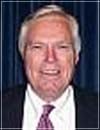
About Winston Pannell
Winston Pannell was born in 1937 in rural Alabama. At the age of fifteen he became interested in religion and was baptized in the Armenian faith, as was Patricia, his wife to be and subsequently their three daughters. In 1985 the Lord confronted him with the true gospel and brought him to faith in God and true repentance from dead works and idolatry. It has been his passion to learn more of a Just God and Savior and his propitiatory work on behalf of his people given him by the Father in the Everlasting Covenant of Grace. The pulpit of Eager Avenue Grace Church in Albany Georgia has afforded him the opportunity to deliver this gospel of God’s free and sovereign grace in Christ, based on his righteousness imputed and received by faith as the whole of the sinner’s salvation. His desire is to deliver this gospel to the hearing of as many as the Lord shall save.
Pristine Grace functions as a digital library of preaching and teaching from many different men and ministries. I maintain a broad collection for research, study, and listening, and the presence of any preacher or message here should not be taken as a blanket endorsement of every doctrinal position expressed.
I publish my own convictions openly and without hesitation throughout this site and in my own preaching and writing. This archive is not a denominational clearinghouse. My aim in maintaining it is to preserve historic and contemporary preaching, encourage careful study, and above all direct readers and listeners to the person and work of Christ.
Brandan Kraft
Bible Verse Lookup
Loading today's devotional...
Unable to load devotional.
Select a devotional to begin reading.
Bible Reading Plans
Track your daily Bible reading with a structured plan. Choose from several options and let us keep track of your progress.
Comments
Your comment has been submitted and is awaiting moderation. Once approved, it will appear on this page.
Be the first to comment!