Isaiah 44:21 Remember these, O Jacob and Israel; for thou art my servant: I have formed thee; thou art my servant: O Israel, thou shalt not be forgotten of me. 22I have blotted out, as a thick cloud, thy transgressions, and, as a cloud, thy sins: return unto me; for I have redeemed thee. 23Sing, O ye heavens; for the LORD hath done it: shout, ye lower parts of the earth: break forth into singing, ye mountains, O forest, and every tree therein: for the LORD hath redeemed Jacob, and glorified himself in Israel.
Sermon Transcript
Auto-generated transcript • May contain errors
100%
And I'd invite you this morning
to turn with me in Isaiah chapter 44. Isaiah 44, I'm just going to
read about three verses. And they're found beginning in
verse 21. Remember these, O Jacob and Israel,
For thou art my servant, I have formed thee. Thou art my servant,
O Israel, thou shalt not be forgotten of me. Whenever the Lord speaks of his
servant, he speaks on the one hand of
his righteous servant, the Lord Jesus Christ, And yet, at the
same time, he speaks to all his servants, that is, those who
are in Christ. I have blotted out as a thick
cloud thy transgressions, and as a cloud thy sins, return unto
me, for I have redeemed thee. Sing, O ye heavens, For the Lord
hath done it. Shout ye lower parts of the earth,
break forth into singing ye mountains, O forest, and every tree therein. For the Lord hath redeemed Jacob,
and glorified himself in Israel. Since about the first part of
November, And all throughout this whole
winter, I've kind of felt like that character in the old Little
Abner cartoon. Whenever they spoke of him, his
name was Joe, and he had a last name that you couldn't pronounce,
just odd letters. But they always depicted Joe. as having a cloud over his head. Everywhere he went, there was
a cloud over his head. Now, I know just mentioning Little
Abner, I'm giving my age away, but that's the way old Joe was. Well, I've kind of felt like
old Joe all winter. Been so cloudy where I live and
cold and rainy and all, I'm just I'm just longing for the spring. And so when I got out of the
car here in Albany yesterday, it was like somebody wrapped
their arms around me and gave me the warmest hug. Felt so good. Sometimes the Lord's people even
feel like that a cloud's hanging over them, going wherever they
go with regard to trials and troubles and persecutions and
afflictions. We kind of feel like that's the
case with us oftentimes. But here in this text, God tells
us that as sinners, as those who have sinned against
God. There is a cloud that follows
us, that hangs over us, that he describes as a thick
cloud, a thick cloud. And it is the thick cloud of
our transgressions, the thick cloud of all our sins. And not only that, but dark clouds
which in Scripture symbolize the wrath of God against sin. He says in a number of places
to various peoples in the Old Testament, he said, I made the
heavens as brass to you, hard, dark, foreboding clouds. And these clouds, just like natural
clouds, they rise up from the earth because of our sins. And these particular clouds are
such as they make one in the sight of God. It's just this
one thick cloud which represents all the sins of His people. Now, I thought about that when
I was studying this. If you notice, he warns in verse
21, he says, first of all, remember these. Who's he talking about
there? Well, if you'll go back and read
those first 20 verses, you'll hear God talk about all these
various idolaters of all kinds. Remember these. Remember and be warned about
all these who sought after and worshipped a God that was not
God. And he describes them here in
that same verse as O Jacob and Israel. Jacob and Israel. Which if you know anything about
what those names mean, it seems that they are very contradictory. The name Jacob means conniver,
supplanter, trickster. And the name Israel means prince
of God. child of God. And the amazing thing is that
these two names were given to the same man in Scripture. And they are used of God to depict
his people who are in and of themselves, and by nature this
sinner, this trickster, this conniver, this one who would
seek to be accepted by God on the basis of something other
than what God says, and yet at the same time what he makes them
by grace, the princes of God, those who
have favor from God in the Lord Jesus Christ. But I thought about it, if you
can think about this and imagine this, take a man on the one hand
who's a blind man in one place, And here's this thick cloud that
hangs over him, but because of his blindness, he does not see
it, he does not know it, and therefore he has no concern about
it. That's every sinner outside of
the Lord Jesus Christ. But then on the other hand, if
you'll take another man who is also a blind man in another place
and there's no cloud over him, he may be fearful that there
is. But because he's blind, he doesn't
know that there isn't a black cloud over him. And that second man is the like
of every one of God's people, every one of those that he chose
and loved in Christ and determined to show mercy to. In their blindness, they're just
exactly like every other fallen son and daughter of Adam. They don't know the reality of
it. They don't know the reality of
sin in the sight of God. And so what he's saying here
is a message of hope to them. He's giving what I would call
the very essence of the gospel here, the gospel. Rather than
being what men have made it to be in our days, in false religion,
just a lot of do, do, do, do, do, which is exactly what it
is, a do-do gospel. The gospel, you don't believe
that, do you? That's what Paul called it. He
said, I count all of that do, do, do stuff, but done, that
I may win Christ and be found in Him. And something is wrong if the
gospel does not come to this sinner who in his blindness is
by the Spirit of God been brought to see what his natural condition
is in himself and in Adam, and when he does not, in the gospel
finds something that brings glad tidings to him. You see, this is what God is
saying to His people who are also naturally blind spiritually,
just like everyone else. He's saying to them, I've not
forgotten you. You've forgotten me. But God
doesn't forget His people. He doesn't forget His people.
They may forget Him. They very often do, to one degree
or another, forget Him. He doesn't forget His people.
Their love oftentimes proves somewhat fickle in its demonstration,
but His is an everlasting love, because He loved them in Christ,
and if He ever loved them, He still loves them. Like a father. who pities his
children. Do you pity your children? I
do. I look for a lot more in yours
than I do in mine. But he says, as a father pities
his children, the Lord pities us and he remembers our frame
that we are nothing but dust. I had a fella call me from Oklahoma
a while back. He had a daughter, I mean a niece
that was, whose husband was stationed in the town where I live, and
he had some interest in the Reformed theology or something like that.
So he called after seeing us on the internet, wanting to know
something about our doctrine. I thought to myself, when he
left that message on my phone, if you want to know something
about our doctrine, why don't you listen to some of these messages
on the internet? We're not trying to hide one
thing. We're not like that pulpit that was on one side and another
on the other side in that old church in England. And a man
went into that church and he saw those two pulpits. I can't think of the term they
used for that, but the custodian was in there cleaning up. And
he said, why are the two pulpits, one on each side? He said, well,
this is it. He said, what they read over
here ain't what they preach over here. What we read in here is what
we preach. And so he had lots of questions
to ask me. Most of them had to do with whether
or not we practice church discipline. I said, no, sir. We practice
what we believe is biblical resolution, restitution. Ye that are spiritual, restore
them that are taken in a fall. That's what we practice. He never
asked me one thing about Christ. He never asked me one thing about
the gospel. And when I couldn't answer what
he wanted to be answered, he evidently told his niece, you
better stay away from that place. But I'll tell you this, I've
got some good news from God to sinners. He speaks here and He tells this
good news that He has remembered His covenant and He will open
the eyes of His people. He'll give them faith and He'll
announce them this good news. And the good news of His gospel
is there is no cloud over you. No cloud. You say, what about
that big black one I remember? Stands out the most in my mind.
No cloud. What about all those little clouds
that float by, that rise up from my sin every day of my life? Thoughts from my mind, thoughts
from my daily work, deeds and words and actions and such as
that. He said, there is no cloud over you. Why? Because of something I've
done. Look down at verse 22. He says, I have blotted out as
a thick cloud thy transgressions and as a cloud thy sins return
unto me for I have redeemed thee. I have blotted out. You see, the good news of the
gospel And heaven only knows it seems to me that there are
a whole lot of folks trying to make people feel bad in our days
when in reality the Spirit of God is the only one who can convict
us and convince us of our sin. And all the preaching that I
could do of law or hell or whatever it is, not one bit of it would
ever avail for anything and never make any sinner really sorrowful
in the matter of their sin. But you see the good news of
the gospel is because of something that God has done. I have blotted And since God is the one that
we sinned against, the God of the Bible, the God of all glory,
this just God who is also the Savior, He's done something for
somebody in the Lord Jesus. I blotted somebody's sins out.
I live by a marine base. And they had a big slogan. It
went on for years. It may still be going on. I don't
know. They said, the Marines are looking for a few good men. I started to have me one made
just like it and put underneath that. God isn't. He said, this is a faithful saying
and worthy of all acceptation that Christ Jesus came into the
world to what? To save sinners. And my friend, the gospel is
about not only the fact that that's the truth, but the fact
that he did it. He said, I have blotted out thy
transgressions, thy sins. And the Lord Jesus Christ, in
his sinless perfection and glory, in his sinless humanity, when
he went to that cross, it was not for sins of his own. As a
matter of fact, there would be no need for him to have gone
at all. Were He not the sinless Savior
and Sacrifice? But there on that cross, He bears
our sins, He bears our transgressions, and He does so because the Lord,
the One who is accountable to all, to Himself and to no other,
because He has imputed those sins to the Lord Jesus Christ. He says in Isaiah 59, Behold,
your iniquities have separated between you and your God, and
your sins have hid His face from you that He will not hear. That's what always separates
God from sinners. Sin. Always. But if you notice here, it tells
us in this very passage of Scripture right here in the Old Testament,
God says in verse 22, I have blotted out as a thick cloud
thy transgressions, and as a cloud thy sins, all of thy sins, return
unto me, for I have redeemed thee. Now there are a lot of
people who think it is totally archaic,
old-fashioned, medieval almost, foolish nonsense to have anything
of this notion of redemption as a part of salvation. There
are a lot of reasons for that, but the number one reason is
redemption implies a necessity of something because you're a
sinner, and I'm a sinner. Redemption implies something
of a necessity, because in the matter of sin, we're not dealing
with just anybody here, we're dealing with this just God that
has shown Himself to be such many a time and again. So how did He blot out this thick
cloud? He says, by redemption. He says, return unto me for I
have redeemed thee. You think about that. That is,
He redeems, He blots out this thick cloud of transgression
and sin, which is that one thick cloud of all the sins, all the
transgressions of all His people, of all times, whether they be
great in their mind or small in their mind, all of their transgressions,
He blotted out in all their sins, blotted them out by this redemption. So what does redemption mean?
It means somebody had to pay. Redemption, as we find it in
the Scripture, has to do with the buying back by the paying
of a price. A satisfaction of God through
this paying of a price. That's the whole picture we find
with Hosea and Gomer. Hosea says this concerning Gomer. He said, so I bought her to me
for 15 pieces of silver and for an omer of barley and for a half
an omer of barley. What happened to her? Well, she
was his wife. She was his love even before
this redemption took place. But Gomer played the harlot and
fell into sin. And then when she was wrecked
and ruined by all her imagined admirers, she fell into such
a state that she fell into slavery and the bondage of slavery. There
was only one way to get her free. That was to redeem her. Now,
let me tell you something. I know we well-meaning preachers
sometimes. We're a well-meaning bunch, but
I'll tell you what, I think when the Lord's people stand in His
presence, we'll realize in the fullness that it was in spite
of us rather than because of us. But the Bible says that we have
what we have because that God has freely given us all things. But I tell you what, you can
give what you want to a man sitting down in death row, it ain't gonna
do him good because he's bound. And what this book shows is just
what every picture of Scripture shows, and that is, in redemption,
He redeems us. Somebody said, well, the Lord
Jesus Christ bought all these things for us. He bought heaven
for us. I'm afraid not. God freely gives
us those things in grace. He had to redeem us. That's what Hosea said. He said,
I bought her to me. Thou hast redeemed us. Just go in your concordance and
go looking in the Bible through the word redemption and redeemed
and see what it is that God in Christ has redeemed. Well, it
isn't a what at all, it's who. He's redeemed. Thou hast redeemed
us to God by your blood. Look back in Isaiah 43, that
first verse. He says, "...but now thus saith
the Lord that created thee, O Jacob, and he that formed thee, O Israel,
fear not, for I have redeemed thee, I have called thee by thy
name, thou art mine." He redeemed us. He redeemed us. And you see,
that's exactly what the Lord Jesus Christ was doing on that
cross. He was accomplishing that work
of redemption. He was redeeming us. He was paying
the price that was necessary to redeem us from the curse of
the law, from the slave market of sin, from the captivity of
the devil. He's there paying that price,
putting away all our sins, which is what is necessary to redeem
us. Because God just does not do
like we do. If you call me and say you're
coming to my house in a hurry, I may just run. If my wife's
not home, I may just run. And I may just take the rugs
and sweep all the dust and dirt under the rugs and cover it up.
And I'll hide stuff under the couch and stuff it under the
cushions and throw the dog stuff outside. I may do all those things. But God can't do that no matter
your sin. He cannot act in a manner that is inconsistent with himself. so that in order to blot out
that thick cloud of our transgressions, that thick cloud of our sins,
and His wrath, and His holy justice against our sins, the only way
He can do it is to redeem us, and the only way to redeem us
is by the paying of this price. Turn over to 1 Peter. The first
chapter. And listen to the Apostle Peter. In 1 Peter chapter 1 and verse
18. Peter writes to these believers,
many of whom were themselves Jews according to the flesh,
and he says, for as much as you know, that you were not redeemed
with corruptible things as silver and gold from your vain conversation
received by tradition from your fathers." Under the law, there
was a coin or a price for the redemption of a slave. Peter says, you're no different
than that. You're not redeemed to God. by anything you do, you're not
redeemed to God by anything such as silver and gold, he says,
but with the precious blood of Christ, as of a lamb without
blemish and without spot, who verily was foreordained before
the foundation of the world, but was manifest in these last
times for I started reading a book one
time. As I recall, it was titled something
like this. It's really what got my attention.
I said, this is going to be good. It was called something like
this, A Price for a People. That's exactly what the gospel
is about. But then I began to read, and
as in his introduction, the writer began to say something like this,
that over the course of history, over the history of the church, there have been amongst all the
Christians, all the believers in the church, so very many different
doctrines concerning the redemptive work of Christ. I closed it right then. I never
read another word. Because what he was saying was
in direct contradiction to the title of his book, which is exactly
what this book says, and that is that Christ Jesus, in His
work of redemption, laid down His life for his sheep. A particular price for a particular
people. What this book says is that the
Lord Jesus Christ, as God manifests in the flesh, purchased the church
with His own blood. What this book says is that the
Lord Jesus Christ came not to be ministered to, but to give
his life a ransom, a redemption price for many. And I'm just inclined to believe
that Christ is going to get everyone he bought. That's what Paul said
to the Corinthians. He said, you were bought with
a price. What is that? The very lifeblood
of Jesus Christ. In other words, if we ever have
any sense of our own sinnerhood, if we ever have any real sense
of what was taking place on that cross and what Jesus Christ is
actually doing, It will be when He brings us to see that sin
had left us in such a wretched a state of bondage and captivity
and slavery that the only way possible for you and I to be
saved from our sins was for God to become flesh. in order to do the one thing
he couldn't do from heaven. You ever stop and think about
that? He created this whole world from heaven. He has in all of
time and history ordained and ordered and carried out and watched
over and sustained and provided for everything and everybody
that has ever lived on the face of this earth. He did that from
heaven. Why couldn't He save you from
heaven? Because there's just one way of redemption. Not only must a man die for men,
but that man has to be like that lamb, that precious lamb described
by Peter and everywhere in the scripture, that lamb without
spot and without blemish. He has to come into this world
as the perfect man and lay down his life for men. Do you ever stop and think about
the very first character in which the Lord Jesus Christ is announced
when he comes into his public ministry into this world? All of a sudden one day when
John is down there baptizing in the river Jordan, he looks
up and here comes a man. He's a Jew just like every other
man. He's not extraordinary in his
outward visage or appearance. But the Scripture shows us that
John is made to know that there's something unique about this man.
He's the one that he's come to be the forerunner of. He said,
Behold the King. Nope. Behold the Son of God. Is he? Yes. That's not what he
says. And when you stop and think of
everything that could be said of the Son of God, He's like
a many-faceted jewel that can never have His beauty measured
or fathomed or explained or proclaimed. All that could be said of the
Lord Jesus Christ standing there in human flesh. And John says,
Behold the Lamb of God. that takes away the sin of the
world. That's Him. Because that's the
only way that we as sinners can be redeemed to God, redeemed
from our sin, redeemed from the curse of the law. And that black
cloud of God's wrath, that darkness and the matter of our sin was
all, the prophet says, was all made to me and hang over his
head and fell on him. And on that cross is the, you
might say, the cloudburst of divine wrath poured out on the
Son of God. I can remember when I was growing
up, you know, we'd have It seems like we don't have a lot of those
anymore, but we used to have those dark black clouds. I can remember one day, I helped a man that raised tobacco. You don't know anything about
that, I'm sure, but we cropped that old vile weed, you know,
that is now worse than abortion and things like that, you know.
We cropped that old vile weed and it's hot and dirty and sweaty
and everything like that. We were just bringing that thing
and carrying it, putting it in the cart and doing that kind
of stuff. And in the summertime, they'd come this black cloud
and it'd get so dark. And the wind would come up, it'd
be so frightful and you'd be hot and sweaty and when that
wind blew and that darkness came, you'd get cold. And it'd start
to thunder and lightning and rain and pour down. You couldn't
get to a shelter quick enough sometimes. But when that all was poured
out, He'd break into the most beautiful,
clear, glorious sunshine. And when the Lord Jesus Christ
was raised up between earth and heaven, He was not on a fool's
errand. He came as the Redeemer to redeem,
and either He did or He failed miserably. But He came, and that
cloudburst of God's wrath, all the sins of His people having
been imputed to Him, laid on Him, made to meet on His head,
and the cloudburst of God's wrath fell on His head, killing Him,
destroying Him, taking His life, which is what was required. Because
the soul that sinneth shall surely die. I suspect that there's one
thing that will never be said that I preach too much. And that's
the dying. The cross death. Who died? What he accomplished in his death.
How he had honored God in his death. How he had saved his people
in his death. This death of Jesus Christ. One day I was reading there in
Romans 8, and Paul was talking about who can lay anything to
the charge of God's leg. Who's he that condemns thee?
It's God that justifies. And after he says it's God that
justifies, immediately he says this, it is Christ that died. You say, well preacher, how in
the world could that ever help me? How can looking back to a
man that died over 2,000 years ago, a man, a Jew, in a place
called Jerusalem on a cross, how in the world can that ever
put me in a good standing with God? I'll tell you, if you ever find
out who died, If you ever believe, if you're
ever enabled of God to believe what God says that he did in
that death, I promise you that what has satisfied the court
of heaven will satisfy the court of your conscience. And you see,
the only reason why that you don't have hope and peace and
rest right now is because what you're offering up to God to
satisfy the court of heaven doesn't satisfy your court of conscience
because it hadn't satisfied the court of heaven. Only the blood,
the righteousness of Jesus Christ. You see, that's what makes the
gospel good news. He said, I have blotted out as a thick
cloud all your sins, all your transgressions. Let's go down and read Isaiah
53. Somebody mentioned Isaiah 53
to me in the last day or so. Isaiah 53. Surely he hath borne Our transgressions, our sins.
The Lord hath laid on Him all our sins. You mean, preacher, all our sins?
What about tomorrow? I got news for you. Everything
was tomorrow concerning you and me when Christ hung on that cross. That's what he's saying here,
just all, all of God's, all the sins of God's people, all the
sins of everyone who'll be brought to believe on Christ. They hung
like a thick cloud. And he blotted them out by causing
them to fall on his Son. We either believe that and have
peace, or we don't believe that. and we die in our sins. Turn over quickly to Colossians
chapter 2. Colossians chapter 2, when the
Apostle Paul is writing to the church at Colossae, He says in verse 13 of Colossians
2, And you, being dead in your sins, and the uncircumcision
of your flesh, hath he quickened together with him? Now, most
of the time, when that word quickened is used in Scripture, most preachers,
most commentators, they run immediately to say something about the new
birth. That's not always the case. Because more often, almost,
where it talks about being quickened, even in Ephesians 2, it's talking
about being made alive, not only in the death of Christ, but in
the resurrection of Christ. It's like Paul said, if there's
no resurrection of Christ, then we don't have any hope. Not only
were we put to death in Christ, that He was made sin for us,
and we're made the righteousness of God in Him, we're quickened
together with Christ. Alright? Having forgiven you
all trespasses. There's two aspects of forgiveness. Christ Because of his death,
God has forgiven all his people for all their sins. Because the
word forgiveness and the word remission are the same oftentimes. And where the shedding of blood
is, there's no need for any remission because sin has been remitted,
been paid for, satisfied God's justice. But there's also the
experience of forgiveness. We experience the experience
of forgiveness when we're enabled to believe on and trust Christ. But now, blotting out the handwriting
of ordinances that was against us, which was contrary to us,
and took it out of the way, nailing it to His cross. nailing it to his cross. Hadn't
he blotted out? He nailed it to his cross. Was
that what he's talking about? What was Pilate nailed over the
top of him? No, he's talking about himself. When he was nailed to the cross,
all the sins of his people were nailed to the cross. That's why The Lord Jesus Christ is called the Son of Righteousness. S-U-N. The prophet Malachi was used
of God and God says through him, but unto you that fear my name. shall the son of righteousness
arise with healing in his wings Paul said the God of this world
has blinded them that believe not the gospel but he said God The same God
who said, let there be light, and there was light. He came
to me in my darkness, and He rolled back the cloud
of deception and caused the light of His truth to shine in my heart,
revealing the glory of God in the person and work of Jesus
Christ. And one day Peter said, you can
turn over this if you want to. I'm going to read it to you anyway. In 2 Peter chapter 1, Peter,
who if you remember was in that select group there on the Mount
of Transfiguration, Peter, James, and John, and they saw the Lord
Jesus Christ. when he kind of, I don't even
hardly know how to explain it, when he made manifest in a measure
his glory as God. I mean, he just shone in such
a transfiguration that they were unmistakably convinced of his
deity and of his uniqueness as the Christ. But when he writes in his second
letter, in verse 16 of chapter 1, he says, For we've not followed
cunningly devised fables, when we made known unto you the power
and coming of our Lord Jesus Christ, but we were our witnesses
of his majesty. For he received from God the
Father honor and glory, when there came such a voice to him
from the excellent glory, this is my beloved Son in whom I am
well pleased. And this voice which came from
heaven we heard when we were with him in the holy mount."
He said, I'll tell you this, I wish he'd do that to me. I
wish he'd bring me out of this darkness. Did you know that there's something
better than that? Better than that. I remember
reading two fellows were in Australia, I believe it was, and they were
searching over the desert. They were trying to find little
gold nuggets. If they could have just found
one little gold nugget, They'd have been thrilled to death.
But while they were stumbling along, looking for a little gold nugget, they stumbled across another
something that appeared to have a unique like. And what they found was the world's
largest opal. And they named it. They called it the Welcome Stranger. And that's the Christ of the
true gospel when God is pleased to come to you and in the light
of his truth reveals the only Redeemer, the only salvation,
the only righteousness, in the Lord Jesus Christ. He'll be the
welcome stranger. Well, Peter goes on and he says
this, we have also a more sure word
of prophecy. More sure, better than seeing
the glorious Christ. That's what the Spirit of God
says. whereunto ye do well that ye take heed as unto a light
that shineth in a dark place until the day dawn and the day
star arise in your heart. What's the day star? It's the
sun. And the one he's talking about
here is that son of righteousness who arises with healing in his
wings. I'll tell you, when I stepped
out of that vehicle yesterday afternoon, after leaving in 24
degree temperatures, I stepped out and I stood in that sunshine
for a minute. I didn't even want to do anything,
go anywhere. The wings or the beams of that sunlight came down. Warned me. Refresh me. Encourage me. There wasn't a cloud in the sky. That's Christ. Picture of Christ. Until the day star arise in your
heart. You do well to hear the gospel,
to read the scriptures, study the scripture, until God the Spirit causes that
Son of Righteousness, to rise in your heart, your mind, your
sight, and you're enabled to believe on Him. He says, for the prophecy came
not in old time by the will of man, but holy men of God spake
as they were moved by the Holy Ghost. Where does he say his word comes
from? Same source. Same source. What will they find out? What
will they rejoice in? He says, it is the fact that
I have redeemed thee. He says, return unto me. Literally,
I think that means something like, worship only me. And then he says this, sing,
O ye heavens, for the Lord hath done it. shout ye lower parts of the earth,
break forth into singing ye mountains, O forests, and every tree therein. For the Lord hath redeemed Jacob
and glorified himself in Israel. He's done it. He's blotted out the thick cloud. He's glorified Himself in Christ
and Him crucified. He's redeemed us. Return unto
Him. People are always asking, well,
what do I do now? Well, He said, rejoice! Sing! I'll tell you what, somebody
comes along and pays all my debts, I believe I'll find a reason
to sing. I couldn't shut my mouth, but
nothing like the one who's redeemed me from all my sin. God bless you.
About Gary Shepard
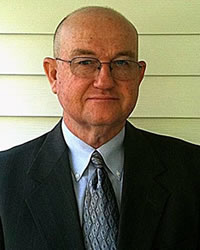
Gary Shepard is teacher and pastor of Sovereign Grace Baptist Church in Jacksonville, North Carolina.
Pristine Grace functions as a digital library of preaching and teaching from many different men and ministries. I maintain a broad collection for research, study, and listening, and the presence of any preacher or message here should not be taken as a blanket endorsement of every doctrinal position expressed.
I publish my own convictions openly and without hesitation throughout this site and in my own preaching and writing. This archive is not a denominational clearinghouse. My aim in maintaining it is to preserve historic and contemporary preaching, encourage careful study, and above all direct readers and listeners to the person and work of Christ.
Brandan Kraft
Joshua
Joshua
Shall we play a game? Ask me about articles, sermons, or theology from our library. I can also help you navigate the site.
Bible Verse Lookup
Loading today's devotional...
Unable to load devotional.
Select a devotional to begin reading.
Bible Reading Plans
Choose from multiple reading plans, track your daily progress, and receive reminders to stay on track — all with a free account.
Multiple plan options Daily progress tracking Email reminders
Comments
Your comment has been submitted and is awaiting moderation. Once approved, it will appear on this page.
Be the first to comment!