Bootstrap
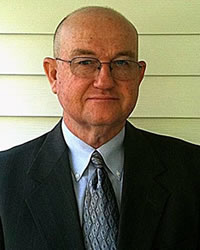
Gary Shepard

King of the Jews

John 19:1-22
Gary Shepard November, 22 2009 Audio
0 Comments
Gary Shepard
Gary Shepard November, 22 2009
John 19:1 Then Pilate therefore took Jesus, and scourged him. 2 And the soldiers platted a crown of thorns, and put it on his head, and they put on him a purple robe, 3 And said, Hail, King of the Jews! and they smote him with their hands.

Sermon Transcript

Auto-generated transcript • May contain errors

100%
Well, I'm glad to be here, and
I do bring you greetings for the folks that I've tried to preach
to and pastor the better part of some thirty years. I want you this morning to turn,
if you would, in your Bibles to John chapter 19. I'll read a few verses, some
of the most awesome verses, I think, in all of Scripture, beginning
in verse 1. Then Pilate therefore took Jesus
and scourged him. And the soldiers plaited a crown
of thorns, and put it on his head. And they put on him a purple
robe, and said, Hail, King of the Jews. And they smote him
with their hands. Pilate therefore went forth again,
and saith unto them, Behold, I bring him forth to you, that
ye may know that I find no fault in him.' Then came Jesus forth
wearing the crown of thorns and the purple robe, and Pilate saith
unto them, Behold the When the chief priests, therefore,
and officers saw him, they cried out, saying, Crucify him, crucify
him. Pilate saith unto them, Take
ye him, and crucify him, for I find no fault in him. The Jews answered him, We have
a law. And by our law he ought to die,
because he made himself the Son of God. You know, even fallen
man, doing exactly what he wants to
do in his wicked heart, is sometimes used as a mouthpiece
for God. And that is just as they slew
Christ, the Bible says, with wicked hands, and in doing so
they fulfilled the determined counsel of God. And men may speak true things. even though they don't know the
truth. They speak things sometimes that
they themselves do not really believe. If you remember, there was a
prophet for hire by the name of Balaam, and he said that God hath not
beheld iniquity in Jacob, neither hath he seen perverseness in
Israel. The Lord his God is with him,
and the shout of a king is among them." He was a false prophet, but that
was true. And it's also true of some things
that the Pharisees said. They said only God can forgive
sins. And they said of Christ, he's
a friend of publicans and sinners. How true that was. And also the
soldiers in our text. And Pilate says, I find no fault
in him. Sad to say that in our day there
are some who say they believe the gospel that seem to have
found some fault with him. But even Pilate was forced to
acknowledge, I find no fault in him. He said, Behold the man. And that was exactly right. But the soldiers here, as well
as Pilate, they make a statement, and they say in that third verse,
Hail, King of the Jews. And if you notice here in what
we find described in these verses that the Lord Jesus Christ is
mocked in his particular office as the King. They put on him
a crown of thorns. They wrap him in a purple robe
signifying royalty. They give him a reed for a scepter. They bow down before him and
they make that statement, Hail, King of the Jews. That word hail means be of good
cheer or be glad. Be glad. This is the King of
the Jews. And there are a few things that
I want to say to you this morning, two in particular, and the first
one is this. The Lord Jesus Christ is a King. He is the King. He is, as the
Bible describes him, the very king of kings. When someone asks you why we
call it sovereign grace, you can say it is the grace of the
king who is the sovereign king, the king of kings. And if you turn over in the book
of Revelation, in that nineteenth chapter, when John is given a
revelation of the Lord Jesus Christ with his people, he gives
us this description in verse 11. He says, And I saw heaven
opened, and, behold, a white horse and he that sat upon him
was called faithful and true, and in righteousness he doth
judge and make war. His eyes were as a flame of fire,
and on his head were many crowns, or all the crowns. And he had a name written that
no man knew but he himself. And he was clothed with a vesture
dipped in blood, and his name is called the Word of God. And the armies which were in
heaven followed him upon white horses, clothed in fine linen,
white and clean. and out of his mouth goeth a
sharp sword, that with it he should smite the nations, and
he shall rule them with a rod of iron, and he treadeth the
winepress of the fierceness and wrath of Almighty God. And he hath on his vesture,"
on that vesture that is dripping in blood, He has on his vesture
and on his thigh a name written, King of Kings and Lord of Lords. Somebody said that error flows
out of low views of God and high views of man. And this generation in which
we live, they have had no view and vision of Jesus Christ as
the King of Kings. When Paul writes to Timothy,
he says that he is to keep a commandment without spot, unrebukable, until
the appearing of our Lord Jesus Christ, who in his times he shall
show who is the blessed and only potentate, the King of kings
and the Lord of lords. And what we find is that throughout
this book there is a constant theme that sets forth this kingship
of Jesus Christ. Let me read you a verse that
is found in Jeremiah 23. He says in this fifth verse,
ìBehold, the days come, saith the Lord, that I will raise unto
David a righteous branch, and a king shall reign and prosper.î the Lord Jesus Christ who is
the one spoken of there, the Messiah, he is said not simply
to be born as a babe in Bethlehem. He is not described as a man
who is simply walking around doing good on the shores of Galilee,
but he is described as the one who would come the man that would
be raised unto David a righteous branch, and a king, shall reign
and prosper, and shall execute judgment and justice in the earth. And in his days Judah shall be
saved." Remember that in his days Judah shall be saved, and
Israel shall dwell safely. And this is the name whereby
he shall be called the Lord our righteousness." He is the Lord
our righteousness, and he is at the same time the King of
kings and the Lord of Lords. And Daniel gives this prophecy
and description of him. He says, And in the days of these
kings shall the God of heaven set up a kingdom, which shall
never be destroyed, and the kingdom shall not be left to other people,
but it shall break in pieces and consume all these kingdoms,
and it shall stand forever. And it shall do so because of
the King." And not only was it spoken of in such ways as these
by the Old Testament prophets, but also by the King himself. If you look back in John chapter
18 and verse 38, while Christ is being interrogated by Pilate,
listen to what he says. In verse 36, Jesus answered,
ìMy kingdom is not of this world.î That did not mean that it was
not over this world. It simply meant that his kingdom
is not of a worldly, material kind. If my kingdom were of this
world, then would my servants fight, that I should not be delivered
to the Jews. But now is my kingdom not from
hence. And Pilate therefore said unto
him, Art thou a king then? And Jesus answered, Thou sayest
that I am a king. Or in other words, you have rightly
said that I am a king. To this end was I born, and for
this cause came I into the world, that I should bear witness unto
the truth, and every one that is of the truth heareth my voice." If you look down in John 19,
also again in verse 10, it says that Pilate said unto him, Speakest
thou not unto me? In other words, Pilate thought
he had the right and the power to draw out of Christ an answer
to his very ridiculous questions. He is like every sinner. He was
so full of himself. He was so obsessed by his own
will and ability, he says to Christ, He said, Speakest thou
not unto me, knowest thou not that I have power to crucify
thee, and have power to release thee? He said, Don't you know
I've got the power to turn you loose, set you free, or I've
got the power to have you taken out and crucified? Very bold. No, he's just like
every sinner with this whole notion of free will and decisionism. Don't you know I've got the power
to reject Christ or to accept Christ? And Jesus answered. Thou couldst
have no power at all against me, except it were given thee
from above." The only power you have is derived power. It is given you from above. You see, the Lord Jesus Christ
is unmistakably the King. And as the King, he is the one
who rules and reigns over all things, and his authority as
King embraces all the universe. And when the Lord Jesus Christ
was raised up on high before he ascended, the Scripture says
that Jesus came and spoke unto them, saying, All power is given unto me in heaven and
in earth. Do you know what that means?
That means that you nor I nor any other being on this earth
has any power. If all power is in the hands
of the King of kings and Lord of lords, we have no power. And when Paul writes in Philippians
chapter 2, he says, because of something that he has done has
also highly exalted him and given him a name which is above every
name, that at the name of Jesus every knee should bow of things
in heaven and things in earth and things under the earth, and
that every tongue should confess that Jesus is Lord, he is King
to the glory of God the Father. But this being true as it is,
and as all men, he says, will find out, he is especially the
King of the Jews. And when I read that, and I'm
sure probably when you read that and you think about the Jews,
were they not right then at that moment rejecting him? Look back at that sixth verse. It says, when the chief priests
Therefore, an officer saw him, they cried out, saying, they
cried out at the very sight of him being led into view, Crucify
him, crucify him. And yet, that statement was still
made. Hail, King of the Jews. But these Jews were the very
same ones who had been saying, We will not have this man to
what? Reign over us. They were not just rejecting
the Lord Jesus Christ. But they were rejecting him especially
in the same character that Pilate and these soldiers had just clothed
him, and that was they were rejecting him as king. You see, that's
what every sinner does. Because the very first thing
that you and I meet with in the gospel command is this matter
of Jesus Christ being Lord and King. You see, the Bible doesn't call
upon people just to believe on Jesus. No. The first thing that you and
I meet with is this command of the gospel to believe on the
Lord. Jesus Christ. So if this is really true, who are the Jews? I'm convinced that this is a
true statement. When Pilate said, there's no
fault in it, that's true. When he says, behold, the man
That's true. And when those soldiers said,
Hail, King of the Jews, I believe that's true, too. But who are
the Jews? Well, turn over to Romans chapter
2. Romans and the second chapter. Listen to what Paul says. And
this is particularly weighty, I think, because it is coming
from one who is himself according to the flesh a Jew. But look at what it says in Romans
2, beginning in verse 17. He says to some, he says, Behold,
Thou art called a Jew, and restest in the law, and make thy boast
of God." In other words, you refer to yourselves, and you
are called by others Jews, and this is your hope. You hope and
rest in the law, in your obedience and performance of the law. He
says, "...and knowest his will, and approves the things that
are more excellent, being instructed out of the law, and you're confident
that you are yourself a guide of the blind and a light of them
which are in darkness, an instructor of the foolish, a teacher of
babes which has the form of knowledge and of the truth in the law.
Thou therefore which teachest others, teachest thou not thyself,
that thou that preachest a man should not steal, dost thou steal? Thou that sayest a man should
not commit adultery, dost thou commit adultery? Thou that abhorrest
idols, dost thou commit sacrilege? Thou that makest thy boast of
the law through breaking the law dishonorest thou God? For the name of God is blasphemed
among the Gentiles through you." The Gentiles, in all their wickedness,
they looked at the Jews and they said, well, if that's the God
of the Jews, if He's God, what kind of a God is He? for circumcision verily profiteth
if thou keep the law. But if thou be a breaker of the
law, thy circumcision is made uncircumcision. Therefore if
uncircumcision keep the righteousness of the law, shall not his uncircumcision
be accounted for circumcision? and shall not uncircumcision
which is by nature, if it fulfill the law, judge thee who by the
letter and circumcision doth transgress the law." What's he
saying there? He's saying that although you
call yourself a Jew, and you look to the law, and you have
your hope based on your obedience to the law, and you make your
boast of knowing God through what you do for God, you are
not really a Jew. He is not a Jew, which is one
outwardly. Now, that's a man who is a Hebrew
himself making that statement. And he's not only making that
statement, he's making it being led by the Spirit of God. He
says, For he is not a Jew which is one outwardly, neither is
that circumcision which is outward in the flesh, but he is a Jew
which is one inwardly. and circumcision is that of the
heart, in the spirit, and not in the letter, whose praise is
not of men, but of God." Now, where did that name Jew come
from? Well, that name Jew came from
that name or word that we find way back in the Old Testament
that began when Jacob's wife, that supposedly hated wife of
Jacob by the name of Leah, when she gave birth to her last child. His name was Judah. Have you
ever heard about Judah? Turn back to Genesis chapter
49. Genesis 49. Listen to the occasion
of this. Because in Genesis 49, after that she had given birth
and said when that child was born, which she named Judah,
When he was born, she said, I'll name him Judah because now I
will praise the Lord. You see, the name Judah means
praise or praise for the Lord. Now, listen to what it says in
Genesis chapter 49 when Jacob himself is bestowing the blessing
on his sons. Verse 8, Genesis 49, Judah, thou
art he whom thy brethren shall praise." What you'll find out is this.
Whenever you find that name Judah, or as it is oftentimes in various
references of Scripture, so many of them have to do with praise. Judah, thou art he whom thy brethren
shall praise. Thy hand shall be upon in the
neck of thine enemies, thy father's children shall bow down before
thee." And not only is praise associated
with Judah, but look down at that tenth verse. The scepter
shall not depart from Judah. What's the scepter? That's the
symbol of the king. the scepter shall not depart
from Judah, nor a lawgiver from between his feet, until Shiloh
come, and unto him shall the gathering of the people be."
In other words, Judah, not only as the name itself speaks, but
also as it was used even by the Jews themselves who said, that
so-and-so is a Jew, why? Because he turns from idols. Did you know that when Pharaoh's
daughter, when Pharaoh's daughter took up Moses, and in so doing,
she defied Pharaoh himself and defied the religion that characterized
it, when she took up that child in that bulrush ark, that the
Jews called her a Jewish wife. They said she turned from idols. And so a Jew, spiritually speaking,
is one who turns from idols and one who has praise for God alone. And I'm going to tell you something
this morning. There ain't many people who do. A Jew, in this
sense, is one who has praise only for Jesus Christ. Because this business of this
name of Jew, he says he's not one who's a Jew outwardly, but
this whole business of being a Jew is one who is one inwardly,
whose praise is not for men, but for God, whose praise is
for none but the King himself." Now, I'll tell you this, every
son of Adam, every daughter of Adam, everyone is going to praise
something. If you don't believe it, you
just turn on your TV, and a man is just right now especially
going through such an awful time. He praises all these athletes,
and then all of a sudden what they do? They fall on their stupid
faces and show what ignorant things they are. Or they praise
these politicians doing so much, and he turns out to be a thief
and a scoundrel. He praises this one, and he finds
everything he praises flawed. This Jew, he has praise only
for the Lord Jesus Christ. Paul, when he writes there in
Philippians 3, what he does is he repents, not
because he was a liar and a cheat and a murderer and a former bank
robber or a hell's angel or something like that. He doesn't repent
of what he and everybody else obviously knows is bad. He's
repenting of what we, by nature, believe is good. And then he
turns, Bo, and he says, But we are the circumcision. Well, sure
you are, Paul. You were born a Jew. You just
got through saying you were a Jew. No, but he said, But we are the
circumcision, or we are the true Jews. He characterizes them by
three things. He said we worship God in spirit. We don't need trinkets. We don't
need crosses. We don't need prayer books. We
don't need pictures. We don't need a cross in your
pocket where you can rub and feel spiritual. We don't need
soothing music or something like that. He said we worship God
in spirit, in spirit and in truth. Then he said this, and we rejoice
in Jesus Christ. That's all we rejoice in. We
don't rejoice in what we've done. We don't rejoice in what we've
felt, because what we feel one day, we may not feel the next
day. He said we don't rejoice in what
we've done. We don't rejoice in who we are.
We don't rejoice of what we've come from. We don't rejoice in
the country we're in. We don't rejoice in those things.
We rejoice in Jesus Christ. And we have no confidence in
the flesh. Somebody says, and they're trying
to be really pious and humble, I don't know how they figure
this, but they say, well, you know, it's not that I don't trust
Christ, I just don't trust myself. But if you do the least bit,
you really are in trouble. I can't have any assurance because
I just, you know, I'm afraid of what I might do. Well, assurance is not born out
of being afraid of what we might do. We could sure spend a lifetime
of that, but assurance is born out of believing what Christ
has already done. You see, a Jew, one of these
Jews, is one who has praise only for Christ. I don't know how
many times I haven't run up with people, even people who claim
to believe the doctrines of grace or whatever language they use,
and if there's one thing that they don't seem to ever want
to talk about, it's Christ. Do you have praise only for Christ? Praise only for this King? Praise only for this One? You see, this people, it says,
they'll be gathered to Him. They'll only have good things
to say about Him. You remember that King Ahab who, when Ahab and Jehoshaphat,
they began to come into this confederation and they were going
to go up and try to take Ramoth, Gilead, you know, and Jehoshaphat
who had just a little bit of sense and spiritual life, he
said, well, isn't there a prophet that we could confer with and
find out what the Lord would have us to do? And so he brought
all these prophets in that he called his prophets, and they
all said, yes, yes, yes, yes, go up. I've seen the Lord giving
it all in your hand and everything like that. And Jospeh said, I don't know
about that. Isn't there anybody else? And they said, yeah, there's
one more fellow, and his name's Micaiah. They said, I don't like
him because he ain't ever got anything good to say about me.
You know, that's why I can't draw a crowd where I'm at. Because
I don't ever have anything good to say about a sinner. I don't
ever have anything good to say about me. I don't have anything
good to say about you. What I've got to say is good
about the Lord Jesus Christ. That's what a Jew is. He has
praise only. for Christ. And not only for
Christ, not only for Christ as the King, but Christ as the King
that he really is. Now, there are five things, I'll
just give you hurriedly, and I'll try to hush, but five things
that Christ as the King has done and is doing and must
do. What does he do as the king?
Well, here is the first thing, and that is the object of Christ's
kingship is first of all to accomplish the salvation of his people,
to accomplish the full and complete and eternal salvation of all
his elect. That's what he does as the king. And you know, rather than looking
at a passage like John 19 and hearing what is being done to
the Lord Jesus Christ here on this occasion, when they press
this crown of thorns on his head and the blood, I'm sure, begins
to run down his face. And as they wrap him in this
robe and smite him and mock him as the king, that's exactly what
he's doing, as the king, eternal, omnipotent,
and as this king who shall reign in righteousness. He's saving his people. when
they pressed that crown of thorns on his head. And they by their
wicked hands and by their wicked hearts mocked him as the king. The king was going at that very
hour to accomplish the salvation of his own. History is full of accounts where
if a king, he was always advised to kind of stay back out of the
line of fire, like Ahab himself did. You remember
Ahab, he was so afraid of getting killed, he disguised himself. But still, that man drew a bow
at a venture, let it go, and it smoked that king in the joint
of his armor, and it killed him. But our King was never trying
to hide. As a matter of fact, he not only
put himself on the very vanguard of his people, but he went out
into the conflict by himself. just like a king had gone out
before him, the king that he's described as his son, David's
son, and David's lord or king. When David went out to meet Goliath, Goliath had said, let's work
it like this. He said, give me a man. This
is the way it will be. If he beats me, then we'll be your servants.
But if I defeat him, then you'll be our servants. And so here's
David, and he goes out. By the way, he's already been
anointed king. Doesn't look like it, does it? But he goes out in the battle,
and he stands before Goliath, and by himself as a representative
man, just like Paul describes in Romans 5, by one man's obedience,
which is his obedience unto death, the many were made righteous. And so our King, he goes out
in this office and he accomplishes the salvation of his people. A king reigns in righteousness. He accomplishes our salvation
all by himself through his obedience and death. And in his accomplishment,
he brings forth a great victory and demonstrates God as a just
God and a Savior by himself. And he does so as a king. Secondly, it is as a king that
he rules and reigns in order to cause everything to work together
for good, for the good of his people and the glory of his name. Christ is the one that Paul talks
about in Romans 8 when he says, And we know that all things work
together for good to them that love God, to them who are the
called according to his purpose. How can that really be? Because the King rules over all
things. Because when he had done all that was necessary to accomplish
our salvation and bring in that everlasting righteousness which
God infused us and justifies us by, the Bible says he sat
down at the right hand of the majesty on high. And it's from
that high and lofty position as a man that he rules over all
things and makes sure. that they all work together for
good to them that are the called according to his purpose. Thirdly, he does so as a king
in order to establish a kingdom for his people and in his people. He says in Luke 22, And I appoint
unto you a kingdom, as my Father hath appointed unto me. Will all his people be saved?
Yes. Will they come to him because
of an act of so-called free will? No, but they will be willing. Because the Father has already
said to his King, way back in the Psalms, Thy people shall
be willing in the day of thy power. He was talking to his Son as
the King. He said, My King have I sent
on my holy hill. And not only that, he says that
it is as a king that he rules to conquer all his enemies, which are all their enemies. You know, the Lord's people, they don't have to get vengeance.
They don't have to get back. They don't have to respond in
kind when they're treated wickedly, lied about, and all these kind
of things that prove to be common to them. Because it's the king himself
who does so. For he must reign till he hath
put all enemies under his feet. Hebrews says this man, after
he had offered one sacrifice for sins forever, sat down on
the right hand of God from henceforth expecting till his enemies be
made his footstool. And then when you get down to
the last pages of the book of Revelation and all the enemies
of God and all of his enemies of his people, they're described
as making war with the Lamb. He says, And the Lamb shall overcome
them, for he is the Lord of lords. And king of kings, and they that
are with him, are called, and chosen, and faithful." He exercises
this office of king that all his people should worship him
and honor him as their Savior King. Now, everybody is going
to honor the Lord Jesus Christ as the King of kings. But His people, they're going
to honor Him as their Redeemer, Savior, King, because He is the
King of righteousness and the King of peace. Do you ever wonder why that's
the twofold? name associated with the kingship
of Christ, he's the King of Righteousness and the King of Peace, because the only way he can be
the King of Peace is to be the King of Righteousness. The only way he can be the king
of righteousness is to die as the sinless substitute in the
place of his people before the very justice of God and satisfy
every claim necessary, everything. And when he dies, the death. that satisfies God and puts away
our sin, he's the King of righteousness.
I don't know if you've thought about this or not. We use the term, the blood and
righteousness of Jesus Christ. That's really redundancy. The death of Christ is the righteousness
of God in Jesus Christ. And since he's the king of righteousness
for his people, he's also the king of peace. He says, for the
kingdom of God is not meat and drink, but righteousness and
peace and joy in the Holy Ghost. If there's no righteousness,
there's no peace. If there's no peace, there's
no joy. If there's righteousness, then there's peace. Peace with
God and peace of conscience. And therefore, joy in the Holy
Ghost. Now, turn back to John 19. I'm
just as scattered this morning as I possibly can be, but maybe
you'll go home and read this and look at it for yourself.
But look back here in John chapter 19, verse 13. When Pilate therefore heard that
saying, he brought Jesus forth and sat down in the judgment
seat in a place which is called the pavement, but in the Hebrew,
Gavatha. And it was the preparation of
the Passover, and about the sixth hour. And he saith unto the Jews,
Behold your king. But they cried out away with
him. But did you know that every time
the gospel is preached, that's essentially what's being said?
to the true Jews, behold your King. They cried out, Away with him! Away with him! Crucify him! Pilate saith unto them, Shall
I crucify your king? The chief priests answered, We
have no king but Caesar. That's what all folks lost in
religion say. Our king is man, self, self-righteousness,
self-works, self-worth. But then it says in verse 18,
they crucified him and two others with him on either side, one
and Jesus in the midst. And Pilate wrote a title and
put it on the cross. And the writing was Jesus of
Nazareth, the King of the Jews. They said, don't write that on
there. Rather, the title then read,
Many of the Jews, where the place where Jesus was crucified was
Nile to the city, and it was written in Hebrew and Greek and
Latin. It's all the languages that represented
every element of society. And then said the chief priest
of the Jews to Pilate, Write not the king of the Jews, but
that he said, I am the king of the Jews. Don't write that he's
actually the king of the Jews. Write that he said he was. But
Pilate answered, What I have written, I have written. He couldn't have changed that for nothing. Because Jesus Christ,
the Christ hanging there on that cross with a crown of thorns
on his head, and a spear in his side, and his hands nailed to
the cross, and blood pouring out of him, beaten to a pulp,
and a purple robe laying there at the foot of the cross. He
is the King. He is the King of all who have
praise only for him. We believe that our salvation
is accomplished, was accomplished by Christ and only Christ through
his doing and I. He is our King. Hail! Be glad! Rejoice!
Gary Shepard
About Gary Shepard
Gary Shepard is teacher and pastor of Sovereign Grace Baptist Church in Jacksonville, North Carolina.

Comments

0 / 2000 characters
Comments are moderated before appearing.

Be the first to comment!

Joshua

Joshua

Shall we play a game? Ask me about articles, sermons, or theology from our library. I can also help you navigate the site.