Bootstrap
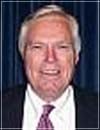
Winston Pannell

King of the Hill

Psalm 15
Winston Pannell July, 5 2009 Audio
0 Comments
Psalm 15:1 LORD, who shall abide in thy tabernacle? who shall dwell in thy holy hill?
2 He that walketh uprightly, and worketh righteousness, and speaketh the truth in his heart.
3 He that backbiteth not with his tongue, nor doeth evil to his neighbour, nor taketh up a reproach against his neighbour.
4 In whose eyes a vile person is contemned; but he honoureth them that fear the LORD. He that sweareth to his own hurt, and changeth not.
5 He that putteth not out his money to usury, nor taketh reward against the innocent. He that doeth these things shall never be moved.

Sermon Transcript

Auto-generated transcript • May contain errors

100%
I want to turn your attention
this morning to the 15th Psalm that Michael read, and I've titled
this message, King of the Hill. As a post-Depression child of
the rural South, I was left to my own inventions for entertainment. One such game we played as kids
was King of the Hill. The object of this game was to
work our way up to the top of the haystack or the bale of cotton
or whatever else, whatever hill we might build, and maintain
that position from those who would dethrone us. Only one could
hold the position and only the fittest survived. But even the
strongest fell eventually because wannabe kings were always outnumbering
the reigning king. Everybody's goal was to be king
of the hill. Well, I don't know if boys or
kids today play that game anymore, but I know men do. In the real
world, that desire to be number one is real strong. And men expend
much time and energy to gain ground on their competitors.
The old cliche, all's fair in love and war, is the anthem of
most. And the weaker made to suffer sometime because of this
attitude by the stronger. A couple of examples is the financial
situation we find ourselves in today is a case in point. The
retirement of millions has been lost to want to be kings of the
hill, those who would seek to take advantage of others. Another
is energy. Speculators drive up the price
of oil. where there is no shortage, and
they do it that they might gain higher fuel costs, and that's
at the expense of the average person, the little man. Well,
in the spiritual realm, there is a desire by sinners to be
king of the hill. Sinners by nature seek to be
exalted above God by their efforts to add to his work of salvation
with what Paul calls in Romans 3.20, deeds of the law. Deeds
of the law, simply put, are these. Those deeds motivated by legalism,
the sinner performs which he thinks are necessary in order
for him to be accepted before God. But in ignorance and by
invention, sinners devise ways to dethrone God, but their motives
and their methods are doomed to failure because nothing we
do or say or nothing that can be done in us will gain or maintain
us in this position. of king of the hill. There is
only one king of the hill, and there is only one way to the
summit of that hill. Look at what Christ said in Psalm
24. Here God confronts us concerning
the hill and the king of it with this question, Who shall ascend
unto the hill of the Lord? Or who shall stand in his holy
place? Here is the answer. He that hath
clean hands, and a pure heart, who has not lifted up his soul
to vanity. Well, who is there who has clean
hands and a pure heart? Who has not lifted up his soul
to vanity? Every one of us are guilty of
both. There is only one. Who is the
king of the hill? Him whom you know sin, the Lord
Jesus Christ. So in this little psalm, God
identifies the king of the hill. in three different ways. First
of all, he is the one who walks uprightly, in verse 2. He's the
one that works righteousness, verse 2. And he's the one that
witnesses the truth. He's speaking the truth that's
in his heart. So let's for a few moments this morning look at
this King of the Hill, as identified by these three witnesses. The King of the Hill, first of
all, walks uprightly. He walks uprightly. That the
person described here in this little psalm is none other than
the Lord of Glory is obvious because no sinner, think about
this, no sinner can dwell in the holy hill of God based on
his walking, based on his working, and based on his witnessing.
The sinner has nothing. We have nothing in ourselves
to recommend us to God, who is a just God and a holy God. Far
from walking uprightly, By nature, we walk according to the counsel
of the ungodly. Look at what Christ said in Psalm
1. Blessed is the man who walketh
not in the counsel of the ungodly, nor standeth in the way of sinners,
nor sitteth in the seat of the scornful. Far from walking uprightly
by nature, we walk in the counsel of the ungodly. He says, blessed
is the man. What man ever walked not according
to the counsel of the ungodly? You and I have. But one hasn't,
the Lord Jesus Christ. Blessed is that man who ever
walked, not according to the counsel of the ungodly, but his
delight is in the law of the Lord. What man ever delighted
in the law of God? Only one, the Lord Jesus Christ. Look at what he says of himself
in Psalm 40. I delight to do thy will, O my
God, yea, thy law is within my heart. Why did Christ delight
in the law? Because he knew that the law,
which would demand his death when sin was imputed to him,
would demand the life of all those for whom he made satisfaction,
him included. And this would be done in a way
that glorified the Father. So the question is asked in Psalm
15 verse 1, Lord, who shall abide in thy tabernacle? Who shall
dwell in thy holy hill? The Hebrew word abide is the
word gur, and it means a temporary state. The Hebrew word dwell
is the word shokan, and it means to settle down. In other words,
the tabernacle was a temporary dwelling place. It was only for
a period of time, and it was replaced by the church. The Holy
Hill, which is the church, is permanent. You remember what
Jesus told Peter? Upon this rock I will build my
church, and the gates of hell shall not prevail against it.
It is permanent. It is forever. Well, while the tabernacle stood,
who abode therein? The tabernacle was not a house
of residence. No family resided in the tabernacle. It was the place where God met
with Israel. The glory of the Lord inhabited
the tabernacle. Look at Exodus chapter 40. Let
me read you these verses in Exodus chapter 40 about who dwelt in
the tabernacle. The latter part of verse 33 says,
So Moses finished the work. He finished the tabernacle. He
finished furnishing. And look at what happened. Then
a cloud covered the tent of the congregation, and the glory of
the Lord filled the tabernacle. And Moses was not able to enter
into the tent of the congregation, because the cloud abode thereon,
and the glory of the Lord filled the tabernacle. And when the
cloud was taken up from over the tabernacle, the children
of Israel went onward in all their journeys. But if the cloud
was not taken up, then they journeyed not till the day that it was
taken up. For the cloud of the Lord was upon the tabernacle
by day, and fire was on it by night in the sight of all the
house of Israel. throughout all their journeys.
The tabernacle was a temporary dwelling place. Where is the
one place today we see the glory of the Lord? 2 Corinthians 4
verse 6 says this, For God, who commanded the light to shine
out of darkness, has shined in our hearts to give the light
of the knowledge of the glory of God where? In the face of
Jesus Christ. The cloud was a pre-incarnate
manifestation of the Lord Jesus Christ. Christ abode in the tabernacle. In fact, the tabernacle, constructed
in accordance with two precise specifications from God to Moses,
pictured in shadows and tithes, the Lord Jesus Christ. He is
our tabernacle. John 1.14 says, And the word
was made flesh and dwelt. And that word dwelt is tabernacle.
He tabernacled among us, and we beheld his glory. The glory
is of the only begotten of the Father, full of grace and truth.
So with this truth established that it is Christ who dwells
in the holy hill, or the church, we see next why and how this
is so. First of all, in Psalm 15, verse
2, He that walketh uprightly. The Hebrew word walketh means
to conduct oneself. We call it sometimes, the scriptures
call it our conversation. But it's to conduct oneself.
Uprightly means entire, without blemish, unchargeable. And Hebrew
7.26 describes this as the impeccable Christ. For such a high priest
became us, who is holy, harmless, undefiled, separate from sinners,
and made higher than the heavens. He alone walked this earth in
perfect submission and satisfaction to the Father's will, obeying
perfectly the Father's precepts in thought, motive, word, and
deed. Jesus said this of himself in
John 6.38, For I came down from heaven, not to do mine own will,
but the will of him that sent me. He knew no sin, but by imputation,
and he died the just. for the unjust, be upright. 1
Peter 3. An example of this is in verse
3 of Psalm 15. Look at verse 3. He that backbiteth
not with his tongue, nor doeth evil to his neighbor, nor taketh
up a reproach against his neighbor. He talks about backbiting not
with his tongue here. Walking upright Christ was free
from pretense and deceit. In other words, he was transparent.
Backbiting in the Hebrew is the word regal and means going about
to slander. Christ never misrepresented his
father. He always told the truth concerning
the father. In John 8, 38, he said this,
I speak that which I have seen with my father, and you do that
which you have seen with your father. And in John 12, Jesus
said, I know that his commandment is life everlasting. Whatsoever
I speak, therefore, even as the Father saith unto me, so I speak. Men by nature tell lies on God
daily, but Christ never backbited with his tongue. Jesus never
misrepresented his Father, and he never misrepresents sinners.
He always tells sinners the truth about themselves. There is none
righteous, no, not one," Romans 3.10, is not popular, but it's
paramount. We must know this. For I say
unto you that except your righteousness shall exceed the righteousness
of the scribes and the Pharisees, you shall have no case entered
into the kingdom of heaven," Matthew 5.30. This is not idle
conversation, but vital revelation. Christ was transparent. He was
free from pretense and deceit. He called a spade a spade. In
other words, he walked uprightly. Another example is in verse 3.
He was no respecter of persons. He doeth not evil to his neighbor,
nor taketh up a reproach against his neighbor. To the first neighbor
here, he doeth no evil. Notice this. The word neighbor
here is reah, and it means a fellow citizen or a countryman. To the
last neighbor, he taketh not up a reproach against. The word
neighbor here in the Hebrew is karoven, means near, kinship. One is a citizen of the country,
the other is a dear family member, the nearest of kin. The word
neighbor has two meanings here. The first neighbor represents
Israel and all who reject Jesus as Lord and Savior. They are
those of whom Christ will say at the judgment, I never knew
you. Depart from me that work iniquity.
The last neighbor represents both Jew and Gentile, included
in the election of God and beloved of the Lord. To the first neighbor,
he doeth not evil to this neighbor. He does no evil to leave this
neighbor to his evil ways and justly punish him. Man is responsible
to obey God and those who don't will get what they deserve. To
the last neighbor, Christ takes not up the reproach
of this neighbor, but declares this neighbor off limits to Satan. God gives him what he doesn't
deserve. Look at Zechariah chapter 3 and
verse 1 and 2. Here's an example. of Satan slandering
the neighbor and Christ not taking up that slander. Zechariah says
this, And he showed me Joshua the high priest standing before
the angel of the Lord, and Satan standing at his right hand to
resist or accuse him. And the Lord said unto Satan,
The Lord rebuketh thee, O Satan, even the Lord that hath chosen
Jerusalem rebuketh thee. Is not this the bran plucked
out of the fire? God, without respect to the person,
rejects one and receives the other, and he's always just to
do so. He's always just to punish the
guilty, and he's always just to justify the ungodly. Why? He walks uprightly. Who shall
dwell in thy holy hill? Christ. Why? Because he is transparent. He has no respect to a person.
The king of the hill, first of all, walks uprightly. Secondly,
the King of the hill worketh righteousness. Look at Psalm
15 verse 2 again. He worketh righteousness and
speaketh the truth in his heart. This righteousness that he worked
out is the wrought out righteousness earned and established as a result
of satisfaction by the doing and dying of the Lord Jesus Christ
to God's law and justice. Jesus said this in John 17.4,
I have glorified thee on the earth. I finished the work you
gave me to do with no contribution from the center. It is that perfect
satisfaction to law and justice rendered by his obedience, suffering
and death on Calvary, which brought in a righteousness of such significance
that God justly justifies the ungodly. It is that righteousness
by which the vile center is condemned. He is disqualified from access
to this holy hill from the church. Christ's righteousness stands
today as an indictment against the vile and the wicked, all
that are void of this righteousness by imputation. Well, who is this
vile sinner? He is any sinner who seeks to
be accepted before God based on his works of morality and
obedience. He is that sinner who rejects
salvation based totally and solely on Christ's righteousness imputed
and insists on adding to that his own works. He is that sinner
who cannot rest in the salvation completed by Christ and finds
his peace and comfort in something done in him or done by him. He's
working righteousness, all right, but one that will be proved out
to be works of iniquity at the judgment according to Matthew
7, 23. On the other hand, this righteousness
Christ worked out, which condemns the vile, brings honor from God
to those who fear him. Look at verse 3. He that backbiteth
not with his tongue, nor doeth evil to his neighbor, nor taketh
up reproach against his neighbor. Fear in God is not some cowering
down of the sinner at the presence of God, that's unbelief, that's
sin, but a reverential respect for the honor of God's redemptive
glory and the salvation of sinners by Christ alone. It is acknowledging,
accepting, and affirming that Christ's righteousness is imputed
is all my salvation, up to and including final glory in heaven,
and that without any contribution from me as forming any part of
the ground of my salvation. either the gaining or maintaining.
In other words, I stand unchangeably justified based solely on the
righteousness worked out by Christ and imputed to my account by
the Father. Christ's righteousness worketh
against the vile and the wicked, but it worketh for those who
fear the Lord. It is the basis on which the
vile are judged and the basis on which the fearful are blessed. Acts 17.31 says this, Because
God hath appointed a day in which he will judge the world in righteousness
by that man whom he hath ordained, whereof he hath given assurance
unto all men, in that he raised him from the dead. So this is
a rolled out righteousness provided by the Lord Jesus Christ. And
look at verse 4 now. in whose eyes a vile person is
contemned, but he honoreth them that fear the Lord, he that sweareth
to his own hurt, and changeth not. Christ worketh righteousness
when he sweareth to his own hurt, and changeth not." What does
that mean? Well, in the everlasting covenant of grace made before
time, God the Father and God the Son entered into a covenant
to redeem a people in time. God chose them and committed
them to Christ. In the everlasting covenant of
grace, God swore to his hurt. He swore to keep the promise
he made to the elect. In Hebrews 6, verse 16, talks
about this promise, this oath. Wherefore, God willing more abundantly
to show unto the heirs of promise the immutability of his counsel,
confirmed it by an oath, that by two immutable things, in which
it was impossible for God to lie, we might have a strong consolation
who have fled for refuge to lay hold upon the hope that is set
before us. God made a promise, and because
he could swear by no greater, he swore by himself. The two
immutable things are his promise and his oath. In this oath, he
swore to hurt the Son. fulfilling the prophecy of Isaiah
chapter 53 and verse 4, where it says, Surely he hath borne
our griefs and carried our sorrows, yet we did esteem him stricken,
smitten of God, and afflicted. But he was wounded for our transgressions,
he was bruised for our iniquities, and the chastisement of our peace
was upon him, and by his stripes we are healed. God the Father
poured out his wrath on the Son. When sin was imputed to Christ,
God spared, not his son. One has to look but to look at
the awful hurt rendered from God the Father to his only begotten
and well-beloved son to realize something of the hatred God has
for sin and the love that he has for his people. Because God
is holy, sin must be punished. Because God is just, the righteous
must live. Sin demands death, but righteousness
demands life. God set the conditions for our
salvation. They were laid upon the Son,
and because God changes not, Christ hurt. We live because
the King of the hill walketh uprightly, he worketh righteousness,
and thirdly, the King of the hill witnesses truth. Look at
verse 5, Psalm 15. He that putteth not out his money
to usury, nor taketh her reward against the innocent, he that
doeth these things shall never be moved. In other words, the
king of the hill witnesses truth. He speaks the truth in his heart. He who is the way, the truth,
and the life, speaks that which is in his heart. Well, what is
the testimony of Christ concerning the Father? Verse 5, He putteth
not out his money to usury, nor taketh reward against the innocent. He putteth not out his money
to usury. In verse 5, money represents
the resources of God the Father. Usury represents interest charged
on those resources. What he's saying here is that
God does not loan you the sinner, his righteousness, and charge
you with interest in order for you to be saved. It is freely
imputed and received by faith. Nothing added to it and nothing
taken away from it. In fact, one of the Mosaic laws
was that Israel could not charge usury to a fellow Israelite.
It was against the law. It is a free gift and undeserved,
unearned, and unequaled in value to secure our salvation. Listen
to what God says through the prophet Isaiah in 55. talking
about it's free, unmerited. Ho, everyone that thirsteth,
come ye to the waters. And he that hath no money, come
ye, buy and eat. Yea, come, buy wine and milk
without money and without price. In other words, salvation has
already been bought and paid for by the doing and the dying
of the Son of God. And we thank God, because if
anything else were required, we wouldn't be able to pay it.
But our song is this, in my hand no price I bring, simply to the
cross I cling. So he putteth not out his money
to usury, and secondly, he taketh not reward against the innocent. Who are the innocent? The innocent
in this instance are those who are unchargeable by God. The reward is eternal life. Those
for whom Christ was hurt are innocent. They stand holy, unblameable,
and unreprovable in God's sight based on Christ's righteousness
imputed, and God takes not back what he has given. Where righteousness
is imputed, it cannot be rescinded. No matter what we do or fail
to do, God changes not. If he put away our sins by the
death of Christ on the cross, he put away our present, our
past, and our future sins. If he has charged Christ with
our sins, he cannot charge us. This is the witness, the testimony
of Christ who speaketh from his heart. So our King walks uprightly,
he works righteousness, and he witnesses the truth. And look
at the end of verse 5 of Psalm 15. He that doeth these things
shall never be moved. Well, how do you figure into
this equation? Do you walk uprightly? Do you work righteousness? Do
you witness the truth? Those who do acknowledge, accept,
and affirm that Christ's righteousness imputed is all my salvation,
up to and including final glory in heaven, and that without any
contribution from me as forming any part of the gaining or maintaining
of that salvation, are those who walk uprightly, work righteousness,
and witness the truth. I stand unchangeably justified
based on the righteousness worked out by Christ and imputed to
me, to my account by the Father. So God's people walk upright. They are jealous for the honor
of God's redemptive glory in Christ. They, according to Psalm
24, have clean hands and a pure heart who have not lifted up
their souls to vanity nor sworn deceit. In other words, they
do not vainly seek salvation based on their words, but based
on Christ's words. So God's people walk uprightly.
God's people work righteousness. They avail themselves of the
source, the supply, the satisfaction, and the security from God's wrath
afforded them by Christ's finished work on the cross. They receive
everything his righteousness provides for them in salvation. 1 John 2.29 says, If you know
that Christ is righteous, you know that everyone that doeth
righteousness is born of him. God's people witness truth. They
preach a free and finished work in salvation by Christ alone,
based on his righteousness imputed alone. So Psalm 15 asked the
question, Lord, who shall dwell in thy holy hill? In verse 5,
he that doeth these things shall not be moved from the hill. He that doeth these things shall
be with the king of the hill. 1 John 4 says this, Herein is
our love made perfect. that we may have boldness in
the day of judgment. For as he is, so are we in this
world. He that doeth these things shall
reign with the King of glory. One last verse, Revelation 5,
verses 9 and 10. And they sung a new song, saying,
Thou art worthy to take the book to open the seals thereof. For
thou wast slain, and thou hast redeemed us to God by the blood
out of every kindred and tongue and people and nation. and hath
made unto us our God, kings and priests, and we shall reign on
the earth. No longer do we try to dethrone
Christ, the King of the hill, but we exalt Him as the Lord
our Righteousness, because when He shall appear, the Scripture
says, we shall be like Him, for we shall see Him as He is, the
King of the hill.
Winston Pannell
About Winston Pannell
Winston Pannell was born in 1937 in rural Alabama. At the age of fifteen he became interested in religion and was baptized in the Armenian faith, as was Patricia, his wife to be and subsequently their three daughters. In 1985 the Lord confronted him with the true gospel and brought him to faith in God and true repentance from dead works and idolatry. It has been his passion to learn more of a Just God and Savior and his propitiatory work on behalf of his people given him by the Father in the Everlasting Covenant of Grace. The pulpit of Eager Avenue Grace Church in Albany Georgia has afforded him the opportunity to deliver this gospel of God’s free and sovereign grace in Christ, based on his righteousness imputed and received by faith as the whole of the sinner’s salvation. His desire is to deliver this gospel to the hearing of as many as the Lord shall save.

Comments

0 / 2000 characters
Comments are moderated before appearing.

Be the first to comment!

Pristine Grace Research Assistant

Pristine Grace Research Assistant

Ask me about articles, sermons, or theology from our library. I can also help you navigate the site.