Bootstrap
Winston Pannell

Jehovah's Servant

Isaiah 42
Winston Pannell November, 9 2008 Audio
0 Comments
Isaiah 42:1 Behold my servant, whom I uphold; mine elect, in whom my soul delighteth; I have put my spirit upon him: he shall bring forth judgment to the Gentiles. 2 He shall not cry, nor lift up, nor cause his voice to be heard in the street. 3 A bruised reed shall he not break, and the smoking flax shall he not quench: he shall bring forth judgment unto truth. 4 He shall not fail nor be discouraged, till he have set judgment in the earth: and the isles shall wait for his law.

Sermon Transcript

Auto-generated transcript • May contain errors

100%
We don't own ourselves. The Lord
owns us. As such, we cannot bind God to
any obligation, to any merit from us. We can't bind God toward
us as owing anything to Him. Think about this. If I could
obey perfectly God's law from the cradle to the grave, God
still wouldn't owe me anything. I would only have done that which
I was obligated to do, which his word commands me to do. I would still be an unprofitable
servant earning nothing from God. All are guilty of sinful
arrogance who imagine that they deserve something from God based
on their obedience to God. We truly are, by nature, all
unprofitable servants. But such is not the case with
Jehovah's That's why I've entitled this message this morning, Jehovah's
Servant. Unlike us, his duties as a servant of Jehovah are executed
to perfection. Where we fail at every attempt
to improve our state and standing before God by our works of righteousness,
where we fail at every attempt to attain God's standard of perfection
in our character and conduct, he knows no such failure. He
met and meets every requirement to be Jehovah's Servant because
of who He is, what He's done, and what He yet will do. So,
let's look for a few moments at Jehovah's Servant. First of
all, He is the right servant. He's the servant we all need.
Turn with me, if you would, to Isaiah chapter 42. And let's
look at a few verses here that speak about the servant of the
Lord, or Jehovah's Servant. First of all, he is the right
servant. Chapter 42 of Isaiah and verse 1 says, Behold my servant,
whom I uphold, mine elect, in whom my soul delighteth. I have
put my spirit upon him. He shall bring forth judgment
to the Gentiles. Behold my servant. Of all the
characterizations of Christ in the scriptures, none is more
endearing to the justified sinner than that of servant. When we
think about how the Son of God, the Eternal God, subordinated
Himself, humbled Himself, and condescended to that of the office
of servant. It's amazing. It's amazing. And we come face-to-face with
Jehovah's Servant in this scripture here where He says, Behold My
Servant. Christ Himself acknowledged Himself
to be a servant. Nothing more than a servant,
a Jehovah's servant. He said this in Luke 22. For
whether it is greater, he that sitteth at meat, or he that serveth,
is not he that sitteth at meat, but I am among you as he that
serveth. In Matthew chapter 20 Christ
said this of his office. The Son of Man came not to be
ministered to, but to minister, and to give his life a ransom
for many. And in John chapter 17, Christ's high priestly prayer,
he prayed this prayer. I have glorified thee on the
earth. I have finished the work you gave me to do, that work
of a servant. And now, O Father, glorify thou
me with thine own self, with the glory which I had with thee
before the world was. Jehovah's servant has accomplished
his work of redemption to perfection. So it says here in verse 42,
Chapter 42 in verse 1, Behold My servant. The obvious question
we should ask is this, why should an omnipotent, omniscient, sovereign,
holy God need a servant? This God who stood on nothing
and created everything by the word of His mouth, why should
He need a servant? He surely needs nothing from
His creation, and He looks for nothing from His creation. He looks only to himself, and
only in himself can he find that rare servant, that right servant,
that reliable servant to do the work necessary to enable God
to remain just when he justifies the ungodly. God couldn't just
go into the marketplace and choose any servant. It had to be a particular
servant. He must have one eminently qualified
to be his servant. A just God and a Savior cannot
remain just and justifying godly sinners apart from the work of
the right servant, a reliable servant. That servant is Jehovah's
servant, the Lord Jesus Christ. Well, in what sense then is Christ
Jehovah's servant? How can he who is one with the
Father over all, God bless forever, how can he be a servant? He's
God. How can one who is equal with
the Father be his servant? That's the question. Turn with
me to Zechariah chapter 13. As God and God alone, apart from
his humanity, he could not be a servant. As one with the Father
in this equality of nature and essence, he is not Jehovah's
servant, but according to Zechariah chapter 13 and verse 7, he's
Jehovah's Let's look at that verse, Zechariah 13, verse 7. Awake, O sword, against my shepherd,
and against the man that is my fellow, saith the Lord of hosts. Smite the shepherd, and the sheep
shall be scattered, and I will turn mine hand upon the little
ones. That Hebrew word fellow is amith, which means another.
In other words, what he's saying is, Zechariah is saying Christ
is another just like the Father. Didn't Christ say, I and my Father
are one? In John chapter 10 verse 30. This fellow is one with the Father
in the essence of his deity. It is he who created the world
and upholds all things by the word of his power. He is subordinate
to the Father in office only as a servant to glorify the Father
in the full free salvation. of his people. It was to him,
it was by him, it was of him and through him that the fathers
glorified in every attribute of his redemptive glory as a
just God and a Savior. He is that man, Paul wrote in
Hebrews 9, who entered in once into the holy place, having obtained
eternal redemption for us. He is very God of very God. But in Zechariah chapter 13,
look at that verse 7 again, God calls him my shepherd, the man. Though very God, a very God,
co-equal with the Father in every attribute of deity, he is God-man,
true humanity, body and soul, touched with the feelings of
our infirmities, yet without sin. Hebrews 4.15. In the everlasting covenant of
grace, where Christ contracted with the Father and the Spirit
to become the substitute and surety of his people, it was
necessary that he take on the nature of his people. For the
scripture says, For every high priest must be taken from among
men. Hebrews 5 verse 14. But this
act did not lessen the dignity of the office or the person of
Christ and his essential Godhead, had he not been God and man.
He could not have been suited for the office of Jehovah's Servant.
In his office as Jehovah's Servant, he lost nothing of his essential
deity. Though he did veil the glories
of his deity, he never for a moment was void of it, and it surfaced
in many instances during his ministry. Only God can raise
the dead, yet this man who is God did raise the dead. Only
God can walk on water, yet this man who is God did walk on water. So he says, behold my servant. Look at Philippians chapter 2
and verse 6. Behold my servant. Philippians
chapter 2 and verse 6 says this. Let this mind be in you, which
was also in Christ Jesus, who being in the form of God, thought
it not robbery to be equal with God, but made himself of no reputation
and took upon him the form of a servant. He was in the form
of God and He took upon Him the form of a servant. So first and
foremost He is God's servant. Now turn back to Isaiah chapter
42 and look at verse 1 again. He says, Behold My servant whom
I uphold. The Hebrew word upholds means
to look to. What He is saying here is that
God the Father looks to no one but Christ. for satisfaction
to his law and justice on behalf of his chosen people. He has
not devised a two-part salvation. God's done his part and then
the sinner has to do his part. His is no halfway salvation. We have no part in our salvation
save as recipients of it. He looks to us for nothing by
way of contribution and to Christ for all of salvation. He is the
Alpha and the Omega. the first and the last, the beginning
and the end, and everything in between. Behold my servant, whom
I uphold, whom I look to. And then the next part of chapter
42, verse 1 says, And whom my soul delighted. Well, the scriptures
declare in John chapter 4 that God is spirit. As God, he has
no soul. The Hebrew word for soul is nephesh,
which means person. I think what he's saying here
is, the meaning seems to be that God is saying in my person, I
am pleased with this person. My soul delights in him. We know
that God was delighted with him because of that baptism. The
scripture says that the voice came from heaven saying,
this is my beloved son in whom I am well pleased, hear ye him. And we know that God was pleased
with Christ because he raised him from the dead. Had he not
been satisfied with what Christ did, he would still be in that
grave today. But God raised him from the dead
and that resurrection from the dead is God's declaration. that
every condition for our salvation had been fully satisfied to the
delight of God's soul, in whom my soul delighted. And then the
next part of verse 1 in chapter 42, he says, I have put my spirit
upon him. Jehovah's servant, as God, needed
not the putting on of the Holy Spirit. As God the Son, he was
one with the Father and the Spirit. But as God-man, he was given
the indwelling Spirit to qualify him and to accomplish the mission
that God sent him to do. Look at John chapter 1, John's
Gospel. It talks about the coming of
the Holy Spirit upon the Lord Jesus Christ. In John chapter
1, in verse 29, The next day John seeth Jesus coming to him,
and said, Behold the Lamb of God, which taketh away the sin
of the world. This is he of whom I said, After
me cometh a man which is preferred before me, for he was before
me, and I knew him not. But that he should be made manifest
to Israel, therefore am I come baptizing with water. And John
bare record saying, I saw the Spirit descending from heaven
like a dove, and it abode upon him. And I knew him not. But
he that sent me to baptize him for it, the same saith unto me,
Upon whom thou shalt see the Spirit descending, and remaining
on him, the same is he which baptizeth with the Holy Ghost. And I saw, and bear record, that
this is the Son of God." And then look at John chapter 3 and
verse 34 over a page or two. John 3, 34. For he whom God hath sent, that
is Christ, speaketh the words of God, for God giveth not the
Spirit by measure unto him. He says, I have put my Spirit
upon him. I have conditioned the coming
and the completion of the Spirit's work to be the fruit and result
of my servant's completion for the work of the church. Without
Christ's obedience, suffering and death, on the cross to satisfy
law and justice on behalf of his people, there would be no
need of the Spirit in the world. He told his disciples in Matthew
16, it is expedient for you that I go away. For if I go not away,
the Comforter will not come to you. But if I depart, I will
send him unto you. So the Holy Spirit's presence
in the church today is testimony that Christ accomplished completely
that he was sent to do. talking about the inclusion of
the Gentiles. Ephesians chapter 2, verse 11,
Paul writes to the church at Ephesus, Wherefore remember that
ye, being in time past Gentiles in the flesh, who were called
uncircumcision by that which is called a circumcision in the
flesh made by hands, that at that time ye were without Christ.
being aliens from the commonwealth of Israel and strangers from
the covenants of promise, having no hope and without God in the
world. But now in Christ Jesus, you
who sometimes were far off are made nigh by the blood of Christ,
for he is our peace who hath made both one and broken down
the middle wall of partition. Thank God that his servant brought
salvation to the Gentiles also, because that includes all of
us. And then back in chapter 42 of Isaiah, in verse 2, the
scripture says, He shall not cry, nor lift up, nor cause his
voice to be heard in the street. What he's saying here is simply
that the coming of Christ was without pomp or pageantry. You
know, when a conquering king came back from the battle, it
was with great pomp and ceremony and celebration, but Christ When
he came for his kingdom, he didn't come that way. He was born in
Bethlehem, which Micah 2 describes as the
smallest, when he said this, But thou, Bethlehem, Ephratah,
though thou be little among the thousands of Judah, yet out of
thee shall he come forth unto me, that is, to be ruler in Israel,
whose going forth hath been from everlasting. So he was born in
the smallest province in Judea, in a manger filled with cattle. Jehovah's servant in his earthly
ministry had not where to lay his head. He was despised and
rejected of men, crucified between two thieves and buried in a barred
tomb. In all this he opened not his
mouth except to say, For this cause came I into the world.
So he shall not cry, nor lift up, nor cause his voice to be
heard in the street. Then look at verse 3 of chapter
42. A bruised reed shall he not break, and the smoking flax shall
he not quench, till he shall bring forth judgment unto truth. With the metaphor of the bruised
reed and the smoking flax, God defines Christ's ministries to
be to those who are weak. and faint of heart. Those who
are weary and heavy laden, who come to him for rest, shall find
it." That's his promise. Come unto me, all ye that are
heavy laden, and I'll give you rest. Didn't he say, I came not
to call the righteous, but sinners to repentance? The proud are
excluded. Only the bruised and mangled
by the fall are the objects of God's love. His ministry in Christ
was to bind up the brokenhearted. His ministry is to kindle that
fire that is almost out. He is the light of the world,
and in him is no darkness. Such is the character of Jehovah's
servant. He is the right servant. He is
the only servant of Jehovah. He's the righteous servant. Look
at Isaiah chapter 53 and verse 11. This is a familiar scripture
to all of us. Isaiah 53, 11. God called him
a righteous servant here. Not only is he the right servant,
he's the righteous servant. In Isaiah 53, verse 11, he says
this, He, that is God, shall see of the travail of his soul,
that's Christ's soul, and shall be satisfied. By his knowledge
shall my righteous servant justify many, for he shall bear their
iniquities. By Christ's knowledge of the
Father and his standard of judgment, by Christ's knowledge of our
state and our need before this holy God, and our inability to
meet these requirements of Jehovah, by Jehovah's servant's knowledge
that his righteousness imputed alone satisfied God's law and
justice, enabled Him to remain just when He justified the ungodly.
He gladly bore the iniquities of us all. He bore their iniquities. By our knowledge of and submission
to this truth, we evidence our union with Jehovah's Witness.
He shall bring forth judgment to the earth. Of this judgment,
the psalmist said in 85 verse 10, Mercy and truth are met together. Righteousness and peace have
kissed each other. In Christ is mercy and truth
met. He is the mercy seat. He is truth. He is the Lord our righteousness.
He is our peace. He brought forth judgment and
truth. How did he do this? God made him to be sin for us
who knew no sin, that we might be made the righteousness of
God in him. God charged the sins of his elect to Jehovah's servant,
and he satisfied perfectly our responsibility to that sin, and
he imputed his righteousness to us. and bore our sins in his
body on that tree. So not only is he the right servant,
he is the righteous servant. And thirdly, he is the remnant
servant. He is our servant. Look at what
he says in verse 4. He shall not fail nor be discouraged
till he has said judgment in the earth and the isles shall
wait for his law. What are the isles? That's the
nations. What is his law? That's his doctrine. That's his
gospel. That's his teaching. The isles,
the nations shall wait for his gospel. The isles are those nations
from which God's elect are called. We know that he has a people
out of every kindred, tongue, tribe, and nation. They are identified
as those who wait for his law. They wait with a certain expectation
for Christ who is the end of law, for righteousness. They
wait on him who fulfills the law. That law which pronounces
them cursed based on their best obedience, and now pronounces
them blessed based on Christ's satisfaction to its precept and
penalty. They wait by entering into His
rest. For he that is entered into His
rest, he also hath ceased from his own works, as God did from
His. Well, it's apparent that there
are still others waiting for His law to call them. There are
those who have not heard the gospel of whom Christ said in
John chapter 10, I must bring them also. In his office as priest,
he made one sacrifice for sin for his elect. In his office
as king, he ruled and reigned at the father's right hand, removing
every obstacle to their knowledge and belief of the truth that
he finished the work on Calvary. He finished the work that thou
gavest me to do. And he hath sent his Holy Spirit into the
world to guide them into all truth. John chapter 16. With the promise that all that
the Father giveth me shall come to me. Him that cometh to me
I want to know why is cast out. We can be sure of this because
he is the right servant, he is the righteous servant, and he
is the remnant servant. One more verse of scripture.
John chapter 13. John chapter 13 and verse 12. So after Jesus had washed their
feet and had taken his garments and was set down again, he said
unto them, Know ye not what I have done to you? You call me Master
and Lord, and you say, Well, for so I am. If I then, being
your Lord and Master, have washed your feet, you ought also to
wash one another's feet. For I have given you an example
that you should do as I have done to you. Verily, verily,
I say unto you, The servant is not greater than his Lord, neither
he that is sent greater than he that sent them. If you know
these things, happy are ye if you do them. Jehovah's Servant,
who for the joy that was set before him endured the cross,
despised the shame, and is set down on the right hand of the
throne of God. And we, as unprofitable servants,
need look no further than to Jehovah's Servant for all of
our salvation.
Winston Pannell
About Winston Pannell
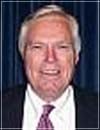
Winston Pannell was born in 1937 in rural Alabama. At the age of fifteen he became interested in religion and was baptized in the Armenian faith, as was Patricia, his wife to be and subsequently their three daughters. In 1985 the Lord confronted him with the true gospel and brought him to faith in God and true repentance from dead works and idolatry. It has been his passion to learn more of a Just God and Savior and his propitiatory work on behalf of his people given him by the Father in the Everlasting Covenant of Grace. The pulpit of Eager Avenue Grace Church in Albany Georgia has afforded him the opportunity to deliver this gospel of God’s free and sovereign grace in Christ, based on his righteousness imputed and received by faith as the whole of the sinner’s salvation. His desire is to deliver this gospel to the hearing of as many as the Lord shall save.

Comments

0 / 2000 characters
Comments are moderated before appearing.

Be the first to comment!

Pristine Grace Research Assistant

Pristine Grace Research Assistant

Ask me about articles, sermons, or theology from our library. I can also help you navigate the site.