Bootstrap
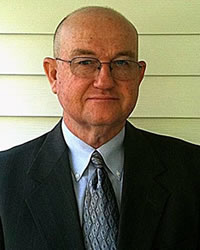
Gary Shepard

One God Many Brooks

1 Kings 17
Gary Shepard July, 25 2014 Video & Audio
0 Comments
2014 Bible Conference

Sermon Transcript

Auto-generated transcript • May contain errors

100%
Brother Gary, you come preach
to us. Please open your Bibles tonight
to the book of First Kings. 1 Kings chapter 17. I am truly thankful for the opportunity
to be in this meeting, to see all of you that I've grown to
love and think so much of. Enjoy your fellowship. I told Brother Jim he ought to
just wash his hands of me. It seems like every time I come,
I'm in a struggle, and always in a struggle as to
what to try to preach. I brought this message recently.
in another place, and I thought pretty much for
the first part that it would be the only place I'd bring it. But I believe the Lord has shut
me up to this tonight. Look with me in these verses
here in 1 Kings chapter 17. And Elijah the Tishbite, who
was of the inhabitants of Gilead, said unto Ahab, As the Lord God
of Israel liveth, before whom I stand, there shall not be dew
nor rain these years, but according to my word. And the word of the
Lord came unto him, saying, Get thee hence, and turn thee eastward,
and hide thyself by the brook Cirith, that is before Jordan. And it shall be that thou shalt
drink of the brook, and I have commanded the ravens to feed
thee there. So he went and did according
unto the word of the Lord. For he went and dwelt by the
brook Kireth, that is before Jordan. And the ravens brought
him bread and flesh in the morning, and bread and flesh in the evening,
and he drank of the brook. And it came to pass after a while
that the brook dried up. because there had been no rain
in the land. And the word of the Lord came
unto him, saying, Arise, get thee to Zarephath, which belongeth
to Zidon, and dwell there. Behold, I have commanded a widow
woman there to sustain thee. So he arose and went to Zarephath,
and when he came to the gate of the city, behold, the widow
woman was there gathering of sticks. And he called to her
and said, Fetch me, I pray thee, a little water in a vessel that
I may drink. And as she was going to fetch
it, he called to her and said, Bring me, I pray thee, a morsel
of bread in thine hand. And she said, As the Lord thy
God liveth, I have not a cake, but a handful of meal in a barrel,
and a little oil in a cruz. And behold, I am gathering two
sticks, that I may go in and dress it for me and my son, that
we may eat it and die. And Elijah said unto her, Fear
not, go and do as thou hast said. But make me thereof a little
cake first, and bring it unto me, and after make for thee and
for thy son. For thus saith the Lord God of
Israel, The barrel of meals shall not waste, neither shall the
crucible fail, until the day that the Lord sendeth rain upon
the earth. And she went and did according
to the saying of Elijah, And she, and he, and her house did
eat many of days. And the barrel of me wasted not,
neither did the crews of old fail, according to the word of
the Lord, which he spake by Elijah." Now, what we read in these Old
Testament passages of the experiences that God records
in the lives of these Old Testament believers, they could not have been written
for them. But rather, they are written
for us as believers in every age that has followed. Paul tells us, now all these
things happened unto them for examples, and they are written
for our admonition upon whom the ends of the world are come. They are for our exhortation,
for our instruction. for our counsel and even for
our rebuke. To know the truth of this experience,
we find the Lord Jesus Christ often referring to Elijah, and
He even used Elijah as an illustration in his first public ministry,
when he stood up there in the synagogue in Nazareth and he
read that passage from Isaiah. And he says, But I tell you of
a truth, many widows were in Israel in the days of Elias when
the heaven was shut up three years and six months, when great
famine was throughout all the land, but unto none of them was
Elias sent, save unto Sarepta, a city of Sidon, unto a woman
that was a widow." He used him as an illustration of divine
sovereignty, especially of the sovereignty of God's grace. He used that passage to teach
of his electing grace. And here in 1 Kings chapter 17
is this admonition for us as believers in this hour. You see, God, in the care of
His people, is a God of means. He works all things, and He uses
all things. But we have an awful tendency
to get a little too comfortable to get dependent on the means
rather than the God of means. And so he has to come to us and
he has to, as the said of the eagle, he has to stir up the
nest. And he does that so that we might
learn that we are not to trust in the means. And there are some things in
this text tonight that I want to try and point out, and I'll
just pray that the Spirit of God, who knows all things, who
knows all us, and who knows the purpose of God more than we could
ever imagine that he will make the application. But the first
thing that I want us to be sure and notice is that Elijah was
simply and really a man, a human being just like we are. He was not some kind of a spiritual
superman. He was not a tower of strength. He was no more a man and no less
a man than these pastors or that you or me or anyone else is. And moreover, he was a sinner. Just like Brother Tim said, he
was a sinner. And we have a tendency sometimes
to view prophets and other Old Testament saints in a way that
is not really true because they simply walk by faith just as
we believers do in this day. They all, according to Hebrews
11, walk by faith, live by faith, believe by faith. Because all
those people around them that were witness to these miracles,
they did not have any interest in them, only those who saw and
who walked by God-given faith. And he tells us in the New Testament,
he says that faith is the substance of things hoped for, the evidence
of things not seen. We remember that verse. But if
you look at the next statement, it says, for by it the elders,
these Old Testament saints, by it the elders obtain a good report. And not only does he say that,
but he singles out the very man in this text, the very prophet
of God, Elijah. And he tells us by James, he
says, Elias was a man subject to like passions as we are. And he prayed earnestly that
it might not rain, and it rained not on the earth by the space
of three years and six months. But did you notice before it
tells us what God enabled him to do through this prayer of
faith, did you notice that it says, first of all, he was a
man subject to like passions just like we are. And when you go into the next
chapter, you will find Elijah, this mighty, strong man of God
standing on Mount Carmel against 850 false prophets, against Ahab
and Jezebel, a wicked king and queen, and even in part against
the very people of Israel themselves in such a display calling out,
how long will you halt between two opinions? If God be God,
let him be God. Let him answer for himself. If
Baal be God, let him answer for himself. But when you get to the next
chapter, he is a groveling fool. He is
laying there almost lifeless under a juniper tree, weak in
a lapse of faith Praying that God would take him because he
is the only one left. And what happens here in his
experience to this man Elijah is not punishment for his sins. Because just like all of the
Lord's people, Christ's death would put away his sin, and he
would be accepted in Christ Jesus, made righteous in him. As a matter
of fact, he was in God's will, and he was doing God's work. If you noticed in our reading
of these verses, there is a word that the Lord the Spirit uses
a number of times, the word there. And when he speaks that word
there, he's talking about a place and a time and a person that
God has appointed to be something to him. Look down in verse 4. He says, And it shall be that
thou shalt drink of the brook, and I have commanded the ravens
to feed thee there. This is where I am going to feed
you, Elijah. This is where you are going to
find water to drink. But not only was this man Elijah,
this believer, not only was he just an ordinary sinner saved
by grace, but he lived also in a most ungodly time. Those in power were wicked and
ungodly. They were the infamous King Ahab
and his wicked wife Jezebel. You've heard of Jezebel. That's
what they used to call a woman who used a lot of makeup. my
early life coming up. Look at that Jezebel. Well, that's
the name, the infamous name that came to be used as that. And
false religion abounded on every hand. He was in the minority of those
who actually stood and believed God, but also he was in the minority
of those, a small minority of those who spoke the truth of
God. Just read the next chapter. All
those 850 prophets are saying this, and Elijah is saying this. And those who profess to be the
people of Jehovah, they had fallen into absolute idolatry and immorality
and unconcerned. And when you read about these
people and this time, it sounds like the evening paper. It sounds like the situation
that believers live in in this day, in this nation, at this
time. And not only that, but he was
a stranger, really, in the land that he was in. And Ahab, the
king, he just had spoke a message to him that that king did not
want to hear. And so he labeled Ahab as the
troubler. He labeled Elijah as the troubler
from Tekoa. He don't ever have anything good.
to say about me. And so here he is, a believer
in his day, ostracized and hated because God had called him to
proclaim his judgment in the form of a drought and a famine. But you know, that's exactly
what God says of his people in this day. You are not of this
world. You are not of this world. And the evidence of that is in
that we have a different God. Not a different view of God.
That's what I thought at the first. But we have a different
God, a different gospel, a different Jesus, different desires, different
goals, a different hope. He says, who made you to differ? But what I want you to notice
tonight is this. When things were at what seemed
to be the very worst, when he's already got problems having a
message nobody wants to hear. He's already been threatened
by the highest powers in the land, the king and the queen,
when he's already living on what would be called a meager existence. It says the brook dried up. I can just see him right now.
What next? Boy, I don't need this. You ever
said that? Why? Why did this have to happen? What is this all about? All I wanted was just A place
where I could at least get a drink of water, verse 7 says, and it
came to pass after a while that the brook dried up. I never read that statement,
and it came to pass, that I don't think of old brother Scott Richardson.
He'd always follow that, and it always does. And it came to pass that the
brook dried up. Now, first of all, why was that? You can count whatever second
causes you want, and you probably do and will, but the first cause was because
God stopped the brook. You know, we can live, and we
do, under the guise of being those who believe in the sovereignty
of God. But when he exercises that sovereignty in a way that does not fit into
our natural thinking. We squirm and we twist. We murmur, but it came to pass
because God brought it to pass. The all-wise, all-gracious, all-merciful
God brought it to pass. You said, God wouldn't do anything
like that. I mean, all Elijah's got is this
one brook to drink of. God wouldn't do that. He did
that. He did it. And this is the first experience
of grace to us. It's because God brings it to
pass. But not only that, this is the
continual method of grace to us. He brings it to pass. And our murmurings and our complaints are not justified for this reason. God brings all to pass. And whatever it is that He has
used means to be a blessing to us. I don't care what it is.
Whatever the means is, we ought to first always remember this,
we didn't deserve it in any way. No, we didn't. Not on our best day. And not
only that, but secondly, we didn't show ourselves truly thankful
for it. to start with. You know when we get thankful
for things? You know when we get thankful for a cold drink
of water when we don't have it anymore? We're a lot like Jonah. Because in Jonah it says, the
Lord prepared a gourd. and made it to come up over Jonah,
that it might be a shadow over his head to deliver him from
his grief. And Jonah was exceeding glad
of the gourd." That's a nice shady gourd. But now listen to what it says
next. But God prepared a worm. when
the morning rose the next day, and it smote the gourd, that
it withered, and it came to pass, when the sun did arise, that
God prepared a vehement east wind, and the sun beat upon the
head of Jonah, that he fainted, and wished in himself to die,
and said, It is better for me to die than to I don't have a gourd anymore. I not only didn't have a grove
of fine oak trees to sit under, I just had one little gourd.
Now it's gone. Why? Because God smote it and
it was no more. And God said to Jonah, Doest
thou well to be angry for the gourd? Are you right in being
angry now over the loss of the gourd?" And he said, I do well to be
angry even unto death. Then said the Lord, thou hast
had pity on the gourd for the which thou hast not labored. You didn't even labor. You didn't
plant this gourd, Jonah. Neither did you make it to grow,
which came up in the night and perished in the night. But you're angry. You're discontented. You're murmuring. You throw up
your hands. You're ready to die now, when
in truth, you didn't provide the gourd. You didn't provide
the shade. You weren't thankful for the
shade and now that it's gone, you won't even acknowledge that
it's me that did it. Where did Elijah get the brook? Did he create it? Did he sustain
it? Did he even find it on his own?
No. You see, the brook is representative
of all that we have in this life, all the things by which God provides
for us and blesses us and gives us pleasure and comfort and joy
and feeds us right down to spiritual things. It may involve your job. It may
involve a person, it may involve a resource, or any of multiplied
millions of things that God uses to bless His people. But then,
sooner or later, it comes to pass a time when by a turn of
event, or by death, or by circumstance, or by depletion, or by a host
of other things, that the brook dries up. And you can mark it down right
then. When the brook dries up, I don't
care what it is, when you're no longer receiving from God
something that is of benefit to you physically and most especially
spiritually, That murmuring, that anger, that fear, whatever
it is, is the dead giveaway that you were looking to the means
and not to the God of means. You understand what I'm saying?
That's the giveaway. And that's the reason behind
God's doing of it. You just get too comfortable
by the means, you get too comfortable, and so the brunt dries up, but
it's the will of God. You say, how can you be so sure
of the will of God? I know after it happens, it was. Why? Because he works all things
after the counsel of his own will. If we can't see that, if we can't
believe that, at least when it happens to us, when the brook
dries up, at least we can, in grace, acknowledge, even as Eli
did, it is the Lord. let him do what seemeth him good
to do." Can you rest there? Can we not at least be thankful
enough to the God of all grace from which we get all things?
Can we not be thankful enough to acknowledge His sovereignty
in the dispensing of all things beneficial to us and His right to change the means
when he wants to. Now, when this happened to Elijah, though it did mean that the means
dried up, it didn't mean that God was through providing for
him or blessing him. If he ain't going to do that,
he probably won't do anything. What unbelieving logic. It's almost as if we're saying,
if God doesn't do it this way, I don't want it done. You see, that rebellion is in
us. And like Brother Tim said, it
don't get any better, I'm afraid. But I do believe that the witness
of Scripture and the principle of God's grace reveals that he
never takes anything away from his people that he does not intend
to give them better. Have you ever noticed that? Look at old Job. Don't you suppose that those
first children and all, they were a blessing, Job? Everybody
looked at Job and said, the Lord's prostrated him. He's blessed
him with such a fine family. He's blessed him with a wife
and all that kind of stuff, you know. The Lord came in one fell swoop,
took it all away. But now you go down to the end
of the book of Job and you read Job's situation then. Even though
God took away. the means of those blessings
to Job, He gave him greater and more. And you can ask Abraham,
is that the case? Or Joseph, oh Joseph, ask Joseph,
as he goes down, down, down, down, as the Lord takes away
from him his family relationship, takes away from him his health,
takes away from him his freedom, his liberty, keeps taking away
from him, shutting off these means of blessing to him. And the next thing you know,
he is exalted to the throne of Egypt. And he says to those brothers,
you meant it for evil, but God meant it for good, to save much
people alive. You see, the truth is, his promise
to his people is, I will never leave you or forsake you." The brook may dry up, but I will
never leave you or forsake you. He said, Lo, I am with you always. And we are sustained by waiting
on God, but believing His faithful promises. I don't know how long it was
from the day that Elijah went down to that brook to get him
a drink, and it had dried up. But I know this. In verse 8,
it says, And the word of the Lord came unto him, saying, He
didn't leave Elijah without a means of provision, but it did mean that God had
changed the means of blessing and provision. Because we have a real tendency
to look at the blessing and forget the blessing. We look to the provision and
not to the provider. We look to the means and we begin
to trust in the means. But you see, God is sovereign. And when He first reveals Himself
in this book, as the Almighty God, El Shaddai. What that actually means is the
all-sufficient or many-breasted God. Do you know that? The many-breasted
God. He has sufficiency. He has the
ability to provide nurture and succor to all His children. He is the all-sufficient God. He is not bound up to this means
or that means. He governs the means in order
to do what He will for His own glory. He can use any means that
He will that is in accordance to His holy character and purpose. They didn't want to praise Him. He said, if they don't praise
Him, I'll raise up stones to praise Me. If you don't praise Him, He can
raise up stones to praise Him. But not only did it mean that
God had changed the means of blessing, He's going to change
the instrumentation. He's going to change the conduit,
if you will. But what really looked like the
worst was really the best. You say, what do you mean? that
the end of the famine was at hand. That's what's going on
here. The end of the famine was at hand, and just like Jacob,
he might have said, all these things are against me. You ever said that? No, Jacob. All these things are
for you. God works all things together for good to them that are called according to
His purpose. All things. Even what we call the bad things.
the unpleasant things. You see, Joseph's prison was
the threshold to the throne. Paul, or Saul of Tarsus as he
was, being cast down into the dust was just before Christ being
revealed to Paul and him being the apostle of God. But let me
give you the best example there is. What's the worst day on this
whole earth? Do you know? Do you know what
the very worst thing, it does appear by the natural eye, if
we have minimal understanding, was the worst day on this earth? It was that day that they hung
the Lord of glory on that cross outside of Jerusalem. It was
that day that the Son of God was crucified. at the hands of
wicked men and women. That was a good day. I heard an old preacher say on
TV, one time he said, oh, he was being dramatic. He said,
oh, I wish I'd have been there that day. I'd have stopped him
from crucifying my Lord. I thought, you fool. That's why he came. By the determinate counsel and
foreknowledge, foreordination of God, you have by wicked hands
taken and slain the Lord of glory." That was the best day. That's
the best day a sinner could ever look to and think about and rejoice
in and hope in, because that's how our Lord could look on us
and rejoice in us. There's something else I notice
here, too, and that is God blesses through the least likely. Now,
let me just tell you, thinking naturally, would this really
have excited you for God to tell you when you're looking at that
last drop of water as the ground absorbs it out of that brook
and you can't even wait your whistle? And he says, don't worry about
it, Elijah. I've got a widow woman over here
I'm going to feed you with. I've commanded a widow woman. I'd have probably said, Lord,
couldn't you have made it a multimillionaire? Why in the world would God use
a widow woman? Because our ways are not His
ways. And our thoughts are not His
thoughts. We are a lot like Naaman. When the prophet of God told
him that the way God would heal him of his leprosy was this means,
which was for him to go and dip in that muddy river of Jordan
seven times, he said, Oh, no. I thought. I thought. And I can I can look back at
my life since the Lord saved me. I can look at all the turns
and the the brook stoppings and all these things, and I can remember
in those hours a lot of time what I thought. I thought this
is the worst thing that could happen. Turned out to be the
best. I thought I was surely starved
to death. I'm fatter than ever. I thought this will be the end
of this. It was just the beginning of
the real thing. I guess that's the way we are. Our Lord, when he'd feed them
up, what did he use? He'd use a lad that had a box
lunch. five loaves and two fishes. Is
that the way you would have done it? That wouldn't be the way
the government would do it, I'm sure of that. And God not only used this widow
woman. Oh, what a meager existence she
had. All she was down to was a handful
of meals and a little jug of oil. She was gathering two sticks
to cook it. That's not much. She didn't see it as much, and
I don't imagine Elijah really saw it as much. But little is much if God's in
it. He used an unlikely means. And
the reason he does that is to assure that he gets all the glory. He's going to get all the glory. He blesses through the least
likely. Never is it the biggest, the
greatest, the richest, the strongest, whatever it is. Especially with preachers. Oh, we're always looking for
Saul. Head higher. Most gifts, most eloquent, most
this, most that. God's not. You remember one When the prophet
was sent down to the house of Jesse to anoint the king, God's
king, boy, Jesse, he lined up them fine strappling boys. The prophet starts looking at
them. No, that's not the one. That's not the one. That's not
the one. That's not the one. That's not the one. Do you have
any more sons? Well, I got one more little lad.
He's just out there tending to the sheep. Or as his brothers
called him, referred to it, he's just tending to those few sheep. The prophet said, bring him.
And he anointed David that day as a king that God had ordained. I'm just saying. We're like that
old song I heard growing up, I overlooked an orchid while
searching for a rose. That's the way we are. But not only that, but this new
source and means that God used, he used it to bring blessing
not only to Elijah, but to others also. to the land, to the people of
Israel, but a special blessing to that widow and her son. You see, God fed him and them,
too. For as long as it took, every time she went to that meal
barrel, There was enough meal to make
three cakes, enough oil to cook it. Well, that's it. Goes back the next day, enough
to make three cakes, enough oil to cook it. We like it stacked up, do we
not? Reserves. But the first thing you know,
we're looking over those reserves and kind of patting ourselves on
the back. God uses what he will, where he will. to do what he
will. I fear, and I know where it came from
in part, but I fear, especially as it pertains to the brook of
the ministry of God's word, We tend to look at the brook
a little more than we ought to. I've often heard preachers say that the greatest gift that God
could give to a people is a preacher of the gospel. That's not true. That's just
not true. And really all that does is swell
up self-righteousness in the preachers and cause one to be of Cephas
and one to be of Paul and one to be of Apollos and all that
kind of stuff. When in truth, the greatest gift
that God could give to a people, he's already given. And that's
the unspeakable gift of the Lord Jesus Christ. And to be quite
honest with you, with God, preachers are a dime a dozen. If he can use Balaam's ass to
get a message across to a man, I believe he could use the least
of men if it pleased him to do so. But the thing is this, God got
new glory here, and the gospel was advanced. Look at verse 24. And the woman said to Elijah,
Now by this I know that thou art a man of God, and that the
word of the Lord in thy mouth is true. Do you think Eli just turned
around and said, the greatest gift God could give you is to
send me to you? No. No. His not doing that, but seeing what God did, brought
her to confess, I know that this, the word in your mouth, is the
word of the Lord. It all boils down to this. Our
confidence has to lie in the river that never runs dry. The brooks may dry up, John,
they will. Sooner or later, every brook
is going to dry up, not the river. Whosoever drinketh of the water
that I shall give him shall never thirst, but the water that I
shall give him shall be in him a well of water springing up
into everlasting life." That fountain that God opened
for sin is not ever going to dry up. Turn over to Psalm 46. Let me just read you a few of
these verses in Psalm 46. Listen now, this is for the Lord's
people. You see, if we thirst after righteousness,
God will provide a brook, a stream for us to drink of, to drink
of that gospel wherein the righteousness of God is revealed. He's just
going to do it. But listen to verse one, beginning
of verse one. God is our refuge and strength,
a very present help in trouble. Therefore, will not we fear,
though the earth be removed, and though the mountains be carried
away into the midst of the sea? Though the waters thereof roar
and be troubled, though the mountains shake with the swelling thereof? You listen to this next verse.
There is a river. Lord, I don't see a brook anywhere,
but there's a river. The streams thereof shall make
glad the city of God, the holy place of the tabernacles of the
Most High." There it is again. God is in the midst of her. She
shall not be moved. God shall help her, and that
right early. I remember sometime reading about
a time in history where there was a city, a walled city, that
was besieged all around by a great army. And they were so big and
so powerful that the river or the stream that fed and watered
the people who lived in that city, they took stones and dug
trenches and they diverted it away from the city. They said,
we'll starve them out. And time passed. They didn't submit. They didn't starve. They didn't
die of thirst. Why? What the enemy didn't know
was that there was a spring in the middle of the city. And that's
what God is saying about His people, His church, His true
church. There is a river. The streams
thereof make glad that holy Zion, that holy Jerusalem. There are many brooks. It is just one river. If God stops a stream or a brook,
that doesn't stop the river. God help us to look to God, to
trust Christ, to drink of him. And we'll always be satisfied.
We'll always be fed and well watered, even though he changes
the means. Thank you.
Gary Shepard
About Gary Shepard
Gary Shepard is teacher and pastor of Sovereign Grace Baptist Church in Jacksonville, North Carolina.
Broadcaster:

Comments

0 / 2000 characters
Comments are moderated before appearing.

Be the first to comment!

Joshua

Joshua

Shall we play a game? Ask me about articles, sermons, or theology from our library. I can also help you navigate the site.