Bootstrap
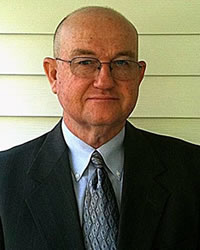
Gary Shepard

The Two Lines

John 3:36
Gary Shepard July, 29 2011 Audio
0 Comments
John 3:36 He that believeth on the Son hath everlasting life: and he that believeth not the Son shall not see life; but the wrath of God abideth on him.

Sermon Transcript

Auto-generated transcript • May contain errors

100%
I'm needing a lot more help these
days. I am thankful to have this opportunity
and to be able to be with you. I'd have been glad just to have
been here tonight to hear the preaching and be with you and
not said a word. That's my heart. And I am thankful
for this congregation of people. It always encourages me to see
you still holding forth the Word of Truth. I am thankful for this
pastor. I love to hear him preach. I
love to sing his hymns. The Lord has blessed him to write
some wonderful hymns. Love to sing them, all glorifying
God, all true to Scripture. I want you to turn tonight, first
of all, to John chapter 3. I'm going to read one verse of
Scripture in the beginning. It's the last verse. Verse 36. He that believeth on the Son
hath everlasting life. And he that believeth not the
Son shall not see life, but the wrath of God abideth on him." And not only the Bible, but in
history and presently and for all eternity,
we find two groups of people. We find two lines among Adam's
race that are not only seen, but distinguished from Genesis
to Revelation. They are described and they are
distinguished by God Himself. Those two groups or two lines
are sometimes called the sheep and the goats. They are sometimes called vessels
of mercy and sometimes vessels of wrath. Sometimes they are called the
children of God. Then some are told, you are of
your father, the devil. They are described as saved. and lost. There are some to be already
in heaven and some already in hell. Some going to heaven and
some going to hell. And they are not only spoken
of in general terms, but they are spoken of individually, such
as those in whole families, like as was in the first family. There was this man, Abel, and
then there was another brother by the name of Cain. And he says to us, Don't go the
way of Cain. He distinguishes. We find the
same thing amongst Noah's family and especially among Abraham's
sons, one by the name of Isaac and the other by the name of
Ishmael. They are distinguished in those
two men by names, the children of promise and the children of
the bondwoman. The children of promise and the
children of the flesh. And then they are even distinguished,
these two lines, among twins who had the same mother and the
same Father, raised in the same place and in the same environment
with the same opportunities, one by the name of Jacob and
the other by the name of Esau. And if you look over in Romans
chapter 9, the apostle in speaking of these very ones makes it so
very clear. He says in Romans 9 and verse
9, For this is the word of promise, At this time will I come, and
Sarah shall have a son. That was Isaac, the child of
promise. And not only this, but when Rebecca
also had conceived by one, even by our father Isaac, for the
children being not yet born, neither having done any good
or evil, that the purpose of God, according to election might
stand, not of works, But of him that calleth, it was said unto
her, said unto her by God, The elder shall serve the younger,
as it is written, Jacob have I loved, but Esau have I hated. Now, there is no difference in
any of these people, all of them being the descendants of fallen
Adam, there is no difference in them by nature. And yet, it is equally true that
there are some who are distinguished, and a difference is made, and
the Scripture says it is God that makes them to differ. You see, if left to themselves,
there would only have been one line. A steady, solid procession
from Adam all the way down to the last person living on this
earth, marching straight into hell. But it says that God made
some of these people to differ. And it says, as it does concerning
his national people Israel, that he'd have everybody know that
he has made a difference and distinguished among men and shown
forth grace and mercy to some. And automatically we always ask
the immediate question, why? And the very first thing that
I'd have you to know and the very first thing that I'd have
you to say is simply, because he would. And because he could. Because he is the absolute sovereign
ruler over all things and all people. And as he says himself,
he can do with his own what he wills. Isn't it amazing how men
and women claim for themselves the very thing that they deny
of God? I'll do with my own stuff what
I will. God says all souls are mine. And he can do with his own what
he will because he rules and he does what he does justly and
he does what he does in infinite wisdom. And if we have to be
reminded like Nebuchadnezzar was, the kind of God with whom
we have to do, he'll do it. He says that he rules and does
all his will in the armies of heaven and among the inhabitants
of men, the inhabitants of this earth, and no one can stay his
hand or say unto him, what doest thou?" Some of the old theologians
used that verse to show what they called the leisure of the
eternal. Not only does he do what he will
to whom he will, he does it when he will, and he can either be
slowed or hurried or stopped. He does this in grace and mercy
because He would and because He can. And not only that, the
Scripture says that He does it to demonstrate or to make known
His power. And he gives us in this very
chapter, Romans 9, as well as elsewhere in Scripture, the great
example, saying himself of this man Pharaoh, for this cause I
raised you up that I might show my power in you. Then we know according to this
book that He does this, He makes this distinction to glorify His
grace in His elect and in His saving them to glorify the Lord
Jesus Christ and as Paul says about three times in Ephesians
1, all to the praise of the glory of His grace. And then not only that, but also,
and so sobering it ought to be to us, he does it to show his
wrath. He says that he is willing to
show his wrath and to do so justly in the matter of all sin, and
especially in the condemnation of sinners outside the Lord Jesus
Christ. And not only do we find this
all the way through this book, from the very earliest opening
examples all the way to the end of this book, but we oftentimes
find it side by side in verses and side by side in a couple
of verses. While we're looking here at Romans
chapter 9, look down at verse 22. The Apostle Paul says, by the
Spirit of God, what if God, God who has just been likened to
a potter, who hath power over the same lump of clay to make
one thing or the other, what if God, willing to show his wrath
and to make his power known, Endured with much longsuffering,
the vessels of wrath fitted to destruction." Do you think they
fitted themselves to it? He has just been talking about
the potter who has power over the clay. And you can run to
this scholar or you can run to this commentator all you want
to, and when you come back to this verse, it's still going
to say, vessels of wrath fitted to destruction. And that he might make known
the riches of his glory, on the vessels of mercy which he had
aforeprepared unto glory, and then Paul as a saved by grace
Jew. says not only of himself and
other Jewish believers, but also of the Gentiles that the Lord
is pleased to say, even us whom he hath called, not of the Jews
only, but also of the Gentiles." Two lines, two groups, always
clearly and definitely distinguished. And that's what we find, I believe
it is John the Baptist here, just like the Lord Jesus Christ
doing in that last verse, the verse we read in John 3, verse
36. Look at it again. He that believeth
on the Son hath everlasting life. That's one line, one group. And he that believeth not the
Son shall not see life. That's another line. two lives. But when he says that, if you
notice, he further describes the terrible state and standing
of that second group when he says, but the wrath of God abideth
on him." Remains on him. Now that word wrath there in
the Greek, and I use the same type sources of educating myself
that the brother mentioned. What the writers and the students
and scholars of the Greek language say of that word wrath, it is
defined in manners and words like this, violent passion, ire, justifiable abhorrence. Punishment. Anger. Indignation. Vengeance. Now, most people in our day, they know nothing and they don't
want to know anything about God being a God of wrath. You see, religion in our day
has sought to pacify the consciences of men and women by portraying
God only as a God of love. But were He not a God of holy,
just wrath, There would be no need for mercy or grace. No need for the good news of
the gospel. As a matter of fact, no need
to be here tonight. But the wrath of God is essential
to His holy character. And unlike our sinful anger,
He commands us in all respects not to be angry, especially at
our brother who is a sinner just like we are. But unlike our sinful
anger, His is a sinless anger. And his is a righteous indignation,
and his is a just vengeance, and it is because of sin, and
that sin being against him. I know what we like to do. We like to categorize sin. Big sins, medium-sized sins,
big sins, and then those big gollywopper sins. But like somebody said a long
time ago, there's no little sin because there's no little God
to sin against. He's infinitely holy. He's inflexibly just. He's angry at the wicked every
day. You say, oh yeah, the wicked.
Who are the wicked? That's every person outside of
the Lord Jesus Christ. That's the man on the pew. That's the harlot on the street. Every person outside of Jesus
Christ. And every one outside of Christ,
these wicked ones as he describes them, he says the wrath of God
remains on them. You know, the Old Testament is
full of demonstrations of God's wrath and judgment. As a matter of fact, you and
I don't know how many people there were, but I absolutely
am sure that there were a lot of them in Noah's day when he
sent the flood. and destroyed every living thing
on this earth except those that were on that ark. He destroyed
every person, young or old. You know, you surely remember
about Sodom and Gomorrah when the Bible says that he just simply
rained down fire and brimstone out of the sky and destroyed
not only Sodom and Gomorrah, but the cities of the plain,
and he destroyed every living one except Lot and his two daughters. Everybody. young, old, whatever
they were, whoever they were. And then how many times, how
many times did God to such people as the whole Syrian host or whatever
army it was that came up against His earthly people, He just moved
in the night and literally slew hundreds of thousands of men. Poured out His wrath. Wipe them
off the face of the earth. And what about that night in
Egypt when in every household there arose a cry and a scream,
an agony of heart and mind when it was discovered that the firstborn
in every household in Egypt, God killed them? You see, he's poured out his
wrath individuals, kings, nations, the whole earth. And when we come to the New Testament,
some would like for us to kind of think that when the New Testament
came about and when Jesus came, that's the end of all that stuff.
I'm sorry. And just like it was said, it
was to the most moral and religious people that were on the earth
at that time that John, when he saw them and some of their
responses, first when they began to hear him preach, he says of
the Pharisees and the Sadducees that came to him for baptism
or came to his baptism, he said unto them, O generation of vipers,
who has warned you to flee? from the wrath to come. That's what he was saying to
those good folks. And then the Apostle Paul, when he begins
to write and to talk about things as he does in the book of Romans,
which is maybe the cheap book of doctrine in all of Scripture
maybe, he says in the first chapter,
for the wrath of God is revealed from heaven against all ungodliness
and unrighteousness of men who hold the truth in unrighteousness."
The wrath of God. He says in the next chapter,
Romans 2, but after thy hardness and impenitent heart treasures
up unto thyself wrath against the day of wrath and revelation
of the righteous judgment of God. I hear foolish people say,
well, I just want God to do right by me. You can count on it. You
can count on it. But God's right and your right,
I have a feeling they're worlds apart. He says again, but unto
them that are contentious, and do not obey the truth, but obey
unrighteousness. You see, the truth and unrighteousness,
they're set contrary to one another. The truth is the gospel. Which
is the gospel, by the way, where he says, wherein the righteousness
of God is revealed, that truth is set against this contention,
which is to obey not the truth, but obey unrighteousness. He says, indignation and wrath. He's not talking about people
killing folks here. He's not talking about Akhenaten
or whatever wild name creature gets raised up to a position
of authority in this world and worries everybody to death. He's
talking about folks who obey not the gospel, believe not the
truth. He says to the Ephesians, he
says, let no man deceive you with vain words for because of
these things, cometh the wrath of God upon the children of disobedience."
Don't ever let anybody minimize sin of any kind to you. He said,
this is why the wrath of God comes on the children of disobedience. And then John, the apostle in
the book of the revelation of Jesus Christ, he is shown by
the Holy Spirit for us to see, by the way, that the whole Christ-rejecting world,
the whole Christ-rejecting religious world will be crying out. in the face of His wrath. They said to the mountains and
the rocks, fall on us and hide us from the face of Him that
sitteth on the throne and from the wrath of the Lamb." A little
Jesus boy. No? Just that little picture,
you know, A fellow carrying that little lamb. That's one of the
first pictures I ever remember seeing in somebody's house. My
cousin's house, I think it was. That man, long hair, and got
that staff, and he's carrying that little lamb. This says, the wrath of the Lamb. For the great day of His wrath
is come, and who shall be able to stand? Revelation 14, "...the same shall
drink of the wine of the wrath of God, which is poured out without
mixture into the cup of his indignation, and he shall be tormented with
fire and brimstone in the presence of the holy angels and in the
presence of the Lamb." Oh, Jesus would never let that happen to
me. He said He would. The angel thrust in his sickle
into the earth, and gathered the vine of the earth, and cast
it into the great winepress of the wrath of God." This is a
New Testament. I saw another angel. I saw another
sign in heaven, great and marvelous, seven angels having the seven
last plagues, for in them is filled up the wrath of God. Somebody said, hell ain't no
joke. It ain't no cuss word. It's the
eternal wrath of God. One of the four beasts gave unto
the seven angels seven golden vials full of the wrath of God
who lives forever and ever. God is a genius in His judgment. as he is in his salvation. And I heard a great voice out
of the temple saying to the seven angels, Go your ways and pour
out the vows of the wrath of God upon the earth. They shall
never see light. but experience the wrath of a
thrice holy God remaining upon them, abiding upon them, worlds
without end, no prospect of hope or relief or pardon or of change." But, but, there's another piece. There's
that other line. And because of the sovereign
mercy. You see, that's the glorious
thing. When God talks about His sovereignty,
He says it in a positive, glorious, and gracious way. He says, I
will have mercy. I'm going to have it on whom
I will. But they're glad to know it,
that I'm going to have mercy. I will be gracious to whom I
will be gracious. You see, there's a people, as
I said, who though by nature are the exact same way As every
other son and daughter of Adam, there is a people who will not
suffer eternal death and who will never know the wrath of
God. Because God has made them to
differ. And look down at that ninth verse. I'm not going to turn there.
I've got it in my notes, but I'll read it to you. This is
the Apostle Paul writing to these believers in a place called Thessalonica,
which would be just like Alma or wherever it is in the world. Look at that ninth verse of chapter
five. For God hath not appointed us to wrath, but to obtain salvation by our
Lord Jesus Christ." Did you hear that? Now, if ever
the Bible is a book about good news. Right there it is. If you
have any sense of God, if you have any sense of your own sin
and sinfulness, this would be good news to you. You can talk about free will
all you want to. You can glory in man's will all
you want to. Or his decision. God's appointment
of anything can never be altered by man's decision. What God did
before time, purposed before time, cannot be altered by something
that you and I do in time. Do you understand that? For God hath not appointed, ordained
us to wrath. But rather than that, that would
almost be good news if it stopped right there, wouldn't it? That
wouldn't get you to heaven. That wouldn't make you righteous
before God. He says, but to obtain salvation. I love that word, salvation.
It's bigger than any of us. Past tense, present tense, future
tense. Salvation from sin. Salvation
from the power of sin. Salvation from Satan. And as
was just said, and I'm grateful more and more for each day that
passes, salvation from self. That's who I need to be safe. by our Lord Jesus Christ. If that had said anything else
in that last phrase, I'd have never had it. If He said, by
doing your best, by working real hard, by giving all your money,
by trying, we'd be lost. Our Lord Jesus Christ. You see, Almighty God, because
He would, because He works all things after
the counsel of His own will, Because He will have mercy upon
whom He will have mercy, He purposed to save a people from this race
of sinners, from all their sins, to glorify Himself. You see, until we get off this
matter of salvation being everything for us, and not first and most
importantly for God. We'll never see this thing. I'll never forget what Brother
Scott Richardson said. He said, before God can do anything
for you, He's got to do something first for Himself. That's what
this is all about. And He chose them in Christ before
the world was. One verse in Ephesians 1 will
tell you that. And the Father and the Son and
the Spirit entered into a covenant to bless this people with an
everlasting salvation based upon the Son's obedience, which is,
I think primarily, what Paul calls in another place, his obedience
unto death, even the death of the cross. Do you know there has never been
no other death like that death? That is the death of the cross. And to buy this death on the
cross to ratify this covenant by the shedding of His blood
and laying down of His life and enduring the wrath of God in
their place. And our brother was just talking
about Noah being in that ark. But do you know that the same
judgment, the same wrath of God that was due all those people
outside of the ark, it was due those same people inside the
ark. But they were safe because that
wrath beat against the ark. I just got a feeling that was
a bad bumpy ride. Why? Because God would have them
to have some sense. of the judgment that was taking
place, of the wrath that was being poured out against all
the world at that time, and yet they were safe because all of
that wind and rain and whatever it involved, it was buffeting
that ark, it was coming up against that ark, it was bruising that
ark, which was a picture of Christ crucified, and they were safe. They were saved. And that's why Christ's blood
is called the blood of the everlasting covenant. Because on that cross,
and as a man for men, the man Christ Jesus, appointed of God,
the sinless, perfect, gloriously holy God-man. I'm real weird. If I type that
in my notes somewhere, I type it capital G-O-D, capital M-A-N,
I make it one word. Somebody said he's as much God
as if he wasn't a man. He's as much man as if he wasn't
God. But really, he's the God-man. He's the one unique person of
all eternity. Never been another like Him.
The immutable, unchanging, gloriously holy Son of God. And what's He saying? He says, My God, My God, why
hast Thou forsaken Me? Why do you think He said that? for us to hear. Not for the Father
to hear. Not just to be seated Himself
in an expression of agony, but for such sinners as we are,
who are the object of His mercy, so we could hear. Because if
in that hour, pictured on that cross, as my substitute, hanging
in my place before divine justice, a representative man, the surety,
everything describing what he does for his people. If he bore it, I don't ever have
to bear it. I don't ever have to bear it.
And it seems like to me that ought to be good news for us
then. Whoever this us is, if it says
He has not appointed us to wrath, but to obtain salvation in Jesus
Christ, if there is this line of mercy and free grace and blessing
and salvation, a distinguished people, I want to know something
about them. Does your conscience in any way
tell you you're deserving of God's wrath? I'll tell you this, self-righteousness
will squeeze any sense of being deserving of God's wrath out
until you can't even feel it anymore in your conscience. The more you think of yourself,
The more you're proud of yourself, the more you rest in your own
works, the more you rest in your own self-righteousness, the more
you glory in what you've done and who you are and all, the
more that just squeezes out any real sense of what we are as
sinners before God. And only the Spirit of God can
make us know it. You see, that's what men are
really afraid to die about. If all that verse says was that
it's appointed unto man once to die, that would be all right. But it says, and after this,
the judgment. You see, the only hope for us
is that Christ did. on that cross tread the winepress
of God's wrath in our place. Turn over to Revelation chapter
19, just a minute. Revelation chapter 19. You know,
this is the revelation of Jesus Christ. Revelation 19. at verse 11. You see, every vision
given to John, every vision given to every Old Testament prophet
had to do with Christ. And I saw heaven opened, and
behold, a white horse, and he that sat upon him was called
faithful and true, and in righteousness does he judge and make war. His eyes were as a flame of fire,
and on His head were many crowns, and He had a name written that
no man knew but He Himself, and He was clothed with a vesture
dipped in blood." Could this be the same one the prophet was
talking about that was coming from Eden with dyed garments,
mighty to save the Lord Jesus Christ? And His name is called the Word
of God. The Word that was with God, the
Word that was God, the Word that was made flesh and dwelt among
us. And we beheld His glory as the only begotten of the Father.
And the armies which were in heaven followed Him upon white
horses, clothed in fine linen, white and clean. And out of his mouth goeth the
sharp sword, that with it he should smite the nation, and
he shall rule them with a rod of iron. And he treads the winepress
of the fierceness and wrath of Almighty God." When he hung there on that cross,
And before then, when he talked about that cup, he says that's the cup of the
fierceness of God's wrath. And as the substitute of his
people, and I'm just speaking symbolically, but he put that
cup to his holy mouth. And he drank it down to the last
drop and dregs. Somebody said he drunk damnation
dry. The wrath, the just wrath of
God was like a sword that God commanded to smite the shepherd
and he ran it all the way to the hill. And he did this for his elect.
He did this for his children. He laid down his life for his
sheep. He purchased this church with
his own blood. He did this for his bride. But I don't know who they are. I don't know who they are. And
so he commands that the gospel of this good news be preached.
He says, Go ye to all the world, preach the gospel. Because the Holy Spirit knows
who they are. And he's going to attend the
preaching of the gospel. You know what it means to evangelize? Somebody said, well, that means
to go preach the gospel. Well, yes, but it means more
than that, because that word is the word that's connected
to our word eulogize, which means to speak high things
of somebody, especially somebody that's died. And that's what
this gospel is all about. He distinctly describes it in
this way. He says it is the gospel wherein
the righteousness of God is revealed. Which means that God is right
to deliver from wrath all his people because He has poured
out that wrath on their substitute and Savior, the Lord Jesus Christ. He has done righteously. He has saved them in a righteous
way. He has made them righteous. And
I'll let Brother Richard tell you all about that tomorrow. Did he do it for me? Is eternal life for me? What has God said? What has He
promised? I know this, the Scripture never
says that He loves every person. The Scripture never says that
Christ died for every person. It surely does not say that the
Holy Spirit is not, that He is trying to save every person.
But it says that He has promised life. given eternal salvation
and the gift of this imputed righteousness and redemption
from all sin to those who believe this gospel. I believe what God said, because He says, He that believeth
on the Son. What does that mean? It means
resting everything on. It means like that man at the
poker table when he reaches back there and all his chips go out
to the middle. I'm all in for this. I'm banking everything, relying
all of my soul, my eternal soul's welfare and salvation the matter
of all my sins, not in anything I am or have done or will do,
but in Christ and what He has already done." I believe God. I always like
what Paul said when he got caught up in that Heraclidan wind. Euroclid and wind that's so fierce
and the ship finally sunk and he stood up, he said, man, it
ain't going to be like it looks. It never is. He said, I believe
God. What do you believe about God?
I believe that it will be just like he said. And I'm banking
everything on His Word, His Gospel, which is the Gospel of a crucified
Christ. Turn one last place, and that's
to Romans chapter 5. I just want you to read these
glorious words. I can't make you believe it.
I don't even know if it's for you or not. But if you can believe it, you
will. Romans chapter 5, and look down at verse 8. But God commendeth His love toward
us in that while we were yet sinners, Christ died for us. That will help you right there
if you can be taught of God this, that you were a sinner before
you sinned in yourself. 2,000 years ago, I was a sinner in
that. Much more than being now justified
by His blood. For as Paul says in Romans 3,
through the redemption that is in Christ Jesus, we shall be saved From wrath
through Him. Through Him. Now, can I believe that? If I
can, I can lay my head down on that pillow and rest. My body is wracked with pain. I'm pain-free in the matter of
my sin. So we just simply believe on
Him. We rest in Him. We trust Him. I've turned it
to Him. No, God turned it over to Him
before the world ever began. He just makes me know it. And
we look for His coming. We view death in new life. And we live, not in fear of wrath,
but in hope and expectation. Paul says, "...and to wait for
His Son from heaven, whom He raised from the dead, even Jesus,
who delivered us from the wrath to come." He delivered us from
the wrath to come. I tell you when we are us, when
we quit being them, and believe what God has said.
Gary Shepard
About Gary Shepard
Gary Shepard is teacher and pastor of Sovereign Grace Baptist Church in Jacksonville, North Carolina.
Broadcaster:

Comments

0 / 2000 characters
Comments are moderated before appearing.

Be the first to comment!

Joshua

Joshua

Shall we play a game? Ask me about articles, sermons, or theology from our library. I can also help you navigate the site.