Good morning, good morning. Welcome everyone into the service
this morning. We thank the Lord for his mercy
that brings us here. I sat there thinking about what
an amazing privilege it is to be able to gather here together
and from this Word, the Word of God, read the Holy Scriptures. It's just a blessing, and I pray
the Lord will reveal to us the truth of His Word and cause us
to rejoice in Christ Jesus. We've got some that are sickly,
some that have had surgery, We pray for Jewel this morning as
she recovers from the surgery on her foot. And I understand
that Betty Ribenbart has bronchitis and we want to pray for her,
brother Joe Schwartz and others that are and have been sick.
And we want to pray for the missionaries that we support. in various places. This morning's offering goes
to the missionaries and Brother Lance Heller, who ministers in
Papua New Guinea, and Brother William Mapo, who is in Africa. Brother James Mwale also in Africa
and the men that he leads and works there. We just lift all
who truly preach the gospel. We lift all of them up before
the Lord and ask his blessings upon them. I want you to look
with me this morning for our reading in Isaiah 65. Isaiah
65. And listen as the Lord through
his prophet tells us so much, so much of
his character, so much of his knowledge of who we all are,
so much of his grace and mercy. I am sought of them that ask
not for me. I am found of them that sought
me not. I said, behold me, behold me,
unto a nation that was not called by my name. I have spread out
my hands all the day unto a rebellious people, which walketh in a way
that was not good after their own thoughts, a people that provoketh
me to anger continually to my face, that sacrificeth in the
gardens, and burneth incense upon altars of bricks, which
remain among the graves and lodge in the monuments, which eat swine's
flesh and broth of abominable things in their vessels, which
stand by me, which stand by thyself, which say, stand by thyself,
Come not near me, for I am holier than thou. These are a smoke
in my nose, a fire that burneth all the day. Behold, it is written
before me. I will not keep silence, but
will recompense, even recompense into their bosom. your iniquities,
and the iniquities of your father together, saith the Lord, which
have burned incense upon the mountains and blasphemed me upon
the hills, therefore will I measure their former work into their
bosom. Thus saith the Lord, as the new
wine is found in a cluster, and one saith destroy it not, for
a blessing is in it. So will I do for my servants'
sake, that I may not destroy them all. And I will bring forth
a seed out of Jacob, and out of Judah, an inheritor of my
mountains, and mine elect shall inherit it, and my servants shall
dwell there. And Sharon shall be a fold of
the flocks in the valley of Acre, a place for the herds to lie
down in, for my people that sought me. But they are they that forsake
the Lord, that forget my holy mountain, and prepare a table
for that troop and that furnish the drink offering unto that
number. Therefore will I number you to
the sword, and ye shall all bow down to the slaughter, because
when I called, you did not answer. When I spake, you did not hear,
but did evil before my eyes, and did choose that wherein I delighted not. They were all
very religious, but all that they did of themselves and according
to their own thoughts, that way that seemed right to them, it
burned like a smoke in the nostrils of God. Let's pray. Our Father, this morning, we
pray that the words that we have read
this morning would be brought with understanding to our hearts, that we be not among that people
that go our own way, the way that seems right to us, but is
the way of death, the way of our own thoughts, which are the
thoughts of those who are truly without knowledge and thinking. We pray that we might be found
among your people, the people of your choice, these people
that are saved by your grace, redeemed by the precious blood
of Christ, and brought to life and faith by your spirit to look
to the Lord Jesus Christ alone. We know that we can do none of
these things in ourself. No man can produce them of themselves,
but you alone who have pledged in the very text that we read
to show mercy to that people who is Jacob and Israel, Lord,
to those that you chose in Christ before the world began. We pray
this morning that we might have understanding as to who they
are, that we might be enabled to find ourselves among that
great congregation despised by the world, hopeless in themselves,
and totally dependent upon your grace. Lord, we pray for these
that we mentioned that are sick and more that we may not know
about of your people, that you would help each one of them,
that you would deal with them in great wisdom and mercy. We pray that you would bless
these missionary brethren who are simply gospel preachers in
another place, that you would, Lord, enable them to be free
to preach the Lord Jesus Christ, that you might give them that
burden of heart and that door of opportunity by which you would
give them the gospel that you would use to call out your sheep,
who in every place will hear your voice and follow you. Lord, we pray that everything
might be done to the glory of your great name, that you would
cause us to know that forgiveness that is in Christ Jesus, that
we might look to his precious cross death for all of our salvation. Lord, we thank you for the way
you have blessed us and bestowed upon us so much and so many. We ask that in all things you
would receive our thanks and our praise as we lift up your
name As we sing your praises. And know that you are God alone. Who does all his will, his perfect
will. And none can stay his hand. We
thank you and pray that you might be in our midst this morning
by your spirit. To do that work that we cannot
do. Enable and help us to proclaim
rightly the word of truth. But we ask it all in Christ's
name. Amen. And your hymn is once again,
number 400, Jesus, Thy Blood and Righteousness. And Brother
Tim, if you'll wait on the congregation. This brave new world indeed,
a brand new joy, now I lift up my voice. O'er the ramparts we watched
were so gallantly streaming? And the rocket's red glare, the
bombs bursting in air, in our heart. Forever God possess
me, hold me and call my soul of passion. I pray, Jesus, that heaven hath
gone out for me. and in our hearts so much rejoice. Mary, who delivers the poor at
rest, Jesus, the Lord of life, justly. so so so so so you I'm going to play it again. In Christ alone my hope is found
He is my light, my strength, my song This cornerstone solid ground, firm through the
fiercest fraud and storm. What heights of love, what depths
of peace, when fears are stilled, when strivings cease. My comforter, my all in all, Here in the Lord of Christ I
stand. In Christ alone, who took on
flesh, fullness of God in helplessness, my group of love and righteousness,
scorned by the ones He came to save. Till on that cross, as
Jesus died, The wrath of God was satisfied. For every sin on Him was laid,
Here in the death of Christ I live. There in the ground His body
lay, Light of the world, my darkness slain, Then bursting forth in
glorious day, Up from the grave He rose again. And as He stands in victory,
Since curse has lost its grip on me, For I am His, and He is
mine, Bought with the precious blood of Christ. No guilt in life, no fear in
death. This is the power of Christ in
me. From life's first cry to final
breath. Jesus commands my destiny. No power of hell, no scheme of
man can ever pluck me from His hand. Till He returns or calls
me home, here in the power of Christ I'll stand. I want you to turn with me to
the book of 1 Timothy. 1 Timothy chapter 1. I want to read one verse to you. And then I want to ask you a
question. And that verse, that statement,
in the midst of many other things that Paul says, is verse 15. This is a faithful saying, and
worthy of all acceptation, that Christ Jesus came into the
world to save sinners, of whom I am chief. My question is very simple. And it is, who does this verse say Christ came to say? It's like a grammar school question. Read one sentence, answer it
with a fill in the blank. do pretty good on those tests. Who does this verse, who does
this Bible say that Christ came to save? He says sinners. Sinners. Most by Comparing what men do, think there are distinctions
between people. Paul follows this with those
words, of whom I am chief. That word means foremost or first. But it has not been long before
that that he would have never said that. He would never have identified
with this group. Because in his religion, he was
a Pharisee. And that simply is what we all
are by nature. We can't say to him, you were
this or that or the other, but if you read about the Pharisees,
you soon find out if the Lord reveals the truth to you, that
that is what we all are by nature. even after the Lord saves us. As one said, we're still recovering
Pharisees. We're Pharisees. We compare ourselves
to others. And we do what Paul warns of
in 2 Corinthians 10 when he says, for we dare not make ourselves
of the number, or compare ourselves with some that commend themselves,
but they measuring themselves by themselves, and comparing
themselves among themselves, are not wise. because they're the same. In
scripture, they're just two different shades of the same breed of maggots. They're alike. And they're not
wise in doing this. Men judge by what men do, but we do what we do because
of what we are. And that is sin. We're sinners because we are
sin. And we were sinners, get this,
we were sinners before we were born. You know that? Paul makes this very clear in
Romans. He says, wherefore, as by one
man, he's talking about Adam here. Adam is more than just
a man like we are. He was a representative man,
the first of our race, naturally. Wherefore, as by one man, Sin
entered into the world, and death by sin, and so death passed upon
all men for that all sinned. That's what it says. When did we sin before we were
born? We sinned in Adam, our federal
head, our representative man of our race. We all fell into
sin in him. And then he says this in Romans
5, for as by one man's disobedience, when he took up that tree in
the midst of the garden, rebelled against God, did that which God
told him not to do, we all did it in him. Whereas by one man's
disobedience many were made sinners, so by the obedience of one shall
many be made righteous. In other words, when Adam took
of that tree, when he defied the authority of God, rebelled
against God, not only was Adam cast out of the garden, cast
out of the presence of God, everybody in our race was likewise, because
we all sin. And so the Bible says that we
are born in sin and shapen in iniquity. It tells us what would be obvious
to us if we didn't want to deny it so that we come forth from
the womb speaking lies, not only lying as pertains to the things
of this world, but especially speaking lies about God, what
we are before God, refusing to take this ground upon which God
saves men as sinners. No. Let me tell you what good
things I do. But the Bible says there's none.
There's none that doeth good and sinneth not. It says to us in Ezekiel, the
soul that sinneth That's every one of us. The soul that sinneth
shall surely die. Meet judgment, shall surely die. And then he tells us in the psalm,
he said, behold, I've made your days as a hand breath. This is a psalmist confessing
this to God. You made my days. as the hand
breath, and mine age as is nothing before thee. Barely every man at his best state, his best state,
not his worst, not what he thinks is his worst, but every man at
his best state is altogether zero. Zero righteousness, zero
goodness, zero anything that God can accept. Man at his best
state is altogether vanity. And look with me over in the
book of Romans, in chapter 3, in Romans, what the apostle has
to say about us. And he gathers together all that
was said by God through the prophets. Romans chapter 3. He tells us in verse 9, what then
Are we better than they, that is, the Jew better than the Gentile,
or the Gentile better than the Jew? That includes all of humanity. No, in no wise, for we have before
proved, both Jews and Gentiles, that they are all under sin. As it is written, as God has
been saying through the prophets all the time, there is none righteous,
no not one. They may think they are, but
there's not. How do we know it? Because God
said it. There is none that understand
it. There is none that seeketh after
God. They are all gone out of the
way. They are together become unprofitable. There is none that doeth good. Does that really say that? Here's
a good man, there's a good man. They're just comparing themselves
with each other. But God doesn't compare. He knows
exactly what we are. There is none that doeth good,
no not one. Not grandpa so-and-so, not reverend
so-and-so, not miss so-and-so, not grandmother, none that doeth
good, no not one. Their throat is an open sepulchre
speaks death. With their tongues they have
used deceit. The poison of asp is under their
lips, whose mouth is full of cursing and bitterness. Oh, it may drip with honey. Swelling
words, bragging words, praising words, but it's full of cursing and
bitterness. Their feet are swift to shed
blood. Destruction and misery are in
their ways, and the way of peace have they not known. And they walk on this earth saying
this, having God ascribe to everything
they say and they do. And he says, there is no fear
of God before their eyes. No fear. You remember that little
slogan, advertising slogan, no fear? That's on every sinner,
every one born of Adam. They have no fear of God because
they don't know God. because they're really ignorant
to who He is, because they don't want to know who He is. There's
no fear of God before their eyes. Now, we know that what thing
soever the law saith, it saith to them who are under the law,
that every mouth may be stopped, and all the world may become
guilty before God. God gave the law to a nation
called Israel. They never obeyed the law. The law always pronounced them
guilty. And not only does it say that
they're guilty, by our seeing how it was with them, we can
know that we're guilty too. Therefore, by the deeds of the
law, there shall be no flesh justified in his sight. That's who we're dealing with,
in God's sight. No flesh, by doing, by law-keeping,
can please God or be justified before God, for by the law is
the knowledge of sin. You may not know it, it's not
used to show you it, But it's still the knowledge of sin. And then he gets down to verse
23 and he says this, for all have sinned and come short of the glory of
God. What's the glory of God? What's
the standard of God? Is it the best man you ever knew?
The woman that set the best example for you, is that person that
you admire the most? No. It's the Lord Jesus Christ. It's the perfect man. It's the
man Christ Jesus. He's the glory of God. And you compare yourselves by
all others, and you come out bright and shining, but how do
you do if you're compared to Christ? He's the man, the man
Christ Jesus. And people say they sin. I don't know of hardly anybody
who would deny that. They say they're sinners. They
say that they know that they're sinners. Oh, I know I'm a sinner. But immediately, They're running
from that position. I know I'm a sinner, but let
me tell you, I'm a member of the church. Let me tell you,
I'm a moral person. I'm a good father. I'm a good
mother. But we none really know that
we're sinners until God, the Holy Spirit, reveals it to us. You say, well, I know I'm bad.
I know I'm a sinner. No, you don't. You don't until
God reveals to you what a sinner is. You don't know it by the
law. You don't know it by conscience.
You don't know it by anything else. You don't know what a sinner
is until God reveals to you the one who's hanging on that cross,
dying. That's how bad sin is. In order
to save a sinner, God had to take on Himself human flesh. He had to leave the presence
of the Father and come into this world, show Himself the perfect
sacrifice, but most of all, to die. He had to be a man to die. He
had to be God in human flesh to satisfy God, to honor God's
law, to pay the penalty for sin. And the Spirit of God reveals
what we are in His sight, in the light of His holiness. When He gives us faith to believe
that we are what He says that we are. Never by feeling. Some days I feel like I'm more
a sinner than other days, but it doesn't change. I'm a sinner
every day. I'm not acceptable in myself
any day before God. God cannot accept me alone on
the basis of my person, on the basis of what I do. He can't
accept me any day. Why? Because he's holy. You want to know how holy God
is? Well, God said in that Ark of the Covenant, that box, those
golden cherubims on the box, He said, that is where I will
dwell in the midst of the people. He's going to dwell, He says,
there. That's where God's presence is
going to abide. So one day, They're carrying
the Ark of the Covenant, which was to be carried, by the way,
by the priests on those staves that were especially made for
it. But they were carrying the Ark of the Covenant on a cart
pulled by oxen. And one of those oxen stumbled. He stumbled. And I can just see
on that cart the Ark of the Covenant maybe shaking and becoming what
appeared to be unstable. And a man named Uzzah, doing
good, he thought, his best, he thought, what he ought to, he
thought, he reached out to steady the Ark. And God killed him. God killed him instantly. You say, isn't that a bit harsh?
Not if you're holy. God cannot have anything unto
himself. He cannot be approached or He
cannot approach anybody in less than His holiness, His perfections,
His glory, His majesty, His sovereignty. killed other, and by that showed
that we find this God with whom we have to do inapproachable,
unapproachable. But the evidence that we don't
know what we are is often how we look at others and by what
we seek to offer God as our best. I thought about this this week
when I was preparing this. And it can be said of all of
us, we don't see the Pharisee in me. That's right. We don't see the
Pharisee in me, in you. Turn over to Luke's gospel. chapter
18. Luke chapter 18. Now in this text,
Christ is speaking to a particular group. He identifies this group. I'm sure most of them were Pharisees. But look at what he says here
in chapter 18, verse 9. And he spake this parable unto
certain which trusted in themselves that they were righteous. And what did they do? Despise
others. If you arrive at a place where
in some way, some shape or form, some by some measurement, by
some comparison, that you think that you're a little better than
any other person in this world, you despise that person. You
look down on that person. That's just what this man did. Christ spoke this parable to
these people who trusted in themselves that they were righteous. I've tried to tell you so many
times there's only one righteousness and it ain't ours. It is not
ours of ourselves naturally, ours by our either doing or not
doing. It's Christ, only Christ. But that's the righteousness
God accepts, because that's the righteousness that He gives. It's the righteousness of God. And he said following that, this
is not, this is the parable. Two men went up into the temple
to pray. The one, a Pharisee, and the other, a publican. Might
have been born in the same town. Might have been born into the
same family. Born into the same environment. And the other, a publican, tax
collector. And the Pharisee stood and prayed
thus with himself, God, I thank thee that I'm not as other men
are, extortioners, unjust, adulterers, or even as this publican. That's his prayer. I thank you
I'm not like other folks. We could say I thank you I'm
not like Charles Manson was, or I thank you I'm not like Hitler
was. What a comparison. I fast twice in the week. He offers up what? religious
activity. I fast twice in the week, I give
tithes of all I possess, and the publican, standing afar off,
would not lift up so much as his eyes to heaven, but smote
upon his breast, saying, God be merciful to me, the sinner. That's about my daily prayer. Actually, he's saying, God be
merciful to me, the sinner. The sinner of sinners. He's not
mentioning this Pharisee. He's not comparing himself with
this Pharisee. He's crying for God's mercy.
to him as a sinner. Christ says, I tell you, this
man, who? This man that cried out to God
for mercy. This man went down to his house,
justified, or declared righteous, pronounced righteous, or accounted
righteous by God rather than the other. for every one that
exalteth himself shall be abased, and he that humbleth himself
shall be exalted. And humbling himself, when you
humble yourself, that doesn't mean you do this. That's the picture of religious
piety. But these are some of the proudest
individuals, the most self-righteous individuals. Their conversation
is filled with what they do and what they don't do and what the
church does and all these things, what we ought to do, what you
ought to do. This man. I said, God, be merciful. Be propitiated. That means your wrath turned
away through a propitiatory sacrifice. God, be propitiated toward me,
the sinner. I deserve your wrath. For my
sin, I deserve you casting me down into hell. and casting me
away from your presence forever, but be turned away in your wrath
from me through a substitute and a sacrifice. When God saves his people, he puts us in a house of mirrors. You ever go into one of those
house of mirrors in a carnival? You just see one person. And that's you. God puts us in like a four-sided
box of mirrors. And every way you turn, the only
one that you can see The only false that you can see, the only
failings that you can see, the only sinfulness that you can
see is yours. God be merciful to me. Save me. I don't know about all
these other people, I'm sure that they are all better than
me. If parts were searched and things were known and deeds were
followed, I know they are probably, I know that they are all better
than me. But it's me that I'm in need
of as a sinner. God be merciful to me, the sinner. And then when we're, shown this,
how bad are we? What did Paul say? Of whom I
am chief. I've often thought that maybe
Paul might have been in some way in his day, but that was
before I came along. I take the title. I'm foremost. That word means is proto, it
means number one, I'm first. The worst of the worst, the baddest
of the bad, in need of a real savior, in need of real grace,
in need of sovereign mercy. Where did Paul come to that?
When he met Christ on that road to Damascus. What was it? Well, he wasn't a drunk or a
whoremonger or something like that. He wasn't a gambler or
a thief. They weren't fixing to put Paul,
the son of Tarsus, on a cross. He was honored of men. He was
taught in religion. He had morality. He had all of
these things. But he was a lost sinner, a lost sinner. And when he saw himself in the
light of Christ, it made me think of that movie,
you know, Crocodile Dundee, when those guys are standing there
with a knife about to cut him and about to do something with
him, and he pulls out that big Bowie knife-looking thing, and
he said, now that's a knife. In the light of Christ, we see
what really is. Oh, we've been along in life,
pretty good fellas and pretty good women, and oh, we know we've
seen. And in the light of Christ, we
see, now that's seen. Me. That's me. And he saw what he said about
the Ephesians. What happened to Paul here is
what he's describing. And you hath he quickened, made
alive, who were dead in trespasses and sins. Turn over to Philippians chapter
3. Listen to Paul. This is his confession. These are words of repentance. But he's not repenting of what
most people think of as evil. He's repenting of that which
most people, and he, thought was good. Philippians 3, listen to how
he begins this. He says, finally, my brethren,
rejoice in the Lord. To write the same things to you,
to me, indeed, is not grievous, but for you it is safe. Don't you have but one message,
Paul? I have only one message for sinners,
and that's Christ crucified. I'm going to preach it to you.
I'm going to write it to you every time. He says, beware of dogs. Beware of evil workers. Beware of the concision. What were they? That's the Jewish
religious people, the circumcised. But everything was flesh. They
hadn't undergone that circumcision of the heart. But he says, rather,
we are the circumcision. We are the true circumcision. He writes this to the church
at Philippi, which worship God in the spirit and rejoice in
Christ, Christ Jesus, and have no confidence in the flesh." No confidence. Well, maybe just a little bit. Maybe my, Maybe my works after
I'm saved will count for something. Maybe I'll get a reward, better
reward. No confidence in the flesh. Though I might also have confidence
of flesh, if any other man thinks that he has whereof, he might
trust in the flesh, I more. If you think you've got a pedigree
for self-righteousness, I'm old. Circumcised the eighth day of
the stock of Israel, of the tribe of Benjamin, and Hebrew of Hebrews,
as touching the law, a Pharisee. I'm out right there. She got
me beat. She got all you beat, too. concerning zeal, persecuting
the church, touching the righteousness which is in the law, blameless. As we say, cleaner than a hound's
tooth. A good man, good preacher. But what things were gained to
me those I counted loss for Christ. Yea, doubtless, and I count all
things but loss, refuse for the excellency of the knowledge of
Christ Jesus my Lord, of whom I have suffered the loss of all
things, and do count them but done. that I may win Christ and be found in Him, found before God, standing in
Him, trusting in Him, hoping in Him, not having mine own righteousness,
which is of the law, but that which is through the faith of
Christ, the righteousness of God, which is by faith. that I may know him and the power
of his resurrection and the fellowship of his suffering being made conformable
unto his death. I died in Christ. I died to my
sins. I died to the law. I died to
the world. And I'm raised in Christ. who
is my hope, my only hope. And I count everything else,
everything past, all my teaching at the feet of Gamaliel, all
my Phariseeism, all my Jewishism, and every other ism I ever was
a part of, I counted all as trash. He didn't say it counted a little
bit. all his degrees, said, I count them lost. And
he's repenting here of that which he thought was righteousness. And he says that everything and
anything I have ever done or do as a sinner, I have no confidence
in it, and I now submit to the righteousness of God in Christ. Paul knew what his natural people,
he knew about them. And he knew that they were all
lost because of this. He said, my heart's desire and
prayer to God for Israel is that they might be saved. Somebody
said, well, that's a true Israel he's talking about, and I agree.
but is still, since he's a man in the flesh who had natural
ties and love for his family, he says, my heart's desire and
prayer to God for them is that they might be saved. Well, how do you know they're
not saved, Paul? Are you saying, this is always,
are you saying we're not saved? He says they're ignorant of God's
righteousness, and they're going about to establish
their own righteousness, and they have not submitted themselves
unto the righteousness of God. They're in rebellion. They're still holding on to the
fact that they were born Jews. They're still holding on to what
the old writers said about the Messiah. And he didn't go beyond this
in himself before God all his days forward. He grew in grace, but he just saw more and more
of his need for grace. He's less, he says, than the
least of all the saints. He says, for I know that in me
that is in my flesh dwells no good thing, for to will is present
with me, but how to perform that which is good I find not." To be in this state of being
a sinner is a bad situation. It's far worse than we think. Our carnal minds are enmity against
God. We're helpless to remedy it.
We must be saved. We must be saved. We must be saved by God, by His
grace, by His power, by His Savior, the Lord Jesus Christ. But you know, being a sinner,
this is also the hope of all those God brings to know themselves
as such, all those that know the truth, all those He brings
to believe themselves, He says they are. And this is who Christ
engaged himself with when he's in this world. They said the Son of Man came
eating and drinking, and they say, behold, a man gluttonous
and a wine-bibber and a friend of publicans and sinners, but
wisdom is justified over children. He's wisdom. He's the wisdom
of salvation, the wisdom of God. If he's the wisdom of God as
a savior, his children need saving. Paul says, for when we were yet
without strength, in due time Christ died for the ungodly. Matthew 18, he says, for the
Son of Man is come to seek to save that which was lost. Christ, the sinless man, he associated
with tax collectors, and prostitutes, and demon-possessed men, and
blind men, and hog men, and lame people, and sick people, and
poor people, and the working class, such as fishermen. Samaritans, they're His people. Thou shalt call His name Jesus,
for He shall save His people from their sins. They're everyone's God hates sin. All we have to
do is look at the flood. All we have to do is look at
Solomon Gomorrah. All we have to do is look at
Israel as a nation. But the kind of sin he hates
worse is self-righteousness. Because it stands between the
sinner and the true righteousness, which is Christ. He said, as we read in Isaiah
65, that it comes up like a stench in his nostrils. You have things that don't smell
good, and you don't like this smell, but there's that smell that you particularly don't like. I remember in law enforcement,
you run into a lot of bad smells. But the worst is a dead body. A discarded, deteriorating body. And that's the way self-righteousness
smells to God. Nothing but death. He spoke scathing words to these
Pharisees. These self-righteous people he
called hypocrites. He called them snakes and tombs
full of dead men's bones, the children of the devil. And he
said in Matthew 7, many shall say to me, Lord, Lord, haven't we preached in your name?
Haven't we done many wonderful works in your name? Haven't we
even cast out devils in your name? He says, depart from me, ye that
work iniquity. Sin. I never knew you. In our text, where Paul is talking to these,
they write to which is us. He said, I was a religious man already.
I was a good man. But I came to know the doctrine
of grace. That's not what he says. He says in verse 13, I was before
a blasphemer and a persecutor. and injurious, but I obtained
mercy. Christ came into this world to
save me, the chief of sinners. When Christ was announced by
John the Baptist, the forerunner, behold the Lamb of God, which
takes away the sin of the world. That doesn't mean everybody in
the world. But that means of every people
in the world. Not just the Jews, but the Gentiles. He died for the ungodly. He bore
the sins of his people in his own body on the tree. He put
away sin. by the sacrifice of himself. That's the good news. There's a savior who has saved
real sinners. And I've just got a feeling by
what I've talked to people over the years that I believe had
some hope of Christ You know what they are in their own eyes?
Always the chief, the foremost of sinners. Saved by a wonderful, complete
Savior, who in His death saved them from their sins. Our Father, we thank you this
morning for your grace and mercy to such sinners as we are in
the Lord Jesus Christ. Call out your people, reveal
yourself in that finished work of salvation, salvation from
sin. We thank you in his name, amen.
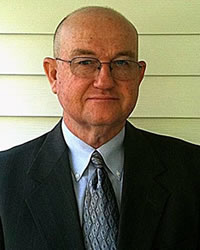
About Gary Shepard
Gary Shepard is teacher and pastor of Sovereign Grace Baptist Church in Jacksonville, North Carolina.
Comments
Your comment has been submitted and is awaiting moderation. Once approved, it will appear on this page.
Be the first to comment!