Bootstrap
Gary Shepard

The Champion of God's Elect

1 Samuel 17
Gary Shepard March, 11 2018 Audio
0 Comments
Gary Shepard
Gary Shepard March, 11 2018

Sermon Transcript

Auto-generated transcript • May contain errors

100%
? Mercy, Lord have mercy ? ? Be
merciful to me ? ? Holy, stand within me ? ? Provide equity
? ? Wash me white as a cloud ? ? As snow in winter day ? ? Mercy,
oh have mercy ? ? Upon my wicked way ? ? Mercy, show no mercy
? ? I keep desiring sin ? Freed from sins of prison, yet
still I run back in. Lead me by your spirit to all
in hells of hearts. Mercy, show mercy. ? That I may cherish God ? ? Mercy,
precious mercy ? ? Be loyal to your Lord ? ? By your loving
covenant ? ? We'll never be alone ? Hold us close as children, who
long to you forget. Mercy, precious mercy, upon the
uncomplained. Mercy, oh, have mercy upon the
rich and poor. Ceaseless, like a fountain, your
mercy will endure. Pour out love and kindness upon
me lavishly. Yes, your mercy, yes, your mercy
pours freely down upon me. I want you to turn in your Bibles
this morning to the book of 1 Samuel, 1 Samuel 17. I've entitled this message the champion of God's elect. When I was a boy, that was a
long time ago, but when I was a boy, like many
children, I heard what they called Bible stories. And the one I always remembered
most was the story of David and Goliath. I thought about it in our day. We like our champions. We like
our winners. especially in the sports world. We want our champions, our winners. We like to hear that statement,
and the winner is. But this account in 1 Samuel
17 is not a story. It's history. It happened. It's an actual event. And furthermore, God did not
record it just in order to entertain us. It was, as Paul says, written
For those upon whom the end of the age shall come. The last days. We live in the
last days. The days of the coming and the
second coming of Christ. God hath in these last days spoken
unto us by his son. And it was given as a type or
a picture to illustrate something spiritual, something about how
God saves his elect people. It has to do with the person
and the work of the Lord Jesus Christ. And I want us to go back and
to think some this morning on this actual event in history. I'm just hoping that you have
some familiarity with this account. But to sum it up in short, the
army of Israel, with Saul as its king, is on one side of a
valley and the Philistines are on the other side. And the army of Israel is supposedly
set in array against the Philistines. That's how it's described. And I'm sure that the air is
charged with tension. And I'm sure also the faces of
the men of Israel, they show their fear. Their king, King Saul, he cowers
in his tent. He's as much afraid as they are,
and maybe more so. And this has been going on for
40 days. 40 days. It kind of reminds me of two
little boys who stand opposing each other, challenging each
other. and each one afraid that the
other is going to do something. But for 40 days, the champion
of the Philistines, a giant whose name is Goliath, he's been challenging
the army of Israel. He's been defying them every
day. He's been mocking them. And He's been prophesying their
doom. He's been telling them that they
all are gonna die. And God has given us these verses,
this account. this recorded, inspired history
to show to us, I believe, three figures. That's what the book
of Hebrews calls them. Types, shadows, figures. And they are called these figures
in order that they might show us, by the aid of the Spirit,
something of God's salvation. There are three figures, and
there is a glorious principle upon which we see one of those
figures acting. Now the first figure, which is
Saul and Israel, is a type of all men by nature, including
God's people, and yet it is a picture of God's elect by grace. Israel, the army of Israel, and
also Saul. And they're like Adam and his
race, of which we are a part. We all were born of Adam. And God had not long before sent
the prophet to tell Saul and these people something severe. In I Samuel 13, I read this,
And Samuel said to Saul, Thou hast done foolishly, thou hast
not kept the commandment of the Lord thy God, which he commanded
thee. For now would the Lord have established
thy kingdom upon Israel forever. But now thy kingdom shall not
continue. The Lord hath sought him a man
after his own heart, and the Lord hath commanded him to be
captain over his people, because thou hast not kept that which
the Lord commanded thee. And in chapter 16, it says, the
spirit of the Lord departed from Saul, and an evil spirit from
the Lord troubled him. And what he had done, what he
had been, the disobedience of this king has now put everybody
in jeopardy. It's put all The people, it's
put all the army in jeopardy. It's the sad consequences they
now face because of his sin. And that is exactly what God
tells us is our case because of Adam's sin. He writes it all
down so plainly in Romans 5. where he says, wherefore as by
one man sin entered into the world, and death by sin, so that
death passed upon all men, for that all have sinned. all face the condemnation, all
face the judgment of God, because in that man who was our father,
our head, we all sinned. We're cast out of the garden,
suffered the consequences of this sinful fall, and it has
marked us to this day. He says in Romans 5, through
the offense of one, many died. He says the judgment was by one
to condemnation. He says by one man's offense,
death reigned by one. He says By the offense of one
judgment came upon all men. You can read these in Romans
5. He says, by one man's disobedience,
the many were made sinners. So unless we know something about
what actually happened in the garden and its consequences on
us, we don't really know the state that we're in. When Adam sinned, we sinned,
and God viewed the whole race as sinners. I'd ask you this
question. When did Christ die? You say, well, something around
2,000 years ago. Well, in Romans 5, it says, but
God commended his love toward us in that while we were yet
sinners, before we were born, before we
came into this world, before we performed one act of disobedience,
He says we were sinners when Christ died for us 2,000 years
ago. How did we become that? We became
that before God in what we call our federal head, that is, Adam. And they looked around them,
and they looked among them, and they by their natural eye saw
no champion for them. Here's Goliath coming out roaring,
inciting, insulting. And they look in their midst,
they see no champion to match him. And they were themselves
no match for Goliath. And like us, like us, fear and
sure condemnation and useless works filled all their days. They just sat there 40 days being
afraid. They just sat there doing foolish
things. They sat there sharpening their
weapons, talking like brave men, I'm sure, bragging on their past
conquests, and waiting to die. Waiting to die. And that's exactly the way that
we as lost sinners, alienated from God, that's the way we are
in our natural state. We talk a good case. We hone
useless weapons. We talk about the day that we'll
do, the day that we'll fight and such, but there is no hope
There is no peace, and we simply sit in the fantasy armor of our
own self-righteousness. We stay without strength. We stay and sit lifeless, waiting
for the judgment of God to fall. Doomed. leaning on the arm of
sinful flesh, lost and not realizing it, dead and not knowing it,
not facing the fact. That's the way Saul and this
army of Israel was. They're just like us. The second figure here is Goliath. And Goliath is a figure or type
of the devil. He's a picture and a type of
Satan and sin. And there's no doubt about it,
he's bigger than we are. All these people going around
saying they're going to rebuke the devil. Well, Michael the
archangel did not even rebuke the devil when he disputed with
him over the body of Moses. He said, the Lord rebuked you.
Are you going to rebuke the devil? We don't know anything about
the devil until we believe the Word of God. We don't know anything
until we see what God says that he does. He deceives. He offers
a counterfeit. And both sin and Satan are against
us. They're able to destroy us. They're giants. Absolute giants. When the spies were sent into
the land, the report that they gave them, the land through which
we have gone to search, it is a land that eateth up the inhabitants
thereof, and all the people that we saw are in it, men of great
statue, and there we saw the giants, the sons of Anak, which
come of the giants, and we were in our own sight as grasshoppers,
and so were we in their sight. That's what the unbelieving spies
told him. And he says, Joshua, in verse
chapter 11, he cut off the Anakins, destroyed them utterly with their
cities. There was none of the Anakins
left in the land of the children of Israel, only in Gaza. in Gath and in Ashtod, there
remained." Guess where Goliath was from?
He was Goliath of Gath. He was Goliath. And so in verse
4, we read this about him. And there went out a champion
out of the camp of the Philistines named Goliath of Gath, whose
height was six cubits and a span. That's big. You might not realize
it in the measurement, but when you compute the measurement,
It's something like, I believe, 10 or 11 feet tall. Bigger than an NBA player. And he had a helmet of brass
upon his head, and he was armed with a coat of mail, metal coat
woven of metal, and the weight of the coat was 5,000 shekels
of brass. And he had greaves of brass upon
his legs and a target of brass between his shoulders and the
staff of his spear was like a weaver's beam, and his spear's head weighed
600 shekels of iron, and one bearing a shield went before
him." That's how big he was, covered with armor. Body armor in the new thing.
He had it from head to toe. And he stood there in power.
He stood there in strength. He stood there in defiance. And that's the way Satan is. Peter said, be sober, be vigilant. vigilant because your adversary
the devil as a roaring lion walketh about seeking whom he may devour." He's like a lion, he's like a
warrior, he's like a terror all the time deceiving He's the destroyer
of men's souls. He's the great adversary of God
and man. He's the prince and the power
of the air. He's the God of this world, and
we're no match for his strength, but especially his subtlety. He deceived the first woman.
He deceived our mother Adam. And we've been children of deception
ever since that day. He's a deceiver in things concerning
God. He's a deceiver in things concerning
our souls. We're no match for him. But the third figure, is a young
man named David, and he is a type of the Lord Jesus Christ. He's
a picture of Christ. There cannot be any perfect picture
of Christ. As far as a man is concerned,
because all men are sinners, but in what he does here, and
other places, The Bible says that he is a picture and a type
of the Lord Jesus Christ. He's the one who's David's son,
David's Lord. The Lord hath sought him a man
after his own heart. The Lord hath commanded him to
be captain over his people, because thou hast not kept that which
the Lord commanded thee." That's what God had said to Saul. There's a man now who's a man
after God's own heart. And David, He comes to this scene
sent by the Father. Look down in verse 17. And Jesse said unto David his
son, Take now for thy brethren an ephah of this parched corn,
and these ten loaves, and run to the camp to thy brethren,
and carry these ten cheeses unto the captain of their thousand,
and look how thy brethren fare, and take their pledge. He's not here because He just
chose to be. He's here because He was sent.
That's what the Bible says about Christ. He's sent of the Father. Galatians 4 says, But when the
fullness of time was come, God sent forth His Son, made of a
woman, made under the law, to redeem them that were under the
law, that we might receive the adoption of sons. Christ is sin
of God. He's sent on a mission. He's
sent to do a work. He's sent to accomplish something. I John 4 says, And this was manifested,
the love of God toward us, because that God sent His only begotten
Son into the world, that we might live through Him, here in His
love, not that we love God, but that He loved us, and sent His
Son to be the propitiation for our sins. He was sent. And not only that,
He was the chosen and the anointed and the prepared. Look over in
verse 34. And David said unto Saul, Thy
servant kept his father's sheep, and there came a lion and a bear,
and took a lamb out of the flock. And I went out after him, and
smote him, and delivered it out of his mouth. And when he rose
against me, I caught him by his beard, and smote him, and slew
him. Long before he comes to this
scene, David is not only one tried in all these areas, found
valiant and worthy, he's anointed. He's God's anointed king. They
sent the prophet down. God sent the prophet down to
the house of Jesse. Because Jesse had all these sons,
sons that here now are in the army of Israel. David is sent
to them. But when they came, when the
prophet came to his house, he looked over the oldest. He said,
he's not the one. The next one, he's not the one. I don't know how many he went
through. He said, don't you have any other sons? Oh, I've got
one son. That young boy of mine, he's
out there tended to the sheep. Go get him. And when he brought
him there, he was God's anointed. And he was anointed, anointed
king right then. But he went right back to tended to the sheep. So long
before time ever was, Christ was anointed the king, God's
king. He was anointed as prophet, priest,
and king. He was anointed by God, appointed
as the savior. And when he came, he came here
as one who is already prepared. He's come here as one entrusted
with the sheep. David was entrusted with the
care of the sheep. The sheep didn't look after David.
David looked after the sheep. And when danger come, when an
enemy came, he defeated that enemy. And he also came as one rejected
and despised by his brethren. Look over at verse 28. And Eliab, his eldest brother,
heard when he spake unto the men. And Eliab's anger was kindled
against David. And he said, why camest thou
hither? And with whom hast thou left
those few sheep in the wilderness? I know thy pride and the naughtiness
of thine heart. For thou art come down that they
might seeest the battle. I believe if I was David, I'd
have said, what battle? What battle? And did you notice
how he referred to David's responsibility? You left him in those few sheep. That's just like the world. They
don't like the Christ of a few sheep. They don't like the Christ who
tells us many are chosen, many are called, but few are chosen.
They don't like this few sheep Jesus. And David said, what have I now
done? Is there not a cause? Isn't there a cause for somebody
to come do something? Is there not a cause for somebody
anointed of God to do something? You see, Christ, it says of Him,
He came unto His own, and His own received Him not. If you look at David, he was a scrawny,
ruddy, I believe is the Bible word, ruddy-looking character.
Just a lad. And Isaiah says of the Messiah,
He shall grow up before Him as a tender plant and as a root
out of a dry ground. He hath no form nor comeliness,
and when we shall see Him, there's no beauty in Him, no beauty that
we should desire Him. He is despised and rejected of
men, a man of sorrows acquainted with grief, and we hid, as it
were, our faces from Him. He was despised, and we esteemed
Him not. Surely He hath borne our griefs
and carried our sorrows, yet we did esteem Him stricken, smitten
of God, and afflicted." Preacher, you're preaching this
to Jesus? Oh, my. There's nothing beautiful about
Him. There's nothing strong looking like Him. There's nothing to
make us think that He would ever be a champion. There's no form. There's no comeliness. There's nothing about the Lord
Jesus Christ that the natural heart desires, or it would appeal
to, or anything like that. But look how David regarded this,
verse 22. And David left his carriage in
the hand of the keeper of the carriage and ran into the army
and came and saluted his brethren. And as he talked with them, behold,
there came up the champion, the Philistine of Gath, Goliath,
by his name, out of the armies of the Philistines. And he spake
according to the same words, and David heard him. In his own ears, David heard
what he was saying. And all the men of Israel, when
they saw the man, fled from him and were sore afraid. And the men of Israel said, Have
you seen this man that is come up? Surely to defy Israel is
he come up. And it shall be that the man
who killeth him, the king will enrich him with great riches
and will give him his daughter and make his father's house free
in Israel. I want you to listen to what
David says. And David spake to the men that
stood by him, saying, What shall be done to the man that killeth
this Philistine, and taketh away the reproach of Israel?" He's going to have to do something
to take away the reproach of Israel. And there's only one
way to do it, is to kill this giant. The only way to take away
The reproach of God's elect is to deal with sin, the giant sin,
to deal with the devil. Who is this uncircumcised Philistine
that he should defy the armies of the living God? I can't hardly
read that without shouting. Who is this uncircumcised Philistine
that he should defy the armies of the living God? There is no possibility of fear. Just like there's no possibility
of Christ fearing to take on the responsibility he came when
he was sent of the Father to defeat the enemy of our soul. I should say enemies of our soul. And when he volunteered for this
task, When he enlisted in this fight,
he refused all fleshly means. Look down in verse 38. And David armed Saul with his
armor and put on, put a helmet of brass upon his head. Also,
he armed him with a coat of mail, and David girded his sword upon
his armor, and he assayed to go out." In other words, Saul tried to
dress and prepare David just like Goliath was prepared. David said no. He wouldn't go
out. He wouldn't go out. And he said,
I won't use all this stuff because I've not proved it. I've not
tested it. I can't use it. And David said unto Saul, I cannot
go with these, for I have not proved them. And David put them
off him, and he took his staff. Now he's
going to take what he's always had. staff, which is a symbol
of authority. It's more like a scepter with
him. He's the king. He's God's king. He's going to take his scepter,
his authority, his person with him. And he took his staff and
chose him five smooth stones out of the brook and put them
in a shepherd's bag, which he had even in a script, and a sling
was in his hand, and he drew near the Philistine. And when he went out to face
the Philistine, he went alone. Verse 32 says, And David said
to Saul, Let no man's heart fail because of him. Thy servant will
go and fight with this Philistine. The word we use is single-handedly. And that's always emphasized
in Scripture about Christ. What He did for His people, He
did single-handedly. He did alone. He offered the
sacrifice of Himself for our sins. And He by Himself purged
our sins. And when you look at the means
by which He conquered, In verse 40, it says that he took five
spruce stones and put them in a bag and he took a sling. Verse 48 says, And it came to
pass when the Philistine arose and drew near nigh to meet David,
that David hasted and ran toward the army to meet the Philistine. And David put his hand in his
bag and took thence a stone and slang it and smote the Philistine
in his forehead, that the stone sunk into his forehead and he
fell upon his face to the earth. I've always thought, and I believe the Bible verifies
this, that Christ slew this giant sin
by himself and with himself. David fought the giant, slew
the giant by himself and with himself in a tie. A smooth stone. Christ is called the stone of
stumbling. He's called the rock of offense. He's called the rock of ages.
He's called the stone uncut by hands. It said that rock was
Christ by himself, by the sacrifice of himself. He gave himself for
us. He bore our sins in his own body
on the tree. We were reconciled to God by
the death of his son. He did it all by the will and
the authority of his father. He did it in the name of the
Lord. He said, who is this that defies
the army of the living God? And he did it by the will and
purpose, foreordained purpose of God. When he walked out there, the
giant laughed at him. He mocked even the more at the
one who was coming against him. But he died. David by himself got the victory. Now, what I want to show you
and what I want you to look about and think about here is the great
principle here, which is basically what we call
representation. Look at verse 47. And all the assembly shall know
that the Lord saveth not with sword and spear, for the battle
is the Lord's, and He will give you into our hands. That's what David says to her. The Lord doesn't save by these
things that you represent. The Lord doesn't
save by strength and self-righteousness and religion and all these things.
You see, the battle is the Lord's. Salvation is the work of the
Savior. But David said, He'll deliver
you into our hands. In other words, David was representing
that people. He was representing that army. And the only hands I see here
are David's, but David is a representative man, just as Christ is the representative
man. And what David does will have
great effect on all the men of Israel, just like Saul did. You might say Saul got him in
this mess. David is going to get him out. You see, our salvation depends
on one man. One man. What he did, it depends
on his success. It depends on what he actually
accomplished in the satisfaction of God's justice, of the dealing
and overpowering of Satan, of every aspect of salvation. It depends on one man. And Goliath's idea is like Satan's
was in the garden. If he can follow one man, then
all he represents will fall. He says in verse 8, And he stood and cried unto the
armies of Israel, and said unto them, Why are ye come out and
set your battle in array? Am not I a Philistine, and ye
servants to Saul? Choose a man for you, and let
him come down to me. If he be able to fight with me
and kill me, then we will be your servants. But if I prevail
against him and kill him, then shall you be our servants and
serve us." And Philistine said, I defy the
armies of Israel this day. Give me a man that we might fight
together. Now the devil said that in the
garden. That was his principle in the
garden. But what he didn't know, is all that's done to us, he was
used to glorify God and to save this people. Because on this principle by
which man fell, by this principle man would be saved. Give me a man. Let me fight with
just one man. And the consequences, if he be
able to defeat me, we'll be your servants. But if I defeat him, you'll be
our servants. And so in the fall, Satan thought,
and it appeared that every son of Adam would be the servant
of Satan. But when Saul and Israel heard those
words of the Philistine, they were dismayed and greatly afraid. You see, Satan wants us to think that it's a
gamble, you might say. It's a gamble. to depend on one
man. Just one man. But the Bible says Christ is
able to save to the uttermost them that come to God by Him. Satan thought he had won when
he received our father Adam, the first representative man,
but he was only establishing this principle by which God could
justly save all his elect, all of grace, as a just God and a
savior and not a works. You know what those soldiers
in that army did? They did nothing. Their believing that David could
do it didn't affect it one bit. As
a matter of fact, I'm sure they didn't believe that David could
do it. But it didn't hinder his work.
It didn't hinder his success. So that when we look to Christ
in this day, we look at a finished work. We can't add a thing to it. Our
faith does not add anything to it. It's the gift of God. For as in Adam all die, even
so in Christ shall all be made alive. And so it is written,
the first man was made a living soul, the last man was made a
quickening spirit. What Adam did, we did in him. And the consequence of what he
did are our consequences, but to those who are in Christ. All he represents, his victory
is our victory. Such a plain picture. If he wins,
we win. He won, we won. What did he do? He saved us. He saved us all together. He
saved us completely. He saved us by Himself. He saved
us with Himself, with His blood, with His righteousness, with
His death, with His work. And here's the glory of it. We
gain more in Christ than we lost in Adam. We lost immutable righteousness,
I guess you'd call it, but we gained everlasting righteousness.
We lost a relationship, we gained sonship. Christ is the champion of God's
elect. He's the champion of God's true
believing people. They don't look to anything else. And you being dead in your sins
and the uncircumcision of your flesh, hath he quickened together
with him, having forgiven you all trespasses, blotting out
the handwriting of ordinances that was against us, which was
contrary to us, and took it out of the way, nailing it to his
cross, and having spoiled principalities and powers, he made a show of
them openly, triumphing over them. Just like David. Christ, when He went to that cross, He
single-handedly faced all the enemies of our soul, and He got
the victory. You say, well, why am I still
so much a sinner? Why am I still so full of unbelief? Why am I still like Paul in Romans
7, wretched man, don't do what I want to do, do do what I ought
not to do? He concluded, he said, who shall
deliver us from the body of this death? I thank God, through Jesus Christ
our Lord, who giveth us, or He is giving us the victory. Now sometimes when I get to looking
at me, I get to looking at what I've done, what I'm doing, I get mighty disappointed, fearful. shamed. But when I look at what he did, I have peace, joy. We're not sitting on a mountainside
waiting for a David to come and be our champion. The conflict
has already taken place. I like that verse in A Mighty Fortress is Our God. Did we in our own strength confide
our striving would be losing? We're not the right man on our
side, the man of God's own choosing. Just ask who thou may be. Christ Jesus, it is he. Lord,
sabbath his name from age to age the same, and he must win
the battle. He has won the battle. He's the champion of his people. He's the winner. He's the victor. He wears the crown. Like David,
he takes the spoils. When David smote him that way,
he cut his head off with his own sword. Christ used Satan's own devices,
his own way. The death of death through the
death of Christ. Christ is called the last Adam. One man representative was the
first Adam of the earth, earthly. The last Adam, second Adam, is
of heaven. And there ain't gonna be no more
Adams. He's the last Adam. And he has won the battle. I hope the Lord is pleased to
show you the Savior of sinners. If he does, you can find comfort
and peace in Christ and what he did and
his death and nothing in you is your champion. And when David
cut off the head of Goliath with his own sword, all those Israelites,
they come a running. They had the victory. They went
to get the spoils. They went to smite the adversaries. But they didn't until he had
already defeated Goliath. So we're running, running the
race set before us. We're fighting the fights, enjoying the spoils, and know
that we already have the victory in Christ. Look to Him. Father, we pray and Our worthy David's name ask you to bless this truth to
our hearts. Glorify thyself and comfort your
people. We pray in Christ. Amen.
Gary Shepard
About Gary Shepard
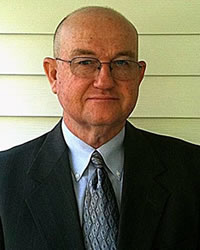
Gary Shepard is teacher and pastor of Sovereign Grace Baptist Church in Jacksonville, North Carolina.

Comments

0 / 2000 characters
Comments are moderated before appearing.

Be the first to comment!

Joshua

Joshua

Shall we play a game? Ask me about articles, sermons, or theology from our library. I can also help you navigate the site.