Bootstrap
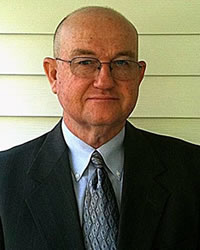
Gary Shepard

Treasure In Clay Pots

2 Corinthians 4:7
Gary Shepard January, 21 2018 Audio
0 Comments
Gary Shepard
Gary Shepard January, 21 2018

Sermon Transcript

Auto-generated transcript • May contain errors

100%
I want you to turn today to 2
Corinthians chapter 4. 2 Corinthians chapter 4, and I'm
going to read the first seven verses. Therefore, seeing we have this
ministry, As we have received mercy, we faint not, but have
renounced the hidden things of dishonesty, not walking in craftiness,
nor handling the word of God deceitfully, but by manifestation
of the truth, commending ourselves to every man's conscience in
the sight of God. But if our gospel be hid, it
is hid to them that are lost. In whom the God of this world
hath blinded the minds of them which believe not, lest the light
of the glorious gospel of Christ, who is the image of God, should
shine unto them. For we preach not ourselves,
but Christ Jesus the Lord, and ourselves your servants for Jesus'
sake. For God who commanded the light
to shine out of darkness, hath shined in our hearts to give
the light of the knowledge of the glory of God in the face
of Jesus Christ. But we have this treasure in
earthen vessels that the excellency of the power may be of God and
not of us. Words in our day seem to lose more of their meaning,
more of their value in communicating things with every day that passes. But you can be sure that the
Holy Spirit is the Spirit of Truth. The Spirit of Truth. And He does not use words that
are not real or not true and not to be accepted in their fullest
sense. When he uses a word to the people
of God, they are real. And Paul in this text speaks
here, being led of that same spirit, He speaks of the gospel of Jesus
Christ. He speaks of the knowledge of
Him and of the blessings in Him as a treasure. Men call silver and gold treasure. The Scriptures say that those
things will rust and tarnish and be gone one day. They'll
be consumed with the fire of God. But he says that these things
in Christ, this gospel of Christ, this knowledge of God in him
is a treasure. I wanted to see what that word
treasure meant there, and it means a deposit. It means wealth,
true wealth. I saw a church sign this week that read, he appeared and the
soul found its worth. He appeared, I suppose they meant
Christ. He appeared and the soul found
its worth. But according to the scriptures,
according to this book, the worth is not in the soul. The worth
is in the one who appeared. The worth is in the worthy one. Worthy is the Lamb, and there
is no worth outside of Him. All who are without Christ or and shall be, if they remain
without Christ, eternally poverty-stricken. The Bible describes them as poor,
as vanity, or less than nothing. Without His righteousness, Without
it being imputed to us, we are worth nothing in the sight of
God. Absolutely nothing. All the value is in the Lord
Jesus Christ. Some years ago, I had an acquaintance
that had an old truck. And he thought it was something
special, but it was beat up and banged up and wouldn't half run. And so one day he was bragging
on his truck, and I told him this. I said, do you know what
that truck would be worth if you taped a $100 bill to the
hood? I was just joking with him. He said, no. I said, it would
be worth $100. Because the only value, the only
good, the only merit that could be attached to it had to be put
on it, added to it. And that's the way it is with
the soul. But since the Bible says that
Christ is all, if He is really and truly all, and He is, all
the knowledge of Him, all the blessings in Him are great, and
they are true wealth, and as Paul says here, absolute treasure. Absolute treasure. And the language
of Scripture bears what I'm saying out. In Ephesians 3.8, Paul says,
Unto me, who am less than the least of all saints, is this
grace given, that I should preach among the Gentiles the unsearchable
riches of Christ. He is the unspeakable gift. Paul talks about the riches of
His grace in Ephesians chapter 1. In the book of Proverbs, we
read these words, In the house of the righteous is much treasure. Much to be value, much to be
esteem, much treasure, but in the revenues of the wicked is
trouble. Trouble. He says this in Matthew
13, a good man out of the good treasure of his heart bringeth
forth that which is good, an evil man out of the evil treasure
of his heart bringeth forth that which is evil, for of the abundance
of the mouth of the heart his mouth speaketh. The good there being those righteous
in Christ, they bring forth from their heart treasure because
Christ is there. Hebrews chapter 11 speaks of
Moses, and it says, Moses esteeming the reproach of Christ, greater
riches. The reproach of Christ, the identifying
with Christ, the obedience to Christ, the believing the promise
of God in Christ, he esteemed the reproach of Christ greater
riches than all the treasures in Egypt. For he had respect unto the recompense
of the reward. He was able of God, by God-given
faith, to weigh everything out for the true value, and in the
light of Christ, and even the reproaches in Christ, it was
more valuable, more treasure, than all the treasures of Egypt. So Paul is identifying the gospel. He's identifying the revelation
of Christ to our soul. He's identifying all these spiritual
blessings and eternal life that is in Christ Jesus. He's calling
it for what it really is, and that is a treasure. But he says something else in
verse 7. that sets before us a picture
of great contrast. A picture that we need to see
and we need to understand. He says this, but we have this
treasure in earthen vessels. That seems like quite a contrast
to it. Something so valuable as to be
called a treasure, and yet it is kept, it is in an earthen
vessel. What does that mean? Simply,
it means a treasure in clay pots. That's what I call this, this
morning, treasure in clay pots. You see, the gospel, as it is in the one who preaches
the gospel, And also in those that believe the gospel, those
who have received the gospel, it is this treasure, but it is
in clay pots. And he says that because it's
true. He says that because that's what
we really are. That's all that we are in ourselves,
in our flesh, and that is the dust of the earth. He says this, that which is born
of the flesh is just flesh. He tells us, as Paul does, I
know that in me that is in my flesh dwelleth no good thing. You say, preacher, surely a little
bit of good. No. In our flesh dwelleth no
good thing. And not only that, but it never
gets better. It never gets better. And people make the mistake.
They make this mistake quite often. They mistake God's restraining
grace on them. God keeping them from being what
they are and what they would be otherwise. They mistake that
restraining grace for their own personal improvement. Where you say, drink anymore,
or I don't curse anymore, or I don't do some of the things
that I once did. Well, I'm glad of that. I'm thankful
of that. But I attribute all of that to
God's restraining grace on you and not your own personal improvement
in the flesh. I know that in me dwells no good
thing. And that's why it makes such
ideas, such as progressive sanctification or getting better and better,
it makes it to be such foolishness, such blind foolishness to us
if we see exactly who God says that we are, and all that is
in us is nothing but flesh. Self-righteousness. Self-glory. Self which is nothing
but weak and sinful and failing flesh. Absolutely no strength
of our own. No goodness of our own. No progress
of our own. Now I want to ask you something. Could not God have kept all men
from falling? Could not God have kept Adam
from taking of that tree in the midst of the garden? Could not
God have prevented? Is he not mighty enough that
he could have kept Noah from getting drunk? Could he not have
kept David from sinning that great sin of adultery with Bathsheba? Could he not have kept David
from committing Uriah to the front so he would surely be killed
in the first of the battle? Couldn't he have kept Moses from
failing to sanctify him before the people? Couldn't he have
kept Peter from openly denying him? And the examples, we could go
on and on and on. Couldn't God prevent? He prevented
Abimelech from taking Sarah for his wife. We know he has prevented multitudes
of things done by individuals over and over again over the
course of history. Couldn't he prevent every little
sin of an individual if he wanted? Does he not have the power to
restrain? You know he does. And yet, we
all fail daily. We all make mistakes. We all show daily exactly what
we are. But He put this treasure and
keeps it in earthen vessels to magnify the glory of His grace, the magnificence of the gift,
the sovereignty of His grace. He does so to exalt His strength,
His keeping, His wisdom, His power, His mercy, and great is
the contrast. Great is the contrast. You see, in all this, He shows
His ability, His ability, to keep such a fragile thing and
preserve it no matter how unlovely, no matter how weak it appears,
no matter how imperfect it appears to the eyes of man. You think of a fragile clay pot,
the slightest drop The slightest blow, the weakest stone, whatever
it is, could in an instant destroy this fragile thing and bring
it to a complete end and all the treasure would be gone. So what preserves us? What keeps
us from being all that we would be? What keeps us with this treasure
in us? What keeps us from doing the
things that we would do in the flesh? What keeps us believing
and trusting and looking to the Lord Jesus Christ, but God Himself? The potter himself who makes
these vessels, the vessels of mercy, he shapes them out of
his own hand, as it says in Jeremiah. And Paul calls us the vessels
of mercy, but we are kept as these vessels of God because
of his mercy. And there's just one reason for
it. There's one reason why his people
don't stumble and fall completely. There's one reason why we're
not destroyed by Satan. There's one reason why we do
not buy our base sales, destroy our sales or glory and everything
other than the treasure itself. And that is because of God's
grace. God's mercy, God's keeping, God's
preserving. You see, He makes us to know
our weakness. He makes us to know our weakness,
our inability to preserve ourselves that we might trust in Him. I thought about this when I was
making some notes. How many times this week has
self-righteousness risen up in us? How many times have we felt pretty
good about ourselves? How many times have we displayed
some trait of self-righteousness? How many times have we displayed
pride or had a prideful thought? Or how many times have we been
beset by envy or jealousy or hatred before we even knew it? And any one of those things left unrestrained by God Almighty
would destroy us. We're just so fragile. We're just nothing more but clay
pots. We just must necessarily Trust
in Him alone. Rest in Him alone. Trust the
work of Christ alone. Trust the Spirit of God alone
to keep us and to save us all by His grace. And that's what He'll do. I like what he says in that psalm.
I've read this psalm, this verse, many times. I had to. He says to us in Psalm 103, verses
13 and 14, like as a father pitieth his children, so the Lord pitieth
them that fear him, for he knows our frame. He knows what we're
made of, he knows our constitution, and he remembers that we are
dust. Sometimes we forget we are. We
get all kind of strong. We get all kind of bound up in
ourselves. We get all kind of mighty and
strong, but he remembers that we're dust. I thought about this. I have often disappointed myself
as a believer. I've often disappointed myself. I've said to myself, how could
I have thought that? How could I have said that? How
could I have done that? How could I ever have entered
into my being such a thought or such an act of pride or whatever
it is, a hatred? But I've never surprised him. I've never surprised God. My
weakness has never surprised the Lord. My failure has never
surprised Him. He, like a father, pities His
children. He pities His people, and He
remembers that they're just dust. They got this treasure. He's
given them this treasure. But the keeping of that treasure,
the enjoyment of that treasure, the benefit and the good of that
treasure all depends on the potter, not on the vessel, because we're
just clay pots. Clay pots. And Paul tells us here the reason
why it's this way. He tells us. He tells us, and
until we learn this, we'll never know anything about salvation,
about what he gives us in Christ, what he's done for us, and anything
else. But we have this treasure in
earthen vessels that the excellency of the power may be of God and
not of us. You see, if we're His people, He continually shows to us, makes
known to us through this weakness that all of this salvation is
of Him. All the glory in our salvation
must go to the God who saved us, who does it all, who saves
and keeps us. He's not going to share His glory
with another. It's not going to be God did
His part and we did our part. It's not going to be salvation
conditioned on anything done by us or anything that we become. It is always going to be just
what Jonah said in the belly of the fish, salvation is of
the Lord. It's of His originating purpose. It's of His death for sin on
the cross. It's for His work of the Spirit
in us, keeping us. It's all of God. And He's going to make sure that we remember that. He's going to make sure that
you and I just don't go flying too high in our pride or flying
too high in our self-righteous. He's going to make sure that we know that we are saved by His grace
through the work of Jesus Christ alone and nothing else. Satan had blinded us, as this
text says, but he caused his light, the light of the truth,
the light of Christ and his spirit to shine in our hearts, revealing
the treasure. How do we know where the treasure
is? Who the treasure is? Because
in our darkness, God came to us and he shined the light to
show it and his glory, the glory of his grace, by the way, his
redemptive glory in the face of Jesus Christ, in the person
and work of the Lord Jesus Christ. I read this week where in Africa,
there was another one of those special large diamonds discovered. What I read was that it was the
size of two golf balls. That's a big diamond. But it was just discovered. It
had been there all along. And all we are in the gospel,
in receiving the gospel revealed to us by the Spirit of God, we're
receiving this treasure that has been there all along, the
gift of God from eternity, the work of Christ on the cross.
And now the Spirit of God reveals to us the grace of God in us,
to us, for us. Brother Rupert, we were just
stumbling along the religious life. We thought we had treasures.
We're preachers. We thought we had something good.
Everybody ought to want what we've got. But all of a sudden,
we discovered a diamond. It had been there all along.
But the God of this world, who especially operates in religion,
the God of this world had blinded our eyes, and we did not see
or know or value this treasure until He opened our eyes. So the psalmist says in Psalm
115 verse 1, Not unto us, O Lord, Not unto us. Every once in a while I have
to be reminded of that. Not unto us. Not unto us. It's not me. It's not my work. It's not what I do. It's not
how much I pray. It's not how much I give. It's
not anything. Not unto us, O Lord. Not unto
us, but unto thy name give glory for thy mercy and for thy truth's
sake. Because flesh always wants to
steal a little bit of God's glory. I'm sorry to say that, but it
always does. It's always reaching out, trying
to take from the Lord Jesus Christ the glory that's His alone. If
we know Him, if we trust Him, if we've been given the gospel
and enable us to believe it, the gospel that gives to Him
all the glory and salvation, it's only because of His sovereign mercy to us. As wretched sinners, we cry out
in this weakness. We ask God why? If I've been shown such mercy, why
am I like this? We lament our failures. We acknowledge
our weakness. But the truth is, The grace of
God to us in Christ shows off like a diamond on that black
background. It's like a gold coin in a clay
pot. Won't the clay pot be broken? And the treasure lost? Not the vessel of mercy, which
Paul says, God hath before prepared to glory. He's going to preserve all these
clay pots of his choice. that he made, that he determined
to show mercy on, these vessels of mercy, he's going to preserve
them, every one, right up to the time that he makes them new. But we're leaky vessels. It appears we have a lot of cracks
in us. And Paul says in Hebrews, therefore
we ought to give the more earnest heed to the things which we have
heard, lest at any time we should let them slip. That means leak
out like a leaky vessel. But God keeps filling. He keeps filling us with His
Spirit. He keeps revealing to us this
treasure, making us to know the value and the glory and the worth
of salvation that's in Christ Jesus. I remember in Bunyan's allegory
about Pilgrim. Pilgrim sees this, I think it's
a lamp stand, and something is constantly being done, water
being thrown on it, it seems like, over and over again, in
order to put it out, put out the flame that was burning there. And then he walks around behind
the wall, and he sees a man pouring in oil. He keeps four in all. There's no way it can be put
out. He keeps four in all. That's the Spirit of God. And
He reveals to us, He assures us, He reminds us, He teaches
us that the Lord Jesus Christ is all. It's the knowledge of
the glory of God in the face of Jesus Christ. Now you can be sure of this. The kind of vessel a treasure
is in doesn't determine and it doesn't lessen its value. You look at me, you just see
an old clay pot. I look at you, I just see clay
pot just like But what we are doesn't lessen the value or determine
the value of what he is. He is perfect righteousness. He is in God's sight the treasure. And what we are, doesn't lessen the beauty of
the treasure. You say, you call yourself a
Christian. I do. But all my perfection is in the
Lord Jesus Christ. I don't have any myself. Not
in my flesh. Not in this clay pot. and some of the dustiest tombs,
some of the broken, rotted chests of hidden treasure so-called
throughout the ages. When they were discovered, I seriously doubt that any of
the treasure seekers looked at the vessel that the treasure
was in. I want the treasure. Paul said, we have this treasure
in earthen vessels. And first of all, he's saying,
as preachers of the gospel, with feet of clay, with the possibility,
no, the probability of error, an error in such frail and fragile
weakness. Don't look at us. But this gospel
we preach, it's a treasure. It's about the Lord Jesus Christ,
who's God's treasure. It's about His unspeakable gift. It's about Him and what He accomplished
in order to save His people. So the clay pot. No clay pot. That's all Paul
was. He was an apostle, but he was
just a clay pot. He said, oh wretched man that
I am, who shall deliver me from the body of this death? That's the clay pot. This is the treasure. I thank
God through Jesus Christ, our Lord, who gives us the victory. He said, I'm nothing. What I
would do, I don't do. What I wouldn't do, that's what
I do. Oh, he just felt the weakness and the sinfulness of his own
flesh. He cries out, the wretched man. Oh, wretched man that I am. Who
shall deliver me from the body, this body of death? Who can save
such a creature who is constantly falling, constantly unbelieving,
constantly failing? And then the treasure speaks. There's only one way. That's
why it makes it a treasure. If it's one of a kind, That determines
its value. It's just one-of-a-kind, one-of-a-kind
salvation that can save you, Paul. I thank God, through Jesus Christ
our Lord, who gives us, we couldn't get it any other
way, who gives us the victory. the victory over sin, the victory
over Satan, the victory over this world, the victory over
this flesh. He will ultimately and finally
give us the victory. Christ in his gospel is a treasure. But we have this treasure in
earthen vessels. It's clay pots. Don't ever think
you're more than that. Don't ever fall for this message
of self-worth, self-value, and such as that. Christ came into
this world to save sinners. And Paul says, of whom I am chief. And it's for one reason. that we might know, that we might
confess that the excellency of the power may be of God and not
of us. Paul says, if we are righteous
in Christ through the faith that he gives us, if we receive that
and know it to be true through the faith that he gives us, if
it's all of him, Where's boasting? He said, it is excluded. The only thing a clay pot has
to brag about is if there's a treasure. We'll brag about our treasure.
We'll brag about our savior. We'll till the day we die show
ourselves clay pots. We'll be filled with a moment
of hate before we even realize it. We'll fail. We'll be jealous. We'll be spiteful. We'll be self-righteous. We'll be full of pride. We'll
do anything that a sinner does but for the grace of God. but for the grace of God. But
he says this, Now unto him that is able to keep you from falling,
and to present you faultless before the presence of his glory
with exceeding joy, to the only wise God our Savior be glory
and majesty and dominion and power both now and ever. The vessels of mercy he has ordained
to glory and glory shall be theirs because of the glory of the treasure. Father, we thank you in this
hour. for our great savior. We thank
you for his blood shed on our behalf, which put away our sins. We thank you for his righteousness,
which you impute to us without works. We thank you that you
have not imputed our sins to us. We thank you that he is our
savior. and does all the saving, being
Jesus, who shall save his people from their sins. Help us to acknowledge, to recognize our own weakness, but not despair. Help us to look
to our treasure, our Savior, the Lord Jesus Christ. We ask
and we pray all things in his name. Amen.
Gary Shepard
About Gary Shepard
Gary Shepard is teacher and pastor of Sovereign Grace Baptist Church in Jacksonville, North Carolina.

Comments

0 / 2000 characters
Comments are moderated before appearing.

Be the first to comment!

Joshua

Joshua

Shall we play a game? Ask me about articles, sermons, or theology from our library. I can also help you navigate the site.