Bootstrap
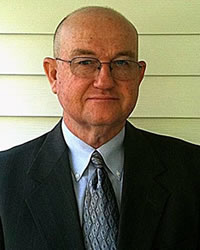
Gary Shepard

Faith Forsaking All, Finding All

Genesis 12:1-5
Gary Shepard November, 26 2017 Audio
0 Comments
Gary Shepard
Gary Shepard November, 26 2017

Sermon Transcript

Auto-generated transcript • May contain errors

100%
God is holy. God is mighty. God, we praise his matchless
name for he is worthy. Let us worship and honor him
as we call upon his name. God is holy. God is mighty. ? We'll praise thee, loving Jesus
? ? With thy blood on Calvary's cross ? ? Thou hast redeemed
us ? ? And the blood which thou hast shed for us ? ? Demands
our filledest love ? ? We will praise thee ? Holy Spirit, cleanse
and fill us. Guard your hearts from every
sin that hath beset us. We need power to obey thy word
and follow those truly Holy Spirit, entangle us. Alleluia, alleluia. Let us all with one accord sing
alleluia. Tis the song of all the ages
and we'll sing forevermore. Alleluia. This morning I want you to turn
with me to the book of Genesis. Genesis chapter 12. As Amos said before a king and A lot of false priests and prophets. I'm not a prophet. I'm not a prophet's son. He said I was a gatherer of sycamore
fruit. And the Lord came to me and told me to
speak. That's all the qualifications
that I have, is that God told me to speak, and to
speak the things of His Word. And I always ask you to hear
me as far as I speak what He says. and pay no attention when I speak
the things of myself. Here in Genesis chapter 12, we meet a man by the name of
Abram, who became Abraham. In Romans 4 and verse 11, Abraham
is called the father of all them that believe. He's given as an
example of all who truly believe. And of his exploits and various
Ramblings and travels, happenings, there could be many things said. But I want you to listen as I
read to you out of the New Testament, the thing that is most often
said by God of Abraham. God, the spirit. saying in Romans
4 and verse 3, for what saith the scripture, Abraham believed
God, and it was counted unto him for righteousness. Again, in Galatians 3 and verse
6, even as Abraham believed God, and it was counted to him for
righteousness. And then finally in James chapter
2 and verse 23, and the scripture was fulfilled, which saith, Abraham
believed God, and it was imputed unto him for righteousness, and
he was called the friend of God. We first meet Abraham at his
birth in chapter 11 and verse 26. It says, Antara lived 70
years and begot Abram. And then we meet him the next
time, after his birth is spoken of, we meet him the next time
here in Genesis chapter 12. Now the Lord had said unto Abram,
get thee out of thy country, and from thy kindred, and from
thy father's house, unto a land that I will show thee. And I
will make of thee a great nation, and I will bless thee, and make
thy name great, and thou shalt be a blessing. And I will bless
them that bless thee, and curse him that curseth thee, and in
thee shall all the families of the earth be blessed.' So Abram
departed as the Lord had spoken unto him, and Lot went with him,
and Abram was seventy and five years old when he departed out
of Haran. And Abram took Sarah his wife,
and Lot his brother's son, and all their substance that they
had gathered, and the sons that they had gotten in Aran. And
they went forth to go into the land of Canaan, and into the
land of Canaan they came. The amazing thing maybe to us
of this great patriarch is that God speaks to him at 75 years
old. And he says, get thee out of
thy country and from thy kindred and from thy father's house unto
a land that I will show thee." That's amazing to us that God
would call upon this man to do such as this in such a time in
his life, being 75 years old. so established, no doubt, has
his family and all of his possessions there with him, and yet God calls
him to go out, and he actually does. He goes because of God-given
faith. And he goes with a view of God's
faithfulness, and God's promise looking to Christ in reality
and all that is promised in Him. Hold your place and look with
me in Hebrews 11. Hebrews 11 and verse 8. He says,
By faith Abraham when he was called to go into
a place which he should after receive for an inheritance, obeyed,
and he went out not knowing whither he went. There was nothing about
the journey, nothing about the place, only the command of God
to go. And what I want us to notice
this morning is one of the first characteristics, one of the first
characteristics of faith as it's demonstrated in the lives of
those who are called of God and called by his gospel and called
to the Lord Jesus Christ. And that is that there must necessarily,
as he says here to Abraham, must necessarily be a coming out. There must be a deliverance. There must be a forsaking on
the place of Abraham, and he must be brought out of the place
that he was in. When you read John chapter 10,
it says, to him, or to Christ, the porter openeth, and the sheep
hear his voice, and he calleth his own sheep by name, and leadeth
them out. Then again in John 10, he says,
My sheep hear my voice, and I know them, and they follow me." Somebody has said that maybe
the letters for faith, F-A-I-T-H, they could stand for something
like this, forsaking all, I take And that means exactly what involves
the faith of Abraham. At God's command, he forsook
all to have the promised one in the Lord Jesus Christ. You say, well, I'm not sure Abraham
was all knowledgeable about that at all. But Christ said of Abraham,
he says in John 8, your father Abraham rejoiced to see my day
and he saw it and was glad. He was not simply looking toward
an earthly inheritance or toward an earthly promised son or to
earthly blessings and inheritance. He looked to God in the Lord
Jesus Christ by the faith that God gives and he saw Christ by
faith and rejoiced in him. And by faith, we see in Christ
that which is worth forsaking everything for. In other words, we see in Christ
All that God has to give in grace, all that he has to give in mercy,
we see in Christ something that we need so badly. When God gives us faith, we see
him and we find it necessary to leave everything else, to
forsake everything else, to have what we have in him. You see, by faith, we see, like
Noah, a danger to flee. Hebrews 11 says, by faith, Noah,
being warned of God of things not as yet seen, moved with fear,
prepared an ark to the saving of his house by the which he
condemned the world and became heir of the righteousness which
is by faith. Noah built the ark. Noah moved
by fear. Noah, because of faith, he left
this earth. And then it says again in Hebrews
11, by faith, Moses. Moses, when he was come to years,
refused to be called the son of Pharaoh's daughter, choosing
rather to suffer affliction with the people of God than to enjoy
the pleasures of sin for a season, is steaming. the reproach of
Christ greater riches than the treasures in Egypt, for he had
respect unto the recompense of the reward. By faith he forsook
Egypt, not fearing the wrath of the king, for he endured as
seeing him who is invisible. In other words, by God-given
faith, we are enabled to see Christ, we are enabled to see
the danger that we're in, we're enabled to see the necessity
of forsaking that which is simply dead works, and we are brought
to Christ because we see him by faith. And faith and repentance
are both sides of the same coin. They are both said to be gifts
of God's grace to his people. Repentance is this God-wrought
change of heart and mind and a reversal with regard from who
we thought God was and what we thought we were and what we thought
commended us to God. In other words, we have to leave
something If we follow Christ in faith and go to Christ in
faith, we have to abandon that which we once thought wrongly
in our minds. You remember Naaman, he's kind
of the poster child of logical, natural, religious thinking. And when he was told exactly
what was required to make him whole and cleanse his leprosy,
the first thing that he did was he got angry and the next thing
he said was, I thought, I thought this was the way it was. I thought
that the prophet would do something and mutter some mumbo-jumbo or
something like that. was the God appointed way of
cleansing in that river that he thought was muddy and unlike
the beautiful waters of his homeland. And because it pictured that
which is the natural man esteems not, but it pictured the blood
of the Lord Jesus Christ. But he said, I thought. And that's
the problem with all of us. Our thinking is such and fallen
and depraved and against God so that when the gospel comes
to us, when the call of God comes to us, it does not come with
a pleasant tone or message to our ears. You see, the Bible says, that
godly sorrow worketh repentance to salvation, not to be repented
of, but the sorrow of the world worketh death. In other words,
there's two kinds of sorrow. The sorrow of the world that
works a certain kind of external natural repentance, and that
kind of repentance That is, as someone said, born in a storm
will die in the calm when everything is better. But godly sorrow is
the work of God's spirit. It's a sorrow over sin, and it
works a repentance not to be repented of. It is repentance
toward God and faith in the Lord Jesus Christ. But if you notice in this text,
the call of God to Abraham was a call of divine, sovereign grace. We don't see any reason in Abraham
for God to call him. We don't see and find anything
done by Abraham to get God to call him. We don't see anything
in his person. We don't see anything in his
worthiness or his work. Not one thing, but God's sovereign
choice of Abraham to call him out of the land that he was in
and to show him mercy. That's the only reason. You see,
he called him to salvation. He distinguished him from among
a fallen race to show him mercy, and his calling of Abraham was
effectual. Everyone God calls, in this sense,
is called, is effectual, it will always bring them out. Now, where was Abraham? Or Abram,
as he was first called? The Bible says that he was in
Ur of the Chaldees, And it says that he was the son of an idol
maker. In other words, the family business,
the family tradition, the family religion involved all of these
idols that the Chaldeans and the Babylonians worshipped, and
there were many. There were many. But God's choice singled this
man out to show mercy to him, and he singled him out to hear
a message, the message of the gospel. He singled him out to
have faith in the Lord Jesus Christ, and he singled him out
to have that faith by hearing the truth. Well, couldn't he have just answered
the call of God? Well, no, because the gospel
of God, the command of God here on this basis, it involved certain
promises. He said, I will make of thee
a great nation, and I will bless thee, and make thy name great,
and thou shalt be a blessing, and I will bless them that bless
thee, and curse him that cursed thee, and in thee shall all the
families of the earth be blessed." Now he promised him a son. And he promised him a son by
whose lineage would come this one that he really promised him,
which was the Messiah, the Lord Jesus Christ. And he promised
him that all blessings, all spiritual blessings, as we hear in the
gospel, would be in this one that would come through the lineage
of Abraham. And in so doing, he promised
him with a great promise, and in it was a greater promise. In it. He would promise him salvation
and life and righteousness. But there was no promising without
some understanding of that which was promised. So you can't say,
well, just Abraham, God said a few things to him and he heeded
him. No, Abraham, Christ said, he
saw my day and he rejoiced in it. How did he see the day of
Christ? Except he see it by faith. God given faith. Because there is no true Christ. There is no revelation of salvation. There is no good news apart from
the truth of the gospel. Listen to what Paul says in Ephesians
1. He says, in whom ye also trusted. Now, he's talking about the Lord
Jesus Christ, in whom ye also trusted, after that ye heard
the word of truth, the gospel of your salvation, in whom also,
after that ye believed, ye were sealed with that Holy Spirit
of promise." Now, what did Abraham hear here? Did he hear what he was supposed
to do? Did he get a prescription like
so many preachers give in our day, that if you'll do this,
God will bless you? Or if you'll act in this way,
God will provide for you, or God will give you an inheritance
or something like that, all based on what he told Abraham to do? Not at all. God simply said to Abraham, I'll
bless you. And God says to every one of
his people in the gospel, I have blessed you. He chose us in Christ
before the foundation of the world, and he blessed us with
all spiritual blessings. You see, the gospel is not, if
you'll do this, God will bless you. The gospel is the declaration
that God has blessed you in the Lord Jesus Christ, and he's given
you everything. Everything. You see, God does not give Abraham
here the reasons, but he gives him the promises of what he'll
do, and he commands him to separate from your country, separate from
your extended kin, separate from your immediate family, separate
from the favor of the world. You do so in order that I give
you everything. That's the title of my message.
Faith, forsaking all and finding all. All. You see, the same cross or the
same gospel Or the same Christ that joins us to God separates
us from everything. Everything. Turn over to Matthew
chapter 10. Matthew chapter 10. And look at what it says beginning
in verse 32. These are the words of our Lord
Jesus Christ. He says, Whosoever therefore
shall confess me before men, him will I confess also before
my Father which is in heaven. But whosoever shall deny me before
men, him will I also deny before my Father which is in heaven. Now how is Christ confessed and
Christ denied in this present hour? It's by denying exactly what
he says in his word about who he is and about what he has done. Well, they say, well, he's done
a lot of good things. He's left us a lot of good teaching,
left us a wonderful example, left us some good instruction
and all these things. That's not the message of the
gospel. The message of the gospel is
about the work of righteousness that Jesus accomplished in his
death and burial and resurrection to the satisfaction of God for
the sins of his people. And it automatically, if that's
The proper word, it automatically creates a division. In other
words, you can say about anything you want to, about Jesus, about
salvation, about religion, until you begin to say who he did it
for, and what he actually did, and what it actually accomplished. If we say that His name is Jesus,
and therefore He shall save His people from their sins, there's
a division. Well, I believe God gives everybody
a chance. Or I believe that Christ died
for everybody. Or I believe that God loves everybody. Or I believe that the Holy Spirit
really desires all to be saved. But when you tell people that
this is not what the Bible says, there's a division. And faith
in the Lord Jesus Christ, which is to believe not only on Christ
for all things, but to believe on what is said about Christ. It will always bring a division. Listen to what it says. Verse
34. Think not that I am come to send
peace on the earth. I came not to send peace, but
a sword. For I am come to set a man at
variance against his father, and the daughter against the
mother, and the daughter-in-law against her mother-in-law, and
a man's foes shall be they of his own household." Now, I do believe in this day. that our society has become so
lax and so all-encompassing in every way that you can have anything
in a family or a friendly circle that you want to and it'll be
accepted. Somebody will accept it. It's
all right. Accept the truth. They'll tolerate anything They'll
let you join their social circus. Well, it's a circus, all right.
Their social circles. They'll embrace you as a friend.
They'll have some kind of fellowship with you in every case except
when it comes to the gospel. And that brings a variance. I dare say that in this dear lady's death that
just took place, even in these hours, there is
a difference. There's a variance in the family
because of belief in the truth. He says, He that loveth father
or mother more than me is not worthy of me, and he that loveth
son or daughter more than me is not worthy of me, and he that
taketh not his cross and followeth after me is not worthy of me. He that findeth his life shall
lose it, and he that loseth his life for my sake shall find it. There is a division, and there
must be always a forsaking. I didn't establish that. I don't
like the thoughts of that necessarily, but it will happen to all who
believe the truth of the gospel, as most of you know here this
morning. every time. You see, we do not
really forsake them, but they forsake us because of Christ,
the truth, and the gospel. I was a preacher when the Lord
first taught me the truth. I was as lost as any man has
ever been on this earth before he revealed the truth to me.
And when he revealed the truth to me, I resigned the religious
organization that I was in. And the following week, I had
to go off somewhere and preach. And one of the denominational
preachers came by and visited my wife. And she said he talked to her
as if I was dead, as if I had died. I never said anything to him.
He only heard something about what I was preaching and the
reason that I resigned. But to him, it was if I died. I didn't have to forsake him.
He forsook me. And that happened a thousand
times since then. That's always the way it is.
Because God, like he did to Abraham, he calls us out of all of these
things. He calls us out from the world,
which is to die under his judgment. Paul said, God forbid. that I
should glory save in the cross of our Lord Jesus Christ by whom
the world is crucified unto me and I unto the world. The death of Christ has separated
his people from a condemned, dying, perishing world. He has done it. And therefore,
they will be separated because of that separation. In Christ, we have acceptance
with God, but rejection by the world. In Him, we become citizens
of heaven, but strangers on the earth. Through Him, we're brought
inside the veil, but we're put outside of the camp. In Him,
we have peace with God, but we're brought to war with the world. What did Abraham leave? Don't you just imagine that there
was those of his family and his friends that they just kind of
clung on to him and say, oh, you're making a big mistake.
Oh, you don't know what's out there. We don't know what's out there,
but we know who's out there. We know what is promised and
who made the promise. What do we forsake by faith when
we believe on the Lord Jesus Christ? Well, we forsake our past idolatry,
our past false religion, our religious professions and experiences,
our family traditions, the favor and approval of the world, and
all hope in self, and they are all bound up together." That's
what Abraham left. He left the family business.
It was associated with idolatry. My business then was associated
with idolatry. He left the family tradition,
which was idolatry. He left an unbelieving society. He left all these things to follow the truth as it is
in Christ Jesus. Some say, well, I'm a follower
of Christ. Are you? Not if you're not a
follower of his truth. Not if you're not a follower
of the Christ that is spoken of in scripture. Well, you say, well, Abraham,
he really should have stuck around. He could have been a good influence
on his family. But if you notice there in that
second verse, God's promise to Abraham is not only that he would
bless, he would receive blessing from him, but that he would be
a blessing. You can't be a blessing to your
family. You can't be a blessing to your
friends. You can't be a blessing in any
way to this world by not forsaking the idols and the untruth of
modern day religion. Well, I'm concerned about them.
Yes, so was the rich man in hell. He was concerned about his brothers,
and he said, send Lazarus to warn them. Paul, whenever the Lord called
him by his grace, effectually and mightily, like he did Abraham. But he called him on the road
to Damascus, and he called him and revealed to him the Lord
Jesus Christ. And in that light, Paul had a
confession to make. He said, I was before a blasphemer. You see, he didn't just kind
of blend his old religion into new religion. Or he didn't, as
some say, he didn't just come to the doctrines of grace, or
he didn't just come get higher light, or he'd come to Calvinism,
or come to the five points, or come to a new revelation of things,
higher learning. He came to Christ. In Philippians
3, everything that he once held in high esteem, his name, his
birth, his work, his Phariseeism, his everything, obedience to
the law and everything, he said, I just count all that as nothing
for Christ. I don't know if we see it or
not, but he's not repenting there. That's Paul's repentance, but
he's not repenting of being a drunk or a druggie or a homosexual
or anything. He's repenting of what he thought
was his righteousness. He said, I count it all at loss
for Christ. In Joshua 24, it says, And Joshua
said unto all the people, Thus saith the Lord God of Israel,
Your fathers dwelt on the other side of the flood in old time,
even Terah the father of Abraham and the father of Nacor. They
served other gods. And I took your father Abraham
from the other side of the flood and led him throughout all the
land of Canaan and multiplied his seed and gave him Isaac." Abraham, by faith, left everything. to find all. All. He left his idols. He left his family tradition. He left everything that was on
the earth at that time that he depended in and loved and trusted
in. He left everything and forsook
it that he might have a righteousness before God. He left his self-righteousness. He left his filthy rags of righteousness
in order that he might be made the righteousness of God in Christ
Jesus. He gained forgiveness of his
sin. He gained peace with God. He
gained comfort from God, salvation from all his sins, all spiritual
blessing, eternal life. That's what he gained. He gained everything that really
is and shall be for all eternity. He said, I counted it but loss. And this call to separation,
this call to This association with that which
is against God, this call of forsaking, it goes on all our
days. Because the world, the devil,
all of false religion, all of our unbelieving friends, all
of the unbelieving family members, it's just always like a tentacles. It's like a giant octopus with
a thousand tentacles that are always reaching out and trying
to get us to follow them and associate with them and believe
what they believe and trust the God and commend what they say. They say, well, we actually believe
the same thing. No. If you want to get a no out of
me, you just say that. Well, I believe the same thing
as you believe. No. We believe that God is God. He acts like God. He saves like
God. And the only righteousness that
there is in this world is the Lord Jesus Christ, the Lord,
our righteousness. And the only way that we are
ever accepted before God and by God is based on his righteousness,
which, as James said, is imputed to us. It was imputed to Abraham. I remember reading about Christian in Bunyan's Pilgrim's
Progress. When it begins and he finds out
that he is living in the city of destruction, that God is going
to bring judgment on that place. And God stirs his heart and shows
him that truth and that revelation. And he runs out of the city with
his children and his friends and his wife and his family all
calling after him and saying, come back, come back, come back.
But it says he put his fingers in his ears. He stuffed his ears to drown
out their sounds and he ran out from the city of destruction
saying, life, life, eternal life. That's why we forsake all. Does
it mean we don't love them? Yes, we love them. Does it mean
we don't be friendly to them? Sure, we're friendly. Does it
mean that we somehow think we're better than they are? No, no,
no. We're just thankful that God
in his mercy, in his sovereign mercy, came to us like he did
to Abraham and call us out and deliver us in Christ to Christ
and all his salvation. In Acts chapter 7 he says, men
and brethren, fathers, hearken, the God of glory, the God of
glory appeared unto our father Abraham when he was in Mesopotamia
before he dwelt in Coran and he said unto him, get thee out
of thy country and from thy kindred and come into the land which
I shall show thee. Then came he out of the land
of the Chaldeans and dwelt in Coran. And from thence, when
his father was dead, he removed him into this land wherein ye
now dwell." In other words, you being in this land, is evidence that God's promises
are true, that they were true to Abraham. You don't believe. You don't believe what Abraham
did. You don't believe on the Lord Jesus Christ, but your very
presence in this land is a testimony to the truthfulness and the faithfulness
of God who promised. You say, well, I tell you, if
God would speak to me like he did to Abraham, if I could see
the glory of God like Abraham saw, I'd believe. Look over in 2 Corinthians chapter 4. Same book, same author, the Holy
Spirit. Chapter 4 of 2 Corinthians, verse
1. Therefore seeing we have this
ministry, as we have received mercy, we faint not, but have
renounced the hidden things of dishonesty, not walking in craftiness,
nor handling the word of God deceitfully, but by manifestation
of the truth, commending ourselves to every man's conscience in
the sight of God." We haven't handled the word deceitfully
or craftily. We've told it plain and spoken
it clearly. But he said, if our gospel be
hid, it is hid to them that are lost. In whom the God of this world
hath blinded the minds of them which believe not, lest the light
of the glorious gospel of Christ, who is the image of God, should
shine unto them. For we preach not ourselves,
but Christ Jesus the Lord, and ourselves your servants for Jesus'
sake. For God, who commanded the light
to shine out of darkness, hath shined in our hearts to give
the light of the knowledge of the glory of God in the face
of Jesus Christ. God revealed His glory, His promised
glory, His saving glory in the promise to Abraham. Abraham saw
his day by faith and he rejoiced in it. And if you ever see the glory
of God, it'll be in the Gospel. It'll be in the gospel. And if you ever see the glory
of God, it'll be because God, in grace, revealed it to you,
that Christ is the all-sufficient Savior, that He is the only,
only one whose work God has accepted whose blood alone has put away
sin, whose sacrifice alone is the sacrifice that God requires,
whose work of righteousness is God's work. And so we read in 2 Corinthians
6. 2 Corinthians 6. And verse 14, be ye not unequally yoked together
with unbelievers. For what fellowship hath righteousness
with unrighteousness? What fellowship can folks have
who believe that something they do is righteousness What fellowship
can they have with us who believe that Christ alone is righteousness? And what communion hath light
with darkness? And what concord hath Christ
with Belial? Or what part hath he believeth
with an infidel? And what agreement hath the temple
of God with idols? For you are the temple of God,
of the living God. As God hath said, I will dwell
in them, and walk in them, and I will be their God, and they
shall be my people. Wherefore, come out from among
them. And be ye separate, saith the
Lord, and touch not the unclean thing, and I will receive you,
and I will be a father unto you, and ye shall be my sons and daughters,
saith the Lord Almighty. Now. He's not saying go and live
in a monastery. He's not saying don't talk to
people. How can we speak the gospel if
we don't talk? But he's commanding us. separate ourselves unto Him and
His truth, whatever the cost, whatever the result, because His is the only righteousness. He's the only Savior. He's the only work that God has
accepted. He's the only promise that can
be believed. There just isn't anything else. And when God calls His people, when He speaks to His people
by His gospel and by His Spirit, they forsake all and they follow Him. And in doing so, they find out that they lost
nothing, and they gained everything. They gained everything. It says, Abraham believed God,
and it was counted to him for righteousness. All those times. But that doesn't mean his believing
was counted for righteousness. That means that the one that
God called upon him to look to, the promised one, the Savior, the Lord our righteousness, he
looked to him and was made the righteousness
of God in him. True faith forsakes all, but it finds all. It finds all because Christ is
all. Father, we pray this morning
that you would give to each of us that singular faith as the face
of Abraham. To look to Christ, to trust him, to appreciate and rejoice in
your sovereign grace in him, and having chosen us in him,
blessed us in him, and having him die for our sins in our place,
put them away, and for revealing such a savior
to us. We pray and thank you in his
name. Amen.
Gary Shepard
About Gary Shepard
Gary Shepard is teacher and pastor of Sovereign Grace Baptist Church in Jacksonville, North Carolina.

Comments

0 / 2000 characters
Comments are moderated before appearing.

Be the first to comment!

Joshua

Joshua

Shall we play a game? Ask me about articles, sermons, or theology from our library. I can also help you navigate the site.