Bootstrap
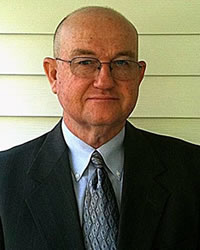
Gary Shepard

A Savior To Be Remembered

Exodus 12
Gary Shepard November, 5 2017 Audio
0 Comments
Gary Shepard
Gary Shepard November, 5 2017

Sermon Transcript

Auto-generated transcript • May contain errors

100%
Mercy, Lord have mercy, be merciful
to me. He stays within me through my
iniquity. Rush me wide and spotless as
snow in winter wind. Mercy, Lord, have mercy upon
my wicked way. Mercy, show mercy. I keep desiring sin. Free from sin's dark prison,
yet still I run back in. Lead me by your spirit. ? To all the things that surround
us ? ? Mercy, show mercy ? ? That I may cherish Christ ? ? Mercy,
precious mercy ? ? You're loyal to your Lord ? By your loving covenant, we'll
never be alone. Hold us close as children who
look to you for care. Mercy, precious mercy, upon me,
? Mercy, Lord have mercy ? ? Upon
the rich and poor ? Ceaseless like a fountain, your
mercy will endure. Oh, round love and kindness,
upon me lavishly. Mercy, yes, your mercy. Please turn with me. this morning in the book of Exodus. The book of Exodus. I want to read to you this morning from Exodus 12 beginning in verse Verse 21. I call this message, A Savior
to be Remembered. It says in verse 21 of Exodus
12, Then Moses called for all the elders of Israel, and said
unto them, draw out and take you a lamb according to your
families and kill the Passover. And ye shall take a bunch of
hyssop and dip it in the blood that is in the basin and strike
the lintel and the two side posts with the blood that is in the
basin, and none of you shall go out at the door of his house
until morning. For the Lord will pass through
to smite the Egyptians, and when he sees the blood upon the lintel
and on the two side posts, the Lord will pass over the door
and will not suffer the destroyer to come in unto your houses to
smite you. And ye shall observe this thing
for an ordinance to thee and to thy sons forever. And it shall
come to pass when ye come to the land which the Lord will
give you, according as he hath promised, that ye shall keep
this service. And it shall come to pass when
your children shall say unto you, what mean ye by this service? that ye shall say it is the sacrifice
of the Lord's Passover who passed over the houses of the children
of Israel in Egypt when he smote the Egyptians and delivered our
houses. And the people bowed the head
and worshiped. And the children of Israel went
away and did as the Lord had commanded Moses and Aaron, so
did they. And it came to pass that at midnight
the Lord smote the firstborn in the land of Egypt, from the
firstborn of Pharaoh that sat on his throne, unto the firstborn
of the captive that was in the dungeon, and all the firstborn
cattle. And Pharaoh rose up in the night,
he and all his servants, and all the Egyptians, and there
was a great cry in Egypt, for there was not a house where one
was not dead. Now the Lord calls Moses to institute that which was called
the sacrifice of the Passover. And in this text, it says that
the Passover, the actual event of the Passover that we've just
read about many times was to be a night to be much observed. Look back down here in verse
42. He says, it is a night to be
much observed unto the Lord for bringing them out of the land
of Egypt. This is that night of the Lord
to be observed of all the children of Israel in their generations. And the Lord said unto Moses
and Aaron, this is the ordinance of the Passover. It was to be often, and it was
to be much observed. And this feast, or this sacrifice
that they observed so often, They were to observe it as a
feast wherein they remembered an event in history. They remembered, if you will,
something that the Lord did. When you read those verses in
verse 29 and 30, The long history of this feast
did not make what was already done effectual. They remembered,
they observed what the Lord had done. And their observance of
this feast over and over and again did not in any way add
to what the Lord had done. Their remembrance of it did not
add to it, did not improve it, did not make it effectual in
any way, they were called upon to honor God and to worship Him
simply by observing this feast and remembering what the Lord
had done. And it was something that God
did that was not only to be remembered, but was also to be re-emphasized
over and over again, all the way to the time of the Lord's
fulfilling every promise. And the amazing thing is that
as this was to be much observed, often repeated, often remembered,
the same is true about the gospel of Christ. The same is true about
baptism. And the same is true about the
Lord's supper or the Lord's table that we will observe this morning. God is to be worshipped, remembered,
observed over and over again for what he has done for his
people, for what he has done for us in the Lord Jesus Christ. I say it represents something
about the gospel. Because the gospel is a declaration
of something that has already been done. When the Lord Jesus
Christ hung on the cross, his last words, which was really
just one word, was, it is finished. And it is an event in history
wherein the Lord has done something, accomplished something for his
people. And all the time when it is preached,
the gospel is preached, It is set forth as something that has
been done, something has been accomplished, and it comes to
us as news. It is always news from God and
truly and really is good news for His people. It's called the
testimony of Jesus Christ. is called the gospel concerning
his son. And it is simply a declaration
of facts concerning Christ, concerning who he is, and concerning what
he actually accomplished over 2,000 years ago in human flesh
on the cross. He is a savior to be remembered. Paul writes in 1 Corinthians,
he tells us in 1 Corinthians 5, 7, and this is in the New
King James Version, he says, therefore purge out the old man
that you may be a new lump since You truly are unleavened for
Christ, for indeed Christ, our Passover, was sacrificed for
us. We're not only told that Christ
as a sacrifice is our Passover. It was typifying what he would
do, but he's telling us also that he was sacrificed, and we
are to look at that offered sacrifice, at that accomplished redemption. We are to believe on him who
finished the work, and brought in everlasting righteousness. He writes to Timothy, and he
says, remember that Jesus Christ, according to the seed of David,
was raised from the dead according to my gospel. He lived, he came,
He offered himself a sacrifice, he died, he rose again, and all
of that, that accomplished work, is his salvation. Look over in
1 Corinthians chapter 15. 1 Corinthians chapter 15, beginning
in verse 3. For I delivered unto you, Paul's
writing to the Corinthians. He says, for I delivered unto
you, first of all, that which I also received. How that Christ died for our
sins according to the scriptures. and that he was buried, and that
he rose again the third day according to the scriptures." In other
words, Paul says, this is the message that I receive. And this
is the message that I preach to you and others again and again,
always remembering that Christ did all the work. Christ did all the saving and
he did it through his life and through his death. Look down
in verse 12. Now, if Christ be preached, that
he rose from the dead, how say some among you that there is
no resurrection of the dead? But if there be no resurrection
of the dead, then Christ is not risen. And if Christ be not risen,
then is our preaching vain, and your faith is also vain." In other words, if this actually
didn't happen, just like the time when God came on the Egyptians
to bring death to them in that judgment, and if he didn't deliver
all these Israelites in their homes by this blood of the Passover
lamb, he said, if this isn't happening, just like if Christ
didn't come, just like if Christ didn't die, just like if he wasn't
risen from the dead as an evidence that God accepted his sacrifice,
then everything we preach about him and everything you believe
is in vain. But it's not in vain. And we
remember Because every time the true gospel is preached, the
gospel of grace, the gospel of Jesus Christ, every time that
the truth is preached, we remember him, we remember what he did. We remember how he died for our
sins according to the scriptures. We remember that it's an accomplished
work. And as Paul says to the Romans,
we remember that he was delivered for our offenses and raised again
for our justification. That's why we preach the gospel. It is not only for the salvation
of his people, but it is for a remembering over and again
of Christ and a glorifying again of God in what he actually accomplished
when he hung there on the cross. We do it again and again, and
everything about the gospel sets forth his successful saving death
for sin. But also, baptism is a public
confession of our trust in something that was done for us by Christ
in his death and resurrection. Now a lot of people have a lot
of different ideas about what baptism is. Some believe that
it actually, in the water, washes away our sin. Some believe that
by the one who administers it, it becomes a cleansing fountain,
so to speak, for sins. But what baptism is, is an identifying,
it is a remembering, it is a confessing that we are saved only through
and by the death, burial, and resurrection of Jesus Christ. Why do we do it like we do? Well,
we do it because God has said that this is the way we're to
do it. We do it because this was the
example that the apostles and the Lord Jesus laid out for us
in the New Testament. But we do it because of what
it symbolizes and we remember that work and that death in what
we actually do and participate in. What do we do? We go down into
a pool of water. And in that water, we are taken,
and we are taken by someone else. We do not administer it ourselves. But we are taken by someone else,
just like we are taken by God himself, and we are buried in
the likeness of his burial, and we are raised up again in the
likeness of his resurrection, we are simply confessing publicly
that this is all our hope and all our salvation. That's why it is not said in
this book that sprinkling is baptism. When we bury somebody, we don't
bury them and leave the head above the ground. When we bury
somebody, we put them all the way in the ground, and if they
be resurrected, they will, by God, be brought up from that
death and to life as we see it in the Lord Jesus Christ. So
when we preach the gospel, we preach and we remember Christ
crucified. We remember his death for our
sins. We remember how he, by that work,
brought in everlasting righteousness, saved all his people. And when we come to baptism,
we confess the same thing. We confess salvation in Jesus
Christ alone. And then we have the Lord's Table.
You might say that there are three things that God commands,
that God has ordained, that God has taught us through the scriptures,
through the apostles, through the Lord Jesus Christ. They are
to preach the gospel and they are to baptize those that believe. And then we have the institution
of the Lord's table. There are people that observe
the Lord's table every week, and that's what they want to
do. It's fine with me, but I just
don't want it to become a ritual. But in baptism, we confess the
Lord's death, and also in the Lord's supper, or the Lord's
table, is the remembrance of the same thing, of Christ and
what he accomplished for us. Look over in 1 Corinthians chapter
11. 1 Corinthians chapter 11 and verse 23. There are so many things, I was
just thinking about it this morning, there are so many things that
have been initiated and instituted in religions And in false Christianity,
there are so many things that are done. Ceremonies, rituals. But we observe this because we
have not only the example of it, but we have the command to
do it. Look at verse 23. For I have
received of the Lord that which also I delivered unto you." Now, Paul was an apostle, but he was not a self-appointed
apostle. An apostle is one who is sent
forth. He is, as all are, an ambassador
of Christ. He doesn't make the rules of
his country. He doesn't make the rules for
those, for the one he is sent by, but he always takes and gives
what he is given. He always takes that which he
receives, and he gives that. For I have received of the Lord
that which also I delivered unto you, no more, no less. That the Lord Jesus, the same
night in which he was betrayed, took bread." They were eating the Passover.
So it was unleavened bread. He says, and when he had given
thanks, there was no passing his hands
over it. There was no ordained priest,
supposedly, or preacher presiding over what was done. It was done
with the greatest of simplicity It was done without ritual or
ceremony. It was just like in the midst
of this feast of the Passover, because the Lord was betrayed,
about to be betrayed and go to the cross, that he initiated
it. And when he had given thanks,
he broke it. He broke the bread up. He broke
the unleavened bread up. If you know anything about unleavened
bread, it's easy to break up. And he said, take eat. This is my body, which is broken
for you. This do in remembrance of me. This do in remembrance of me. This is my body, my sinless,
perfect body. This represents. It doesn't actually
become my body when somebody prays for it. It doesn't become
my body when some priest hands it over to you. This was my body
which was broken for you. It represents my body. You're to remember my body, my
sinless human body, which was pierced, which shed blood, by
which I poured out my life's blood for my sheep. It was my
blood and my body that was offered on that cross. Then verse 25 says, after the
same manner also he took the cup. The two things that were
there at the Passover supper was unleavened bread and wine. It wasn't grapefruit juice, it
wasn't grape juice, it was wine. I've often wondered why, how
people could reason out, such as they do when they enter into
like the church covenant that I used to be a part of, and in
that they vow that they will not drink wine. or how they could think about
in that day when Christ was offering up this cup that they could not
in any way refrigerate anything. No, he took wine. After the same
manner also he took the cup when he had said, saying, this cup
is the New Testament. the new covenant in my blood. That blood that the writer of
Hebrews says, that blood of the everlasting covenant. The everlasting covenant. This do ye as oft as ye drink
it in remembrance of me." The Lord's table is just like
the gospel is just like baptism. It is a remembrance of the Lord
Jesus Christ. We do it in remembrance of Christ
and not just of him mystically. We do it in remembrance of Christ
and what he accomplished for us because these very elements,
the bread and the wine, they speak of how he accomplished our salvation. Body broken, blood poured out. The only way that we could ever
be saved is for God the Son to come and take upon Himself human
flesh and blood, be partakers with those of His people, and
lay down that life for our sins. And that's why we do it again
and again. We don't get baptized again. True scriptural baptism is only
when one believes the gospel. Just because somebody dips us
in water, sprinkles water on our head, that's not baptism. It does not happen before we
come to the knowledge of the truth. in whom you trusted after you
heard the word of truth, the gospel of your salvation. Biblical,
scriptural baptism is believer's baptism. He that believeth and
is baptized. But after we've been baptized, we don't go back again. We acknowledge
that finished work. But this we do. We partake of
the Lord's table. As long as we live, as long as
we're enabled to gather with his people, we do it. Look at that next verse. Till
he come. For as often as you eat this
bread and drink this cup, you do show the Lord's death." Till he come. You do show the
Lord's death. I know you've heard me say it
many times. But there is nothing that is
to be repeated more and more and more. There is nothing that
can give us comfort, peace, joy. There is nothing that is more
important than in the showing of the Lord's death. through the preaching of the
gospel, through baptism, and through the Lord's table. You
do show what? That you're somebody? You show that the Lord's death
is the only way and is all your hope of salvation. You see, Faith does not determine the
success of what Christ did, nor does it make that work effectual
for us. No, that work that he accomplished
in history is the cause of faith. Faith is given to us because
of what He did, and faith looks to Christ and His work of redemption
accomplished in history. The Old Testament saints, they
all look to the cross, to His coming. But since the cross, the New
Testament saints, we look back to the cross. And we look to him who died there
and was buried and rose again and now sits at the right hand
of God. He did not do that without dying. We do show the Lord's death because
he that sinneth, the soul that sinneth shall surely die because
the wages of sin is death. Look in Hebrews chapter 9. Hebrews chapter 9 and verse 12. Neither by the blood of goats
and calves. Now that Passover was the blood
of a lamb, an actual lamb. But that lamb's blood did not
save. It only pictured and pointed
to the one who would come and be God's lamb, the lamb of God
that takes away sin. Neither by the blood of goats
and calves, but by his own blood, he entered in once into the holy place having obtained
eternal redemption for us. He did that. He made that sacrifice. He offered that offering. He
was the Passover that was sacrificed for us, that actually saves us
from our sin. And for that reason, When we come to the Lord's table, we don't come to a pity party
for Jesus. We don't need the lights to be
turned down low. We don't need soft music playing
in the background. It's a feast wherein we rejoice. And we remember
our Savior, His sacrifice, and rejoice in His salvation. And this is how. He died for
us, bled for us, rose again for us, is seated at the right hand
of God for us, and He is our only hope. So actually, in the gospel, this
is what we're confessing when we believe it. In baptism, this
is what we're confessing when we participate in it. And in
the Lord's table, this is what we're confessing every time. We eat of this bread and drink
of this wine. It says that when they finished
it up, guess what they did? They sang a song. They sang a
song. They were happy about it, rejoicing. It's a feast. And we're thankful that God has
given us this feast to remember his son.
Gary Shepard
About Gary Shepard
Gary Shepard is teacher and pastor of Sovereign Grace Baptist Church in Jacksonville, North Carolina.

Comments

0 / 2000 characters
Comments are moderated before appearing.

Be the first to comment!

Joshua

Joshua

Shall we play a game? Ask me about articles, sermons, or theology from our library. I can also help you navigate the site.