Bootstrap
Gary Shepard

We Have An Advocate

1 John 2:1
Gary Shepard April, 9 2017 Audio
0 Comments

Sermon Transcript

Auto-generated transcript • May contain errors

100%
Open your Bibles this morning to 1 John. 1 John chapter 2. I think about it sometimes when
we come together and I tell you to open your Bibles. I wonder if we really realize
or thinking about what we're doing. We're opening the word of God. We're opening this most sacred
word of the living God. What a privilege, what a blessing,
what a responsibility. Reading in the second chapter
of First John, we read, my little children, These things
write I unto you that ye sin not. And if any man sin, we have
an advocate with the father, Jesus Christ, the righteous. It seems like at the present
hour. There is an attempt to minimize what I would call
the legal language of the scriptures. An attempt almost to make the
gospel and the good news of God something mystical. But the Bible uses legal language. The Bible uses the terms of a
court. And this is so we can get a plain
understanding of the truth. of what Christ has done for us,
what he is to us. Everybody is familiar with the
terms of the courts. Courts have been since time began. We find words and terms like
condemn, condemnation, justification, redemption, ransom, surety, imputation,
judge, judgment. And all of these things are pertaining
to Christ and God's salvation. There so we might have some understanding
of the awful condition we're found in by nature. What it is
to stand before God as the righteous judge and what it is to be saved
by the Lord Jesus Christ. Now here John, first of all,
states that unchanging command from God, whether it is by prophet,
whether it is by apostle, whether it is by the Lord Jesus Christ,
it is always sin not. I write unto you children, that
you sin not. In other words, with regard to
whatever we might be taught by grace, and moreover what many
people would say about grace, grace is never a justification
or an excuse for sinning. Always the same standard is lifted
up. Sin not. Paul writes in Romans
6, what shall we say then? Shall we continue in sin that
grace may abound? God forbid. How shall we that
are dead to sin live any longer therein? How is anybody dead
to sin? By dying in the Lord Jesus Christ. By dying in that one whose death
made an end of sin. And never are we to minimize
sin Never are we to look on sin as a light thing. Never are we
to count being a sinner as a little thing. But we are to view sin
always in the light of how God views it. Sin not. God hates sin. always hates sin. And any attempt, in any doctrine,
or anybody's gospel, or anybody's commentary, or anything else,
to minimize sin is a danger. It's not what the gospel says.
It's not what the apostle says. It's not what Christ says. It's
always sin not. But that being the case, Though
that's always the standard, we know that we will sin. If we have an honest bone in
us, we know that we'll sin. So that the question is not if,
but when. When any man sins. Verse 8 in chapter 1 says this,
if we say that we have no sin, we deceive ourselves and the
truth is not in us. All such nonsense as sinless
perfection, All such nonsense is viewing us as being righteous
in our person and self. Absolute foolishness. The truth is not in us. And when he says that, after
he says all of these things, we meet with another legal term,
a legal name, if you will. It is that of the advocate. Advocate. He says here, if any
man sin or when any man sins, we have an advocate with the
Father, Jesus Christ the righteous. So that we are brought by the
grace of God, into this place in Christ Jesus so that we are
not only made free from our sins, but also though made not free
from sinning, when we sin, we have an advocate. Even the Lord's people, Even
those saved from their sins are daily sinning. And it appears
that we realize this more sometimes than we do at other times. We realize it more to some degrees
at some times than we do at others. But when we are made to know
it, We hate sin in ourself. We hate sin against God. And sin, by virtue of what it
is in our conscience, always brings us to grief. We always are found admitting
ourselves to be sinners. We're always found, if by grace,
confessing our sin and our sinfulness, always found grieving over sin. But it's against that black backdrop
that John says, but we have an advocate. Whether we are fresh from the
feeling of being forgiven or whether we are found in the grief
and the state of depression and such over our sinfulness, we
have an unchanging advocate. But what is an advocate? Well, Hawker defines an advocate
as one that pleads the cause of another. I don't have anybody
to plead my cause or case before the local court. I don't have
one to plead my cause before. I don't have anybody on retainer
that could plead my case in any situation. But how much more
before God? This is one who pleads the cause
of another before a judge. Other places define advocate
as an intercessor, as a consoler, as the word itself means a paraclete
or one who comes to one side. Comforter. Counsel for the defense. That's what an advocate is. And I recently had the jury duty
experience once again, and what an experience it is. I sat on the case of a man who
defended himself. And immediately, the thought
came to my mind about the saying that people have said for many
years, and that is, a man that acts as his own lawyer has a
fool for a client. Boy, that was the case. He acted
as his own lawyer And it showed that he had a fool for a client. But if that is the case in the
natural realm, what is it to stand before God? What is it
to face the judgment of God? What is it to face the wrath
and judgment of God? God is infinitely holy. We are not bestanding before
one who is like us. God says, you thought that I
was one such as yourself. God is not like us. He is infinitely holy. He is inflexibly just. And not only that, he knows all
things, even the intents of our hearts, our motives, and our
thoughts, and we dare somehow think that we can stand before
him. But we'd be like the man who
came to the wedding feast without a garment. In Matthew 22, it
says that the ruler of the feasts or the master said unto him,
friend, how camest thou in hither not having a wedding garment? It says, and he was speechless. Men and women imagine in their
deceived, fallen minds what their plea will be before God. Such things as this, I did the
best I can. I did the best I could. I treated people as good as I
could. I love my wife. I did all these things. I just
did all. There's the problem. Every natural defense of man
begins with I. It all depends always on something
we've done or not done. And we do not realize, we do
not know by nature and only find out by grace that this is the
very thing that this book over and over cries out against. Standing before God on your own,
on your own merit, on your own terms, seeking by your obedience
or life somehow to please God. They say, I just live by the
golden rule. But the very law that they claim
to live by is the very law that was given to condemn, and there
is no hope without an advocate. Who is an advocate before God? Because he is surely the one
that we will all face. He is surely the one with whom
we have to do. Who is an advocate? Who does
it say here is the advocate? Jesus Christ. Not as we think he is. Not as
we want him to be. But his advocacy is just based
on what it says in this book. But it says, first of all, that
he is the only advocate. Buddha will never do. Confucius
will never do. Muhammad will never do. But more than that, another Jesus
will not do. Paul warned and he spoke about
those who believed and followed and trusted in another Jesus,
who is not the one that we find revealed in the Word of God at
all, but he is a idol of men, the imagination of men. He's
not really the Jesus we read about here in Scripture, who
one verse describes him. One verse. And that is the very
verse wherein Joseph and Mary found out His name. Thou shalt
call His name Jesus because of something. Because He shall save
His people from their sins. And any other Jesus. is simply
another Jesus. Because only Jesus Christ, the
one revealed in Holy Scripture, he's the only one that can meet
the needs of the court and the defendant. How can he do that? Because he's
a one of a kind. He is the only God-man. He is the only one that is able
to meet what God requires and what we as sinful man requires. He's the only one that can do
that which is necessary to save us. We're like a lot of people, like
I'd be, I'm sure. If we had a case in court, we
want to find the cheapest lawyer that can defend us. We're in hopes that we can get
by with a bargain or something like that. We're hoping that
we can get one that suits us as we are naturally. All the
time, God's saying that there is only one advocate. There's only one who can plead
a sinner's case. And so Paul writes, and he writes
in this way in 1 Timothy 2, he says, for there is one God and
not many gods. There's just one. And he's the
way he says he is in this book. He's not the one that all these
preachers say he is and describe as only a God of love and only
a God of mercy. He is exactly as he is in this
book. There is one God and there is
one mediator between God and men, the man Christ Jesus. You say, that's being very narrow.
It's only as narrow as this book. There is one God. There is one mediator between
God and men, the man Christ Jesus. And we are as people standing
before God, especially as believers, We are accused. We are accused
in our conscience. We are accused by the devil. That's what he's called. The
accuser of the brethren in Revelation 12. We have all these things
against us. But here he says that though
we are constantly accused in conscience, accused by the devil,
accused by all other people, we have an advocate. But what is the basis for his
advocacy? You know, I believe that most
people don't really have understanding as to what the advocacy of Jesus
Christ is based on. They imagine, you see, if our
need arises because of our sin, if it's because we're guilty
in ourselves, how can he advocate for us? Oh, he says to the father, well,
they're not as bad as it seems. Or some say, Lord, I like those
people. They try the best that they can.
I plead for them. I want for them this, that, and
the other. That's foolishness. That's nonsense. Because the only way that he
can be an advocate for us in the sight of this thrice holy
and just God is on this basis. He's Jesus Christ the righteous. He's Jesus Christ the righteous. He does not plead our case. He does not intercede for us
and plead our case and cause on the basis of any goodness
in us or anything done by us or anything else except His righteousness. He's Jesus Christ the righteous. And on that basis, He pleads,
He makes His intercession for us, His advocacy based on who
He is and not on who we are. You see, the truth is, the Lord
Jesus Christ, He does not have to beg the Father on our behalf. That's not what this means. He
doesn't have to come before the throne of God and plead with
God and such as that. His very presence is our plea. The fact that Christ died for
our sins and God raised Him up from the dead signifying that
He accepted His sacrifice and offering and raised Him up on
high and set Him down at the right hand of God. His very presence
there is our intercession. He's our advocate. He makes intercession
based on his righteousness, because he knew no sin. And for that reason, he could
be a substitute for sinners. The scriptures say that he died
for our sins and the price was paid. He acted on our behalf
in a righteous or a just way and satisfied every claim against
us. He doesn't base this advocacy
on what we can do. or what we'll do or what we've
accepted or rejected or anything else. His advocacy is always
based on his righteousness. And I tell you, if that means
little to you, you've never been brought before
God convicted of your sins. If you have ever and are ever
brought before God to see sin in the light that God sees it,
to see yourself in the way that God sees it, to see your inability
and your hopelessness in yourself and your sad condition, this
will mean something to you. That there is an advocate. We
have an advocate with the Father, Jesus Christ, the righteous,
who died in our place for our sins, who acted in this righteous
way that God describes in Romans 8 like this. Romans 8, 33. Who shall lay anything to the
charge of God's elect? There's that legal stuff again. It's all over this book. And
it given that we might have some understanding as to what is involved
in the death of Christ for sin. Some people used to call it a
mercantile redemption. I don't want to hear anything
about the court. I don't want to hear anything
about bought and paid. I don't want to hear anything
about blood or sacrifice. Just let me hear about Jesus. But I'm telling you something.
If you don't hear about these things, you're not hearing the
gospel. If you don't hear about these
things, you're not hearing what God says in His Word. If you
don't hear these things, you're not hearing about the true Jesus who shall lay anything to the
charge of God's election. It is God that justifies. That's a term of the court. means
to declare righteous, just like a court declares one not guilty. Who is he that condemneth? It is Christ that died. Yea, rather, that is risen again,
who is even at the right hand of God, who also maketh intercession
for us. I sin every day. I sin every
minute. I sin when I don't think I sin. Everything I do is polluted with
sin. I'll never in this life reach
a state or a condition or a plateau wherein sin does not pollute
everything I do. And the only hope I have is in
this advocate. We have an advocate with the
Father. And it isn't just this funny
feeling, mystical Jesus everybody keeps talking about. It isn't
this person excluded by his work that we're looking at. We're looking at the true Jesus
who actually did something. And His work, His person is because
of His, is a success because of His work. And His work is how we're saved. He's Jesus
Christ the righteous. He satisfied both parties. His blood satisfies the court
of heaven in the matter of our sin. It offers satisfaction,
and the evidence is there in heaven. Neither by the blood
of goats and calves, but by His own blood, He entered into the
holy place, having obtained eternal redemption for us. That involves a price that was
paid. That involves a standard, a court,
a legal thing. Redemption has to do with the
buying back by the paying of a price. But there's another evidence. The evidence in the heart of
every believer. every single one. Romans 3, Paul says, whom God
set forth to be a propitiation through faith in his blood. to declare his righteousness
for the remission of sins that are passed through the forbearance
of God. Now, two things about that. When he says, through faith in
his blood, he's tying the death of Christ to all that was typified
in those Old Testament sacrifices. All that blood that was shed. all of the atonement that was
made. But he's also doing something
else there. When he says faith in his blood,
he's making sure that we don't get deceived by this mystical
Jesus everybody's talking about. Who is excluded from His work? Who is excluded from His sacrifice? Who is excluded from His death
on the cross? It's faith in His blood. What does that mean? faith to
believe that he accomplished what the Bible says he would
accomplish by his death. He shall save his people from
their sins. And I like the fact that he's
not only able to advocate for us in this sense, but with that
word has the meaning of comfort. In other words, acting maybe
as our lawyer, he can not only advocate for us on the basis
of his own righteousness, but he can also console us and assure
us that on that basis, everything's going to be all right. You see, the word advocate here
is the same word that is used about three other times in application
of the Holy Spirit. And it's translated with regard
to him as comforter. Christ said, I'll send the comforter. so that we have not only in Christ
this advocacy before the throne of God, we have it in our hearts
as a comfort and a blessing and a means of giving us peace in
our heart. And I don't know if you noticed
it here, but the one that we stand before
The one who is the God of glory, the one who's spoken of here
as this one being our advocate before, he says, he's our advocate
before the Father. You see, it just gets better
and better. In other words, our advocate and the Father They're in agreement. The father looks upon the advocate,
our advocate, not only in this role, but in relationship. He's his son. We have an advocate with the
father. Who is he? The son. I remember years ago hearing
a story about the little boy who sat in the footsteps of the big college
building, and he noticed that there was a young man sitting
there with his face in his hands. So sad. The little boy ran up to him.
He said, what's wrong with you? What's wrong? Oh, you'll never
be able to understand. Oh, come on, tell me, what's
wrong with you? Well, I need to see the coach
in there. I got to talk with him about
something and his secretary shut me out and says I can't see him
for a day. I need to see him right now. He said, come on. What? You mean to tell me I've gone
through all this and I can't get in, but you can get in?" He says, come on. And so the
young man got up and walked with this little boy right through
the front of the building, right past the secretary's desk, through
the door open and said, daddy, this boy wants to talk to you. He's the son of the father. And it gets even better. Christ
said, the father is our father, your father, and my father. Oh, what we won't give for this
relationship. Our father, he's the advocate. We have an advocate with the
father, Jesus Christ, the righteous. And by grace, he's not only Christ's
father, he's the father of all these children. But it always boils down to this,
doesn't it? Who is he an advocate for? Who is he an advocate for? Well, in chapter 1, we find that John
is writing this to those who have fellowship with the Father. They have fellowship with God
through Jesus Christ. And John, particularly, over and over again in this book
refers to them as little children. There are a lot of people that
will read this book and this Bible. And to them, it will be read
just like if you read somebody else's mail. It's not to you. It's not to
everybody. This book is particularly to
the people of God, God's elect, the little children. President Trump says we're all
God's children. No. Christ said to some, you
are of your father the devil, and his works you'll always do. There is a distinction made over
and over again, not only as to attitude and condition by grace,
but relationship. By attitude, he says, Verily,
verily, I say unto you, except you be converted and become as
little children, you shall not enter into the kingdom of heaven. Everyone God saves, he brings
down. In this sense, like little children,
they are taught. Like little children, they are
corrected. Like little children, they are
in attitude, stand before him in humility. They're just little
children. Don't know so much as we thought
we knew. Can't do so much as we thought
we could do. We're just little children. Christ said it like this in John
13, little children, yet a little while I'm with you, you shall
seek me. And as I said unto the Jews,
whither I go, you cannot come. So now I say unto you. He didn't call the Jews that.
He didn't call the Pharisees that. But he called that little group
of believers, disciples, little children. Little children. Look here in
the epistle of 1 John. Verse 12, 1 John 2. I write unto you, little children,
because your sins are forgiven you for his name's sake. Well, he surely was talking about
somebody back then, wasn't he? No. He's talking about all the
people of God in all times, even those who have not yet believed. But their sins are in one sense
forgiven. They don't know about it yet.
But it's true. Little children. Verse 13. I
write unto you fathers because you have known him that is from
the beginning. I write unto you young men because
you have overcome the wicked one. I write unto you little
children because you've known the father. You see, this admonition and
this encouraging news is to those who know something about forgiveness,
but who yet feel their sinfulness. We have an advocate with the
Father. Verse 18, little children, it
is the last time as ye have heard that antichrist shall come and
even now are there many antichrists whereby we know that it's the
last time. Chapter 3. Verse seven, or verse 18. Little children, let us not love
in word, neither in tongue, but in deed and in truth. All this
book is to little children. Chapter four, verse four. You are of God, little children,
and have overcome them, because greater is he that is in you
than he that is in the world. Chapter 5 and verse 21, little
children, keep yourselves from idols. Little children. But particularly, look in chapter 3 and verse 7. Let no man deceive you. He that
doeth righteousness is righteous, even as he is righteous." But especially look at verse
10. Verse 10, verse John 3. In this, the children of God
are manifest, and the children of the devil. Whosoever doeth
not righteousness is not of God, neither he that loveth not his
brother." Now, we get all scared, and rightly so by what preachers
say about this. They say the evidence of being
a child of God is if you do right. Well, I'll just confess to you
right now. If that's what this says, I'm
out. I cannot, in that sense, do right. Especially not to please God. But He that doeth righteousness. That's a child of God. What is the doing righteousness
that these little children of God, they all do? They all do. I hear it said a
lot. If you're a Christian, you won't do this. If you're a Christian,
you will do this. Doesn't matter, it doesn't matter
if in the Bible you can show somebody who is a Christian who
did this or if you can show that there is in the Bible a Christian
who didn't do something. To do righteousness is to trust
the righteous one. is to plead his blood and righteousness
for all your salvation. Now, how do I know that's true?
How can I be so sure after all those commentary and preachers
have said that doing righteousness is something else, something
we perform because of the next verse? And the next verse, you
see, thank God He gave an illustration. Thank God He gave an illustration. He gave a Bible illustration. That's the only ones I really
trust. The Holy Spirit gave this illustration, and He used two
men, Cain and Abel. Now, we only know a very limited
amount about those two men. We know that Cain rose up and
he killed his brother. You say, that's bad, that was
unrighteousness. Well, in one sense it was, but
he did that The Bible says, because his works
were evil and his brothers were righteous. We only know two things about
them. King brought the fruit of the
ground, the works of his own hand. All tried to worship God
in that way. And that was unrighteousness.
That was, as the Bible describes it, evil works. Abel took a lamb, took the very
thing that pictured and pointed to the Lord Jesus Christ and
his sacrifice for sin. And he came before God. That's
what worship is. It's coming before God. He came
before God and he offered what God requires, what God provided. And that was blood. That's all we know about him. But it says, instead of loving
his brother, which Abel did, Cain did not love his brother
and slew him, one reason, because his works were already evil. His works were already evil.
If we had what some preachers say, we could say, well, Cain's
problem was, as a fellow once said to me years ago before I
hardly knew anything, but I knew that was wrong. He said, Cain
just came with the wrong attitude. No. He came with the wrong sacrifice. He came with the wrong offering.
He sought to please God and approach God without blood, the blood
that God appointed and accepted, of which this lamb was a type
of our Lord Jesus Christ. If it had said maybe that Cain
was a drunkard, but we don't even know anything
about alcohol in that day, or Cain was a whoremonger, or Cain
was a thief, or Cain was a this and a that and the other. The
truth was that Cain slew his brother in anger because God
accepted his sacrifice and he refused his. And so the Bible says that Abel
did righteousness. He trusted Christ. He looked
to him. He pled his blood. He went before
God in the way that God appointed because his father, Adam, had
told them both that God requires a sacrifice. Romans 9, 8. That is, they which
are the children of the flesh, these are not the children of
God, but the children of promise. The children of promise are counted
for the seed. That's God's elect. But here is a good verse. Galatians 3 and verse 26. Paul doesn't simply call them
little children, but he says, for you are all the children
of God by faith in Jesus Christ. You see, true God-given faith. will never ever trust anybody
or anything but Christ alone. His sacrifice, His blood, His
righteousness, and that's it. The Spirit itself beareth witness
with our spirit that we are the children of God. And that the Spirit of God will
only bear witness, a true, positive witness. There's that word again,
witness. Another legal term, Spirit of
God will not bear witness, but to anything but Christ. When He is come, He'll take the
things of mine and show them unto you. Show you not only what
they are, but show you that this is the only way. Convince you
that this is the only way God forgives sin. Convince you that
He has forgiven your sins in Christ. God's people are to sin not. That's always the standard. That's
always what's said. But God's not delusional as to what we are.
He knows what we are. We ain't nothing but sin. He says, sin not. He says, love
one another. But when any man sins, we have. Isn't that wonderful? We have an advocate with the
Father. We don't need a priest. We don't
need another go-between. We don't need a preacher to be
our stand-between. We don't need to walk down an
aisle, shake a preacher's hand, or rededicate. We have an advocate, Jesus Christ, the righteous. He advocates on the basis of
His perfect righteousness, on the basis of His righteous work. And we only do righteousness
when we believe on Him alone. We trust His righteousness. We have an advocate. You get in trouble here, you
may not be able to hire the best lawyer in the county. But before God, we have an advocate. Our Father, we thank you this
day with our blessed advocates. We thank you that though we're
not righteous, he is. Though we do not righteousness
of ourselves, he does. We praise you and we thank you. We pray for those who do not
yet know his work as their advocate. Be pleased to save your people
and to reveal to them this glorious truth. For we ask it in his name,
his advocacy being the very basis of our prayer. Amen. Amen.
Gary Shepard
About Gary Shepard
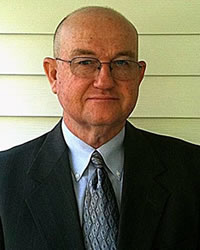
Gary Shepard is teacher and pastor of Sovereign Grace Baptist Church in Jacksonville, North Carolina.

Comments

0 / 2000 characters
Comments are moderated before appearing.

Be the first to comment!

Joshua

Joshua

Shall we play a game? Ask me about articles, sermons, or theology from our library. I can also help you navigate the site.