Bootstrap
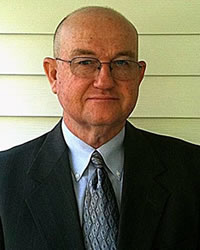
Gary Shepard

Christ The Mercy Seat

Exodus 25:17-22
Gary Shepard February, 19 2017 Audio
0 Comments
Gary Shepard
Gary Shepard February, 19 2017

Sermon Transcript

Auto-generated transcript • May contain errors

100%
and you handle it with the care
that follows. ? With all my love Christ my Savior
? ? Live in me from day to day ? ? By His love and power controlling
? ? All I do and say ? ? May the word of God how richly ? May the peace of God, my Father,
rule my life in everything. that I may become to comfort
sick and sorrowful. May the love of Jesus fill me,
as the waters fill the sea. Him exalting self abasing, this
is victory. May I run the race before me, strong and brave to face the
foe, looking only unto Jesus as I own virtue. May his beauty rest upon me as
I seek the laws to win, and may they
forget the channels seen only here. Turn with me in your Bibles this
morning to the book of Exodus. I want to begin in the book of
Exodus chapter 25. We'll begin by reading a description
of one of the items in the tabernacle. Verse 17, Moses is commanded,
and thou shall make a mercy seat of pure gold. Two cubits and
a half shall be the length thereof, and a cubit and a half the breadth
thereof. And thou shalt make two cherubims
of gold. Of beaten work shalt thou make
them in the two ends of the mercy
seat. and make one cherub on the one
end and the other cherub on the other end, even of the mercy
seat shall you make the cherubims on the two ends thereof. And
the cherubims shall stretch forth their wings on high. covering
the mercy seat with their wings, and their faces shall look one
to another. Toward the mercy seat shall the
faces of the cherubims be. And thou shalt put the mercy
seat above upon the ark, and in the ark thou shalt put the
testimony that I shall give thee. And there will I meet with thee,
and I will commune with thee from above the mercy seat, from
between the two cherubims which are upon the ark of the testimony
of all the things which I shall give thee in commandment unto
the children of Israel. Now that is the description basically of the lid that was
on the Ark of the Covenant that was in the Holy of Holies in
the tabernacle. It is called the Mercy Seat. And I thought about it often
in the kind of situations that I often find myself in. There are not too many people
in our day who think they need mercy. Mercy can be defined as the kind
treatment of one that has acted the part of an enemy. Mercy is said to be for those
who are miserable. And surely, if anybody needs
mercy, it is sinners. It is sinners who need mercy. And that brings me to a question
this morning that I would want to ask each and every one that
is present. Do you need mercy? Mercy from God. Well, three times in the Psalms,
it says that the Lord is plenteous in mercy. Plenteous in mercy. Those that seek mercy acknowledge
that they don't deserve it or it wouldn't be mercy. They confess by their wanting
mercy that there is no other way that God could show favor
to them. Mercy is for the ill-deserving,
not just the undeserving, but mercy is for the ill-deserving. And the object that we read about
in that text is called the mercy seat. But like all the objects in the
tabernacle, just like all the objects on the Old Testament
economy, that mercy seat pictured Christ. It was a type, a foreshadowing
of the Lord Jesus Christ. And it showed how that God could
and would be merciful to sinners. Now let me tell you just a few
things about what took place on the mercy seat. Once a year, the high priest
that God appointed, the high priest would go into the Holy
of Holies by himself, representing the people. But he would not
go without blood. He would take the blood of the
sacrifice, and a little special shrub, as it were, and he would
dip the shrub into the blood, and at God's command, he would
sprinkle it on the mercy seat. Made of gold, covering of gold,
the lid on this box with the two golden cherubims both pointing
each other, And the scripture says that God told them, I will
dwell there, meet with you there, show mercy to you there, commune
with you there over the mercy seat. The mercy seat. Turn with me in your Bibles to
the book of Hebrews. Because here in the book of Hebrews,
in chapter 9, we read the apostle mentioning this very thing, the
mercy seat. And he says in verse 5, in description
of it, He says, and over it the cherubims of glory shadowing
the mercy seat. He's describing those cherubims
of gold and that golden lid on the mercy seat. But what is interesting
is the word that is here translated mercy seat, is also the word
used in the Greek Old Testament, the Septuagint, to describe the
mercy seat. It is the same word. But when we read that word elsewhere
in the New Testament, It comes out in the translation just a
little bit different from that. Turn over, if you would, to I
John, I John chapter 2. John says, We have an advocate with the
Father, Jesus Christ the righteous. And he is the propitiation for
our sins. And not for ours only. John says,
being a Jew, But for the whole world, you notice that word,
the words the sins of is not in the original, but for the
whole world, meaning Jew and Gentile. He is the propitiation
for our sins. That word is the same word as
mercy seat. mercy seat. He is the mercy seat. All right? Turn over just a little
bit more, and in chapter 4 of 1 John, look at what it says. 1 John chapter 10, 1 John chapter
4 verse 10. He says, herein is love, not
that we love God. No man, woman, by nature, loves
God. They love who they think is God. They love their own definition
of God, but they don't love God as He is. It says, herein is
love, not that we love God, but that He loved us and sent His
Son, the perpetuation for our sins. Same word, mercy seat. And then look with me one more
time at Romans chapter three and verse 25. Again, it is Christ
Jesus. Again, it is that redemption
that is in Christ Jesus. He says, being justified, verse
24, being justified freely. Now, we don't know anything about
justification, even though we might think we know something,
if we don't know about free justification. Free. That word is translated
in another place, without a cause. Being justified without a cause
in us, being justified freely, by his grace, through the redemption
that is in Christ Jesus, whom God has set forth a propitiation
through faith in his blood to declare his righteousness for
the remission of sins that are passed through the forbearance
of God, to declare, I say at this time, his righteousness
that he might be just and the justifier of him which believeth
in Jesus. That word in verse 25, propitiation,
is the same word mercy seat. Mercy seat. In other words, the
Lord Jesus Christ is the mercy seat. And in light of that, God
has clearly passed over the sins of some people. We read about
Abraham, Isaac, various ones in the Old Testament, David,
all sinners, but God passed over their sins. And Paul says here
that he remitted or he has forgiven the sins of some. And not only
that, he says that God did then and now forbear some who have
sinned. And not only that, but that he
was and is just in the doing so. He even says that God showed
his righteousness to do it. God showed his righteousness. He showed that he was right to
forgive these people's sins. He was right to forbear their
sins. And he says, moreover, that he
is now the justifier. That means declaring righteous. He is the one who declares righteous
them that believe on Jesus, the just one. How can that be? How can that be? That God would
show mercy to such who are so diametrically opposed to what
he is. His being holy and we being nothing
but sinners. How can God be just and justify
such as we are and be right in the doing of it? It says by Jesus Christ being
the propitiation. The mercy seat. You see, when
the priest went in once a year, he went in representing Israel. Not any other nation on the earth,
but he went in representing Israel. And the reason for that is because
the Lord Jesus Christ went into the holy place in the presence
of God, representing His true Israel. his people, those that he loves. And he went there in order to
be a propitiation. I wonder how many people profess
to be Christians and they have no idea what that word means. What is a propitiation? Well, it's a great Bible word,
and it's used at least three or four times that we have read
already, but most people don't have an understanding of it.
And most commentators, most people who comment on the Bible, they
change propitiation to expiation, which is the removal of guilt. The Lord Jesus Christ, in his
sacrifice, surely did expiate, or he surely did remove guilt,
but not without propitiation. Not without propitiation. And they're not the same thing. Men do this in order to try and
do away with the idea that God is a God of wrath. They say, we only have to remove
our guilt. We don't really have to turn
away his anger against sin. But it says this in Psalm 11,
God judgeth the righteous, and God is angry with the wicked
every day. Most people only hear about God
is love. But it says here that God is
angry with the wicked every day. And I got a surprise for some
folks. God is referred to as a God of
wrath some 580 times in the Old Testament. 580 times. And nowhere do we find Him, as
some people say, Him being referred to as just A God of love. He's a God of wrath against sin. And we hear the prophet speak
of God's wrath being demonstrated. Oh, he's not just passively wrathful,
but he actively has done so. It says in Psalm 78, the wrath
of God came upon them and slew the fattest of them and smote
down the children of Israel. God acted in wrath. So if God is not the God that
men set him out to be, and rather is the God of how the Bible sets
him out to be, it says also by Paul and John and others, for
the wrath of God is revealed from heaven against all ungodliness
and unrighteousness of men who hold the truth in unrighteousness. Has God changed? The Bible says that he's the
same yesterday and today and forever. He doesn't change. He says, I change not, therefore
ye sons of Jacob are not consumed. If God was that way, then you
can count on it. He's that way right now in the
matter of sin. And we read in the Bible that
this is the promised end of unbelievers. This is the future of all unbelievers. In Revelation 14 it says, And
the third angel followed them, saying with a loud voice, If
any man worship the beast and his image and receive his mark
in his forehead or in his hand, the same shall drink of the wine
of the wrath of God. which is poured out without mixture
into the cup of his indignation, and he shall be tormented with
fire and brimstone in the presence of the holy angels and in the
presence of the Lamb. And the smoke of their torment
is scented forever and ever, and they shall have no rest day
or night, who worship the beast in his image and who receive
the mark of his name." In other words, everybody who worships
Antichrist, everybody who does not bow to the Lord Jesus Christ,
every one of them will meet the wrath of God. So what does propitiation
mean? Propitiation has to do with appeasement. It has to do with turning away
wrath. But in the Bible sense, it seems
to mean to appease his wrath so as to satisfy his holiness
and his justice and to obtain favor as a result. Propitiation with the Lord Jesus
Christ does not only turn away the wrath of God, does not only
satisfy the law and justice of God, but brings us into favor
with God. I like what John Owen said about
this. He said, there is an offense
to be taken away a person offended to be pacified, the person offending
has to be pardoned, and a sacrifice has to be offered. And that was what was pictured
in the mercy seat. The priest went in representing
those Israelites with the blood, and He made atonement for their
sins. He made atonement. And only the
Lord Jesus Christ has done this, and that He has done by Himself
and by His work on the cross. Hebrews 2. Wherefore in all things
it behooved him to be made like unto his brethren that he might
be a merciful and faithful high priest in things pertaining to
God to make reconciliation for the sins of the people. In other words, just like was
pictured in the Old Testament, that priest is the Lord Jesus
Christ, and he's the only priest there is. That sacrifice was
the Lord Jesus Christ, and he's the only sacrifice there is. His blood shed on the cross was
that blood pictured being sprinkled on the mercy seat, and it's the
only blood that suffices. In other words, he is the only
mercy seat. But how did this mercy seat,
how did this propitiation come to be? Do we look in the pages of history? Do we look at the church, so-called,
in our day? Where did this propitiation,
this propitiatory sacrifice, the Lord Jesus Christ come from? Well, look back here in Romans
chapter 3 and verse 25. Verse 25, it says, whom God has
set forth. God is the offended party. He is the one who has to be reconciled,
or we have to be reconciled to, that we need to turn away his
wrath because of our sin. And yet it says, God set forth
the Lord Jesus Christ. You might say that God set forth
himself. You know, David, you remember
the account of David and Goliath. David there slaying Goliath,
who's a type of sin and a type of the devil, with that stone,
David is a type of our Lord Jesus Christ. But what really we fail
to realize is that the stone that he slung, that also is a
type of the Lord Jesus Christ, so that he by himself, with himself,
slew all our enemies. Christ is referred to as the
stone, the rock. So he is by himself, with himself,
purging our sins on the cross. The perpetuatory sacrifice of
Christ is a self-satisfaction of the triune God. Just like
Abraham said when he talked to Isaac about going up on the mount. Isaac said, well, we're going
up to worship, and I see the wood, and I see the fire, and
I see the knife, but we don't have a lamb. We don't have anything
to sacrifice. But he said, the Lord will provide
himself a sacrifice. In other words, Christ is God,
providing God as a sacrifice and an offering for sin. That's
why he came into this world. That's why he took upon himself
human flesh. and the perpetuatory sacrifice
of Christ meets the requirements of that divine nature, which
is all the persons of the Godhead, Paul says to those believing
sinners at Corinth, God hath reconciled us unto himself. In other words, an offense took
place. In the garden, Adam sinned against
God. And Paul says in Romans 5, when
he sinned, we all sinned. And then when every one of us
were born, because we were born of Adam, we take upon ourselves
the nature of sin. And to imagine. that we're somehow
getting better and better as men seem to think we are. For heaven's sake, look around
you. It says that men shall wax worse
and worse. And our only hope Our only hope
is in this propitiation. And in the work of vicarious
atonement, God is both the subject and the object. He's both active
and passive. God holds the claims. God satisfies
the claims. He is the one displeased. And
he's the one that propitiates the displeasure. He's the one
that demands atonement, and he is the one who provides it. That's why it is mercy. Paul writing to the Colossians
says, and having made peace, Now, how many times do you and
I, over the course of our lifetime, hear preachers and people saying
that you need to make your peace with God? But we can't make peace with
God. We're sinners. We have a natural
enmity against God. He says, and having made peace
through the blood of his cross by him to reconcile all things
unto himself, by him I say whether they be things in earth or things
in heaven. Now does that say to make peace
with God? The big difference in the truth
and the lie is the lie tells you to make peace with God, which
you cannot do, and the truth tells you peace has been made. God has reconciled his people
unto himself. And the word set forth here in
our text, the word has a two-fold meaning. It means God decreed
or ordained or purposed this to be so. He has set forth, He
has ordained, purposed, established that Jesus Christ and only Him
would be the propitiation. But it has a second meaning.
It means to place an open view. It means to set before men's
eyes, to set in a public view. How has God set forth the Lord
Jesus Christ as a propitiation? Well, he sets him forth in the
promises of his word. God only promises forgiveness,
mercy, salvation in the Lord Jesus Christ. He set him forth
in those pictures such as we've read there in the Old Testament,
all those things, not only that ark, but Noah's ark pictured
Christ. He set him forth in the incarnation,
in the birth of Christ, because the prophet said he has come
to perform the mercy. He set forth the Lord Jesus Christ
by John the Baptist, the one who would herald him. He said,
behold the Lamb of God. He sets him forth on the cross. And he showed that he has been
right and just in forgiving the sins of his people from Adam's
day all the way to today because of the death of Jesus Christ. Atoning or reconciling or paying
the sin debt or turning away the wrath of God by himself. He set him forth when he set
forth the Holy Spirit at Pentecost. And he set him forth when he
set him forth in the preaching of all the apostles and the writings. He said, Paul says in Galatians
3, O foolish Galatians, who have bewitched you that you should
not obey the truth before whose eyes Jesus Christ hath been evidently
set forth, crucified among you? And he sets them forth every
time the true gospel is preached. You won't find Christ set forth
in places where they sing all the time, they shout all the
time, they give inspirational messages all the time. and a
thousand other things, but he is set forth when the true gospel
is preached. And he's set forth before you
today. You say you're not much of a
preacher. I'll agree with you. But Christ is a wonderful and
the only Savior. If you were dying of thirst on
a desert, you wouldn't mind a drink of water being poured out of
an old boot. And if you're a sinner in need
of mercy, you won't mind if God uses a crooked stick to mark
the straight line. But he is set forth in the heart.
when He gives us new birth, when He reveals Christ to us, when
He shows us the King in His beauty. Well, that brings us to a question. Who does Christ propitiate God
for? Now, He says He's already done
it. He's already done it for some. He's already bore someone's
sins on the cross. But he says in one place that
those he propitiates, he loves them. How do we know that God loves
anybody because he sent his son to be the propitiation for their
sins? He propitiates God for His elect,
His chosen, the people given to Him by the Father before the
world begins. They're described as sheep. I love what Christ said about the
sheep. He said, my sheep, hear my voice. And they follow me. You say, well, I just don't care
about anything you're saying. Don't worry about it. You're
not a sheep. I don't have anything for you. But if you're one of his sheep,
you'll hear his voice in the Word. You'll hear what he says
about himself, about how he made peace by the blood of his cross. You'll hear how he saves sinners. He saves his church. It says
that he purchased the church with his own blood. But a wonderful thing. is he
says he perpetuated God for believers. Whom God has set forth a perpetuation
through faith in his blood. Now here he doesn't say just
through faith in Jesus. Because there's a lot of people
in our day don't want to hear anything about Jesus. They've
got a mystical Jesus that they want to talk about, then they
just say Jesus. But it doesn't say faith in Jesus
here, does it? It says, Faith in His Blood. And when Paul, if he be the writer
of Hebrews, when he says, Faith in His Blood, in that hour, it
went back to all that those Old Testament sacrifices and blood
typify. Faith in His Blood. Well, what
about blood? blood that was shed for the atonement
of sin. By one offering, he hath perfected
forever. By one sacrifice, he hath redeemed
his people. They did it many times with animal
blood. He only has done it once. You see, this expression limits
believers to the effects of Christ's propitiation. We'll say, I don't
believe on Christ. No propitiation. You meet God
as the God He is, a just God. You meet Him as a God of wrath
against sin. No propitiation. Those are true believers who
rest in Christ as the all-sufficient answer to all the accusations
against us from God's law, which always demanded and always demands
punishment by death in the matter of sin. You don't believe that? How many
times does it say in one way or another in this book, Without
shedding of blood, there is no remission of sins. In other words, in an economy that today would
have PETA up in arms, where there are so many animals, so many
sacrifices, so much bloodshed on all those altars over the
course of the Old Testament history. What is God saying? There's no
forgiveness. There's no remission of sin without
the shedding of blood. But not the blood of ghouls and
goats. but by his own blood he entered
in, once having obtained eternal redemption for us. The idea of substitutionary sacrifice,
turning away the wrath of God, all through the Bible is shown. One night in Egypt, God said,
I'm going to slay the firstborn in every house. I'm going to
demonstrate my anger against sin. And he went through the whole
nation of Israel that night, and the firstborn of every living
creature, man, woman, boy, girl, animal, the firstborn of every
creature, died. But in the houses of those Israelites
who dwelled in the land of Goshen, none of them died. Why? Because God had told them to
take a lamb, the Passover lamb, without spot and without blemish,
and to shed his blood, and to take that blood and put it on
the lintels and doorposts of their houses. God says, when I pass through,
and the firstborn of all creatures dies, when I kill every one of
the firstborn of all those creatures, When I see the blood, I'll pass
over you. Not when you see it, but when
I see it, I'll pass over you. Many talk about the love of God,
but they know nothing about this propitiation. And the only way
God can love me is to be propitiated toward me, and that is why the
scriptures say, the love of God, which is in Christ Jesus. One day, two men went in the
temple to pray. One was described as a publican,
which was a wealthy man, moral man, good
man, as we say, religious man. That was the Pharisee. And the
other one was a publican. tax collector, considered the
most base of all that time. The publican, it said, or the
Pharisee, rather, said, God, I thank you that I'm not like
other people. Especially I'm not like that
publican down there. I tithe, I fast, I do all these
things, I keep your law, But it says the publican would not even look at heaven,
wouldn't even lift his eyes up to heaven. And he smote himself
upon his breast and he said, God, be merciful to me, the sinner. Guess what that word is there?
Propitiated. God be to me, it doesn't matter
whether you're talking about propitiation or perpetuatory
sacrifice or the perpetuatory, it's all the same, it's Christ. God be merciful to me, the sinner. And you know what it says. It
says that man went down to his house justified. God declared him righteous. God declared him as being without
sin. God declared him as being perfect
and accepting his side. That man went down to his house
justified. But not the Pharisee. an old man by the name of William
Cowper. He lived down the alley from
John Newton's, where John Newton lived in the church parsonage,
I guess you'd call it. But William Cowper was a man
that had fits of despair and gloom and just had mental anguish
a lot. But one day he was reading in
Romans 3 and verse 25, and God brought to his heart
an understanding and a belief in what it says there. God set
him forth to be a propitiation through faith in his blood, to
declare his righteousness for the sins remission of sins that
are passed through the forbearance of God, to declare, I say at
this time, His righteousness, that He might be just and the
justifier of him which believeth in Jesus." And later he wrote this song
that we sing sometimes. There is a fountain filled with
blood drawn from Emmanuel's veins, and sinners plunged beneath that
flood lose all their guilty stains. The perpetuatory sacrifice of
Christ is the only thing that has satisfied God and it's the
only thing that will ever give you peace. Faith in that work
Christ did. There is no forgiveness in an
earthly priest. There is no forgiveness in a
sinner's prayer. There is no forgiveness in anybody
or anything not making up what you have done. There is only
forgiveness and remission of sin through the blood of Christ. Now you notice it says faith
in His blood. can duplicate His blood. When
we take the wine of the Lord's table, we're taking it simply
as a thing to remember His blood. It's not actually His blood.
We have faith in the work that He accomplished. So John says, herein is love. here in his love, not that we
love God, but that he loved us and sent his son, the propitiation
for our sins. The single propitiation for our
sins. Paul writes in Romans 5, But
God commended his love toward us in that while we were yet
sinners, Christ died for us. Much more than being now justified
by his blood, we shall be saved from wrath through him. For if, when we were enemies,
we were reconciled to God by the death of His Son, much more
being reconciled, we shall be saved by His life. And not only
so, but we joy in God through our Lord Jesus Christ, by whom
we have now received the atonement. Or, as the word is, by whom we
have received the reconciliation." God was in Christ, reconciling
His people unto Himself. He sent His Son in love, not
to make Him love His people, but because He loved His people. Well, how do I know whether or
not I'm one of his people? Do you have faith in his blood? Christ is a propitiation to those
who look to him alone. to look to Him and His cross
work as having accomplished their salvation and therefore turned
away the wrath of God. God's not angry with His people.
Oh, they're still sinners, but the penalty of that's their sins
Christ bore on the cross. And for that we rejoice and be
glad. We shall be saved from wrath. Our Father, this morning we give
you thanks. We praise you for your grace. We thank you for the sacrifice
of our Lord Jesus Christ who put away all our sins. Turn away your wrath. That's what he's doing on that
cross. He's suffering your wrath for
the sins of your people. Help us to look to him. Give
us faith in him. Not trusting in ourselves. not
trusting in anything that man has to offer, but only in the
Lord Jesus Christ. We pray and ask all things in
his name. Amen.
Gary Shepard
About Gary Shepard
Gary Shepard is teacher and pastor of Sovereign Grace Baptist Church in Jacksonville, North Carolina.

Comments

0 / 2000 characters
Comments are moderated before appearing.

Be the first to comment!

Joshua

Joshua

Shall we play a game? Ask me about articles, sermons, or theology from our library. I can also help you navigate the site.