Bootstrap
Gary Shepard

Not Without Blood #3

Hebrews 9:13; Hebrews 9:14
Gary Shepard December, 4 2016 Audio
0 Comments
Gary Shepard
Gary Shepard December, 4 2016
;Blood To Purge The Conscience

Sermon Transcript

Auto-generated transcript • May contain errors

100%
I invite you to turn with me
to Hebrews 9 again. We've been looking at the necessity
of the blood and how the priest would go in, but as it tells us in the seventh
verse, that he did not go within without blood. There was this
necessity of the blood. And I want to read to you this
morning verses 13 and 14. For if the blood of goats But the blood of bulls and of
goats, and the ashes of a heifer sprinkling the unclean, sanctify
to the purifying of the flesh. How much more shall the blood
of Christ, who through the eternal Spirit offered himself without
spot to God, purge your conscience from dead works to serve the
living God. If you were to go back to the
book of Numbers chapter 19, you would find out so very much about
what the apostle is talking about in verse 13. The ashes of a red heifer was
kept together and mixed with certain items, especially water,
in order to purify or to cleanse one and make them ceremonially
clean who had touched a dead body or some such thing as that. It was called the water of purification. And it's to this that the apostle
makes reference. He talks about the ashes of a
heifer mixed with that running water, put on with hyssop and
scarlet, and therefore making one ceremonially clean. But when he reaches verse 14,
as he's been doing here in this book of Hebrews, he can only
begin by saying, how much more? In other words, there is a great
comparison here, but there is an even greater contrast here. How much more? when talking about
the blood of Christ. How much more the blood of Christ,
that is the blood of God himself, God manifest in the flesh. How much more shall the blood
of Christ, who through the eternal spirit, That is, with the aid
of the Spirit that we know as the Spirit of God. We know the
Spirit of God in agreement with God eternally, and according
to the terms of the everlasting covenant, He did offer Himself
under those conditions. And this is what we ought to
be thinking about. That the apostle says, how much
more shall the blood of Christ, who through the eternal spirit
offered himself. In other words, it was a most
voluntary offering. And we read in this scripture
that a priest and our Lord is that great high priest. A priest
must naturally have an offering. Listen to what it says in Hebrews
8. For every high priest is ordained
to offer gifts and sacrifices Wherefore, it is of necessity
that this man have somewhat also to offer." In other words, these
earthly priests who went in before the earthly sanctuary and offered
up every type of sacrifice that was required, they never went
empty-handed. And neither does Christ, our
priest, go empty-handed. It says that he offered up himself. And when he offered up himself,
it was in demonstration of love divine. It was he could offer
up no better than himself. To offer up himself was to offer
up what God required and demanded. But it says here that he offered
himself without spot. It's in all those Old Testament
types and shadows and pictures that we all find many times in
the Old Testament. All of whether it was a blood,
the blood of a bull or a goat or a lamb or whatever it was,
it had to be offered without a blemish, without spot. And so we read in scripture that
these, that he that this he offered up to God was without spot. And to me, that ends the controversy
as to whether or not Christ became sin or any other thing whatsoever
such as that because he offered himself without spot. He offered himself without spot
because he knew no sin. He did no sin, and this seems
to answer all our questions about it. But if you notice also, he
offered himself without spot to God. He did not offer himself
to man. He did not offer himself to the
devil. He offered himself without spot
to God, because God is the offended party. God is the one to whom
the payment must be made. God is the one who is sinned
against. And this really matters. Because
in the transaction that takes place, it takes place between
the son and God. It takes place between the son
and the father. when Abraham went to take Isaac
up on the mount and offer him up as a sacrifice. Abraham's
son knew Isaac. He knew exactly what was required
in order to worship God. And so he asked his father, he
said, I see the fire, and I see the knife, and I see the wood,
but where is the sacrifice? And to this, Abraham responded
in such a way as to make us know that this is true. He said, the
Lord will provide himself a sacrifice. In other words, the sacrifice
that Christ offers is to God. It is God who's offended. It is God, the one who is to
be dealt with, and he's described as the God with whom we have
to do. But notice this. He offered himself
without God to purge, in order to purge. Now, we know what that
word means, don't we? The word purge means to cleanse. And we find it so many times
throughout the scriptures in the New Testament, especially
beginning with Hebrews 1 and verse 3. Who being the brightness
of his glory and the express image of his person, and upholding
all things by the word of his power when he had by himself
purged our sins. He sat down on the right hand
of the majesty on high. He purged our sins. He cleansed
our sins. He washed away our sins with
his own blood. Here's another illustration in
Proverbs 16. By mercy and truth, iniquity
is purged. It's washed. It's clean. And
then in Hebrews 9 and verse 22, and this is the real meaning.
And almost all things are by the law purged with blood. and without shedding of blood
is no remission. All things under the law, almost
all things under the law were purged with blood. In other words,
the blood was not only offered, but the blood was sprinkled over
all priests and pieces and parts and things because by under the
law, almost all things were purged. They were cleansed, they were
made ceremonially clean. But here the Apostle says that
the conscience, that it is the thing that is purged here by
the shedding of Christ's blood, by the appropriating of His blood,
Does all of this purging of the conscience take place? Now the
conscience, we have all got different ideas about the conscience. But the conscience is to be known
by ways of scripture, the way that the scripture uses this
term. Here's one, Acts 24 and verse
16. And herein do I exercise myself
to have always a conscience of void of offense toward God and
me. In other words, our conscience
either says yes or no to something. According as God has touched
our conscience, we either reject or accept something. We find
it satisfying or we find it not satisfying. And this is a sense
that Paul uses in Romans 2 when he writes, which show the work
of the law written in their heart, speaking of the Gentiles, which
show the working of the law written in their hearts, their conscience
also bearing witness, and their thoughts, the meanwhile, accusing
or else excusing one another." Accusing or excusing. He says the Gentiles have the
law written on their minds, in their hearts, in their conscience,
and in all things that this law makes them to excuse or accuse
something. Accept something as right and
accept it as not right. But when he writes in 2 Corinthians
1, he says, for our rejoicing is this, the testimony of our
conscience that in simplicity and godly sincerity, not with
fleshly wisdom, but by the grace of God, we have our conversation
in the world and more abundantly to you. In other words, Paul's
conscience bore witness that he was telling people the truth. In 2 Corinthians chapter 4, it
says, but we have renounced the hidden things of dishonesty. not walking in craftiness, nor
handling the word of God deceitfully, but by manifestation of the truth,
commending ourselves to every man's conscience in the sight
of God." In other words, we're preaching the truth. And you,
in your conscience, if God has quickened your conscience, you
know that we are telling the truth or we're not telling the
truth. Then he uses that word in 1 Timothy
1. He says, now the end of charity
is out of a pure heart and a good
conscience and faith unframed. Again in Timothy, holding the
mystery of the faith in a pure conscience. And then speaking
lies in hypocrisy, having their conscience seared as with a hot
iron. In other words, these people,
if they had not had their conscience as if it were seared with a hot
iron, given over by God to so much that is wrong, They know
the difference between right or wrong, especially that conscience
quickened by the Holy Spirit so that in the conscience they
determine whether something is right or wrong. Look at verse 9. which was a
figure, speaking of those Old Testament sacrifices, which was
a figure for the time then present in the which were offered both
gifts and sacrifices that could not make him that did the service
perfect as pertaining to the conscience. It may have made
him ceremonially clean. It may have made him clean to
the outside. But in his conscience before
God, none of these things would ever really suffice. Because
they never once put away sin. They never once dealt with the
issue of sin. Oh, they pictured a way of doing
it. But they never did really put away sin. And therefore,
the conscience could never rest. But notice what he says here.
He says in this 14th verse, to purge the conscience from dead
works. Now think about this. Dead works. That almost seems like a contradiction
of terms. When something is working, we
think of it as living. But when it is dead, we think
of it not being able to do any kind of work. But dead works,
as we find it here in the scripture, are simply works that are done
by dead people. You say, how can that happen?
Well, they're dead in the sense that they're spiritually dead. They're void of any living faith. They're void of the life of God. They're void of the Holy Spirit. And these Old Testament sacrifices,
which at this very time, were now ending and come to a complete
fulfillment in Christ when he came, there were still people
struggling with these things which were dead works. And I commit to you this morning
that there are a lot of people, even today, that just in that
sense alone, with these old things of the Old Testament, they're
still struggling with them today. And they are simply dead works. all their sacrifices, all their
trying to keep the law, all their trying to do, these other things
that we read about and hear about every single day of the year,
it seems they are all still affected with them. They are dead works. But sad to say, Those of us in
our day, many more who were Gentiles than were ever Jews by nature
and birth, we still struggle with the same thing. We still struggle doing things
for God without the life of God. Turn back to Romans 7 and listen
to what the apostle says. Romans 7 and verse 5. For when you were in the flesh,
the motions of sin which were by the law." Now, when he talks
about that, he's talking about the flesh trying to fulfill the
things of the law. So he says, for when you were
in the flesh, the merchants of sin, which were by the law, did
work forth in your members to bring forth fruit unto death. That's all it could do. That's
all that a natural man, when told the things of the law, and
comes to do the things he thinks are of the law, that's all it
ever burns out to be, fruit unto death. And why does it call it fruit
unto death? Why does it call it here dead
works? simply because it will end up
in death. It will all be counted as death. It will all be manifested as
sin. All that man does in order to
please God, in order to gain acceptance with God, it never
amounts to anything but dead work. That was the case with the Pharisees,
who were very religious. That was the case of those people
in Matthew 7 that we read about so many times, and they said
they had done many wonderful works. But in so many words, Christ
told them Depart from me, I never knew you. Your works were dead
works. And if the only thing that can
purge the conscience from dead works, if the only thing that
can make clean the conscience from dead works is the blood
of Christ. It must be that to trust Christ
alone. It must be that to rely on his
cross works. It must be to trust his righteous
work to save us entirely. It means to trust his work that
he did and what we do can satisfy the conscience. In other words, there's only
thing There's only one thing that will satisfy a quickened
conscience before God. One thing. And that is what satisfies God. That's what satisfies heaven. And this is exactly what the
Apostle is talking about here. Only that which satisfies God
can satisfy the conscience, can bring to peace the conscience. And that's why all our efforts
and all our going back to see what we've done and see how we
have applied this to our lives and how we have attempted to
do that. They might satisfy for a few
moments, but they don't satisfy the conscience long at all. Because we begin to feel guilty
again. We did begin to feel it, no peace
again. I don't know how many times that I have had people, and I
have dealt with this issue myself, but I don't know how many times
that I've had people to ask me questions like, doesn't, don't
it mean anything those things that I did before I heard the
gospel of grace. Things like, I remember I prayed
and I felt a sincere feeling or I did this and I did that
and I did the other thing. Does that not count for something Let me put it like this. It counts
for dead works. It counts for dead works. It counts for sin. Because for
something to be a dead work, it has to be sin. Sin bringeth
forth death. And when we go back and we look
and that's what the apostle is telling us here. He's saying
don't try to satisfy the conscience with all those things that you
did, all those things that you failed, all those things that
you experienced, all those things that you confessed, all those
things that were just like the things that those Israelites
did under the law. But he said the blood of Christ,
the work of Christ, the work he accomplished on that cross,
that alone will be the work that God deals with. And I don't know why that folks
want to hold on to that. Because one of the great, any
work before Christ was to be refused and to turn back. Because Paul himself said of
that very thing, he said, he said, I was before a blasphemer. And you could say, well, yes,
Paul, but you were a moral man, were you not? Or you were a religious
man, were you not? You were a well-instructed man,
were you not? Were you not all these things,
a Jew and touching the law blameless? Yes, but all those things. He did before faith in the true
Christ. Now Paul could have said, I really was expecting the Messiah. He was really expecting the Messiah
as every Jew was. But he was expecting the wrong
Messiah. Everybody professes to be a Christian,
and there are certain Christian things that if you believe the
Bible, as we say, you're just going to naturally believe them.
But the truth is, we never believe on Christ until he's revealed
to us by God. And until the time that the Spirit
works in us and enables us to see the Christ for who He is,
when we do find out who He is, He's just the opposite exactly
of what we thought He is. Paul, in this same book, in chapter
six begins by saying, therefore leaving the principles of the
doctrine of Christ, let us go on to perfection. In other words,
let's go on to maturity. Laying aside the foundation of
repentance toward dead works and faith toward God. Now this That's what Paul says
was the foundation. Don't you begin with the foundation? Isn't the foundation the first
thing you lay? Isn't that where we start? Isn't
that where a start is made with a foundation? And Paul said to
these people, let us go beyond that. That was their foundation.
What was it? Repentance from dead works. I'm sorry. Repentance from dead
works and faith in the Lord Jesus. Repentance toward God and faith
in the Lord Jesus Christ. Repentance toward God being God
is not who I thought he was. God has not done what I thought
he was. He is not doing what I believed
that he was doing. He is not the way that I thought
that he was. Since that's the case, I must
believe on Christ, this Christ, who by himself and for his glory
saved a people and washed them from their sins in his own blood. Any work plus Christ is a dead
work. We read about justification and
we hear it spoken of as a condition, as faith, a condition of justification,
but faith is not a condition of justification, it's a fruit
of justification. Because in Romans 8, it tells
us that we're justified by His blood. So anything before or after our
conversion with regards to our acceptance and standing before
God mixed to Christ dead works. Because, he said, purge your
conscience from dead works to serve. To serve. I don't believe that most people
know what it is to serve the Lord. Because to serve the Lord for
them is to do, do, do, do, do. But to serve the Lord, and this
is what this is all about, the service of the Lord. To serve
the Lord is to worship the Lord. What are you going to give him?
What are you going to do for him? How are you going to help
him? That's a product of just a small
God that is preached. He needs your help. He needs
you to do something. He needs your money. He needs
your time, your talents, and all those things. But to serve God is simply to
worship him. I'll go back again to the illustration
of Abraham when he took Isaac. They went up to worship God. How could they worship God? Through
a sacrifice that God provided. Christ is that sacrifice that
God provided Himself on behalf of His people. And it is to worship
Him, to approach Him, to be accepted by Him, is to serve Him. He says, the living God. For a long, long number of years
now, I've loved that expression. The living God. I hear so many
talk about God as if he's dead or if he's some helpless being
somewhere desirable for us, benevolent maybe. But Paul says here, the
living God. We serve the living God. We don't bow down to statues.
We don't have icons and crosses and symbols and stuff. Why? Because God is spirit and
seeks them that worship him in spirit and in truth. We worship the living God. And
you can't worship the living God with dead The Lord Jesus Christ is a living
Lord. When John sees the lamb in the
revelation, he says, I saw it as a lamb newly slain. We worship the living Lord. And these are so foolish when
you think about them. People, they don't know who the
living God is. The God of the Bible lives, and
he's unchanged, and he's holy, and he's righteous, and he's
just, and he can accept anything other than perfection. Turn over to John chapter 6. John chapter 6. One day the Lord, when He began to talk about things spiritual, and all the crowd that had been
there for the physical, they walked away. They walked away. They thought
that they needed physical food, and when he did not give it anymore,
they left. Then verse 67 says, Then Jesus
said unto the twelve, Will you also go away? And then Simon Peter answered
him, Lord, to whom shall we go? Thou hast the words of eternal
life. And we believe and are sure that
thou art the Christ, the Son of the living God. The living God. So altogether the Apostle Paul,
if he be the writer of the Hebrews. In that one statement, how much more? It's just a question and at the
same time an emphatic statement. How much more? Shall the blood of Christ, the
work of Christ, the death of Christ, the sufferings of Christ, who through the eternal spirit
offered himself without spot to God, purge your conscience
from dead works to serve the living God. Any work not done in faith, any
work not done in love, any work done thinking it's a part of
our standing and acceptance before God must be cleansed. And you know, sometimes, and
I'll say this since the apostle wrote this to believers, Sometimes we forget. We forget. It's not at any point
Christ plus something in us. It's not at any point we reach
a certain plateau that we can say we helped, that we did any
part of the work. It will have to always purge
our conscience, remind us that it is the blood of the Lamb of
God. It is the blood of the Lord Jesus
Christ. It's His death that is our life
all together. May we repent of all. May we
put aside of all. The only way is by the blood
of Christ. Father, we thank you for your word, for
your son, for his blood. Wash us, purge us, cleanse our
conscience of all but him. We pray in his precious name.
Amen. Amen.
Gary Shepard
About Gary Shepard
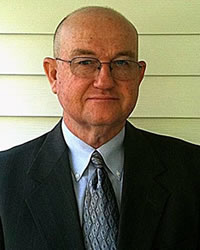
Gary Shepard is teacher and pastor of Sovereign Grace Baptist Church in Jacksonville, North Carolina.

Comments

0 / 2000 characters
Comments are moderated before appearing.

Be the first to comment!

Joshua

Joshua

Shall we play a game? Ask me about articles, sermons, or theology from our library. I can also help you navigate the site.