Bootstrap
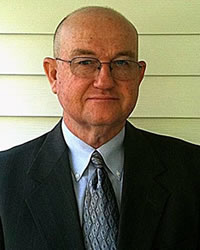
Gary Shepard

Tearing Down And Building Up

Jeremiah 1:9; Jeremiah 1:10
Gary Shepard November, 6 2016 Audio
0 Comments
Gary Shepard
Gary Shepard November, 6 2016

Sermon Transcript

Auto-generated transcript • May contain errors

100%
Turn with me, if you would, in
your Bibles to the book of Jeremiah. Jeremiah in the first chapter. Jeremiah chapter 1. The words of Jeremiah, the son
of Hilkiah, of the priests that were in Anathoth in the land
of Benjamin. To whom the word of the Lord
came in the days of Josiah, the son of Ammon, king of Judah,
in the thirteenth year of his reign. It came also in the days
of Jehoiakim, the son of Josiah, king of Judah, unto the end of
the eleventh year of Zedekiah, the son of Josiah, king of Judah,
unto the carrying away of Jerusalem captive in the fifth month. Then the word of the Lord came
unto me, saying, Before I formed thee in the belly, I knew thee. And before thou camest forth
out of the womb, I sanctified thee and ordained thee a prophet
unto the nations. Then said I, ah, Lord God, behold,
I cannot speak, for I am a child. But the Lord said unto me, Say
not, I am a child, for thou shalt go to all that I shall send thee,
and whatsoever I command thee, thou shalt speak. Be not afraid
of their faces, for I am with thee to deliver thee, saith the
Lord. Then the Lord put forth his hand
and touched my mouth. And the Lord said unto me, behold,
I have put my words in thy mouth. See, I have this day sent thee
over the nations and over the kingdoms to root out and to pull
down and to destroy and to throw down, to build and to plant. This man, Jeremiah, who has also been called the
weeping prophet, he was not looking for a call
from God for him to speak for God. He wasn't seeking the ministry. And I'm also very leery of those
who want to preach so bad. We ought first to want to know
and to believe the gospel of Jesus Christ. And we have to
have some sense of that responsibility of what it is to speak for God. This man Jeremiah was very different. In verse 2 it says, to whom the
word of the Lord came. Rather than looking, it says
that the word of the Lord came to him. The word of the Lord
came to him in the reigns of these kings that are mentioned. The word of the Lord came to
him in these difficult times, in times when it could be deadly
to speak for God. In times when it would be dangerous
to tell the truth of God or to stand up and say, thus saith
the Lord. And if you notice here, what
is true of him is certainly true of all, and that is the time
and the message and the work of every prophet and of every
apostle and of every gospel preacher is ordained of God. None take these things to themselves,
no office such as was said of the priesthood. When it says,
and no man taketh this honor unto himself, but he that is
called of God as was Aaron. Look down in verse four. Then the word of the Lord came
unto me, saying, Before I formed thee in the belly, I knew thee. And before thou camest forth
out of the womb, I sanctified thee, or I set you apart. And I ordained thee a prophet
unto the nations, or to the people. In other words, I guess you would
say his was a prenatal ordination before he ever came forth from
the womb. And not only that, no man being
humbled by God and before God, and knowing his own personal
need of mercy and grace, feels qualified to speak for God. Verse 6, it says, then said I,
O Lord God, behold, I cannot speak. For I am a child. In other words, Jeremiah was
saying, I'm a child insofar as knowledge is concerned. I'm a
child insofar as understanding is concerned. I'm a child insofar
as ability is concerned. I'm just like a child. But it is a call that he cannot
refuse. God will not take no for an answer. And so he and all who are called
must go not in our own strength, but his. and in the knowledge
that he is with those he sins. Verse 7, it says, but the Lord
said unto me, say not, I am a child. For thou shalt go to all that
I shall send thee, and whatsoever I command thee, thou shalt speak. It's not a matter of a decision. It's not a matter of entering
into a work. It's a matter of being sent by
the Almighty. Be not afraid of their faces,
for I am with thee to deliver thee, saith the Lord. And that is the same thing we
read in Matthew chapter 28. when he sends men out to preach
and to teach, and he says, lo, I am with you always, even until
the end of the age. And note this ninth verse. Then the Lord put forth his hand
and said unto me, Behold, I have put my words in thy mouth." If there is one thing that signifies,
that reveals Whether or not one is sent of God to speak for God,
it is this very thing, whose words are in his mouth. The Lord says to Jeremiah, I
have put my words in thy mouth. And this seems to be an expression
and a picture that we find several times in the scriptures, one
being the attitude of Moses when the Lord sent him forth. In Exodus, it says, and the Lord
said unto him, who hath made man's mouth? You see, Moses had
just said, like Jeremiah, I cannot speak, and I cannot especially
speak for you. But he says, who hath made man's
mouth, or who maketh the dumb, or deaf, or the seeing, or the
blind? Have not I the Lord? Now therefore go, and I will
be with thy mouth and teach thee what thou shalt say. I'll put my words in your mouth. And if you turn over to Isaiah
chapter 6, look in Isaiah chapter 6 and listen to much the same
thing concerning Isaiah when he is sent of God. Isaiah chapter
6 and verse 5. And this is simply after God
has revealed himself to him. In other words, he says, in the
year that King Uzziah died, I saw the Lord. And he was high and
lifted up. And he saw him in his threefold
holiness with all the living creatures crying out in his presence,
holy, holy, holy, Lord God Almighty. And when he beheld who God is,
and especially who he is in Christ, it humbled him. And if he had
ever thought of being able to speak before, he found himself
feeling totally unable to speak for God. And so in verse 5, it
says, then said I, woe is me. For I am undone, because I am
a man of unclean lips, and I dwell in the midst of a people of unclean
lips. For mine eyes have seen the King,
the Lord of hosts. Then flew one of the seraphims
unto thee, having a live coal in his hand." In other words,
this is a living, fiery, burning coal. And it says, which he had
taken with the tongs from off the altar. In other words, these
burning coals were symbolic of that sacrifice that had been
offered, that had been accepted, that had been consumed by God,
accepted by God. And now the only thing left is
the smoldering embers. And he laid it upon my mouth
and said, lo, this has touched thy lips and thine iniquity is
taken away and thy sin purged. But this is not only for Isaiah
alone. But this is representative of
the message that he is to herald. This is symbolic of that gospel
that he is to proclaim of the finished work of God. That the
Lord has put this message on his lips and these words in his
mouth. Look over in Isaiah chapter 49. Isaiah chapter 49 and that second
verse. He says, And he hath made my
mouth like a sharp sword. In the shadow of his hand hath
he hid me, and hath made me a polished shaft. In his quiver hath he
hid me. These are all weapons. These
are all things that are for a warfare. They're all instruments and tools
that God has put in his mouth, it says, made it a sharp sword
and a polished shaft like an arrow. Look over in chapter 50. He says, the Lord, in verse 4,
the Lord hath given me the tongue of the learned. None have that
by nature. It has to be the gift of God's
grace that he teaches us his gospel. The Lord hath given me
the tongue of the learned, that I should know how to speak a
word in season to him that is weary. He wakeneth morning by
morning, he wakeneth my ear to hear as the learned. What is he going to speak? A
word to him that's weary. What is the gospel that's found
in the lips and the mouths of those who proclaim it but good
news to sinners who are lost and helpless and hopeless? And in Luke chapter 21, he says,
for I will give you a mouth and wisdom which all your adversaries
shall not be able to gainsay nor resist. This is Jeremiah. And in chapter 20 of the book
of Jeremiah, in that ninth verse, he says, Then I said, I will
not make mention of him, nor speak any more in his name. Why? Because I have become a
reproach for it. Because men have made themselves
my enemy for it. Because I've got nothing but
flack, as we say, for doing so. Because to preach it is to have
men to find fault in me and to want not to hear what I've got
to say. I'm just going to quit speaking
these words. But his word was in my heart
as a burning fire, shut up in my bones, and I was
weary with forbearing, and I could not stay. I said, I'm going to
quit preaching this message. I said, I'm going to stop speaking
what God says, these words that he's put in my mouth. It causes
too much controversy. It brings me to be the enemies
of those who hear me. I'm not going to say it anymore. But he says, that word was like a fire in my bones. And when I said I would not say
it anymore, it burned even the more fierce and I could not keep
but speaking it. When they told those apostles,
you might remember when they told them in the book of Acts
and other places to stop preaching what you're preaching. They said, we cannot but speak
the things that we have seen and heard. And the Apostle Paul, much in
this same vein and thought and expression, he says, woe is unto
me if I preach not the gospel. I remember a man telling me,
A deacon in a church telling me a long time ago, nearly 40
years ago, he said, I think that we can get over this, we can
get by this difficulty if you will stop preaching what you're
preaching. And I told him then I'd do anything
mostly that he asked me to do, except that one thing. I don't
have to preach, but if I preach, I have to preach the gospel. I have to declare the words of
God. And in our day, just like every
day, but especially in our day, God has given us an objective
standard by which to measure and evaluate and weigh all that
men preach. And that is the written Word
of God. In other words, if the words
in my mouth or if the words in any other who claims to speak
for God, if those words are not these words, God has not sent us. God has
not called us. John writes in I John 4, Beloved,
believe not every spirit, but try the spirits, whether they
are of God, because many false prophets are gone out into the
world. What is the test? How do we know
whose words are spoken that are true and right and the words
of God? only if they are these words. And this was the command under
the Old Testament. In Isaiah, he says, in Isaiah's
day and every day, he says, to the law and to the testimony. Did you know that's a name given
for the gospel? A name we find early in the pages
of the New Testament? Another word for the gospel,
what is it? The testimony of the Lord. And he says, to the law and to
the testimony, if they speak not according to this word, it
is because there is no light in them. They don't have the words of
God in them. He did not put His words in their
mouth. And that is the way it is all
through this book. That's what God says. That's
what he commands. That's what is to be done by
those he sent. But look at why God has put his
words in the mouths of his messengers. It is not It is not to appease. It is not to brag. It is not to soothe men and women. It is not to inspire people. Look at verse 10 of Jeremiah
1. He says, see, I have this day
set thee over the nations and over the kingdoms to root out
and to pull down and to destroy and to throw down, to build and
to plant. Now, what will God do using his
messenger? Having put his words in his mouth,
what will he do first? It says, to root out and to pull
down and to destroy and to throw down. Now. Maybe that's at first one
of the reasons why the message is not so generally accepted
and received. When you look over in II Timothy
and the fourth chapter, listen to what the Apostle Paul says,
writing to another messenger. You see, we're not setting forth
what we, in our own opinions, believe if we preach the word. And so rather than being simply
an administrator or an entertainer or whatever men in our day, a
counselor, whatever it is, The instruction in II Timothy 4 to
this young man is this, I charge thee therefore before God and
the Lord Jesus Christ who shall judge the quick and the dead
and his appearing and his kingdom, preach the word. Preach the word. Be instant, in season, out of
season, and look at this, reprove, rebuke, and exhort with all longsuffering
and doctrine. This is a day when men and women
want preachers who don't preach doctrine. But there is no way
that any man can preach the Word without preaching doctrine, because
God calls His gospel, My doctrine. For the time will come when they
will not endure sound doctrine, but after their own lusts shall
they heap to themselves teachers having itching ears." What does that mean? They're
looking for somebody to scratch them. They're looking for somebody
to preach what they by nature want to hear. And when you go
in this world seeking to hear and to find somebody to say what
you want them to say, they're lined up for a price ready to
do it. They will not endure sound doctrine. But God's messenger, the one
in whose mouth God has put his words, he must preach the word,
he must reprove and rebuke and exhort with all longsuffering
and doctrine. Paul calls them ambassadors for
Christ. But it's amazing to me that those
who call themselves by that name and those who are sent out by
religion using that title, they are anything but ambassadors
for Christ. Because an ambassador He's not
left up to his own ideas and his opinions. He's to be the
ambassador representing the words and the doctrines and the things
of the king. Or the words and the constitution
of the nation that sends him. It's not a matter of his choice. So Jeremiah is told by the Lord
here that he has singled him out, that he has sent him forth,
that he has put his words in his mouth to root out and to
pull down and to destroy and to throw down. Somebody said,
well, that's a very negative message. Don't you have anything positive
to say? That's a very narrow, negative
message. Well, evidently so. It is a negative
message to all error in every age. and most especially all
error as it pertains to God and the basis upon which he receives
and accepts and saves sinners. That's the way it was with Micaiah.
You ever remember reading about Micaiah the prophet? Well, Micaiah
was summoned by Jehoshaphat and Ahab as far as getting approval
from God as to whether or not to go up and try to take Ramoth-Gilead. And all of Ahab's prophets were
saying, yes. The Lord said, yes, go. Yes,
go. You'll get it. You'll receive
it. You'll be victorious over it. And Jehoshaphat said, well, is
there not a prophet of the Lord that we might inquire upon? And
Ahab said, there's one, but I hate him. I hate him. Why? Because he has
nothing good to prophesy concerning me. And when they finally summoned
Micaiah there, just exactly that. There was nothing good to prophesy
about Ahab, and there's nothing good to prophesy or to preach
concerning any sinner and anything done or willed by them. None. And then there was Amos. who was sent the prophet, the
man who said, I'm not a prophet or I'm not a prophet's son, but
I was a gatherer of sycamore fruit. And the Lord came to me
and he put his words in my mouth. Amos said, I was just minding
my own business. I had a cartload of sycamore
fruit gathered up there. And the Lord came to me and he
said, you go and you prophesy. And when the king heard him,
and when the chief priest heard him, the chief priest said, you
need to go and do your preaching somewhere else, not in the king's
court. They called him the Troubler
from Tekoa. He's just always causing trouble.
He's just always trying to tear down. He's always trying to root
up. He's always trying to destroy. Our Lord said, every plant which
my heavenly Father hath not planted shall be rooted up. Paul said in my gospel, the words
that the Lord put in my mouth. He said, ìTheyíre a saver of
life unto life to some, and theyíre a saver of death unto death to
others.î He said, ìThat which I preach,
I didnít receive from man. It doesnít glorify man. It doesnít
naturally please man.î But he said, ìI certify unto you that
my gospel came from And the first work of preaching
God's Word, I call it demolition. Demolition. Rued out. In other words, this has to do
with the false foundations upon which men have built. The traditions that they hold
to as if it was God's truth, but it is not God's words. You remember Naaman? If God had left him where he
was, believing what he believed, he would have remained and died
a leper. when he came at the suggestion
of that little slave girl down to where the prophet lived, and
the prophet sent word to him as to what he was to do, the
word and command of God, which was simply to go and dip himself
seven times in that muddy River Jordan to be cleansed. It just tore Naaman up. It just turned over his little
apple car. It just uprooted everything that
he thought about God and how God worked. He said, I thought
that the prophet would surely come out here and wave his hand
over me and do some kind of hocus pocus kind of stuff in order
to heal me. And he tells me to go and dip
in that muddy Jordan. Oh, we got beautiful rivers in
Syria. We have the Havana and the Farpar.
We have these wonderful, clean, beautiful rivers. And he's saying
to me, go dip in that, Jordan. You see, that's what had to happen
first. His own notions, his own ideas, his own traditions, his
own past thoughts as to how God receives and cleanses and all
these things had to be torn down. And that's what he has to do
to every one of us. And Amos said, I thought he would
do it another way. And those soldiers that were
with him, in wisdom, they said, well, if the prophet had told
you to do some great thing, you would have done it. And so finally he goes and he
dips in that River Jordan. He has to take off all of his
regalia. He has to take off all his medals
and all his fancy armor and all his nice clothes and all these
things that are part of him being the captain of the Syrian host.
And he has to go into that Jordan and be washed. Whenever our Lord preached those
Pharisees, they looked at his servants and they said things
like this, Why do thy disciples transgress the tradition of the
elders? For they wash not their hands
when they eat bread. Here the Son of God is standing
right in front of them, and in their blindness and in their
ignorance, they're worried about whether or not somebody washes
their hands or not. But He answered and said unto
them, Why do you also transgress the commandment of God by your
tradition? You see, He says it's to root
out all the false foundations. And
when you speak the truth, When you tell men and women about
that one way of salvation, when you talk about the Lord God Himself
being salvation in its entirety, when you talk about it not being
of works, but of God's grace, all in Christ Jesus and Him alone,
that just destroys, roots out all those false foundations. That song that we just sung. It says, on Christ, the solid
rock I stand. But what's the next line? All other ground is sinking sand. He says, it is to pull down. Because Paul, writing to the
Corinthians, he said it as plainly as it can be. He said, for other
foundation can no man lay than that that is laid, which is Jesus
Christ, plus nothing. You see, that's common in our
day. Jesus Christ plus this. Jesus Christ plus you join our
church. Jesus Christ plus you be baptized
by this particular one. Jesus Christ plus you stop doing
this or that or the other. All a host of things that has
to be rooted up. Pull down. all these false refuges that
men hide in, all their superstructures that they've made of their own
works that are beautiful to them but unable to stand the breath
of God's judgment. And God's method for doing this is simply His words. His words. That is, His gospel
preached and His Spirit attending that preaching of His word. Now I want you to turn to 2 Corinthians. 2 Corinthians chapter 10. Now God's messengers And God's
people are all in the proclaiming of this message. They're still
in this flesh. We're still here on earth. We're
still dealing with others who are just like us in this flesh. But listen to what Paul says
in 2 Corinthians 10 in verse 3. He says, for though we walk
in the flesh, we do not war after the flesh. for our weapons, for the weapons
of our warfare are not carnal. They are not fleshly. but mighty
through God, to the pulling down of strongholds, casting down
imaginations, and every high thing that exalted itself against
the knowledge of God, and bringing into captivity every thought
to the obedience of Christ." He doesn't use the sword. to advance the cause of Christ. We do not use the arm of the
political world. We do not use force. We do not use debate. We do not
use argument. We use proclamation. Proclamation. And it involves the mind. It involves the mind. Whenever the Philistines took
the Ark of the Covenant, and all the Ark of the Covenant is,
is a type of Christ crucified. It is a type of the Gospel of
Christ crucified. That box, God dwelt between the
cherubims over that mercy seat, and it was there that the high
priest went in and sprinkled the blood, pictured reconciliation,
justification, redemption, salvation, all through the blood of the
Lord Jesus Christ. So they carried that Ark of the
Covenant into the temple of their God, Dagon. And they set that box, left it
by itself. They just set that box in the
presence and before that great statue of Dagon, the god of the
Philistines. And when they got up the next
morning and went into his temple, there he was, falling over. And so what did they do? They
do what men do by nature all the time. They stood their God
back up. My friend, any God you have to
prop up is no God at all. But they went, and the next morning
they came back in there, and he had fallen over and broken
off parts. And that's the way the gospel
is. That's the way the Word of God is. You just stand it up. You just proclaim it. You just
teach it and preach it and keep doing it. The words of the Lord
from the mouth spoken. The Lord brings down his enemies. What about Gideon? When the Lord
came to Gideon, do you know what the first thing that he said
for Gideon to do? Now you really have to think
about this to appreciate it. The first thing he told Gideon
to do was to go to where his father had a stall wherein this
seven-year-old bullock that he had been raising and fattening
to offer up to bale was housed. He said, you do this, you take
that bullock, you go out there and you destroy the altar of
Baal and you raise up an altar to the Lord and you slay that
bullock and offer him on that altar and then you turn and fire
it with the wood that is gotten by you cutting down all the trees
of the grove around the altar. And man, when they got up the
next morning and found out what had been done, the men of the
city, they were angry. But the problem was, there was
only one God. He had only one way of sacrifice
and worship and acceptance. And He had even commanded in
Deuteronomy that you shall not plant any grove of trees near
the altar of the Lord." You see, the altar of the Lord
was just a rock. You don't make a rock. But all
these trees were planted in a special way to somehow enhance the atmosphere
and the scene and make it feel more worshipful and all that
kind of stuff. And the Lord said, don't you
dare. When you raise up an altar, one thing, you don't put a chisel
or a hammer or anything on it. And you don't plant any trees
around it. And you don't put any stairs to walk up to it.
Why? All those things showing that
man in no way has any part of doing the work upon which a sinner's
received. But the first thing Gideon had
to do, cut it down, tear it down. And that's always the case. You
can't preach the gospel and not bring about that process
of demolition. In other words, the true gospel
proclaimed works by God's grace in the mind. That's where the
battle's at, in the mind. He says it pulls down all the
superstitions and the emotional experiences and the acts and
rituals of religion, all the childhood deceptions, all the
notions of free will and baptismal generation and decisionism and
revival professions, all when there was no gospel preached. No gospel known. You see, Paul, who was Saul of
Tarsus, he had a great set of credentials. Educated at the
feet of Gamaliel. Pharisee. Moral, as far as his
view of the law was concerned. Esteemed of men. Respected. But God had to tear all that
down. And he had to be brought to this.
I was before a blasphemer. I did all that in the ignorance
of unbelief. He wasn't a man that was right
with God and knew God and served God and worshipped God. No, he
was a blasphemer. And he was an unbeliever. All these things that men believe
in. You can't just, you can't stick
the doctrines of grace on the end of a false profession and
make it the truth. You see, repentance is repentance
toward God. It's a change, a total change
and a turning from false views about God. And there are three particular
idols that have to be rooted out, torn down, pulled down,
destroyed. Number one, this notion that
God loves everybody. There's only one thing that destroys
that, but it totally destroys it. The fact that we have in
scripture so many times him saying that he hates all workers of
iniquity, that he hates Esau, that he hates them that sow discord
among the brethren. That's people. And the second one is this. The
notion that Christ, when he died on that cross, died for everybody. I'll take his words for it. He
said, I lay down my life for the sheep. Saying to those Pharisees, the
reason you believe not is because you're not of my sheep. I'll
take what Paul says in the Word of God that he purchased the
church with his own blood, that he loved his bride and gave
himself for it. And the third one is this, that
notion that somehow the objective of the Spirit of God is to save
everybody. Could we ever imagine, in truth,
after reading all that God says about what He is and what He
does, the fact that whatsoever He desires that He does, could
we ever imagine that God could be kept back from doing what
He really wanted to do? Is man so strong? Is his will
so powerful that he can thwart the will of the Spirit of God? No, the Spirit of God shall surely
give life and faith and new birth to everyone the Father loved
and chose and everyone the Son died for. Those and no more,
but all of them. All of them. And you see, whenever
you proclaim the words of God concerning these things, when
you hold them up to men, It's just like a process of demolition
and destruction. They see it as that. Unless God, in His grace, brings
them to see that that's exactly the way it is. All our natural
and all our religious self-righteousness, oh, it just has to be exposed
for what it is. How do we know what it is? By
what God says. Filthy rags. All our works, all our goings
about to establish righteousness before God, no ground of salvation. Nothing
but sin. Painful. Absolutely, but necessary
in order to build and to plant. A man said to me many years ago,
he said, you just like to make me feel bad, don't you? No, I
want you to feel good. But you cannot feel good resting
in anything but Jesus Christ and that work he accomplished
on Calvary. You can't rest on that old profession
of faith. You can't rest on that baptism
when you were six years old or when you were born. You can't
rest your hope of eternity and salvation on something you feel
or something you think or something that's been traditional in your
family. None of these things. But if God tears them all down, The man that speaks the words
by which he tears them all down, he's the man that also sows the
seed. How does it come? By words. The gospel seed. The one in whom
all true salvation is. You see, we don't lay a new foundation,
we seek to clear away to the true foundation that God has
already laid, the only foundation there is, which is Christ crucified. Salvation in Him alone. Righteousness
only by His righteousness imputed to us. Salvation by His blood
shed on that cross. One hundred percent grace. not of works, lest any man should
what? Boast. You see, when all that you've
thought and all you've done and all you've worked for to be accepted
favorably by God, when it's all torn down, when it's all demolished,
you don't have anything left to boast in. And that's why Paul
said, where is boasting then? It is excluded. Excluded. Salvation apart from all human
works, salvation apart from all human decisions. Paul said in writing to the Corinthian
church, where they were having some difficulties, playing a
few preacher favorites, he said, I planted, Apollos watered, but
God gave the increase. We preach the gospel. We speak
the words of eternal life. And Isaiah says that the Lord
has laid in Zion the foundation. And he that believes in him,
what? The foundation, Christ Jesus,
the solid rock, shall never be confused, shall never be disappointed,
shall never be found without salvation. Zechariah says, The hands of
Zerubbabel have laid the foundation of this house. His hands shall
also finish it, and thou shalt know that the Lord of hosts hath
sent me unto you. Just one foundation. Just one
way of salvation. All of God's grace. All of God's
mercy. Nothing else? Don't have any
hope in anybody else or anything else? Don't look past back to
yesterday for some basis of hope? You say, well, that could mean
I'm lost. That's the first step of knowing you're saved, is finding
out you're lost. Brother Mahan said, if you've
never been lost, you've never been saved. But whatever God plants, whatever
he puts in us on the basis of his truth, you can count on it. You can rest in it. You can lay
down your head on your pillow tonight and go to sleep in safety. I don't care who's elected Tuesday. You say, you don't know what
I've done. And I don't care and don't really want to know. But the Lord sent his son. into this world to save sinners. That's why He came. That's what
He's doing on that cross. That's what He finished, accomplished. And He's right to do this in
Christ. You see, the same words that
tear down, destroy, and root up are the same words that set
forth this glorious structure. Zion, the dwelling
place of God's people. Salvation by Christ alone. Paul said he feared for his kinsmen
because they were still going about trying to establish a righteousness,
and they had not submitted themselves to the one righteousness there
is, the one God gives as a gift to His people in Christ. He does this all by the words. that he puts in the messenger's
mouth to tell of salvation only by
grace and not of works. Only in Christ Jesus and not
we ourselves. One hundred percent of him. Nothing of me. May He tear us down. May He root out every false foundation
and destroy every false hope and cause us to rest on the firm
foundation. His Son. His grace. His blood. His righteousness. Nothing else. Father, this day we give you
thanks and praise, and we worship you as the one who alone can
save. Tear down all of our idols, all
of our imaginations, and enable us to believe your truth. Save
us because you have saved us. Help us. Enable us to believe. Give us that new heart. And cause us to look to Christ. We pray in His name. Amen. Amen.
Gary Shepard
About Gary Shepard
Gary Shepard is teacher and pastor of Sovereign Grace Baptist Church in Jacksonville, North Carolina.

Comments

0 / 2000 characters
Comments are moderated before appearing.

Be the first to comment!

Joshua

Joshua

Shall we play a game? Ask me about articles, sermons, or theology from our library. I can also help you navigate the site.