Turn in your Bibles this morning
to the book of Matthew, Matthew's Gospel, chapter 26. We're to have the Lord's table
this morning, and this ordinance that was established
by the Lord Jesus Christ must also be defined by Him. He gave us two ordinances, if
you would call them that. Baptism and the Lord's Table. And each are to be a public confession
of the Lord Jesus Christ. Verse 26 of Matthew 26 says, And as they were eating,
Jesus took bread, and blessed it, and break it, and gave it
to the disciples, and said, Take eat, this is my body. And he took the cup, and gave
thanks, and gave it to them, saying, Drink ye all of it, for
this is my blood of the New Testament, which is shed for many for the
remission of sins. But I say unto you, I will not
drink henceforth of this fruit of the vine until that day when
I drink it new with you in my father's kingdom." And when they
had sung a hymn, they went out into the Mount of Olives. Now, men over the centuries have
added their own definitions and their own meanings to these ordinances that the
Lord has left us, left for His believing people. But there is not a doubt that
the Lord, especially here, has made clear just exactly what
the wine represents. He says, this is my blood. And when you hear what the Bible
says with regard to wine, wine is used and spoken of as
that which is to be a blessing. He describes it in the Psalms
this way, wine that makes the heart glad. And whenever Abraham was returning
from rescuing Lot, you remember he had to go and rescue his nephew
Lot who had been kidnapped along with all the other inhabitants
of those cities in the plain. And as he was returning from
that success and that great victory, it says that he met this rather
amazing personage that we read of a number of times in the Bible
by the name of Melchizedek. I don't know who Melchizedek
really was. And to be quite honest, neither
does anybody else. Whether or not he was truly the
pre-incarnate Lord Jesus Christ or not, I don't know. But I know
this, if he's not, He is a wonderful type and picture of the Lord
Jesus Christ. And whenever this King, who is
described as King of Salem, and also in the New Testament, King
of Salem, or King of Peace and King of Righteousness, whenever
he came to Abraham, In the hour of this victory, it says, and
Melchizedek, king of Salem, brought bread and wine. And he was the
priest of the Most High God. And he blessed him and said,
blessed be Abram of the Most High God, possessor of heaven
and earth. And blessed be the Most High
God, which hath delivered thine enemies into thy hand, and he
gave him tithes of all." I love that name by which God
is declared and defined there, the Most High God. And he attributes these victories
that had been accomplished by Abram in the rescue of Lot and
these others, he attributed all of these victories to the Most
High God who had delivered his enemies into his hand. Saved his family. And so now here is Melchizedek,
the priest of the Most High God, and he comes and he greets Abram
with bread and wine. Why is that? Because it is a
time to feast. It is a time for celebration. And it is a time to worship God,
to thank Him, to praise Him, to recognize Him as the giver
of every good and perfect gift. It is a celebration of a God-given
victory. And that is exactly what this
Lord's table that Christ has initiated here, that is exactly
what it is about. It is not, as I often thought
it was in my youth, and as I often witnessed among religious people,
it is not a pity party for Jesus. They would turn the lights down
low. They would have everybody look
with long faces. But the Lord's table is a true
celebration and feast of the victory that Christ himself has
accomplished for his people in his coming and his life and his
death. And so when he begins to define
what these elements represent, he says in that 26th verse concerning
this cup or this wine that was given, he says, this is my blood. Now, if we know anything about
the significance of blood, we have simply to look back in the
Old Testament and see that God forbid this taking of blood because
of this reason. He said, because the life of
the flesh is in the blood. And even at that early hour in
this book, in this history of Israel and this history of the
world, even in that hour, he is in so many ways picturing
and telling and hinting of this free and full and eternal salvation
through Christ and Him crucified. Because you see, the life is
in the blood. But it is not simply life that
is in the blood naturally, but it is life in this blood spiritually,
a particular blood, the blood of the Lord Jesus Christ. And what he is saying here is
not that this is literally his blood. Literally his blood was
flowing in his veins at that very moment. And neither is he
saying, as some teach in transubstantiation, that a religiously appointed
priest can in some way pray over this wine, or do some kind of
hocus-pocus over this wine, and it will, by what he does, then
become the blood of Christ. Or even that when that blood
is partaken of, he can do something, or that in us, at that time,
it becomes the blood of Christ. That's not what he's talking
about. But he's talking about what blood represents when it
flows out of the body. What is that? That is death. When life blood flows out of
our bodies, we are dead. And so what our Lord Jesus Christ
is speaking of in this type and in this symbol is talking about
the death that he was about to die. The blood that he was about
to shed on the cross. And we have need to remember
that when he talks about his blood, he's talking about not
ordinary human blood, he's talking about the blood of God. You see, he is Christ who is
God manifest in the flesh. And so when Paul is instructing
those Ephesians elders in the book of Acts, he tells them that
they are to feed the church of God, which he purchased with his own
blood. You see, the Lord Jesus Christ
is none less than the God-man. The one who was in the beginning
with God and who is at the same time God, it says that he was
made flesh and dwelt among us. Flesh and blood. But the blood he's talking about,
and the blood that all of his elect people have an interest
in, the blood that all true believers find hope in, is in this sinless,
perfect blood, this that is described as powerful blood, and as the
Apostle Peter says, precious blood. Because if all the blood of bulls
and goats and lambs and heifers, if all the blood of all of Adam's
descendants had been shed as a sacrifice, all of that blood
together would not have atoned for one sin. Christ says, this is my blood. This is the blood of the Son
of God. This is that holy and sinless
and perfect blood that was always pictured and typified whenever
that Passover lamb was set apart and observed and scrutinized
in order to see that it was without blemish and without flaw so it
could be the sacrifice. And so the Apostle Paul says
in a later date, in one of his epistles, he says, Christ our
Passover is sacrificed for us. And the Apostle Peter, when he
begins to talk about redemption, which is the very heart of all
of our salvation, he says, for as much as you know, Thank God
His people are brought by His grace to know some things. They
are given knowledge, they are given understanding, not perfect
knowledge, but they are given knowledge so as to be able to
distinguish Christ from Antichrist. And so he says, for as much as
you know that you were not redeemed with corruptible things as silver
and gold from your vain conversation received by tradition from your
fathers, but you were redeemed by the precious blood of Christ. as of a lamb, without blemish
and without spot, who verily was foreordained before the foundation
of the world, but was manifest in these last times for you." You see, if you go back in the
Old Testament, And you look in the tabernacle, or you look in
the temple, or you look at anywhere where the people of God worship
God, it was always around blood. It was always around a death
and a sacrifice. And maybe the clearest of all
evidence of that is whenever we read about Abraham, who was
about to take Isaac up on Mount Moriah. And even this young man,
who at that age was young, he had some knowledge and understanding
about what was required to worship God. He looked at everything around
him and he said to his father Abraham, he said, Father, I see
the wood for the sacrifice, for the altar. I see that you've
got a knife in your girdle that will be used to slay the sacrifice. I see that you've also got the
fire, but where is the lamb? Where is the sacrifice? Where
are we going to get that blood that's necessary to worship God? Where can we find a sacrifice? We don't, we don't, we're not
taking a lamb with us. We're not taking any other animal
with us. But Abraham so wisely did say
to him, God will provide himself a sacrifice. And my friend, this
is what it's all about. That's what the Lord Jesus Christ
is. He is that one God-appointed
and also God-approved sacrifice that was offered for the sins
of His people. And I realize that maybe most
of this world They are so quick, they're so sure to say, we believe
that he was, as this sacrifice in his death, dying for all people. But let me ask you this. If Jesus
Christ actually did die for every person in this world, and I am saved, and this one
is lost, What will be the deciding, determining factor of whether
or not that death was effectual or not? It would be something
I did or something they didn't do, and that would make salvation
to be of works when the scriptures say over and over again, it's
all of grace. And so if Christ died for all
people, every person in the world, and so many of them will finally
and eternally perish, which we know that they will if we believe
the scriptures, then what in the world did the death of Jesus
Christ have to do with salvation? Nothing. Christ said, this is
my blood. And all I would say is this,
will the Son of God, will God who is manifest in the flesh,
come into this world on the mission upon which all His glory hangs
on? Do you think He shed His blood
in vain? Do you think one person that
he died for, truly died for, and paid their sin debt, do you
think that one of those people would finally and actually perish?
God forbid! What blasphemy! He says, this is my blood. I'm God manifest in the flesh. I'm the Savior. I'm the Redeemer. I'm the one that Paul says in
whom we have redemption through His blood, the forgiveness of
sin according to the riches of His grace. There's no grace without
blood. But most especially, there's
no grace without this precious blood, this singular blood that
was shed by the Lord Jesus Christ. Paul saying in Romans 5, much
more than being now justified by his blood, we shall be saved
from wrath through him. Doesn't that sound good? Isn't
that a reason to worship Him? Isn't that a reason to stop and
to think and to pray and to be thankful and to be faithful and
whatever? The fact that by His blood shedding,
by Him coming into this world and doing that one thing necessary
to save us, which was to die in our place, we'll be saved
from wrath. You can go home tonight and lay
down on your pillow and rest your head in the bosom of God,
knowing that His justice is altogether fully and finally satisfied in
the matter of your sin. We're justified by His blood. And therefore, we'll be saved
from the wrath of God. Paul's saying in Romans 3, whom
God has set forth to be a propitiation through faith in His blood. Somebody
says, well, I just believe in Jesus. And what I have to say is this,
which one? Because evidently, we're not
all talking about the same one. Here's this one who did this,
here's this one who's this way and the other way, and all these
things. How do you distinguish the true
Jesus? I was thinking about it this
week. When I was growing up, there was some kind of quiz show
or game show, and they would have three people on it that
were supposed to be the same person, and they would be asked
various questions, and at the end they would say this, will
the real so-and-so please stand up? Well, will the real Jesus please
stand up? He already has stood up. You
see, the real Jesus is the one defined not on the basis of what
preachers say or people believe. The real Jesus is the one who
defines Himself in His Word. It won't matter a hell of beans
what you think or what I think or what Dr. so-and-so said or
Reverend so-and-such said. It will not matter one thing
what any of them said. It only will matter what thus
saith the Lord. So our Lord comes even to this
table. Not so you can have a real sentimental
feeling or a false assurance. He said, this is my blood. This
is my blood. And just so you and I don't fall
for this business of just believing on Jesus, We better hear what
the Apostle Paul is saying in Romans 3. He says, whom God has
set forth to be a propitiation through faith in his blood. That's his work. I hate it when people try to
make the person of Christ and the work of Christ enemies with
each other. You see, the person of Christ,
divorced from his distinguishing work, just makes it mysticism. And that work, apart from the
person who performed it, makes it totally unsatisfactory. That's
why Paul said, we preach Christ crucified. That's his person,
that's his work, that's inseparably joined together, that's how he's
distinguished, that's how he's known. He said, this is my blood. And when he stood there in John
chapter 6 after having done miracles and fed the people and everybody
was always glad to get their belly full just like people are
so interested in a health and wealth and prosperity kind of
gospel in our day. But when he said, except you
drink my blood, you don't have eternal life.
What's he talking about? He's talking about that appropriation
of this death by faith, laying hold on eternal life by faith
in the Lord Jesus Christ. This is my blood. And then he says this. He says,
this is my blood of the New Testament. Did you know there are people
who only know of the New Testament as it pertains to The second
part of their Bible. What is the New Testament? Well,
it's the second part of their Bible. No. He said, this is my
blood of the New Testament. And what that means is, this
is my blood, as it says elsewhere, this is my blood of the New Covenant. New Covenant. Now, when he says
new, don't you think for one minute That is, meaning that
it started at His coming. Or that it started at the cross. Because the covenant of which
this blood is shed is described by the Apostle in Hebrews 13
as the blood of the everlasting covenant. You see, men and women get the
notion by what they're taught in our day that this covenant
depends on whether or not you make a decision or not, or whether
or not you do this or not, or whether you stop doing this.
No, this covenant predates time itself. It's the everlasting
covenant. And it's the covenant within
the Godhead. When this covenant was made,
you and I weren't here. You see, in order to assure the
salvation of His people and assure that it depend on His grace and
not on our works and to assure the success of it and therefore
His glory of it, this is an everlasting covenant. It was made before time. It includes
time and it goes beyond time. It's everlasting. The everlasting
covenant. And it's new only in the course
of revelation. But it's the everlasting covenant.
Because the one whose blood is shed is described as the lamb
slain from the foundation of the world. Oh, it's described in the book
of Hebrews, where we read all about this covenant. It's described
as a better covenant. It's described by words like
this wherein God says, I will, and they shall. It's described
as a matter of the heart. It's described as a matter of
newly revealed, and it rests upon an accomplished redemption. It doesn't rest on a public decision. I'm sorry. You see, the one thing that true
salvation always demonstrates is that salvation, as Jonah confessed
it, is of the Lord. An old preacher said it's of
the Lord and it's preparing, it's of the Lord and it's providing,
it's of the Lord and it's perpetuating. You and I are not going to get
any glory in it. It has to do with His will. He works all things
after the counsel of His will. Now you find a nook or a cranny
where free will as it pertains to man is concerned can be slipped
in that, and you'll be wrong. He works
all things after the counsel of His own will. I'll do all
my purpose. All my counsel shall stand. This everlasting covenant depends
upon one individual and the work that he performs. This redemption
depends upon the sacrifice and the dying of the Lord Jesus Christ
for the satisfaction of God's justice in the matter of our
sins. And it is absolutely unconditional. What kind of blessing would that
be? I've used this illustration recently, I think, but suppose
you have a million-dollar debt, and here you are with this million-dollar
debt, and you don't have one cent, not one red cent, nor can
you get it. And so a man comes along who's
wealthy, and he says, well, I'll tell you what I'm going to do.
$199,999 of your debt. And you don't have
a buck. You don't have one greenback.
What good will it do you? You see, The salvation of the Lord is
all of grace. That means God foots the bill. And he does it by the precious
blood of the Lord Jesus Christ. No responsibility in the accomplishment
of this covenant is ever committed to any man except the man Christ
Jesus, and it is final and irreversible. It contains all spiritual blessings
in Christ, and according to the Apostle, it's been ratified by
the death of the testator. And then he says this, this is
my blood of the New Testament which is shed. You see, we're not re-shedding
the blood today. We don't re-shed it every time
that we have the Lord's table, no. He said, which is shed. This blood has been shed, was
shed according to the determinate counsel and foreknowledge of
God. And when he talks about it being
shed, he's talking about it being willingly and voluntarily and
lovingly and obediently being shed by the one who had the power
to withhold it or to lay it down. Oh, he says, they by wicked hands,
they took him and they crucified him. But they did so according
to the determinate counsel and foreknowledge of God. You see, some people forget if
they ever knew that when Christ hung on that cross, He and His
faculties was as totally aware and as totally strong and as
totally divine at the last second that he was all his day. He said, no man takes my life
from me. You say, the Roman soldiers took
it. No, they didn't. The Jews took
it. No, they didn't. He said, I laid
down my life. It says that Jesus at a certain
hour, he cried with a loud voice. And he yielded up the ghost. I laid down my life for the sheep. He said, which is shed for many. Just because the Bible does not
teach what men teach in universal salvation, that does not reduce
the work or the death of Christ to a handful. He describes it,
God in his own language, as many. I don't know who they are, but
I'm looking for them, because I've got some good news for them.
That is that Christ has already paid their debt. He said, even
as the Son of Man came not to be ministered unto, but to minister
and to give His life a ransom for many. and on one occasion when Paul
stood up and preached the gospel. There are a lot of people who,
if I had a bill that the Apostle Paul was going to be here preaching
this morning, they would have made sure they got here to hear
him. But they would have not believed
any quicker the message of the gospel. If I preach it, or Paul preaches
it, Because it's not in the one who proclaims it, it's in the
one who it's about, and it's in the hands of God's Spirit
to take it and to reveal it to His people. And once when Paul
preached, it says, And when the Gentiles heard it, they were
glad and glorified the word of the Lord. And as many as were
ordained to eternal life believed. Would you like me to put that
in modern-day preacher language? Modern-day preacher language
is this. If you'll believe, God will give you eternal life. Yes. And if a dead man laying
in that cemetery out there can take the first step, he surely
can take all the rest. No, we have to be made alive
first. And we're made alive based on
this. It says, and as many as were
ordained to eternal life. Who does that ordaining? God. Why are we so afraid to find
out that God is running this show? That He's the One who does all
the ordaining. That the reason that salvation
is all for His glory is because it's all of His work. As many as were ordained to eternal
life, what did they do? They believed. It isn't that
God has chosen the people to salvation and if they're going
to be saved, they're just going to be saved, they're not going
to find. No. They're going to, every one of them be brought
to hear the gospel. He'll give them faith to believe
the truth as it is in Christ crucified. And they're going
to glorify him in it. Christ says in John 17, praying
to the Father, as Thou hast given Him power over all flesh, that
He should give eternal life to as many as Thou hast given Him.
He came unto His own, and His own received Him not. But as
many as received Him, to them gave He power to become the sons
of God, even to them that believe on His name. Why do they believe? Because they were born of God.
They were not born of the will of man, nor of the will of the
flesh, nor any other thing, but of God. As many as are led by the Spirit
of God, they are the sons of God. Christ was once offered
to bear the sins of many, and unto them that look for Him,
He shall appear the second time without sin unto salvation. He's
going to bring many sons to glory. You read Romans 5, and you see
what happens according to the Apostle Paul as he's led by the
Spirit to rise. You see what happens to those
who are in one man. That first man, Adam. That's all of us by nature. Oh,
but see what happens in that last Adam. By one man's disobedience,
this happens, many. By the other man's obedience,
the many that are in him, he saves. Shed for many for the
remission of sins. Well, if there's no way of knowing who's going to believe and who's
not going to believe, that really doesn't make Christ
work for the remission of sins. His
blood is shed for the remission of sins. His blood is shed for
the remission of all the sins of all His people of all time. That's why His name is Jesus.
Can you believe one verse of Scripture? For thou shalt call His name
Jesus. For he shall save his people
from their sins." Now, in the New Testament, those Greek words
that we have translated in one place, forgiveness, they're also translated in another
place, remission. So remission of sins and forgiveness
of sins, they're the same. The word means to send off or
to send away. Don't you want your sins sent
away from you? You see, that's the good news
of the gospel. He sends the sins of His people
away from them And He made them to meet on His Son. And He imputes to them the very
righteousness of God in Him. But, as was shown and demonstrated
throughout all the Old Testament, and as the Apostle reaffirms
it, talking about Christ and His death in the New Testament, He says in Hebrews 9, and almost
all things are by the law purged with blood. And without shedding
of blood, there's no remission. Without the shedding of Christ's
blood, there'd be no forgiveness. But he put away the sins of his
people by the sacrifice of himself. And so when the Apostle Paul
writes in 1 Corinthians, he writes to a church there in Corinth
that had some problems. What were they doing? Well, they
were taking the Lord's table And they were pretty much making
it a drunken feast, a time of almost revelry, a time to do
nothing but fill their bellies. And so he writes them to rebuke
them. And he quotes from this very
passage some. And he says, he that eats or
drinks of this table unworthily He eats and drinks damnation
to himself. Now, the natural thing, the way
that seems right to us, is to think that he's saying
there, if you're unworthy, you better not take this table.
If that were the case, if that's what he's saying, we might as
well all go home right now. Because I assure you, there's
none of us worthy. Not even the Lord's believing
people. What he's talking about is doing
so in an unworthy manner. Meaning this, that is to simply
take the elements, not discerning the Lord's body and blood. Not in contemplation of the death
of the Lord Jesus Christ. Not in a thinking about who it
is that has died and what it is that he actually accomplished
in his death. There'd be no reason to celebrate if he hasn't accomplished something.
If he hasn't gained that victory like was represented when Melchizedek
came with the bread and wine. But he has. And that's all His
believing people's comfort and hope and salvation and peace
and righteousness. Did you hear what the hymn writer
said? This is all my hope and peace. This is all my righteousness. You see, this is what righteousness
is really about. Not about moral quality or living. It's about the dying of the righteous
one to bring in everlasting righteousness to his people. He says, this is my blood. May the Lord help us to see it
by faith. to believe it, to know the comfort
of it, to know the salvation of it, of our souls.
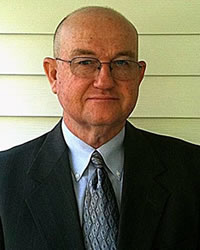
About Gary Shepard
Gary Shepard is teacher and pastor of Sovereign Grace Baptist Church in Jacksonville, North Carolina.
Comments
Your comment has been submitted and is awaiting moderation. Once approved, it will appear on this page.
Be the first to comment!