Bootstrap
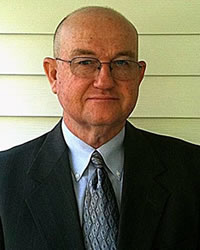
Gary Shepard

Christ Made A Curse

Galatians 3:10-13
Gary Shepard April, 24 2016 Audio
0 Comments
Gary Shepard
Gary Shepard April, 24 2016

Sermon Transcript

Auto-generated transcript • May contain errors

100%
I want you to turn first of all
in your Bibles this morning to Galatians chapter 3. Galatians chapter 3. And I want to read a few verses
here. And then I want to call your
attention Back to a portion of the Old Testament. Galatians 3 verse 10, For as many as are
of the works of the law are under the curse. For it is written,
Cursed is every one that continues not in all things which are written
in the book of the law to do them. But that no man is justified
by the law in the sight of God is evident. For the just shall
live by faith, and the law is not of faith, But the man that
doeth them shall live in them. Christ hath redeemed us from
the curse of the law, being made a curse for us, for it is written,
Cursed is every one that hangeth on a tree. The Spirit of God used this man
Paul to write these words. But long before he wrote these
words, he wrote some things through
another man. A man by the name of Samuel. Samuel was a prophet of God. And God used Samuel to write
down quite a number of things, and among them were a lot of
things concerning another man by the name of David. David is
the psalmist. David is God's king. And God uses David as both an
example and a warning to the Lord's people. Paul again wrote,
"...all these things happened unto them, such as David, many
others, for in samples, and they are written for our admonition."
upon whom the ends of the world are come." They're not written
down for David, such as were saints in the Old Testament,
but for us, he says, those of us upon whom the ends of the
age shall come. But he also uses David. as a picture, as a type of the
Lord Jesus Christ. And we know that because Christ
Himself bears record to that. He says in Luke 24, these are
the words which I spake unto you while I was yet with you,
that all things must be fulfilled which were written in the law
of Moses and in the prophets and in the Psalms concerning
me." An old preacher says that all verses of Scripture, all
portions of Scripture, or like all the roads that are said to
have led to London. They all lead to Christ, and
we ought to get there as quickly as we can. So if you hold your
place here and turn back over to 2 Samuel, 2 Samuel chapter 16, we read in these verses something that took place in
the life of David. 2 Samuel chapter 16 and verse 5. It says, "'And when King David
came to Behurim, behold, hence came out a man of the family
of the house of Saul, whose name was Shimei, the son of Gerah. He came forth and cursed still
as he came.'" And he cast stones at David,
and at all the servants of King David, and all the people and
all the mighty men were on his right hand and on his left. And thus said Shimei when he
cursed, Come out, come out, thou bloody man, and thou man of Belial,
The Lord hath returned upon thee all the blood of the house of
Saul, in whose stead thou hast reigned. And the Lord hath delivered
the kingdom into the hand of Absalom thy son. And behold, thou art taken in
thy mischief, because thou art a bloody man." Then said Abishai,
the son of Zerui, unto the king, Why should this dead dog curse
my lord the king? Let me go over, I pray thee,
and take off his head. And the king said, What have
I to do with thee, ye sons of Zerui? So let him curse, because
the Lord has said unto him, Curse David. Who shall then say, Wherefore
hast thou done so? And David said to Abishai, and
to all his servants, Behold my son, which came forth of my bowels,
seeketh my life. How much more now may this Benjamite
do? Do it. Let him alone, and let
him curse, for the Lord hath bidden him. It may be that the
Lord will look on mine affliction, and that the Lord will requite
me good for his cursing this day. And David and his men went
by the way, Shimei went along the hillside over against him,
and cursed as he went, and threw stones at him, and cast dust. And the king and all the people
that were with him came weary and refreshed themselves there." David, undoubtedly, rather than
Saul, was God's chosen, anointed, and beloved king. He describes David in this way,
even with all his weaknesses, as the man after God's own heart. His very name means favorite
or beloved. And likewise is that the title
given to Christ Himself, the Father saying, this is my beloved
Son in whom I am well pleased. And he also was born in Bethlehem,
in that city which is called the city of the great King. And he too was a shepherd." You
remember David was the shepherd boy. He was despised by his brethren. But Christ is also the good. Shepherd." The Great Shepherd,
Scripture calls him. The Shepherd and Bishop of our
souls. The Chief Shepherds. And like I said, he was a man
who was early on rejected by his brethren, and then later
by his people. And in our text here in 2 Samuel
is one such occasion. David's son, whose name is Absalom,
he has turned the heart of the people against David. In other words, just as Satan
turned Adam against the Lord, So did Absalom seek to usurp
the authority of David and turn his heart from him. Turn the
heart of the people from him. And it has gotten so bad that
now Absalom seeks his life. Those who are with Absalom, they
seek to kill David. And it has come to the point
that David has been forced to flee and to go into exile. And as he comes into this city,
this man by the name of Shimei, who is of the household of Saul,
the former king, he comes out And right in the midst of all
these mighty men that are with David, he begins to curse David,
throw stones at David, throw dirt at David. And one of David's
captains asked permission to cut his head off. And you can
bet on it, he would have done it in an instant. He said, let
me take this dead dog's head off so that he will stop cursing
the king. But did you notice what David
said to him in verses 10 and 11? He says, "'What have I to do
with you, ye sons of Zeruiah? So let him curse, because the
Lord has said unto him, Curse David.'" And then again in verse
11, He says to him, Behold, my Son, which came forth of my bowels,
seeks my life. How much more now may this Benjamite
do it? Let him alone, and let him curse,
for the Lord hath bidden him." Amazing words. But if you notice, David owns
this to be the will and the purpose of God. It might not have been
how he personally would have wanted. But in the midst of this,
he bows to this truth and this reality. that all things are
of God. And if here is a man not only
cursing, but literally pronouncing a curse on David, it must be
the Lord's bidding. And these verses, this account,
this event, pictures in a great way the sufferings, the dying
of the greater than David, the Lord Jesus Christ. Because David, just like Christ,
he voluntarily submitted to what God would do. If God says for
him to curse me, Let him curse me." And it is than that, but
a much more multiplied, willing, and voluntary spirit that Christ
submits to what befalls Him. David could have destroyed Shimei
in an instant, but he didn't. And likewise, he could have allowed
his servant to kill him, but he didn't. He says, let him alone. Let him alone. Let him vent his
wickedness. And David's humiliation here,
it just simply is a picture and a type of the humiliation of
Christ. We read about it over and over
again in the Scripture. Paul himself writing in Philippians
2 and saying, and being found in fashion as a man, he humbled
himself and became obedient unto death, even the death of the
cross. Isaiah said he would. He was
oppressed and He was afflicted, yet He opened not His mouth. He is brought as a lamb to the
slaughter and as a sheep before her shearers is done, so He opened
not His mouth." And then when we get to Matthew's Gospel, it
says, "...and the high priest arose and said unto Him, Answerest
Thou nothing? What is it which these witness
against Thee? But Jesus held his peace again
in Matthew. And when he was accused of the
chief priests and elders, he answered nothing. Then said Pilate
unto him, Hearest thou not how many things they witness against
thee? And he answered him to never
a word, insomuch that the governor marveled greatly. That's our Lord. Willingly, freely,
voluntarily. And Peter gives this description
and account. He describes him in this way,
he says, "...who did no sin, neither was guile found in his
mouth, who when he was reviled, reviled not again. When he suffered,
he threatened not, but committed himself to him that judgeth righteously." David didn't in turn curse him. David didn't have his life taken
away. David didn't respond in kind. But like Christ, he freely and
voluntarily submitted himself to the hands of this man, just
like Christ did to the hands of the men who took Him and hanged
Him on a cross. You see, like the shepherd, he
said, I lay down my life. for the sheep. I give my life
for the sheep." And David's reason for doing this was the same reason
for Christ in His humiliation. He said, the Lord has said unto
him, curse David. The Lord has said unto him, curse. The Lord hath bidden him. And
God, in His wise counsel, had determined it, and in His mighty
hand had brought this to pass using this one who thought to
do evil and who would be held responsible for it, and that's
the same way it is with Christ. He said, this is the Lord. The
Lord has bidden him. The Lord has brought this to
pass. The Lord has said unto him, curse David, and you can
mark it down. There was never a time in this
world that Almighty God was in any more control and His will
being more carefully carried out in the events of men as when
Christ was taken and hanged on a cross. He hangs there. The Lord has said, curse Him.
The Lord has bidden this to happen. And so one of the very first
things that gets announced on the day of Pentecost is a reminder
and an assurance that this is exactly what has happened. Peter
says, "...Him, being delivered by the determinate counsel and
foreknowledge of God, ye have taken, and by wicked hands have
crucified and slain." You took him doing just what you wanted
to do. You took him and you'll be held
accountable for just what you did. But everything happened
according to the determinate counsel and foreordination of
God. And then just a little later,
They don't go very long before they get reminded of this fact
too. He says, "...the kings of the
earth stood up, and the rulers were gathered together against
the Lord and against His Christ. For of a truth thy holy child
Jesus, whom thou hast anointed, both Herod and Pontius Pilate,
with the Gentiles and the people of Israel, were gathered together."
There has never been a more diverse group of individuals than this. There have never been probably
a case where there were more bitter enemies to each other,
hated and despised and fought against each other, but it says
they were gathered together. They were gathered together for
to do whatsoever thy hand and thy counsel determined before
to be done." That's right. You see, God determined it just
as He determined the lots that fell on the two goats on the
day of atonement. They cast lots. One was for the
Lord's goat, one was for the offerer's goat. You think it
happened just by chance? Which fell on which? He says,
"...and Aaron shall cast lots upon the two goats, one lot for
the Lord, and one other lot for the scapegoat. And Aaron shall
bring the goat upon which the Lord's lot fell, and offer him
for a sin offering." God determined that. It's the Lord that's bidding
it. The lot is cast into the lap,
but the whole disposing thereof is of the Lord. You can speak
of luck all you want to. You can talk about chance. You
can talk about faith. You can talk about all the other
things that seek to steal the glory of God's sovereignty away
from Him. But it will not matter. The casting
of the lock, or as we say, the rolling of the dice, even that
is of the Lord. He said the Lord has bidden him. Isaiah had long recorded this
before Christ came, yet it pleased the Lord to bruise him He hath
put him to grief when thou shalt make his soul an offering for
sin. He shall see his seed, he shall
prolong his days, and the pleasure of the Lord shall prosper in
his hand. He shall see of the travail of
his soul and shall be satisfied. By his knowledge shall my righteous
servant justify many, for he shall bear their iniquities."
It's the Lord. It would seem like with the view
that men and women naturally have if they entertain any belief
whatsoever in a God, it would seem so contrary to natural thinking
to imagine that when the Son of God coming to this earth could
be taken and at the hands of men be crucified and slain. And that be the will of God.
Just like it was the will of God for Shimei to curse David,
so it was the will of God for Christ to be cursed. You see, David was cursed, and
it seems like that there is a kind of two-fold application that
can be made there. As far as Shimei's cursing here,
it was unjustified. Because David was not guilty
of what Shimei charged him with. He hadn't shed the blood of Saul's
household. He loved Jonathan. When he had
the opportunity in the cave, in the night, to take Saul's
life, he didn't do it. And likewise, the charges of
men against Christ, they were unjustified. It says they hated
Him without a cause. They hated Him without a cause.
He was holy and harmless and undefiled and separate from sinners. It says He did no sin. He's the Lamb without blemish,
and without spot." He knew no sin. But so far as God was concerned,
what came to pass with David was from God as a righteous chastisement
because of his sin. David had sinned. David was a
sinner. So everything God dealt with
David with was just. He really deserved Cursing, if
not for that, for something else. But what about Christ? What about
the Lord Jesus Christ? Could He, the One who knew no
sin, as far as God's justice was concerned, could He be justly
punished for sin? You see, this is where, as we
say, it comes down to the nitty-gritty. Why was this holy, sinless, perfect
man justly crucified? Why is he there on the cross
bearing this curse? Well, the answer is, yes, he
could be. And more than simply, yes, he
could be, yes, he must be. Because God had imputed to him
all the sins of all his elect for all time. All. Sometimes I wonder if we really
have a grasp on that at all. All the sins. All you ever think
about, or I ever think about for the most part, is those sins
that are so blatant we can't hardly deny them. But that's
not all of them. That's not even close to all
of them. That doesn't even begin to measure all of them. But for
all the sins of all God's people, of all time, from Adam till however
long he causes time to stand, all their sins to be charged
to, and Christ be held accountable for them all. Now, what must justice say if
that's the case? Curse Christ. Must be. Must be. Because you see, the
one thing that is most often abused in all that men say with
regard to preaching what they call the gospel, the most abused
attribute of God is His justice. And by that I mean this, if Jesus
Christ, before divine justice has borne the curse, has died
for the sins, has paid the price for every single man, woman,
boy, girl in Adam's race, if he has, as most say he has, died
for their sins. The greatest injustice that could
ever mark time or eternity is for God to send one of them to
hell. To make them bear a second time
the curse for their sins. But He's already told us, at
least one man in Luke 16, that he's already in hell. Did Christ
die for him? Did he bear the curse for Christ?
If he did, let me be the first to cry, Injustice! That's not what the Scripture
says. Paul says that God made him to be sin for us, and when
he speaks in that language, he's talking about God's people. that people that we've seen in
John 17 that were given to Christ from among men, these elect people
that were chosen in Christ, that were the objects of divine grace
and His purpose of grace to them, God imputed their sins to Him. Somebody always says, and if
they don't say it, it comes into their mind, well, that's not
really fair, is it? This is not about fairness the
way we think. This is about grace. This is
about the free right of God to do with His own what He will,
to save whom He will, and to leave whom He will to the just
consequences of their sin. Your sin is your sin if God has
not charged it to Christ. Now we know that Christ in this
suffering, He bore somebody's sin because He suffered. He died. And rather than just
always beating ourselves over the head with the Scriptures,
living in denial of the Scriptures, living in order to try to please
men, especially religious people, whoever they are, I won't be
found among those He suffered that curse for. I want to know if He died for
me. I want to know if He bore that curse in my place. I want to know if I'm among this
people that Isaiah says concerning Him, the Lord hath laid on Him
the iniquity of us all, so that He's justly cursed by divine
justice because He's bearing the sins of His people, and therefore
God brings the wrath of God and His death on Him. Turn over to 1 Peter 2. 1 Peter
2. Let me remind you of how Peter addresses this letter. He addresses this letter to these who are described on
one hand as strangers scattered through a great area, but then he describes them as
elect according to the foreordination and forelove of God. But look
at chapter 2 and verse 24. He says, "...who his own self,"
bear our sins in His own body on the tree, that we, being dead
to sins, should live unto righteousness, by whose stripes ye were healed. For you were as sheep going astray."
You were sheep, not goats. You were sheep. Christ said,
I lay down my life for my sheep. I give my life for my sheep.
He turns to those Pharisees. He said, you believe not because
you are not of my sheep. But you are as sheep going astray,
but are now returned unto the shepherd and bishop of your souls. Here is God cursing God. He as the representative of His
people, He as the Savior of these sinners, bears their sins in
His own body on the tree. What happens on the tree? He
dies. He's put to death. Because the
wages of sin is death. The curse from the beginning
was this, in the day you eat thereof, you'll surely die. And so Christ drinks the cup
of divine wrath because the Father had given it to Him. And in John
18, Peter speaks and he seeks to act just a lot like David's
captain sought to act toward David. It says, "...then Simon
Peter, having a sword, drew it, and smote the high priest's servant,
and cut off his right ear. The servant's name was Malchus. Then said Jesus unto Peter, Put
up thy sword into the sheath, the cup which my Father hath
given me. Shall I not drink it?" Then the band and the captain
and the officers of the Jews took Jesus and bound Him." Why? Because He's going to die as
the substitute for His people. He's going to die as the substitute
for all these who are brought to look to Him and Him alone. And He bears the curse that's
due us because we are lawbreakers. Absolutely. And what a foolish thing it is to
imagine. What a Christ dishonoring thing
to imagine it is. To imagine that we, by our doing,
can ever undo our sins. And worse than that, to imagine that in some way we
can give the Savior a hand. We're going to give Him some
help. We're going to let Him pay 95% of the debt, but we're
going to pay the 5%. We're going to let Him do most
of the work, but we're going to kind of sweep up behind Him. Look back at Galatians 3. You and I are either under law
or grace. We're either one or the other,
and we're not a mixture. Now, you listen to what Paul
says here, because he writes to some people he's greatly concerned
about. They've heard the gospel. They've
believed. on Christ. But there have come some to Galatia,
they're trying to mix law and grace. Law of Moses. Doing. He says in verse 10, For
as many as are of the works of the law are under the curse. They're under the curse. Because
it is written. Cursed is everyone that continueth
not in all things which are written in the book of the law to do
them." Now, the law requires two things. It requires a complete conformity
to. You don't go to the law like
you go to golden corral and go to the buffet and just pick out
what you want. Well, I'll go back here to the
Old Testament, I'll pick out Sabbath day keeping or I'll pick
out how this is to be done or that's to be done. No, it all
rises or falls together. But it isn't just to like the
law. He says, "...cursed is everyone
that continueth not in all the things of the law to do them."
So if you're going to take that principle of doing it, and you're
going to try to stand before God and be accepted or at least
improved by your doing, it must be total. Otherwise, all it can do is curse
you. Curse you. Paul is reminding
them of that. All it can do is curse you. You
say, but the law is perfect. Absolutely. The flaw is not in
the law. It's in us. You say, the law
is good. Absolutely. But it was never
given of God as a means of salvation or a means of sanctification.
Because everything is in Christ. Everything is done by Christ.
He says, but that no man is justified by the law in the sight of God,
that's evident. That's evident to anybody who
truly believes what God says. That's evident to anybody who
has been unable to see the truth, to look to Christ. For the just shall live by faith,
and the law is not of faith, but the man that doeth them shall
live in them." The law is not of faith. Faith looks to Christ. Faith looks out of oneself to
Christ. Faith looks away from everything
concerning the law because Christ is the end of the law for righteousness
to everyone that believes. You see, the curse for lawbreakers
is always death. The only ones who are not under
the curse are those who have been brought by the Spirit of
God to the Lord Jesus Christ and who trust Him alone. And
all who seek to stand before God and be accepted by God in
themselves, all who look to their own person, or their own works,
or their own imagined righteousness, or to their own doing the best
that they can, or to any principle of doing, cursed. Cursed. But it says that Christ
redeemed us from the curse. Now it is amazing that those
two words would be together. Redeemed and Cursed. Because that shows us exactly
what was necessary for the curse to be removed from us. A price
had to be paid. A ransom had to be paid. And my friends, if Christ, as
we sing, paid it all, if He really did pay it all,
if He really did redeem us to God, then we have no curse. We may
be cursed by men like Shimei, but God doesn't curse us. His
justice doesn't curse us. As a matter of fact, He tells
us in that hour, when He calls us into His presence, He says,
Come ye blessed of My Father. And He says to the remainders,
Go ye cursed into everlasting Punishment. If He was made a
curse for me, then I am made the righteousness of God in Him.
He was cursed, but I am blessed. He was accounted the sinner when
God imputed my sin to Him, and I am accounted righteous, God
imputing His righteousness to me." Old Robert Hawker. He said, to impute is to charge
a thing upon a person whether guilty or not. That's what imputation
is. The Lord laid on Him our iniquity. He laid on us His righteousness. Why did He do that? Because the
Lord had bidden Him. Why was He cursed? Because it
was the Lord's purpose and will and grace. And if He bore our
sins in His own body on the tree, He bore them all away. They are no more. So when we stand in His presence and find out all about what heaven
really is, It says, "...and there shall be no more curse. But the
throne of God and of the Lamb shall be in it, and His servants
shall serve Him. And they shall see His face,
and His name shall be in their foreheads. And there shall be
no night there, and they need no candle, neither light of the
sun. For the Lord God giveth them
light, and they shall reign forever and ever." No curse. His people have a cross
they bear. There's no curse in our cross.
He bore all the curse in His cross. And God raised Him from
the dead. If you look back in 2 Samuel 16, David said in verse 12, "'It
may be that the Lord will look on mine affliction, and that
the Lord will requite me good for His cursing this day.'" The Lord did give him good. He did give him good. Verse 14 says, "'And the king
and all the people that were with him came weary and refreshed
themselves there. That's where the weary can come
and refresh themselves is wherever Christ is. If you're looking
for it anywhere else, you'll never find it. Sometimes even
as believers, we stray and we get to looking, we get to feeling
feelings and thinking thoughts and looking away But if we're weary, refreshment is only in Christ. And the situation in this life
becomes like it was when Balaam was hired to curse Israel. He was offered big payment. He
wanted to do so. But he had to go back to, I think
it was Balak the king. He had to go back to him and
said, I can't curse Israel. The Lord has not bidden me to
curse Israel. No man can curse Israel. No matter
how much you want it, no matter what you do, you can't curse
Israel. I can't curse Israel. Because
the Lord has bidden them not to curse Israel. And if Christ
has borne the curse according to the will and purpose of God,
we have no curse. We still have our sins in this
flesh. We still have our weaknesses.
But the curse for Him, He bore it all on that cross. All. Like that little A chorus we've
sung at times. They're all taken away. My sins
are pardoned and I am free. They're all taken away. We're going to have our curse
to bear. There's no curse in our cross. We have a cross, but no curse.
Father, we thank You for our Lord Jesus Christ. that He willingly
and freely and in our place on that cross did bear our curse. Redeem us from the curse. No law can condemn us. Your justice
has been satisfied. Your character has been honored
all through the sufferings of our substitute. Forgive us of
our great failures. We're like David in ourselves,
just full of sin and full of failures. But we're thankful
that we're saved by the One that David's a type of. Help us. Have mercy upon us as was some. For we pray in His name. Amen.
Gary Shepard
About Gary Shepard
Gary Shepard is teacher and pastor of Sovereign Grace Baptist Church in Jacksonville, North Carolina.

Comments

0 / 2000 characters
Comments are moderated before appearing.

Be the first to comment!

Joshua

Joshua

Shall we play a game? Ask me about articles, sermons, or theology from our library. I can also help you navigate the site.