Bootstrap
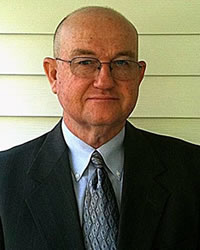
Gary Shepard

A Gospel Summary

1 Timothy 1
Gary Shepard March, 20 2016 Audio
0 Comments
Gary Shepard
Gary Shepard March, 20 2016

Sermon Transcript

Auto-generated transcript • May contain errors

100%
Please turn back in your Bibles where we read
there in 1 Timothy. 1 Timothy chapter 1. He's not left us adrift to just float around on a sea
of personal opinion, fallen human logic, a multitude of different ideas, but rather He has given us an
objective standard. And that standard is His written
Word. It is the Holy Scriptures. And while the writings of men
of all kinds, religious, secular, they have all come and gone,
And if time stands longer, they will come and go. But the Word of God, the Holy Scriptures, have withstood
the test and trial of time. In one of Bunyan's illustrations,
sees a fire burning by a wall. And somebody's always trying
to put that fire out. But then he sees on the other
side of that wall that oil continues to pour under it. That's the
way the Spirit of God is with the Word of God. You can't shut
it out of your mind if God doesn't want you to. And he gave this Word through
and by men that he chose. He gave it by his prophets. He
gave it by his apostles. Before Christ revealed Himself
to him was Saul of Tarsus, but now he is the apostle Paul.
And he begins by saying in that first verse, Paul, an apostle
of Jesus Christ, by the commandment of God our Savior and Lord Jesus
Christ. That was his only credentials. But that's the only credentials
that count. He spoke and he wrote for God
because God commanded him to, chose him to, and commanded him
concerning what he was to speak. This isn't his opinion or his
idea or his philosophy or any such thing as that. He's there
and he's writing these words led by the Spirit of God. They are literally God-breathed,
inspired. And this standard is the standard
by which everything is judged. Some say, well, the Bible says
you're not supposed to judge. That is utter nonsense. It says, judge righteous judgment. And the only way that you and
I or anybody else can judge righteous judgment is to make a judgment
based on this book. based on what God says. And not only is everything judged
by this Word and standard, all will be judged by this. When we stand before God, it
won't be based on what we think, People like to sit around now
and throw out to each other what they think it may matter to one
another. It will not matter to God. It
will in that day be simply what thus saith the Lord. And we know that. We fight against
it, but we know it. He's given a witness that this
is exactly the way it will be, and the witness is, He raised
His Son from the grave. This is going to count. This
is all that will count. And Paul is writing to a young
preacher, and he is giving encouragement, and he is giving instruction,
he says, unto Timothy. My own Son in the faith." You
see, that's the way the gospel is communicated and transferred
and spread from generation to generation. It says, from faith
to faith. In other words, here is one by
the name of Paul that God has given faith and taught the faith. And now he is also communicating
and God is giving this same gospel to this young man Timothy who
has come along and he now has been given faith also by God. Paul believes, speaks the message,
teaches the Word to this young man. God causes him to believe. It is from faith to faith. And he gives him a serious charge. He gives him a real warning. He says, "...as I besought thee
to abide still at Ephesus." He said, I didn't leave you behind
just because I didn't want you to go with me. I left you behind
for a reason. He says, when I went into Macedonia,
that thou mightest charge some that they teach no other doctrine. That they don't drift off from
something else, a mixture of law and grace, some other emphasis,
some other thing. He said that they teach no other
doctrine. What doctrine was that? The doctrine
of Christ. The doctrine of God's grace in
Christ. Neither give heed to fables,
fairy tales, and endless genealogies, things that simply minister questions
rather than godly edifying which is in faith, so do." He warns
and he tells Timothy. Make sure that men teach no other
doctrine. Well, Paul, you must be very
narrow-minded. But the truth is, Paul and every
gospel preacher They are all only as narrow as God Himself. They're only as narrow as His
Word. They'll always be called narrow-minded. They'll always be called bigots
and said to be prejudiced, or know-it-alls, or think that they're
the only ones that are right. But in truth, they're only standard. Their only reason for speaking
is the Word of God, the written Word of God. And he warns after
that, throughout these verses, saying that all these who are
so willing to preach law, rather than this sound doctrine, He
says, they preach it, but the law is only for the unrighteous. And he gives this long list of
what that is. And then he says, the only reason
that I received this ministry, the only reason God saved me,
the only reason that God called me to bear witness of this truth,
He says it's by the grace of God. I was just before a blasphemer. All I was was an injurious individual,
and I obtained mercy because I did it ignorantly in unbelief. Was Paul the originator of this?
No. Did he not know in some measure,
maybe in his head, some of these things? Yes. But he was willfully,
just like each and every one of us are, he was willfully an
unbeliever. He did these things. He thought
what he thought, willingly in his unbelief. Unbelief denies who God is. But it doesn't change God. Unbelief
denies what you and I are. But it doesn't change us. And
our failure to believe what God says, it may be demonstrated
by us in a multitude of ways, either in what some would call
atheism, or in another and greater way, in a false religion, but
it doesn't change God. We know. in the depths of our
conscience. We know in our heart of hearts
that this is the Word of God and it begins simply with God
in the beginning. God created the heavens and the
earth. He didn't explain Himself. He
didn't ask anybody if He could. He didn't even go about to explain
how He is. It begins with God, and it's
about God, and most especially about His purpose and grace which
He gave a people in Christ before the world began. And there'll
be a lot of people. who go to the Bible for historical
significance, or for moral guidance or reference, or they'll base
a philosophy on some part of it, or a false religion on one
verse or two. But this book is a message. It is
a message. Because when Paul in his statements
here, comes to the point of verse 15, he gives a summary of the
gospel. A summary of the gospel. That's what I call this, a gospel
summary. And it is amazing that something
as glorious Something as infinitely wise and perfect. Something that
can be proclaimed ages without end, and the whole of it never
be told out. It is amazing that God, in His
condescension and in His design, He can pretty much reduce it
to a sentence. So Paul says this, verse 15,
This is a faithful saying, and worthy of all acceptation, that
Christ Jesus came into the world to save sinners of whom I am
chief. This has been on my mind a lot
this week. And this probably isn't the only
time that I've ever thought this, but I thought if I only had one
opportunity, if I just had one chance to preach the gospel to
a man or a woman, If I would be standing there at the foot
of that cross where that thief hung, and all I could say to
him, all I could tell him about was one brief message, I think
I'd have to go to this text. I think I'd have to elaborate
as best the Lord would enable me to on what is said in this
one This gospel summary. Because it is the best of statements. It is the most wonderful news. And it is the only source of
true hope. And when I read what he says
in that statement, I'm made to know something. And
that is that the gospel is a declared and proclaimed message. It isn't something mystic. It
isn't something like a fable that he just warned against or
an endless genealogy. But it is rather, as Paul describes
it here, a saying. And that means a speaking, a
declaring, a proclaiming. In other words, it has something
to do with heralding some news that is going to be good news
to some people. It has to do with a speaking
of the truth. It has to do with the declaration
of the Word of God which is called the testimony of the Lord. It has to do with glad tidings. Glad tidings. Not a fable or
a myth or a legend or a tradition or a rumor or an opinion, but
this is the declaration of the eternal God. It's the most important
thing you could ever hear. The most important message that
has ever been pinned down. And there was a time, as has
been the case all throughout history, when every attempt by
every religion and by every tyrant and ruler, there have been all
these attempts to do away with this Word. But they've not been
able to. Because this is the Word of God.
One noted atheist said that in his day, he said, in a hundred
years, there would not even be anybody reading or being able
to read the Bible. One hundred years later, in that
very place, there was a print shop printing Guess what? The Bible. The Bible. When they invented the printing
press, the very first thing that was printed on the printing press,
guess what? It was the Bible. And we can
turn wherever we want to. They're volume after volume.
of the most foolish, the most base, sometimes the most scientific,
whatever it is, there's only one book that's going to count.
And that's this Word. That's this Word. He says, Who
hath believed our report in Isaiah 53? To whom is the arm of the
Lord revealed? This is a message from God to
some people. It's a declared word to some
people, not written in the stars, not written in signs and wonders, written in His Word. You see,
the word saying here is the word Logos. And that's the word that
is often used by the apostles, especially the apostle John,
in reference to the living Word, the Lord Jesus Christ. And Paul
is saying that this subject, this teaching, this doctrine
concerning Christ, the sum of it as taught by John and by Christ
Himself and by Paul, it's true. But men and women won't even
read it. Why? Because they don't want to. They
don't want to hear it. They don't want to know what
it says. And in their foolish blindness,
they imagine that they won't be responsible for what it says
on the basis of them not knowing what it says. Plead ignorance before the government
or the court and see how far it gets you. This is the standard. And it is a faithful saying,
Paul says, meaning that it is absolutely trustworthy and accurate
and a definite saying because God says it. Because God is faithful. Know ye therefore that the Lord
thy God He is God, the faithful God. In another place it says, faithful
is He that promised. In another place it says, He's
faithful and just to forgive our sins. It says, He always
abides faithful. Can you say that? Not even close. Could there be another one just
like yourself? of the same flesh that you could
trust in and say that they're faithful? No. Paul said, God is faithful by
whom you were called unto the fellowship of His Son, Jesus
Christ our Lord. He's faithful. I'm not faithful. In this sense,
Paul was not faithful. As a matter of fact, the Scriptures
say, Paul himself said this, he says, we have this treasure. We've got this gospel. We've
got this treasure. But we've got it in earthen vessels.
We've got it in clay pots. That's all they are, clay pots.
And this reveals the faithfulness of God. And that's one of the
things that's missed in our day and set forth by a false religion
in such an awful way that it misrepresents God. But the gospel,
the truth, reveals the faithfulness of God to Himself. He's going to be faithful to
His purpose. He is faithful to His decree. He is faithful to His justice,
and to His love, and to His mercy, and to His grace. He's faithful
to His Word and promises. He's faithful to His character
and nature. He says He's chosen a people
to salvation. Will they be saved if God is
faithful? He said He predestinated a people
to be conformed to the image of His Son. Will they be? God's
faithful. And that's what the Gospel declares,
the faithfulness of God. This is a faithful saying. And
it shows the faithfulness of Christ to the Father. In other
words, to all those covenant pledges and to this chosen people
that were given to him and that he came in order to save. This is not a shot in the dark.
This is the faithfulness of Christ. And not only that, it shows the
faithfulness of God's Spirit to carry out and to ensure and
to apply every blessing to these the Father chose and to those
of the Son redeemed by His blood. He's faithful to give them new
birth and faith and repentance and to call them to Christ through
this gospel. This is a faithful saying. And then he says this, and it's
worthy of all acceptation. All will not accept it. As a
matter of fact, most will not accept it. But it's worthy of
all acceptation. That is, this message is absolutely
true and worthy to be received and believed on and trusted in
and relied upon. It's suitable exactly to God,
and it's suitable exactly to those to whom it is sent. And it is worthy of being received
by all kinds of persons, whether they be Jew, or Gentile, or male,
or female, or young, or old, or rich, or poor, or learned,
or unlearned, or near, or far, because He calls it a treasure. A treasure. In other words, if
there was some way that I could come up with a literal treasure
as far as this world is concerned, and I were to announce that this
treasure was buried out in the backyard of this church property,
And I were to send that message out, do you think whether or
not a person was Jew or Gentile, whether they're from North Carolina
or New York, wherever it is that they're from, do you think that
would hinder them from coming to try to find it? This gospel
is worthy of all acceptation. That is, it's valuable. It's
to be esteemed highly by all, but really, What does this gospel say? This
is always what it comes down to. People talk about the gospel,
they talk about Jesus, they talk about this and that and the other,
faith and believing and all that. But what does the gospel really
say? Have you ever heard what the
gospel really says? I know this, you never will hear
what the Gospel really says until the Lord opens your ears to it.
He that hath an ear, let him hear. But before it goes into
the ear of the heart, it'll have to come into the ear of your
body, your natural ear, you'll have to hear before you hear. But all His people are going
to hear. He said, My sheep hear My voice. They hear the sweet
voice of that shepherd. Oh, somebody says, if God would
just speak to me, if God would just talk to me. Listen! This
is God talking to some folks. This is Christ the Shepherd talking
to His sheep. And what did God say? Through
the prophets? Through all those Old Testament
pictures and types? What did he say by John the Baptist? What did he say when he was personally
and bodily on this earth? What did he say by the Apostle
John or by the Apostle Paul? All of them had the same thing.
I've heard Brother Mahan speak of this so many times, I'm glad
the Lord's kind of stuck it in my mind. What were those Old
Testament prophets saying? They were saying, Christ is coming. What was John the Baptist saying?
He was saying, He's at the door. He's here. What were all these
apostles saying? He's coming to save sinners. What is Jesus Himself saying?
I'm come to save sinners. Or John, He's come and saved
sinners. Or Paul again, He's coming again
and He's saved sinners. And Paul says, I'm the proof
of it. He says He came. It doesn't say
He began to exist when He was born. He no more began to exist
when He was born than He ceased to exist when He died. He came. That means He must have pre-existed,
doesn't it? He pre-existed. In John 14, it
says that God, the Word, became flesh and dwelt among us. That means he existed before
he became flesh. He was always the Word that was
God, the Word that was with God. And then Paul says it this way,
he says, great is the mystery of godliness. What would that
be, Paul? That God was manifest in the flesh. Somebody said, Only a fool or
a Christian would believe that. That that man, that child born
in Bethlehem, that man that walked on the face of this earth, is
the God-man. Isaiah had already talked about
it. He made that distinction when he said, unto us a child
is born, unto us, A son is given. The son's not born. The son comes
in human flesh. He came into this world. He is
Christ Jesus. Christ means anointed. He's God's anointed. He's God's
anointed prophet. He's God's anointed priest. He's
God's anointed king. He's God's anointed savior. He's
God's appointed mediator and redeemer. God has put everything
in Him, appointed Him, and He's Jesus, or Jehovah Jesus, come
to do the will of Him that sent Him, come to do the work that
the Father gave Him. He came in the fullness of time. He came made of a woman. He came
made under the law to redeem. He came to bring in that everlasting
righteousness. He came to die the death of the
cross, because He's the Lamb slain from the foundation of
the world. He came, and if we could only
see this, that Christ Jesus not only came into the world, but
He came into the world to save. I get so weary of hearing what
Christ made available, what Christ made possible, what Christ offers,
what Christ will do. But it says here, He came into
the world to save, not to give us a chance, and certainly not
to make men savable, or to help them save themselves, or to make
salvation possible, or to make an offer. He came to be the offering. He didn't come just to make a
sacrifice. He came to be the sacrifice. He didn't come to give you a
lift up by the bootstraps or a helping hand or any such notion. He came in this world to save. And the great difference between
falsehood and truth concerning Christ lies in this. What did
He accomplish? He came to be the sacrifice for
sin and thereby to save. He came to be what Jonah said
He would be, that salvation that is of the Lord. He came as Jesus,
the very name of which means He shall save His people from
their sins. He came to save, and guess what? That He did. If you and I ever
find out our weakness and our helplessness and our inability
to save ourselves, that will be the best news you ever heard
in this life. He came to save. If you look over in 2 Timothy chapter
1 and verse 9, Paul writing again to this same young man concerning
this same one. He says in verse 9, who have abolished death and
have brought life and immortality to light through the gospel." Light. Light. But not only life, immortality. How does He bring it to light?
How does He bring it to light to us who sit in darkness, blinded? through the gospel. Would you
have any light in this dark world? Would you have any light in the
matter of your soul's condition? In the light of eternity? In
the light of your standing before God? He brings it to light in
the gospel. And then if you turn just a page
or two more to the book of Titus, in Titus chapter 3, he says,
"...but after the kindness and love of God our Savior appeared
toward man, appeared not by works of righteousness which we have
done, but according to His mercy He saved us." Saved us. The work of Christ
on behalf of His people is an accomplished work. He saved us.
Men are always talking about something that they can do to
be saved. There's nothing we can do to
be saved. He had to do it all. That's His
mission. That's why He came into this
world. That's what He successfully accomplished. That's why the
Father raised Him from the dead, seated Him at the right hand
of the Majesty on high. It was because of what He did. He was who He was before, but
it's because of what He did. That's His glory. You see, salvation
is not something we do. Nor is it based upon our deciding
to make what Christ has done effectual for us. Salvation is
what Christ came to accomplish in full for His people, and on
that cross He said it is what? Finished. Finished. But who did He do it for? Who
did He come into the world to save? It says he came into the world
to save sinners. Not many sinners in this world.
If you don't believe that, just ask people. One old preacher
said it about Bride. He said, a sinner, a real sinner
is a sacred thing. Only the Spirit of God could
make him thus. You can say things like this,
well, I know I'm not perfect. That's not the story. You ain't
even close. And neither am I. You could say
this, well, I'm not as bad as most people. That's a pitiful
yardstick. Or you could say things like
this, I'm doing the best I can. Or I believe God will just weigh
everything into balances and maybe the good I've done will
be more than... No, no, there is none good. You see, all these
things are simply a revelation of how really ignorant and blind
and unwilling to believe what God says about us. I'll keep
saying this by God's grace as long as I live. You will never
know what you are, nor could I ever know what I am, really,
in the sight of God until He enables us to believe what He
says about us. Don't ask your mama. You never
did anything wrong in her sight. Don't ask your friends. They'll
just pour flattery on you in hopes that you'll turn and pour
it right back on them. Don't ask yourself, because the
heart is deceitful above all things and desperately wicked.
And when you fail to stand on this ground, this one little
old square foot of ground called sinnerhood, you exclude yourself
from every mercy and grace from God. Sinner. One incapable of pleasing God. One whose sins must surely bring
out not only death, but eternal death. A sinner, one who is under
the justice of God and apart from Christ, will perish. A sinner. Somebody says, well,
that's not a very positive message. Well, you're not very positive
in yourself. I'm not positive. We're sinners. Everything we do. Everything
we think. Imagine, every motive, we're
sinners. But the glory is, Christ came
into the world to save sinners. If we could save ourselves, or
could in any way help in our salvation, He wouldn't have to
come. A sinner is just that, one who
is brought by God to acknowledge that he can't save himself. I
always think of that illustration of a drowning person. When they
teach rescue people and lifeguards how to rescue a drowning person,
they say, swim out to that drowning person. But as long as they're
kicking and flailing and doing all this stuff, don't touch them
because they'll drown themselves and you too. But when they give
it up, when they go under, as we say that third time, Get them
and bring them. That's what God has to do. He
has to bring us to an end of ourselves and our strength. Cause
us to see our violence. Cause us to see our inability
to do anything to please Him or save ourselves. Causes us
to see how brief this life is and how long eternity is. Bring
us to the conviction of our sins. I can remember in those old meetings,
those old revival meetings and services, somebody would kind
of get low looking and low hanging heads and somebody would say,
I believe Joe is under conviction. No. He may have some sadness
over the consequence of his sin, but he doesn't yet know that
his sin is against God. And the greatness of his sin
is measured by the one he sins against." No. He's just crying a few of those
Jimmy Swaggart crocodile tears and such. But he's not convicted
of sin. Because if he were, he'd have
to flee to Christ. He'd know that there was just
one Savior. He'd be like the sick man. I can tell you this. If my dear
wife knew that there was one person somewhere that truly could
cure that leukemia she has, she'd be doing her best to get there.
And I'd be helping her. Why? Because a Savior is born
out of need. It's born out of a knowledge
that we can't save ourselves, that we'll surely perish. But those Pharisees, they stood like so many do, with
their arms crossed, watching everybody that goes by. Well,
I'm as good as they are. I'm better than they are. I don't
do this. I don't do all these things. Christ said that they
just die in their sins. Because He didn't come to call
the righteous, but sinners to repentance. They said, this man
receives sinners and he eats with them. Hallelujah! Come ye sinners, poor and needy,
weak and wounded from the fall." Sinners. Christ paid for somebody's
sins. And He's going to save everyone
He died for. He hung as their substitute in
their place, and endured what they would have endured, but
couldn't. He paid all their debt. Gave
Himself a ransom for them. Redeemed them by His blood. God imputed their sins to Him,
and He paid the debt. God counted Him as such, but
He imputed His righteousness to them, and so He declares them
righteous. Justify. Justify. And I don't know if you notice
this or not, but Paul follows those words with this, "...of
whom I am chief." You won't hear any of this testimonial
like we hear in our day. Oh, I used to be a sinner. I
used to be a bad sinner. Paul said, "...of whom I am chief."
In Romans 7, as an apostle, being led by the Spirit of God to speak
the truth of God and the experience of all of God's saved people,
he's still saying it, O wretched man that I am. Nothing you can quit, nothing
you can do or say or practice will ever keep you from being
what you are in yourself. a sinner. Sometimes that overwhelms
me when I think about my own wretchedness right now. How in
the world could such a sinner as myself ever have one inkling
of hope that I remember this? I'm just
the kind that He came to save. And though far superior, I'm
sure in a multitude of ways, I'm just like old Paul the Apostle
was. Those he saved, they don't go
around looking at anybody else. You show me a fault-finding religiousness,
and I'll show you a self-righteous lost Pharisee. Because it's not
what you are. It's what I am. And when I found
perfection in the Lord Jesus Christ, I quit looking for it
in anybody else. You can't be as bad a sinner
as I am. My sin's against light. My sin's against grace. My sin's
against revelation. My sin's against goodness. How
I do need this Savior. How I do need Him. Paul said
I was injurious, ignorant, a blasphemer, an unbeliever, But God saved
me. But I'm still the chief of sinners.
He didn't say, I'm still a sinner. He said, I'm still the chief
of sinners. That's the attitude of God's people. Grace is a humbling
thing. To have to be saved by one outside
of yourself totally, and not only that, but from God, by God. becoming human flesh to die for
your sin. Now, there are many more particulars,
and they are so wonderful, concerning God's eternal purpose, concerning
all the particulars of what actually is involved in our redemption,
in Christ paying our ransom, more that's involved about all
His glorious person, This is a summary. This is a
faithful saying. Christ Jesus came into the world
to save sinners, of whom I'm chief. I'm chief. Old Brother Richardson used to
say that preaching the gospel is just one beggar telling another
beggar where he got bread. That's the truth. Father, this
day we thank You that You brought to our ears
the Gospel of Your grace in Christ crucified, that You sent a messenger
with his faults and his failures just like myself, but You caused
him to preach to me the truth, enabled me to believe it, Brought
peace in my heart. Peace that passeth human understanding. That's why you get all the glory
and all the honor and all the praise for all eternity. Save your people. Gather your
lost sheep. Bring your elect from the four
winds and cause us to come to Christ that we might have life. We thank you and we ask everything
in Him. Pray your Spirit would make this
to be a reality in our hearts. Amen.
Gary Shepard
About Gary Shepard
Gary Shepard is teacher and pastor of Sovereign Grace Baptist Church in Jacksonville, North Carolina.

Comments

0 / 2000 characters
Comments are moderated before appearing.

Be the first to comment!

Joshua

Joshua

Shall we play a game? Ask me about articles, sermons, or theology from our library. I can also help you navigate the site.