Bootstrap
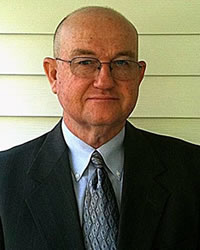
Gary Shepard

The Known Unknown

Romans 8:28
Gary Shepard January, 10 2016 Audio
0 Comments
Gary Shepard
Gary Shepard January, 10 2016

Sermon Transcript

Auto-generated transcript • May contain errors

100%
Turn in your Bibles this morning
to the 8th chapter of Romans. Romans chapter 8. I wrote the title of this message
down some time ago Just had it as a thought in my
mind. Didn't even really know why I
wrote it down. But then this week I have been brought back, I think, to
know and to remember why. I've entitled this, unknown. The known unknown. And I'll just read one verse
in the beginning, and that is the 28th verse here in Romans
8. You're very familiar with it.
The Apostle Paul writes, that all things work together
for good to them that love God, to them who are the called according
to His purpose." We're here now in the first month
of this new year. 2016. And when I thought about it, the
words of Joshua came to my mind. When he was about to lead Israel
across the Jordan into the new land, he said, you've not passed this
way before. We're headed out into some new
territory in which we have never passed this way before. And we know that like all of
our years past, it will be full of events, which to us, some
will seem bad, and some will seem good. I suppose we could
say it will be more of the same. And I know that as sinners, we will bring enough trouble
to ourselves. We'll bring enough trouble. We'll create enough problems
and enough heartaches Every day of it. I wish that wasn't the
way it is, but that's the way it is. Plus, on top of that,
in addition to that, we will have trials. We will have difficulties. We will have afflictions and
much more. And for many, we already have. We already have. Our Lord said,
these things have I spoken unto you, that in me you might have
peace. In the world ye shall have tribulation,
but be of good cheer. I have overcome the world. I think I learn more and more
that the only real peace in this world is in Him. There is no peace outside of
Him. And this is the way it has been
for all since Adam, to one degree or another. And in one of the
oldest books in the Bible, in the book of Job, we find Job
and others expressing this very thing. It says, man that is born
of woman is a few days full of trouble. Again, he says, yet
man is born unto trouble as the sparks fly upward. And then the wise Solomon is
led to write this. All of these things, if we're
honest, we found them to be true. He says, for what hath man of
all his labor and of the vexation of his heart wherein he hath
labored under the sun, for all his days are sorrows, and his
travail grief, yea, his heart taketh not rest in the night. This is also vanity." And then
you add to that, that as the end of this age approaches, as
time rushes forward to the hour of judgment, men shall wax worse
and worse. Paul says perilous times shall
come, and all situations will become more ripe for judgment. We know that. We find it to be
true. But as the people of God, as
those who have received grace from God, as those who are brought
to trust Christ and to receive mercy at His gracious hand, We
are not to fear the unknown. We are to dwell on the known. We are not to worry as to what
may happen, but we are to think on Him who will bring it to pass. And we are to seek our comfort
and our rest in all things based on His promise to us concerning
it. We rest in His promise. And first of all, we can do that,
and we should do that, and hope for what God will do because
of what He's already done. When you read throughout the
Scriptures and hear the Lord speaking through prophet or psalmist
or whoever it was, speaking to Israel, He was always calling
upon them to remember what He had done. What He had blessed
them with. And what we think is oftentimes
not what we're to remember. Because when Paul is led of the
Spirit to write this, and to assure the Lord's people of what
they can hope in and trust in, he immediately reminds them about
what God has already done. He started doing for us before
the foundation of the world. So in verse 29, he says, for
whom he did foreknow, or forelove, he also did predestinate. And that word means to mark out
beforehand. He also did predestinate to be
conformed to the image of His Son, that He might be the firstborn
among many brethren. How can men and women ever run
from that precious Word? which speaks of something that
the thrice holy, good, and gracious God has done. He did predestinate. And not only that, that predestination
is also joined inseparably to His Son. These He did predestinate. to be conformed to the image
of his Son. How in the world could conformity
to Christ be something bad? He says, and that in order that
he might be the firstborn among many brethren. Moreover, whom, not simply what,
but whom He did predestinate, them He also called, and whom
He called, them He also justified, and whom He justified, them He
also glorified." Grace goes from God initiating toward us to God
glorifying us in His Son. And then he says in verse 31,
"...what shall we then say to these things?" This is what the
Lord's people have to say. This is what we delight to say. He says, if God be for us, who
can be against us? What can be against us if God
be for us? You remember when, I believe
it was Gideon, saw this unique figure out in the midst of the
battle. And he knew it was immediately
the captain of the Lord's hosts. And he said, are you for us,
or are you for them? And all he responded was this,
I'm the captain of the Lord's hosts, and the ground that you're
standing on right now is holy ground. In other words, if we're
in that host, The Lord's host. The Lord's people. The Lord's
children. He's for us. He's the captain
of the Lord's host. And He's been for us since old
eternity. He was for us in that covenant. Everlasting covenant. He was
for us when He became our surety and our head. He's always been
for us and always will be for us. And so what God has already
done and always will do, it likewise is for us. And the way we can
be assured of that and know that is to remember what He's done
when it appeared that it was the very worst. When you look back at where we
stood in our father Adam, in that garden paradise, And He
is our representative in all that He did, we did in Him, and
everything He did had such a dramatic effect on us even to this day. Oh, that was a bad day, wasn't
it, when He fell? No, it was a good day. Because when God dealt with our
federal head Adam, the first Adam, on a principle of representation,
it enabled Him to deal with us also in the last Adam, the Lord
Jesus Christ. And what we lost in the first
Adam, we not only gained in the last Adam, but much more. Much, much more. And so what appeared to be at
that hour the very worst was without a doubt the very best. And not only that, but what happened
on the cross. when this One who represents
us in that covenant, when He's taken out and crucified and slain
and put to death so that the One who stands for us, the One
who represents us, it appeared that the very worst had happened
to Him and therefore to us. But it wasn't the worst at all.
As a matter of fact, it was the absolute very best. And that's exactly what Paul
and Peter and every apostle is saying, that in these things,
God was in a total and absolute control, working, as Scripture
says, all things after the counsel of His own will. Can you rest
in the will of God? That's what He brings all His
people to rest in. To pray before God and men, Thy
will be done on earth as it is in heaven. Yours is a perfect
will. Yours is the only true free will. Yours is a glorious and a gracious
will to all your people. And so when Peter stands on that
day, not long after that, he says in Acts 2, in that sermon,
he says, "...Him, that is Christ, being delivered by the determinate
counsel and foreknowledge of God, you've taken and by wicked
hands have crucified and slain." You did it. You're guilty of
it. You'll be held responsible for
it. But as you did it, doing what
you would, you carried out the determinant counsel and foreordained
purpose of God." And then just a little later he'd say this,
he'd say, For of a truth against thy holy child Jesus, whom thou
hast anointed, both Herod and Pontius Pilate, whence the Gentiles
and the people of Israel were gathered together." They're going
to mess everything up. Impossible. He says, "...for
to do whatsoever thy hand and thy counsel determined before
to be done." The very worst was the very best. And so Paul writes here in verse
32, He says, "...he that spared not his own son, but delivered
him up for us all, how shall he not with him also freely give
us all things?" That was the giving of all things
to his people. And so he continues, and he says,
"...who shall lay anything to the charge of God's elect?" Nobody. Neither devil, or angel, or man,
and especially not God Himself. Why? Because it is God that justifies. That's why it is impossible to
say, as some seem to want to say, that man is only justified
when he believes, or he's only justified when Christ hung on
that cross, though that was the means by which he was justified.
But his God, the eternal God that justifies, and whatever
He does, He does forever. This is all at one time with
Him. It is God that justifies. Who is He that condemneth? It is Christ that died. Yea,
rather, that is risen again, who is even at the right hand
of God, who also maketh, or is making, based on His work, based
on His sacrifice and blood, who is right now making intercession
for us. He's for us. How many times in
your life Whether it's affliction or problems or difficulties,
that it comes to your mind, if I had so-and-so in my corner,
if I had this one in my corner, if I had this one for me, I'd
be okay. But he says, he's for us. He's
making intercession. right now for us. We have nothing
in ourselves to do so. No basis in us. But He can, and
He does on the basis of His own self, and on the basis of His
own sacrifice, and on the basis of the fact He satisfied justice
for us. He makes intercession for us. I don't even know how to pray.
My prayers are so selfish. Especially when it comes to my
loved ones, to my family, to you. My prayers are so selfish. But even the Spirit of God on
the same basis of Christ crucified, He has groanings for us before
God and makes that intercession according to the will of God. To that perfect will of God.
And what about when we came under conviction? When the Holy Spirit
began to convict us over the matter of our sin? When we began
to find out that we were really lost? When we began to feel our
own helplessness and our inability and were made aware of our own
being unable to save ourselves. When we found out, maybe so many
of us, that we were in a false religion and that all our hope
was a false hope. What did God work in us that
for? Somebody told me one time, they
said, preacher, I think you're trying to make me feel bad. No,
I'm not trying to make you feel bad. But oh, it was to feel bad
when we are convicted of what we are as sinners. See, our hopelessness
and our blindness, all these things. We thought it was the worst,
but it was for good. It was to reveal to us the truth. It was to bring us to the Lord
Jesus Christ. It was to bring us to this gift
of repentance, the repentance from dead works that he talks
about. It was to bring us to faith in
Christ. It was to bring us to a knowledge
of the truth. It was to make known to us His
salvation and His grace and His mercy, all of which is in Christ. Sure appeared bad for a while,
didn't it? Old Brother Richardson said, it's the bad news that
makes the good news, good news. But when it's happening, it appears
as bad, it appears as the worst. But it's really the best. And there is a great unknown
before us. There always is an unknown before
us, isn't there? Sadly, when we think we know,
What's going to happen, or what's not going to happen, or all these
things. Though there's a great unknown
before us, there is much that is known. There is so much that
God's people know. And so when Paul begins to state
what he is saying in verse 8, that's how he begins. And we
know. There are a lot of people out
there that say, well, we can't know this, we can't know that.
Oh, there's a lot of secret things that belong to God. Yes, but
he says, but the things that are revealed, they belong to
us. They belong to His people. And
he says, and we know, which is simply a carrying on of what
has already been said, because it's the same word that is translated
in verse 30 As moreover, moreover, we know. We know. And we know it, first of all,
because of who says it. That's really where it all comes
down to the nitty-gritty, isn't it? That which is said or promised
or declared is only as good as the one who says it. And the one who says this cannot
lie. He's the God of truth. And He
cannot fail. He's the Almighty. And He cannot die. He's the Eternal
God. And He cannot change. He's the
Immutable One who's the same yesterday and today and forever. And we don't rest in some kind
of positive thinking. And our hope is not based on
some fleshly optimism. And this certainly is not true
of those who do not believe the truth. We just believe God. I couldn't
tell you the exact second when I first began Believe God. But I know this, from whenever
that was, that He began to enable me, through that gift of faith,
to believe God. I now can't help but believe
God. You could offer me the most convincing
outward evidence you want, but I cannot help but believe God."
And that's exactly what Paul was saying in the midst of that
storm when it appeared that everything, everything that was going on
just felt disaster and all these things, everybody's going to
die, he's going to die, but he simply said, I believe, I believe God
that it shall be as He has said. That's my only hope. I believe,
God, that it will be as He has said. Not because of what is
seen with the natural eye. The truth is, it most often looks
exactly the opposite. Not what I'm presently experiencing,
not what well-meaning people might say to me, it's all because
of God-given faith. And faith is not some kind of
natural optimism. Faith is the enablement by God's
Spirit to believe God's Word. We know because we believe God. We know because we believe His
Word. This is the Word of God. This is the promise of God. And it's to His people. It's
to all His people. That's to everyone that's in
Christ Jesus. So He says again, and we know
that all things... What are all things? All things. That includes every trial, Every
tribulation, every sickness, every heartache, every loss,
every disappointment, every family situation, and yes, even our
sins and our failures. Is that too much? No, that's
all things. All things. And so he tells us
by the Apostle, he says, in everything give thanks. Why? For this is the will of God in
Christ Jesus concerning you. God help us to see that. Help
me to see that. Whatever it is, it is the will
of God in Christ Jesus concerning us. All things. And I know what
endless speculators we are by nature. Well, what about this?
And what about that? And what about the other things?
How in the world can this be good? All things. And if God says all things, you
can mark that down. He means all things. And we may, as we often do, We
may think, as Jacob thought, all these things are against
me. Were they? No. They were for him. They were deliverance for him.
They were salvation for him. They were blessing that he had
not ever imagined for him. God was not against him. All
these things were not against him. They were for him. And that's what he says to all
his people. And we know that all things,
all things, they work. They're not some kind of fatalistic,
motionless, unchanging situation. They work. Why? Because God works
them. He works all things. David said
concerning affliction, he said, it is good that I have been afflicted,
that I may learn your statutes. That's what God's people are
learning in this world. Sometimes by their failures.
Sometimes by sickness, sometimes by tragedy, sometimes by all
the experiences of life, sometimes by tribulation, we're all learning
His Word. We're all in the school of affliction. Many are the afflictions of the
righteous. He says, we read that, but the
Lord delivers us out of them all. They work. You see, God
in His overriding providence, He rules all things to bring
His purpose of grace given to us in Christ all to pass. They work together. God's plan and purpose for His
people is so intricate and it is so perfect. Somebody gave
an illustration one time of a piece of Counted cross stitch. And you look at the back of a
piece of counted cross stitch, any of you have ever seen it,
and it is an awful mass of threads back and forth. It is a mess
and looks totally disorganized. That's the way God's purpose
is to us. That's how it often seems to
us. But when you turn it around on the other side, you see a
beautiful, orderly picture, flower, saying, whatever it is. And that's
the way it is to God. He's always right. Our problem
is we don't know Him good enough to trust Him. We don't study
His Word enough to find comfort in His promises. We don't seek
to hear His gospel preached that we might gain strength and that
food that we need for all these things. But these things He works
together. And we're not to isolate any
one of it. We're not to isolate one thing
from all the rest and then just dwell on it. We're not to view
it as fate or chance or luck, but fact is, God is working all
these things together. And he says, for good. You see, only God is good. And
that means only God knows what good is. You that have had children, tried
to raise small children especially, what they think is good is simply
temporary, momentary, and good to them, not really good for
them. But when God says He's working
them together for good, He means for our true good. He means for
our eternal and for our spiritual good. He knows what is good. Do you want to do good to your
children as best you know? God knows what's good. That's
what He does for His people. As the sovereign Lord of the
universe, He is working everything together. Not only as it pertains
them particularly, an individual, but everything in this universe,
all of history and time, has been God working together all
these events together for good. If we could only believe. This is
good. This is good. Why? Because God's
worked it together. It comes from God. And this is
a special promise that he makes to a particular people. It's
not a universal promise. These promises are made to the
people of his heart and his love that he gave to Christ. He says,
to them that love God. Now that doesn't mean that if
we don't love God, they won't work together for good. No, this
is a description of the people that all these things work together
for good for. These are those that love God.
The fact that He in grace has saved them and they're brought
to the knowledge that He works all these things together for
good for them, these things are the cause of their love for Him. We love Him because He first
loved us. We love Him because He loved
us and gave Himself for us. He could never look on my love
for Him and make that the basis of any gift. As a matter of fact,
that's one of the griefs of my heart, is how can I, so loved
and so blessed and such mercy shown to and grace given to,
how is it that I can be so cold and thankless and loveless? But I love Him. The more I find out about Him,
the better I love Him. In spite of my sin, I love Him."
He put that love there. They work together for good to
them that love God. To them that are the called. Called. You say, well, God's
calling everybody. No. I'm sorry. He hasn't even
caused a gospel call to go out to every person in the world. The call. We read about Him in
verse 30. Then He also called. And that word called means on
one hand, named. He wrote their names in the Lamb's
Book of Life before the foundation of the world. He named them. This isn't a haphazard thing.
This isn't a random doing. Out of His own heart, out of
His own sovereign will, He named them. He chose them. He called them
effectually. In Romans chapter 1, when Paul
begins to write this, he addresses these as called. Call saints. Name saints. The word to be is
not in the original. Call saints. He called them separated
ones. Set them apart unto Himself for
His own use and glory. They're called. The called of
Christ Jesus. The called in Christ Jesus. Effectually
called. Thy people shall be willing in
the day of thy power." There was such a state, such a condition
of sinners, that if he doesn't act in the power of his own might
as God, and call them effectually and mightily, he says, no man
can come. And then he says, all that the
Father giveth me shall come to me. Well, how will they come?
If He can't come, He calls them effectually and mightily. He brings them. And they are
the called according to His purpose. What a miserable existence it
is in this world until you find out that everything is according
to His purpose. Everything is happening not by
accident, not by fate, but according to the sovereign purpose of God. He does it, and He does it on
purpose. And you can just stop and say,
well, what about this event, or what about this going on,
or what about these starving people, or these dying people?
I said, He does it all on purpose. And your purpose? And my purpose
in ourselves are not according to His purpose. His ways are
not our ways. They are as high as the heavens
are above the earth. It is nothing but the pride of
man who thinks he would do better than God does. It's all on purpose. All on purpose. According, it says, to the eternal
purpose which He purposed in Christ Jesus our Lord. Do you know what that means? That means the creature cannot
control it. And how many hours? How much
wasted energy? How many futile attempts? Do we, even as His people, make
trying to control it? This is His purpose. This is
His work. This is out of our hands, and
it always has been. A creature cannot control it,
that means also there can't be any merit in it. Not only does
He save us without any merit in us, but every good thing He
does for us is still without any merit in us. And it's eternal. Eternal. It's His purpose. His
is an eternal purpose. And it will result in glory to Him. and in our gratification to Him. Can you imagine? Oh, it would
be wonderful if we could do it today, but we struggle. But can you imagine coming down
to a time and looking back at all of your life, not just anybody
else, but all your days, and being able from your heart to
acknowledge that everything was good and right and true, everything
was ordered of God, and it was working toward good to you, it
was His purpose. Paul said to Timothy, He said,
God who has saved us and called us with an holy calling, not
according to our works, but according to His own purpose and grace
which was given us in Christ Jesus before the world began. To them that are the called according
to His purpose. You say, well, why pray? Because
in prayer God, the Spirit, when He enables us to truly pray,
He brings our will into conformity to God's will. When we ask, we
ask anything according to His will and purpose. And we rest
right there. We rest in the goodness of God. What a verse. Turn one more time to 2 Timothy. Before I read this verse, I want
to remind you where the man that God used to write Romans 8.28,
where he was when he wrote this verse. He was in prison. He was enduring physical hardship,
mental hardship, spiritual hardship of a kind. He had every reason
to doubt God, humanly speaking. Every reason to be bitter. Every
reason to not have any hope. But from this prison, he writes
in verse 12, that even though he was doing what God commanded
him to do, which was to preach the gospel, he's now been cast
into prison for preaching that gospel. I guess things are out
of control. No. Paul said, I'm here and I'm
enduring all things for the elect's sake. Why? Because God had some
sheep there in that prison. But verse 12, he says, "...for
the which cause I also suffer these things. Nevertheless, I
am not ashamed, or I am not disappointed, for I know whom I have believed,
and am persuaded that He is able to keep that which I have committed
unto Him against that day." Against the very day when we stand before
God. Everything. Well, how much have
you committed to God? Everything. Everything. That's what we're to commit to
Him. Not just our souls, but our families, our labors, everything. And I pray that He'd give us
grace to do it. There is much unknown, and that's
a hard thing. And it's only made better in
the remembrance and the knowledge and the assurance of what we
do know. And we know that all things work
together for good to them that love God, to them that are the
called according to His purpose. And what the believer faces every
day and for all the future is the known unknown. But it's all
of God, and it's all in Christ, and it's all by grace. Our Father,
this day it's in the name of our Lord Jesus Christ, who we're
not worthy of, whose least mercy we're undeserving of. We pray for grace that we might
rest in what you've said, that we might see things in the light,
of your wisdom and goodness and kindness to us. We thank you
for your purpose to us and to ours, and we rejoice that you
do all things right. We pray for strength and help
and mercy, and we ask it because of Christ. In His name, Amen.
Gary Shepard
About Gary Shepard
Gary Shepard is teacher and pastor of Sovereign Grace Baptist Church in Jacksonville, North Carolina.

Comments

0 / 2000 characters
Comments are moderated before appearing.

Be the first to comment!

Joshua

Joshua

Shall we play a game? Ask me about articles, sermons, or theology from our library. I can also help you navigate the site.