Bootstrap
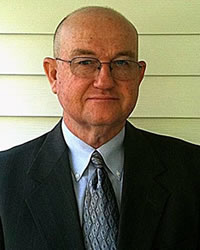
Gary Shepard

Remembering Our Ruin and Redemption

Deuteronomy 15:15
Gary Shepard December, 28 2015 Audio
0 Comments
Gary Shepard
Gary Shepard December, 28 2015

Sermon Transcript

Auto-generated transcript • May contain errors

100%
Deuteronomy 15, where we read
verses 7-15. I think it would be good for us to remember, especially on this last Sunday
of the year particularly, how the Lord has led us and kept
us, protected us, provided for us, and been with us over the
past year. But even more than that, the Lord's people should remember
Remember what He has done for us spiritually, what He has done
for our souls, what He has done for us in the light of our sins,
and what was our natural state. Where were we and what were we
when the Good Shepherd found us? In every case with the Lord's
people, they were every one lost sheep." Lost sheep. And I thought about it. Where
was Abraham, who is described in Scripture as the father of
them that believe? He was living. in the land of
Ur of the Chaldees, and he was the son of an idol-maker." He
was a lost sheep. And where was Noah? He was one man amongst a whole
generation of people that deserved the wrath of God. He was no different
in Himself. But it says, Noah found grace
in the eyes of the Lord. Where was Gideon? He was a coward
hiding in a winepress. Isaiah, he was so involved politically
and governmentally with the king that he served, that he didn't
see anything of the glory of God, it says, until the year
that King Uzziah died, when he saw the Lord high and lifted
up. Where was Matthew? It says he
was seated at the seat of custom, He was the instrument of the
tax grabbers, and most likely was skimming a little bit here
and there in the process as he collected those taxes. Or Peter and James and John,
they were just simple fishermen, had no interest and no need of
the Lord of glory." Well, what about Paul, who was Saul of Tarsus,
a religious man, a moral man, thought he knew God, taught other
people about God, highly esteemed among his nation and all religious
people in his day. But he was lost. And what about a man by the name
of Onesimus? He's a runaway slave imprisoned
with the Apostle Paul that he might there in that place hear
the gospel of the grace of God. You see, we are always to be
remembering the redeeming grace of God to us. We would always be remembering
how it is that He rescued our souls. That He alone is the reason
if we have any peace or hope or comfort or any expectation
of great and eternal glory." You see, as God commands these
people as a redeemed people, and He issues to them all these
various instructions, it is always in the light of His grace to
them. He reminds them, the Lord hath
redeemed thee. And that is to be the basis and
the motivation of all that He commands His redeemed people
to do. They are to go forth on this
basis and from this point as those who are redeemed. And if we really are, by the
Spirit of God, enabled to think on these things and remember
these things, it will truly humble us. It will truly bring us to
bow our hearts in thanksgiving to Him, because it humbles us
to remember what we are, and what we have, and what we have
by the grace of God, and to remember that it is because of nothing
in us. It makes us truly thankful. It makes us truly hopeful. And it encourages us in all the
things that God commands us to do because of this. And it seems to me in this text,
the Lord in giving these instructions through Moses, He brings it down
to this, that the reason that they are to do these things and
act toward others as they are commanded to do, it is because
of two things. two things that they are to remember. And those things he states in
that 15th verse when he says, "...and thou shalt remember."
Remember. We often use that expression,
how soon we forget. And the truth is, how soon we
forget. And so he says, "...and thou
shalt remember that thou wast a bondman in the land of Egypt,
and the Lord thy God redeemed thee. Therefore I command thee
this thing today." Two things that He calls upon
us, that He commands us to remember. And the first one is this, He
said, remember first of all that you were a bondman in the house
of Egypt. Do we know? Do we have any concept
in our minds as to what a bondman is? A bondman is a slave. And so what he's doing here is
reminding these people that he has brought out of Egypt who,
by the way, are a picture and type of his spiritual people,
his spiritual Israel. And Paul makes that distinction
so that none would think that because they were a part of national
Israel, they were automatically God's true people. He says, for they are not all
Israel that are of Israel. But this nation, these people,
so distinguished by God and used as an example and picture and
type of His spiritual people, what He says of them is true
of every one of His people. He said, you remember that you
were a slave in the land of Egypt. And not only that, but when you
find Egypt in Scripture mentioned and spoken of, most often it
is simply given as a picture and type of this world. of this natural world, of these
natural people of which every one of us were born in and live
among, he said, remember that you were a slave in the land
of Egypt. And that is the state that every
sinner saved by the grace of God was in, and that is the state
right now of every unbeliever, a slave, in the land of Egypt. And the thing is, only those
that are born of God, Only those that He comes to in the power
of His Spirit and gives them spiritual understanding, gives
them spiritual eyes to see, and spiritual ears to hear, and a
heart to believe, only those who are born of God, only believers,
know this and acknowledge this. I was a slave in the land of
Egypt. And they only know this because
they've been taught of God, because God has enabled them to believe,
as I often tell you, God enables them to believe the condition
that He says that they're in. Don't ever be deceived, though
we are all naturally deceived. so that we do not know our real
condition and our true situation and circumstances spiritually
until He enables us to believe what He says that I am. You see, I am not what I think
I am. I am not what others imagine that I am. But you and I are,
and we'll only know it if He enables us to believe it. You
and I will only know what we are when He enables us to believe
what He says that we are. He says that we're lost. He says
that we are sinners. He says that we are helpless. He says that we are unrighteous
and ungodly. And he says that we are all of
ourselves already captives, slaves. And he describes the state of
all by nature, and apart from grace, he says that we have all
been taken captive by the devil at his will. All this foolish
religious nonsense about rebuking the devil here, and rebuking
the devil there, and doing all these stupid things of the flesh. He says, we are taken captive
by the devil at his will. Does that sound like free will
to you? It says that our will is such
that we are easily and have been taken captive by the devil at
his will. If his will can take us captive,
our will must not be free. And the truth is, our will, Just
like all our faculties is bound to an evil nature of sin and
it is not free. It always wills according to
what I am. Our wills never act in a way
that is in opposition to how I am, to what I want. I've told
you this often. Never in my life have I ever
gone into a restaurant and when the waitress came to take my
order, all of a sudden I just, contrary to what I am, ordered
liver. It just is not going to happen. It absolutely cannot ever be. I will not ever will that which
is contrary to what I want and to what I like. My will is bound
to who I am and what I want. And so here is every son and
daughter of Adam by nature and by birth. We are in every way
captives and slaves, enslaved as beggars, and cast also into
a prison without hope, not only because of what we are and do,
but because of our having offended the law and justice of God. Slaves. Paul, in his writing,
reminds those at Rome that they were the servants of sin. Oh, he said, God be thanked. But you were the servants of
sin. Oh, I do what I want, I do that.
But the fact is, we're only sin in ourselves. And so we are also
the servants of sin. And he reminds us also, he says,
you were without strength. That's what you were. You were
without strength. And you've been that way a long
time. Because he says, when we were
yet without strength, Christ died. Who did He die for? The
ungodly. I hear all these people walking
up and down in this world talking about how godly they are, or
she's godly, or he's godly. Well, evidently Christ didn't
die for you. Because it says that He died
for the ungodly. And we are without strength.
We could not of ourselves obey God. We could not ever of ourselves
do good. We could not ever of ourselves
resist the devil. We could not of ourselves obey
the gospel. Somebody says, well, I can believe
if I want to. I can believe when I want to.
Well, why don't you? Well, I don't want to. That's
the problem. That is the problem. You see,
we never do these things because we are in all actuality and reality
possessed by a nature that will neither will or has the ability
to do righteously. And we're chained. You know what
the worst thing I've ever been chained to is? The worst thing
that I've ever been chained to is me. Oftentimes in attempts
to reform and attempts to do better and attempts to do this
and that and the other, it's like when I would do it, all
of a sudden the chain reaches the end of its length and it
just stops me. Chained to our fallen passions. Chained to our fallen desires
and our evil habits. And so totally unable to liberate
ourselves if we wanted to. Which we don't. That's it. We like a little religion over
here. We'd like just a little bit of something over here to
maybe appease our conscience in the matter of our sin. Or
we'd like just a little something over here whereby we might have
a little hope that in some way we've got a prospect of being
accepted and received by God. That's not salvation. Not salvation. He died for sinners. And when
our Lord went into that synagogue in Nazareth that we read about
in Luke chapter 4, and He opened the book, it was His habit to
go into the synagogue, and He opened the book that was handed
to Him. And He said that what He was
about to read was a fulfillment of that prophecy that God gave
to Isaiah concerning the Messiah. And He read the book. This is
what he read. This is what Isaiah said. The
Spirit of the Lord is upon me because He hath anointed me to
preach the gospel, or to proclaim good news to the poor, that is,
the poor spiritually who are found to be that way by the Spirit
of God. He hath sent me to heal the brokenhearted
and to preach deliverance. to the captives." To do what? To preach deliverance
to the captives. Is that what we were? Absolutely. We're described in another Old
Testament passage as prisoners. In other words, God said, the
good news will come to these who are prisoners, but they're
prisoners of hope. He says, "...to preach deliverance
to the captives, and recovering of sight to the blind, and to
set at liberty them that are bruised." Is the gospel for us? Are we captives? Are we these
who have been brought to see what we are? And you see, like
Israel enslaved in Egypt, and under the hard taskmaster Pharaoh,
we were like them brought to misery and poverty of soul and
hopelessness. They weren't even expecting God
to do anything for them. They weren't seeking the Lord. They had forgotten who Jehovah
was. They had really no interest in
hearing what his prophet said. And when Moses was sent forth
of God to speak to them concerning deliverance and this exodus by
which they were to depart out of Egypt, they laughed at him. They just said, well, we're not
expecting anything. And that's the way it is when
the gospel came to us. We're not looking for anything
because we think we've got everything. We're not looking for deliverance
because we don't think we're slaves, captives. We don't look
for a gift of righteousness because we think we're already righteous.
And we make that awful mistake of comparing ourselves with ourselves. Paul said, you better not do
that. What do you mean? I mean, looking around you at
those who are just like you are, sinners and captives, and saying
to yourself, well, I'm as good as he is. Or maybe thinking in
your heart, I'm as good as you are, preacher. That's a low standard. That's a very low standard. You
see, there were a bunch of people in Christ's day who on the outside
were as spit and polished as they could be. They upheld all
these laws and rituals and ceremonies, and they held the highest standards
of morality and trusted, it says, in themselves that they were
righteous. And this is what Christ said.
He said, except your righteousness, exceed the righteousness of the
scribes and Pharisees, you'll perish." In other words, if you
haven't got something better than the best folks in this world
right now, you're going to die in your sins. You say, well,
preacher, why? Why does the Bible say these
things? Why does God always bring these
things home to us? Why does He say, remember that
you were a bondman in the land of Egypt, so we would despair? Yes, despair of yourselves. Somebody said once, they were
telling somebody about me, they say, well, I don't really like
to hear him preach because he doesn't have much good to say.
about me. You know why I don't have anything
good to say about you? Because there isn't anything
good about you. There is none good, no, not one. And I don't want to make you
feel bad, I don't want to make you despair, but I want you to
despair of all hope in saving yourself that you might be enabled
by God to look outside of yourself to the Lord Jesus Christ. You
can mark it down. Paul, when he talks about how
we were in Ephesians 2, he said, you were dead in trespasses and
sins. What is it that men don't understand
about dead? Why are they always calling upon
men and women and giving them prescriptions and remedies and
things to do in order to be saved or either increase the favor
of God? Christ said, no man can come
to Me except the Father draw him. Dead. He said, you were
dead in trespasses and sins. You walked according to the prince
and power of this world. You were by nature the children
of wrath, even as others. In Isaiah chapter 51, the Lord
says this to us. He said, you remember the pit
from which you were digged. Do you remember the race into
which you were born? We all have these ancestral connections
that we like to kind of exalt maybe a little bit as our claim
to fame in this world. You can ask my daughter. Her
mom was related to probably every king and queen in England, I
think. But there's one thing for sure.
That is, it doesn't matter where you came from, what your last
name is, what your color is, whatever it is, we can all trace
back to one common ancestor whose name is Adam. And when he fell,
we all fell in him. His whole race fell in its totality
in Him, so that every one Christ tells us in His Word is born
in sin, shaped in iniquity, comes forth from our mother's womb,
speaking lies." That's the pit from which we
were digged. David, he described it like this. He said, I was
in a horrible pit. It was a horrible pit. Dead in
the bottom of a horrible pit. Well, somebody throws a line
down to him. If you can take hold of this
line, crawl out, you'll make it. No. He's dead in the horrible
pit. What he needs is somebody to
come down to the pit where he is. Take him up in his arms. Climb that rope entirely by himself
and bring him out. That's what we need. A total
Savior. A complete salvation. A finished
work. Don't paint me half of a Rembrandt
and say, finish the other half. Boy, that will be really something. Don't build a piece of Work like
Richard can build and say, well, you just finish the rest of it
off, because I promise you it won't look anything like it.
I need a finished work. I need a total Savior. I need
One who saves me from all my sins. David said, I was in a
horrible pit. And the Lord brought me out,
and He set my feet on a solid rock, And he put a song in my
heart. My friend, if I can't remember,
if I don't know anything about and acknowledge the pit from
whence I was digged and the bondage from which I was delivered, then
I must still be enslaved in it. Old John Newton wrote it in that
hymn, Amazing Grace, and he made it as clear as it can be. He
said, I once was lost. but now am found." I didn't find
my way. I was found. We have to be saved. We have to be saved by God in
His power and grace. And oh, what slavery most were
bound up in, in the false religion of superstition. That's the way
Paul was. in all the rituals, in all the
ceremonies, in all the deception, in all the idolatry, in all the
man-centered, God-dishonoring activities of religion. You remember,
you young women and not-soul women, you remember what you
liked to do when you were a kid? You liked to play dress-up. That's
the way religion is in our day. Let's play dress up. We'll all
get dressed up, we'll put on our robes, we'll put on all these
titles, we'll put on all these things, and we'll just parade
around and feel good about ourselves. A young preacher dressed me, listed me as Reverend
so-and-so. I don't want any titles. And
most especially, I don't want the title of reverend, because
holy and reverend is His name. I don't want to dress in a way
that's different from you and give the impression that I'm
on some other level than you are. I'm just one sinner telling
another sinner who the Savior is. Whereas old brother Richardson
used to say I'm preaching the gospel as just one beggar telling
another beggar where he got bread. That's all. Men and women are so bound up,
held fast by false hope, false gospel, false Christ, held fast
by its grip and content with it. I remember when I was already
the pastor of a church, so-called, And I thought we were mostly
all saved, especially me. And the Lord began to kind of
open my eyes to some things in this book. And I remember beginning
to kind of think like this, maybe God isn't who I thought He was.
It does say that, doesn't it? And I heard a message on a cassette
tape. To this day, I couldn't hardly
tell you how it came to be in my hands. But it's told me the
only way that God could be just and yet justify, count righteous,
save a sinner like me. I was a bondman in the land of
Egypt. Like Brother Mahan said so many
times, he said, if you ain't never been lost, you ain't never
been saved. And that's the truth. If it was
the end of the story right here, how sad it would be for us. If
the deliverance depended on us, how impossible it would have
been. But bless God, there's another
word there. And. And. You find this same statement
basically in Deuteronomy 24 and verse 18, I think it is. There
it is translated as, But, "...and thou shalt remember that
thou wast a bondman in the land of Egypt, and the Lord thy God
redeemed thee." He didn't leave you there. If it was left up
to you, you'd still be there. But He didn't leave you there.
He redeemed you. Redeemed you. And the example
of redemption is in this very nation. How were they redeemed?
Their redemption was two-fold. They were redeemed by blood.
They were redeemed by power. They were redeemed through that
picture and type of Christ and His shed blood, which was that
Passover lamb. where they were commanded to
take the blood of this Lamb that they would watch and look over
and make sure He was pure and sinless and just these things
that pictured a sinless Christ, the Lamb without spot and without
blemish. And they were to slay that Lamb and take that blood
and paint it, literally paint it, on the lintels and doorposts
of the houses that they lived in. Why? Because God has said He was going
to pass in Egypt and slay the firstborn in every household
of man and beast. But He said this, He said, but
when I see the blood, I'll pass over you. What does that mean?
Well, that blood was just simply a picture of Christ crucified. In other words, That household
was safe because the wrath of God had already fallen on a substitute,
on an innocent victim, that lamb. And then Paul tells us that that
Passover lamb was a picture of Christ. Well, suppose they had
just sheared his sheep, sheared his wool, glued his wool up there. Would they have been safe? No.
Or if they had just tied him at the door as an example, would
they have been safe? No. Because the soul that sins
must surely die. And the wages of sin is death.
And if we're to have a Savior from sin, that Savior must be
sinless, but He also must die in our place. That's redemption. Redemption by blood. But they
were not only redeemed in that sense, because with redemption
is not only the idea of this ransom price that's paid, but
it also has as a part of it an actual deliverance. And they
were delivered by the power of God in an unmistakable way. They left out of the cities of
Egypt. They marched on the way that
Moses led them, but all of a sudden they found themselves enclosed
on both sides, the Red Sea before them. Pharaoh and his army, hot
on their tails. Well, there's no way. There's
one way. And that's by the almighty power
of God who parted that Red Sea and they marched over on dry
ground. They were delivered by blood
and by power. Brought out. Actually delivered. And the same is true for spiritual
Israel. All of God's elect are redeemed
by blood and by power through the Redeemer. Christ the Son
of God, by the shedding of His blood as our substitute to make
atonement for our sins, He hath redeemed us from the curse of
the law." The word redemption implies far more than just this
paying of a price. And it is a ransom price that's
paid that also guarantees the actual deliverance. He said,
the Lord redeemed you. Now listen. He does not say the
Lord made you redeemable. He does not say the Lord gave
you a chance. He does not say the Lord enabled
you to redeem yourself. He said the Lord redeemed you.
You see, that's the good news of the Gospel. He hath saved
us. He hath redeemed us. He has delivered
us. And he says, oftentimes, he said,
the Lord not only redeemed you by blood, but He brought you
out with a mighty hand. That's why I don't spend any
time giving invitations at the end of a service. That's why
I don't try to beat and badger people into doing stuff that
they have no heart to do. Because I know this, if Christ
shed His blood for you, the Lord will bring you. The old writers used to call
that fetching grace. He'll bring you. He'll do whatever
is necessary to bring you to an end of yourself and to bring
you to the knowledge of what He's done for you by His grace.
You say, what has He done for me? Everything. Well, if He's
done everything, what are we to do? Thank Him for it. And
thank Him for it again. And thank Him for it again. It's
all to the praise and glory of His grace. Paul says, being justified
freely by His grace through the redemption that is in Christ
Jesus. When the redeemed are pictured
in the Revelation, it says, "...and they sung a new song, saying,
Thou art worthy to take the book, and to open the seals thereof,
for Thou wast slain, and hast redeemed us to God by Thy blood,
out of every kindred, and tongue, and people, and nation." Are
they saying because you've redeemed the whole world? Are they praising
Him because He's redeemed every single person in Adam's race? No. They're praising Him because
He redeemed them out of these tribes and nations. Redeemed
them, it says in another place, from among men. And the Lord will not hesitate
to sacrifice anything or anyone, even as He did the firstborn
in Egypt and Pharaoh and his army, to save His people. He's
the Lord, mighty to save. Christ also has once suffered
for sins, the just for the unjust, that He might bring us to God. He's going to bring somebody
to Himself. He says in Isaiah 43, "'But now
thus saith the Lord that created thee, O Jacob, and he that formed
thee, O Israel, fear not, for I have redeemed thee.'" Jacob
and Israel, they were the two names given to the same man.
One of which showed what he was in himself, that bondman in Egypt,
Jacob the conniver. Israel, prince of God, what he
was because of God's redeeming work. "'I have redeemed thee,
I have called thee by thy name, thou art mine. When thou passest
through the waters, I will be with thee, and through the rivers
they shall not overflow thee. When thou walkest through the
fire, thou shalt not be burned, neither shall the flame kindle
upon thee. For I am the Lord thy God, the
Holy One of Israel, thy Savior. I gave Egypt for thy ransom,
Ethiopia and Saba for thee, since thou wast precious in my sight. Thou hast been honorable, and
I have loved thee. Therefore will I give men for
thee, and people for thy life." Is that too much of a God for
you? Is that too much grace for you?
Not if you're the object of that grace. Not if it's you He's saving.
Not if it's you He's forgiving. Not if it's you He's keeping. He brought them out. He says,
the Lord thy God redeemed you. And then He says this, I command thee this thing today."
What did they have to do with? How you treat your brother? How
you're to have a generous heart? How you're to be kind and gracious? Was it in order to be redeemed?
No. It's because you were redeemed.
Why should we worship God? Because we were bondmen in the
land of Egypt, and the Lord redeemed us. Why should we seek to obey
His commands? Because we were bondmen in the
land of Egypt, and the Lord redeemed us. Why should we help when we
have opportunity? Or why should we seek to get
the gospel to others? Because we were bondmen in the
land of Egypt, and the Lord redeemed us. He did it. He did it by Himself. He did it by His grace. He did
it through the Lord Jesus Christ, which is why He's called the
Redeemer. Forgive, because we've been forgiven. Love, because we've been loved. Help, because we've been so helped. this week where a preacher in England by the
name of William Jay went to visit that preacher who penned that
hymn, Amazing Grace. His name was John Newton. And
when he came into Newton's house, Newton welcomed him, received
him. He said, I'm glad you're here. He said, I've just received
a letter from a man who seems truly penitent, truly sorry for
the way he's gone and everything. And when this preacher found
out who the letter was from to Newton, he said, oh, if the Lord
does something for this man, it'll really be something. And
Newton said, since the Lord saved me, I've never despaired of him
saving anybody. And when old Newton would sit
down to write his hymns in his study, or he'd sit down to write
his sermon out, Jay said there was a placard on the study wall
written in big letters. And guess what it was? Deuteronomy 15, 15. You're to remember that you were
a bondman in the land of Egypt, but the Lord thy God redeemed
you." We are to remember both our ruin and our redemption. And when you remember those two
things, think about them. You will have praise in your
heart for your Redeemer. That there was a way He devised
to save us and still maintain His glory as the thrice holy
God, and yet be merciful to us. And that's in Christ crucified.
Father, this day we give thanks and praise to You at every remembrance
of your mercy to us. If we've never praised you before,
help us to believe. Help us to praise you now. To
be thankful for such grace and mercy to us. May you be exalted
in everything. Magnified. The High and Holy
One that inhabits eternity. and you be praised most of all
in our hearts as God our Savior and Redeemer. We pray and thank
you in Christ's name, Amen.
Gary Shepard
About Gary Shepard
Gary Shepard is teacher and pastor of Sovereign Grace Baptist Church in Jacksonville, North Carolina.

Comments

0 / 2000 characters
Comments are moderated before appearing.

Be the first to comment!

Joshua

Joshua

Shall we play a game? Ask me about articles, sermons, or theology from our library. I can also help you navigate the site.