Bootstrap
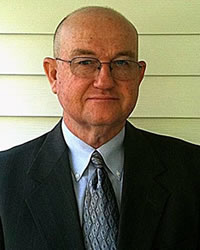
Gary Shepard

The Story of Redeeming Love

Ruth
Gary Shepard October, 25 2015 Audio
0 Comments
Gary Shepard
Gary Shepard October, 25 2015

Sermon Transcript

Auto-generated transcript • May contain errors

100%
Be turning in your Bibles to
the book of Ruth. The book of Ruth. It'll be nestled
there between the book of Judges and 1 Samuel. I hope that you
will pray for me this morning and I hope you'll be patient
with me this morning. I believe the Lord has used two
ladies to draw my mind and my heart back to this text today. One of them in this very congregation
in our conversations recently and the other a dear lady I met
in Kentucky from California and we in our conversations came
upon this book and it caused me to go back and to reread the
book of Ruth. And when I read it, I just sat
there by myself reading it, and I could not help but weep. This
is the story of redeeming love. That's what I've entitled this
message, the story of redeeming love. And here in this book,
We have an account of true love. As a matter of fact, it's really
a picture of the only true love that there is. This is THE love
story. And though it bears a woman's
name, she is not really the central figure. The central figure is
a man. But it is a picture of the love
of God which is in Christ Jesus. A love that is always manifested
in redemption. The old hymn writer, he knew
something about that because we just sang his words when he
sang, redeeming love shall be my theme. That's the theme of
the Bible. It's the theme of the gospel.
redeeming love. Because in the Bible, God's love
is always associated with redemption. We find that pictured with that
nation that He set apart, Israel. And He said to them, But because
the Lord loved you, and because He would keep the oath which
He had sworn unto your fathers, hath the Lord brought you out
with a mighty hand, and redeemed you out of the house of Bondman,
from the hand of Pharaoh, king of Egypt." And then he reminded
again, as he often did through the prophets, one being Isaiah,
where he says, In all their affliction he was afflicted, and the angel
of his presence saved them. In his love and in his pity he
redeemed them and bared them and carried them all the days
of old. And it was the same in another
picture, in another relationship that we find in the book of Hosea
between Hosea and a wicked wife by the name of Gomer. He loved her and when she sold
herself to sin and to debauchery and found herself on the slave
market. He redeemed her. He bought her
unto himself. It says he loved her freely,
totally freely, and he redeemed her with a price. But this morning,
I want you to come and stand with me in your mind at the gate
of the city Bethlehem. And as we stand there and look,
coming toward those gates are two women. They are very weary. They are very poor. They have
lost everything, and they are in every way ragged and desolate. What has happened to them? And
why is it that they are found in such a state and condition
as this? Well it says here that there
was a famine in the land. The very first verse of this
book begins, Now it came to pass in the days when the judges ruled
that there was a famine in the land and a certain man of Bethlehem
Judah went to sojourn in the country of Moab. He and his wife
and his two sons. In other words, it seemed like
maybe to him there were greener pastures in Moab. There was more work, maybe more
food to be had in Moab. And so this man Elimelech, a
Jew, he has taken his family and he has left Bethlehem Judah. Those names mean the house of
bread and praise. And He has moved them and He
has taken them and gone to a place called Moab. Such a wicked, vile
place. They've left the place where
God identified with and they have now gone to where everything
but God is the thing. This is the place that God says
using this language Moab is my wash pot. And so he has taken
his family and he has gone to Moab with his wife Naomi and
sons Malon and Kileon, or Kileon, and while he's there, the two
sons marry two Moabitish women. They were not supposed to. Being
Jews, they were not supposed to, but they married these two
women, these two Gentile women, by the name of Ruth and Orpah. And while they're there in Moab,
Elimelech dies, and not only that, both of the sons die. And so we read in verse 2, And
the name of the man was Elimelech, and the name of his wife Naomi. and the name of his two sons,
Malon and Kalion, Ephrathites of Bethlehem Judah. And they came into the country
of Moab, and continued there. And Elimelech, Naomi's husband,
died, and she was left, and her two sons. And they took them
wives of the women of Moab. The name of the one was Orpah. and the name of the other, Ruth. And they dwelt there about ten
years, and Malon and Calion died also, both of them, and the woman
was left of her two sons and her husband." And after all this
takes place, and after all of this time, Naomi hears word of
something, and so it says in verse 6, then she arose with
her daughters-in-law that she might return from the country
of Moab, for she had heard in the country of Moab how that
the Lord had visited his people in giving them bread. She heard words. She heard a
message. She heard some news that God
was blessing his people giving them bread. Doesn't that sound
like the gospel of Christ, who is the bread of life? Doesn't
that sound like the gospel which is the gospel of the grace of
God, God giving His people something in Christ? And as she leaves
to go, she sends her daughters-in-law back to their people. She says,
Just go home to your people. And that's what Orpah does. She
does go home to her people and leaves Naomi and Ruth, but Ruth
is inclined to go with Naomi. And so in verse 7, it says, Wherefore
she went forth out of the place where she was, and her two daughters-in-law
with her, and they went on their way to return unto the land of
Judah. And Naomi said unto her two daughters-in-law,
Go, and return each to her mother's house, and the Lord deal kindly
with you, as ye have dealt with the dead and with me. And the
Lord grant you that you might find rest, each of you, in the
house of her husband.' Then she kissed them, and they lifted
up their voice and wept. And they said unto her, Surely
we will return with thee unto thy people. And Naomi said, Turn
again, my daughters, why will ye go with me? Are there yet
any more sons in my womb that they may be your husbands? Turn
again, my daughters, go your way, for I am too old to have
a husband. If I should say I have hope,
if I should have a husband also tonight, and should also bear
sons, would you tarry for them till they were grown? Would you
stay for them from having husbands? Nay, my daughters, For it grieveth
me much for your sakes, that the hand of the Lord is gone
out against me. And they lifted up their voice,
and wept again, and Orpah kissed her mother-in-law, but Ruth clave
unto her. And she said, Behold, thy sister-in-law
is gone back unto her people and unto her gods. Return thou
after thy sister-in-law. And then Ruth says something.
And this has been used in many wedding ceremonies, been used
in many pieces of literature, but this is Ruth speaking to
her mother-in-law. And those who can be turned back
will, just like Orpah was. She went back to her family. She went back to her homeland. She went back to her gods. But because of God's grace, and
surely it had to be grace not only in the mind, but in the
heart, Ruth is determined to go with Naomi. And so verse 16
says, And Ruth said, Entreat me not to leave thee, or to return
from following after thee. For whither thou goest I will
go, and where thou lodgest I will lodge. Thy people shall be my
people, and thy God my God. Where thou diest, will I die,
and there will I be buried. The Lord do so to me, and more
also, if aught but death part thee and me." When she saw that
she was steadfastly minded to go with her, then she left off
speaking unto her. She's like that woman who had
an issue of blood. who would not because of the
press be kept away from him, but she pressed through until
she touched him. And that's what God does in the
heart of His sheep. There are and there will be many
obstacles, but not one of them will be able to keep them from
the Lord Jesus Christ. As a matter of fact, They're
all bringing them to cry. And now the family has lost everything. Here are Naomi and Ruth, and
they are in every sense, for the most part, without hope.
And all that has happened to them is because of what the head
of the family did. Elimelech left Bethlehem Judah. And he is simply a type and picture
of our father Adam who went out in disobedience from God's presence
and who went and hid himself after he disobeyed God in the
trees, in the garden, and it says in Romans 5, when he sinned,
all in him sinned. When he fell before God, all
his race fell with him. By one man, sin entered into
the world, and death by sin. When He sinned, we all sin. He was a representative man,
and Elimelech is simply a type and picture. And when they return,
when they return I want you to notice what is said about her. Verse 19, it says, So they too
went until they came to Bethlehem, and it came to pass, when they
were come to Bethlehem, that all the city was moved about
them, and they said, Is this Naomi? She seems to favor Naomi. There's a little bit about her
that reminds us of Naomi, but This can't be Naomi, can it?
And she said unto them, Call me not Naomi, call me Maura. For the Lord hath dealt very
bitterly with her. and the Lord hath brought me
home again empty. Why then call ye me Naomi, seeing
the Lord hath testified against me, and the Almighty hath afflicted?"
He's a lot like Jacob when he thought he had lost everything
except that one last favored son, and now he thought he was
about to lose him. And he said this, he said, all
these things are against me. But just as it was in Jacob's
case, all these things were not against him, all these things
were for him. He was about to find out that
not only had he not lost and would not lose Benjamin, but
one that he thought he had lost he would regain, and that was
Joseph. And Joseph would be not only
the Redeemer of his family, but of all of Egypt. And so here
is Naomi, and she is coming back into Bethlehem, and she is feeling
and thinking that everything is against her, all things appear
to be against her, but it really isn't. Everything that has happened
has been for her. As a matter of fact, not only
everything that has happened happened such for Jacob and also
for Naomi and also for Ruth, but that's what is said of all
of God's sheep. Paul says in Romans 8, And we
know that all things work together for good to them that love God,
to them that are the called according to his purpose. They are named
by His purpose of grace to them. And no matter what it appears,
no matter how crooked the path seems, everything is always being
worked by Him and for them for their spiritual and eternal good
and His glory. Everything. Now we may be just
like Naomi was. We may be and are naturally,
apart from grace, always thinking this, or always drifting back
to seem to think this, that all these things are against me,
but they're not. We're the Lord's child. They're
for us. And they may be a path. There may be a crooked path that
He takes us on and we're back and forth and up and down and
all these various things. But He's always moving us in
a particular direction. He's always bringing us to the
Lord Jesus Christ. And He has to empty us. He said,
I went away full, but the Lord has brought me back empty. And the reason being is if, as
scripture says, Christ is the fullness, then we have to be
emptied of all but Him, of every hope, of every support, of every
imagined righteousness, of everything that would rival Him, and God
empties us of this worthlessness to give us the best, to give
us Him who is all. He says Christ is all, and if
He is all, everything else is nothing. But we think it is.
Oh, we think it is. But only when God brings us to
Christ, who is all, do we see and realize and are made to understand
that that was all nothing, because He's everything. She says, God
has dealt bitterly with me. No, God had dealt graciously
with her. Because all these things, all
these events, the death of her sons, the death of her husband,
the poverty she found herself with, all of these things, they
were bringing her back to the house of bread and bread. They were bringing her back to
the living God they were bringing her back to the truth of God
and to the grace of God because Bethlehem Judah simply was a
picture and a type and an illustration of Christ Bethlehem Judah Bethlehem
is the house of God that's where God is and Judah means praise
and that was among those spoken of by Jacob as being the ones
from him would be one who has all the praise of the brethren.
And that's Christ. That's what God is always in
all these things. He's always bringing his people
like he did Ruth and Naomi, always bringing them to Christ. And
so here they come back to Bethlehem Judah and they're hungry and
poor and they're in a bad state and they come back But isn't
it amazing? People would say today they were
really lucky. No, luck had nothing to do with
it. There's no such thing. But as
they are brought back to Bethlehem, Judah, the last verse of chapter
1 says, So Naomi returned and Ruth the Moabitess, her daughter-in-law,
with her, which returned out of the country of Moab, and they
came to Bethlehem. in the beginning of the barley
harvest. Fancy that! Just so happens that
God has brought about a harvest, a crop. And here they are, they're
coming back into the city of Bethlehem, Judah, to that land,
and it's the time of the barley harvest. They've got nothing.
They don't know what to do. They've been disobedient in their
own individual ways. But look at the first verse of
the next chapter. It says, And Naomi had a kinsman
of her husband, a mighty man of wealth, of the family of Elimelech,
and his name was Boaz. There's your chief figure. There's
the central character in this love story. He is the chief figure,
this man Boaz. And in Naomi's husband's family,
there's this wealthy, honorable man by the name of Boaz. He's a type of the Lord Jesus.
And Ruth then goes out to pick up. This is how desperate they
are. She goes out into the fields
and after the the gleaners had already gone through and harvested
the crop, she goes along picking up the grains or the remaining
years of corn that might have fallen off the carts or in some
way been broken or something and just so left behind. She
goes out and that's what she's picking up just so they can live. And she goes to the fields in
a kind of haphazard way as far as she's concerned and she reaps
in the field of whoever will let her. Here it is again, it
just so happens that the field she goes to glean in is the field
of Boaz. Chapter 2 and verse 2 it says,
and Ruth the Moabitess woman said unto Naomi, let me go now
to the field and glean ears of corn, after him in whose sight
I shall find grace. And she said unto her, Go, my
daughter. And she went, and came, and gleaned
in the field after the reapers. And her hap was to light on a
part of the field belonging unto Boaz, who was of the kindred
of Elimelech. Wouldn't you know it, this isn't
fate, and this isn't chance, and this isn't luck, this is
God's purpose. She's brought not only from a
heathen land back to Bethlehem or to Bethlehem Judah, but she's
also in God's providence brought to be picking up grain after
the gleaners in the field of a man by the name of Boaz. And he sees her before she sees
him. And what a wonderful thing that
is to realize that God saw us long before we ever saw him.
Everyone he saved, all his people, he saw us before the foundation
of the world. He saw us when we did not yet
have body, breath, or existence. He saw us in Christ Jesus in
that everlasting covenant. Ruth sat in that field, but before
she ever sees Boab, he sees her and he casts his eyes on her. And you might as well say it,
it was love at first sight. He loved her at first sight. He loves her and casts his eyes
of love upon her before she knows him. And this is the way of God's
grace and God's love. It says he loves his people with
an everlasting love. I've loved you with an everlasting
love. Therefore, with cords of loving
kindness, I've drawn you." You see, in our day, love is just
spoken of as some kind of mere emotion or a benevolent attitude
that really never overcomes anything or does anything. But in the
picture of God's love, it has to be that that love moves in
action. It says that He blessed His people
with all spiritual blessings in Christ Jesus, having chosen
them in Him before the world began. And here she is. Verse
4 says, And behold, Boaz came from Bethlehem and said unto
the reapers, The Lord be with you. And they answered him, The
Lord bless thee. Then said Boaz unto his servant
that was set over the reapers, Whose damsel is this? And the
servant that was set over the reapers answered and said, It
is the Moabitish damsel that came back with Naomi out of the
country of Moab. You notice that God never never
tries to make her be more than she is. She never stops in this
description of being identified as this Moabitish woman, this
woman from Moab. That's what she is in herself.
And so he says, And she said, I pray you let me glean and gather
after the reapers among the sheaves. So she came and hath continued
even from the morning until now. that she tarried a little in
the house. And then said Boaz unto Ruth,
he's not going to just love her and look at her, he's going to
talk to her. And then said Boaz unto Ruth,
Hearest thou not my daughter? Go not to glean in another field,
or he's saying to her, listen to me, don't bother to go and
glean in another field, neither go from hence, but abide here
fast by my maidens. Let thine eyes be on the field
that they do reap, and go thou after them. Have I not charged
the young men that they shall not touch thee? And when thou
art a thirst, go unto the vessels, and drink of that which the young
men have drawn. Just make yourself at home. Reap where my people reap. Drink
of the same vessels that they drink. Nobody will bother you. I put the word out. Not one of
them is to touch you or harm you or make you go away. That's the grace of God. That's
the providence of God. An old preacher said the providence
of God is the handmaid of salvation. And so God is not only bringing
her on this course as he does each and every one he saves,
he's not only bringing her on this course, he's providing for
her all along. Gomer thought what she had and
the gifts she received, she thought that it was her lovers that gave
them to her. But it wasn't. Even when she
lay in the arms of adultery, Hosea would go and bring food
and provision and leave it by her door. That's God's grace
to us. Even, it says, while we were
yet sinners, in this sense, lost sinners, in all our course and
in all our protection and in all our provision, God has been
bringing us like Ruth, providing for us all the way. We attributed
it to luck and and our own earthly wisdom and our hard work and
all these things, but no, it wasn't. It's God bringing us
and providing for us and all this goes on and it says in verse
10 of chapter 2, Then she fell on her face and bowed herself
to the ground and said unto him, Why have I found grace in thine
eyes, that thou shouldest take knowledge of me, seeing I am
a stranger? What are you doing this for me?
You see, that's what grace is. Grace is God doing for those
not only undeserving, but even unsuspecting. And Boaz answered
and said unto her, It hath fully been shown me all that thou hast
done unto thy mother-in-law since the death of thine husband, and
how thou hast left thy father and thy mother and the land of
thy nativity, and art come unto a people which thou knewest not
heretofore. The Lord recompense thy work,
and a full reward be given thee of the Lord God of Israel, under
whose wings thou art come to trust. Like a baby chick. gathered under the arms or the
wings of that old hen or as a picture in scripture those baby eaglets
as they're gathered up under the wings of that mother eagle.
That's what we do in trusting Christ. We gather under the wings
of God. He's our refuge and we forsake
every other refuge. Then she said, Let me find favor
in thy sight, my lord, for thou hast comforted me, for that thou
hast spoken friendly unto thine handmaid, though I be not like
unto one of thine handmaids. And Boaz said unto her, At mealtime
comest thou hither, and eat of the bread, and dip thy morsel
in the vinegar. And she sat beside the reapers,
and he reached her parched corn, and she did eat, and was sufficed,
and left. He set the banqueting table in
front of her. He said, how is it that you treat
me so well, since I'm a stranger, I'm a Gentile, I'm a Moabitess
woman? How is it that you, being who
you are, would treat me in such a wonderful way. Verse 15 says,
And when she had risen up to glean, Boaz commanded his young
men, saying, Let her glean even among the sheaves, and reproach
her not. It's just getting better and
better. She doesn't have to wait to pick up the scraps as it comes
behind you. You let her go and glean even
among the sheaves. You see, they were the ones cutting
down the sheaves and stacking up the shocks of weed and corn
and all that. What's he saying? He's saying,
provide for her and she doesn't even have to work for it. That's
what grace is about. And let fall also some of the
handfuls of purpose for her, and leave them that she may glean
them, and rebuke her not." In other words, don't just allow
her to reap behind you. Don't just allow her to take
of the sheaves. Pour out some nice big handfuls
on purpose. That's what God's been doing
for His people all their days. Handfuls on purpose. Handfuls
of grace on purpose. Salvation on purpose. All these
things done, not by accident, but because He would. Because
for a reason known only to Himself, He loves His people with that
everlasting love in the Lord Jesus Christ. And so that everything
He does to us and for us is on purpose. Paul writing to Timothy
says he has saved us and called us with an holy calling not according
to our works but according to his own purpose and grace which
was given us in Christ Jesus before the world began. And she
took it up and went into the city and her mother-in-law saw
what she had gleaned and she brought forth and gave to her
that she had reserved after she was sufficed. There was enough
for them both and more. And her mother-in-law said unto
her, Where hast thou gleaned today, and where wroughtest thou?
Blessed be he that did take knowledge of thee. And she showed her mother-in-law
with whom she had wrought, and said, The man's name with whom
I wrought today is Boaz. And Naomi said unto her daughter-in-law,
Blessed be he of the Lord, who hath not left off his kindness
to the living and to the dead. And Naomi said unto her, The
man is near of kin unto us, one of our next kinsmen, to the living
and to the dead. Naomi and Ruth were the living
And they were also representatives of Elimelech and the two sons
who were dead. So they represented all. He blessed
the name of the Lord. What she's saying is here, this
is no accident that you're in this man's field. This is the
Lord. And this man that you have gone
to go into his field, it's just the mercy of the Lord. It's just
the grace of God that you're in this man's field. And he's
our near kinsman. Now here's where it gets really
wonderful. Because the word that we have
in the Hebrew that's translated as this kinsman or near kinsman
is something like Goel, which means the kinsman redeemer. The kinsman redeemer. And under
that law that God gave to Moses concerning these people. The
near kinsman had the right to redeem the inheritance of the
family of one who died. This is a picture of Christ as
the true kinsman redeemer. There are three things necessary
for one to be able to redeem. Number one, He had to be in the
family. He had to be this near kinsman. Number two, he had to be able
to redeem. To redeem means to buy back.
He had to be able to redeem. And the third thing is this,
he had to be willing to do that. And what we find here is that
Boaz was all three. And not only that, in Boaz we
see that Christ was all three all three and there was a matter
in this business of redemption there was a legal matter that
had to be taken care of because even in the picture God showed
us that redemption has to be just and right and God has to
be righteous and just in redeeming. Redemption is not God sweeping
our sins under the carpet. Redemption is not just God saying,
oh, don't worry about the price, or don't worry about the sin,
don't worry about what's been done. All these, that's not redemption,
and that's not the love of God. And so if we preach about the
true love of God, we have to preach about this redeeming love.
It's always joined with this redemption. And Christ himself
is the redeemer of his people. So in order to redeem us, Christ
had to become a man. And he had to identify with this
earthly family. And he had to be our near kinsman. He's described as being bone
of our bone, flesh of our flesh. He tells us by the Apostle John
in John 1 that the Word that was God and was with God in the
beginning, the Word was made flesh and dwelt among men. Why?
Because only a man can redeem man. Naomi couldn't redeem herself. She couldn't redeem Ruth. And
of all the men in Israel, or all the people in Moab, none
of them could redeem her either. It had to be one that fits this
unique set of characteristics and quality. And in order to
redeem us, there has to be one that meets God's necessities,
and at the same time meets our necessities. And only the God-man
is of such worth as to be able to redeem a multitude of sinners,
being that one and unique man, that one who is God in sinless
flesh. So in Hebrews it's described
in this way. For as much then as the children
are partakers of flesh and blood, he also himself took part of
the same, that through death He might destroy him that had
the power of death that is the devil. Christ became partaker
of flesh and blood because necessary to our redemption is the just
payment for our sins and that just payment for our sins is
always one and the same thing and that is death. He says the
soul that sins shall surely die. But your dying for your sins
and my dying for my sins would just simply leave us separated
from God forever, because we're of such a character that our
death's worth nothing. But if there could be a sinless
man, there's a near kinsman, one who's like us in our humanity,
yet without sin. If our sins could be transferred
to him, and if he can pay the price and satisfy God, Chapter
3 says, Then Naomi, her mother-in-law, said unto her, My daughter, shall
I not seek rest for thee, that it may be well with thee? And
now is not Boaz of our kindred, with whose maidens thou wast?
Behold, he went with barley to-night in the threshing-floor. Wash
thyself therefore. and anoint thee, and put thy
raiment upon thee, and get thee down to the floor. But make not
thyself known unto the man, until he shall have done eating and
drinking. And it shall be, when he lieth
down, that thou shalt mark the place where he shall lie. And
thou shalt go in, and uncover his feet, and lay thee down,
and he will tell thee what thou shalt do. She said unto her,
All that thou sayest unto me I will do. And she went down
into the floor, and did according to all that her mother-in-law
bade her. And when Boaz had eaten and drunk, and his heart was
merry, he went to lie down at the end of the heap of corn.
And she came softly, and uncovered his feet, and laid her down. And it came to pass at midnight,
that the man was afraid, and turned himself. And behold, a
woman lay at his feet. And he said, Who art thou? And
she answered, I am Ruth, thine handmaid. Spread therefore thy
skirt over thine handmaid, for thou art a near kin's now. In that day and in that culture,
for a man to spread the hem of his garment over a woman was
to declare his protection of her and of his attention to make
her his wife. It was a symbol of his spousal. And so that's what Ruth is saying
to him. She bows at his feet, lays at his feet, And when he
awakes and asks who she is, he says, she says, I'm your handmaid. I'm your servant. Thread thy
skirt over me. Be my near kinsman. We have much
the same thing described in the book of Ezekiel, where we first
begin to see the bride of Christ in a picture, and at her first
date she's like, Ruth the Moabitess woman, she's nothing but in Ezekiel,
she's like an infant cast out in a field, aborted and bloody
and dirty and nobody loves her. God says, now when I passed by
thee and looked upon thee, Behold, thy time was the time of love,
and I spread my skirt over thee, and covered thy nakedness. Yea,
I swear unto thee, and entered into a covenant with thee, saith
the Lord, and thou becamest mine." When Boaz spread the skirt of
his garment over Ruth, he said, I'm going to make you mine. I'm
going to redeem you. I'm going to carry out my role
as your near kinsman, and you're going to be my wife. Know what
Boaz does. He said, Bless be thou of the
Lord, my daughter, for thou hast showed me more kindness in the
latter end than at the beginning, and as much as thou followest
not young men, whether rich or poor. And now, my daughter, fear
not. I will do to thee all that thou
requirest. For all the city of my people
doth know that thou art a virtuous woman." He said, I'm going to
do all that's required to be your kinsman redeemer. I'm going
to do it all. And the amazing thing is here
In redemption, the one who was redeemed, they couldn't do anything. They had already lost the inheritance,
and they were already in bondage and servitude. That's where we
fell to an Adam. And unless Christ redeemed us,
unless He redeemed us not only completely, but redeemed us all
together by Himself and does all that's required, we'd have
no hope. And now it is true that I am
thy near kinsman. He said, but there's a problem.
I love you, I love you before you ever looked at me, before
you ever found out about me, but there's a problem. Well,
what is that? There's a kinsman nearer than
me. There's an order in which it has to take place. The one
who's the nearest kinsman to the family is the one who has
the right, the responsibility to redeem. There's one nearer
than me. Verse 13 of chapter 3 says, Terry
this night, and it shall be in the morning, that if he will
perform unto thee the part of a kinsman well. Let him do the
kinsman's part, but if he will not do the part of a kinsman
to thee, then I will do the part of a kinsman unto thee, as the
Lord liveth, lie down until the morning. She lay at his feet
until the morning, and she rose up before one could know another. And he said, Let it not be known
that a woman came into the floor. Also he said, Bring the veil
that thou hast upon thee, and hold it. And when she held it,
he measured six measures of barley, and laid it on her, and she went
into the city. His provision is full. Don't
glean. You just wait. And here is plenty
for you and your mother-in-law to eat on the whole time until
this matter is settled." He said, I'll do all that's required.
When she came to her mother-in-law, he said, Who art thou, my daughter? And she told her all that the
man had done to her. And she said, These six measures
of barley gave he me. For he said to me, Go not empty
unto thy mother-in-law. Then said she, Sit still, my
daughter, until thou know how the matter will fall. For the man will not rest until
he has finished this thing this day." It's all going to be finished
in a day. You know that's what the prophet
said of Christ? The prophet said he shall not
fail until he executes judgment in the land. There was no possibility
that the Lord Jesus could fail in the salvation of his people.
So when he came into this world, And after so many years, as a
man walking on this earth, showed himself to be in every aspect
of his being in his humanity, especially being one who is like
the Lamb without spot and without blemish, he hurried to the cross. He hurried to the gate. He hurried to the place of judgment. Boaz can't just take her to be
his wife. He can't do that under the law,
just as Christ cannot simply take us as his bride apart from
the law and justice of God, because we're sinners and there's a claim
against us. So he says, there's a nearer
kinsman than me. If this is done, it has to be
done right. And so Boaz goes immediately
to the gate. That's why I wanted you to stand
with me at the gate, because this is all settled at the gate.
And so it says, Then went Boaz up to the gate, and sat him down
there. And behold, the kinsman of whom
Boaz spake came by, unto whom he said, Ho, such a one, turn
aside, sit down here. And he turned aside and sat down.
And he took ten men of the elders of the city, and said, Sit ye
down here. And they sat down. And he said
unto the kinsman, Naomi, that is come again out of the country
of Moab, selleth a parcel of land which was our brother Elimelech's. And I thought to advertise thee,
saying, Buy it before the inhabitants and before the elders of my people.
If thou will redeem it, redeem it. But if thou will not redeem
it, then tell me, that I may know, for there is none to redeem
it besides thee, and I am after thee." And he said, I will redeem
it. But then said Boaz, What day
thou buy'st the field of the hand of Naomi, thou must buy
it also of Ruth the Moabitess, the wife of the dead, to raise
up the name of the dead upon his inheritor." You've got to
take this Gentile woman to be your wife, and you've got to
raise up. That's the whole role of the
near kinsman. You've got to raise up children
unto the dead. But you see this near kinsman
is a type of the law and the justice of God. The law cannot
in any way touch us. All it can do is condemn us.
Cannot save us. Cannot redeem us at all. He said I can't do that. It will
mar my inheritance. I cannot redeem it for myself
lest I mar my own inheritance. Redeem thou my right to thyself
for I cannot redeem it. We cannot ever be saved. by the
law, or sanctified by the law, or by any principle of doing.
Paul said, knowing that a man is not justified by the works
of the law, but by the faith of Jesus Christ, even we have
believed in Christ that we might be justified by the faith of
Christ and not by the works of the law, for by the works of
the law shall no flesh be justified. For what the law could not do,
in that it was weak through the flesh, God sending his own Son
in the likeness of sinful flesh, and forced sin, condemned sin
in the flesh. None of these things can save
us. Only the Kinsman Redeemer can save us. And this is why
Christ came into this world, to redeem His bride. And so it
says, verse 7 of chapter 4, Now this was the manner in the former
time in Israel concerning redeeming and concerning changing. For
to confirm all things a man plucked off his shoe and gave it to his
neighbor. And this was a testimony in Israel. Therefore the kinsman
said unto Boaz, Buy it for thee. So he drew off his shoe. And
Boaz said unto the elders and unto all the people, Your witnesses
this day, that I have bought all that was Elimelech's, and
all that was Calion's, and all that was Melon's, and of the
hand of Naomi. Moreover, Ruth the Moabitess,
the wife of Melon, have I purchased to be my wife. to raise up the
name of the dead upon his inheritance, that the name of the dead be
not cut off from among his brethren, and from the gate of his place
ye are witnesses this day. And all the people that were
in the gate, and the elders said, We are witnesses. The Lord make
the woman that is come into thine house like Rachel and like Leah,
Which too did build the house of Israel, and do thou worthily
in Ephrathah, and be famous in Bethlehem." Christ is famous
in his house, in his household. And so Boaz redeemed her. And she has gone now from being
an outcast Gentile to being the wife of maybe the wealthiest,
most honorable, and noteworthy man in all of Israel. And Christ finished it. That's
what he said on the cross. That's what's taking place on
the cross. He is redeeming. He's paying that ransom, that
redemption price by burying their sins in his body on the tree
and they all go free. They are all married to him now.
One day there will be a great and glorious marriage supper
and feast of the Lamb we read about in the Revelation. But
they are already His. They are already redeemed. Verse
13 it says, So Boaz took Ruth, and she was his wife. And he
went unto her, and the Lord gave her conception, and she bare
a son. And the women said unto Naomi, Blessed be the Lord, which
hath not let thee this day without a kinsman, that his name may
be famous in Israel. And he shall be unto thee a restorer
of thy life, and a nourisher of thine old age, for thy daughter-in-law
which loveth thee, which is better to thee than seven sons hath
borne him. And Naomi took the child, and
laid it in her bosom, and became nurse unto it. And the women
her neighbors gave it a name, saying, There is a son born to
Naomi. And they called his name Obed. and he is the father of Jesse,
and he is the father of David. In other words, Christ, the true
Christ, would be born in this limb. There was one other aspect
of the kinsman-redeemer, because maybe more times in scripture
than this word, Goel, is translated as kinsman or redeemer, it is
translated as avenger of blood. In other words, if somebody killed
one of the family, under that law, that manslayer could flee
to a city of refuge and nobody could touch him. But it was the
responsibility, the right of that near kinsman as the avenger
of blood to take vengeance on that individual. If he ever left
the city of refuge, if he was ever found outside of that city
of refuge. He was the avenger of blood and
he was to slay the manslayer. Has our family had a manslayer?
Yes. His name is Satan. He's the tempter. He's the one in the beginning.
And when Adam listened to him, and Eve listened to him, flew
the whole race. But we have a near kinsman. And
it was promised that he'd do just this in that very opening
hour, when he's referred to as the seed of the woman. The Lord
said to the serpent, said to Satan, the woman's seed, you'll
bruise his heel, But he'll crush your head. He'll crush your head.
So when the Lord Jesus hung on the cross, all his, he was bruised
in that sense. But at the same time, he not
only redeemed his people, he avenged them. And he crushed
Satan's head. He crushed him. Paul said, Christ
hath redeemed us from the curse of the law, being made a curse
for us, for it is written, Cursed is every one that hangeth on
a tree. And when these people are all
seen in glory, when John saw them in the revelation, this
whole complete company, the bride of Christ. It says they sung
a new song saying to the Lamb, thou art worthy to take the book
and to open the seals thereof for thou was slain and has redeemed
us to God by thy blood out of every kindred and tongue and
people and nation. That's why the gospel is good
news. It's good news to God's people. You can believe it. It's
good news to you. And Paul writes about the grace
of God in Ephesians 1. He speaks of Christ and he says,
In whom we have redemption through his blood. We're not redeemed
with corruptible things, Peter says, such as silver and gold,
but by the precious blood of Christ as of a lamb without spot
and without blemish. Redeeming love is the love of
God and that love and that redemption is in Christ and Him crucified. The hymn writer said amazing
love at can it be that thou my God just die for me. God help us to look to our kinsman
redeemer because we'd not be redeemed without him. Our Father
this morning we pray that you would take your word and these
things that picture the grace and salvation and love that you
bestow upon your people in Christ Jesus our Lord and help us Lord
not only to look to him but to be so thankful and to praise
you for so much. See in ourselves this poor outcast
Moabitess woman and see in our Lord Jesus Christ, this glorious
Boaz. We pray and ask all things in
his name. Amen.
Gary Shepard
About Gary Shepard
Gary Shepard is teacher and pastor of Sovereign Grace Baptist Church in Jacksonville, North Carolina.

Comments

0 / 2000 characters
Comments are moderated before appearing.

Be the first to comment!

Joshua

Joshua

Shall we play a game? Ask me about articles, sermons, or theology from our library. I can also help you navigate the site.