Bootstrap
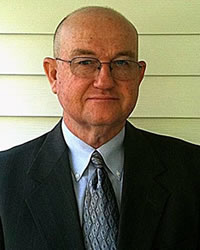
Gary Shepard

The Works of Abraham

John 8:39
Gary Shepard October, 4 2015 Audio
0 Comments
Gary Shepard
Gary Shepard October, 4 2015

Sermon Transcript

Auto-generated transcript • May contain errors

100%
Turn back this morning again
to John chapter 8. We read verses 33 through 39. And when we come to a passage
like this, We are reminded again that in
the Scriptures, God's elect people, the children of God, are also
called the children of Abraham. But our Lord spoke these words
to those Jews who claimed to be the children of Abraham, but
that were so only according to the flesh." They were the children
of Abraham by natural generation. They were his natural descendants. And Paul makes that distinction
in Galatians 3, When he says, "...know ye therefore
that they which are of faith, the same are the children of
Abraham." And again, "...and if you be Christ's, then are
you Abraham's seed, and heirs according to the promise." But what I want us to notice
this morning is what he says in verse 39. It says, "...they answered and
said unto him, Abraham is our father. But Jesus said unto them,
if you were Abraham's children, you would do the works of Abraham."
He distinguishes them from the true children of Abraham, from
true believers, no matter what their claim might be, by this. He says, the children of Abraham."
If you were the true children of Abraham, you would do the
works of Abraham. And what he says will be true
of all of us. It will be true of all the children
of God. It will be true of all who know
and believe the truth." But what is he talking about? What does
he mean by the works of Abraham? Well, he's talking about the
works of faith which are never works to gain or even to improve
salvation, which alone is the accomplished work of the Lord
Jesus Christ." And what we find of Abraham is what we find of
all these children of Abraham. And that is, the works of Abraham
were never done as the ground of his salvation, but because
he was saved. Turn over to Romans chapter 4, and listen as the Apostle Paul
makes this distinction. He says in verse 1, "...what
shall we say then, that Abraham our father, as pertaining to
the flesh, hath found? For if Abraham were justified
by works, he hath whereof to glory, but not before God. For what saith the Scripture? Abraham believed God, and it
was counted unto him for righteousness. Now to him that worketh is the
reward not reckoned of grace, but of debt. But to him that
worketh not, but believeth on him that justifieth the ungodly,
his faith is counted for righteousness." So we know by these words that
he in no way, by any of these works of Abraham, found that
a part of his salvation or even to improve his standing before
God. Paul writes to Titus, and he
makes that clear also, saying, not by works of righteousness
which we have done, but according to his mercy he saved us by the
washing of regeneration and renewing of the Holy Ghost." The work
of Christ, the righteousness of the Lord Jesus Christ, is
the only basis upon which he was justified before God. That is so clear and plain. But these works, these that are
described as the works of Abraham, they were the evidence before
men that he did truly believe God. And when you see what is being
said by Paul, we know that there can be no conflict between what
Paul says and what James tells us in James chapter 2, because
he talks about Abraham also. And so he says in James chapter
2, beginning in verse 20, But wilt thou know, O vain man, that
faith without works is dead." In other words, it's not really
faith at all. He says, Was not Abraham our
father justified by works when he had offered Isaac his son
upon the altar? seeth thou how faith wrought
with his works, and by works was faith made perfect. And the scripture was fulfilled,
which saith, Abraham believed God, and it was imputed unto
him for righteousness, and he was called the friend of God."
You see then how that by works a man is justified, and not by
faith only. You see, Paul, as he often did,
and as his emphasis was, he spoke about how we are justified before
God. In other words, what is the evidence
that we are saved, that we are righteous before God, and he
tells us that that is all in Christ Jesus. James is addressing
those who say they have faith. But their faith is no more than
the devil's faith, simply believing that there is God. And this faith
they say they have is not evidenced in those things which they do. But there is an evidence. There
is a demonstration. that we truly do believe on the
Lord Jesus Christ, and it is accounted unto us for righteousness. And we see that in the works
of Abraham because these works that are spoken of here, these
works, in the midst of them were many failures, in the midst of
these works were many obvious sins?" In other words, such things
as when Abraham did not bother to tell Pharaoh on the first
part that Sarah was his wife. And God began to deal severely
with Pharaoh and his household because of it. And even later,
whenever he did not tell another king by the name of Abimelech,
who was about to take her for his own wife, but God stopped
him. You see, these works were all
in the midst of all these failures, in the midst of all these sins,
in the midst of his unbelief, such as when he took Hagar to
bear a son by her and did not wait upon the Lord with Sarah. So his works in the flesh were
anything but perfect. And so he cannot be talking about
these things, and not only that, but his obedience in these words
was not a law obedience. Look back again to Romans chapter
4, because the Apostle Paul continues in his talking about Abraham
and adds to him the man David. In verse 6 of Romans 4, he says,
even as David also describes the blessedness of the man unto
whom God imputeth righteousness without works. saying, Blessed
are they whose iniquities are forgiven and whose sins are covered. Blessed is the man to whom the
Lord will not impute sin." And then he's going to make sure
we understand this. He says, "... cometh this blessedness
then upon the circumcision only, or upon the uncircumcision also."
In other words, on the Jew only, or also on the Gentile. For we say that faith was reckoned
to Abraham for righteousness. How was it then reckoned? When
he was in circumcision or in uncircumcision? Not in circumcision,
but in uncircumcision. Before the law that was given
through Moses was ever given, Before Moses was ever born, before
there was such a thing as the Ten Commandments, Abraham believed
God and it was counted unto him for righteousness. and he received
the sign of circumcision, a seal of the righteousness of the faith
which he had yet being uncircumcised, that he might be the father of
all them that believe." though they be not circumcised, that
righteousness might be imputed unto them also. And the father of circumcision
to them who are not of the circumcision only, but who also walk in the
steps of that faith of our father Abraham, which he had, being
yet uncircumcised." In other words, it was totally separate
from and apart from that law that was given through Moses. And the reason that we know that
is not only because Paul states it clearly here being led by
the Spirit of God, but even Christ Himself says in our text chapter
in verse 56, He says, "...your father Abraham." rejoiced to
see my day, and he saw it and was glad."
He saw it by faith. He looked to the Lord Jesus Christ
which God had revealed to him through all of these pictures
and types and shadows. He looked to Christ alone and
he was made the righteousness of God in Him. So, what are these works of Abraham? If they did not make up any part
of the basis of his salvation, What are the works of Abraham? If he sinned, if he failed, if
he still had unbelief, if he still struggled in all these
things, what are the works of Abraham? Because our Lord said,
if you were Abraham's children, if you were the seed of Abraham,
you would do the works of Abraham." Well, the very first, and I'll
say the very basis for the works of Abraham, is what we find declared
not only about Abraham, but declared as that which is the first order
of all things in the seed of Abraham." Look back first of
all to John chapter 6, because in John chapter 6 and verse 29, Our Lord, in the face of those
who held fast to the necessity of doing in order to be accepted
by God, look at what he says in verse 29. And Jesus answered
and said unto them, This is the work of God, that ye believe
on him whom he hath sent. Now, the difference with Abraham
was this. He believed by God's grace, and
through God giving him faith, he believed on Him who he would
sin. In other words, he, by faith,
looked toward the coming and the cross of the Lord Jesus Christ. And that's the same thing we
do, except we look back to the cross. We look back to that work
that Christ accomplished. So the first thing is that we
are brought by God in His grace to believe. To believe the truth. To believe on the Lord Jesus
Christ. And so when we begin to read
about the experience of Abraham as we find it in Hebrews chapter
11, it begins in that 8th verse by these two words, by faith
Abraham. In other words, faith preceded
everything. All that we have about Abraham
in the account of God, all the record of his life and his travels
and his end, everything, we have it all from faith. Now, I know that Abraham didn't begin
physically then, did he? He wasn't born with faith. But
his life, as we find it, as a pattern and as a picture of the life
of a believer, as the life of his spiritual children, it begins
when God calls him. That's right. So when we read
here about him, in that chapter of Hebrews 11 where we find out
so much other things about the believers that we find in the
Old Testament, in verse 8, it begins with, "...by faith Abraham."
He didn't do any of these things to get faith. He didn't do any
of these things in order to be saved. But he did them because
God gave him faith. He did them because of God's
grace to him and his salvation to him. Well, what did he do? What are the works of Abraham?
Well, the first thing that we find is this, and that is, he
separated himself from the idolatry of his past. If there's one thing that is
plain and obvious, especially in the light of the fact of the
situation that Abraham was born into, which was, as is in the
case of most of us, a religious situation. But look at Hebrews 11 and verse
8. when he was called to go out
into a place which he should after receive for an inheritance,
he obeyed and he went out, not knowing whither he went." And you can go back and read
in the book of Genesis, And the first thing that happens when
we meet Abraham, he's dwelling in the land of Ur of the Chaldees,
and he is bogged down and born in the midst of an idolatrous
religion, and his father is an idol maker. Well, Abraham, I guess you could
do whatever most people seem to want to do in our day and
just apply all of what you might have known of the truth now to
that which you thought you knew about God, all the idolatry of
the past. That's not the case. Let me read
you what was said by Stephen. You
remember Stephen? He is about to be stoned, and
He speaks to those who are about to stone Him, and He gives a
kind of a history of God's mercy and grace to Israel. And in the
midst of that, He talks about Abraham. As a matter of fact,
He almost begins with Abraham. And this is what He says, "'Men,
brethren, and fathers, hearken!' The God of glory. Not just any
God, but the God of glory. The God of glory appeared unto
our father Abraham when he was in Mesopotamia, before he dwelt
in Coran, and said unto him, Get thee out of thy country and
from thy kindred, and come into the land which I shall show thee. He said, Abraham, you've got
to leave it. Did you ever read Bunyan's Pilgrim's Progress? In the very beginning of that
allegory, we find that Christian, having been given some light
and a revelation, he's found out he lives in the city of destruction,
And he's been bidden to leave that city lest he perish with
all the inhabitants of that city. And his family and his friends
are all clinging to him, telling him not to go. But we find Christian
fleeing that city with his ears stopped up and crying, Life! Life! Eternal life! There was a line of demarcation. position he had to be delivered
from. There was a lie. There was error. There was all this idolatry. And that is exactly true of just
about every one of us in one way or another. That's the way
it was with Saul of Tarsus. God had to deliver him. out of
that religion that was supposed to be all about Jehovah God. But it had fallen into such error. It had declined to such a degree
that laws of men had replaced the truth of God. The priests
that called themselves the priests of God, they had been nothing
but idolaters and the most base of men. And so we find the Apostle
Paul, he said, I was before a blasphemer. You read Philippians chapter
3, and what you'll find is not Paul talking about how he had
to be delivered out of drunkenness or idolatry or whoredom or whatever
it was, what you'll find is a man who's talking about the things
that he once counted as righteousness. I was a Jew. I was a Hebrew. I was taught by the leading teacher
of the day. As far as the law was concerned
in my interpretation of it, I was without fault in every way. I
was a teacher. I was a respected man. I was a moral man. He said, but
I count it all but done now. I count it all as nothing but
sin that I might be found in the Lord Jesus Christ. Abraham left Ur of the Chaldees. He departed. He separated himself. You remember when Hezekiah became
king? Twenty-five years old. And here's
Hezekiah. He's raised up. And in the midst
of all the idolatry around him, the Lord reveals to him that
now the people have taken that very serpent of brass that God
commanded to be made by Moses and held up in the camp when
they were bitten by a fiery serpent, they've now taken the brass and
they're offering offerings and worshiping it. But it says that Hezekiah, began
to dispose of all that. He began to tear all that down
and destroy it. And it says that he said of that
piece of brass, he called it nehushtan. You know what that
means? A piece of brass. In other words,
God, when He revealed the truth to him, enabled him to view these
things for just what they were, and that serpent, apart from
any relationship to God's grace and pointing to Christ, what
was it? It was a piece of brass. Just a piece of brass. Lifeless,
helpless, hopeless piece of brass. And you know always it seems
to involve this in some way. It will involve in some way when
the Lord reveals the truth to us. And we are truly believers
like Abraham was. Believe the gospel. Believe in
that gospel that gives to Christ the glory. It will bring about
a separation of some degree. It involved his family. It involved
his friends lifelong. It involved all these individuals
that made up such a great part of his life. But if he believed
God and if he obeyed God, he had to depart from that. I've never understood how people
who say they believe the gospel Or people who are first, I might
say, begin to be instructed in their minds of the truth. And
they begin to weigh in their minds the repercussions, you might
say, or the ramifications of believing this gospel. You can almost see it in their
eyes. I've heard them speak it. Preacher, if I believe what you
say, that means Grandpa, who's the most finest man I've ever
known, that means he went to hell. Or that means my mama,
who's the most saintly woman I've ever known, that would mean
that she perished because she didn't believe that. Well, let
me ask you this. Will you be made better for believing
what they did? Or will you be made better for
believing what God says? As a matter of fact, the truth
is, all our ancestors, all the people that went before us and
from the time we were born We're a part of our life, friends and
all these things. It's such an interwoven fabric,
isn't it? But if they died in their sins,
if they died believing a lie and they perished, you will not
do them any good by following them. As a matter of fact, When
you read about the rich man that it says he died, and in hell
he lift up his eyes? Was he interested maybe in his
brothers following him there to that place? He said, send
Lazarus back and warn my brothers and tell them not to follow me
to this place. Am I believing a lie that somebody
else believes? won't take them out of hell.
But it sure put me in it. You see, here's the first evidence
of this faith that God gave Abraham. This is the work, in part. He answered the call of God,
and he separated himself. He may not have had to move a
mile, maybe. That's not what it's about. In
his case, it had to do in part with geography. But what it has
to do with his children is spiritually. I'm not going to call a lie the
truth. I'm not going to call error right. Not if my mother believed it
or my father or my grandfather, the greatest person I ever knew, Not if God calls. And this is
what he says. He uses the Apostle Paul, and
Paul is led of God's Spirit to write this when he writes to
the Corinthians. He says, "...be ye not unequally
yoked together with unbelievers, for what fellowship hath righteousness
with unrighteousness?" That's true with marriage. That's
true with work. That's true with partnerships. That's true with recreations.
He says, what fellowship does righteousness have with unrighteousness? Now, there are people in this
world I like. There are a lot of people, I
just like them. I like their personality, I like various things
about them, but I don't have any fellowship with them. Why? Because I have to separate away
from them. Because they don't know anything about the truth.
They don't know anything about the gospel of God's glory. He
says, "...be ye not unequally yoked together with unbelievers. For what fellowship hath righteousness
with unrighteousness? And what communion hath light
with darkness? And what concord hath Christ
with Belial? Or what part hath He that believeth
with an infidel? And what agreement hath the temple
of God with idols? For you are the temple of the
living God, as He has said, I will dwell in them and walk in them,
and I'll be their God, And they shall be my people. The living
God, he allows no rival. He just doesn't. And here's the
work of Abraham. It's the work of faith. He separated
himself from that idolatry that was so a part of him naturally.
God making him as he does all his people to differ. And if
we believe the truth, that will be the case with us. It will. And then secondly, he did this.
He publicly and he privately worshipped God in the only way
he can be worshipped. By God-appointed sacrifice. Now there's something that you
read about Abraham. More times than you read anything
else about Abraham. Do you know what that is? You read in this book many, many
times, Abraham believed God. But when you look at the life
of Abraham, And this is how the works of Abraham played out.
They played out in the life of Abraham. When you look at where
it says, Abraham believed God, when you look at where it says,
Abraham moved from this place to that place, or whatever place
it was, it's always followed with this, and he built an altar. He built an altar. Why? He had to if he was going to
worship God. He built an altar, and he sacrificed one of his
flock, poured that blood on that altar, offered that sacrifice
of that lamb. He worshiped God. It says he
called upon the name of the Lord. He called upon the name of the
Lord. And that's amazing because you
read over in Romans 10, that verse that everybody knows, but
they know nothing before it or nothing after it. It says, Whosoever
shall call upon the name of the Lord shall be saved. They say, you don't believe that,
do you, preacher? I most definitely do. But I know this. to call upon
the name of the Lord isn't simply to walk down an aisle somewhere,
or to make some kind of a public statement. To call upon the name
of the Lord just as it was in Abraham's day means to worship
God in that one way that He has appointed and no other. You know, Abraham was a nomadic.
A fellow. Lived in tents. Moved from place
to place. And I can just see Abraham across
some plain or valley or something like that. And somebody's out
on the hill tending to their flock maybe. And they look down
there and they say, well, who is that down there? Just moved
to this place. And they get down a little bit
closer. And they observe Abraham. What
is that fool doing? He's going around picking up
rocks. He's stacking rocks as if there isn't enough rock stacks
around here. He's going around and he's stacking
up rocks. He's made a pile of rocks out
there. And now he's killing the sheep. He's offering up a sheep on that
pile of rocks. He must be some kind of weirdo
or something. No. He's just worshipping God
in the only way that God can be worshipped. In that way, through
that one appointed and God-determined sacrifice. That's why Paul said, I determined
to know nothing among you save Jesus Christ and Him crucified. His whole life. His whole spiritual
life, because he never began to live until God called him
and gave him faith. But wherever he is, he's a worshiper,
calling upon the name of the Lord. And that altar and that
sacrifice was like the gospel he saw in them Christ crucified,
and he looked by faith to Him, and he rejoiced in it. There is no worship in Christ
apart from His truth, apart from that way. Paul said again, we
preach Christ crucified. He wondered and he feared lest
somebody would be departed or drawn away from the singularity
that is in the Lord Jesus Christ. That altar, that way of worship
was a picture of substitutionary redemption. The victim in the
place of the offerer. It was a picture of the only
way that God can be just and yet justify us and deal with
our sins. It was a picture of particular
redemption. And it was a picture of success. Because looking to that one,
that these things represented. That one that God would send.
That one that Abraham could see by faith in these things. It gave him peace. He was a worshipper. Absolutely a worshipper. So when
Paul writes to the church at Corinth, He says, "...and to
the church of God which is at Corinth, to them that are sanctified
in Christ Jesus, call to be saints with all that in every place
call upon the name of Jesus Christ our Lord, both theirs and ours."
What are we doing here this morning?
Calling upon the name of the Lord. We come together to acknowledge,
to be thankful for, to be distinguished by the fact that the Lord Jesus
Christ laid down His life for the sheep. That His death in
our place is all our salvation. That He is all our righteousness
and all our hope and all our peace. And we have none other
but Him. The wind's breezy this morning,
and the rain, they say, is going to come and bring a deluge upon
us. So we have to worship Him. That's
what Abraham had to do. Absolutely. And thirdly, he continued
in the faith amidst all the trials and the failings. Look at Hebrews 11. In verse 9, it says, "...by faith
he sojourned in the land of promises as in a strange country dwelling
in tabernacles with Isaac and Jacob, the heirs with him of
the same promise." Now I know he had problems. You say, how
do you know he had problems? Because he had kids. He had Isaac and Jacob. And I tell you, with all his
failings, he failed. What can you imagine that he
must feel like when a heathen king looks at him and says, you lied
to me. You said she was your sister. You coward. You weak thing. You're a disgrace
for a man. If it hadn't been for God, I'd
have killed you and took her. Let me tell you, the trials of
this life, they don't give us faith. But they prove the faith we have.
They demonstrate whether we have faith or not. I've seen some
people They supposedly believed the truth, they were so happy
and so zealous and so involved and everything, and all of a
sudden they have a trial in their family. Or a health problem. That's the end of it. The seed of Abraham, they have
trouble. We have trouble. We have afflictions. We have
failures. We have times when we just would
like to beat ourselves because of our weakness or our sinfulness. But he continued believing. And he was not alone. It's the
true case in all the situations of the Lord's people. Look, Hebrews
11, verse 33. For so many of them are summed
up, and it says, "...who through faith subdued kingdoms, wrought
righteousness, obtained promises, stopped the mouths of lions,
quenched the violence of the fire, escaped the edge of the
sword, out of weakness were made strong, waxed valiant in fight,
turned to flight the armies of the aliens, women received their
dead, raised to life again, others were tortured, not accepting
deliverance, that they might obtain a better resurrection.
Others had trial of cruel mockings and scourgings, yea, moreover
of bonds and imprisonment. They were stoned, they were sawn
asunder, were tempted, were slain with the sword. They wandered
about in sheepskins and goatskins, being destitute, afflicted and
tormented, of whom the world was not worthy. They wandered
in deserts and in mountains and in dens and caves of the earth. That doesn't sound like such
a good life, does it? I'm afraid it's oftentimes the
life of the Lord's people. It's the life of Abraham's seed. But by His amazing grace, they continue. They continue. That's what marks the works of
Abraham. He continues. How can he? By the grace of God. Kept by
that grace is that hymn sung that would not let him go. He
may fall, but it would not let him stay fallen. Then fourthly, he lived in this
world as a stranger. This is the work of Abraham. He lives in this world as a stranger. as a pilgrim, as a sojourner. When you look in Hebrews chapter
11 and verse 9, it says, by faith he sojourned in the land of promise
as in a strange country. And look at verse 13, these all
died in faith. not having received the promises,
but having seen them afar off, and were persuaded of them, and
embraced them, and confessed that they were strangers and
pilgrims on the earth. For they that say such things
declare plainly that they seek a country, and truly, if they
had been mindful of that country from whence they came out, They
might have had opportunity to have returned, but now they desire
a better country that is unheavenly, wherefore God is not ashamed
to be called their God, for he hath prepared for them a city."
They said, this is not our home. This is not our home. Ye are not of the world. That's what Christ says of his
people. All its fame it has to offer. All of its money. All of its possessions. All of
it. What good is it if this is not
where we're going to stay? All these things. All these things have to be taken
care of. Sometimes I think the few things
that I've got, kill me in the process of maintaining them. My wife reminded me, those gutters
need to be cleaned out of those leaves, you know. And if it ever
dries out enough again, that yard needs mowing. Why did I
need such a big yard? Why did we need so much stuff
that has to be maintained? Why can't we view this world
as those who are just passing through Just sojourners. Pilgrims. Strangers. That's all we are. Peter said,
"...and if you call on the Father, who without respect to persons
judgeth according to every man's work, pass the time of your sojourning
here in fear." Just like driving through a town that you know
is a bad town. You're just saying, Lord, just
help me get through this town. That's the way this world is.
And it's never been more like that than it is right now. I don't want to live here. If
you want to live forever in this place the way it is, you found
something I haven't found. He said, I'm a sojourner. Peter
again, "'Dearly beloved, I beseech you as strangers and pilgrims,
abstain from fleshly lusts which war against the soul.'" You remember old Lot? Lot's living
in Sodom. He's living in a place that is
about to come under the judgment of God. And I'll just tell you,
I just believe Lot's a picture and a type of the Lord's people
in the hour prior to His coming. The only reason He was delivered
was by the grace of God. But it says that Lot vexed his
righteous soul with the filthy conversation of the wicked. Now
I know what people think. They think that Lot didn't like
all that cussing and dirty joke telling and all the blatant immorality
around him. But there's something we need
to always remember. All these things that are going on in this
world right now that make us shriek with horror. A murder, a mass murder this
week. All the blatant wickedness of
homosexuality and all these things, they are the consequence of the truth rejected. You read
Romans 1. They are the result of a false
religion, of a false gospel. How could it ever be said then
that Lot was righteous? Because he was righteous in the
same way that Uncle Abraham was righteous. He's a believer. Not to say he didn't make mistakes,
not to say that he didn't have all these problems, but he pictures
a stranger and a sojourner and a pilgrim. The works of Abraham lie in this.
He continued in the faith through all these things with an anticipation,
with a looking, and a hoping, and a prospect of better things
to come. This world is not our home, but
we do have a home. It says that he looked for that
city whose builder and maker is God. Hebrews 11 and verse
10, he says, For he looked for a city which hath foundations,
whose builder and maker is God. All these, through all this,
they continued. They persevered by God's grace. And they looked beyond this world. And they had hope. You know,
you can endure a lot of rough things if you've got, as we say,
if we see some light at the end of the tunnel. If we can know that it's going
to end. If we can know that it's going to be better at some point. What has God promised us? To
be absent from the bodies, to be present with the Lord. To
leave this life is to go into His presence. Faith looks with anticipation
to the future, to the coming of Christ, to heaven and to glory,
to an inheritance. incorruptible and undefiled,
and that faith is not a way reserved in heaven for you." And then lastly, Abraham died
in faith. He died in faith. As a matter
of fact, verse 13, speaking of all the Lord's people, all these
believers, these all died in faith. They died believing. They died at an exact time. Oh, how often it's said, he or
she or they died before their time. No. It's appointed unto
man once to die. The instrument of Abraham's death
The hour of His death, the place of His death, they were all ordained
by God. And not only that, but that He
would die in faith. That's why the Scriptures say
that we saw or not as others who have no hope. Our hope is
in Christ. They all die in faith. Genesis says, "...and these are
the days of the years of Abraham's life, which he lived an hundred,
threescore, and fifteen years. Then Abraham gave up the ghost
and died in a good old age, an old man and full of years, and
was gathered to his people." Now, is he talking just about
the people Were his family that died before him? No. Because
his people were the seed of Abraham. He was gathered to them. His
people is the Lord Jesus Christ. He's a joint heir with Christ
Jesus. And at that time, appointed by
God, he died in faith. I want to die believing, don't
you? I do. There's nothing in that hour
that will suffice. David laid down on his deathbed,
and he looked back at his life, and he said, my household is
not like it should be before God. He hath made with me an everlasting
covenant, ordered in all things, and sure, this is all my salvation." If you be the sons of Abraham,
if you be the children of Abraham, you do the works of Abraham,
none of which are to be saved. None of which are even to prove
to anybody that you're saved. But you just do the works of
Abraham. They're the works of His grace. Working in us to do,
to will and to do of His good pleasure. And He'll keep all
His sheep. Father, this day we pray that
You would bless us and help us Keep us and save us and do all
things necessary to bring us unto Yourself, to preserve us. All our perseverance will only
be because of Your preservation. All our keeping on is only by
our being kept. Help us. We praise You and thank
You. In Christ's name, Amen.
Gary Shepard
About Gary Shepard
Gary Shepard is teacher and pastor of Sovereign Grace Baptist Church in Jacksonville, North Carolina.

Comments

0 / 2000 characters
Comments are moderated before appearing.

Be the first to comment!

Joshua

Joshua

Shall we play a game? Ask me about articles, sermons, or theology from our library. I can also help you navigate the site.