Bootstrap
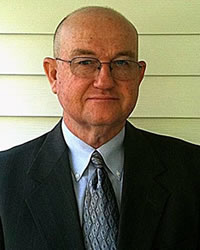
Gary Shepard

Iniquities Gone In A Day

Zechariah 3:9
Gary Shepard August, 31 2015 Audio
0 Comments
Gary Shepard
Gary Shepard August, 31 2015

Sermon Transcript

Auto-generated transcript • May contain errors

100%
Please turn back to where we
read in Zechariah chapter 3. And I want to go back and read just
a couple of verses. And they're verses 8 and 9. Hear now, O Joshua the high priest,
thou and thy fellows that sit before thee, for they are men
wondered at. For behold, I will bring forth
my servant, the branch. For behold, the stone that I
have laid before Joshua, upon one stone shall be seven eyes,
Behold, I will engrave the graving thereof, saith the Lord of hosts,
and I will remove the iniquity of that land in one day." Now, I hope that you will listen carefully
to me. I want to try to say what I feel
led to say as carefully as I can. Because God uses this prophet
Zechariah to declare His covenant promise, many covenant promises,
which are promises of grace to a people that he chose and gave
to Christ in this very covenant. It's called the everlasting covenant. And his death is the sole basis
of this covenant. all it takes to ratify this covenant. And so his blood, his death,
is called the blood of the everlasting covenant. And here in this text,
Christ the Messiah is called by God the branch. My servant, the branch." And
that name or that term simply speaks of his association and
union with these people. He's called the branch. He's
called divine. And with him, in this relationship,
They are one before God. They are said many times in the
New Testament to be in Christ Jesus. And what I want you to see today
is in verse 9, and it involves a work that God
will do. Look at the last statement that
he makes in verse 9. He says, and I will remove the
iniquity of that land in one day. It begins, as all the gospel,
always begins. It begins with God. It begins with Him stating what
He will do. He says, I will remove the iniquity
of that land, that people that He is speaking of here. And iniquity is just another
term that we find the Spirit of God using to tell us something
about our state and condition as sinners. Sometimes that which
is against us before God is called sins. That has to do with missing
the mark. Sometimes it has to do with violating
the commands of God. It is called transgressions. But oftentimes it's called iniquity,
which involves the greatest of sins. It involves the things
that men do themselves or attempt to do to make atonement for their
sins and all their efforts to establish a righteousness before
God. It involves all our works. all the works of men and women,
especially religiously, to establish acceptance before God, to be
blessed by God. Hold your place and look over
in Matthew's Gospel, chapter 7, where our Lord shows us this
in the most clear and definite way. In verse 21, he says, "...not
every one that saith unto me, Lord, Lord." These are those
who obviously profess some knowledge and relationship with the Lord
Jesus Christ. They say, Lord, Lord. But he says, "'Not every one
that saith unto me, Lord, Lord, shall enter into the kingdom
of heaven, but he that doeth the will of my Father which is
in heaven.'" What is that? He says this is the will of God,
that you believe on His Son whom He hath sent, that you trust
Him. He says, many will say to me
in that day, in that day when men stand before God, Lord, Lord,
have we not prophesied in Thy name? And in Thy name have cast
out devils, and in Thy name done many wonderful works. They are so convinced. so satisfied,
even to that hour, that what they have done, and what they
have preached, and all that they have abstained from doing, that
these things are really going to recommend them to God, even
be rewarded by God. But the Lord Jesus says in verse
23, "...and then will I profess unto them, I never knew you,
depart from Me, ye that work iniquity." Those things were not pleasing
to God. Those things were not acceptable
to God. It was all inequity. It was all less than what God
required. It was instead of what God had
given. So, He calls it what it is, iniquity. But the promise of God here in
our text is that He will remove somebody's iniquities. You can just mark that down. That was the covenant pledge
and promise of Almighty God. It was to remove somebody's sin,
somebody's transgression, somebody's iniquities. And no doubt in my
mind that we live in this day, and there may be some who would
confess to be sinners in a measure, confess to have transgressions,
but few there be that recognize iniquities. that would dare call
what the Lord Jesus called in these descriptions nothing more
or less than iniquity. Ye that work iniquity. But this promise is that He will
remove somebody's iniquities. As a matter of fact, He will
remove all the iniquities of this land, or of this people
that He describes. That is described in the 8th
verse as these men that are wondered at. God's elect have always been
wondered at. When they confess what they believe
concerning Christ and that salvation that is with Him, being all of
the free and sovereign grace of God and not of their works
at all, they are wondered at. They are definitely wondered
at. But he says he's going to remove
Somebody's iniquities. And I just wonder in this day,
I mean in this hour in which we live, when there is so much
that goes on in the name of religion, so much that is said about God,
so much that is said about God being the answer to your problems
and all these various foolish notions that men speak of, Is
there anybody who is really interested in what he has promised here?
Is anybody interested in God having removed their iniquities? In other words, the best thing
that anybody can be asked in truth in this day is simply this,
are you a sinner? Because if you're not, there
is no good news in this book for you. Is there anybody who after having
maybe been raised in religion or made a profession of religion
or sought in their morality to live morally in this world, is
there anybody who after having done all of that, knows in their
heart right now that God has not accepted it, that He cannot
accept it, that He says He will not accept it, that He calls
it what it is, iniquity. If you be one of such persons,
my prayer is that God would cause you to hear His promise. Because he describes those who
are the recipients of these promises that are yea and amen in Christ
by all these titles that no one by nature wants to be identified
with. He says, in due time, Christ
died for the ungodly. Christ came into this world to
save sinners. He came to seek and to save that
which was lost. And there aren't many of these
kinds of folks to be found in our day. Though the Bible says
all have sinned, though it tells us again and again that the wages
of sin is death, that it tells us that God must and will punish
sin, You see, this is really the greatest of our problems.
It's the greatest of our problems. And our best, on our best day,
is nothing but sin. And we are told that it is not
by works of righteousness that we have done, but according to
His mercy He saves us. This promise is a promise of
mercy. All our best is simply filthy
rags. And all our efforts cannot remove
one sin. When Paul writes, if he be the
writer of Hebrews, in Hebrews 10, the first thing he says is
reminding those that he speaks to concerning what those things
under the law represented, he says, not all those sacrifices
that were offered, not all that blood that was shed under that
Old Testament economy, not any of them, not any of those priests
that stood, They couldn't put away one sin. But he said, every
time it happened, there were in these things the remembrance
of sin. God reminded men through all
those things that they were sinners. God reminded them through all
those priests and offerings and blood, He reminded them that
sin had to be paid for. That God judges sin. And He reminded
them that it's just by one way. Just by one way. It's by sacrifice. is by God-appointed sacrifice. And so, all those things just
simply showed again and again that we are sinners and there's
only one way that God will accept. And so, he says this is what
he'll do. I love those covenant promises.
I love when he talks about what he'll do. He makes His people
to be so frustrated and brought to an end of what they can do,
so that they are made to delight in the things that He says He
will do, the things He says He has done. And His will of grace
to His people has to do with this covenant of grace, and the
gospel is good news to sinners like we are, because it tells
us what he did. He says, I'll do it. He says,
I will remove the iniquity of that land in one day. Well, that day and that work
is the work of the eternal God." He's talking about the salvation
of the eternal God. And if you remember in Scripture,
you'll find that He tells us again and again, reminds us of
His own eternality, and He says this to us, He says, a day to
me is as a thousand years, and a thousand years as a day. And that means that His day,
and your day, and my day, which are 24 hours, that's not like
His day. You see, He's the eternal God.
And though you and I are these time-bound creatures, He views
everything in this one eternal now, and it's just one day. Just one day. It's all at once. with Him who is described as
the High and Lofty One that inhabits eternity. But though that is
the way it is with Him, it isn't such to you and I who are these
creatures of time and who learn of what God has done in a progression
of revelation. God reveals to his people the
things that he has done, the things that he has freely given
them in the Lord Jesus Christ. And when He begins to reveal
to us what it is that He has done in grace, how He has saved
His people by His grace, all by Himself in the Lord Jesus
Christ, this one day in the process of revelation to us is really
three days. Three days. And He does this. to assure that
you and I, all who are saved by Him, ascribe all the glory
to Him. It is He who hath saved us and
not we ourselves. He does it to assure the glory
of the Godhead as accomplishing all our salvation. And He is,
as God our Savior, as you read there in Isaiah, God our Savior,
He is God in these three sacred persons of the Godhead, God the
Father, God the Son, God the Holy Spirit. And John says, and
these three are one. He's God our Savior. And this is one salvation. Sometimes I think theologians,
they lose all sight of this when they begin to pick and divide
and define and all. This is just one salvation. And this is the removal, one
removal of iniquity. This is one justification. This is the one work of righteousness. And it all glorifies God from
eternity to eternity. First of all, there was the day. There was the day when God the
Father, as the initiator of salvation, like I said, it always begins
with God. You can trace the salvation that
flows freely to a people in Christ, you can find it, trace it all
the way back to the fountainhead, and God is the spring of it all. It begins with Him. And there
was a day when God the Father, this One who is the initiator
of this salvation, that day when He purposed not to impute or
to charge His people with their sins. He purposed. He determined. that He would
not charge and hold accountable these individuals that He gave
to His Son with their sins. That's right. You see, this was
an act of God before the world was. It was a work done before
us. It was a work in which we did
not assist, and we did not will, and we did not do anything. We weren't even born. We weren't
even born. And this is called a blessing. Do you know that? All these people
in our day, how are you blessed, or have a blessed day, they know
nothing about this. I offended a young woman yesterday,
I'm quite sure, if expression means anything, when knowing
that I was a preacher, she asked me if I was a cheerleader for
Jesus. I said, no. I'm not a cheerleader. I'm not going to talk in that
kind of terms of the Lord of glory. It may hurt your feelings,
I'm sorry, but I'm just not going to bow as all seem to do in our
day in making the Lord of glory to be some part of a football
team maybe. Cheerleader. No. The Bible says that He blessed
us. Ephesians 1. I've read it to
you many times. He blessed us with all spiritual
blessings. in Christ Jesus before the world
was. You say, how do you know that
was one of the blessings? Because two times at least in Scripture
it says, blessed is the man to whom the Lord will not impute
sin. Before we were ever born. before
we were ever in the actual accomplishment or engaged in these iniquities, He removed them. In an act of His free, sovereign
grace, according to His will, as He works all things after
the counsel of His own will, He removed our sins, the responsibility
for them, from us and put them on Christ. The Bible says He became surety. And that means he became totally
responsible. He determines. And since this
was an intricate and vital part of his whole purpose of grace,
he did it before the world began. He removed the responsibility
of them from His people, laid them on Christ, made Him the
surety so that Isaiah could say, the Lord hath laid on Him the
iniquity of us all. I don't know exactly when that
was. But in our way of thinking, In our way of looking at things
as we find them revealed in Scripture, there was a day when He removed
iniquity from His people. He laid them on Christ. Paul
writes in 2 Corinthians 5, God was in Christ, reconciling the
world unto Himself, not imputing their trespasses unto them. Not imputing. Isaiah 43, this
is what it says, God says, I, even I, am he that blotteth out
thy transgressions for mine own sake, and will not remember thy
sins. Jeremiah records this. He says, "...and they shall teach
no more, every man his neighbor, and every man his brother, saying,
Know the Lord, for they shall all know Me. From the least of
them unto the greatest of them saith the Lord, for I will forgive
their iniquity, and I will remember their sin no more." Somebody
says, well, God determined to do that at some point in time.
No. He's eternal. He's the same yesterday, and
today, and forever. He doesn't change. He doesn't
alter. Again in Jeremiah, he says, "...in
those days, and in that time, saith the Lord, the iniquity
of Israel shall be sought for, and there shall be none. And
the sins of Judah, they shall not be found, for I will pardon
them whom I reserve." That pretty well assures that
God's going to get all the glory, doesn't it? He did that before
the world began. It was that day when He determined
not to charge His people with their sins. There was no devil
there to try and stop Him, though He could not. There was no man
acting in something called so-called free will to try and stop that. He did that as God the Father
alone. He did just what he's saying
here in this book. He removed their iniquity in
one day. God, somebody says, He can't
do that. He can't do that until this happens or that happens.
All God has to do to be God is to do what's right and just. Since He can't fail. Since He
can't change. Nothing is contingent upon that. Nothing is dependent upon that. And you and I can say, well,
what if this hadn't happened? What if Christ hadn't died? What
if this hadn't happened? It just absolutely does not apply. Put an N.A. on such things as
that. Not applicable. But then there's secondly another
day. It's all the same day, but in the revelation of it, in the
pouring out of it, there's a second day. And that's the second day,
the day He removed in that day that the surety died on the cross
in their place. That is all that is the basis
of these covenant promises. all that God's justice hung upon,
all that was necessary to remove our sins in the legal and judicial
sense of it, happened in that day when Christ hung on the cross. It was such a predetermined and
well-defined day that they could not take him and stone him though
they tried, though he could not be forced or pressured by any,
including his own family and earthly mother, he would simply
say to them, mine hour is not yet come, I'm headed for a day. That day was appointed in old
eternity. It's a part of this one great
day. And His death for them was the
just basis upon which He removed them. And what the good news
is, as was stated by John the Baptist when he announced His
coming. What was it? He said, Behold
the Lamb of God which taketh away, removes sin. Behold the Lamb of God that taketh
away the sin of the world. And He's not talking there as
in every other place. He's not speaking universally
in this sense of every person in the world. He's tearing down
that barrier that had long stood between Jew and Gentile. He's saying that to those who
are mostly Jews. He's the Savior of the world.
He's not just the Savior of the Jews. He's the Savior of Jew
and Gentile. He's the Savior of a people.
He saves them from among men. Revelation says that they sung
a new song saying, Thou art worthy to take the book and to open
the seals thereof for Thou was slain and has redeemed us to
God by Thy blood out of every kindred and tongue and people
and nation. That day came that was appointed. Every step of his earthly journey
led to that hour, that day, that he would hang on that cross.
And as the surety of his people, that time came to pay the sin
debt. And he poured out his blood.
poured out that perfect, sinless life, that holy, gloriously,
though in flesh life, which nobody else had or has had. Look over in Hebrews chapter
9. Hebrews chapter 9. Here, the
apostle is comparing, or rather contrasting, the priest and the
sacrifice of Christ to all those earthly priests and sacrifices. What does he say? If he'd been
like all the rest of them, he'd had to have done it again and
again and again. But he didn't. How many days do you suppose
that those priests went into the tabernacle or went to the
holy place of the temple and offered again and again, day
after day after day after day. But he's not like those priests.
And his sacrifice is the sacrifice of himself. He says in verse
26, "...for then, had he been like them, must he have often
suffered since the foundation of the world. But now once, in
the end of the world, hath he appeared to put away sin by the
sacrifice of himself." Did he remove iniquity? All the sins of all His people
were laid on Him. If you're one of God's sheep,
all you've ever sinned, all you've ever done, not only your missing
the mark, not only your violations of His commands, but also all
those iniquities, removed them. You know that's just a little
too much grace for some people. But I'll tell you what, it's
not too much for somebody that God has showed them what they
are. Again, in Hebrews, he says in
Hebrews chapter 10. Look over in Hebrews chapter
10 and listen to what he says in Hebrews 10, after he's told
us that all those other sacrifices, they don't amount to anything.
They never put away any sin. But verse 10, he says, that this
One who came, and the first thing He said is, I came to do Thy
will, O God. by the which will we are sanctified
through the offering of the body of Jesus Christ once." That's
actually what that ends right there. Once. One sacrifice. One sacrifice for sins forever. One sacrifice offered one day. Every priest standeth daily,
ministering and offering oftentimes the same sacrifices, which can
never take away sins. But this man, after he had offered
one sacrifice for sins forever, sat down on the right hand of
God, from henceforth expecting till his enemies be made his
footstool, for by one offering he hath perfected forever them
that are sanctified." And he said, this is just what he said
in his covenant. Verse 17, And their sins and
iniquities will I remember no more. For where remission of
these is, there is no more offering for sin. Why don't we offer up today as
a part of our worship a lamb? shed His blood, pour it out.
Why don't we have a priest to dress up in this particular garment
that was described and appointed by God and take that blood and
come somewhere in this building to a special place and sprinkle
that? Why don't we do that? Because remission is removal. And they are no more if they
have been removed through the sacrifice of this great High
Priest, the Lord Jesus Christ, who by the sacrifice of Himself
put them away. Through his own self, Peter said,
bear our sins in his own body on the tree, that we being dead
to sins should live unto righteousness, by whose stripes you were healed. Paul says, who gave himself for
us that he might redeem us from all iniquity. And John says,
and you know. Do you know this? He says this to
believers. He says, and you know that He was manifested to take
away our sins. And in Him is no sin. You know that. Not many people
know that. He removed them in that day because
He paid the debt. And so now there's a zero balance. I like a zero balance. That old hymn writer said, oh,
happy day. Oh, happy day when Jesus washed
my sins away. Another hymn writer said, my
sin, not in part, but the whole, is nailed to His cross. and I bear it no more." Praise
the Lord. Praise the Lord, O my soul. But I said in this day there's
a third day in our experience. And that third day, lastly, is
that day when the third person of the Godhead, and I told you
salvation is of the Lord. He's God our Savior. The Father
removed them in that day before the world began. The Son removed
our iniquities in that day He hung on the cross. The Spirit
of God does a work in us and enables us to believe this blessed
good news as to what God has done. I remember hearing a preacher say,
Faith is believing that God will do what He says He will do. And
I thought, well, yes, in part, but it's first. You'll never
believe that God will do what He says He will do until you
have truly believed that He has done what He says He has done. And those are the same people who
have had God's decree not to impute their sin to Him. Who
the Son has come and died, and in His death put away their sin,
yet they're still so blind and rebellious, ignorant. They're unwilling in every way. Unwilling to bow before God as
He is. Unwilling to believe what He
says about Himself or us. Unwilling to be saved His way
by grace alone in Christ alone. Unwilling, therefore going about
to establish our own righteousness before God, and not submitting
to the righteousness that He gives as a gift in Christ. Absolutely unwilling. Would you
like me to define so-called free will for you? You can define
it by one word. Unwilling. Unwilling. Unwilling to have God as He is? Unwilling to believe that I am
what He says that I am? Unwilling to believe that the
only way I can be saved was for God to come in human flesh and
die for my sins and therefore remove my iniquities? Unwilling. He said, you will
not come to Me that you might have life. But all this is a
wonderful day I'm talking about now. It's the day of God's power. It's going to happen to every
one of His people. That doesn't mean that they're
going to see a vision in the sky. That doesn't mean that they're
going to feel this. Wonderful, funny, warm feeling
in their bodies or in their minds. Doesn't mean they're going to
speak in tongues or stand on their head or do anything like
that. They're going to believe Him. Just going to believe God. You say, how do you know that?
Because God's already said that. He's already appointed that day. In Psalm 110, he's the father
speaking to his king. But you know, there can't be
a king with a kingdom unless he has subjects. And so the father
says to his king that he's set on his holy hill, you're going
to have subjects in your kingdom. He says, He didn't say, all people. He
said, thy people. Call His name Jesus, for He shall
save His people from their sins. The Father says, thy people shall
be willing in the day of thy power. Some of you I've known a long
time. And when the Lord first began
to reveal the truth to me, and I began to try to tell it to
you, you were not willing. There was a whole lot that weren't
willing. But something happened. All of a sudden, that which you
couldn't believe, you had to believe. The day came when that
which you didn't want to believe you now, wanted to believe it,
rejoiced to believe it. Believed it, even if nobody else
believed it. Because it is what God said. Thy people shall be willing in
the day of thy power. I love to see it when God brings
that day to His people. Oh, some of them have to go through
a lot of agony in the process. They'll fight and kick and struggle
and deny and run and hide and all these things. But then one
day, they're willing. He makes us willing. Our wills
don't have a thing to do with our salvation. But if He saves
us, He'll make us willing. Absolutely willing. He enables
us to believe God, to believe the Word of Truth, which he tells
us is the gospel of our salvation. And iniquity in that day is removed
from our conscience. Our works are repented of as
a basis of our justification before God. And we see that if
the Father removed all sins from us by His gracious act, and the
Son removed all sins from us through the shedding of His blood,
and the Spirit of God bears witness to this truth in our hearts,
our sins are no more. Our sins cannot be on Christ
and on us. They cannot be charged to Him,
and also to us. They cannot be paid for by Him,
and then due from us. They cannot be removed, and yet
remain." Oh, the glorious, free, and sovereign
grace of God. Iniquities gone in a day. That old hymn writer said a few
words that stick always in my mind as being true to this book. He said, payment God cannot twice
demand. First at my bleeding surety's
hand and then again at mine. Micah records these words, "'Who
is a God likened to Thee, that pardoneth iniquity, and passeth
by the transgression of the remnant of His heritage? He retaineth
not His anger forever, because He delights in mercy.'" The psalmist says, "'For as the
heaven is high above the earth, So great is His mercy toward
them that fear Him. As far as the east is from the
west, so far hath He removed our transgressions from us."
Call them sins. Call them transgressions. Call
them iniquities. They're gone for His people. You say, well, if you tell folks
that, They'll just live and do what
they want. The thing is, those who are truly
saved altogether by God's grace, their desire is to obey, to follow,
to worship, to glorify the God that saved them. being saved
freely by God's grace, by the Godhead, having our iniquities
removed in a day, that's the only true motivation to godly
living. We sing in years past that little
chorus. Did you hear what Jesus said
to me? Maybe He hasn't said it to you
yet. I pray that He will. Did you hear what Jesus said
to me? They're all taken away. Your sins are pardoned and you
are free. They're all taken away in God's
great and glorious day of grace. When Paul writes in several of
his epistles, Ephesians being one of them, he begins by saying,
blessed be the God and Father of our Lord Jesus Christ for
what He's done, to the praise of the glory of His grace. Then he says that He's made us
accepted in the Beloved, in Christ, in whom we have redemption. Through His blood, the forgiveness
of sin to the praise of the glory of His grace. In whom you are sealed by the
Holy Spirit until the day of redemption to the praise and
glory of His grace. This is the gospel. Iniquities
gone in a day. Father, we pray that You would
make Your Word a blessing and a comfort to Your people, that
You might get all the honor and all the glory, all the persons
of the Godhead, exalted in our salvation, the salvation of sinners
such as we are. We thank You and we praise You
and we give glory to Your name and we rejoice in your goodness
and grace to us. We pray in Christ's name, that
one whom you've appointed, and thank you. Amen.
Gary Shepard
About Gary Shepard
Gary Shepard is teacher and pastor of Sovereign Grace Baptist Church in Jacksonville, North Carolina.

Comments

0 / 2000 characters
Comments are moderated before appearing.

Be the first to comment!

Joshua

Joshua

Shall we play a game? Ask me about articles, sermons, or theology from our library. I can also help you navigate the site.