Bootstrap
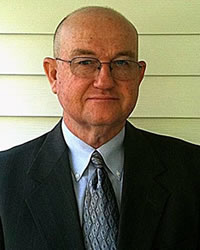
Gary Shepard

This Man Shall Be The Peace

Micah 5:1-7
Gary Shepard June, 21 2015 Audio
0 Comments

Sermon Transcript

Auto-generated transcript • May contain errors

100%
Micah chapter 5. Here in Micah chapter 4 and chapter
5, we find a prophecy that was given
of God through this man by the name of Micah." I thought about it as I was sitting
there how often we hear people talk about world peace. They talk about praying for peace. Well, the truth is there wasn't
peace in Micah's day. There wasn't peace before Micah's
day. And there hasn't been world peace
since Micah's day. And there's a reason for that. And the reason, or I may should
say the fault is, that all men and women are sinners. Somebody said, why can't we just
get along? Well, the reason is, we love
self more than anybody else. And we're sinners. One and all. In Micah's day, God was speaking
concerning a judgment that He would bring against the nation
of Israel. And He would bring them to this
judgment using other nations such as the Babylonians, such
as the Assyrians that are mentioned here, and even later using the
Romans. He gave this prophecy and he
also fulfilled it concerning that earthly nation. But it is
also a gospel prophecy. It is a prophecy concerning the
Lord Jesus Christ and God's spiritual Zion. I feel like any time that
I come back to the Old Testament that I need to remind you of
something that Christ said while He was here on this earth. He
said to some, O fools and slow of heart, to believe all that
the prophets have spoken! Ought not Christ to have suffered
these things, and to enter into His glory, and beginning at Moses
and the prophets?" Michael was a prophet. Some call him a minor
prophet. But when God sends a prophet,
there are no minor prophets. Because their message is all
about the Lord Jesus Christ and His people. It says, "...and
beginning at Moses and all the prophets, He expounded unto them
in all the Scriptures the things concerning Himself. And as then, God being a just
God who will not clear the guilty, And who must punish sin, he must
bring judgment upon all sinful nations as he has, and as he
is, and as he will. Because nations are simply people. Nations are made up of people. They're made up of sinners. And He must punish our sin. You know that. I don't even have
to tell you. And it doesn't matter how much
you deny it. He has given a witness in our
hearts. in the fact that he has raised
the Lord Jesus Christ from the dead and appointed him the judge,
the righteous judge, he's going to judge all sin. And he must even judge the sins
of that people which he says that he has loved and chosen
for himself. They are the true Israel. The Apostle saying, he is not
a Jew who is one outwardly, but who is one inwardly. Circumcision is not of the flesh,
but of the heart. The true Israelite, he says,
is that one who worships God in spirit, and who rejoices in
the Lord Jesus Christ, and who has no confidence in the flesh." And the enemy did, and the enemy
always will be numerous and strong, and they'll waste the land. That's what's going on all over
this earth this very moment. has all my days that I have lived,
will, according to all the prophecies of God, carry on until the coming
of the Lord Jesus Christ. We need not expect anything else. But the prophet, in the midst
of all of this, and in the midst of this prophecy of judgment,
He speaks a hidden message of hope. He speaks some good news. Because he speaks a prophecy
concerning the Messiah, the Christ. And although the Jews, according
to the flesh, thought that He would be a coming King for them
alone, He was the coming King and Savior of that people that
they pictured and represented. But when He first speaks of Him,
it appears that the Messiah Himself would be defeated. If you look
back in that first verse, it says that they shall smite the
Judge of Israel with a rod upon the cheek. Who is the Judge of
Israel? Well, as I said, God, according
to what He says, has committed all judgment into the hands of
His Son, the Lord Jesus Christ. He is the righteous Judge, the
Judge of Israel. But it says, that these shall
smite with a rod, the cheek of this one that he is talking about. And we find out that there are
lots of references of Scripture concerning Christ of that very
thing. He speaks through Job, and he
says, "...they have gaped upon me with their mouth, they have
smitten me upon the cheek reproachfully, they have gathered themselves
together against me." And these are references to how Christ
would be treated and dealt with when He was born of a woman and
came into this world. Lamentations 3 carries on the
same prophecy, "...he giveth his cheek to him that smiteth
him, he is filled full with reproach." He came unto His own, and they
received Him not. In Matthew it says, Then did
they spit in His face, and buffeted Him, and others smote Him with
the palms of their hands, saying, Prophesy unto us, thou Christ. Who is He that smote thee? John says that they cried out,
"'Hail, King of the Jews!' and they smote Him with their hands." And then Matthew says that Jesus
said unto them, All ye shall be offended because of me this
night, for it is written," it was written by the prophet Zechariah
so long before, "'I will smite the shepherd, and the sheep of
the flock shall be scattered abroad.'" Not only was he smitten
by those The Jews, the Romans, all that gathered against him,
but he is also, as was just sung, smitten of God. And the fact
that this surely has to be talking about Christ is seen in verse
2, where the place that he is from is spoken of. Verse 2 says, "...but thou, Bethlehem
Ephrathah, though thou be little among the thousands of Judah,
yet out of thee shall he come forth unto me that is to be ruler
in Israel." They looked at the Lord Jesus Christ and they said,
can any good thing come out of Nazareth? And they did so willingly,
not even wanting to find out the real truth, which is that
He was born in Bethlehem just like Micah said He would be. But to whom does He come? Well,
in that second verse it says, that this One who is to come
forth from Bethlehem, Ephrathah, God says, He comes forth unto
Me. Oh, He comes to the earth. But He
not only comes to the earth, He comes to God. He comes to
God the Father, because the matter has to be decided and dealt with
before God's law and justice. It has to be dealt with in the
court of heaven in the matter of our sin, not in the court
of public opinion. He says, He comes forth to me.
I remember Brother Scott Richardson saying so many times in years
past, he said, before God can do anything for you and me as
sinners, He first has to do something for Himself. He has a claim as
the holy and righteous and just God against even those that He
has loved and will save. He has to deal with that if He
is to show mercy to us. Just like when Abraham was about
to take Isaac upon Mount Moriah. And young Isaac looks at everything
that he knows will be necessary to worship God and be accepted
by God. He says, I see you have the fire,
and I see you have the wood and the knife for sacrifice, but
where is the lamb? Where is the sacrifice? And Abraham says to him, God
will provide Himself. a sacrifice. He comes forth,
God says, to me. And he comes forth, as it says
here from Bethlehem, as the one, it says in verse 2, that is to
be the ruler in Israel. He's not coming to just be somebody's
sidekick spare tire and helper and all these other things. He's come forth to be ruler in
Israel. The very thing that we are commanded
to believe, first of all, with regard to the gospel as it is
in Christ, it says, believe on the Lord Jesus Christ. This one is the King of Kings. And He is the Lord of lords. And He did not come forth, just
as Micah is saying, He did not come forth to be anything less
than ruler and master and sovereign over all things. You see, the
cross was the way to the throne. He said, ought not the Christ
first to have suffered and then enter into His glory? That was the way to His throne. He's not on a mission to fail. And He's described in this way,
if you look in verse 2 again, whose goings forth have been
from old, from everlasting. He's not a Johnny-come-lately. He did not begin when He was
born of a virgin there in Bethlehem. He did not have His beginning
when He took upon Himself human flesh. He's the eternal Son of
God. John says in verse 1 of chapter
1, in the beginning was the Word, capital letters, and the Word
was with God, and the Word was God. The same was in the beginning
with God. You say, I don't understand that.
Neither do I. I'm a finite being talking about
the infinite God. He is that One that was in the
beginning. He is that One that was with
God and at the same time was God. He was from the very beginning. And then the Apostle goes on
and he says this, He's the same yesterday and today and forever. Whatever He is, that's what He
was. And whatever he is and was, that's
what he always will be. And that is the hope of our salvation. He says, I am the Lord, I change
not, therefore ye sons of Jacob are not consumed. You change,
don't you? I change. My changes usually
are always for the worst. So I can't have any hope in that
which changes, especially in myself, because I change. But He never changes. He always
abides the same. He always abides faithful. And
just by this alone, we have to know that this is the only One,
the Lord Jesus Christ. And then we find out something
else about Him in verse 4. He says, He shall stand. He shall stand. This One that
will be smitten down, literally slain and brought to death, and
not just a death, but a particular death, the death of the cross,
though smitten down, He shall stand. He's going to rise from the dead.
He rose from the dead. And try, as men would, to hide
and cloak that obvious fact. There were witnesses. Faithful
witnesses that He raised from the dead. And the glory of that
being raised from the dead, Paul says that when he was delivered,
he's delivered by God for the offenses of this spiritual Israel,
and he was raised because of their justification. Their justification depended
on his death, but also on his resurrection. Paul said, if we
have no hope in the resurrection, we don't have any hope. If Christ
be not raised from the dead, then we have no hope. He said
there's no reason to preach Christ, and we're all men just lost and
hopeless and helpless. But He was delivered for our
offenses and raised for our justification. He stands before God, this one
does, as the representative of His people. He'll feed all His
sheep. He'll care for them. He'll keep
them like a shepherd because He's the Almighty One. Matthew
says, "'And thou, Bethlehem, in the land of Judah, art not
the least among the princes of Judah, for out of thee shall
come a governor that shall rule My people Israel.'" Now let me
ask you this. Did he rule national Israel? Outwardly? No. As the sovereign of the universe,
he did. But as a spiritual ruler and
king, did he rule over that nation of people in the Middle East?
No, he did not. So it has to be this spiritual
Israel. His kingdom is in the midst of
the hearts of His people. He rules and reigns as King,
as the Lord of glory. And then it says, in the majesty
of the name of the Lord. He's not hiding anywhere. He's
not waiting for you or me or any of the fallen sons of Adam
and Eve. He's not waiting for us to make
Him Lord. I hate that. I hate to hear men
and women speak of making Jesus Lord, when the truth is God beat
you to it a long time ago. He made Him Lord of lords and
King of kings, and He comes forth and He rises up from the dead
in the majesty of the name of the Lord as the God-man, and
He satisfies God, because He is God in flesh. And
of such infinite value is His sacrifice that His blood atones,
the Scripture says, for the sins of many. It doesn't say all. It says many. It says His sheep. It says His bride. It says His
children. It says His church. In other words, his life and
his death laid down, his blood shed there on that cross is the
payment for sins, the sins of his people. And not any of them
are going to perish. Not any of them are going to
perish. Because his obedience unto death, Because it is so
exact, because it is such a ransom and a payment, a particular payment
for the sins of a particular people, His obedience unto death. Because of that, it says that
God's given him a name. He's given him a name above every
name. He didn't wait for somebody to
do it. He didn't wait for somebody to accept Him. He didn't wait
for somebody to make a decision for Him. Because of His obedience
unto death, because of His successful finished work on that cross,
so satisfying the justice of God on the behalf of His people,
God gave Him a name that's above every name. He being the brightness of His
glory, and the express image of God's person, and upholding
all things by the word of His power, when He had by Himself
purged our sins, He sat down on the right hand of the Majesty
on High." Now you think about this. He is seated at the right
hand of the majesty on high, the man, the glorified man, Christ
Jesus. Why is He there? Why did God
exalt Him? Because He accomplished something.
He died for somebody's sins. He didn't die. I'm not going
to misrepresent the Word of God and say He died for everybody.
When it says He dies for the sins of the world, it's talking
about how God has broken down this barrier between Jew and
Gentile. He's removed all these distinctions. His people are from among all
these various stratas of society and divisions of sex and race
and everything else. But He saved them from their
sins. And rather than trying to follow a path of resistance
to the Word of God, and try to say Christ died for everybody
now except you, I'm telling you He died for somebody. Don't you
want it to be you? I want it to be me. He didn't
have to die for me. He didn't have to put away my
sins and pay that awful price. All He owes me, humanly speaking,
is hell itself, which is the strict justice for every sinner. But notice what it says next.
It says, "...and they shall abide." Whoever it is, whoever this Israel
is, whoever his people are, They're going to make it. They're going
to be saved from their sin. They're going to be exalted into
the presence of God. They're going to go to heaven. They shall abide. They're going
to abide in Him. They're all going to live. They're
all going to be preserved. They're all going to dwell with
God in Him. They're all going to continue
in His care. They're all going to be safe.
Why? Because their salvation depends
on what He did and what He does, not on them. Will they fail? Absolutely. Will they sin again? Absolutely. Will they fall? Will they falter? Will they make
mistakes? You can count on it. But they're going to abide. They're
going to abide in Christ. They're going to live in Him
who is alive. And then it says this, because
of all this, He shall be great unto the ends of the earth. I
don't like to hear people talk about somebody they call Jesus
in our day much. Why? Because they make him such
a pitiful, pathetic, helpless, failing individual. But not this
one. The angel tells Mary and Joseph
exactly what his name is to be. He says, Thou shalt call his
name Jesus. That means Savior, or Jehovah's
Savior, or Jehovah the Savior. For He shall save His people
from their sins. He has a people. He's going to
save every one of them from their sins. He absolutely is going
to do it. And He shall be great unto the
ends of the earth. Malachi says, "'For from the
rising of the sun, even unto the going down of the same, my
name shall be great among the Gentiles, and in every place
incense shall be offered unto my name, and a pure offering,
for my name shall be great among the heathen, saith the Lord of
hosts.'" David said his glory will be great in salvation. Now you tell me you're a saved
person. Let me ask you this, is God's glory great in your
salvation? When you ask people in our day
if they know God or if they're saved, they immediately begin
to tell you what they've done. I'm a member of such and such
a church, or I'm a this, or I'm a that, or I've been baptized,
or I had an experience. Let me tell you all about my
experience. No, His name is great in salvation. But I want you to notice particularly
what it says in verse 5. And this man shall be the peace. There is enough in that one statement
to fill all the volumes of a million worlds. And I'll tell you this
about it too. There's only one way you'll ever
believe this. There's only one way that you'll
ever have a rest in this, and that is for God to reveal it
to your heart. He says of this one, This one
who will be smitten down, this one who will be slain, and who
will be raised up from the dead, and His name exalted and be great. But He brings it right down to
what I'll call the nitty-gritty. What I need. And He says, this
man shall be the peace. You mean to tell me, preacher, that I could really have peace,
peace with God, because of something one man did. If you find out
who the man is, you can. If God revealed the Lord Jesus
Christ, who He is, and what He actually did on that cross, you
will. And if He doesn't, you never
will. If you notice, first of all,
he speaks of the singularity, I'll call it here. The peace. No peace anywhere else. No peace in this world anywhere
else. This world, in every part, in
every country, in every state, In every circle of human beings
is just waiting for war to break out. You say, no. Oh yes. It erupts and we read about it
on the news every day. It doesn't have to be in the
Middle East. It can be in your own neighborhood. It can be in
your own family. It can be between you and your
best friend. War breaks out. So you think
by now we would learn that there is no peace in all these things. Here is the peace. There is just
one peace. And not only that, he tells us
of the sureness of it. He says, this man shall be the
peace. You can have your maybe-so's
and mights and all that stuff. Give me God-shall-be's. This
man shall be the peace. And he does not at any point,
nor does he anywhere in this book, say that we are to make
peace with God. You couldn't make peace with
God if you tried. And many have. Why? Because we
are sinners against God. Natural mind is enmity against
God. Nor does it say here or anywhere that any other has or
can make peace with God. Not Buddha, not the Pope, not
Reverend so-and-so, not this priest or that one. This man
shall be the peace. And I say only if God enables
us because we believe that He is such because God says He is. What is the warrant for faith?
Just because God said it. You say, I just can't believe
it. Well, you'll never have peace. I'm telling you. That's just
too simple. to not of yourself." Right? God says it. As a matter of fact,
he's that one really, that pre-incarnate one that Abraham met when he
returned from the slaughter of the kings who identified himself
as the King of Salem. What does that mean? King of
peace? And he himself said, and we ought
to see this, he came not to establish world peace. He said, I came
not to bring peace, but a sword. He's a divider. They were divided. There was a division because
of him. There always is a division because
of him. But he came to be Peace with
God on the behalf of a multitude of rebel sinners who were at
war with God. That's what that means. The natural
mind is enmity against God. Always at war against God. Don't want God's rule. Don't
want God's way of salvation. Don't want God's Son. We will not have this man to
rule over us. He comes in grace, because grace
is the cause of peace. As a matter of fact, you go and
you look at many of the New Testament epistles, and the apostle will
begin, and he'll say this, grace and peace. Were it not for grace,
there would be no peace. Were it not for God's grace in
Christ, there would be no peace. Peace is rest. And true peace
is not accomplished by any of our doings because it's only
in this man. Not done with your help. Me and
Jesus do not have a good thing going. He's everything. He's the peace. He's the only
righteousness there is. He's that one man, that one priest
that represents His people. Paul says there's one God and
one mediator between God and men, the man Christ Jesus. And it's His obedience, not ours,
that saves. Paul in Romans 5, "...for as
by one man's disobedience many were made sinners," who was that?
Adam. "...so by the obedience of one
shall many be made righteous." And he had to come to this earth
and take on a human body, because only one in our nature could
redeem us. Redemption being necessary for
peace. And only Christ, the sinless
Son of God, had the right, the ability, and the will to redeem. He is that long-promised, long-awaited
peace. So that when He was born, what
did the angels announce? Peace. on earth. Not peace to
earth. Not world peace. Wars certainly
did not cease at that moment. So what's he talking about? He's
talking about peace with God. Peace with God. The long-promised
peace. Peace on earth and God's good
will to men. He's the prophesied one. You
go all the way back to the book of Genesis, in chapter 49, when
one of the patriarchs is given this prophecy that relates to
Christ. He says, "...the scepter shall
not depart from Judah, nor a lawgiver from between his feet, until
Shiloh come." What does that name mean? Peace. Peace came
when Christ came. "'Til Shiloh come, and unto him
shall the gathering of the people be.'" You know this verse in
Isaiah 9, verse 6, he says, "'For unto us a child is born, unto
us a son is given, and the government shall be upon his shoulder, and
his name shall be called Wonderful, Counselor, the Mighty God, the
Everlasting Father, the Prince of Peace.'" Zacharias gives this prophecy,
"'And I will cut off the chariot from Ephraim, and the horse from
Jerusalem, and the battle bow shall be cut off, and he shall
speak peace unto the heathen, and his dominion shall be from
sea even to sea, and from river even to the ends of the earth.'" But let me show you an important
verse. And that's found in the book
of Colossians. Colossians chapter 1. I would never ask you to believe
any of this if it were not the Word of God. That's the first thing that He
has to do to save us, is convince our hearts, this is the Word
of God. It doesn't matter what you say,
or I say, or John Doe says, or whoever. It will all come down
to this. What does God say? The Word of
the Lord endures forever. Alright, look at what it says
in Colossians 1.19, speaking of Christ, For it pleased the
Father, that in Him all fullness dwell." Now, if all fullness
dwells in Christ, if you and I get anything, it's going to
have to be in the Lord Jesus Christ. All fullness of righteousness. All fullness of salvation. All
fullness of redemption. All fullness of sanctification.
All fullness of life. If we get anything, it's going
to have to be in Christ. But look at verse 20. And having
made peace. What a wonderful few words. and
having made peace." In Paul's day, when he sits down, maybe
from a dungeon somewhere, pins down these words led by the Spirit
of God, he could say it right then, Bill, having made peace. How? By the blood, through the
blood of His cross. by Him to reconcile all things
unto Himself. By Him, I say, whether they be
things in earth or things in heaven, and you that were sometime
alienated and enemies in your mind by wicked works, yet now
hath He reconciled in the body of His flesh through death to
present you holy and unblameable and unreprovable in His sight." He made peace through the blood
of His cross. Because that sin-separating debt
between His people and God, He paid in full. That requirement
that death be the punishment for sin. Paul writes in Ephesians, and
he says, "...for He is our peace, who hath made both one, and hath
broken down the middle wall of partition between us." His people
are a people from the midst of Jew and Gentile. Paul says in
Philippians, "...and the peace of God, which passeth all understanding,
shall keep your hearts and minds through Christ Jesus." If you
are looking anywhere else for peace, You will never find it. But look into Christ. This man,
he'll be the peace when the enemies of our soul come against us. You see, this is all about enemies
coming against those Israelites. The Assyrians, and the Babylonians,
and the Romans, and there are a whole lot more. They're always
coming against the Lord's people. And He said He'll be the peace
when they come. He'll be the peace and He's known
only through the gospel of peace. Did you know that's what the
gospel is called? The gospel of peace. He'll be
the peace that is revealed to our hearts and minds through
the gospel, and only the Spirit of God can speak peace to a sinner's
heart. And when He does, if He does,
it will be through the gospel of peace. It won't be through
a funny feeling or a vision. He'll bring us to believe what
He says, that Christ has done and what He is to those who believe. Paul to the Romans, for the kingdom
of God is not meat and drink, but righteousness and peace and
joy in the Holy Ghost. That's the perfect order. That's
the necessary order. Righteousness. Where are you
going to get that? Only in Christ. It's called a
gift. Well, what's the result of righteousness?
Peace. Peace with God. And what is the
result of peace with God? Joy. Real joy. Lasting joy. He says in Romans
10, "...whosoever shall call upon the name of the Lord shall
be saved. How then shall they call on Him
in whom they have not believed? And how shall they believe on
Him of whom they have not heard? And how shall they hear without
a preacher? And how shall they preach except
they be sent?" Then he quotes an Old Testament passage. As
it is written, how beautiful are the feet of them that preach
the gospel of peace and bring glad tidings of good things."
Before Christ went to that cross, before He suffered and bled so
sure So confident, so impossible it was for him to fail, that
he promised to send the Comforter. And he says, "...the Comforter,
which is the Holy Ghost, whom the Father will send in my name,
He shall teach you all things, and bring all things to your
remembrance whatsoever I have said unto you. Peace I leave
with you, my peace I give unto you, not as the world giveth,
give I unto you. Let not your heart be troubled,
neither let it be afraid." He is peace. And He gives peace. And He'll be the peace, the only
peace, when the enemies of our soul invade us from without. He says our war is against the
wiles of the devil. Though we wrestle not against
flesh and blood, but against principalities and against powers,
against the rulers of darkness, the darkness of this world, against
spiritual wickedness in high places. But He'll be the peace. He already
has the enemy of our souls on a chain. He's already reserved
them to darkness forever. Only allows Him to do what would
be good for His people in glorifying His name. He says, have your feet shod
with the gospel of peace. That is, the Lord's people walk
among all these things and they face it daily. But what does
God say to them? He says, for the God of peace
shall brew Satan under your feet shortly. The grace of our Lord
Jesus Christ be with you. And He'll be the peace when your
conscience accuses you of your sins. The conscience is like
that friend, that self-righteous friend, If you make one little
slip, he or she says, Aha! David said that's what they said
to him. Aha! I told you, you're not a Christian.
You call yourself one of the Lord's people. You say you believe
God. Aha! He'll be the peace. His blood
applied. By His Spirit, His Word applied
to our hearts and consciences. And He'll be the peace when all
our circumstances and all our trials and all our afflictions
and all our temptations and all our sorrows and all our griefs
rage like a raging storm all around us. I've always said that The life
of a believer is like standing down there on the beach. And it's not a matter of whether
or not another wave's coming. It's a matter of how quickly
the next one's coming and how big it's going to be. One day
the Lord was with His disciples out in the ship and the storm
rose up. And it kept raging until He said,
Peace be still. And the storm can rage all around
us, and it does. But if He speaks to our heart,
that calming peace, let it rage. Let it rage. Do us no harm. He's that peace that passes understanding
that his blind, ignorant sinners know nothing of it. It doesn't
square with human logic and natural understanding. But John said
he's given us an understanding, and that gives us peace. He'll be the peace. Because He's
the God of peace. He's the One whose blood ratified
that everlasting covenant. Hebrews says, Now the God of
peace that brought again from the dead our Lord Jesus, that
great Shepherd of the sheep, through the blood of the everlasting
covenant, make you perfect in every good work to do His will,
working in you that which is well-pleasing in His sight, through
Jesus Christ, to whom be glory forever and ever. Amen." And we're coming down, every one
of us, to that hour we dread. That inevitable hour called death. We're going to die. The Lord's people, unless they
happen to be amongst that group that are here when He comes,
the Lord's people are going to die too. Physically die. They'll never die in the true
sense of death, but their bodies are going to die. What about
it when we come to die? You'll be the peace. Number one, He's promised to
be. Number two, I've seen the Lord's people die. Haven't we? I've seen them die. They die
in peace. They may have pain, but they
have peace. They can give you enough morphine
so you won't have pain. They can't give you enough that
you'll have peace. But in that day, He'll be the
peace. He'll be the peace. Many in this day, just like the
false prophets in Micah's day, they speak peace, peace, God
says, when there is no peace. But God's prophet and God's preacher
declares, this man shall be the peace in him alone. Through His blood shed is that
peacemaking sacrifice, that one offering for sins forever, offered
before God. And His righteousness imputed
to us, Him enabling us to receive it
by the faith that He gives, and that's the peace. Now, He sent
out His servants. They were to go here and there
and the other. Go to different houses. He said, "...and into whatsoever
house ye enter, first say, Peace be to this house. And if the Son of Peace be there, your peace shall rest upon it.
If not, it shall turn again to you." I've come down here this
morning. Come down to this house, and
I'm saying this, peace be unto you in the name of the Lord Jesus
Christ. In Him alone. Through His blood,
through His righteousness alone. And that child of peace will
hear, will believe. Some will, some won't. But the children of peace will.
Mordecai in the book of Esther was a type of Christ. Now, I
hear a lot of preaching from the book of Esther and what a
great woman she was and all this kind of stuff. She's not the
center of the book of Esther. Mordecai is. He's the one who delivered her.
She's a type of the Bride of Christ. Mordecai, after all that, was
promoted. And it says, Mordecai the Jew
was next unto King Ahasuerus, and great among the Jews, and
accepted of the multitude of his brethren, seeking the wealth
of his people, and speaking peace to all his seed. Christ speaks
peace to all his seed, all his children. Paul closes out. in 2 Thessalonians,
and he says, Now the Lord of Peace Himself give you peace
always by all means. This man is the peace. The peace of God. Peace with
God. The peace that passeth all human
understanding. One of my favorite, go-to verses. I got lots of them, but this
is one of those in the storm, in the trouble, in the trial,
in the pain, in the sorrow, go-to verses. It's found in Isaiah
26, and it's that third verse where he says, "...Thou wilt
keep him in perfect peace, whose mind is stayed upon Thee, for
he trusteth in Thee." Perfect peace. Kept in perfect
peace. When our minds, when our hearts,
when our thoughts are stayed or fixed upon the man and his
work, who is peace? Peace for sinners. And I'm a sinner. I need peace. I could never make peace. But
thank God by His grace, He gives peace. And it's in the Prince
of Peace. Father, this day, may there be
many of the sons of peace in this house that would be enabled
by Your grace today to look to the Lord Jesus Christ. Come unto
Him in our hearts and minds and find rest for our souls. Believe
your truth. Enable us to look outside of
ourselves for anything that we have done or would even this
day do. But look to Christ and Him crucified. Believe this word that He shall
be the peace. We thank you and pray in His
name and for your glory. Amen.
Gary Shepard
About Gary Shepard
Gary Shepard is teacher and pastor of Sovereign Grace Baptist Church in Jacksonville, North Carolina.

Comments

0 / 2000 characters
Comments are moderated before appearing.

Be the first to comment!

Joshua

Joshua

Shall we play a game? Ask me about articles, sermons, or theology from our library. I can also help you navigate the site.