Bootstrap
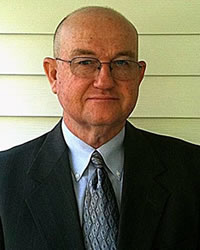
Gary Shepard

Leaning On The Lamb

Leviticus 1:1-9
Gary Shepard April, 19 2015 Audio
0 Comments
Gary Shepard
Gary Shepard April, 19 2015

In Gary Shepard's sermon titled "Leaning On The Lamb," the central theological focus is the sacrificial system outlined in Leviticus 1:1-9, which serves as a foreshadowing of Christ’s atoning work. Shepard emphasizes that the burnt offering is not merely a ritual but a profound representation of individual faith; the worshiper must lay hands on the sacrifice—a sign of personal identification with the lamb, acknowledging one’s own sinfulness and need for atonement. Key Scripture references include Leviticus 1:4, illustrating the necessity of approaching God with the divinely appointed sacrifice, and Ephesians 5:2, which connects the sacrificial system to Christ, described as the Lamb of God. Shepard argues for the significance of this act as an expression of reliance on Christ alone for salvation, underscoring Reformed doctrines such as substitutionary atonement and justification through faith in Christ. The overall message aligns with the primary Reformed assertion that salvation is found solely in the work of Jesus Christ and not in human effort.

Key Quotes

“All true worship of God must be as He has appointed. It must be, as He says, and He does not leave us to our own imaginations.”

“When we come to believe on Christ, we are brought to look at who's dying on that cross and why He's dying.”

“It is to lean everything on. Rest everything in salvation and everything else on Christ.”

“He is our only hope, and He is a good hope, the very good hope of grace.”

Sermon Transcript

Auto-generated transcript • May contain errors

100%
Open your Bibles today to the book of Leviticus. And I'll make it real easy on
you. Genesis, Exodus, Leviticus. Leviticus is the book of the
Levites. And it has instructions to the priests and to the people. But if you remember, the Apostle
Paul tells us that these things were written for our admonition,
for our instruction, those of us upon whom the ends of the
age shall come." And rightly so, because believers in the
Lord Jesus Christ are described in the New Testament as a kingdom
of priests. Kings and priests to God. So these instructions were not
simply to Israel, but they are to us, and they are especially
to those who would believe on the Lord Jesus Christ. Leviticus chapter 1, beginning
in verse 1, And the Lord called unto Moses, and spake unto him
out of the tabernacle of the congregation." You remember that
was that particular tent that God instructed to be built, that
wherever they traveled and camped throughout the wilderness, right
in the middle of the camp was this tent, this worship place
called the tabernacle. Speak unto the children of Israel,
and say unto them, If any man of you bring an offering unto
the Lord, ye shall bring your offering of the cattle, even
of the herd, and of the flock. If his offering be a burnt sacrifice
of the herd, Let him offer a male without blemish. He shall offer
it of his own voluntary will at the door of the tabernacle
of the congregation before the Lord. And he shall put his hand
upon the head of the burnt offering, and it shall be accepted for
him to make atonement for him. And he shall kill the bullock
before the Lord. And the priests, heir and sons,
shall bring the blood and sprinkle the blood round about upon the
altar that is by the door of the tabernacle of the congregation. And he shall flay the burnt offering
and cut it into his pieces. And the sons of Aaron the priests
shall put fire upon the altar and lay the wood in order upon
the fire. And the priests, Aaron's sons,
shall lay the parts, the head and the fat, in the order upon
the wood that is on the fire which is upon the altar. But
his inwards and his legs shall he wash in water, and the priest
shall burn all on the altar to be a burnt sacrifice, an offering
made by fire of a sweet savour unto the Lord." In the New Testament, The Lord's
people are often encouraged to lay hold on eternal life. And we know that this is not
a physical laying hold. It is a laying hold with the
hand of God given Faith. And we have a picture of this
many times in the Old Testament. Many times. But here is one that
I want us to look at this morning, here especially in verse 4. And he shall put his hand, that
is the worshiper, that is, the one who brings the sacrifice. And he shall put his hand upon
the head of the burnt offering, and it shall be accepted for
him to make atonement for him." I say that this is a picture
of God-given faith because we are instructed by the faith that
he gives to his people to lay hold on the Lord Jesus Christ. In some of the sacrifices, the
priests represented the people and they laid their hands on
the offering. But on this burnt offering, which
was a burnt offering for sin, the offerer was to come personally
and individually with this sacrifice, and they were themselves to lay
their hands on the head of the sacrifice. And this goes to show
further that believing is not so much a corporate thing, but
believing is truly a personal and an individual thing. It is not, though, a believing
of whatever we will, It is not a believing if it is not a trusting
of Christ alone, just as this sacrifice and this contact reveals. Because this sacrifice is a picture
of Christ who is called the Lamb of God. Whenever John the Baptist,
who was the forerunner and announcer of the Messiah, whenever he came
forth to announce the Christ who would immediately follow
him, he announced him in this very character, Behold the Lamb
of God which takes away sin. That's what Christ's coming is
all about. And if you look in verse 9, it
says, "...but His inwards and His legs shall He wash in water,
and the priests shall burn all on the altar, to be a burnt sacrifice,
an offering made by fire of a sweet savor unto the Lord." Now hold
that in your thoughts and let me read to you a verse out of
Ephesians 5 where the Apostle Paul tells us this, He says,
"...and walk in love, as Christ also hath loved us, and hath
given Himself for us, an offering and a sacrifice to God for a
sweet-smelling savour." These things that we read about in
Leviticus, They all point to Christ and they say something
about one believing on Christ. And there are several things
that are demonstrated for us as this worshiper came, as they
did time and time again, to the door of the tabernacle And when
they come, God used this to demonstrate for us something about what it
is to believe on Christ. To come to God in that one way
that He has ordained. And the very first thing is so
very important. And that is, it was with the
sacrifice that God commanded. In other words, the offer did
not come with a handful of jewels, or an armful of corn, or whatever
it might be. In order to worship God, the
true and living Jehovah, The worshiper had to come as God
had prescribed and as God had commanded, and that is exactly
the case with you and with me. And we can appoint it as they
could have appointed it as simply being what Moses said, But it
became the command of God directly to them when God told Moses to
tell them, as He did in these first three verses, exactly what
they were to do, exactly what they were to bring, and exactly
how they were to act toward that sacrifice. All true worship of
God must be as He has appointed. It must be, as he says, and he
does not leave us to our own imaginations or the fallacies
of men, but he clearly, in this book, tells us how he must be
approached and worshipped. Moses spoke. And therefore was
the mouthpiece of God simply because he said what God commanded
him to say to the people. And that's what preaching the
gospel is. It is speaking exactly what God
in His Word commands to be preached and spoken concerning the Lord
Jesus Christ. But not only that, not only was
this sacrifice to be what it was, there was this instruction
on what was to be done by the offerer. That's what we find
here in that fourth verse. In other words, God says to Moses,
not only is He to bring this perfect, spotless sacrifice of
either the herd, or the flock, or the cattle, or the sheep, whatever
it is, it's to be a male without blemish, and He's to offer it
willingly at the door of the tabernacle of the congregation. And when he does that, when he
comes with his sacrifice, when he offers it the way he does,
when he lays his hand on the sacrifice, he is in that confessing
some things. He's confessing some things because
the significance is he's confessing his need of a sacrifice. Now, like I said, this isn't
just any offering, and this isn't just any sacrifice. It is that
offering by which he is to receive atonement before God. You see, this offering, this
burnt offering, had to do with sin. Absolutely had to do with
sin. And so, when he came with his
offering, when he came and offered it before God, when he came and
put his hands on that offering, on the head of that sacrifice,
he was in doing so, confessing his need of a Savior, confessing
his very sinnerhood, and that this is exactly what was required
of God for forgiveness of his sin. So what does that mean? That means that those who truly
believe on Christ. What is Christ? How is He described
in this book? He is described and set forth
in this book as the Savior of sinners. Thou shalt call His
name Jesus. For He shall save His people
from their sins." Of all that you and I need to have done for
us, and we are by our own murmuring and complaining so often of people
in need of a lot of things, but the one thing and really the
only thing that we really need is the Savior. So when we're brought to believe
on Christ, when we're brought past all the phony religious
stuff that goes on in this world, when we're brought out of our
old professions of faith and our old experiences and all that,
and we come and cast ourselves before the Lord Jesus Christ
and own Him to be the only Savior, we're confessing that we're sinners. A sinner is the only thing that
needs a sacrifice. A sinner is the only thing that
needs a Savior. And those who need a sacrifice,
and therefore those who look to Jesus Christ alone, the Savior
of sinners, in doing so, they confess that they are sinners. But not only that. It is to confess
also that death is the just due for our sins. Now, not only does
God tell us that the soul that sinneth shall surely die, not
only does He tell us that the wages of sin are death, The truth
of the matter is, when we come as this offeror did to the Lord
Jesus Christ, we are confessing not only that that is the absolute
truth, but that it is the just way. You see, we don't do things
that we don't think are really just when they pertain to us. But here is this worshipper who
comes before God, comes to the door of the tabernacle, comes
with his sacrifice, which is a sacrifice for sin, and then
the Scripture says that he is to take this, and this sacrifice
is to die on his behalf. Let me tell you how bad a sinner
we are. Somebody says, I get tired of
hearing how bad of sinners we are. Well, the only way you'll
ever know how much of a Savior Christ is, is when He brings
you to find out what a sinner you are. And you and I, we can
so look down at others and imagine how weak and how pitiful they
are, and how vile they are, and how corrupt they are, and how
sinful that they are. And all that says is, we don't
really know who we are. And if the Lord were to open
up our black hearts, If he were to spread like a movie on a screen
the thoughts that went on in the mind of every person in this
building today on a screen and show it for every eye to see,
everyone would shriek back in horror. We like to cover it up. We like
to imagine a righteousness. We think that we are good people
even though God tells us there is none good, no, not one. and rather are brought to the
Lord Jesus Christ, we are brought and we confess that His death,
His sacrifice, the laying down of His life is the only possible
way to make atonement for our sins before God Almighty, and
that His doing so is the only just way. You see, we consent and confess
that God is just to punish our sins. And not only that, but
when we look to Christ and trust Him alone, we are also confessing
that this is the principle by which God deals with men and
women who are sinners, and that is a life for a life. We're saying this is the one
way of redemption. This is the one way of salvation. And Paul, he confessed that,
and all believers confess this when they find out who they really
are. He said, if we can be saved by
a principle of doing, then Christ died in vain. If there was any other way, if
there was any other way whereby you and I might be saved and
delivered from our sins. I'm talking about before God. I'm talking about before His
justice. I'm not talking about this funny
feeling, emotional view of salvation. I'm talking about how we really
are before God, how He really is. If there was any other way,
do you think He'd have sent His Son, that He'd become flesh,
become a man, and come to this earth in order to die? If you want to find out, if you
ever find out what kind of real sinner you are, if you ever have
your mouth shut before God and you quit bragging and boasting
on yourself, it will be because He brings you to look at who's
dying on that cross and why He's dying. When that offeror laid
his hands on the head of that sacrifice, He was identifying
with the victim. He was identifying with the substitute
in His place. He was identifying with the just
way God saves sinners. He was identifying with redemption
by the blood. He was identifying with the one
way that God can be just and justify a sinner. The one way
He can deal with our sins, which is to punish them. And it's to confess that what
the innocent sacrifice suffers is what we really deserve. That's
what we deserve. We don't deserve good. We don't
deserve blessing. I hear people all the time, somebody
has something to happen to them, somebody else says, well, they
didn't deserve that. Or, I didn't deserve that. No,
what you deserved was far, far worse. Separation from God. And it is to confess Christ crucified. It's to identify with what Paul
called the offense of the cross. What's the offense of the cross?
That you and I are such vile sinners. that the only way we
could be saved is for God manifest in the flesh to die in our place. To suffer what we were to suffer. To suffer the just for the unjust. And Paul writes in 1 Corinthians
18, and he says, the preaching of
the cross, that is the preaching of a crucified Christ, The preaching
of salvation through a death, through blood. He said it's foolishness
to them that are perishing. Just foolishness to those that
perish. But to those that are being saved, it is the power
of God. You see, if we ever truly see
the power of God, it will be in Christ and Him crucified."
You see, when that offerer brought that sacrifice, whether it was
a bull or a lamb, whatever it was, the burnt offering, and
there were various burnt offerings of like the cattle or the flock
or the birds, depending on what a person's financial Ability
was so that everybody had to come with a sacrifice, irregardless,
and they were without excuse. And it says he had to take him
and kill him. Can you imagine this squeamish
generation in which we live? This animal crazy generation
in which we live? This unnatural affection toward
that which has no soul or life, generation in which we live,
can you imagine being commanded by God to take that animal and
kill it? That's what He was commanded.
Because that's the only way to make atonement. And then when
He came, And he was as commanded to lay his hands on the head
of that bull or that lamb or whatever it was. When he did
that, it was to believe. It was to believe what God says
about the real transference of his sin. He's going to lay his hands on
the head of that lamb. And he does in a picture what
God tells us plainly again and again and again in Scripture.
He does believe what God says that he has done in transferring
the guilt and the responsibility of the sins of the worshiper
to the sacrifice. All the responsibility. Because
you see, faith is believing that Christ, when He hung on that
cross, died for me in my place. And that the Lord had transferred
all responsibility for my sin, all the burden of my penalty
to Him. That's what we find. Isaiah records
it in Isaiah 53 when he says this, All we like sheep have
gone astray, we have turned every one to his own way, and the Lord
hath laid on him the iniquity of us all. Let me tell you what that means.
more generally in the Hebrew. It means the Lord has made to
meet on His head all our sins. Blessed is the man to whom the
Lord will not impute sin. That means to reckon or to charge. Blessed is that man, David says,
Abraham says, Paul says, blessed is that person that God will
not charge with their sins. Well, how in the world can He
be just then? He's just because He has transferred
them or imputed them to the Savior of sinners. He has laid them all on His head. You know, we speak of things
being on our heads. What does that mean? It means
our responsibility. It's on us. But all the sins
of all Christ's people for all times, whether they're considered
big, little, or in between, every one of them, was laid on the
head of the Lord Jesus Christ. Now let me tell you something. There's only one way that you
can ever truly, completely, and to the peace of your soul, believe
that all your sins were actually transferred and laid on Christ. That's when God enables you to
believe. To believe what He has said. To believe on the Lord Jesus
Christ. If I believe on Christ, I have
to believe what God says in the matter of my sin that they were
all transferred to the Lord Jesus Christ. You do understand what transfers
means. It means that which was on one
is carried and moved over to another. In the bookkeeping world,
it means that which was moved from the loss column over to
the profit column. It means that which was moved
from the liability column to the asset column. When the Lord
Jesus Christ died on that cross and suffered the agony of that
separation, crying out, my God, my God, why hast Thou forsaken
me? It was because all the sins of
His people were charged to Him, counted to Him, His responsibility,
and He's dying there as their substitute. For He hath made
Him to be sin for us who knew no sin, that we might be made
the righteousness of God in Him. Now let me ask you this, if that
didn't really happen for somebody, then why is Christ dying on that
cross? Why is God's justice putting
Him to death on that cross? He died for the sins of some
sinners from among Adam's race. And they will every one be made
manifest. They will enjoy the blessings
of His grace to them. Thrill at the very mention of
salvation in Christ alone by His death, that all their sins,
past, present and future, are put away by the sacrifice of
Himself. My friend, if that doesn't delight
your soul, you neither know who you are, or who God is, or most
especially what Christ is doing on the cross. You see, and those who trust
Christ agree on this principle. Just like when that worshipper
laid his hands on the head of that offering, that victim that
was about to be slain, That offerer was saying, I agree. Thankfully and mercifully, I
agree in this principle of God dealing with me through another
one. I agree on this principle of
substitution. He's made a curse for us. That
He bore our sins in His own body on the tree. That He is the one
sacrifice. forever by which all his people
are perfected. And it was also to confess faith
in his acceptance with God through this sacrifice. If he didn't
believe, and I'm sure that there were many who went through the
ritual who did not believe, but the believer, That Old Testament
saint, when he went to that door with that sacrifice and did this, he was believing that God accepted
him through this because God said that He would. It is wonderful. It is what we
are commanded to do to trust God and believe God in what He
has said. That's not presumption. As a matter of fact, to not do
so is unbelief. He hath made us accepted in the
Beloved. Now, I may not be acceptable
to you, and you may not be acceptable to me. But everybody that trusts
the Lord Jesus Christ and His sacrifice and death, they're
all accepted before God. In the Beloved, accepted am I? The hymn says. And most of the
Jewish writers, they said concerning this, they said that this was
to put both hands on the head. Both hands. And by doing so, that offer expressed
total dependence. He didn't have anything in his
hand. He didn't do his hands in any particular way. He just
put his hands on the head of the sacrifice. And in doing so,
confessed himself a sinner, confessed that this was the one way God
saves sinners, confessed a full confidence in the sacrifice that
God had ordained and prescribed, and confessed that he was accepted
before God in Him. That's what Paul said, Ephesians
1, He hath made us accepted. You see, salvation is not about
you and me accepting something. Everybody hears it time and time
again, except Jesus as your personal Savior. You're not the one who
does the accepting. God has to do the accepting.
And it says that He has made His people accepted in the blood. not showed them a way by which
they can make themselves acceptable, He has made them accepted in
the Beloved. We sing that hymn sometimes.
Nothing in my hand I bring, simply to His cross I cling. And this act was a confession
of the worshipper's inability to save himself. Have you been
brought to that yet? Are you still trying to do this?
Or worst of all, looking back on what you've done? You see,
you can't have one hand on the head of the sacrifice and another
hand on something you've done. No, the offerer came both hands,
empty hands, and confessed his inability to save himself. Nothing that God would accept,
nothing that he could do, only through this sacrifice could atonement be made. And
it was to confess that this one sacrifice covered all his sins. You hear people talking about
confessing all their sins. You and I don't even know all
our sins. We haven't even begun to think
about all our sins. And unless God helps us, we'll
never realize that the truth is not only everything we do
or think or say is sin, but we are sin itself. You're going
to confess your sins, but you better get started, because it
will take an eternity. And you still want to confess
them because you don't even know them all. Because this involves
not only the sins of commission, the sins of omission. It's not
just simply what I did, what I didn't do I should have done.
I didn't like to go down that path. But this man, after he had offered
one sacrifice for sins forever, sat down on the right hand of
God, because it was finished. The old hymn writer said, My
sin, not in part, but the whole, is nailed to His cross, and I
bear it no more. Praise the Lord, praise the Lord,
O my soul. But there's something else in this. And there's something else in
that fourth verse that we find in the putting the hands on the
head of the sacrifice. It was not only putting both
his hands on the head of the sacrifice, it was not just simply a touching. He didn't do like this, you know,
put one finger of each finger Touch the head of the sacrifice.
He didn't even just take both hands and lay it on him. Because the word put here, the
phrase, and he shall put his hand upon the head of the burnt
offering, it means to lean one's weight on it. It's more than
just a touch. It's a rather strong word that
means, to lean one's weight upon. Let me give you some of the definitions
or the usages of this word, not only in the Bible, but also in
Strong's concordance. Strong defines the word as, to
prop. You know what that is, don't
you? to be propped up by. Somebody said, well, you know,
that's all religion is to these people. It's just a prop. No,
Christ is the prop. To prop. It means to lean upon
or to take hold of. or to bear up, or to establish,
or to lie hard, or to rest self on, or to stay, or to sustain. It's always a strong, forceful,
active Word. Let me read you some of the verses
in the Old Testament where it's used. but translated differently,
by other words. Judges 16, And Samson took hold
of the two middle pillars upon which the house stood, and on
which it was borne up. That was the temple that Samson
pulled down on himself. And that same word is used to
describe those pillars. It says, "...by which that great
temple was borne up, on the one with his right hand, on the other
on his left." All the weight, all the support, all the foundation
of that temple were those two pillars. It was borne up or carried
by those two pillars. 2 Kings 18. Now behold, thou trustest upon
the staff of this bruised reed, even upon Egypt, on which, if
a man lean..." He's talking about reliance on the arm of the flesh. And He said, you trust in Pharaoh,
you trust in Egypt, and it will be like if a man leans on a reed
and it goes through his hand. It means to lean upon. 2 Chronicles 32, verse 8, "...with
him is an arm of flesh, but with us is the Lord our God to help
us and to fight our battles. And the people rested," that
same word, "...and the people rested themselves upon the words
of Hezekiah king of Judah." They were propped up. They were supported. to the degree they were able
to rest from their fears and their cares because of what Hezekiah
had said. Psalm 3 verse 5, I laid me down
and slept, I awaked, for the Lord sustained me. Kept me from dying in my sleep.
He sustained me. Same word. Psalm 37, For the
arms of the wicked shall be broken, but the Lord upholdeth the righteous. Same word. Psalm 88, Thy wrath
lieth hard against me. Lieth hard. Psalm 111, they stand fast forever
and ever, and are done in truth and righteousness. There's that
word, stand fast. Psalm 112, his heart is established. The more I read of these words,
the better I liked it. Supported, upheld, rested, leaned
on. Established. Sustained. Come to find out it was in one
of my very favorite verses in the Old Testament. Isaiah 26
and verse 3. Thou wilt keep him in perfect
peace, whose mind is stayed on thee, because he trusteth in
thee. You see, this is a picture of
what faith and believing on Christ is. It's to lean everything on. Rest everything in salvation
and everything else on Christ. He props me up. He holds us. He sustains us. And we rest all. in Him and what He has done for
sinners such as we are. This is what true God-given faith
does. And this is what it is to believe
on Christ crucified. On His substitutionary work,
it is to lean wholly and rely completely and entirely on Him. Somebody says, well, I believe
in Christ. I doubt it. When you talk about
your works and all this kind of stuff, your decisions and
your experiences, no. This is what it is. Both hands,
empty hands, laid hold of Christ and only Christ. It's like old
Jacob. by the brook that night, when
he wrestled with that One who is really the Angel of God, Christ. And he said, I will not let you
go until you bless me. It's to put all the weight on
Him. On only Him. And not only in
the matter of our souls and our sins, but at all times. All the time. Just one hope,
one support, one Savior. How many times have we sung this
song? We sung it just last Sunday,
I believe. Or maybe it was Wednesday night.
The hymn writer said, My hope is built on nothing less than
Jesus' blood and righteousness. I dare not trust the sweetest
frame, but wholly lean on Jesus' name." And this is what we confess in
baptism. And this is what we confess when
we take the Lord's table. In baptism, we identify with
His death, burial, and resurrection. When we have the Lord's table,
He said, this is my body, this is my blood. Trusting, confessing
the same thing. And this is what we confess when
we bear witness to the gospel. Paul said, we preach Christ crucified. Plus nothing. As everything. and all. The Bride. You know, the Song
of Solomon is about Christ the Bridegroom and His Bride. And
the Bride is described in somewhat romantic terms throughout that
book. But here's one description in
Song of Solomon verse 5 of chapter 8. Who is this? that cometh up
from the wilderness, leaning on her beloved. I raised thee
up under the apple tree, there thy mother brought thee forth,
there she brought thee forth that bare thee." He's talking
about his bride. Who is this? Coming up out of
the wilderness. She's been delivered up out of
the wilderness. How? By that beloved. What's she doing?
She's leaning on Him. What a picture. To this same
people, in the book of Deuteronomy, Moses said, The eternal God is
thy refuge, and underneath thee are the everlasting arms. That's why this little silly
poem about The two footprints on the sandy beach. There's two
footprints, and then all of a sudden the man sees in his dream there's
only one set of footprints, and so therefore he asks the Lord,
why is there just one set of footprints? And supposedly God
says it's because that's when I carried you. And God's salvation
is just one set of prints. Because He carries us from beginning
to end all the way. We lean hard on Him all the way. What a fellowship! What a joy
divine! Leaning on the everlasting arm. Leaning on the Lamb. That's what
I call this. Leaning on the Lamb. All the
weight of all my sins. All my hope of salvation. All my prospect for eternity. is all of Christ. Someone says, well, you've got
all your eggs in one basket. No. I've got all my confidence
in one Savior. The One who alone is able to
save and save to the uttermost. Father, this day we give praise
to You and thanks for Your Son, our Savior, the Lord Jesus Christ. He is our only hope, and He is
a good hope, the very good hope of grace. We thank you for these
plain pictures, these illustrations that you gave us even before
He came into this world. The one way atonement is made,
the one way a sinner is accepted by God, the one way that we can
worship you, which is by that sacrifice that you've appointed,
that one sacrifice for sins forever, which Christ paid and made when
He hung on the cross. Were we not so full of pride
and self-righteousness, we would delight in such a Savior. If we did not think ourselves
not in need of a Savior, we'd run to this Savior. Lay hold
of Him. Lean entirely upon Him. Lie hard against Him. Lord, I
pray You'd help us to do so. To wholly lean on Jesus' name. For we ask all things in Him. Amen.
Gary Shepard
About Gary Shepard
Gary Shepard is teacher and pastor of Sovereign Grace Baptist Church in Jacksonville, North Carolina.

Comments

0 / 2000 characters
Comments are moderated before appearing.

Be the first to comment!

Joshua

Joshua

Shall we play a game? Ask me about articles, sermons, or theology from our library. I can also help you navigate the site.