Bootstrap
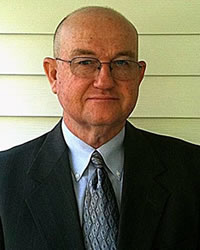
Gary Shepard

The Called

Romans 8:28
Gary Shepard September, 14 2014 Audio
0 Comments
Gary Shepard
Gary Shepard September, 14 2014

Sermon Transcript

Auto-generated transcript • May contain errors

100%
If you would open your Bibles
this morning to the book of Romans. Romans chapter 8. I'm going to read just one verse. That is the 28th verse. And we know that all things work
together for good to them that love God, to them who are the
called according to His purpose. This verse of Scripture may well
be one of the most misquoted verses in the Bible. People say, in order to console
themselves and to console others, that the Bible says, all things
work for good. But such individuals, they're
not only misquoting the verse, they're misapplying the verse. It's almost like they're reading
somebody else's mail and applying the message to themselves. All things do not work together
for good for all people." Now you can just mark that down. They absolutely do not. But in this book, in the Bible,
we are taught that some names, the names of God's people, they
were written in the Lamb's Book of Life. before the world began,
before they existed physically, before they did anything, whether
it be good or evil. And these people who are so named,
they are distinguished in the Bible. He did not write their
names literally in the Bible. written the name Gary Shepherd
in the Bible, I would have to assume that it was the Gary Shepherd
that was once a part of ABC News or the one who managed a local
grocery store. But they are distinguished in
the Bible by descriptive words, by terms. They're called the
body of Christ, the church of the Lord Jesus Christ, the people
of God, the elect of God. And one way that they are described
is this. They're described as the called. The called. If you look back
at our verse, it says, Paul including himself, and we know that all
things work together for good to them that love God, to them
who are the called according to His purpose. work together for good for the
called." And when Paul begins this epistle to the Romans, he
says in his description of those he writes to, he says in chapter
1, "...among whom are ye also the called of Jesus Christ."
And when he uses this descriptive name and title, if you will,
he joins it inseparably to his own sovereignty. In other words, they are the
called according to his purpose. They are called according to
His will. They are the call because of
His desire, His decree, and His predetermined, predestined purpose. If you look over in chapter 9,
verse 11, when he speaks of his sovereign
grace as was demonstrated to these two twin boys. Verse 11
says, "...for the children, being not yet born, neither having
done any good or evil, that the purpose of God, according to
election, might stand, not of works, but of Him that calleth."
It's according to His purpose, His electing grace, Him being
the one that calls. And then if you look over in
chapter 9 at verse 23, He continues, and that he might
make known the riches of his glory on the vessels of mercy
which he had aforeprepared unto glory, even us whom he hath called,
not of the Jews only, but also of the Gentiles. As he saith also in Osi, I will
call them my people, which were not my people, and her beloved,
which was not beloved. And it shall come to pass, that
in the place where it was said unto them, You are not my people,
There shall they be called the children of the living God."
Now, this word called, as we find it in these verses of Scripture,
they are the call, and that word can mean, first of all, named. They are the named of Jesus Christ. Named by Jesus Christ. But the named of Jesus Christ. And it's for this reason that
our Lord said to those early disciples, that they could rejoice
and were to rejoice not because demons were subject to them,
but because their names were written in heaven. That word can mean appointed. They are the appointed of Jesus
Christ. And Strong gives this definition
as one of the definitions. He says it means divinely selected. They're the called of Jesus Christ. As a matter of fact, if you look
back in Romans chapter 1, It tells us in that sixth verse,
he says, "...among whom are ye also the called of Jesus Christ,
to all that be in Rome beloved of God, called saints." You see
those two words there that are italicized, they're added by
the translators. But these he describes here were
not simply called to be saints, they are called saints, sanctified
ones. Called saints. Grace. to you and peace from God our
Father and the Lord Jesus Christ." Divinely selected, appointed
saints, called saints. And then also this word called
has with it the definition of invited. but not invited in the
sense that you and I think of invitation, or as is used in
religion, but more something like this, summoned. You see, an invitation really
has to do with who does the inviting. If the one who sits on the throne
If the One who rules over all things, if the One who holds
your soul in His hand, if He issues an invitation to you,
it's really a summons. They are effectually called. Not only are they the called
of Jesus Christ, but they are effectually summoned, brought
to the Lord Jesus Christ. And that by the irresistible
grace of God. Some people don't like that term,
irresistible grace. But we're not saying that men
and women, these call, we're not saying that they do not by
nature in themselves not resist Him like every other one they
do. But they don't do it successfully. because they're effectually,
irresistibly called. It says that no man can come
to the Father except he be drawn. No man comes to the Son except
he be drawn. And that's not a word that simply
means Invited in a natural sense, it means actually brought. Like that knife, that sword that
Peter drew out, same word, and cut off the servant of the high
priest, or as it's used, when the net was drawn full of fishes. That sword didn't jump out on
its own. And that net did not come in
on its own, they were brought, they were drawn. And like Christ
says of His sheep, who were not immediately standing before Him
in that hour, He said, of the sheep have I that are not of
this foe, not necessarily of this Jewish foe, them also I
must bring. I must bring. And then he says it like this,
he says, "...all these that the Father giveth me, they shall
come to me. And him that comes to me I will
in no wise cast out." They will be, God says, willing in the
day of His power. They're the call. And then this
word also has this as a definition of it. It also means a vocation
or service. You look back in Romans 1 there
in that first verse, when the apostle is identifying himself,
he says, Paul called an apostle. He made great effort to let everyone
he preached to, taught, to make them know that he did not take
this place on himself. He did not assume this office
on his own. He's an apostle because he's
called an apostle by God. And this not only applies to
an apostle, but it applies to every one of the Lord's sheep. Turn over to Hebrews chapter
3, because here in Hebrews chapter
3, listen to the apostle when he says in this first verse,
Wherefore, holy brethren, partakers of the heavenly calling, consider
the Apostle and High Priest of our profession, Christ Jesus."
Now you learn three things about all true believers there. Number
one is that they are all holy. They are holy in the Lord Jesus
Christ. Holiness, in my mind, does not
admit to degrees. Either one is holy, or they are
not holy. God is holy, and all it would
take for Him to be unholy is the slightest blemish, fault,
or error. And they are holy. Why? Because they're holy in Christ.
They're holy in Him. And then the second thing is
that they are all brethren. They're a part of a family. They
have God as their Father. The Holy Spirit has come and
indwelt their heart, and from that Spirit's Word, they now
cry, Abba, Father. They view Him as the righteous
Father. They are found in Christ, in
union with Him, as that One that they are joint heirs with. They are all brethren. But then
also it tells us the third thing, and that is, all true believers
are partakers of the heavenly calling. They are everyone partakers
of. They enjoy a fellowship in this
heavenly calling with the Father and the Son and the Spirit and
all the called. They are, as Paul writes in 1
Corinthians chapter 1, those pages in which he has such rebuke
and reproof and correction, but he doesn't do it in order to
devaluate or change the status that they have in Christ. It says he addresses them as
those who are, again, not called to be saints. but called saints,
holy ones, separated ones. So those who are the called of
Jesus Christ, they were sinners chosen by the Father in this
eternal and unconditional election, or divine appointing and selection,
and redeemed by the precious blood of Christ and called to
Christ. And all the elect in these senses
are the called and shall be called, called from death to life and
from unbelief to faith, called to repentance, and that's why
they're the called. Every definition, as is often
the case, in words used by the Holy Spirit, every definition
can apply to these who are saved by the grace of God. And they either have been, or
they shall be, every one, internally and effectually called by the
Spirit of God, and be as those Thessalonian saints the called."
The called. If you turn over to 2 Thessalonians, We find out exactly how this calling is made manifest. If we are among this group that
I'm describing from Scripture this morning, if we are the called,
if we have been divinely appointed, divinely selected, and if we
surely shall be effectually and mightily called, how will this
be made manifest? You see, sometimes men and women,
preachers especially I have to say, will take one aspect of
a biblical truth and separate it to the obviously other part
of that biblical truth, that same truth. But if it is true that there
are these called, as he describes them, and they are divinely selected
and appointed by God to be the objects of His grace, and if
they will be effectually and mightily brought to Him, how
will God make this manifest? Look here in 2 Thessalonians
chapter 2. And when you read chapter 2,
you have to read chapter 1 and see the very black background
that this grace of God is set against. He talks about some
who are in their own rebellion and defiance against God and
His truth, they are given over to this reprobate mind, And they
follow exactly what they by nature want to, and believe what they
want to believe, and receive strong delusion from God. But then the apostle in this
letter, it's like he spins on his heel, and he goes out of
that dark background to the light, of the truth and reality of God
saving His people. And so he says in verse 13 of
chapter 2, But we are bound to give thanks always to God for
you, brethren beloved of the Lord, because God hath from the
beginning chosen you to salvation through sanctification of the
Spirit and belief of the truth." You see, what he was saying concerning
the great mass of humanity and their rejection of Christ and
their reprobation by God, What he says about that, he doesn't
change that, but he states also the truth of God's grace and
purpose in Christ. But look at verse 14. He says,
"...whereunto." Now I have a feeling that you and I, not having lived
in 1611, we don't really maybe understand what a word like whereunto
means in the King James English. But whereunto simply connects
what is about to be said with what has already been said concerning
these beloved and chosen of God. And he says, whereunto He called
you by our gospel to the obtaining of the glory of our Lord Jesus
Christ. Now you can just sit around if
you want to, and you can play that soul-damning game that the
devil often leaves people to play to the very end, thinking
about as to whether or not, wondering as to whether or not you're one
of the called or not. Or saying as some say, well,
if I'm going to be saved, I'm going to be saved. If I'm going
to be called, I'm going to be called. But you better pay heed
to this next statement. Paul said, whereunto He called
you. Now, he's not just talking about
Paul's preaching here, but he's certainly not separating himself
from it. He says, whereunto He called
you. by our gospel. You mean, Paul, you've got one
gospel and somebody else has got another gospel, maybe Peter's
got one, and John's got... No. He's putting himself in that
same group of the call, and all of them are called by God through
His gospel. Why? Number one, because that's
what he said. If he's in charge, if he's the
one doing the saving, and this is how he says he does it, you
can speculate as to how he might do it all you want to, but the
truth is how he says it's going to be done. Why the gospel? Because the one He calls His
people to is set forth in the true gospel. Paul in Romans 10,
he says, how can you call upon Him? And I believe there is more
than simply stating or pleading to Him. It has to do with actually
worshipping Him in the only way He can be, just like Abraham
and others when they set up that altar and called upon the name
of the Lord. But he said, how can you call
upon Him of whom you've not heard." Brother Mahan used to say, you
can't call upon Him of whom you've not heard or learned any more
than you can come back from where you've never been. He called by our gospel, Paul
said. And one day I found out myself
that my gospel was not our gospel as Paul described it. Because
our gospel has altogether to do with God, with what He does. Man's gospel has to do with what
men command men to do in order to be saved. He said, He called
you by our gospel. And I used to come to this book
and I could read in all the epistles of Paul, just say Paul alone.
And I could read chapter 9 in Romans, and I can read other
places where it was obviously emphasizing God's sovereign in
salvation and Christ having finished the work of salvation and being
all the righteousness that a sinner needs to enter into glory. I
wasn't in agreement with that. But thank God when He called
me. became my gospel. And what was
to be good news to his people became good news to me. And when
I went to read again what Paul and others of the apostles had
written in the Word of God by the Spirit of God, the things
that my heart was once at enmity against, I loved them. And you know what? I still love
them. The more I can read in this book, the more I can find
out about what He did and how He is, the happier I am. He called them. And not only
that, but when Paul wrote the first letter to these people
in Thessalonica, turn back to 1 Thessalonians chapter 1, Listen to what he says in the
first verses, verse 4 of chapter 1. He said,
"...knowing, brethren beloved, your election of God, knowing
that you are among the called of God." Now how do you know
that, Paul? He says, "...for our gospel,
came not unto you in word only." Now, it's obvious that it did
come to them in word. You see, the gospel, which is
the means by which God accomplishes His purpose, His calling, these
that are the called, it has a lot of reasons, a lot of purposes. And the number one purpose is
that it glorifies God. We preach it because He commands
it. We preach it because it's the
truth. We preach it to all men and women
because He commands us to. But we know also that it's in
the means that He gets glory as well as in the end. So that
when we preach the gospel, And it is sounded out as he commands
to everyone that we have opportunity to preach it to. He tells us
that that word, that gospel, that truth of Christ, it is a
stench in the nostrils of some. It's a savor of death unto death. I think sometimes one of the
things that makes me tremble the most is I wonder how many
times and to how many people the message that God had called
me to preach was a saber of death unto death to them. We don't
see it accomplish all that we want, but it accomplishes the
first goal. He said that gospel of Christ
which will be used of God to call out all of His people. It is, first of all, a savor
of life unto life to them, but in the preaching of it, it's
a sweet savor or fragrance to God. Brother Allen, that's the
liberating thing that we learn about preaching the gospel, and
that is we are first of all preaching for God, for His glory. It doesn't matter if there's
two or three or five or five thousand. We are first proclaiming
that which gives all glory and honor to Him. So Paul says, "...for
our gospel came not to you in word only, but also in power,
or authority, and in the Holy Ghost, and in much assurance,
as ye know what manner of men we were among you for your sake."
and ye became followers of us and of the Lord, having received
the word with much affliction and with joy of the Holy Ghost."
Paul said, when you first heard the word, it didn't come to you
as just a good speech that someone had made. It came to you, and
when the light of God's truth began to shine in your hearts
and minds, it brought much affliction. I lay there on my hospital bed
this week after the surgery and how everything came about so
fast, and I got to thinking about pain. And I thought, you know,
pain is really a wonderful thing. in that it is an alarm, it is
a warning that something is not right. That's how all of my experience
of the week began. It began with pain. When the
Gospel first comes to us, as it did these Thessalonian believers,
it was with much affliction. We have to be wounded before
we can be healed. We have to be convicted before
we're converted. We have to be brought down before
we can be lifted up. We have to know sin as it is
in us and as it is before God, before we can know and appreciate
and call out to the Savior of sinners. Salvation doesn't mean anything
to those who don't think they need to be saved. Oh, but when
this gospel comes to these called, when they're called by this gospel,
Paul says, the Word came to you, not in word only, but also in
power and in the Holy Ghost, that is, the Holy Spirit taking
the Word. I got a text from a preacher
brother in Michigan. And he asked me if I was planning
on preaching today, and I told him I was going to try to. He said, remember, the power
is in the Word. It won't be how you speak it,
however loud or soft or emphatic. And I wrote him a text back,
and I told him how I wish that I believed that that was true
more even knowing that God knows it's true. I wish I knew and
was more convinced in my heart that that is the reality, that
it is the Word, it is the truth, it is the Gospel of the Lord
Jesus Christ that He uses, not my ability, not my craftiness,
not my oratory, but it's the Word. I've often thought that
the Apostle Paul, if you and I had heard him, we might be
a tad disappointed. Obviously he had some disfiguring
affliction with his eyes or something like that, so that he did not
present a pleasant face to look at. But what he said, by the
enabling of God's Spirit, was what the Spirit of God used to
call these Thessalonians. And not only, he says, you became
followers of us and of the Lord, so much for those who said, I'll
never be a man follower. You better be a follower of those
who follow the Lord. He says, having received the Word
in much affliction and with joy, of the Holy Ghost." You see,
that's the only joy there is. When Paul said, the Kingdom of
God is not meat or drink, but it's righteousness, and then
the next thing he says, and peace and joy in the Holy Ghost, and
there's no reversal of that order without righteousness, There
is no peace. And without peace as a result
of that righteousness of Christ being imputed to us, without
that, there is no joy. But when the Spirit of God takes
the truth of Christ and reveals it to us, calls us mightily by
His Spirit, brings us to this truth, brings us to Him who is
the truth, we can say with David, blessed is the man that God chooses
and calls us to approach unto Him. And Paul, speaking of this
heavenly holy calling, when he writes to Timothy, he includes
all believers and his own self And he says this, he says, God
hath saved us and called us with an holy calling, not according
to our works, but according to His own purpose and grace which
was given us in Christ Jesus before the world began. These were the called of Jesus
Christ in old eternity. They are the called of Jesus
Christ in time. And they'll be the called of
Jesus Christ for worlds without end. He says, "...but it is now made
manifest by the appearing of our Savior Jesus Christ, who
hath abolished death and hath brought life and immortality
to light through the gospel." Why won't men and women hear
the gospel? Why will people gather to hear
what they are to do or how good they are? rather than hear the
gospel by which he calls his people. As a matter of fact,
Paul wrote to the Galatians. He said, but when it pleased
God, who separated me from my mother's womb, and called me
by His grace. What did he do? When it pleased
God, who separated Him or set Him apart from His mother's womb
and called Him by His grace, what was the result of that? He said, He revealed His Son
in me. He didn't just switch from being
a Jew to being a hyper-Jew or a better Jew or this or that
other title. God called me by His grace, and
He revealed His Son in me." In Philippians 3, he refers to this
calling as the high calling of God. In Romans 11, it's the calling
of God. In several places, it's your
calling, brethren, or the heavenly calling. And he says, those that
are the called, are those that love God. Well, why do they love
God? Because when He calls us, He
reveals to us how He is. And He reveals to us what it
is that He has done in saving our souls. And what He does is reveal to
us Exactly what we are. And when you find out who He
is, and you find out who you are, and you find out what He
in sovereign mercy and grace has done for you, the Spirit
of God sheds that love abroad in our hearts. And we love Him. We love Him because He first
loved And we are called, according
to the apostle Peter, we are called from darkness to light. That is, just as in creation,
God speaks that command to let there be light, and those who
sit in darkness, they see a great light. He brings us from the
ignorance, the blindness, the prejudice of our fallen hearts
and minds, We're totally in the dark as to who God is, or what
we are, or who Christ is, and most especially, it seems, as
to what He's done. We have no understanding as to
what sin is. No understanding of the Scriptures,
or the Gospel, or salvation. No knowledge of God's purpose. No knowledge of His providential
workings in the world. No knowledge of what God is doing. But when He calls us, we find
out what He's made us by grace. He calls us to Christ. He calls us to forsake all and
to follow Him. And then, by God's grace, we
know some things. That's what John said. He said,
but you have an unction from the Holy One, and you know all
things. And among those things we know, all things are of God. But as our verse says, we know. We know that all things work
together for good. Why? Because the One who called
us works them for good. They're not at any given moment
good to us, but they're all worked together for good, together for
good, to us, for us, and for His glory." We know that
when He calls us. Old Jacob, the conniver, supplanter,
foolish in so many ways, trickster, the one that God uses so many
times Describe us and His relationship to us. He's the God of Jacob. Well, Jacob, after Joseph he
thought was gone, and after one of his sons had been sent, and
after his sons had got into a problem with the man who's in charge
down there in Egypt over all the food, When the only way they
could go back and get more food or get out of the bind that they
were in was they had to bring that other favored son. And old Jacob, he threw up his
hands. He said, all these things are
against me. You don't ever do that, do you? Seems like as I get older, I'm
doing it about every day or every other day. All these things are
against me. What next? What else can go wrong? Nothing has ever gone wrong for
the called. Nothing. When those boys went down to
Egypt with that other son, it turns out that the man in charge
of it all was his son Joseph. The one that those other sons
had betrayed and lied to their father, sold into slavery. And
Joseph says to his brothers, you meant it for evil, but God
meant it for good. So that God used even their evil
for good. And so now Joseph is loaded up
in a cart, taken down to Egypt to live like a king the rest
of his days. His whole family united. His
son Joseph, beloved, exalted. All things were for him. And all things are for us if
we're the called. of Jesus Christ, the called to
Jesus Christ. May He bless us to know and to
rest and to rejoice in these things. Father, this day we give
You thanks and praise and honor and glory that You have made
these things sure to your people, that all of them will be saved,
and all things will work together for them for good because of
our Lord Jesus Christ. Thank you so much. Stir gratitude
in our hearts. Thanksgiving. Praise rather than
murmuring and muttering. For we pray and ask it all in
Christ's name, Amen.
Gary Shepard
About Gary Shepard
Gary Shepard is teacher and pastor of Sovereign Grace Baptist Church in Jacksonville, North Carolina.

Comments

0 / 2000 characters
Comments are moderated before appearing.

Be the first to comment!

Joshua

Joshua

Shall we play a game? Ask me about articles, sermons, or theology from our library. I can also help you navigate the site.