Bootstrap
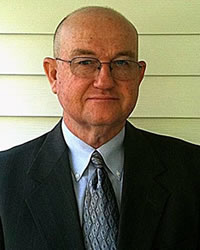
Gary Shepard

A Penny A Day

Matthew 20:1-16
Gary Shepard September, 7 2014 Audio
0 Comments
Gary Shepard
Gary Shepard September, 7 2014

Sermon Transcript

Auto-generated transcript • May contain errors

100%
Turn with me in your Bibles this
morning to the Gospel of Matthew. Matthew chapter 20. I'm going to read to you and
with you those first 16 verses. And I'll tell you the title of
my message right in the beginning. I call it, A Penny a Day. A Penny a Day. For the kingdom of heaven is
like unto a man that is an householder which went out early in the morning
to hire laborers into his vineyard. And when he had agreed with the
laborers for a penny a day, he sent them into his vineyard. And he went out about the third
hour and saw others standing idle in the marketplace. And
he said unto them, Go ye also into the vineyard, and whatsoever
is right I will give you. And they went their way. Again
he went out about the sixth and the ninth hour, and did likewise. And about the eleventh hour he
went out and found others standing idle, and saith unto them, Why
stand ye here all the day idle? They say unto him, Because no
man hath hired us, he saith unto them, Go ye also into the vineyard,
and whatsoever is right, that shall ye receive. So when even
was come, the Lord of the vineyard saith unto his steward, Call
the laborers, and give them their hire, beginning from the last
unto the first. And when they came that were
hired about the eleventh hour, they received every man a penny. But when the first came, they
supposed that they should have received more, and they likewise
received every man a penny. And when they had received it,
they murmured against the good man of the house, saying, These
last have wrought but one hour, and thou hast made them equal
unto us, which have borne the burden and the heat of the day. But he answered one of them and
said, Friend, I do thee no wrong, didst thou not agree with me
for a penny? Take that thine is, and go thy
way, and I will give unto this last, even as unto thee. Is it not lawful for me to do
what I will with mine own? Is thine eye evil, because I
am good? So the last shall be first, and
the first lasts. For many be called, but few chosen."
Now this parable comes from our Lord in response to something
that has just been said by Peter in chapter 19. If you look back in chapter 19,
verse 27, it says, Then answered Peter, and said unto him, Behold,
we have forsaken all, and followed thee. What shall we have therefore? Somebody said a long time ago
that a parable, and that's what these first verses of chapter
20 are, they said a parable is an earthly story with a heavenly
meaning. And when our Lord was asked by
the disciples in chapter 13, Why do you speak to us in parables?"
He says that it was in the fulfillment of something that the prophet
Isaiah had recorded concerning the Lord. But then he said, it's
not given to them to understand these things, but it is given
to you to understand them. Blessed are your ears who hear
these things. Blessed are you who are enabled
of God to understand them. And there is no doubt, and I
surely will never ever know or be able to express myself, all
that is in this parable that our Lord speaks here, But I know
that if you notice in what is said, he talks about the kingdom
of heaven. He begins with the word, for,
showing us that it has something to do with what Peter has just
asked when he said, we've forsaken all and followed you. What will
we have as a result or a reward of that? But our Lord talks about
how the kingdom of heaven is. It is the kingdom of grace which
will become the kingdom of glory. It is a heavenly a spiritual
kingdom that is ruled by the one who is himself the King of
Kings, the one who is described by the psalmist as the King of
Glory, who has already entered back into heaven. And He has
advised us, He has commanded us to seek first the kingdom,
the kingdom of God and His righteousness. The kingdom of God has something
to do with His righteousness. And that's how the Apostle Paul
describes it in Romans chapter 14. He says, "...for the kingdom
of God is not meat and drink." Peter on this occasion, He did
other times, and as the disciples did, and as we do, we tend to
think along these fleshly lines, material lines. But he tells us the kingdom of
God, is not meat and drink. It is not these external things
that men clamor after. He says, but it's righteousness
and peace and joy in the Holy Ghost. And that order is unmistakably
accurate in just how that effect is brought to pass. Righteousness,
which is peace, which results in joy, he says, in the Holy
Ghost. But what he's talking about there
is in that one and that work which the Holy Ghost reveals
and makes known. As Christ told us, He will take
the things of mine and show them unto you. He will reveal His
righteousness and the fact that He made peace
by the blood of His cross, and the result of that in our souls
will be sure and certain joy." Now, if you notice here in this
parable, our Lord in this description covers time. If you read it again,
you'll find out he mentions the early morning, and the third
hour, and the sixth hour, and the ninth hour, all the way to
the eleventh hour. So what is being talked about
here by Christ has to do with all of eternity. has to do with
all of time, all the ages of this world, and certainly every
age of our lives. Past, present, and future. And it is this way because God
does not change. This is the way it was then,
and this is the way it is now. All of time and eternity. And he speaks here concerning
this, all these things going on, they're concerning a vineyard. And that is the way that the
Lord likens His church and people. As a matter of fact, He likens
His people as a vineyard planted by Himself in a wilderness, right
in the midst of a desert, howling wilderness. And that is certainly
the way his church is in this world. Though it is in this world,
being not of this world, in this wilderness, but certainly a God-planted
vineyard. Isaiah chapter 5, he says, Now
will I sing to my beloved a song of my beloved touching his vineyard. It is his church. They are his
people. He says, My well-beloved hath
a vineyard in a very fruitful hill. And you notice here that
it is the householder, or the good man of the house, who is
the initiator of all this. Not only is he the one who possesses
all things, and most especially this vineyard, But He is the
one who, here in this text, in our parable, as Christ Himself
is, He is the one who initiates everything. He's the one who
came to seek and to save those that were lost. In everything
that has to do with this vineyard, as is the case in everything
else, in the beginning, God does all these things. In creation,
you go back to Genesis 1, it says, in the beginning, God created. And then when John, in his gospel,
begins that gospel talking about the new creation, talking about
salvation, he begins in the same place, always in the beginning,
was the Word. And so it's the householder here
who initiates all this, just as it is God who is the first
cause of salvation and the first cause of everything pertaining
the grace of God to His people. And if you notice also, you'll
find the state of those that He calls to this vineyard and
to this world. They are, every one of them,
standing idle. They are not seeking to be a
part of this vineyard. They are not seeking to know
this householder. They are not seeking these wages
that are here mentioned. They are all standing idle in
the marketplace of this world. And I don't know of a greater
description of sinners that God is pleased to save when He tells
us in our natural state, there is none that seeketh after God,
there is none righteous, there is none that doeth good, no,
not one. In other words, he describes
us here in this spiritual picture just as we are. Unwanting, undeserving,
unable to do anything that God would ever receive. Everything
we do is touched and tainted by sin. Vanity. They are all gone out
of the way. They are together become unprofitable. There is none that doeth good,
no not one. And not only that, and especially
in light of what Peter has just asked our Lord, this text is
so applicable. He says, "...so likewise ye,
when ye shall have done all those things which are commanded you,
say, We are unprofitable servants." We have done that which was our
duty to do." And here is this situation. Here is this vineyard
and the householder calling forth, going into the marketplace, seeking
out these laborers in this vineyard. But there is one chief message. There is one central thing in
this parable. And that is the thing that I
want us to notice most of all today. And that has to do with
the wages of this kingdom. You see, these are the wages
of grace. Now I hear a lot of people talking
about salvation by grace. You hardly ever run into anybody
who calls himself, quote, a Christian who doesn't believe in salvation
by grace. But what I've noticed is, over
the years, that when somebody talks about being saved by grace,
there's always a little appendage on the end of their confession. And it starts with B-U-T. We believe, oh yes we believe,
that men and women are saved by grace, but, but, the truth of the matter is, there
is no appendage to grace. I'm talking about 100% grace. And that is exactly what grace
is if we knew anything about the Word. It has to do with unmerited
favor from God Almighty. This is the kingdom of grace. Now, it is righteous grace. The Apostle Paul, writing in
Romans chapter 5, he assures us that grace is not like so
many people think grace is, which is a notion that grace is something
like God sweeping under the carpet all of our sins and all that
He has against us. But Paul, when he talks about
grace, he says in Romans 5, For if by one man's offense death
reign by one, much more they which receive abundance of grace."
That's what I want. Abundance of grace. You can't give me too much grace. And it seems like that when I
have almost expended out all the grace of God, what I find
is I'm needing more grace. More grace. But he says, "...much
more they which receive abundance of grace and of the gift of righteousness
shall reign in life by one Jesus Christ. In other words, grace. I'm talking about the grace of
God. The grace we find in Scripture
is most surely always associated with righteousness. In other
words, when God shows grace to a sinner, He does not in any
way violate His holy character. He does not in any way reverse
His law or alter His justice or defy His own holy character. When He shows grace, He does
right to do it. Listen to Paul again. He said,
that as sin hath reigned unto death, even so might grace reign. Grace will triumph. Grace reign
through righteousness unto eternal life by Jesus Christ our Lord. Now we cannot, if we view the
Scriptures rightly, we cannot talk about grace without talking
about righteousness. And we can't talk about righteousness
of some kind separated from grace. And we cannot talk about righteousness
or grace apart from the Lord Jesus Christ. You see, God is not only the
possessor of all things as this householder, as he's called here,
was. He not only owned this vineyard,
and he not only went out and sought who he would to work in
this vineyard, he established also the rules of this vineyard. God is the possessor, the sovereign
possessor of all things, and He is also just in His dealings
with all. Now, I don't know if you noticed
it or not, But the one thing that this householder promised
to those that he hired and brought to labor and be a part of this
vineyard was this. He said, you come and you labor
in this vineyard and I'll give you what is right. Right. But I'm here to tell you
this morning that there is nothing any more contrary to you and
to me and every son and daughter of Adam, nothing any more contrary
to us than what God says and deems as right." Why? Because our natural minds
are enmity against Him. Because what He says is right,
we think is wrong. Whenever the truth is preached,
it comes to our natural minds and hearts as that which... that can't be right. Surely that
can't be right. I mean, if we know anything about
fairness and justice, surely this can't be right. But this
is exactly what the householder promised to every one of these
that came to work in this vineyard. I'll give you what is right. And you and I, just like these
men, we by nature don't know what's right. That's one of the things that
I found out when the Lord first began to deal with me. I found
out that what I thought was right was wrong. And not only that,
I found out what I thought was wrong was right. I used to have an old Bible. And in this Bible, anytime that
I found something that had to do with like election or predestination
or anything like that, I made me some kind of note to explain
that away. I thought to myself, I know that
cannot mean what it kind of sounds like it means. But what I found
out is God Almighty is not only able to say what He means, that's
exactly what He said. And it's not what I think is
right that's right, it's what He says is right and what He
does is right. We know right by two things. By what God says in His Word
and by what God does. And so what we have before us
is a picture of God doing right. If you notice, there was a wage that was established
and applied to the very first one that He called, all the way
down to the last one He called. And it was a penny a day. I'm told that at this time, that
denomination of coin as it was, a denarius or something, was
the average rate of a day's pay for a day's work. And so, here
it is established, this particular wage in this vineyard, just like
it is in the kingdom of God, and it was a penny a day, it
was the same for everyone. Whoever they were, whenever they
came, for whatever they did, They all received the same. Why? Because this parable is
about the kingdom of God. This parable is about those who
are His people. This parable is about those who
are the objects of His salvation. Those who will be the subjects
in His kingdom over which Christ rules. And the wage was a penny
a day for all. And the reason is because nothing,
nothing in the kingdom of grace is based on anything done by
us, rather it's based on everything done by the Lord Jesus Christ. That's what grace is. Because all of the grace of God is bound up in the doing and
the dying of the Lord Jesus Christ. And when you come down and look
at this text, it says in verse 2, And when He had agreed with
the laborers for a penny a day, He sent them into His vineyard.
Now, I'm going to tell you this. If you and I are in His kingdom, The first thing that has to be
settled in our hearts and our minds is we have to be brought
into agreement with God as to the wages of this kingdom. And that wage is the same to
all. It is the grace of God in one
outside of ourself the Lord Jesus Christ. You say, but what? No. We have to be brought to
agree with God. And we none do apart from His
grace and power working in us. You see, He has to bring us to
know and to see and to understand our own worthlessness and our
own inability in order for us to see that we can do and deserve
nothing in salvation. Now, most everybody I run into
these days, they're worth a lot more than a penny a day. They're worth a lot more than
being wretched sinners who must be saved entirely by grace apart
from all human works that must be saved by somebody else, the
Lord Jesus Christ. You see, the wages of this kingdom
and the principle upon which God blesses and saves His people
is what the Bible calls imputation. And there isn't a better word.
Because when you read what imputation means, actually when you read
what redemption means, these are really words and terms of
the court and of the market. Which means that God in this
kingdom bases everything on this principle of imputation. And He has established the currency
of this kingdom, and it is all grace, all Christ, and all in
this kingdom, all of His elect are blessed based on what He
accomplished in His life and death. Turn over to Ephesians chapter
2. Ephesians chapter 2. And listen
to the apostle. And we've read this so many times,
and yet it seems like that when you talk about salvation by grace,
everybody puts to it their own definition. And one definition
is this, that means grace is conditioned on faith. But listen
to what he says in verse 8 of Ephesians 2. For by grace are
you saved through faith. And someone always says, I told
you. Wait a minute. For by grace are you saved through
faith, and that not of yourselves? You weren't born with faith?
You don't have faith of yourself? You don't have some dormant faith
in you just waiting for you to exercise it, and that not of
yourself, guess what? It's the gift of the grace of
God. It is the gift of God, not of
works, lest any man should boast. Because if it were of works,
here'd be one over here, Just like that little thought that
was working around in Simon Peter's brain. That natural inclination
to feel like that since you did a little bit more work than Joe
did a little more work, then you deserve more than he does. Nope. Grace. Paul writes to Titus and he says
this, and it's just one of those verses, just like verse 8 here. He writes to Titus and he says,
"...not by works of righteousness which we have done, but according
to His mercy He saved us." As a matter of fact, that's the
same tense in which we have it there in Ephesians 2. For by
grace you have been saved. By His mercy He hath saved us. And if you'll turn over to Romans
chapter 4 and listen to what Paul says, he talks about that
man that is so often used, two of them, that are so often used
as examples of the Lord's people, Abraham and David. And so when he comes in Romans
4, verse 3, he says, "...for what saith the Scripture, Abraham
believed God, and it was counted unto him for righteousness?"
Not his believing, but the one he believed on, the Lord Jesus
Christ. Now to him that worketh is the
reward not reckoned of grace, but of debt. But to him that
worketh not. but believeth on him that justifieth
the ungodly, his faith is counted for righteousness, even as David
also describes the blessedness of the man unto whom God imputes,
or charge, or counts righteousness without works, saying, Blessed
are they whose iniquities are forgiven and whose sins are covered. Blessed is the man to whom the
Lord will not impute sin." Now, there are some things going
on there. Number one is the determination
of God in the salvation of His people not to impute their sins
to them. And he says, blessed is that
person. And on the other hand, he says,
blessed are they to whom the Lord imputes righteousness without
their works, or apart from their works. And that means that the
coin of this kingdom is the Lord Jesus Christ in Him alone. It is the fact that God hath
made Him to be sin for us who knew no sin that we might be
made the righteousness of God in Him. in Him. He paid the wages due
the sins of His people, and He paid them in full, and our wages
are what Christ merited. Thus God deals with His people
based on His doing and not ours, from eternity to eternity and
every moment between. And that's a fact right now,
as it is from the very first time we believed. If you remember, what we have
basically is the same picture in the manna that was gathered. You remember the manna? It says, "...and the children
of Israel did so, and gathered some more and some less. And when they did meet it with
an omer, he that gathered much had nothing over, and he that
gathered little had no lack." Why? Because it was a picture
of Christ and a picture of His grace. And it's the truth of
every stone. that God sets in this building
that He calls His body, the church. One day there is coming that
hour when that last one of His sheep is called out. The hour
that He describes as the time when that last stone is gathered
into that building. And by the prophet Zechariah,
He says, This is the word of the Lord unto Zerubbabel, saying,
Not by might, nor by power, but by my Spirit, saith the Lord
of hosts. Who art thou, O great mountain? Before Zerubbabel thou shalt
become a plain, and he shall bring forth the headstone thereof. That last stone in the building.
Make them manifest. Call them out. That last sheep
that hears His voice. That last one that's brought
to believe the gospel. He says, and when that last stone
is brought in, it will be with shoutings of grace, grace. But if you noticed, there were
some that murmured when pay time came. And essentially, what they were
saying is, well, now that's not fair, is it? That's not fair. We work through the heat of the
day. We started early in the morning. And you're counting them who
just in the eleventh hour began in the... He says, they said,
you're counting us as equal. Equal. Well, in this kingdom, everyone
is equal. Whether it be Adam, if he'd be
the one that first brought to the knowledge of God, surely
in a picture he was. Or whether it be that last one
that just immediately precedes the coming of our Lord Jesus
Christ. Equal. All saved by grace. All made righteous in Christ. for a penny a day. You know, the sad thing is that this attitude and notion,
it just doesn't want to die in this flesh. It just doesn't want to bow its
ugly head and go ahead and die. I've always told you that if
anybody I could identify with Scripture, it's Peter. Peter
said, Lord, but now we've forsaken all and followed you. What are
we going to get? Well, unless I miss reading,
all that these fellows pursued wasn't very much. Maybe a ragged
fishing boat and a few old smelly nets and stuff like that. We don't ever ought to feel like
we've ever done anything for Christ. When the truth is in
this kingdom, He's done everything for us. Did we not agree? A penny a day. He says in Isaiah, Ho, everyone
that thirsteth, come ye to the waters, and he that hath no money,
Come ye, buy and eat. Yea, come buy wine and milk without
money and without price. You say, how in the world can
a person who has no money buy anything? Because the wages of
this kingdom is waste. Grace in the Lord Jesus Christ. So, here is the Apostle Paul. The Lord used him to write the
greater part of the New Testament Scriptures. An apostle. And over here, hanging on a tree
across next to the Lord Jesus is a thief. He's being crucified
for his wrongdoings and he's about to enter eternity. Who's
going to stand the highest? Neither one. Neither one. On the one hand
over here, here's Joseph who fled the arms of Potiphar's wife,
would have nothing to do with her. Here's David. premeditated adulterer, who's
going to have the highest place. Neither one. Because in this
kingdom, just like in this Benjard, there's one wage. If you looked
on the coin of this kingdom, just speaking in a picture, you'd
see one face, both sides, and that's Christ. And the equality of these wages, they're just simply a picture
of the free and sovereign grace of God. That's why I don't have
any ground to boast over you, and you don't have any ground
to boast over me. If you've never fallen, I don't
believe it, but if you've never fallen, just thank God for His
preserving grace. But it won't put you on any higher
ground if I've fallen seven times. I had at the bottom of my notes
a hymn for you to look at. Guess which one it was? It was Bonar's old hymn, Not What
These Hands Have Done. which Richard and Janice sung.
They didn't know what I was going to preach, and I didn't know
what they were going to sing. But you read through the words of
that hymn, that's exactly what he's saying. This kingdom is
a penny a day. That's grace. Father, we give You thanks this
morning for Your great grace and mercy. We have nothing in
ourselves to boast of, We are most undeserving and even ill-deserving. We are none higher than the other.
Our reward is that of Abraham's. When you say to him, I am thy
shield and I am thy exceeding great reward. Father, this day
we pray that you would teach us about your grace, that you
would cause us to know that salvation is not of works lest any man
should boast, but solely in the Savior alone, the Lord Jesus
Christ. We thank you and we give you
thanks and praise this day in His name. Amen.
Gary Shepard
About Gary Shepard
Gary Shepard is teacher and pastor of Sovereign Grace Baptist Church in Jacksonville, North Carolina.

Comments

0 / 2000 characters
Comments are moderated before appearing.

Be the first to comment!

Joshua

Joshua

Shall we play a game? Ask me about articles, sermons, or theology from our library. I can also help you navigate the site.