Bootstrap
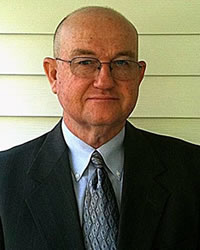
Gary Shepard

The Anchor of the Soul

Hebrews 6:18-20
Gary Shepard August, 31 2014 Audio
0 Comments
Gary Shepard
Gary Shepard August, 31 2014

Sermon Transcript

Auto-generated transcript • May contain errors

100%
If you would turn in your Bibles
to the book of Hebrews this morning, Hebrews chapter 6. The Apostle begins these first
verses of Hebrews 6 warning and talking about those
who would apostatize and prove not to be either believers
or either to prove themselves believers, very disobedient that
God had to deal with. But then he says in that ninth
verse, we are persuaded better things
of you, and things that accompany salvation." And when he comes on in these
verses, he makes reference to Abraham and a promise made to
Abraham and God's faithfulness to that promise. And that promise being not only
to Abraham, but to all of the Lord's people. So that in verse 17 he says,
"...wherein God, willing more abundantly to show unto the heirs
of promise, The immutability of his counsel confirmed it by
an oath, that by two immutable things, in which it was impossible
for God to lie, we might have a strong consolation who have
fled for refuge to lay hold upon the hope set before us, which
hope we have as an anchor of the soul, both sure and steadfast,
and which entereth into that within the veil. Whether the
forerunner is for us entered, even Jesus, made an high priest
forever after the order of Melchizedek. Living as we do near the coast, and having boats as a number
of you do, These verses ought to be a special
mercy to us. He speaks here of an anchor. And we have some understanding
naturally of what an anchor is. It is that device by which a
ship is secured and held firm. And as I said, this text speaks
of an anchor. And I wonder if we know anything
about this anchor. You see, this is a very important
anchor. It's called here, the anchor
of the soul. Verse 19, which hope we have
as an anchor of the soul. You see, most people in our day
have everything upside down. They think that we are bodies
that have souls. But we are, in truth, souls that
have bodies. God, when He created man, breathed
into him the breath of life, and he became a living soul. And we are much more concerned
about our bodies, though they are passing, fading, failing
things, than we are our souls, which are forever. You see, this anchor of the soul
is also said to be a hope, a hope. And this hope, and by the way,
it is a biblical hope, not a wish as most people use that word
in our day. This hope is described as being
sure and steadfast. I like things that are sure and
steadfast. And there are some things that
I want us to notice here in these verses because the Apostle is
led by the Spirit in these few verses to really tell us so much
if we have an interest in our soul. And the first thing that I want
us to notice this morning is, what is this hope that he speaks
of? And I say that because he distinguishes
here between this hope from this strong consolation. They are not in one sense the
same. And what he says in verse 18
shows us that this is not the grace of hope in the believer. They do have the grace of hope
along with every other grace from God. But our hope is not
in our hope in this sense It's not in our hope being the anchor
of our soul. Our hope is because of this anchor. And what is obvious here is that
this anchor is just as an anchor literally is, it is outside of
the ship. Our hope, our anchor, is outside
of ourselves. It's in one who is not ourselves. We have no hope in ourselves. Our hope is in this anchor. And he is described as this one
who is set before us. That is, here is one who is objectively
outside of ourselves and set before us this hope being based
on something objective, not subjective. It is outside of us. And he describes it in this way,
he says, "...this hope is in that which entereth into that
within the veil." What is he talking about here? Well, the
truth is, the book of Hebrews, is literally the commentary,
if you will, on all those things that we read about in the Old
Testament, especially those things regarding the priests and the
sacrifices of that old Mosaic economy. What did the priests
do? Well, once a year, the high priests
with that sacrifice that was appointed and ordained and given
of God, that sacrifice of blood, he would enter in to the tabernacle
and beyond the tabernacle into that very Holy of Holies which
no one could enter. and which was described by God
Himself as His dwelling place. And that priest would once a
year on the Day of Atonement go into the Holy of Holies with
that blood and sprinkle that blood on the mercy seat. He would make atonement for the
sins of the people. And so the reference here is
not simply to those priests and those sacrifices and that tabernacle,
but what the apostle calls here in another place, the true tabernacle. The holy of holies in the presence
of God. where that atonement was once
offered and made by the priest of God, the Lord Jesus Christ,
and that sacrifice accepted by God in all that He did. Hold your place right here and
turn over just a few pages to Hebrews chapter 10, And look here in Hebrews 10 in
verse 18. This follows on a reminder of
God's covenant pledge to His people. He said, "...and their
sins and iniquities I will remember no more." How could that ever
be? He says, where remission of these
is, where remission of sins is, there is no more offering for
sin. In other words, where sins have
been atoned for, when sins have been put away by the perfect
sacrifice, there need not be any other offering for sins. having therefore this having
taken place, having therefore, brethren, boldness to enter into
the holiest." He says, "...by the blood of Jesus, having by
a new and living way which He hath consecrated for us through
the veil." This hope is a hope based on something that the Lord
Jesus Christ did when He, as the priest of His people, who
is described here as a priest not after the order of Aaron,
but after the order of Melchizedek. He has an unending priesthood. His sacrifice did what none of
their sacrifices ever could, and that was to put away the
sins of those He represented. So all this hope is bound up
on this very work of the Lord Jesus Christ, and it is said
to be laid hold of. What is he talking about? Laying
hold of this. That is simply a description
of what God-given faith does. Lays hold by the grace of God,
by the faith that He gives on the Lord Jesus Christ, claiming
only Him and all Him in all that sacrifice and work. It is really, if you look over
in Hebrews chapter 7, it is really the better hope that is described
there, Hebrews 7 and verse 19, where he tells us, comparing
all that went on under the law of Moses, he says, "...for the
law made nothing perfect, but the bringing in, of a better
hope did, by the which we draw nigh unto God." By the which
we draw nigh unto God. And the one he's talking about,
he is describing and pointing out this anchor, showing us that
this security and this salvation is all because of this priest
who has already accomplished and finished the work and therefore
secured everyone who believes. He said himself, I am the way,
the truth, and the life, and no man cometh unto the Father
but by me." Paul writing in Ephesians 2, he says, "...for through Him
we both have access by one Spirit unto the Father." Now, he's talking
about an anchor and he's talking about it being secured, not somewhere
on earth, not a natural thing, but that which is accomplished
in the presence of God on behalf of his people through and by
the doing and the dying of the Lord Jesus Christ. So much so
that Paul describes this in 1 Timothy 1. He says, Paul, an apostle
of Jesus Christ, by the commandment of God our Savior and Lord Jesus
Christ, who is our hope. And then he writes to Titus,
and he says, looking for that blessed hope. and the glorious
appearing of the great God and our Savior, Jesus Christ." In
other words, He is our hope and He is our anchor. And without
Him as our anchor, we could have no hope. Well, where? Where is this hope that is described
here set before us? Well, if we look at what the
Bible says, we surely have to trace every blessing and all
of salvation back to the very fountainhead of all grace, and
that would be, we find Him set forth in the everlasting covenant
of grace. As a matter of fact, the Lord
Jesus Christ is described as the mediator of the covenant. He is described as the angel
or the messenger of the covenant. In other words, here are all
of these covenant blessings. all of salvation, all of eternal
life, all that heaven has to give, here are all of these blessings,
and they are brought together in a covenant or an agreement
within the Godhead, and all of it rests on the mediator of this
covenant. It is not a covenant between
you and God in the sense that God says, if you'll do this,
I'll do that. That was the covenant that was
made with those people under the law, and they showed us,
and God used them to show us that no one can ever be blessed
by God on the basis of what they do in obedience to God. But He set forth in that everlasting
covenant, and surely He set forth on the cross. He set forth before
men hanging between heaven and earth on that cross outside of
Jerusalem, and He dies there as the substitute for sinners. But here, in this particular
text and context, here I believe the apostle's reference is to
the gospel. To the gospel of Christ. To the gospel of grace. And I say that because in the
gospel, The only hope for sinners is declared to sinners. Listen to what the Apostle Paul
says in Romans 3. He says of Christ, whom God has
set forth to be a propitiation through faith in His blood. Now that verse is set against
everything that we hear in our day. Such as, all you got to
do is believe on Jesus. Just believe on Jesus. Well,
what that verse does, it ties the blood of Jesus Christ, which
is simply an expression expressing the whole work and death of the
Lord Jesus Christ, that faith in Christ involves more than
simply believing that He is or believing in a person. It's believing on what He did.
We believe on the Lord Jesus Christ. But do you ever wonder
why In those expressions in the Bible, we have such a name for
the Savior. Believe on the Lord Jesus Christ. Well, in those names that he
bears, that one is distinguished not only for what he is in himself,
God and man, but the very Christ, or Messiah of God, who was to
do a particular work. We don't just simply believe
on Jesus. Faith is not simply believing
in some mystical person we know nothing about. Faith is to be
in His blood. That is a confidence that is
born out of this gift from God which is called faith whereby
we rest in and rely upon totally that which He did. Paul writes to the Galatians,
and he says, "'O foolish Galatians, who hath bewitched you that you
should not obey the truth, before whose eyes Jesus Christ hath
been evidently set forth crucified among you?' Now he wrote that to the church
in Galatia. And when you stop and think about
it, it is very unlikely, now I'm not saying impossible, there
may have been one, but it is very unlikely that there was
anybody at Galatia who was actually present at the crucifixion of
Jesus Christ. So how was He set forth? Obviously,
Paul says before you, how was He set forth? Crucified. when
Paul and these other brethren preached the gospel to them. How did they find out about this? How did they find out? How were
they brought to be possessors of this hope and this confidence? How were they brought to know
and have knowledge of this One who is described as the anchor
of the soul? It's because He's set forth in
the Gospel. And you can't find hardly anybody
in our day who'd go out of their way in the least bit inconvenience
themselves, put themselves to any trouble or expense or anything
else just to hear the Gospel. And that's why the masses will
perish. He's set forth. The only hope
there is for sinners like us, the only anchor for souls that
are bound for eternity, is set forth in the gospel. And that's
what it is to preach the gospel. It is to keep setting forth the
Lord Jesus Christ in His glorious person and in His accomplished
work. And that is not only what it
is to preach the gospel, that is my goal every time. But what does it mean as it does
in verse 18 and 19 20. What does it mean when he says,
having fled to Him for refuge? We're fleeing people, but by
nature, we're fleeing like criminals to get away from God, to get
away from justice. But when he talks about fleeing
to this anchor for refuge, he's talking about looking and fleeing
to and submitting to and seeking the Lord Jesus Christ. And he calls forth another Old
Testament picture. And that was a provision under
that law, a provision for the person who unintentionally slays
another. Say I'm out and I accidentally,
by some failure on my part, kill somebody. It's an accident. But that one that's the near
kin of the one that dies, He may likely have a near Kim's
person who would seek to get revenge on his death. The Bible in the Old Testament
describes that person as the avenger of blood. Well, under
the law that God gave to Israel, there was set up seven cities
all scattered throughout Israel. And one who would find themselves
in that position, having accidentally slain, or as we would say, involuntary
manslaughter, guilty of that, they could run and flee from
the avenger of blood to one of these seven cities and be safe. The way that was to be to these
cities was to be carefully identified. They were to take all the stones,
anything that would hinder a quick fleeing to the city. They were
to remove all the stones and stumbling blocks, and they were
to erect signs pointing to these cities that were on both sides
of the Jordan. person, that manslayer, if he
could make it to one of those cities of refuge, he'd be safe. He'd be safe for as long as the
high priest lived. Now, if we're able, by God's
grace, to see our state and condition, and see the Lord Jesus Christ
who is Himself the only refuge, and we flee to Him like one of
those cities of refuge, we're safe. Safe. For how long? for as long as the priest lives. And here, the priest is Christ
who is a priest forever after the order of Melchizedek." That sinner, and by the way,
as Ol' Arthur Pink said, There's a great difference between the
refuge under the law and that made known in the gospel. What's the big difference? Well,
he said the cities of refuge were available only for those
who had unintentionally killed a person. But we have been conscious, deliberate,
lifelong rebels against God. And nevertheless, Christ says,
come unto me, all ye that labor and are heavy laden, and I'll
give you rest. Again, the manslayer in the city
was safe, yet his very refuge was a prison. It is the very
opposite with the believer. Christ opened for him the prison
door and set him at liberty. You see, Christ makes free. And
again, in entering the city of refuge, he turned away from his
inheritance, his land, his cattle, but the one who lays hold on
Christ, he obtains an inheritance. For the manslayer to return to
his inheritance meant death. For the Christian, death means
going to his inheritance. He said, we fled to Him. And
I'll tell you what, when the Spirit of God shows us what our
dangerous, desperate situation really is, and that's the only
way we'll ever see it, when He shows us what a state we're in
as sinners against this thrice holy and just God, when He moves
our heart out of its rebellion to bow at the feet of the Lord
Jesus Christ, that's when we'll flee to Him and be safe. Flee to Him and be safe. In those
cities, I said seven, but I'm thinking of the fullness of it
met in Christ. There are actually six cities.
In those six cities, Each in their name say something about
the true refuge. One was Kedesh, which meant holy
place. He's a refuge for the unclean. One was Shechem, which meant
shoulder. He's a refuge for the weary. One meant Hebron. One was Hebron,
which meant fellowship. He's a refuge for those who've
acted like enemies. One was Bazar, which meant stronghold. He's a refuge for the helpless. One was Ramoth, which meant exalted. He's a refuge for the hopeless.
And one was Golan, which meant joy. He's a refuge for the unhappy. In other words, as the apostles
said, He's all. And He's all as this refuge. And all the Lord's people. shall
be faced with this Christ set forth in this gospel, and will
be brought, as these were, and as His people in every age are
brought, to flee to the refuge." Well, what do those who flee
to the refuge, who lay hold on this hope, what do they receive? Verse 18 says, they received
strong consolation. Now, I can promise you this. If you do not have this strong
consolation, the problem is unbelief. Now, I know what people say. I know what preachers say. And
some even seem to kind of glamorize unbelief. They say that it's
maybe a good thing that you have no assurance, no feeling of security
in the matter of your salvation. And people say such foolish things
as this. They say, well, the reason I
don't have much hope is because my hope is not an absence of
it for Christ, it's in myself. But the Bible warns us again
and again against having any hope in ourselves. You see, when
we are in want of assurance, it is because we are looking
to something about ourselves and not looking to Christ. These
who have fled for refuge to Christ, who have Him as their anchor
and their hope, He says they have with that strong consolation. You see, He is the consolation.
They waited for the consolation of Israel. Simeon, we read about
him in the New Testament, he waited for the consolation of
Israel. And when he got there, when Mary
and Joseph brought that child into the temple, this man who'd
waited for the consolation of Israel, you know what he had?
Strong consolation. You say, how do you know that?
Because His next words were, Now let thy servant depart in
peace. For mine eyes have seen thy salvation. There's no peace looking at my
salvation. I hear all these people talking
about my salvation. God's our salvation. Our salvation
is in The Lord Jesus Christ. And assurance. If you remember
Peter and those disciples, when all the multitudes that had sat
and heard Christ and ate lunch with Him, when they all began
to walk away, and he looked at them, he said, will you also
go away? He said, Lord, to whom shall we go? You have the words
of eternal life. And we believe and are sure that
you are the Christ. You are the Christ. An old preacher said there are
three things or three effects or fruits that flow out of believing. Peace, comfort, joy. The kingdom of God is not meat
and drink, but righteousness, peace, joy. That will always be the order. Without righteousness, we cannot
have peace with God. With righteousness, with Christ
as the Lord our righteousness, we have peace, and out of that
peace, It flows joy. Joy in the Holy Spirit. And it flows out of His promises
and His Word. Who do you use for the reference
here? Abraham. God made a promise to Abraham.
Now, He made, you might say, a number of promises to Abraham. in the flesh. He fulfilled them. But he made a promise to Abraham
that through him he would make one that flowed out of his lineage
a blessing and therefore make Abraham the father of many people,
the father of them that believe. And the Bible says Abraham believed
God. Christ said, Abraham saw my day. He rejoiced in it. He saw by
faith the one that God had promised him would come and would be salvation. And so Paul says, Abraham believed
God and it was counted to him for righteousness. Well, having
righteousness in the Lord Jesus Christ, this imputed righteousness
that he imputes, To his people having righteousness, we have
peace. And out of peace comes joy. You see, he says, it's by two
immutable things. The promise and the oath of God. That's where assurance, that's
where strong consolation comes from. I could say to you this
morning, let's say you're in deep debt, and I could say to
you this morning, I said, don't worry about it. I'm sending you
a check tomorrow for five million dollars. Well, if you get any hope out
of that, it'll be imagined, I can tell you that. But there are people in this
world that could say that. and mean it. Because they're
able. The only problem is them being
willing. But that's what the Scriptures teach. The Word of
God. This promise is of full salvation
in Christ. Soul salvation. Eternal salvation
in Christ through His death And it's sure to His people because
He's steadfast. It's founded and grounded on
the inflexible and unchangeable justice of Almighty God. Because that's what He's doing
on that cross. When God tied His people by those
chains of grace, you might say, In that covenant, He bound them
to Himself and to His Son in particular, the Lord Jesus Christ,
so that when He came into the world, He accomplished everything
necessary to the salvation of their soul and hung on that cross
and said, It's finished. And they're sure because He's
steadfast. Being the curious fellow that
I am, I decided I would just look on Wikipedia. If you've got any encyclopedic
questions, you can go online and search and find out a few
things maybe. But I looked up anchors. The
first and earliest, and I mean a long time ago, anchors were
rocks. rocks. The bigger the rock, the
more secure as an anchor. But there was something I noticed
in what was written there. It said the best one was the
rock that was in place naturally. The only problem is if you secured
to that rock, it was permanent. That's what our Lord did. He
secured Himself to us, and He is that solid rock, and therefore
He is that steadfastly secure Savior. You see, it's sure because
of who He is. And it's secure because of what
He did. In what he did for his people
as a just God and a Savior, everything is okay. And that's what he said. Look unto me, and be ye saved,
all the ends of the earth, for I am a just God and a Savior. He likens the church as well
as every individual In the Lord's true church, He likens us to
a ship. Will the ship be okay? If the
anchor holds. And you can count on it, He's
going to hold. Look in verse 20. He says, "...whither the forerunner
is for us entered, even Jesus, made an high priest forever after
the order of Melchizedek." As I understand it, a forerunner,
at least used in this way quite a bit in past days, especially
around the Mediterranean Sea, a forerunner, Since so many of
the harbors around that sea are shallow at times when tides are
low, a forerunner was a little ship that would sail out of the
harbor maybe like at low tide, sail out to the big ship, take
the anchor of the big ship and rope and sail back into the harbor
and drop the anchor in the harbor. So that when the tide rose or
if there was another storm or something like that, the ship
would be safe. It wouldn't drift into danger
because it was anchored, already anchored. And basically that's
the picture of our Lord Jesus. That He came out of that very
Holy of Holies, came down as the forerunner into this world
and bore the sins of His people in His own body on the tree,
accomplished their salvation, secured it, and then He rose
from the dead and entered back into that holy place and dropped
anchor for all He represented. That's why He's the anchor of
the soul. Are His people safe? Oh, they'll
have lots of storms. I've about come to conclude that
all a believer's life is is storms. The worst being the storms of
our own unbelief. Storms of trial and sickness
and afflictions and troubles and all these things. But those who look to Christ
are safe. Even though it's not their looking
that secures them. It's the anchor. I've never seen
Him. A lot of people say they've seen
Jesus in a vision or something like that. I don't believe one
word of it. Why? Because He said, the just shall
live by faith. And faith is like that Rope or
chain. And He whom we've not seen, it
secures us to Him. He's the anchor. He's the security. He's the Savior. He's the Redeemer. He's the Lord of Glory. And He's
safe, isn't He? John says, as He is, so are we
in this world. He shows to the heirs of promise
the immutability, the unchangeableness of His counsel and His promise. He who cannot lie can be relied
on. That's why He calls His Savior
an anchor. And that's why He's our hope.
And that's why Him being our only hope, a steadfast hope,
we have strong consolation. Certainly not when we're looking
at ourselves and what we've done. Certainly not when we're even
thinking about what we've not done. But when we're looking
to the Lord Jesus Christ, One more time, in this place,
I've sought to set him forth. Poorly I know that, but I feel
like John the Baptist sometimes. Somebody said he was a man of
one tune, middle C. He just kept hitting that same
key. What was it? Behold the Lamb
of God. He alone takes away sin. Just
one anchor, and that's Christ. Our Father, this day we give
You thanks and praise You for Your goodness and mercy to those
in the Lord Jesus Christ. Cause us to flee to Him, to forsake
all other hope, and to rest in Christ and what He accomplished
in His cross death. May we be able to say that we
have an anchor, steadfast and sure, even while the sea billows
of this life roll, all the oppositions of life, all the matter of our
sin, grant that we might know Him and be found in Him having
His righteousness and not one of our own. Give us faith. Call us to Him. For we pray and
ask all things in Christ's name, Amen.
Gary Shepard
About Gary Shepard
Gary Shepard is teacher and pastor of Sovereign Grace Baptist Church in Jacksonville, North Carolina.

Comments

0 / 2000 characters
Comments are moderated before appearing.

Be the first to comment!

Joshua

Joshua

Shall we play a game? Ask me about articles, sermons, or theology from our library. I can also help you navigate the site.