Bootstrap
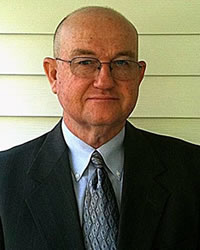
Gary Shepard

The Irresistible Christ

Psalm 110:3
Gary Shepard March, 23 2014 Audio
0 Comments
Gary Shepard
Gary Shepard March, 23 2014

Sermon Transcript

Auto-generated transcript • May contain errors

100%
Turn back in your Bibles to our
reading in Psalm 110. Psalm 110. I want
to re-read something that the Father says to the Son. says to the one who he has anointed
his king. He says in that third verse,
thy people shall be willing in the day of thy power. Thy people shall be willing in
the day of thy power. I'm sure there is not a believer
under the sound of my voice that does not have some child,
some parent, some friend, someone that they desire that they should be saved by
the Lord. that they are in some state of
concern over their souls. And if we know anything about
the truth, we know that all people, male, female, young, old, rich,
poor, educated, uneducated, no matter what their state in life
is, all people By nature, apart from the grace of God, resist
the Lord Jesus Christ. They'll consume false religion
like it is the most sumptuous banquet. They'll believe a lie
spoken by a man in the name of God, not sin of God, so very
quickly. Paul even said to the Corinthians that his concern for them was
that they would hear what was really another gospel and believe
it, or believe on another Jesus, or be led by another Spirit. He knew how easily We are deceived. And Christ, He never ever, in
what He says to men and women, ever causes anybody to imagine
anything or ability in them contrary to this fact. He said, you will
not come to Me that you might have life. He inspires the Apostle
Paul to write, and remind us that there are none who seek
after God. They have neither the will nor
the want for the Lord Jesus Christ. And the Apostle in the book of
Acts said to one people, Ye stiff-necked and uncircumcised in heart and
ears, you do always resist the Holy Ghost, as your fathers did,
so do ye." All resist the Lord Jesus Christ, all resist The
Spirit of God. And he says in Timothy, Paul
does to some, he says, now as Janus and Jambres withstood Moses,
so do these also resist the truth. Men resist the Lord Jesus Christ. They resist the Holy Spirit when
they resist the truth. You cannot separate. And these
things are true and these things are obvious. We experience them
if we try to speak to someone or if we give a tape or a CD
to someone. All these efforts to try to get
the gospel in the hearing of these individuals and many more,
they always meet with this natural resistance. And while that is true, there
is another great and gracious truth. And that is that none, and I
do mean none, of God's elect, though they by nature also resist
Christ, none of them will ever finally and fully be able to
do so successfully. Why? Because to them He will prove
to be the irresistible Christ. That's my message this morning.
The irresistible Christ. And the reason why is that according
to this book, that people, these elect people, have been chosen
of God and they were betrothed to Christ in the everlasting
covenant. They are said to be His. His
people. And they are not only loved by
Christ, given to Christ, they were purchased by Christ through
His cross death for them. He died in their place. His work is a vicarious or substitutionary
work. He doesn't just simply die a
random universal death. His death, as I said, was a price
and a ransom for these people. And this is the promise of the
Father to the Son. Thy people. In order for Him
to be the King, And in order for him to have a kingdom, he
has to have subjects in that kingdom. He has to be king over
a people in this unique sense. And so the Father says to him,
Thy people shall be willing in the day of thy power." Hold your
place there in Psalm 110 and turn over to John chapter 6. John chapter 6. where our Lord
faced a total rejection, for the most part, of all those who
were outwardly moral and outwardly religious and very highly esteemed,
not only among men, but of themselves. They reject Him. They resist
Him, and they always do. But we do not find the Lord Jesus
Christ here worried, or concerned, or bent down, or depressed, or
disappointed, or any of these things. Rather than that, His
words to them in verse 67 are these. He said in verse 36, But I said
unto you that you also have seen Me, and believe not. But listen to verse 37. that the Father giveth me shall
come to me, and him that cometh to me I will in no wise cast
out." That is about as positive, that is about as assuring a statement
as any possibly could be to those who believe the truth." In other words, in agreement
with the Father and the Son in that covenant, the Holy Spirit
will bring all the Father loved and chose, all of them effectually. Many believe in what they call
the effectual call. But this is not merely a doctrine
to be believed in our heads and then put on a shelf somewhere. This is a word of comfort and
assurance to every gospel preacher and to every true believer. You see, the coming that is talked
about here in verse 6 is undoubtedly believing. You read through this
chapter and you'll find that coming and believing are used
in the same way. Coming to the Lord Jesus Christ
is believing on the Lord Jesus Christ. And the grace of God,
if we just thought of it for a minute, if we didn't try to
divorce it from God Himself, we'd have to know that the grace
of God is efficacious grace. And what I mean by that, it is
that grace of God that is joined with the power of God and the
will of God, and it cannot be thwarted. The purpose of grace
given to this people before the world began, it will be carried
out and fulfilled. It is omnipotent grace. And when we think about this
in terms of that word irresistible, there are about three aspects
of it that we might consider. Number one, as having to do with
power, absolute power and authority. Someone could be irresistible
in that they had absolute power and authority. And then secondly,
it could have to do with persuasiveness. Someone might be irresistible,
something might be irresistible with regard to persuasiveness. You can't resist that powerful
persuasiveness. And then thirdly, it might have
to do also with appeal. It's so appealing, you can't
resist it. Don't bring out one of those
little chocolate whoopie pies filled with the white cream inside
of it. It might prove irresistible to
me. Though I shouldn't eat it. But
the truth of the matter is, all three aspects of this irresistibleness,
they all three do apply to the Lord Jesus Christ. He is irresistible in His power. He says, the Father hath given
me all power in heaven and in earth. Go preach the gospel. It is the same with regard to
persuasiveness. He works in the mind. He works
in the heart. He's able to persuade men and
women in such a way that no one else could ever come along and
persuade them otherwise. And most definitely, He is so
irresistible in His appeal, whenever the eyes of a blind sinner are
opened to see Him for who and what He is. And so when you read
here in John 6, not only that 37th verse, but also in verse
44, he still restates this same inability. He says, No man can
come to me except the Father which has sent me draw him. No man can come. By nature he
resists. He cannot come because He will
not come. He will not come because He doesn't
want to come. And then He states that again
in verse 65. And He said, Therefore said I
unto you, that no man can come unto Me, except it were given
unto him of My Father. Any hope that we might have of
us persuading these individuals, any hope we might have of using
science or whatever, records of archeology, whatever all these
other things, any hope we might have of persuading them or convincing
them or showing them the appeal of Christ or the truth, by natural
means, is hopeless. Hopeless. Why would I want to
spend a whole lot of time trying to convince someone by scientific
record or by all these things that God created the earth? If I convinced you that God created
the earth and you became a creationist, apart from grace, you'd still
be lost. you'd still be lost and without
the knowledge of Christ. But what we have need of remembering
and what I want us to see today and be reminded of is that man's
inability does not in any way diminish God's ability. You see, though He states our
state and condition so clearly, so unchangeably, no man can come
to Me, there is also in this statement a divine exception. Accept. Isn't that wonderful? It isn't wonderful if we want
to hold on to our ability or hold on to a notion of so-called
free will or something like that. If we want to do something that
God does not want to do, if we want to save somebody that God
has not purpose to save, it's not good there. But to a sinner
who knows what he is, and to those of us who know who these
are that we love, we don't kid around about their condition. They cannot of themselves. They will not of themselves. They won't not in themselves
to come to the Lord Jesus Christ. And they won't accept. And in both these two verses,
if you notice in verse 44, the accept is this. Accept the Father. Not accept them and the Father. Not except them and the preacher.
He simply says, no man can come to me except the Father which
has sent me. Draw him. Draw him. That's a wonderful
word, that word draw. In the 65th verse, he says, "...therefore
said I unto you, that no man can come unto me, except it were
given unto him of my Father." That's grace. The gift. except it were given unto him."
Everything in salvation is a gift, including those graces that he
gives and those gifts that he gives whereby we are enabled
to come to Christ. He says, "...no one can come
to me except the Father which hath sent me draw him." Now,
if you want to find something interesting, if you want to find
something that is so totally contradictory to the thoughts
and the ideas and preaching of modern religion, take a Strong's
Greek Dictionary in your hand. or on your computer and you take
that word draw in the original and see what the definition is
for it. It's pretty short. It means to drag. Literally, sometimes, figuratively. To drag. And there are two references
in Scripture whereby that same word is used, and it really throws
a lot of light on this. If you think it means only that
he has an influence on them, or he merely tries slightly to
persuade them, I remember how many times I've heard preachers
over the years stand up and tell a big lie. They said God can
do anything He wants except save a sinner against His will. Well,
what a God He is then! He's more pitiful than I am,
and I'm certainly pitiful. But there are two references,
one in John 18 concerning Simon Peter. And you can look at this
when you get home, but in verse 10 of John 18 it says, "...then
Simon Peter, having a sword, drew it." and smote the high priest's servant
and cut off his right ear. The servant's name was Malchus." Same word. He drew the sword. Now I've never by any stretch
of the imagination ever heard of and certainly never saw a
sword that on its own left out of the sheath that it was in.
It had to be taken by one in hand and drawn. Well, there's
another one in John 21 and verse 6. And that is, when the disciples
had failed so miserably fishing, and Christ came to them, and
it says that He said unto them, Cast the net on the right side
of the ship, and ye shall find. They cast their fore, and now
they were not able to draw it for the multitude of fishes."
Have you ever saw a net that drew itself in? And yet it is
the same word. The fishes in that net were brought
into shore or brought into that boat because these fishermen
laid hold of the lines of that net and drew it into the boat. Does that sound like a mere opportunity
to you? He says, except the Father draw
him. And not only that, if you look
over in John chapter 12. Turn over to John chapter 12
and listen in John chapter 12 and verse 32. Here's the Lord Jesus Christ
and He makes this statement and it's that same thought. He says,
"...and I, if I be lifted up from the earth." Now, somebody
could say, well, he meant by this, that, or he meant by that,
the other. But before we look at the rest of that verse, look
at the next verse. This he said, signifying what
death, he should die. What's he talking about here?
He's talking about him being lifted up on a cross. He's talking
about Him dying what He calls, through the Apostle, the death
of the cross. In other words, there's going
to be a consequence that will take place as a result of His
being lifted up. Something, since it is a sacrifice
to divine justice, has to take place. He says, If I be lifted up from
the earth, will draw all unto me. You say, well preacher, it says
all men. It must be universal. No. The translators added that
word men, when in reality it simply says, if I be lifted up,
I'll draw all unto me. Who's that? All He dies for on
that cross. All these that the Father hath
given Him. All of these that make up His
bride and His church. All these sinners who of themselves,
they never would come to Christ if left to themselves. And then look back in John chapter
10. John chapter 10. You know, in John chapter 10,
the Lord Jesus Christ is set forth as a shepherd. The shepherd. The one that David was talking
about in Psalm 23. The Lord is my shepherd. And what he says of the shepherd
here in John 10 cannot be applied in any other way as it is in
verse 16, and that of the sheep. He says, "...and of the sheep
I have." Now he made himself known first to the Jews. He hasn't
elect people from among the Jews. He hasn't elect people from among
the Gentiles. But these standing around Him
were for the most part Jews. He says, and of the sheep I have
which are not of this fold, them also I must bring. People like to talk about Christ
doing anything He wants to do. He can do anything. I'll tell
you what he can do. First of all, he can do what
he says he's going to do. "...them also I must bring."
Bring where? Bring to himself. Bring to this
fold. There's one fold. "...and they
shall hear my voice, and there shall be one fold and one shepherd."
I'm going to bring every one of them, of this Jewish fold,
of this Gentile fold, people out of every nation, kindred,
tribe and tongue. I've not come on a fool's errand. I'll lay down my life for them
and I'll bring every one of them to myself. Let me read you a verse out of
Isaiah 53. Here Isaiah is led by the Spirit
to talk about the Christ, the Messiah. In verse 11 of Isaiah
53, he says of Him, "...he shall see the travail of his soul,
and shall be satisfied." You see, before any sinner can
ever be satisfied, The Savior has to be satisfied. And before
the Savior can be satisfied, the triune Godhead must be satisfied. All of them together. He shall
see of the travail of his soul, and shall be satisfied by his
knowledge, shall my righteous servant justify many. For he shall bear their iniquities. He'll bear the responsibility. He'll bear the penalty of all
their sins. And on that basis, He will justify
every one of them. And because of that, He in His
travail will be satisfied. Absolutely satisfied. And this must come to pass because
it is the will of God who works all things after the counsel
of His own will. He does all according to His
will among the inhabitants of heaven and earth. And nobody
can stop Him. Nobody can stop Him. You could say, He only saves whom He will. And that's right. But everyone that He will save,
He will save. Now we could fight against that
all we wanted to. Or we could recognize the truth
of it and rejoice in it. Since there is no hope in any
of these, we desire their salvation. It doesn't mean that we stop
praying for them. It doesn't mean that we have
no interest in them or concern for them. It doesn't mean that
we don't love them anymore or any less. It means that we look to Him.
We look to the Lord Jesus Christ who is this One who is mighty
to save. He is the mighty God. He is mighty
to save. Who can stop Him? Not one of my children. Not one
of my family. Not one of my friends. Not one
of these I preach to. Not one of these I pray for.
If He has purpose to do so. Christ has power over all flesh
to give eternal life to as many as the Father has given Him. What good would this act of sovereignty
belonging to Christ, what good would it do or be if He did not
use it to do what He wants to do? I hear folks talking about, God
wants to save you, but He can't, or you won't let Him, or something
like that. How is there any hope and peace
in that? How can you ever lay down concerning
your children, or your families, or anybody else that you love,
and not think about how helpless it is if it's in their hands? You see, He's not left His greatest
work and greatest glory success to be determined by fallen sinners. His providence is always working
toward the goal of saving all His sheep. Everything. Your life and my
life, if we're His people. Well, Paul, You really fell on to a streak
of hard luck. You do your best preaching. We
see you there preaching everything. You seem sincere and all. But
here you are down in prison for doing it. Now those great multitudes,
they'll never hear you. You're down in prison. Paul says, I endure all things
for the elect's sake. that they may also obtain the
salvation which is in Christ Jesus with eternal glory." Now
there were some actually prisoners there with Paul that he preached
the gospel to and the Lord revealed Himself to. He was down there
because the Lord had some sheep there. He sent to Corinth and
was afraid, and the Lord appeared to him in a vision. He said,
don't be afraid, but speak the things that I've told you to
preach, for I have much people in this city. But it was also from that very
Jail cell that the Lord used him to write a host of epistles
or letters that become the books of the New Testament. How many
have they reached? He says in Romans 11, And so
all Israel shall be saved. And we know he can't be talking
about the nation of Israel. What's he talking about? He's
talking about spiritual Israel. How do we know that? "...there
shall come out of Zion the Deliverer, and shall turn away ungodliness
from Jacob." What is real ungodliness? Real ungodliness is works salvation,
self-righteousness, to the denial of the need for salvation by
grace in Christ. He's going to save all His people
from their sins. But to accomplish this, God does
not change Christ to make Him more appealing to fallen blind
sinners. That is the common worst error
of our day. Let's make Jesus more appealing. Let's tear off the rough or the
sharp edges of the gospel Let's don't use texts like John 6,
37 or other texts like that. Let's just set Christ up as this
glorious moral example and great teacher and wonderful martyr. And maybe folks will like Him.
Tell Him He'll be your friend. Tell Him He'll provide that next
meal that you need. Tell Him that He'll heal all
your sicknesses. Tell him he desires for you health,
wealth, and prosperity. No. The problem is not in Christ.
The problem is in blind, deaf, dead sinners. And so the Holy
Spirit In saving all of His people does a work in them, opening
their eyes and revealing to them the King in His beauty. And He causes them to see by
giving them faith to see the irresistible Christ. You see, that's what being saved
by grace is also about. He says, for by grace are ye
saved through faith, but that not of yourselves. It is the
gift of God. He doesn't give it to everybody.
He says all men have not faith, but He gives it as a gift. to
these that he purposes to say." Look back in 1 Corinthians. 1 Corinthians in the second chapter, where we find this same situation,
In 1 Corinthians 2 and verse 9, Paul says, "...but as it is
written, I hath not seen, nor ear heard, neither have entered
into the heart of man the things which God hath prepared for them
that love Him." Just hadn't done it. Nobody has just thought about
this. But God hath revealed them unto
us by His Spirit. For the Spirit searcheth all
things, yea, the deep things of God. For what man knoweth
the things of a man save the Spirit of man which is in him? Even so the things of God knoweth
no man but the Spirit of God." If no man knows the things of
God but the Spirit of God, what is the only way we'll ever know
it? If, as Paul says to himself and to the believers at Corinth,
he reveals them to us. reveals them to us through His
Word. He says, "...Now we have received,
not the spirit of the world, but the Spirit which is of God,
that we might know the things that are freely given to us of
God." That we might know. That we might
be enabled to see by faith, understand by faith. The things that are
freely given to us of God. And according to what Christ
said, we'll find out that He gives us all things freely by
Himself in Christ. He said, the Holy Spirit will
take the things of mine and show them unto you. He hath revealed them to us."
That doesn't mean that we know everything. Wouldn't be much
of a gift if I could understand it all, or count it all, or measure
it all, or describe it all. But these are things that are
freely given to His people in Christ. You see, God gives us an illustration
of this whenever Abraham sends his servant to get a bride for
Isaac. And so he's speaking to this
prospective bride, really the one that he's been sent to get,
rather than Abraham choosing a bride for Isaac out of that
people that he was living among at that time. He sends his servant. Isaac is not there. He sends
his servant down there. And everybody would just stop
and wonder, what if she doesn't come? What if she doesn't like what
she hears? But the only thing that Eleazar
does is this. It says that he says to this
woman, Sarah, My master's wife bare a son to my master when
she was old, and unto him he hath given all that he has."
You mean to tell me that everything you just described how that Abraham
has got cattle and sheep and tents and camels and silver and
gold and all these things, you mean to tell me that he has given
everything to Isaac? That sort of makes Isaac look
appealing, doesn't it? He becomes irresistible to her.
And God has taken all the gifts of His grace, blessed His people
with all spiritual blessings in Christ. And those who have
Christ have it all. Another illustration is how David
sent down after the death of Saul and Jonathan, he sent down
his servant Ziba to find the son of Jonathan. He'd made a
pledge to Jonathan. And as soon as David is openly
king and his enemies are conquered, that very household that had
been his enemy, because of that promise he had made to Jonathan
and that pledge that he had made to him concerning his family,
first order of business. Where's Mephibosheth? And Mephibosheth
is just like every sinner. that God say, He lives in Lodabar. That's a land of no pasture.
Perfect description for this world. And He is crippled because He
was dropped by His nurse when she was fleeing the palace. You
might say He was helpless because of a fall. That's us. Help us because of
our fallen Adam. He will not of himself voluntarily
come. He will not because he fears
that what David really wants to do is make sure that there's
no rival left to his throne. But the Bible says that he sent
his servant down there to Mephibosheth where he was to fetch him. to fetch him. And he brought
him back to the king's palace, and he fed him at the king's
table, and he ate with the king's sons, and the king treated him
all his days like his own son. That's the irresistible Christ. But rather than simply imagining
that that God, in saving His people, saves them in such a way that
they're drug-kicking and screaming into His kingdom. You remember what the Father
said, Thy people shall be willing, But they're only willing in the day of His power. Now,
the day of His power, first of all, has to do with regard to
that time between the first coming of Christ and the second coming
of Christ. There's a broad sense in which
that is the day of His power. The day of the Savior's power.
Of the Redeemer King's power. But to each one of these sheep,
to each one of these elect, to each one of these that He loved
with an everlasting love and shed His blood for, there will
be to them a day of His power." It is pretty much a sure thing
that until that day, They're going to remain rebels,
stumbling around in their blindness, walking after the course of this
world. But when He stops them, some of them are real religious,
but lost, like Saul of Tarshish. He's riding along on a horse
or some beast of burden on his way to Damascus. He's zealous
for God. He's going to hail all these
so-called Christians and put them into prison or have them
stoned or put to death something. He's doing this for God. And as he rides along on that
Damascus road, the Lord Jesus Christ in a glorious brilliance,
stops him, unhorses him, lays hold of him. And the man who probably, if
he's that zealous to do what he's been doing, the man that
would be the most naturally and religiously opposed to the Lord
Jesus Christ. He now is brought to Christ,
bowed before Christ. And when His eyes are opened
to see by faith who Christ is as the true Messiah, He'll preach
Him the rest of His days. The rest of His days. Paul said, "'For it is God which
worketh in you both to will and to do of His good pleasure.'" On that day of Pentecost and
shortly thereafter, when the apostles preached these basically
naturally illiterate fisherman. It says that some folks gladly
received his word and were baptized. They gladly received it. Most
of them had gone there to hear something else. But you see what
God was doing all the time for them was He was always bringing
them to that truth. They went there for that feast
of the Jews. You know they had to be zealous
to travel the distances they traveled and incur the expenses. You know they had to be zealous
for Judaism. But that weaving, winding path,
just like that Ethiopian eunuch in the desert, was Christ bringing
them to Himself. The irresistible, glorious Christ. When even Stephen began to speak,
to preach the very message for which he was stunned, It says they were not able to
resist the wisdom and the Spirit by which He spake. You look back
in John chapter 6. John 6 and verse 39. Christ says, And
this is the Father's will which hath sent Me. that of all which
He hath given me, I should lose nothing, but should raise it
up again at the last day." We can say irresistible grace
and be right, but it's really the irresistible Christ. Oh, John Newton, Captain of a
slave trading ship. A wretched man by his own description. He says, amazing grace how sweet
the sound that saved a wretch like me. I once was lost, but
now am found. am found, was blind, but now
I see." God help us, encourage us, strengthen us to pray and
to seek, to bring men and women under the sound of the gospel,
or to give them a CD with a gospel message on it, or a bulletin,
or what have you, and ask them to come to the service. All these
things. Because He has sheep that He
must bring. He uses means, but He's the one
who has to do it. And He's the one who makes sure
that that work is successful. All that the Father giveth me
shall come to me. and him that cometh to me, I
will in no wise cast out." Sometimes we ask folks just to come, to
hear. And they've told us a dozen times,
no. But you and I don't know what
Christ is doing in their heart right now. and He may well show Himself
to them, and they being able to find Him irresistible. Father, this day we give You
praise and glory through our Lord Jesus Christ. We thank You
that the success of the Gospel depends entirely upon You. though we have been instructed
to do many things concerning these all around us with regard
to spreading the gospel. Help us to be faithful in the
doing of those things, but help us also to be encouraged and
to remember your blessed promise that all that the Father gives
you has given you will come to you. And you'll never cast them
out. And we'll rejoice with them and
you when they come. We thank you in the name of Christ. Amen.
Gary Shepard
About Gary Shepard
Gary Shepard is teacher and pastor of Sovereign Grace Baptist Church in Jacksonville, North Carolina.

Comments

0 / 2000 characters
Comments are moderated before appearing.

Be the first to comment!

Joshua

Joshua

Shall we play a game? Ask me about articles, sermons, or theology from our library. I can also help you navigate the site.