Bootstrap
Gary Shepard

True Fellowship

1 John 1:3
Gary Shepard February, 23 2014 Audio
0 Comments
Gary Shepard
Gary Shepard February, 23 2014

Sermon Transcript

Auto-generated transcript • May contain errors

100%
Turn with me in your Bibles first
of all to 1 John 1. 1 John 1. And I want you to notice
with me what John says in that third
verse. He says, "...that which we have
seen and heard declare we unto you, that ye also may have fellowship
with us, And truly our fellowship is with the Father and with His
Son, Jesus Christ. I want to talk to you about true
fellowship. Or I might say, the basis for
all true fellowship. And I'd begin by saying that
the church, not an organization or a building, but the church,
which is Christ's body, is, in the scriptural sense of the word,
a fellowship. As a matter of fact, it is the
only true fellowship. And as we read there in 1 John,
this fellowship is with God in Christ and also with those in
the body of Christ. And if you look back with me
in the book of Acts, in that second chapter of the book of
Acts, We find that fellowship that
John says is with us being described. The fellowship among the people
of Christ. Look with me in Acts chapter
2 beginning in verse 41. Luke writes, "...then they that
gladly received his word were baptized. And the same day there
were added unto them about three thousand souls." And they continued
steadfastly in the apostles' doctrine and fellowship, and
in breaking of bread, and in prayers. And fear came upon every
soul, and many wonders and signs were done by the apostles, and
all that believed were together, and had all things common, and
sold their possessions and goods, and parted them to all men, as
every man had need. And they, continuing daily, with
one accord in the temple, and breaking bread from house to
house, did eat their meat with gladness and singleness of heart,
praising God, and having favor with all the people. And the
Lord added to the church daily such as should be saved." What we find in the book of Acts,
as well as all the New Testament, is this very true and real fellowship
that is quite different from the fellowships among men and
especially the fellowships claimed by those in false religion. And let me make one distinguishing
thing, one distinction here in the beginning, and that is we
must never mistake friendship for fellowship. Fellowship doesn't
have to do with being with people whose personalities match yours
and mine, or whose outward interests do so. I have a number of friends
in this world, but I do not have fellowship with them. I do not have the fellowship
that is described in the Scriptures. Because true fellowship is described
here and is characterized by one thing primarily and chiefly. And that is that true fellowship,
as we find it in the Bible, centers around true doctrine. That word that in our day has
become a dirty word. But as we have just read in Acts
2, true fellowship is characterized by true doctrine. Look back in verse 42. And they continued steadfastly
in the apostles' doctrine and fellowship, and in breaking of
bread, and in prayers. In other words, what we find
here is that they steadfastly continued as all true believers
do, and they did so around the Apostles' doctrine. What does that word doctrine
mean? Well, it simply means something
like teaching. They continued steadfastly around
the apostles' teaching. The word that we find Isaiah
using there in Isaiah 53 concerning the gospel is, he says, who hath
believed our report? They received and believed and
had fellowship around this report that the apostles gave concerning
the Lord Jesus Christ. Think if you will what we read
there in 1 John 1 and 3. John being an apostle himself, says to these that he writes
to, that which we have seen and heard, that is what we declare
unto you." They were commanded at one time. to stop preaching
what they were preaching, but they said, we cannot help but
to speak the things that we have seen and heard. So John says, That which we have seen and heard,
most particularly from the Lord Jesus Christ Himself, He says,
"...declare we unto you that, or in order to, that ye also
may have fellowship with us." In other words, something that
they had seen and heard of God, heard of God in Christ, that
was what they spoke and taught in order that these might have
fellowship with us. And truly, our fellowship is
with the Father and with His Son, Jesus Christ. In other words, the doctrine
that their fellowship was around was the apostles' doctrine. And this is the only true doctrine
that those of the true church require and need and will have
as the basis for fellowship. I do not separate from, I do
not refuse fellowship with men over matters of either no or
little importance." In other words, the basis of fellowship
is not what your view on prophecy is, I believe that this is my
view of prophecy. I believe Jesus is coming. Nor is it to be on the basis
of one thing or another that just seem to prove to be oftentimes
diversions that Satan brings about in order to divert us and
distract us from that which really matters, which is Christ and
Him crucified. Because if you study the Scriptures,
if you read the book of Acts or the writings of any of these
apostles, what you find is that the apostles' doctrine is the
doctrine of Christ. The doctrine of Christ. Turn over to Acts chapter 16. Now listen to the apostle in
Acts chapter 16 in verse 9. This always has interested me
because there are so many people who would really like to have
a vision from Christ. They would like to have some
visible manifestation. But listen to what Paul writes
here in Acts 16 and verse 9, or Luke writes concerning Paul. It says, "...and a vision appeared
to Paul in the night. And there stood a man of Macedonia
and prayed him, saying, Come over into Macedonia and help
us." Help us. Don't you imagine that there
were a lot of needs among the Macedonians? Don't you imagine
that there were poor folks who needed food and sick folks who
needed medicines and things of that nature? There were undoubtedly
a lot of those things. They needed help in some sense,
but that was not the great help that they needed. And that was
not the great help that God was sending Paul and these brethren
to give to them. Listen to the next verse. And
after he had seen the vision, immediately we endeavored to
go into Macedonia, assuredly gathering that the Lord had called
us for to preach the gospel unto them. What they needed was the
apostles' doctrine. What they needed was the doctrine
of Christ. Because fellowship with God,
which is the basis for fellowship with those among the church,
is with God in the Lord Jesus Christ. And it's always based
on the truth. Hold your place and turn over
to 2 Corinthians. In 2 Corinthians, the Apostle
Paul writes in chapter 6. And this is what he says in 2
Corinthians 6 and verse 14. He says, "...Be ye not unequally
yoked together with unbelievers, It doesn't matter what they call
themselves. It doesn't matter what they claim
to be. Because here is going to be the
distinction by which they are known. He says, "...for what
fellowship hath righteousness with unrighteousness?" And what communion hath light
with darkness? And what concord hath Christ
with Belial? Or what part hath he that believeth
with an infidel? Now he's not talking about all
the issues of life here. What he's talking about here
is this separation, this inability to fellowship apart or outside
of the truth. The truth as it is in Christ
Jesus. And what agreement hath the temple
of God with idols? For ye are the temple of the
living God. As God has said, I will dwell
in them, and walk in them, and I will be their God, and they
shall be my people." He's not just talking about immoral or
ungodly conduct here. What he's talking about here
is the doctrine or the gospel whereby the Lord Jesus Christ
Himself is made known. The fellowship among the people
of God is fellowship around the true Christ. Listen to what the prophet Zechariah
was led to write, the very expression of God Himself. He says in chapter
13 and verse 7, "'Awake, O sword.'" What is that? The sword of His
justice? He says, "'Awake, O sword, against
My shepherd.'" Who is God's shepherd? That's the Lord Jesus Christ. Awake, O sword, against my shepherd,
against the man that is my fellow." My fellow. You see, fellowship
is based on this one thing, and that is the Lord's fellow is
also my fellow. We have fellowship, one with
another, around this one fellow who is the Lord's fellow, and
by His grace that He is made to be our fellow, the one He
describes as this man who is none other than the man Christ
Jesus. That is, we agree with God on
this one fellow. As God has given him glory, a
glory that he possessed with him before the world began, God
has shown us to a degree this glory, and we now glory in the
one God glories in. We glory in the one that God's
glory is in. So John, this same apostle we
first read, who is described as the apostle of love, notice
what he says, "...whosoever transgresseth and
abideth not in the doctrine of Christ, Hath not God. Boy, that's something. Whoever,
as I said, no matter what they claim, that transgresseth or
goes against the Word of God, and abides not, stays not with,
sticks not with, loves not the doctrine of Christ, hath not
God." You see, a man can take the Bible in hand. And he can
make those fair speeches that the apostle says deceive the
simple. He can flaunt his intellect or
his education or his skills or his charisma or whatever it is. But whosoever does not stick
with, emphasize, center on, preach the doctrine of Christ, hath
not God. And that not only goes for those
who are the preachers that speak to men, that goes also to the
hearers. Men heap to themselves teachers,
it says, having itching ears. They want to hear something.
Something inspirational, or something educational, or something exciting,
or something entertaining. But whosoever abideth not in
the doctrine of Christ, hath not God. He that abideth in the doctrine
of Christ hath both the Father and the Son." Now John, you're
drawing a very fine line there. Well now listen to this, on the
heels of that statement. if there come any unto you, and
bring not this doctrine." Now just imagine some things you
may have heard. I've heard it many times. People
saying to me, why don't you just preach on this or that or the
other and leave maybe things that are contradictory to the
way men want to think and believe. Why don't you do some things
that are appealing to men and women? Why have you always got to bring
this doctrine? It's like somebody sitting down
to the piano to play and they know one note, they know middle
C. And again and again. They're
just hearing that same note again and again. Why? Because the middle
note, if you will, of the gospel is Jesus Christ and Him crucified. It's the doctrine of Christ. This fellowship that they enjoyed
here in the early church, they enjoyed it based on their association
with, belief in, identification with the Apostles' doctrine. That's the doctrine of Jesus
Christ and Him crucified. And it was no different in Christ's
day as it was in the days later of these apostles who went out
to preach, and as it is in this very day. When Christ began to
set forth His gospel, the gospel concerning Himself, it says they
were astonished at His doctrine. There was such authority with
His doctrine. There was such a simplicity,
a powerful simplicity with his doctrine. There was something
about his doctrine that they were astonished at. And these
early believers who were converted to the Lord Jesus Christ from
Judaism, they did not have anything to do or have to do anything
by way of dividing Because their doctrine made those
of their former religion divide with them. That's always the
way it is. I don't ever set out to divide
with anybody. I don't ever set out with the
goal of trying to make somebody mad or angry or leave or whatever
it is. I never set out to do that. or
to become unpopular or held in low esteem. That's never my goal. I assure you, if you really know
me personally, that's not my personality to do that. But if
I stay with the Apostles' doctrine, if I preach and believe the doctrine
of Christ, then by virtue of the very nature of this message
and the nature of sinners who hear it, there's going to be division.
The Scriptures say that there must be divisions or heresies
among you, that they which are true might
be made manifest. You see, the reason that these
apostles, and not only these apostles if you'll read the book
of Acts, the reason that all these believers who had fellowship
with each other, the reason why they were persecuted and mocked
and isolated and ostracized was because, not that they were not
nice people, but because of their doctrine.
Their doctrine was the doctrine of Christ. And like it was said
of our Lord Himself, on one occasion when He asked them, He said,
for which of these things that I do, these miracles, for which
of these miracles do you seek to stone me? Oh, they said, we
don't seek to stone you because of any of the miracles that you've
done. But because you made yourself to be God. Because of the words
that you've said. You see, there are so many nice people
in this world. I've got a lot of nice friends
in this world. But the reason that there's a
division and a distinction and the reason why that there can
be no true fellowship with them is because even though most of
them claim to be Christians, they know nothing about the doctrine
of Christ. That's sad. Today the call is to sacrifice
doctrine for the sake of unity and fellowship. But these early
believers found the doctrine of Christ, which is the doctrine
of God, the doctrine of grace, to be the very first basis for
fellowship. They loved the apostles' doctrine. Not because of who the apostles
were, I just have a feeling that if the apostle John, or
the apostle Peter, or the apostle Paul, if they were on this earth
right now, speaking as they did, speaking what they did, They
would be no better received and probably even less better received
than they were in their day. Somebody say, oh, that Simon
Peter, he's just a zealot. He's just too insistive on black
and white, up and down. There's no middle ground with
him. They look at John and say, oh,
he's not as much of a teacher, you know, he's just a nice fellow
maybe, and he really doesn't have all that much to say. Or
they say of Paul, oh, Paul, he's very learned, he sets forth a
lot of things, but he's not much to look at and he's boring. But they weren't to these people.
Because they had the children's bread. Because they had those
green pastures for the sheep of God. Because they had the
Word of the One who had loved them and saved them and given
Himself for them. They had that Word about Jesus
Christ and Him crucified. And once when He told them, These
very men, some of them, after He had fed the multitude, everybody
had filled their bellies to the full, and then our Lord began
to make spiritual applications began to talk about things that
were not satisfying or gratifying to the flesh. He said, Whosoever
eats my flesh and drinks my blood, if they don't do it, they have
no part in me. They said, this is a hard saying.
Give us your fish. Keep your words. Give us to drink. Something that will satisfy our
thirst naturally and keep your message. And so most of them walked away.
Most of the whole crowd walked away. And here are these few
disciples left. And so our Lord looks at them
and He says, will you also go away? And they said, Lord, to whom
shall we go? You have the words of eternal
life. That's what we've got to have.
Sinners who are spiritually dead, and who are racing headlong to
eternal death, what we need are the words of life. What we need
is the doctrine of Christ. They love the apostles' doctrine,
and they sought to hear and learn, and they take a stand for and
spread and be not ashamed of the doctrine of Christ. which is the doctrine of grace.
You cannot distinguish or separate Christ, the man Christ Jesus,
the doctrine of Christ from the doctrine of grace. The doctrine
of grace is about the grace of God in Christ. We sang Brother
Jim's hymn. About that good, that perfect
gift that comes down from above. A gift is of grace. And they heard the apostles'
doctrine. They heard the doctrines of grace. And they found out that the message
of the gospel was grace. It wasn't law. You see, that's
why the Pharisees would have nothing to do with it. They based
their relationship with God and what they were expecting to receive
from God on the basis of their obedience and keeping the law. Paul said, "...for by grace are
ye saved." Do you hear that? For by grace are you being saved."
You said, yes, but it's conditional, it's dependent upon your faith.
Oh no, it's not. For by grace are you being saved
through faith and that, not of yourselves. If it wasn't for grace, no one
would ever have faith. You don't have faith to get grace,
you have faith if you have it because of God's grace. And that not of yourselves, it
is the gift of God. Not of works, lest any man should
boast. I've been trying to preach the
Apostle's Doctrine over thirty years now. And I've learned one
thing. I've learned that men and women
are the most resistant to, and totally are opposed to, and
will not have, if left to themselves, a salvation that is all of grace. They'll take a mixture. Mix a
little law with a little grace. I think we can live with that.
You might can live with it, but you can't die with it. For by
grace are ye saved. Whenever the apostle writes in
Hebrews, look over in Hebrews chapter 13. Hebrews chapter 13, in the last
chapter after the apostle being led by the Spirit, showed how
that all the things of the law pointed to and pictured Christ. Salvation through His death,
by His blood and sacrifice. Look at what he says in verse
9. Be not carried about with diverse
and strange doctrines. Don't be swayed, don't be moved,
don't be influenced by diverse and strange doctrines. For it
is a good thing that the heart be established with grace. not needs, which have not profited
them that have been occupied therein." You think about all
those folks, we've just been through the book of Exodus. You
think about all those folks there, those Israelites in that desert,
all those multitude that came out of Egypt, who were recipients
of the law that was given through Moses, who saw all the activities
around the tabernacle and all these things, and yet that whole
generation, with the exception of two men, died in unbelief. Paul, when he wrote to the Corinthians,
he wrote long epistles. Two of them. But in the very, very beginning
of those epistles, he never cast any doubt on these people that
they were believers. He said He addresses them as
the saints that are in Corinth. And though He goes on to rebuke
them about some of their conduct and their failings morally, He
goes on to instruct them, though He does all those things, He
never casts on them that notion of them being unbelievers. But when He wrote to the Galatians, where the issue was law and grace,
where the issue was a mixture of the Judaizers coming into
the churches in Galatia and trying to teach a mixture of law and
grace. He doesn't even address them
as believers. He just goes straight to the
point as if they are in real doubt. Turn over to the book
of Galatians in chapter 1. And listen to the apostle. Verse 6. He said, I marvel that you are
so soon removed from Him that called you into the grace of
Christ unto another gospel. Now what does Paul call anything
and everything that is not the gospel of grace? He calls it
another gospel. Which is not another, but there
be some that trouble you and would pervert the gospel of Christ. Now we know by those two verses
that the gospel of Christ is the gospel of grace. Salvation
fully, freely, given of God by His grace. Not grace plus anything,
but grace. The gift of God. But though we,
or an angel from heaven, preach any other gospel unto you than
that which we have preached unto you, let him be accursed. As we said before, so say I now
again, if any man preach any other gospel unto you than that
you have received, let him be accursed. The automatic assumption is there,
and the question that comes up is, Paul, why must you be so
dogmatic? Why must you draw such a straight
line? Why must you require and say
things like this? He said, For do I now persuade
men, or God? Or do I seek to please men? For if I yet please men, I should
not be the servant of Christ. But I certify you, brethren,
that the gospel which was preached of me is not after man. Now the Lord has used a number
of men to help me. He's used a number of old riders
to help me. But I'll tell you what we better
be sure of as preachers especially, and that is that we did not get
our gospel from men. Meaning that we did not get it
from them as they being the final authority and say on everything. It's the Word of God. I attribute whatever error I
might have outside of myself from the writings of men. Not from the Word of God. So
like the one preacher said, you know, the Word of God will throw
a lot of light on those commentaries. That's right. We are to try these
things. Test them with the Word of God. Is this the doctrine of God? Turn over to the next chapter
of Galatians, chapter 2. And look at what Paul says in
the latter part of chapter 2, that last verse. He said, I do not frustrate the
grace of God. That word frustrate is a very
interesting word. It means to set aside. It means
to neutralize. It means to violate. It means
to disannul. It means to despise, reject. And it is a word very close akin to the same Greek word that we
get our word atheist from. That's right. Atheos used one
time in the Scriptures in Ephesians 2 and verse 12 translated Without
God. You could see how that word could
be our word atheist. Without God. Well, to be without
grace is to be without God. Which is the worst somebody said
years ago? That person who says he believes
that there is no God? Or that person who says he believes
in God, but he's not God as he is? No difference. Believes on Jesus. But he doesn't anywhere resemble
the Jesus of Holy Scripture. He's what Paul called another
Jesus. You see, what I'm saying is that
grace, the doctrine of grace, the doctrine of Christ, the apostles'
doctrine, that is the basis for all true fellowship. And that's
why the apostles warned us against it. Christ Himself did so, saying
in Matthew 16, How is it that you do not understand that I
spake it not unto you concerning bread, that you should beware
of the leaven of the Pharisees and Sadducees? Then understood
they how that He bade them not beware of the leaven of bread,
but of the doctrine of the Pharisees and of the Sadducees. What was
that? If you took all the doctrines
and the practices of the Pharisees and the Sadducees and you could
take them like ingredients and put them in a pot, boil them
all down to their finest, least essence, what would you have?
You'd have a religion that glorifies man and not God. You'd have a
teaching that is from man, not God. He said, you teach for commandments
the commandments of men and not God. And it would be simply put,
a religion of human works and self-righteousness and self-glory
and self-will, simply called free will, and especially the
traditions of men. Paul said this in Romans 16,
"...Now I beseech you, brethren, mark them which cause divisions
and offenses contrary to the doctrine which you have learned,
and avoid them. For they that are such serve
not our Lord Jesus Christ, but their own belly, and by good
words and fair speeches deceive the hearts of the simple." It's
amazing. Here's somebody over here, he
begins to leave Christ crucified, teaching this particular doctrine,
that particular doctrine, emphasizing this instead of the gospel. Oh,
here are these people over there eating it up and they think they're
so smart for being taught that. You know what he said? He said
they're simple, stupid, untaught, Unlearned. But Paul, when he
writes to Timothy, you know Timothy was a young preacher, his son
in the faith, and he gives Timothy such wonderful instructions.
All of them could be centered on this one thing. Stick with
the gospel. Stick with Christ and Him crucified. Stick with the apostles' doctrine. He says in 1 Timothy 1.3, "...as
I besought thee to abide still at Ephesus, when I went into
Macedonia, that thou mightest charge some that they preach
no other doctrine." How stupid is a statement like, don't just
preach doctrine, preach Christ. Did they not hear what that said?
Or maybe this, chapter 4, 1 Timothy, "...if thou put the brethren
in remembrance of these things, thou shalt be a good minister
of Jesus Christ, nourished up in the words of faith and of
good doctrine, whereunto thou hast attained." No good minister
without good doctrine. Or maybe again in chapter 4,
"...take heed unto thyself and unto the doctrine continuing
them, for in doing this thou shalt both save thyself and them
that hear thee." I want to be able to say as the Apostle Paul
that I'm free of the blood of all men because I'm not shunned
to declare unto you or all who'd hear me, of Christ, the whole counsel
of God. You see, to declare the whole
counsel of God, you better be talking about the Counselor Himself.
Wonderful Counselor, the mighty God. 1 Timothy 5, Let the elders
that rule well be counted worthy of double honor, especially they
who labor in the word and doctrine. And then he said, preach the
Word, be instant in season, out of season, reprove, rebuke, and
exhort. Well, somebody said, I can understand
why you'd have doctrine to reprove, but what about exhort? Reprove,
rebuke, correct with all longsuffering and doctrine. For the time will
come, when they will not endure sound doctrine. But after their
own lusts shall they heap to themselves teachers having itching
ears." The apostles' doctrine concerned the man Christ Jesus,
the God-man, who He is. And not only that, it concerned
especially what He accomplished. And I insist upon that word accomplished. Not what He made available, but what He accomplished. What
did He accomplish? Well, the jury is still out on
that. We'll have to wait and see how
many go to heaven, how many reject Him. No, no. He accomplished
salvation. for that people and all that
people that the Father gave Him in that eternal covenant before
the world began. Thou shalt call His name Jesus,
for He shall save His people from their sins." And what about all those doctrines
that assure that He gets all the glory? What about the glorious doctrine
of election? We have it pictured so clearly
time and again in the Old Testament, stated clearly in the New Testament,
that God chose a people in Christ and blessed them with all spiritual
blessings before the world began. That assures He gets all the
glory. It's His choice and not theirs. What about the doctrine
of predestination that exalts Him alone? That He works all
things after the counsel of His own will. That He predestinated
a people to be conformed to the image of Christ. It's His work,
not our work. Why would they preach the condition
of man as they did? fallen, helpless, unable to save
himself, because it glorifies the grace of God. It gives all the glory to God. Why
was Noah and all who preached this doctrine a preacher of righteousness? Because he shows how that God
can be just and yet justify sinners through the dying of our Lord
Jesus Christ. Righteousness is something God
makes us in Christ. His work is the work of righteousness. He brought in the everlasting
righteousness. No, we do not fellowship around
a creed, or an old confession, or a position, or a system of
theology bearing a man's name, but a person. But not a person
in some mystical sense. If I walk out of this building
this morning, and I meet somebody on the street, and I say, do
you believe in Jesus? Most likely they'll say they
do. No problem. We'll all be happy and all. Except
what they believe about that name and what I believe about
that name. Most especially, what they believe
about that name and what this book teaches about that name
may be totally different. If I were to say, you know Joe
Swartz? He's 6'6", weighs 250, got dark
curly hair. You say, that's not the Joe Schwartz
I know. Wouldn't be the one I know either.
How would we know who you're talking about? Tell me something
about him. Distinguish him. Describe him.
And I'll let you know if that's the same one I know. That's the
way it is about that name Jesus. Paul, who wrote a good part of
the New Testament by the Spirit of God, when he stood there in
the after of grace, he said, I was before a blasphemer. No,
Paul, no, let's don't be that. Let's don't talk about it in
those terms. Let's just say you came to the
doctrines of grace maybe. Or let's just say you got some
higher or deeper understanding. No. He said, I was before a blasphemer. I talked about God. I talked
about Jehovah. I talked about all the prophets
and all that, but I was a blasphemer. Because I didn't know the Lord
Jesus Christ. And I wouldn't have known Him
to this day had He not stopped me in my tracks on the road to
Damascus and made Himself known to me. We believe on the Lord Jesus
Christ as He's revealed in the Apostles' Doctrine. Not more,
and certainly not less. And these people, these people
who had fellowship with each other, they continued in the
apostles' doctrine and fellowship. There is no real fellowship where
there is no real gospel. They gathered together. They
heard the apostles teach the doctrine, the teachings. They
observed the Lord's table. They prayed. And without fanfare
or ritual, and without so-called aids to worship, they gathered
and they worshiped Christ in truth, by the Word of truth and
the Spirit of truth. They praised God. They had all
things common. You think that means that they
all agreed with everything about who the best person for office
was in this particular office or whether they all like this
food or they all like to do the same thing and all this kind
of stuff? No, they were as diverse as the Lord's people are today.
But it means they had the one chief most important thing in
common. And that's Christ. I've seen
people begin to discuss things like eschatology or what have
you, and the next thing you know, they're mad at each other over an issue of little importance,
when in truth, they are to center on and focus on the big issue. Jesus Christ and Him crucified. The things that are plainly stated
in His Word. Verse 47 says, they went on and
praised God, having favor with all the people, and the Lord
added to the church daily, such as should be saved. That's an interesting statement.
The Lord added to the church daily, such as should be saved. You ever think about that? Who
should be saved? Well, if you're looking at individuals
in themselves, none should be saved. So we're going to have
to find the reasoning somewhere else. Who should be saved? Those that the Father loved with
that everlasting love, they should be saved. Those that He made
all those covenant promises to in Christ, they should be saved. Those that were given to Christ,
that He stood surety for, they should be saved. Those He died
for. If there's an ounce of justice
in this world, in this universe, those that Christ actually paid
the price for their sin, paid their sin dead and full, stood
and suffered in their place, they must be saved. Who should be saved? Those that
the Spirit of God mightily and effectually calls. draws, brings
to Christ, gives faith to, and they believe they should be saved.
They will be saved. And they'll all have fellowship
with God in Christ. On that basis, only Christ and
Him crucified. And they'll have fellowship with
each other. True fellowship. True fellowship. That's what I want. Father, this day we give You
praise and glory, honor, as best You enable us to do. We pray
that You would forgive us and cause us to know the glory of
Your grace to us. Give us grace whereby we might
be enabled to believe The plain promises, the plain declarations
concerning what Christ has done for us. Give us grace, Lord,
as those who have been saved by grace, that we might live
to the glory and praise of Your grace in Him. That we might have
true fellowship, not only with You in Christ, but with all our
brethren in Christ. And may all our fellowship be
centered around Christ, though He be absent from us bodily,
yet He's given unto us the precious truth and gospel concerning Him. Help each one, Lord, we pray.
Save, Lord, such as should be saved, for Thine own name and
glory's sake. For we pray in Christ's name,
Amen.
Gary Shepard
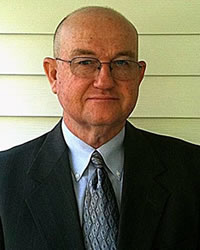
About Gary Shepard
Gary Shepard is teacher and pastor of Sovereign Grace Baptist Church in Jacksonville, North Carolina.

Comments

0 / 2000 characters
Comments are moderated before appearing.

Be the first to comment!

Joshua

Joshua

Shall we play a game? Ask me about articles, sermons, or theology from our library. I can also help you navigate the site.