Bootstrap
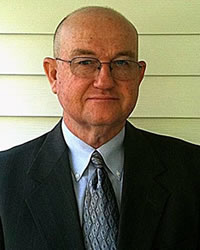
Gary Shepard

The Lord Our Righteousness

Jeremiah 23:1-6
Gary Shepard February, 9 2014 Audio
0 Comments
Gary Shepard
Gary Shepard February, 9 2014

Sermon Transcript

Auto-generated transcript • May contain errors

100%
If you would take your Bibles
this morning, turn with me to Jeremiah chapter
23. Jeremiah 23. As we find it often
in the Scriptures, There is a warning to the enemies
of God. And as He gives warning to His
enemies, He speaks mercy to His people. Woe be unto the pastors that
destroy and scatter the sheep of my pasture, saith the Lord. Therefore thus saith the Lord
God of Israel against the pastors that feed my people, ye have
scattered my flock and driven them away, and have not visited
them, Behold, I will visit upon you the evil of your doings,
saith the Lord. And I will gather the remnant
of my flock out of all countries, whither I have driven them, and
will bring them again to their foes, and they shall be fruitful
and increase. and I will set up shepherds over
them which shall feed them, and they shall fear no more, nor
be dismayed, neither shall they be lacking, saith the Lord. Behold, the days come, saith
the Lord, that I will raise unto David a righteous branch, and
a king shall reign and prosper, and shall execute judgment and
justice in the earth. In his days Judah shall be saved,
and Israel shall dwell safely, and this is his name whereby
he shall be called the Lord our Righteousness. The Lord pronounces a woe to
these that He describes in this text. And when God pronounces
a woe on His enemies, it is irreversible and it cannot be hindered. And
the woe that he pronounces here, he pronounces against those who
are shepherds, or under shepherds, that are supposed to be given
the charge and care of the sheep of the Lord's pasture. God identifies His sheep as just
that, His sheep. But he does not say so of these
particular shepherds. He says, Woe unto these that
have scattered the sheep. They lead men and women into
idolatry. They fail to warn them of the
wolves that come in sheep's clothing. And most of all, they did not
feed them with the word, the gospel of the Lord Jesus Christ. But as we find in this text,
though these shepherds, these scattering shepherds, though
they fail the people of God, the chief shepherd, The One who
is described as the Good Shepherd, or the Shepherd and Bishop of
our souls, He will not fail them. And He not only makes a prophecy
here, but He makes a pledge here. And that is that He will in spite
of these scattering shepherds, He will in spite of all that
is done against them and all that is failed to do for them,
He will gather them, He will save them, And he shows here
exactly how he will do it. He will save them by a person. And in that person, their salvation
is a positional salvation. You say, a positional salvation. Well, I'll say this, lest anybody
say that we're just speaking theologically or of some personal
doctrine. Positional salvation is the salvation
of the Bible, and it is as personal as it gets. And I call it positional salvation
because God views and deals with all our race in one of two representative
men. One of them is described as the
first Adam, And the other, who is none other than the Lord Jesus
Christ Himself, is described as the last Adam. So we're talking about, as the
Bible does, God dealing with all men and women either in Adam,
that first Adam, or in the Lord Jesus Christ. So that when you
go to a portion of Scripture like Romans 5, he uses this term,
by one man. He contrasts one man in whom
we all fell, with this other one man by whom
all his people will be saved." Let me read you one verse out
of Romans 5. He says, "...for as by one man's
disobedience many were made sinners." And he's talking here about this
principle of representation. As by one man, those that he
represented, they were made sinners, fell in sin. So by the obedience
of one, shall the many be made righteous. By one man, the race
fell. And in contrast with that, yet
by the same principle, by the obedience, this obedience unto
death of this last Adam, those he represents, they are made
righteous. Paul, writing to the Corinthians,
he describes it in this way, in 1 Corinthians 15, he says,
For as in Adam all die, so also those who are in Christ. So by the obedience of this one,
the many shall be made alive." You see, God describes himself
as the righteous God. That's not a name I picked out
for him, or a name that I just choose to describe him by. He describes himself, this unchangeable
God, as the righteous God. So, saving these He speaks of
here that He will save and deliver, He must save them in a way consistent
with Himself, so He'll save them by His righteous grace, and as
He says, make them righteous. By one man's disobedience, The
many were made sinners. So by the obedience of one, the
many shall be made righteous." And this one in whom they'll
be made righteous, this last Adam, the Lord Jesus Christ,
He's the one spoken of in verse 5 and 6 of Jeremiah 23. Look
at it again. Behold, the days come, saith
the Lord." If He says it, they will come. There is no turning
back His purpose. Behold, the days come, saith
the Lord, that I will raise unto David. This one will have something
to do with David. He's David's Lord, but at the
same time, he's called David's son. I will raise unto David a righteous
branch. and a king shall reign and prosper,
and shall execute judgment and justice in the earth. In his
days Judah shall be saved, and Israel shall dwell safely, and
this is the name whereby he shall be called." And it's all capital letters. This is the name whereby he shall
be called the Lord our righteousness. And if I were to state this as
simply as I possibly could and can, it would simply be that
all their righteousness is in one outside of themselves. The only righteousness. that any fallen child of Adam,
anyone in all our race, the only righteousness that they will
ever have, and that by grace, is in the Lord Jesus Christ. You see, that's what that very
name tells us. He is the Lord, but He is not
only the Lord Jehovah Jesus, but He is the Lord our righteousness. We ought to remember that name,
we ought to seek to find out and learn everything about what
is meant by that name, but this is the name by which the Deliverer
and Savior and King who reigns and prospers, this is the name
whereby He is called the Lord our Righteousness. And that being the case, and
for that reason, all of these that he says, who are also described
in another way many times in this book, but also in chapter
33, they have a name because God views them in Christ. Turn over there to Jeremiah chapter
33. Jeremiah chapter 33, where these
that he will save, these sheep of his pastor, these that he
will deliver, these that are spiritually called the house
of Judah and the house of Israel, They are, it says in verse 16,
in those days shall Judah be saved, and Jerusalem shall dwell
safely, and this is the name wherewith she shall be called. You see that? She. Because he's talking here
about Jerusalem. That Jerusalem which is above,
which is the church, which is the people of God, which is the
Bride of Christ. And this is the name whereby
she shall be called the Lord Our Righteousness. You see, there is such a union
by our association, if we be the people of God, such a union
by our association with our head, with what those old theologians
called our federal head or our representative. That it is used,
this marriage relationship is used to picture just exactly
that. Listen to what Paul says in Ephesians
5. I always read this in a wedding
ceremony. I always try to stress the importance
of men and women living together, doing everything, because of
what it represents. It represents the union between
Christ and His church, His bride. Paul says in Ephesians 5, For
we are members of His body, of His flesh, and of His bones. We're pictured as Christ the
head, and we as believers the body. He says, for this cause
shall a man leave his father and mother, and shall be joined
unto his wife, and they too shall be one flesh. One flesh. Now listen to this, same verse. This is a great mystery, but
I speak concerning Christ and the church. You see this union
between a man and a woman This union of marriage wherein it
is said that when they unite, they become one flesh. It is a picture of that union
of Jesus Christ and His bride, His people. So if he be called by this name,
the Lord our righteousness, if she be married to him taking
his name rather than hers, what is her name? The Lord our righteousness. And this is absolutely necessary. Absolutely necessary if we are
to stand accepted before God and by God. This is absolutely
necessary that we be joined to Christ if we possess righteousness. Why? Because we don't have any
of ourselves. You say, well, we're working
to it. No, we don't have any of ourselves. We may compare
ourselves with ourselves and think we stand a little bit better
or higher than the other. But Paul said, that's a dangerous
thing. Because the standard by which
we are judged is not a sinner like ourselves, but by the perfect
man, the man Christ Jesus. Paul, when he writes in Romans
chapter 3, quotes out of what already has been stated in the
Old Testament. He says, "...as it is written,
there is none righteous, No, not one. You might be better than me.
I certainly hope you are. But that is a poor standard. And it is not the standard set
forth in the Word of God, what you say about yourself, what
someone else says about you. None of these things amount to
anything or count for anything but just more sin. We are what
God says that we are. And He says there is none righteous,
no, not one. As a matter of fact, Another
one of the prophets that God used to write this Old Testament,
the prophet Isaiah. God commands him to take his
place with his race and declare something about every one of
us. He says, but we are all as an
unclean thing, and all our righteousnesses. which are not really righteousnesses
at all. But all our righteousnesses are
as filthy rags. And we all do fade as a leaf,
and our iniquities, like the wind, have taken us away. In other words, if we are to
be saved, if we are to be saved by the God of the Bible, if we
are to be saved in the way that He says He saves sinners, and
the only way we ever could be saved, He has to do something
for us. He has to assure If Christ is
the only righteousness, especially the only righteousness in a man,
He has to put us in Him. He has to view us in Him. He has to receive us and accept
us and bless us all in Christ. And that's exactly what this
book says he does. Turn over to Ephesians, the first
chapter. Ephesians chapter 1, when Paul
is writing in this letter to the church at Ephesus, look at
what he says in verse 3 of chapter 1. He says, Blessed be the God
and Father of our Lord Jesus Christ, who hath blessed us with
all spiritual blessings in heavenly places, or in the heavenlies,
in Christ. You see that? Where are all spiritual blessings? And they are the only ones that
will last. They are the only ones that matter. Where are they? Where has God
blessed them to be for a sinner like me? He says, in Christ. Not by way that Christ has prescribed. Not by a religious formula that
some preacher has made up. But all these spiritual blessings
are in Christ and God has blessed His people and assured that they
will be the recipients of all spiritual blessings in Christ. Not by your doing or mine. Not
by our decision, by God's decision. And not only that, if you look
down in verse 4, it says, "...according as He hath chosen us in Him."
There it is again. Where is divine election? which is the choice of God that
He speaks of in this book. A choice of a people to be the
objects of His mercy, to be the bride of His Son, to be the heirs
of His grace and His eternal inheritance. How did they come
to be such? He chose them in Christ before
the foundation of the world. And then when you get down to
verse 6, that is as plain as it possibly ever could be. Because it says, "...to the praise
of the glory of His grace." Everything He does toward a sinner is in
grace. And it is to the glory, His glory,
for His grace. to the praise of the glory of
His grace wherein He hath made us accepted." All this world talks about is
somebody accepting Jesus. Find that in this book for me. You see, it is not we who are
to accept Jesus. What we have need of is to be
accepted in Jesus. You look at this book, and read
it, and quit listening to people who don't know anything about
this book, and you see who it is that has to do the accepting.
God must accept us. He's holy, and just, and righteous,
and we're sinners. We better find out how He can
accept us. He hath made us accepted. In the original, that says something
like this. He has graced us. How? In the Beloved. That word's a little word, isn't
it? That word, in. But I'm telling
you what, the wealth and the height and the depth and the
width and the breadth of God's eternal salvation is bound up
in that little word as it is associated to the Lord Jesus
Christ. In the Beloved. Is acceptance
by God based on what kind of person I am, or what I do, or
what I don't do, or what I give, or where I go? Is that where
acceptance is? It's in the Beloved. It's in
the Beloved. You look on down in verse 7. In whom? There it is again. Talking about the Beloved Christ,
in whom we have redemption through His blood, the forgiveness of
sins according to the riches of His grace. Don't give me some formula. Don't
give me some rule. The Lord's people being saved
by His grace, They hate their sin, they seek grace to live
more godly in this world, but their standing, their acceptance
before God is in the Beloved, in whom we have redemption through
His blood, the forgiveness of sins according to the riches
of His grace. Look down at verse 11. in whom also we have obtained
an inheritance." It's not going to be a basis of reward whereby
if you do better than me, you'll get more than me, you'll get
more stars, you'll get more merit badges or something like that.
No. It says, in whom also we have
obtained an inheritance. being predestinated according
to the purpose of Him who worketh all things after the counsel
of His own will." In whom? In Christ. Look down in verse
13. In whom? Ye also trusted, after that you
heard the word of truth, the gospel of your salvation, in
whom also, after that you believed, you were sealed with that Holy
Spirit of promise." It's in him. It's always been
in Him. It's going to be in Christ and
no other. You see, God views His elect
ones in Christ. All He did, they did in Him. Paul, when he writes in Romans
6, and he talks about our association with Adam, that old man, he says,
knowing this, that our old man was crucified. How was our relationship
to the old man crucified? It's because we were crucified
with Christ. Because we're in Christ, if we
be His people. And they will surely be shown...
You know, this world always talks about those who are the in crowd. Well, you can mark this down.
God's people will be in eternity and will be shown to be the only
in crowd that there is and they will be such because God put
them in the Lord Jesus Christ. Let me read you some verses that
just all amplify what I'm trying to say to you this morning. Romans
3.24, we read it, Joe read it, "...being justified freely by
His grace through the redemption that is in Christ Jesus." How are we justified? That means
declared righteous. Freely, he says. That word in
another place is translated without a cause, where it says that they
hated Christ without a cause. Same word. Being justified freely,
without a cause in us, through the redeeming work of the Lord
Jesus Christ. Listen to this one, Romans chapter
8 and verse 1. There is therefore now no condemnation
to them which are in Christ Jesus." Maybe just a little bit? None. Because no condemnation comes
from being justified, which is being declared righteous by God,
and on that basis, there's no condemnation to them that are
in Christ Jesus. 1 Corinthians 1. Paul writes, unto
the church of God, which is at Corinth, to them that are sanctified
in Christ Jesus. Sanctified? Well, I thought sanctification
was a process, a progressive thing. Oh no. Salvation in every
aspect is in Christ. They are sanctified in Christ. That word means, on the one hand,
to be set apart. It means, on the other hand,
to be regarded by God for the use of God and holy by God. All of sanctification is in Christ
Jesus. Call saints with all that in
every place, call upon the name of Jesus Christ our Lord, both
theirs and ours. 1 Corinthians chapter 1 again,
verse 30, Paul says, But of Him, that is of God, by God, Are you
in Christ Jesus, who of God is made unto us wisdom and righteousness
and sanctification and redemption? By God, by His grace, by His
will, by His purpose, by His divine act of grace, He says,
you are in Christ Jesus. Well, being in Christ Jesus,
what are we made? Wisdom, righteousness, sanctification,
and redemption. That's everything. That's everything. Galatians
3. There is neither Jew nor Greek,
there is neither bond nor free, there is neither male nor female,
for you are all one in Christ Jesus. All these distinctions. All these differences. Men and
women, they hate these differences. They make everybody to be the
same, know the same, have the same fruit. That's absolutely
rubbish because the divine hand of the Almighty has made us different. Just be thankful that you weren't
made like me. We're different. Male is male,
female is female. Black is black, white is white,
red is red. Smart is smart, ignorant is ignorant. Talented is talented. Some like
me, not so much talent. We're different. But all of God's
people are one in Christ Jesus. Paul writing to the church at
Ephesus again. Chapter 2, he says, God hath
raised us up together and made us sit together in heavenly places
in Christ Jesus. And he says, now, in Christ Jesus,
ye who sometimes were far off are made nigh by the blood of
Christ. Far from God we are, unless He
put us in Christ, and by His blood make us nigh to God. All of the so-called spiritual
movements of religion Don't you want to get closer to God? Don't you want to get deeper? Don't you want to get right up
there on the front row? How much closer can one get than
being in Christ? In Christ. You say, Pastor, don't
you believe in good works? I sure do. But not to save yourself. Not by works of righteousness
which we have done, but by His mercy He saved us. How? In the Lord our righteousness. Paul says to the Colossians,
speaking of Christ, he says, Whom we preach, warning every
man, and teaching every man in all wisdom, that we may present
every man perfect. What an objective. But he didn't
stop there. He said, present everyone perfect
in Christ. That's all you can be in Christ
is perfect. And all you can be outside of
Christ is just an unrighteous sinner with no hope. When Paul wrote to Timothy in
chapter 2 of 2 Timothy, he said, Therefore I endure all things
for the elect's sake, that they may also obtain the salvation
which is in Christ Jesus with eternal glory. Why are you preaching, Paul?
You wrote this letter from a prison. You're talking about the very
thing that got you thrown into prison. Preaching Christ. Preaching
the gospel. You can preach works all you
want to, and men will applaud you. They'll love it. But you
preach salvation that is only in one outside of man's self,
the Lord Jesus Christ, and they'll put you in prison. What are you preaching? Why do
you keep preaching this? He said, I do it for the elect's
sake. He did it first for the glory of God. He did it at the
command of God. But he did it for the elect's
sake. Why? That they might obtain that salvation which is in Christ
Jesus with eternal glory. You see, Daniel had written of
the Messiah. And He laid down some things
being led by the Spirit of God about Messiah when He came and
what He would do. And He said He would die, but
the thing He says right there in the midst of it is this, He
said He'd bring in the everlasting righteousness. He is the everlasting
righteousness. In His life and in His death,
He is that everlasting righteousness. Because righteousness has to
do with justice. When God was instructing those
leaders in Israel that were to be the judges of the people,
He instructed them to be very accurate and very strict with
their weights and balances, and to deal with all people the same,
because I'm the righteous God. So how can He deal with your
sin? My sin? You know, I can remember my early
days all up into manhood and all. I must have turned over
thousands of new leaves. When I was in false religion,
I used to walk down their aisles and shake the preacher's hand,
do all those things. But I never improved. I was still a sinner if I was
honest with myself. And if anything, it seemed I
was a worse sinner. And that's all it can do. You
can tell a man to do something in order to gain the favor of
God or increase the favor of God. He may try, but you'll make
two-fold more the child of hell of him than he was before. God help him that he never imagines
that he has improved. Christ spoke the greatest warning
against those, He said, who trusted in themselves that they were
righteous. What did they do? Despised others. Turn over to 2 Corinthians. 2 Corinthians chapter 5. In 2 Corinthians
chapter 5, look at that last verse, verse
21. There's always a lot of discussion about this, but it's really pretty
plain. For He, that's God, hath made
Him, that's Christ, to be sin for us who knew no sin. How do we know? And what do we
know about what it is for Christ to be made sin by God for us? Well, it's the same thing that
He talks about when He says He's made Him to be a curse for us. For cursed is everyone that hangs
on a tree." We know that Christ was made sin for His people because
He who knew no sin died because of sin. But they were not His
sin. They were the sins of His people
that God had laid on Him, imputed to Him. And He died on that cross
to satisfy those sins in the matter of divine justice which
required death. But listen, that we are writing
to believers, Church at Corinth, for all who truly believe, that
we might be made the righteousness of God." In other words, not just any
righteousness, God will not accept that, but the righteousness of
God. The righteousness of Christ,
because He is God manifest in the flesh. But now look at those
last two words. Made the righteousness of God
in him. It doesn't say by him. It says in
him. In other words, there would never
be a time that I could or ever will stand before God and be
counted by God righteous except in Christ. I'll be called the righteous, but that's because the righteous
as we find them in Scripture are those who look to Christ
as their only righteousness. This is the name whereby she
shall be called The Lord our righteousness. Turn over to Philippians. Philippians chapter 3. I'm about
to close. Philippians chapter 3. Listen
to the Apostle. This is Saul of Tarsus. And here
in chapter 3, he doesn't repent of being a drunken bum, adulterer or something like that.
He's a moral Pharisee. And yet he says that before,
as that moral Pharisee, that law keeper, he was a blasphemer. But notice what he says in verse
8. Verse 7, But what things were
gained to me, those I counted lost for Christ. He thought once
that being a Jew was counting for something. He thought that
being moral counted for something. He thought that being a teacher
of the Bible counted for something. He thought that being a Pharisee
counted for something. But not before God. He said,
now I count them lost for Christ. Yea, doubtless, and I count all
things but lost for the excellency of the knowledge of Christ Jesus
my Lord, for whom I've suffered the loss of all things, and do
count them but done, that I may win Christ and be found in Him. not having mine own righteousness
which is of the law, that is, any imagined righteousness that
might come based on a principle of my performing, or my obedience,
or my doing, but that which is through the
faith of Christ, the righteousness which is of God by faith. Where do you want to be found,
Paul? In Him. Not having my own righteousness. Alright, turn back for one more
text in Romans 4. Abraham is called by God the
father of the faithful, the father of them that believe. And when
you come here to Romans chapter 4, listen to what it says beginning
in verse 21. This is all about how Abraham
was counted righteous before God. And it was and is through
faith in the Lord Jesus Christ. Faith is simply looking outside
of ourselves to Christ. Looking apart from our own doing
to His doing. Looking apart from anything in
us to His suffering and death on that cross. There's the righteousness
of God. Verse 21, "...and being fully
persuaded that what he had promised he was able to perform, and therefore
it was imputed to him." Wonderful word that word imputed. It was
charged to his account by God. It was put to him, accounted
for him by God for righteousness. Now it was not written for his
sake alone that it was imputed to him, but for us also, to whom
it shall be imputed, since," and that's what it means here,
that's what it actually says, since we believe on him, that
raised up Jesus our Lord from the dead, who was delivered for
or because of our offenses, and was raised again for our justification. When the Lord Jesus Christ, bearing
the sins of all His people, them being in union with Him, when
He went to that cross and suffered and died, He did so for our offenses. But when God raised him from
the dead, it was the sure proof and evidence that all those offenses,
all our sins had been made an end of and put away and the debt
paid. And therefore, Christ being raised
from the dead is the testimony that God's people, those who
believe on Christ, are justified. declared righteous by God. You see, in faith, we don't do something to be justified
by God. True faith, which is a gift of
God, looks to Christ for everything. wants to be like Paul said, I
want to be found in Christ. I pray that a lot. Lord, let
me be found in Christ. Because God making us righteous
is not God putting something on us, but by putting us in someone. He is the Lord our righteousness. And by faith, we are enabled
by God to trust Christ alone and to cease from going about
to establish our own righteousness. Some years ago, I wrote a hymn And I entitled it, Our Righteousness
in Heaven Sits. By faith we look to heaven's
throne and see our glorious dress. There in the Holy Son of God,
the Lord our righteousness. Let change what will, let come
what may, he ever sits the same, and all who plead his blood alone
are called by that great name. Through falls and fears and every
doubt, unchanging he abides. Our righteousness in heaven sits,
all hope in him resides. accepted in God's Son beloved,
by free grace justified, and saved from all the wrath to come
in Christ the Crucified. O God, be praise, and all ye
saints remember and recall, the righteousness we call our own
is not our own at all. Paul wrote to the church at Colossae. And they, like everyone that
he had written to, had people trying to tell them this and
trying to tell them that. Just like it is in our day. Somebody's
saying, you've got this level of Christianity here, and you've
got this level here, and you've got this level here. It's a pyramid
plan kind of, you know. This is what he said to them. And you are complete in Him who
is the head of all principality and power. Complete in Him. You say, well, preacher, aren't
we to grow in grace and in the knowledge of Christ? Yes. in
Him. If I'm alive, I'm alive. I'll
grow, that doesn't make me any more alive. But that's the sign
of life. I grow. But he said, don't ever forget,
those who are in Christ, they're complete in Him. Because
He is the Lord our righteousness. There's something amazing in
that, that just if you stop and think about it, that word, our,
is sinners who believe on Christ. And that is amazing that we could
ever say that. Believe it. The Lord, is our
righteousness. He who should not ever have had
anything to do with us, who could not be bettered by us, who could
only be defiled by a way of salvation that's inconsistent with Him,
but in Christ, He's that just God and the Savior. He's the Lord, our righteousness. God, help us to know Him, to
trust in Him, to learn more about Him, and certainly to glorify
Him. Father, we thank You for Your
great mercy to us. We know it is all to the praise
of the glory of Your grace. Grant that we might be found
among those whose only hope is in Christ Jesus. Give us true faith that looks
to Him and to that work He accomplished in its entirety as the man Christ
Jesus, to His cross death. We pray that You would teach
us and help us and receive our thanks For we ask all things
in Christ's name. Amen.
Gary Shepard
About Gary Shepard
Gary Shepard is teacher and pastor of Sovereign Grace Baptist Church in Jacksonville, North Carolina.

Comments

0 / 2000 characters
Comments are moderated before appearing.

Be the first to comment!

Joshua

Joshua

Shall we play a game? Ask me about articles, sermons, or theology from our library. I can also help you navigate the site.