Bootstrap
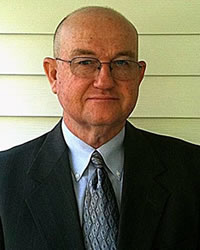
Gary Shepard

Knowing Your Election

1 Thessalonians 1:4
Gary Shepard September, 29 2013 Audio
0 Comments
Gary Shepard
Gary Shepard September, 29 2013

Sermon Transcript

Auto-generated transcript • May contain errors

100%
Turn back to 1 Thessalonians
where we read this morning in the Scriptures. 1 Thessalonians chapter 1. It is a sad and shameful commentary on our
day. when the very doctrines of Scripture, the very Word of God Himself, is dealt with by preachers in
such a way that in their own imagined wisdom, they withhold
from men and women these precious These truths do two things. Number one is they reveal God
for who He is, and they assure that all the
glory, especially in salvation, goes to Him. And then they do another thing,
both of these things being the reasons why men will not preach
them. The second thing is they stain
the pride of men. They take away all our boasting
and all our glorying in the things which we imagine that we, have
done. There is a word in our text this
morning that so many, if they read it at all, read by it very
quickly. It is the word, election. Election is both a Bible word,
and most definitely a Bible doctrine. The man that God used to write
these words, being inspired by the Spirit of God, is the Apostle
Paul. And he had been forbidden by
the Holy Spirit to preach the gospel in Asia or Bithynia, but
was directed on this particular missionary journey to Macedonia
in a place, city, called Philippi. The Bible says that it was there
that he preached to a group of women by the river, and it says
that the Lord opened the heart of a woman by the name of Lydia,
so that she attended unto the things that were spoken of Paul
as well as her household. But Paul and those that were
with him were imprisoned and beaten by the authorities at
the Jews' request. Religion is always against the
truth. Self-righteousness is always
against the Word of God. But yet, while he was imprisoned,
Paul continued to preach. He preached, and God was pleased
to stir and save the very jailer himself, that Philippian jailer,
who, it says, believed along with his house. And then when they were forced
to leave Philippi, they traveled on to this city of Thessalonica,
and they preached in the synagogue there. But again, they met with
the same persecutions from these religious Jews which believed
not. And yet, In verse 4 of Acts 17,
it says, that some of them believed, and consorted with Paul and Silas,
and of the devout Greeks a great multitude, and of the chief women
not a few. But they were forced out of the
synagogue, And they met in the home of a man by the name of
Jason who, along with some others, were also accused by the Jews
who said this, "'These that have turned the world upside down
are come hither also.'" My friends, the world, has been
upside down since the fall of man in the garden. And it is only through and by
this message, this gospel that Paul and these others preached
by the Spirit of God, it is only by this means that it will, that
is, anybody in it will ever be right side up. It is the gospel of God. But Paul again was forced to
leave Thessalonica, also much sooner than he would have liked,
because the Jews again, it says, set all the city on an uproar. And he did not have the time
to spend there among those who believed like he wanted, and
so now, sometime later, he writes this letter, as we see in verse
1, to the church of the Thessalonians. Paul and Silvanus and Timotheus
unto the church of the Thessalonians. And then he says this, we read
the fullness of his greetings because he says, the church of
the Thessalonians which is in God the Father and in the Lord
Jesus Christ, grace be unto you and peace from God our Father
and the Lord Jesus Christ. And most everywhere you find
the apostle using those two words, grace and peace. It will always
be grace that precedes peace because there is no peace without
grace. He says, we give thanks to God
always for you all, making mention of you in our prayers, remembering
without ceasing your work of faith and labor of love and patience
of hope in our Lord Jesus Christ in the sight of God and our Father. And then he says some things
that were not only encouraging to them, but also instructive
to us. Because he says in verse 4, "...knowing,
brethren beloved, your election of God." Now, I hope every one of you
is looking at your Bible. I hope every one of you are able
this morning to receive those words as the very words of God
Himself when He says, knowing, brethren, beloved, your election
of God. Now, I call this message, knowing
your election. You see, in this book, and this
one book alone, he calls them brethren something like 16 times. Knowing brethren. You see, he
has an intimate relationship with them, a family relationship,
one that supersedes all other relationships. I know how men
and women talk in our day. As if they are so sure that when
they get to heaven, they'll see every one of their natural earthly
family, but that will not be the case. The only family that
any will see in heaven is that spiritual family, and if we're
not in that family, we will not see them, neither Christ. Paul speaks of this family, and
this family was a family of which his close natural family was
not a part of it. Not only that, his national family,
the Jews as a nation, was not any part of it. and also certainly
not his former religious family, being a Pharisee, being a Jew
in the Jews' religion. Those things did not in any way
enter into this relationship and were a part of this family
he speaks of. Because like Paul, those he's
speaking to, God, the living and true God, had identified
Himself to them as their Father. The Father of Christ was their
Father. God the Father. God our Father. And on the basis of that relationship
with God being their Father, He calls them all now brethren. Brethren in Christ. You see, when our Lord walked
on this earth, He identified this family. He spoke to some
and He said, I go to my Father and your Father." He took them
aside and He instructed them in this way. He said, when you
pray, you pray on this basis. Our Father who art in heaven. And you see Christ is Himself
called in this same relationship. He's called the firstborn among
many brethren. And that means that we have no
part in this family that will be one family, and one happy
family, one family of fellowship together for all eternity, if
we do not have this relationship and this union with Christ, who is the head of this family. In Hebrews 2, the apostle says
this, "...for it became Him, for whom are all things, and
by whom are all things, in bringing many sons to glory." All the
Lord's people. to make the captain of their
salvation perfect through sufferings, for both he that sanctifieth
and they who are sanctified are all of one, for which cause he
is not ashamed to call them brethren." Christ's people are in this relationship,
and on the basis of it, He's not ashamed to call them brethren. Saying, I will declare thy name
unto my brethren. In the midst of the church will
I sing praise unto thee. Paul says, knowing brethren. Your election of God. And he knows that these are such
because, number one, God has assured him of this. He's the
apostle of God. He's been sent to preach the
gospel of God. He's led and directed of the
Spirit. God has assured him of this. And not only that, because he
has seen what God did in them. And then because of what he has
seen, God has brought them to do. There is the witness of God's
Spirit to him. He has been enabled to see what
the Lord has done in them, and then what that work has caused
them now to do and to be. They are the elect of God. And one thing he says in this,
first of all, that we should note is this, they are described
in this way, they are brethren Beloved of God. I tell you, I don't want to rest
anywhere on my love for God. I don't want to be found trusting
and relying on my love for Him, but rather to know something
and have a confidence of His love for me. Same way with acceptance. It isn't my acceptance of Jesus,
it's His acceptance of me that matters. They are described as
beloved of God. And by that, since God is the
unchanging God, we ought to think about that in everything we consider,
He is the one who changes not. So that means if they are beloved
of God, or any that are beloved of God, they have been in eternity
past, they are being even at that moment, and they always
shall be loved of God, because He loves His people with an everlasting
love. That's what He says in Jeremiah.
I have loved thee with an everlasting love, therefore I have drawn
thee." They are beloved in Christ because He Himself is called
the Beloved. They are accepted in the Beloved. And not only that, but the Scriptures
say that the love of God, Paul says in Romans, the love of God
is in Christ Jesus. We have no claim on the love
of God, no right to the love of God outside of Christ. And this is the same love of
John 3.16. But divine love is the first
cause of all these people have, the first cause of all that they
are. They are beloved of God. And
Paul did not say that all men are loved of God. He says this
in a way to distinguish how God has favored them. You're beloved of God. Not everybody
is beloved of God. You say, well, what about John
3.16? John 3.16 is a verse wherein it is made known that the love
of God was not simply for the Jewish people, but for the world,
that is, for a people out all of the world, and they're described
and distinguished in this way. They're brought to believe. They brought to believe the truth,
believe the gospel. And they will never, because
of God's love and grace, they will never perish. These people
among the Thessalonians are beloved of God. And if God really did
love every person in this world, tell me, what in the world would
His love have to do with salvation? Absolutely nothing. If He loved every person in the
world, why would there ever be a hell? Why would there ever
be a judgment? You see, He speaks of this love
as unique and special and discriminating. He says, brethren, you are beloved
of God. Just like he said, Jacob have
I loved, but Esau have I hated. They have been loved of God.
And being loved of God, they are also the elect of God. The elect of God. There is without a doubt, Throughout
this book, not only plain statements of this truth, but a host of
examples. Noah's one, his family. God destroyed the whole antediluvian
world, every person in it, but He loved and showed mercy to
Noah and his family. They are chosen of God. And this love, being a sovereign
love, demonstrates itself first of all, as the Apostle teaches
us, with God not only loving a people from Adam's race, but
also choosing them. God's elect are spoken of often
in Scripture. If you look over in Isaiah 65,
it says of them, "...they shall not build, and another inhabit. They shall not plant, and another
eat. For as the days of a tree are
the days of my people, and mine elect shall long enjoy the work
of their hands." When a verse like that is read
so often, people say, well, he's talking about the nation of Israel. Well, if he's talking about the
nation of Israel alone, that prophecy, that promise has utterly
failed, and God Himself would be a failure. But he's talking
about this chosen people from among Adam's race, the true Israel,
that Paul says they are not all Jews who are Jews outwardly,
but he is a Jew who is one inwardly. They are spiritual Israel, and
this very nation of Israel is the clearest illustration and
example of God's right to choose who He will. There are words like elect, and
election, and chose, and chosen. Matthew 24, he says, "...for
there shall arise false Christs and false prophets, and shall
show great signs and wonders, insomuch that, if it were possible, they shall deceive the very elect."
if it were possible. But it's not. In Mark 13 he says,
"...and then shall he send his angels, and shall gather together
his elect from the four winds, from the uttermost part of the
earth to the uttermost part of heaven." These messengers of
God, which is simply nothing but those who preach the true
gospel, they'll be used of God to gather who? His elect from
the four winds. In Romans chapter 8, Paul, in
that great book of solid, sound doctrine, the doctrine of God's
grace, he says this, "...who shall lay anything to the charge
of God's elect?" It is God that justifies. How could you read that verse
and not know that God justifies His elect? that people that He
chose to Himself and for His glory. In Colossians 3, even
in instructions to those people who already believed, He says,
"...put on therefore as the elect of God, holy and beloved, vows
of mercy, kindness, humbleness of mind, meekness, longsuffering." God has a people. Thou shalt call His name Jesus,
for He shall save His people from their sin. How did they
come to be His people? Because the Father gave them
to Christ before the world began. And not only that, they were
His people given to Him because the Father chose them. Paul writes to Titus, he says,
"...Paul, a servant of God and an apostle of Jesus Christ, according
to the faith of God's elect, and the acknowledging of the
truth which is after godliness." When God chose the nation of
Israel, And you go back in the Scriptures to see all that surrounds
that, like we've often been doing in Wednesday evening services,
you see that everything pictures the people of God, pictures the
worship of God, the sacrifice of God, the gift of God, the
righteousness of God. Here is a people chosen from
among the nations to be the people of God earthly, and they picture
the spiritual people. Deuteronomy, it says, "...for
thou art an holy people." That means a people separated unto
God and for the use of God. "...holy people unto the Lord
thy God, and the Lord hath chosen thee to be a peculiar people
unto Himself above all the nations that are upon the earth." Somebody
said, God wouldn't be doing right if He chose to save this one
and that one. Well, he wouldn't be right if he chose a nation
of Israel above the others also. We know he did. We have the evidence
of it. And I realize, without any doubt,
that election is not salvation, but there is no salvation without
election. Not only that, there is no gospel
without it. There is no true preaching of
the gospel of God without it. He says, they are the elect of
God. And this isn't the only time
that Paul mentions it. In Romans 9, he says this, using
an example that God gave, that example being the children, Jacob
and Esau. He says, "...being not yet born,
neither having done any good or evil, that the purpose of
God, according to election, might stand not of works, but of him
that calleth." You see, Jacob and Esau were
both sinners. Both wretched sinners, just like
we are. And God, in His sovereign will
and love, He distinguished one, left the other in Himself and
to Himself to justly face what He should face. But He showed
mercy to Jacob. Somebody always says, well, I
don't understand how in the world that God could hate Esau. But if we ever find out what
we are as sinners, and know ourselves to be just exactly in ourselves
just like Jacob, we'll wonder how in the world he could love
Jacob. Paul says in Romans 11, this
was a very encouragement to himself as he sought to preach. It's
an encouragement to me in this day. He said, even so, then at
this present time also, just as it was in Elijah's day, you remember how it was in Elijah's
day? Elijah said, Lord, I'm ready
to die. Everything has gotten so wicked
and so vile, and nobody wants to hear the message that you've
sent me to preach. I'm going to sit down under this
juniper tree and just wait to die." But the Lord said to him, you
get up, you go where I've told you, you preach what I've told
you, because I reserved to me right at this hour 7,000 that
have never bowed their knee to Baal." He wasn't sending Elijah to preach
a message to see if just perhaps he could, by his reasoning ability
and his charismatic personality, try to get somebody to make a
decision. He said, you go and you preach
because of some who are already decided upon. When Paul was so
afraid down in the city of Corinth, that wicked place, the Lord sent
him a vision and told him to stand and preach the gospel. He said, for I have much people
in this city. In Romans 11, he says again,
"...what then? Israel hath not obtained that
which he seeketh for, Israel as a nation, but the election
hath obtained it, and the rest were blinded." You say, well,
why even have this relationship with this national Israel then?
if they are, as a whole, the ones who rejected Christ even
themselves. He says, well, as concerning
the gospel, they are enemies for your sake, but as touching
the election, they are beloved for the Father's sake. In other
words, as a nation, they are rejected. But there is a remnant,
according to the election of grace, not only among the Gentiles,
but also of the Jews. And they're beloved. Paul himself
was one. Chosen of God. And when you read
this, and when you begin to think about this truth and doctrine
of election, one of the things that we have to confess is that
it is something that God has already done. I'm always amazed at how when
you tell people the truth about what God says Himself, they are
so quick to say, God can't do that. The Bible says He's already done
it. And neither you, or me, or Paul,
or Abraham, or Noah, or Adam, or Eve, or the devil, or any
angels, anybody in this world or heaven, they were not present
when He made this choice. They were chosen from eternity. They were blessed with what He
calls eternal salvation. You see, you can't have an eternal
salvation if salvation with regard to you begins at a certain point
when you do something. Somebody says, how long have
you been saved? I say, from before the foundation of the world.
Is that right? Ephesians 1, Paul says, Bless
be the God and Father of our Lord Jesus Christ. He is the
God and Father of our Lord Jesus Christ. Christ in His humanity,
and everyone in Him, everyone is in this same relationship.
It says, Who hath blessed us? Who blesses who? He has blessed
us. Don't you want to be among the
blessed? I mean, the things we call blessings,
they are not blessings. Cars and houses and health and
all these things, they are not blessings. They may well be the
things that curse you. But it says He has blessed us. with all spiritual blessings." That's every one of them. And
you know they're the only ones that are going to last. All spiritual
blessings. In heavenly places, in Christ. Now this next statement says
a volume, volumes, according This is according. A deacon told me one time, he
said, this stuff you're preaching is not according to Hall. I think
Hall is the bridge expert, isn't he? No, but it is according to
God. According as He hath chosen us
in Him Before the foundation of the
world. Before the foundation of the
world. Before the world was ever made. And it was done so that in time,
those He chose would never ever be able to be lost. never able
to be those who mess it all up, which is exactly what we do. That's why salvation is of the
Lord, because if it wasn't, we'd mess it up. that we should be holy and without
blame before Him, in love having predestinated us unto the adoption
of children by Jesus Christ to Himself, according to the good
pleasure of His will." Salvation doesn't begin with
our choice. Salvation began with His choice.
Salvation is not according to our so-called free will, it's
according to God's will. And I can tell you this, if He
had not willed to save a people in Christ, there would not be
anybody saved. Because no sinner ever has or
ever will of their own selves wield positively toward God Himself. Why? Because the natural mind
is enmity against God. We will according to our nature. There are things that I just
do not like. I do not like liver in any way,
shape, form or fashion. And all my years I have never
gone into a restaurant and my will acted in a contrary way
to what I desire and like and ordered from a menu liver and
onions. It just has not and will not
happen. You see, God did this as an act
of His sovereign will. Once in a while, somebody asks
me, what do you folks mean when you say sovereign? Sovereign
grace, Baptist Church. We mean simply that God does
what He pleases. That God loves who He will, that
God saves whom He will, when He will, how He will, and no
one can stop Him. You see, the right and reason
of it is in Himself, and therefore it's unconditional. It's not
based on foreseen works. It's not based on one's foreseen
choice. It's not based on foreseen merit. It's not based on the foolish
notion that so many have espoused to explain election like this,
that God votes for you, the devil votes against you, and therefore
you have the deciding vote. No. Because neither you or the devil,
either one were present when this election took place. Just one voter, one chooser. God Almighty Himself. You see, election does not find
us in Christ. Election puts us in Christ. He hath chosen us in Him before
the foundation of the world. Paul says, For by grace are ye
saved through faith, and that not of yourselves. It is the
gift of God, not of works, lest any man should boast. And if any question, God being just and right in the
doing of it, You have to remember and find
out this. We find out what is really just
and what is really right in two ways. And neither one of them is our
opinion. Neither one of them is our thinking.
Neither one of them is our logic and our reasoning. We find out
what is just and right by virtue, number one, of what God does. He can't do anything but right. We sang that hymn in the beginning.
Holy, holy, holy Lord God Almighty. He can't do anything but right.
If he ever did anything that was not right and just, he would
at that moment cease from being God. And we know what is just and
right by another thing, and that is by what God says. If God says He chose the people
in Christ before the world began, not based on anything in them
or done by them, I know that's right. He says it's right. He tells
us it's right. It's right and just because He
does it. Paul in Romans 9 says, what shall
we say then to this very thing? Is there unrighteousness with
God? God forbid us even thinking that. For he saith to Moses, I will
have mercy on whom I will have mercy, and I will have compassion
on whom I will have compassion." End of story. What are you going
to say to that? I'm going to fall down on my
knees before the only God there is and cry out, Lord, have mercy
on me. You don't owe it to me. I don't
deserve it, but I sure do plead for it. Have mercy on me. In Romans 9 where Paul gives
us examples, he calls us back to Jeremiah again with another
example. He says, Hath not the potter
power over the clay? to make one vessel unto mercy
and another vessel to dishonor. Vessels of honor, vessels of
dishonor. Can the potter make of the clay
that he owns? That's what Christ is saying.
He says, all souls are mine. You say, well, this is the Lord's
world, I know that. That's not the half of it. Every soul in this world As Christ
reminded us when He prayed to the Father and said, You've given
Me power over all flesh to give eternal life to as many
as Thou hast given Me. You see, this choice is a choice
of a people. Out of those two groups, that
God distinguished in this world in order to show us that, of
the Jews and the Gentiles, a remnant in each group according to the
election of grace. And it is unchangeable and effectual,
and all the elect of God shall actually reach eternal glory
and shall be saved eternally. that everyone will be brought
to hear the gospel, the truth. Why? Because God says so. Why? Because God's glory is in
the means, the message, as well as the end. Somebody said, well, where did
it get you, Paul? Got you run out of this city and that city
and Thessalonica. Got you thrown down in the dungeon
of the prison. And Paul said, therefore I endure
all things. He didn't say, I enjoy them all.
But he said, I endure all things for the elect's sakes. that they
may also obtain the salvation which is in Christ Jesus with
eternal glory." They've got to hear. God has
sent me to proclaim a message to them. He's going to buy that
message. He Himself is going to gather
them out of the four corners of the earth, from the four winds,
What's He going to gather them to? A place on a mountaintop
somewhere? Is He going to gather them to
a doctrine or a creed or an organization? He's going to gather them to
Christ. He's going to bring them to know
His Son. And He's going to do it individually. You see, election involves individuals. When this man himself, who was
Saul of Tarsus, when the Lord was pleased to call him out,
sent him down to that street called Straight in Damascus to
hear a message from one by the name of Ananias. When he got
there, you know what Ananias told him? He said, Saul, the God of our
fathers has chosen you. I'll tell you, Ananias didn't
choose him. He got scared whenever the Spirit of God mentioned his
name and that he was to receive him when he came. He said, I've
heard of this guy. He sure isn't a candidate for
the gospel. But the candidates for the gospel
are the ones that you and I least likely think to be. Paul already had a religion.
Paul already had a good, clean, moral life. Paul already was
zealous in his religion. He already was all the things
that religion tries to make people in our day. But he was still
lost. He said, I was before a blasphemer. But God chose him. He hath chosen
you, that thou shouldest know his will, and see that just one,
and shouldest hear the voice of his mouth. Paul, when he closes out Romans,
in Romans 16, and he's naming some people that he wants whoever
reads the letter to note and acknowledge, send his greetings
to, and he says, he says, Salute Rufus! Chosen in the Lord. Chosen in the Lord. when he writes to the Philippians. He said, And I entreat you also,
true yokefella, help those women which labored with me in the
gospel, with Clement also, and with other my fellow laborers,
whose names are in the book of life. I heard a preacher on the radio
saying one time, he said, if you'll do this and you'll do
that and all this kind of stuff, God will write your name in the
Lamb's Book of Life. These names were written in the
Lamb's Book of Life before the world began. In the indelible
ink of Christ's precious blood. And in it, God views these individuals
as chosen in Christ. That's so important. You see,
election and every other doctrine separated from Christ is a damning
thing. Paul said, he chose you in Christ. He didn't choose you like you're
a standing head and shoulders amongst the crowd. He didn't
choose you in anything done by you. Holy God cannot choose us
in ourselves. Those He chose, He chose in Christ. That is, He chose, as it says
there in Ephesians 1, chose them in Christ in the view of His
person and His work. He chose them as Christ. Viewed them in Christ. joined
to Christ, united with Christ, as it says, one with Christ. So that Paul always writes again
and again using those two words, in Christ. Paul, you're doing pretty good.
I don't want to be found. before God, judged by God, blessed
by God. I don't want to be found based
on anything that I do or have done. I'm counting all of that
as done, that I might be found in Him. That's where I want to be found.
Not having my own righteousness, which is based on a principle
of my doing, I want a perfect righteousness.
Mine is like filthy rags. All our righteousness are as
filthy rags," he said. I want that perfect robe of righteousness
that God imputes to His people, charges to their accounts. An old hymn writer wrote a little
Verse and a hymn. He said, Christ be my first elect,
God said, then chose us in our glorious head. Chosen in Christ. He judged all the sins of the
elect in Christ. when as Paul says, He was made
sin for them, that they might be made the righteousness of
God in Him. If you throw out election, you
throw out Christ. You don't preach this blessed
doctrine that ascribes all the glory and salvation to God as
the initiator as well as the accomplisher. You don't preach
the gospel. You say, well, I'm going to teach
him that at some point. No. That's the first thing Paul
heard from Ananias. What's so important about election?
Because it's unto salvation. You go home and you read 2 Thessalonians,
chapter 2, verses 13 and 14. where Paul says, God, be thanked. Be sure you read the first part
of chapter 2, because it speaks of those that God sent strong
delusion to that they believe a lie rather than the truth. He said, but God be thanked,
because He hath from the beginning chosen you unto salvation. You see, God must have all the
glory. If you ever want to tread on
so very dangerous, eternally dangerous ground, it is to ascribe
any part of your salvation and your acceptance before God to
yourself. He said, I will not share my
glory with another. He gives us glory in Christ, but the one who is the initiator
and accomplisher The cause and the result of salvation is God
and Him alone. Well, what do the elect do? What
really distinguishes them? He said, but God be thanked,
brethren beloved of the Lord, that God hath from the beginning
chosen you unto salvation through sanctification of the Spirit
and belief of the truth. All the elect are confronted
by God using whatever it means to bring them to the knowledge
of this truth and others concerning Christ and God's sovereign grace
to His people. It is a reality A truth. It's something God has done,
and it has a result. It brings all His sheep to follow
Him, to know Him, to hear His voice, and to confess, as Jonah
of old, salvation. My salvation is of the Lord. Not of works, lest I should boast. Not even of my knowledge of elections. But Christ and His precious shed
blood. Because those that were chosen
of the Father and given to the Son, the Son came into this world
and laid down His life for them. The elect are the sheep. He says,
I give my life for the sheep. An old writer said, although
election belongs to God's decree from eternity, It becomes a dynamic
force in the hearts and the lives of God's children. They hear
His voice. They rejoice in electing love
and grace. They rejoice in Christ. And they sing with that old hymn
writer, My hope is built on nothing less than Jesus' blood and righteousness. That's it. "'Tis not that I did
choose thee, for, Lord, that could not be. This soul had else
refused thee, had thou not chosen me.'" Father, we give praise to your
high and holy name this morning. Bring our hearts, Lord, to forsake
every other hope and to look to Christ to be thankful of Your
grace in Him and to ascribe all glory, all the work, all the
accomplishment from beginning to end of our salvation to You. Bless someone this day who has
never before to rejoice in the blessing of being chosen
in Christ by you before the world began. And may everything go to your name and for your glory
alone, in Christ. Amen.
Gary Shepard
About Gary Shepard
Gary Shepard is teacher and pastor of Sovereign Grace Baptist Church in Jacksonville, North Carolina.

Comments

0 / 2000 characters
Comments are moderated before appearing.

Be the first to comment!

Joshua

Joshua

Shall we play a game? Ask me about articles, sermons, or theology from our library. I can also help you navigate the site.