Bootstrap
Gary Shepard

I Am What I Am

1 Corinthians 15:10
Gary Shepard August, 18 2013 Audio
0 Comments
Gary Shepard
Gary Shepard August, 18 2013

Sermon Transcript

Auto-generated transcript • May contain errors

100%
If you would turn back this morning
to that 15th chapter of 1 Corinthians, I want to read again one verse,
one statement that the Apostle Paul makes. And that is the statement
he makes in verse 10, "...but by the grace of God I am what I am, and His grace which
was bestowed upon me was not in vain. But I labored more abundantly
than they all, yet not I, but the grace of God which was with
me." I've entitled this message simply, I Am What I Am. And I do so with the understanding
that the Bible declares all God's elect, all His people, all believers,
in two ways. He describes them as to what
they are in themselves, in Adam by nature, and what they are
by grace, what they are in Christ. And sometimes this causes a bit
of a conflict in our logical minds that are always wanting
to define things as either or. We're either this or we're that. And that's true in most cases. But the man that God used to
write this verse, he knew the reality of these two realities. And he confesses them both. He is at all times grieved over
the one, and yet still enabled to rejoice over the other." You
see, what he was by grace in Christ had not yet changed what
he was in himself, that is, in his flesh as a sinner. And yet, admitting that, what
he was as one still possessing a fallen sinful nature, That
did not change what he was in Christ. And what I want you to
notice with me in some various texts and verses are these two
things stated, confessed, written both realities in him and said
to be also in all believers. And the first one is this, what
I am. That is, what I am in this flesh,
what I am by nature, because my flesh, Though now, thankfully
by God's grace, restrained to some degree, I say thankfully
restrained to some degree, God preventing me from being what
I would be of myself is never at any time in this life improved. I am what I am." And that is
stated as clearly as it can be stated in the Gospel of John
where it says plainly, that which is born or brought forth from
the flesh is flesh. And that which is born or brought
forth of the Spirit is spirit. Now what we have to realize and
confess if we confess the truth is that in our lives, in us,
there are brought forth both of these things. Turn over with
me to the book of Romans. chapter 7, where this same apostle,
this same man born of God, this man the believer as he was, listen
to what he says in Romans 7. He is not describing here what
he was. but what He is." And neither
is He describing here what others are, but yet still what He is. And when you look down in verse
7, He says these words, He says, "...for we know, or we have known,
that the law is spiritual." But I am carnal, sold under sin. For that which I do, or would
do, I allow not. For that what I would, that do
I not. But what I hate, that I do."
Can this be the same person? Can this man be a believer? Well, he undoubtedly is not only
a believer, he is the apostle of God who in these statements
is led by the Spirit of truth to state the reality. He says, "...if then I do that
which I would not, I consent unto the law that it is good."
He says, "...now then it is no more I that do it, but sin that
dwelleth in me. For I know that in me, that is
in my flesh, dwelleth no good thing. For to will is present
with me, but how to perform that which is good I find not. For the good that I would I do
not, but the evil which I would not, that I do." That is in my
practice. That which I desire to do, that
which I know to do, I do not. In other words, I'm like a vehicle,
and before me is a gloriously smooth open road. But I'm sitting here like this
vehicle, and I have no tires, and no steering, and no engine,
and no means in my vehicle whereby to travel this wonderful, beautiful
road. He goes on. Now, if I do that,
I would not. It is no more I that doeth, but
sin that dwelleth in me." Now, how can he say that it is not
him? Because as well as he's stating
what he is in himself, he is at the same time remembering
what he is in Christ Jesus in his standing before God. I find then a law that when I
would do good, evil is present with me, for I delight in the
law of God after the inward man, but I see another law in my members,
warring against the law of my mind, and bringing me into captivity
to the law of sin which is in my members. O wretched man that
I am, who shall deliver me from the body of this death?" You
see, faith, that is, God-given faith, Rather than try to make
up ourselves for being something that we are not in this flesh,
faith acknowledges what we are. We have no illusions about what
we are. Paul had no illusions about what
he was in this flesh, in this body, as a sinner. And so very
clearly, he speaks about this conflict within him, and he says
it in the plainest of terms in verse 18 and in verse 24. Verse 18, he says it like this,
"'For I know that in me that is in my flesh dwelleth no good
thing.'" In other words, in direct contradiction, what is so often
taught and preached, and people are commanded to find as an objective
in their so-called Christian life, is something that Paul
says and acknowledges as an utter possibility. You cannot improve
the flesh. Though God restrains the fresh
by His grace, and we thank Him for it. We are not at any time
ever to imagine that in this flesh, in our nature, in our
body, there has been any improvement. In other words, nothing that
we do can be done without it being tainted by sin, without
it being guided by a principle and a motive to self-glory and
self-righteousness. He says, For to will is present
with me, but how to perform that which is good I find not." And
if we didn't understand that, if that isn't plain enough for
us, If that isn't clear enough, in the life of this one, we know
to be a child of God and a believer. He cries out in that 24th verse,
"...O wretched man that I am, who shall deliver me from the
body of this death?" Now, when Paul writes in Philippians chapter
3, he describes the people of God. He describes this true Israel
and circumcision of God in this concise manner. He says, for
we are the circumcision, or the true Jews, or the true Israel,
which worship God in the Spirit, and rejoice in Christ Jesus and
have no confidence in the flesh." No confidence in the flesh. So how does that line up with
men and women being taught by preachers? that they are to seek
evidence of their salvation, evidence of their Christianity,
evidence that they are true believers by looking at their works, by
looking at their flesh. It shows great error. It shows the damning tide of
works salvation and works religion where men and women are called
upon to turn and look upon themselves and their works, that which is
brought forth by the flesh as an evidence and fruit of salvation. He says, have no confidence in
the flesh." And he talks about a struggle that's going on here. Where is this struggle going
on? It's going on, according to the
apostle, in our minds. There's something taking place
in the mind, a struggle in that place which is the seed of understanding
and the seed of judgment. Now that the truth of God has
been revealed to us, the truth about God, the truth about who
we are. And he says this, he says in
Romans 8, he says, the carnal mind, that is our natural mind,
is always simply enmity against God, for it is not subject to
the law of God, neither indeed can be." Why would I want to
be pointing you back to the law, even as a rule of life? Why would
I want to be pointing you to that which the Apostle Paul is
forever and ever again telling them to put aside as far as any
basis of acceptance or fellowship with God? Because the carnal
mind is enmity against God, it is not subject to the law of
God, neither indeed can be. And we have no struggle in the
mind. There is no struggle in the mind
of an unbeliever. But the struggle comes when God
gives faith and when God renews the mind, when He comes with
light to our darkened minds and with life to our spiritually
dead souls. And what he's talking about here
is not that old principle of fallen man whereby it views mankind
as having a kind of a black dog, white dog controversy always,
going on in us because this controversy, this struggle, this conflict
never begins in the mind of a man or a woman until God brings to
them faith and brings to them by His Spirit the truth of the
gospel. You see, it's not ever a struggle
in our minds. as fallen men and women to think
that we ought to do something to make amends for our sins or
that we ought to do something in order to gain the favor of
God. We think that by our fallen nature. But another part of that fallen
nature is not only the total wickedness of our hearts and
our minds, but it's also that natural tendency to think that
we can do something to atone for our sins and to please God. You see, in verse 21, he says,
"...for I find then a law, which in so many other translations
is translated as a principle or a rule of action. He says, I find in a law that
when I would do good, evil is present with me. I don't have
any doubt that in his mind, The Apostle Paul, just like every
other one born of God, had a desire to do that which was pleasing
to God. Had a desire to obey what he
commands us to do all throughout his Word. But there's just one
problem. He says, that is, that when I
would do good, I find in me a principle. a God-wrought principle that
I ought to do these things that are good, that I ought to do
them for the glory of God. But he said, I have a problem.
Evil is present with me. Now, it's a dangerous thing if
you and I ever get to any point to imagining that we are in some
ways in ourselves, in our flesh, better than other sinners. If there is any teaching that
would lead us to think that we are in ourselves in any way superior
to the worst of sinners that we walk among, we got a problem. that we imagine that because
we have even this desire, this principle working in us, this
desire to do good, that we actually do, we're blinded to the reality. The most exalted, I don't even
know how to use terminology for this because really doesn't apply
to a true child of God. But let's just say the most exalted
child of God, the most advanced, still has evil present in them. When the wise Solomon stated,
the best state of man, what is the best state of a man even
in this world? Well, the best state of a man
is a sinner who's justified in Christ. But that man at his best
state in himself is altogether vanity. I just am what I am. Paul says, O wretched man that
I am. And some say that what he is
alluding to is a kind of awful punishment that some had laid
upon others, maybe by the Romans themselves, wherein as punishment
for a crime, they would take a dead body, a corpse, and tie
it to the back of a man. Ties arms to his arms, his legs
to his legs, his torso to his torso, his head to his head. And he would have to go around
as a living man, and yet he's carrying with him everywhere
he goes, which renders him unable to be with anybody. He's carrying
with him this dead, putrefying corpse. That's what Paul says
is his state spiritually. O wretched man that I am! Who shall deliver me from the
body of this death? This is what I am in my flesh
by nature, what I became in Adam. And I'm not saying it, he's not
saying it in order to excuse our sins. He's not saying it
and I'm not saying it in using it to justify my sinning. I just am what I am, apart from
Christ, by nature, in this flesh. And all we have to do to know
this is the case to go back and look at the situations that we
find believers, we know to be believers, we know to be God's
people, and see where God released them to be and let them be what
they would in themselves. And we find a drunk Noah, an
adulterous David, we have a lying Abraham, we have a cheating Jacob. Why was that? in order to show
us that we are what we are. Paul said, that's not what I
used to be. Thank God I'm not altogether
what I used to be, but that's what I am. Is that the case with
you? I find so many people that that
they seem to be living in this fantasy world. And when they
fall, blatantly fall, and sin against God, and things happen,
it's like it shocks them totally. They haven't prayed for deliverance,
they haven't prayed for provenient grace, because they thought themselves
better than they are. He says, I know that in me, that
is in my flesh, dwells no good thing. Not just a little bit,
Paul? Not just a little bit of improvement? Haven't you made
just a little bit of progress? when the apostle talks about
growing in grace. Now, I know that is representative
of many things. But if we grow in grace, we grow
also in this knowledge and understanding of our need for grace. You see,
the more I learn about me, the more I find out about what I
am, the more I know I need the grace of God. I find myself crying
out, God, don't let me be before this world what I am. Don't release
your restraining hand from me and let the natural inclinations
of my flesh and my heart and my natural mind guide me and
control me and take charge of me and keep me a slave so that
I do those things which in all things make me a reproach and
a shame to your name because I've been brought to know what
I am." That's just the truth. That's just the truth. Paul said,
I am what I am. But here's the other side of
that coin, if you will. That did not and cannot change
what he was in Christ, what he is by grace. Somebody says, well,
now I know that if a person does this, that, or the other, they're
not a real Christian. That tells me you need know nothing
about yourself or nothing about the grace of God. A real Christian,
if God lifts his hand for one instant, will do and be what
every other sinner will be. But what Paul says he was, didn't
change what he was in Christ. Did not change that statement
there in 1 Corinthians 10. I am what I am by the grace of
God. In that particular instance,
he was talking about being the apostle of God. How in the world
can this man who persecuted the church of God, who had men and
women held into prison, had them brought out to be stoned by the
people, committed the most awful atrocities in the name of God. How can he ever be an apostle,
a messenger of God, and a preacher of the Lord Jesus Christ? By
grace. He says, by the grace of God,
I am what I am. I am what I am in this natural
sense, But I am what I am in this spiritual sense by the grace
of God." What are you now, Paul? He says, I'm a man in Christ.
I'm a man in grace. I'm a man justified in the Lord
Jesus Christ. I am what I am by grace in Christ. While Paul was what he was, He
also is what He is by grace in Christ. You see, faith not only
acknowledges what we are in the flesh, what we are in Adam, but
also what we are by God's grace. How do I really know what I am
in this flesh? I believe what God says that
I am. I cannot feel it enough. I cannot
imagine its horrors enough. I cannot sense its awfulness
enough, though I do some. But how do I know the reality
of it? Because God says, this is what
I am. If He leads His Apostle to say,
this is what He is in the flesh, you can count on it. That's what
we are in the flesh. But how do I know that I have
anything better or am anything better in the sight of God? By
what He says. That's why the Gospel is good
news. If you want to set the brilliant
Bracelet made of the finest diamonds out, just laid on a black background. That's the way grace is. Paul
says, where sin did abound, grace did the much more abound. We
believe that we are what we are in ourselves and in this flesh
and its weakness and its sinfulness because of what God says we are.
And we believe what He says we are by grace, what He has made
us to be in Christ. Because after Paul says what
he says here in Romans 7, after he speaks of this struggle and
this conflict, After he says all that he says, acknowledges
what it is, and he cries out, O wretched man that I am, who
shall deliver me from the body of this death? The very next
thing he says is, I thank God. I thank God through Jesus Christ
our Lord. Who's going to deliver me? Who
has delivered me from the body of this death? I thank God. Through
Jesus Christ our Lord. So then with my mind, that renewed
mind, that spirit wrought mind, with my mind I myself serve the
law of God. How do you do that, Paul? In
Christ. but with the flesh, the law of
sin." This isn't a matter of feeling. You cannot feel yourself
to be the sinner you are, but neither can you feel yourself
to be what you are in Christ. This is by faith. This is what
God in His Word sets forth for His people to believe. You see,
to imagine after we have seen ourselves to some degree for
what we really are, to having been brought into our minds the
reality and truth of what God says that we are in His sight
in ourselves. How could we ever imagine that
we're something different in Christ? By God-given faith. Not by looking at ourselves.
You see, that's what we're always going to see. Well, the Bible
says, somebody says, well, the Bible says, examine yourselves. No, it doesn't. If you examine
yourselves and you find the least bit of good in you, you've messed
up. You're self-deceived. What it
says is this, examine yourselves as to whether you be in the faith. What is the faith? The gospel. The faith is the message of righteousness
as the gift of God in Christ alone. Paul said, as this sinner
saved by grace, he said, I am what I am in every sense by the
grace of God. How is that, Paul? In Christ. He's not talking about what He
is personally, in His person. He's talking about what He is
positionally by grace. Listen to what He says in 2 Corinthians. Therefore, if any man be in Christ... Now, He's talking about that
one who is chosen in Christ, put in Christ in the covenant
before the world began, called to believe in Christ. If any
man be in Christ, he is a new creature. Or as many of the translations
actually say, for he is a new creation. He's in the new creation. Old things are passed away. Now, you think about this. He's talking here about regeneration,
which this passage or verse is often used as one of those proof
texts of regeneration. If he's talking about regeneration,
then evidently regeneration would have to bring perfection, would
it not? Because he says, the old things
are passed away and all things are made new. Are you a believer? Being born of God's Spirit, did
that happen to you in your person? John said, if any man say he
has not sinned, he lies and he makes God a liar. You see, his
subject there is not regeneration at all. It's reconciliation. Just read 2 Corinthians 5. He's
talking about what God does for His people, viewing them in Christ. In Christ as in contrast to viewing
them in Adam. In Adam, all die. In Christ,
all are made alive. In other words, we are brought
in Jesus Christ, if we are the Lord's people, we are brought
out of that old creation into the new creation. We're brought
out of Adam and into Christ. And all those old things in Christ,
they passed away. When? When He died. And we died
in Him. What's the new creation? It's
being risen in Him. Being alive unto God in Christ. All by grace. You see, that was
2,000 years ago. I wasn't there in myself, in
my body. But I was in my head. He went
to that tree. He suffered the just for the
unjust, that He might bring them to God. Paul says, He was made
sin for us. Why? That we might be made the
righteousness of God in Him. How are you righteous? In Christ. How are you righteous in Christ?
By the grace of God. By the grace of God. You look
back at verse 6 of Romans 6. This is a very helpful verse. Because this precedes what he
says in chapter 7. But in verse 6 of Romans 6, he
says, knowing this, or having known this, that our old man,"
our old man, what is that? That's what we are in our father
Adam. That's what we are as a part
of Adam's race. That's what we are as a part
of this world that sinned against God. For our old man was. You say, well, that says, is
preacher. It does, in the King James Version. That is not what
it says in the original. That one word, as is the case
often in Romans 6, it says, knowing this, that our old man was crucified
with Him. Now, dead is dead. Our old man,
our old connections with our father Adam, That old creation. Our old man was crucified with
Him that the body of sin might be destroyed that henceforth
we should not serve sin. He doesn't say our old man is
being crucified. No. He says our old man. You
see these two parallels in Scripture. that talk about the Lord's people
and what they are in themselves and what they are in Christ.
It's a parallel of this old man, new man. When he writes in Ephesians
4, he says, "...and ye put on the new man which after God is
created in righteousness and true holiness." That really sounds
Like a motivating thing, doesn't it? You say, there's a new man
we're to put on. No, that is that we are to live
before men. We are to live in our conduct
in this life, in our doings toward others, especially our brethren,
in that way which is more consistent with the man that we are in Christ. because he writes to the Colossians.
And he says, you have put on the new man. Here we have something
he says put on, here he has something we put on. Same thing. Which is renewed in knowledge
after the image of him that created him. Renewed in knowledge. What's
the difference between a person that's born of God and an unregenerate
person? Well, you can start down this
list and say, well, a regenerated person doesn't do this. Or a
regenerated person doesn't do that. Or a regenerated person
doesn't do the other thing. But it won't be true. Because
you can find, and if you knew over the history from the cross
to this day, what regenerated men and women have done, what
regenerated men and women have done to others in the name of
God. It'd shock you. What's the difference? God said, I'll take that stony
heart. Now, you can't separate the mind,
the heart, the affections, that center of what we all are. You can't separate those things
apart. God says, I'll take out of them
a stony heart and give them a new heart. What is the new heart?
It's the heart of faith. And now what he says in Romans
10, with the heart, man believeth unto righteousness. The difference
between men and women, born of God and those that are not, is
faith. Well you say, the Lord's people
certainly conduct themselves in a different manner. only by
faith, left to themselves. I'm convinced that if God would
leave me to myself for an instant, I'd be the biggest devil that
there ever was. I am what I am by the grace of
God. I don't have any hope outside
of Christ. I pray that He'll be the one
who keeps me and speaks to me and leads me and constrains me. Give me this fruit of love. Love for Him caused me to see
His love for me, that that love might constrain me. Paul describes
himself in this way. He says, I knew a man. I knew
a man in Christ above fourteen years ago, whether in body, I
cannot tell her whether out of the body, I cannot tell, God
knows. Such a one was caught up into
the third heaven." He's talking about himself. How did he get
such a revelation? How did Paul, who was Saul of
Tarsus, come to know what he knows, preach what he preaches,
be enabled of God to write what he writes? by grace, all of grace. You see, what believers wait
for is they wait for glorification. The flesh is just flesh. There
won't be anything else until the hour of glorification with
the Apostle's promise, we shall be changed. I read that and I
want to say, hallelujah. I will be so thankful when I
am changed. When this flesh puts on immortality,
When the eyes enable me to see Christ as He is, when the heart
fully believes the Lord Jesus Christ, that by the grace of
God I am what I am. Now there is not a chapter division
here between Romans 7 and Romans 8. Listen to what he says. When
he says, I thank God through Jesus Christ, he follows it immediately. Next statement, there is therefore
now no condemnation to them which are in Christ Jesus." You say,
but you just said that about us and done by us and thought
by us and felt by us that there are things that are condemning.
That's exactly right. That's the reality. But in Christ,
the One who alone could condemn us, He doesn't condemn us. There is, therefore, Now, me
being in the awful state I am in myself, me being this wretched
man, there is therefore now no condemnation to them that are
in Christ Jesus, who walk not after the flesh, but after the
Spirit. And I don't believe that there
are a handful of people, hardly in any place as much, that understand
what that means. Because most think that if you
live this way or live that way, you're walking after the flesh.
If you live this way, that way, you're walking after the Spirit.
That is not what he's saying here. Now, there may be results
and consequences of it. But what he's talking about is
that person who walks after the flesh seeks to be justified before
God, favored by God, pleasing to God based on what they do
in the flesh. They're condemned, but those
that walk after the Spirit. Now, I just ask you to remember
what Christ said the Spirit of God would do. He said, I'll send
to you the Spirit of Truth, the Comforter, and He will take the
things of mine and show them to you. If I'm looking at myself,
I'm not looking to Christ. You say, well, you ought to watch
over yourself. Well, I'll agree to that. I watch after the conduct
of my life. Take my word for it, I'm not
nearly what I could be. But for any reason to have hope,
for any reason to have peace, for any reason to think myself
saved? No. Only in and through and by
the doing of Christ. You see, that's the conflict
between the flesh and the Spirit. When we are born of God, the
Spirit of God, according to this Word, comes to indwell us. The indwelling, if the Spirit
of God is not in you. When does this difference arise?
When the Spirit of God indwells us to teach us, to show us, to
give us understanding, that understanding John talks about. When he brings
to us the truth, the reality of what we are in ourselves,
and then the truth and reality of what he's made us in Christ.
The conflict between our natural minds, our flesh, which loves
self, which loves sin, which loves our own works of righteousness
rather than God's gift of it in Christ. And the Holy Spirit
who takes the things of Christ and shows us and gives us faith
to trust Him alone and to plead His blood as the atonement of
our sin, His righteousness, with all the grounds of our justification. And the Spirit must constantly
save us from this old natural tendency to look to self, to
rely on something we've done, or to think we have become something
that will recommend us to God. See, that's what Paul is saying
again and again, especially in Galatians. He's saying, don't
go back to the law. Don't look to the law. Because
all that the law... Number one, if you go back looking
to the law, you're going back as an act of the flesh, and the
law can only do one thing to you and yourself, and that's
condemn you. Somebody's always wanted to know,
what's your position on the law? Guilty. That's me. Guilty. Paul says it in this
way, to show you this conflict is... is not a conflict of a
new nature put in us, but ourselves and the Spirit of God who come
to indwell us. He says, Galatians 5, For the
flesh lusteth against the Spirit. Capital letters. Holy Spirit. and the Spirit against the flesh,
and these are contrary the one to the other, so that you cannot
do the things that you would." And any fruit, anything in us
that could be classified as a good work. or anything favorable in
us, Paul calls the fruit of the Spirit. You say, well, so-and-so,
I know them, they're changed. Absolutely. But he says the fruit
of the Spirit, singular, the fruit of the Spirit is love,
joy, peace, long-suffering, gentleness, goodness, faith, meekness, temperance. Against such there is no law. That's the difference. But that
which the Spirit of God produces in us, that which He enables
us by grace to do and to cease from doing, He also shows us
that that is never the basis of our standing before God. We're
saved by grace in Christ's crucifixion. Say, well, preacher, have you
got something against good works? Absolutely not. I've got a lot
against Phariseeism. Paul said, though the outward
man perish, wither away, yet the inward man is renewed day
by day. He speaks of the renewing of
our mind. Let this mind be anew, which
was also in Christ Jesus. Now I want you to listen to what
John says, Apostle John. In 1 John 3 he says, Beloved,
Now are we the sons of God, and it doth not yet appear what we
shall be, but we know that when He shall appear, we shall be
like Him, for we shall see Him as He is." Obviously, there's
going to be a change, a transformation, glorification, if you will. But,
in 1 John 4, he says this, "...herein is our love made perfect, that
we may have boldness in the day of judgment, because as He is,
so are we in this world." Well, which one is it? Is it that we
shall be like Him, or is it that we are already like Him? Yes,
yes, we are like Him, being in Him by grace. And when He appears,
we shall be like Him. I am what I am. by nature. But thank God I am what I am
by grace. Like old Isaiah, when he saw
the Lord high and lifted up, he said, woe is me, I'm a man
undone, I'm a man of unclean lips dwelling in the midst of
a people of unclean lips. Then it says the angel took the
tongs from the altar and took a hot coal, purged his lips,
and he says, your sins are purged. I'm unclean, But I'm clean. Paul then says, the Spirit also
helps our infirmities. For we know not what we should
pray as we ought, but the Spirit himself makes intercession for
us with groanings which cannot be uttered. I am what I am, but
I am what I am in Christ by his grace. I hope the Lord uses that
for his glory and for the help of his people. Father, this day
we give to you all the praise and glory for your grace in our
magnificent, wonderful Savior, the Lord Jesus Christ. We are
what we are, but He is the Lord, our righteousness. We thank you
that you have blessed us in Him, but never let us fail to remember
that we are what we are in ourselves. calls us to grow in grace that
is in the knowledge of our Savior, the knowledge of what we are,
and the knowledge of who He is, what you made us by your grace
in Christ. We thank you. We bow before you
and praise you. We're not able to rightly Tell
all that is involved, but we thank You for the understanding
You give us in Your Word. It's all to the praise of Your
glory. We pray in our Savior's name,
Amen.
Gary Shepard
About Gary Shepard
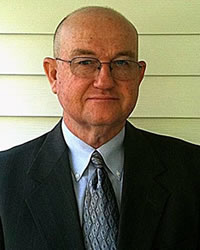
Gary Shepard is teacher and pastor of Sovereign Grace Baptist Church in Jacksonville, North Carolina.

Comments

0 / 2000 characters
Comments are moderated before appearing.

Be the first to comment!

Joshua

Joshua

Shall we play a game? Ask me about articles, sermons, or theology from our library. I can also help you navigate the site.