Bootstrap
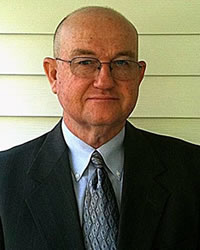
Gary Shepard

The Knowledge of Faith

Gary Shepard August, 11 2013 Audio
0 Comments
Gary Shepard
Gary Shepard August, 11 2013

Sermon Transcript

Auto-generated transcript • May contain errors

100%
Open your Bibles this morning
to the book of Job. You can find the Psalms. You
can find that book of Job that is just prior to it. Job chapter 19. I want to try
to talk to you this morning about the knowledge of faith. The knowledge
of faith. I sometimes hear preachers speak
in a negative way about knowledge. They seem to make little of knowledge. They use terms like head knowledge. That's just head knowledge. As
if there could be any true knowledge without it. There must be head
knowledge. There has to be knowledge in
the mind. And while it surely must be joined
with faith, I'm sure that you can't believe what you don't
know. You just read what Paul says
in Romans 10, where he talks about the impossibility of believing
on one of whom you've not heard. We have to have He had knowledge. And true knowledge is simply
the knowledge of the truth. That's what God says that He
would have all His people, a people from amongst all men to come
to the knowledge of the truth. And that truth is certainly gospel
truth. That truth is surely the truth
about Christ The one in whom is hid all the treasures of wisdom
and knowledge. You find out about the Lord Jesus
Christ, you're going to find out about knowledge. If you find
out about true knowledge, you're going to find out about Christ
because He is the truth. And that knowledge is a knowledge
of the Word of truth. That's what the Gospels call,
that's what the Bible is called, the Word of the truth, the knowledge
of the truth. And the psalmist in that 119
Psalm says, which is a reference in every verse to the Word of
God, the Gospel of God, he says, teach me good judgment, and knowledge,
for I have believed thy commandments." In another place, in Proverbs,
it says, the fear of the Lord is the beginning of knowledge,
but fools despise wisdom and instruction. And then he says
again also in Proverbs, that first chapter, He says, "...how
long, ye simple ones, will you love simplicity, and the scorners
delight in their scorning, and fools hate knowledge?" He says,
"...fools hate knowledge." And the man that we're going to look
at this morning in part, this man Job, even with all his weaknesses,
and he has them, just like we all have them, with all his weaknesses,
he had true knowledge. It was what sustained him, it
was what upheld him, It was what comforted him in all things. You see, like all of God's people,
Job had a lot of trials. Job had many troubles and sorrows
and afflictions. I may well have heard about Job
and his trials long before I ever heard about Christ. People, when
I was coming up, they'd have sayings about the patience or
the trouble of Job. I knew something about a man
named Job before even anything really about Christ. Because
he had all these troubles. As a matter of fact, the psalmist
says, many are the afflictions of the righteous. He had a lot
of troubles, and he also had friends who, in their ignorance,
they were miserable comforters. Look here in Job 19. Job, in responding to some of
their advice and instruction and comments, It says, "...then
Job answered and said, How long will ye vex my soul, and break
me in pieces with words? These ten times have ye reproached
me. Ye are not ashamed that ye make
yourselves strange to me. And be it indeed that I have
erred, mine error remaineth with myself." He said, what you've
said to me hasn't helped me any. You got any friends like that?
It would be wonderful if they just keep their advice to themselves. They add trouble to your trouble
and trial to your trial. That's the way Job's friends
were. And so in the midst of all this, It says, in the midst
of these sorrows and losses, he has a knowledge. He has a
knowledge of someone and also a knowledge about that someone. He has a knowledge of God in
a particular character. He has a knowledge of God in
a particular office and in a particular person of the Godhead. Look down at what it says in
verse 23. He says, "...O that my words
were now written, O that they were printed in a book." He's
gone before not only talking about What little comfort and
encouragement these friends have been, and yet he's ascribed everything
that has happened to him to God. Look back in verse 5. He says,
"...if indeed you will magnify yourselves against me and plead
against me my reproach, Know now that God hath overthrown
me, and hath compassed me with his net." He didn't say he was
very much liking to it. He didn't say it didn't bother
him and disturb him and discomfort him and all that, but he knew
who did it. He didn't attribute it to fate
or chance or any such thing. He says, "...know that God hath
overthrown me, He has compassed me with His net. Behold, I cry
out of wrong, but I'm not heard. I cry aloud, but there is no
judgment. He hath fenced up my way that
I cannot pass, and He hath set darkness in my path." He knew
who it was that had brought all these trials and troubles on
Him. Though in the midst of them He was struggling with unbelief,
struggling with human weakness, all these things, He says, I
know it's He that has fenced my way that I cannot pass. He set darkness in my path. Not like people would say today,
it's the devil that's done all that. No. Though I'm weak in
these things, though I fret and cry, I know it's the Lord that's
done this. He says, He has stripped me of
my glory and taken the crown of my head. I don't feel like
a big boy too much these days. "...he hath destroyed me on every
side, and I am gone, and mine hope hath he removed like a tree. He hath also kindled his wrath
against me, and he hath counted me unto him as one of his enemies. His troops come together and
raise up their way against me, and encamp round about my tabernacle. He hath put my brethren far from
me, and mine acquaintance are barely estranged from me. My
kinsfolk have failed, and my familiar friends have forgotten
me. They that dwell in mine house
and my maids count me for a stranger. I am an alien in their sight. I called my servant, and he gave
no answer. I entreated him with my mouth,
My breath is strange to my wife, though I am treated for the children's
sake of mine own body. Yea, young children despise me. I rose, and they spake against
me. All my inward friends abhorred
me, and they whom I loved are turned against me. My bone cleaveth
to my skin and to my flesh, and I'm escaped with the skin of
my teeth. Have pity on me. Have pity upon
me, O ye my friends, for the hand of God hath touched me. Why do you persecute me as God
and are not satisfied with my flesh?" He said, it's the Lord. whether I understand it or not,
whether I want it to be, which by nature in our flesh we don't
want it to be, he said, I know it is the Lord. And he'd done
all these things to Job, brought all these things so descriptive
in these verses, so many things that many of the Lord's people
have been brought oftentimes to the same experience. So he
says, Oh, that my words were now written. Oh, that they were
printed in a book. Oh, that they were graven with
an iron pen and laid in the rock forever. For I know that my Redeemer
liveth and that He shall stand at the latter day upon the earth. And though after my skin worms
destroy this body, yet in my flesh shall I see God, whom I
shall see for myself, and mine eyes shall behold, and not another,
though my reins be consumed within me. But ye should say, Why persecute
we him, seeing the root of the matter is found in me? Be ye afraid of the sword. For wrath bringeth the punishments
of the sword, that ye may know that there is a judgment." In
other words, even in the midst of all these trials and troubles,
even in the midst of his own sinfulness, he had this knowledge,
this personal and intimate knowledge of God in the person of the Lord
Jesus Christ. You say, well, how could it ever
be that Job, before Christ ever came, before the New Testament
was ever written, How could he have known the Lord Jesus Christ? Well, he knew Him in this revelation
of God and believed that revelation of God in the person of what
he calls here, the Redeemer. The Redeemer. And you see, this
God-given knowledge, believed by God-given faith, is the basis
of His assurance, assurance concerning the One He calls here, My Redeemer. Look back at verse 25, "'For
I know that My Redeemer lives.'" Now that is amazing. Since Christ
had not already come into this world, since He was not made
flesh and dwelt among us, Job by faith acknowledges Him, even
that hour, as already the Redeemer and already living as He was
in the person of the Son of God. And everything about this relationship
of faith is based on that which he knows personally and assuredly. I know, I know that my Redeemer
lives. That's exactly what Paul is talking
about when he speaks there in Philippians 3, and talks about
casting off everything that he once thought he knew, in order
to be found in Christ, having that which is in Christ, the
gift of righteousness in the Lord Jesus Christ, and being
in Him, possessing a knowledge of Him which is in every way,
far, far, Now, if you go back and you look at this word in
this text, redeemer, you will find that it is that Hebrew word
that is given a number of times in the law and in various Old
Testament books concerning the one who is called the kinsman
redeemer, the goel. And we find maybe the greatest
example of that and the most information about what a Redeemer
is in the book of Ruth. Which, by the way, He is not
the chief central character in the book of Ruth. You say, well,
why did they name it the book of Ruth? I don't know. The chief
central character in the book of Ruth is Boaz. You see, Boaz
is a type of the Lord Jesus Christ in this particular character
as the kinsman redeemer. Ruth, on the other hand, is a
Moabitess woman. She has no part or lot in the
house of Israel. Being a heatheness woman, that
was married to one of the sons of this woman by the name of
Naomi. And here she is, both Naomi and
Ruth, this Moabitess woman, who are for all measurements in the
most awful state of poverty and loss. They have neither food
to eat, a place to live, they have no relationship in the camp
of Israel, there's no hope for, except for one thing. And that
is, if there is a man, if there is an individual who can be found
in some relationship to them, which Boaz was legally, And if
he could be that one who is related to them, and if he is able to
do so, and it can be that he's willing to do so, he can take
the role and place as their kinsman-redeemer and go down to the city of Gate
where all the legal matters are taken care of. And if there is
no one else that's able to redeem them, he can by paying a price
and standing as their near kinsman, he can redeem them and redeem
them unto himself, which is exactly what Boaz did. And he took Ruth
to be his wife. And He took Naomi, her mother-in-law,
into the house, and all the children, being a man of plenty, He redeemed
them unto Himself in every way, picturing what Christ did to
His people. He became their Redeemer, their
kinsman Redeemer. And it is this redeemer, it is
this redemption that the apostle Peter is talking about over in
1 Peter chapter 1. Turn over to 1 Peter chapter
1. Because here in this New Testament
book, here after the coming of our Lord Jesus Christ, the apostle
Peter, he writes to those who like Job, know something. God's not paying a bounty on
ignorance. Ignorance is not bliss. He will have all His people come
to the knowledge of the truth. As a matter of fact, in 2 Thessalonians,
when He describes the non-elect, those not chosen in the salvation,
He describes them that go on in their blindness, being blinded,
and says they are deceived because they receive not the love of
the truth. If you look here, Peter begins
in verse 18 with the words, "...for as much as you know." for as
much as you know." You see, as I said, to know something means
more than just to have information about something, although that
is absolutely essential. But to know here means to have
that information, that truth about something as it pertains
to God, and most especially to Christ. And to know means to
be assured of, and to delight in, and to be convinced of it. It is a fact. The gospel is a
fact. The gospel is a declaration. The gospel is the testimony of
God. The gospel is the Word of God. And it'll be true if you and
I believe it or not. You see, some people have this
notion that something is true only if they believe it or not.
No, the Word, the gospel, is going to be true if you never
even hear it. If you don't know anything about
it, it's not going to change anything. But the thing is, by
grace, God brings His people to know the truth in this sense. To know about it, for sure, but
to know it in this sense of being assured that this is true, that
this is of God, to be convinced and to delight in it. And all
believers know some things, and they all come to know them the
same way. The same way. When those disciples,
knowing at that particular time what seems to be very little. But yet, compared to the rest
of men in their day, they knew a lot. Why did they know it? The Lord Jesus said to them,
He said, it is given unto you. It is given, I have given unto
you to know the mysteries of the kingdom of heaven. But to
them it's not given. You see, the only way that they
knew, the only way the Lord's people ever know more than any
other sinner knows, is because God in grace gives it to them
to know the faith to believe. And by the word of the gospel,
and through messengers of the truth, and through the revelation
of His Spirit, they are enabled by this gospel to know in this
sense, to have this knowledge. Look back up in verse 10 of 1
Peter. 1 Peter 1 and verse 10. He says, "...of which salvation..."
What is this? The salvation of your soul. "...of
which salvation the prophets have inquired and searched diligently
who prophesied of the grace that should come unto you." What were
those Old Testament prophets in their prophecies? in their
fourth tellings by the Spirit of God, he says they were talking
about this grace and salvation that would come to these in the
future, that Paul in that day says, is now come." Searching
what, or what manner of time, the Spirit of Christ which was
in them did signify when it testified beforehand the sufferings of
Christ and the glory that should follow? unto whom it was revealed
that not unto themselves but unto us they did minister the
things which are now reported unto you by them that have preached
the gospel unto you with the Holy Ghost sent down from heaven,
which things the angels desire to look into." In other words,
the prophets. being led by the Spirit of Christ. I hope you caught that. Not just
the Spirit of God in some generic way, but the Spirit of Christ. They testified as the Spirit
always does, the things concerning Christ. And he says, these are
the things, this is the knowledge, this is the revelation that they
were talking about. Things that God has said would
be given to these that are described here in this epistle. Peter himself. If you remember, on one occasion,
the Lord asked him who men say that He is. And finally, after
they have given to Christ what various ones have said that Jesus
was, He said, but who do you say that I am? Well, if He was
no different, if no distinction had been made by God in Him or
these disciples, to make them differ from all these other ones,
they would have said the same thing. But he had a knowledge.
God gave him a knowledge that was far superior, that was true
in contrast to their error. And when he asked him, who do
you say that I am? Peter said, you are the Christ. The Son of the Living God. In
other words, all those Old Testament prophecies, promises about Messiah
that was to come, they found their fulfillment in you, you
standing here as a man before me. You're the Christ. You remember
what the Lord told Simon? He said, Blessed are you, Simon
Barjona, for flesh and blood hath not revealed that unto you,
but my Father which is in heaven. You see, the knowledge of faith
is the knowledge of the gospel. that is revealed in the hearts
of God's people by the Spirit of Christ. And it is this gospel
message that is the message of blood redemption. It is a message
of redemption that is in Christ Jesus, the Redeemer. It's not
heresy, it's not tradition, it's the truth and Word of God. Because the Bible is a book about
redemption, redemption by blood from the first book to the last
book. Peter joins a long list of those
who are just like Job, who by grace, No. You remember what
Paul said? He said, I know whom I have believed,
and I am persuaded that He is able to keep that which I have
committed unto Him against that day. I know. Like John who says,
we know that we pass from death unto life. Even like that blind
man who had so little knowledge, but he knew this. He said, one
thing I know, and that is that once I was blind, but now I see. How did you get that way? That
man right there. That Jesus of Nazareth. I know He's the One. And He had in one sense an advantage. in that he could see the Lord
Jesus Christ personally right there in front of him, and yet
a disadvantage in that he could not behold Christ in the same
knowledge and light that a person in our day can behold Him through
the gospel by faith. Why? Because God's given His
people knowledge. Now Peter says, just like Job,
he says, for as much as you know. What do we know about the Redeemer? What do we know about redemption? These that he describes here
in the first five verses of his epistle, these who are believers,
these who are described as God's elect, these who are the heirs
of this inheritance, these who are kept by the power of God,
these who are God's people, they know what they're redeemed from. Those who have this knowledge
of faith, they know what they're redeemed from. Why? Because the
Bible tells us. We know we are redeemed from
sin. Christ came into this world to
save sinners. Thou shalt call His name Jesus,
for He shall save His people from their sin. We are redeemed
from our sins, the entirety of them. It tells us that we are
redeemed from the curse of the law. How? Christ being made a
curse for us. We know that we're redeemed from
the wrath of God. We shall be saved from wrath
through Him. We know that we're redeemed from
the bondage of false religion and tradition. We know that we
are redeemed from this cursed earth. We are redeemed from among
fallen men. It says in Revelation 14, we
know we are redeemed from all iniquity. We know by Job's case
that we are not redeemed from every little sniffle and cold
or cancer or all these other things. Somebody says in this
passage, in Isaiah and also in Peter, where he talks about,
by His stripes you are healed. All you got to do is claim your
healing. They're talking about a physical healing. He's talking
about this spiritual, eternal healing. We're redeemed from
the greatest of diseases. We're redeemed from our sins.
And not only that, we know what we're not redeemed by. Whenever
Boaz went into that gate to redeem Ruth and Naomi and all that pertained
to them. He went there and He didn't decide
what He wanted to do, what He wanted to pay. It was already
decided and determined. He had to obey and keep the law
that was given. There was a law concerning redemption. Peter says, "...for as much as
you know that you were not redeemed with corruptible things as silver
and gold from your vain conversation received by tradition from your
fathers." You know that you were not redeemed by paying money.
You know that the price of redemption was not silver or gold. We know
that we're not redeemed by the works of the law. that we're
not redeemed by the deeds of the flesh or the deeds of the
law? We know that nothing we say or
do or are or pay or don't do, they don't have any part in our
redemption. Our redemption is by the Redeemer.
We sing that hymn, Jesus paid it all. Either He did or He didn't. If He left any part for you or
me, we're in big trouble. Because we have nothing. Religion
says all the time, we do this or don't do this in order to
redeem yourself. But true believers actually repent
of their doing. They repent of the best of their
doing. Well, what they trust in? The
Redeemer. The Redeemer. And they know that
the price of redemption far, far greater than anything I might
sacrifice or anything I might do. And we know also how we're
redeemed. How do you know about that? When
God speaks, I believe it's in Hosea maybe, which is in itself
a wonderful picture of redemption between Hosea and Gomer, but
when He speaks there concerning His people and what they have
fallen into by virtue of a failure of the priest to teach them the
truth, He said, My people are destroyed for lack of How can
we ever find out what redemption is about or how a sinner is redeemed
except by virtue of this book? Turn over to Romans chapter 3. In one verse, in one verse is
a wealth of good news, of declared truth, and it is the knowledge
of all those who are taught of God. Look down in verse 24. Paul speaks concerning all the
Lord's people. He says, being, or as it is,
having been justified. What does that mean? It means
declared by God in His sight to be perfectly righteous. declared to be by God without
condemnation, which is without sin, having been justified freely. That word translated in another
place means without a cause in us, by His grace. Well, how is it that God in grace
could ever redeem such sinners as we are? He says, through the
redemption that is in Christ Jesus. Now, men talk a lot of
times about redemption, but there's only one person at the center
of redemption. That's the Redeemer. You see,
that's the knowledge we have to be brought to. We have to
be brought to know that all of redemption is in and through
and by the Redeemer in all that He is and all that He is. did. We're saved through the
redemption that's in Christ. Look down in verse 19 of 1 Peter
chapter 1. He says, we know that we're not
redeemed by silver or gold and the traditions that you have
passed on from your fathers down to now. He says, but with the
precious blood of Christ, with the precious blood of Christ. You see, there is no redemption
without the shedding of blood. There is no remission of sins,
no forgiveness without the shedding of blood. In chapter 1 of Ephesians,
Paul says of Christ, "...in whom we have redemption through His
blood, even the forgiveness of sins." And if you know anything,
the only times in conversations and such in our day that you
hear about redeeming or redemption, it's when it says of someone
that they have redeemed themselves. Now, you might redeem yourself
with me, or I might redeem myself with you, but they won't either
one of us redeem ourselves before God. If that could be done, there
would be no need for the Redeemer. Job says, I know my Redeemer. And the reason that he delights
in this is this knowledge of what would be required of a Redeemer
who would redeem a sinner like himself before God. How could
we ever delight that our Redeemer lives unless we have some understanding
of what's required to redeem us? That blood, is what represents
death. We could say just as accurately,
we're redeemed by His death. The shedding of blood, that life
that's in the blood, goes out and what is left is death. That's what sin requires. The
soul that sins shall die. And the one who redeems that
soul, the one who redeems that sinner, there's just one way
for him to do it. He must die. He must die. And we know that's the reason
and the meaning of all these Old Testament types, pictures. When Paul wrote to the church
at Corinth there in 1 Corinthians 15, he said, I'm still preaching,
The very thing that I first delivered unto you." What was that, Paul?
How that Christ died according to the Scripture. Did that mean
that simply the Old Testament Scriptures, which is what he
had to be talking about, by the way, that the Old Testament Scriptures
all said that Christ would die? Yes, they did. But not only that. In all those sacrifices and priests
and offerings and bloodsheddings, in all those things, they pictured
and typified the dying, the suffering of the Redeemer. Christ died
according to those Old Testament Scriptures. We know that those
types and shadows pictured the substitutionary and sacrificial
death of Christ for His people. We know that the skins that were
used by God to cover Adam and Eve after the fall, that was
a picture of Christ's suffering and death, that He might be to
a sinner a robe of righteousness. We know that the basis of Abel's
acceptance, and on the other hand, Cain's rejection, was a
picture of Christ, that lamb that Abel offered. We know that
Abraham's substitute for Isaac, which was the ram, was a picture
of the substitutionary dying of Christ. We know that Israel's
redemption from Egypt by a Passover lamb was our Redeemer. And we know why Christ's blood
is precious. He says, but with the precious
blood of Christ as of a lamb without blemish and without spot. Why is the blood of Jesus Christ
any more precious than your blood or my blood or anybody's blood,
because it's the blood of God. It's the blood of God. You see,
when Paul was talking to the Ephesian elders and telling them
how they were to take care and tend and watch out for the sheep
and the church, he refers to that church as the church which
he purchased with his own blood. I hear people say, and I don't... I don't want to get anybody on
a debate with this, but they say, Christ purchased all these
things for us. All these gifts that God gives,
He purchased all these things. That's not exactly accurate.
You see, what God would have us to know, according to Paul,
is the things that were freely given unto us. You say, well,
if He didn't purchase these things that they were freely given unto
us, what's redemption about? It's about us. It wouldn't do
any good for God to have given us 10,000 earth, 10,000 blessings
of every unimaginable kind, if we're sitting like a prisoner
on death row and not able to get out and enjoy Him. It says
He redeemed us unto God. He redeemed as Boaz redeemed
Ruth unto himself. When you find that word redemption
or redeemed, it will always have to do with those He redeemed,
that He might freely give us all these things to enjoy. His blood is precious because
it is perfect, sinless, holy blood. Even as Peter talks about
redemption here, even as he says it is Christ who redeems us,
He goes back to that sacrificial Passover lamb of which one of
the most important things was that it be without spot and without
You see, Christ's blood was the only perfect human blood that's
ever been, because He didn't have Adam as His Father. Because
that which was conceived in Mary of the Holy Ghost was described
as that holy thing. He did never alter. He did never
change. He did not ever become what He
was not. because He had always been responsible
for our sins. They didn't take that lamb when
it was offered, and just to show some kind of human logic in identifying
with sinners that would be represented, He didn't take that spotless
lamb and lay Him there on that altar and rub tar all over Him. It says that Christ, in contrast,
to the blood of the bulls and goats. His blood was offered
when He offered Himself without spot unto them. For by one offering
He hath perfected forever them that are sanctified. He hath
entered into that holy place and obtained eternal redemption
for us. And I'll just tell you this,
if it's eternal redemption, it has to be particular redemption.
You say, well, why is that? Because God never changes. And if He is that Lamb slain
from the foundation of the world, in order for Him to be the surety
of this covenant of redemption, it had to be determined who He
would die for. He lays down His life for the
sheep. Generally, false religion believes
this, that Christ died for all men, which makes Him a total
failure for the most part, which is a view that cannot be found
in the Bible. But more cunning than that, more
of a counterfeit than that, is such a notion as has been devised
by a man such as Andrew Fuller and others that kind of puts
a man in the middle where he can straddle the fence and hold
both sides. This is what they say. Well,
we believe that the death of Christ was sufficient for all
mankind. But we know it will only be efficient
for those who believe. It will only be efficient for
the elect of God. The main problem with that is
you cannot find it in this book. The design of God's redeeming
grace, the design of this particular covenant of grace in redemption
is the salvation of a particular people through a particular person
and work. Christ said it like this, I lay
down my life for the sheep. Husbands, love your wives. as Christ loved the church and
gave Himself for it." That's how He'll be praised in heaven.
And they sung a new song saying, Thou art worthy to take the book
and to open the seals thereof for Thou was slain and has redeemed
us to God by Thy blood out of every kindred and tongue, and
people, and nation, out of a people chosen of God, given to Christ,
and He comes as the Redeemer to redeem them. We know that
God purposed this redemption, that it's not an afterthought
or a contingency plan. The glory of His grace is bound
up in it. Peter says, "...who barely was
ordained before the foundation of the world." What does that
mean? He was appointed as such, ordained
of God as such, could never fail as such before the foundation
of the world. If my Redeemer entered into this
covenant and pledged to be my Redeemer, to actually redeem
me by the price of His perfect life laid down on that cross,
if all my hope and my salvation is in my Redeemer, I don't have
anything to boast in. It's all in my Redeemer. And
that which is manifested, as Peter says, in Christ and His
cross death is simply that which was ordained of God before the
world began. Known unto God are all His works
from the beginning. His blood shed is the blood of
the everlasting covenant. And then lastly, we know who
He redeemed. Peter says in verse 20 of chapter
1, "...who verily was ordained before the foundation of the
world, but was manifest in these last times for you." Evidently
those that He had written this epistle to. They are described,
as I said, as His sheep, as His children, as the elect of God,
as His people, as the redeemed. But He says this in the next
verse, For you who by Him, by His grace, by His work in you,
do believe in God, that raised him up from the dead, and gave
him glory, that your faith and hope might be in God. Seeing you have purified your
souls in obeying the truth through the Spirit unto unfeigned love
of the brethren, see that you love one another with a pure
heart fervently." How do we purify? Our souls. Well, the purifying
of the soul is spoken of as being that which happens when we believe
on the Lord Jesus Christ. When the Bible talks about us
having a conscience that's defiled, what's that? That's a conscience
wherein we try to make it in our mind to satisfy God or please
God or do something for God based on our own self. That's filthy
defilement of the conscience. But our consciences are purged
when the Spirit of God gives us faith to and enables us to
look to Christ and Him crucified alone. And our consciences are
purged, in that sense, by the blood. We obey the truth. by the Spirit of God. Unto unfamed,
not fake, love of the brethren. The redeemed love the redeemed. Turn back to Job 19. Because Job's hope and his prospect,
we call it in our experiences a little light at the end of
the tunnel. This life is a dark tunnel. and keep getting run over by
trains, it seems like. We speak of seeing a little light
at the end of the tunnel. Well, Job's little light at the
end of the tunnel was this. He says, For I know that my Redeemer
lives, and that He shall stand at the latter day upon the earth.
My Redeemer, who had to die to redeem me, God accepted His work
and raised Him from the dead. He lives. And though after my
skin worms destroy this body, he knew the reality of coming
physical death. Yet in my flesh shall I see God. Now I can't explain glorification. But listen to what he says. Whom
I shall see for myself, and mine eyes shall behold, and not another. Nobody's going to be looking
for me. It won't even be based on faith. I'll see with my eyes,
my glorified eyes, my living Redeemer God, though my reins
be consumed within me." What does that mean? It literally
means something like this, I'm overwhelmed by the thought of
it. Job, you've lost so much. Look at you, you're eaten up
with probably what was leprosy. You're down there scraping your
sores with the ashes with potsherds. Your wife is railing on you like
a nagging Haggadah, why don't you curse God and die? Your children
have been slain. You've lost all your glory. Nobody,
you say, you say everybody don't even, they walk on the other
side of the street from you. And yet there's something, he
says, that overwhelms my spirit, that makes my heart feel like
it'll burst. What is it? The knowledge, the
assurance that the One who redeemed me lives and I shall live in
Him and with Him and see Him with my eyes and not another. How do you know this, Job? Number
one, because God promised it. God said it. And number two,
because it is Christ. that die. Number three, because
He gave me faith to believe. What is the witness? It is that
God-given faith whereby He enables us to believe His Word, believe
on Christ. That's the knowledge of faith. The knowledge of the Redeemer
and His redemption by His blood wherein He redeemed us under
God, out of every kindred nation pride. And every believer is
brought, oftentimes, to say, well, I don't know about this,
or I don't know about that, or I don't know about what's going
to happen, or this, or that, or the other. But if we can lay
hold of this, I know my Redeemer lives. He's going to stand on
the earth one day. And I'm going to be alive, because
I'm going to see Him as He is with my eyes. In my glorified
body, my redeemed body, I'll see Him as He is. What will He
be then? My Redeemer. He'll be my Redeemer. He's always been my Redeemer.
Father, we thank You this day for our Redeemer, for His precious
blood, for this righteous redemption which He alone has accomplished
for such poor sinners as we are. Lord, we know that none are saved
apart from knowledge, and there is no true knowledge apart from
faith. But both true knowledge and faith
agreed that it is neither one of them, it is all of our Redeemer,
our Lord Jesus Christ. We thank you for Him and for
all blessings in Him and pray in His name, Amen.
Gary Shepard
About Gary Shepard
Gary Shepard is teacher and pastor of Sovereign Grace Baptist Church in Jacksonville, North Carolina.

Comments

0 / 2000 characters
Comments are moderated before appearing.

Be the first to comment!

Joshua

Joshua

Shall we play a game? Ask me about articles, sermons, or theology from our library. I can also help you navigate the site.