Bootstrap
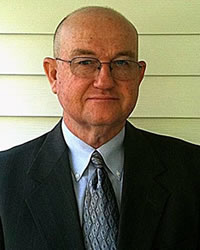
Gary Shepard

They That Wait Upon the Lord

Isaiah 40:31
Gary Shepard July, 21 2013 Audio
0 Comments

Sermon Transcript

Auto-generated transcript • May contain errors

100%
Turn back to Isaiah 40. I want
us to pick up where we left off in the reading and begin in verse
28. Hast thou not known, hast thou
not heard, that the everlasting God, the Lord, the Creator of
the ends of the earth, feigneth not Neither is weary. There is no searching of his
understanding. He giveth power to the faint,
and to them that have no might he increaseth strength. Even the youth shall faint and
be weary, and the young men shall utterly fall. But they that wait
upon the Lord shall renew their strength, they shall mount up
with wings as eagles, they shall run and not be weary, and they
shall walk and not faint." Now there is a promise of God-given
strength and help in these verses, especially in that 31st verse. But if you notice there also,
there is a description of those to whom those promises are given. And those described here are
they that wait upon I wonder if we fit the character of those
to whom these promises are made. I wonder if I fit that character. I know this, I know that God's
true people, God's elect as they make profession of faith and
believe the truth on this earth, They are charged by men with
being fatalist, with being lax, unconcerned, unenthusiastic,
and even pessimist. But what this world and what
especially these religious people call fatalism is simply a trust
and a confidence and a faith in God who cannot fail and who,
because of His power, is in no hurry. He is in no hurry. And we wait as we must wait,
being commanded to wait, But we do not simply wait with no
prospect and no goal and no possibility of anything happening. We wait
upon the Lord. There are lots of folks who are
waiting in this world. But the Lord's true people, they
wait on the Lord And they look and delight in the fact that
our God is long-suffering. Maybe that's the Old Testament
word for grace. But He is long-suffering as Moses
wrote when he said, the Lord is long-suffering and of great
mercy. forgiving iniquity and transgression,
and by no means clearing the guilty, visiting the iniquity
of the fathers upon the children unto the third and fourth generation."
He's long-suffering. That is, God cannot be stopped. in anything he purposed to do. Such words as trying, they do
not apply to Jehovah God. Somebody said, the Lord's trying
to show you something. Oh no, He's not. The Lord cannot
be stopped. The Lord cannot be slowed. The Lord cannot be hindered. And the Lord cannot be hurried. You see, we wait on Him to do
what He alone can do. We've been brought, if we're
His believing people, to acknowledge that we must wait Though commanded
to do some things, we do them in light of this. We wait for
Him to do what only He can do. And God often is found as this
long-suffering God who will not march to the beat of our drum,
who will not determine things according to our calendar, because
he is long-suffering. I don't think I could do you
better this morning than to read to you something that an old
preacher had to say about this long-suffering of God. He said, the long-suffering of
God is a quality in the divine nature that makes him slow in
dealing with his enemies. God does not fly into a rage
at the least provocation. The Hebrew word, which is sometimes
translated long-suffering and sometimes slow of anger, literally
means long of nose, which means slow of breathing. Because anger
is indicated by a rapid and violent breathing through the nostrils,
and the opposite is true of long suffering and slow to anger. God is long of nose. He doesn't snort, he doesn't
sniffle like angry man at the least provocation. He said, a
snorting, charging bull is an emblem of passionate anger. But God is not like a bull or
a prancing horse eager to go in the work of judgment. God
is in no hurry to punish His foes. He is not like a cruel,
nervous dictator in a hurry to have his enemy shot at dawn. God is patient with rebels. And this patience belongs to
His nature. So that a general or universal
atonement is not necessary to account for the long delay in
the punishment of the wicked and rebellious. In other words,
this is no evidence, this is no indication that God is really
going to be merciful and gracious and save everybody. It's not
a demonstration of his saving love. He says, the devil, as
well as man, has defied God for ages and is still at large, not
because Christ died for him. but because God is patient. You see, the patience of the
Lord's people is born out of the patience of God. God is waiting to judge, not
until His patience runs out, but for the human cup of iniquity
to fill. And the time of judgment is left
to His sovereign will and does not depend upon any degree of
His patience." You see, God is infinite in His patience in order
that He might show His glory in both judgment and in salvation. In other words, everything that
God waits to accomplish on this earth among all people will work
in the end to show His glory as it is demonstrated in judgment,
but also in mercy. There will be no act of impatience
with God. But He will exercise His sovereign
dominion and right and power and authority over all things
to accomplish that purpose that He purposed before the world
began. James expresses it like this. He says, "...be patient therefore,
brethren, unto the coming of the Lord. Behold, the husbandman,"
or the farmer, or the vineyard keeper, he waits for the precious
fruit of the earth and hath long patience for it until he receive
the early and the latter rain." The farmer waits, and the rain
comes, and then another rain comes. Why doesn't he harvest
after the first rain? Because he waits for the precious
fruit, for the best fruit. And that's what James is saying
to the Lord's people. But the truth is that some men
and women, they misjudge God because of this. They imagine
that because He has not struck them dead immediately, in their
rebellion that they have a bright future in some way. There they must be doing something
right. Listen to Solomon in Ecclesiastes. He says, "...because sentence
against an evil work is not executed speedily." Therefore, the heart
of the sons of men is fully set in them to do evil." That's why
it is so foolish for preachers to stand up and say, well, if
you don't do this, or if you keep doing that, or the other,
God will strike you down for it. You don't know what God is
going to do. And he may very well wait, not
in order to show mercy, but for that sinner to fill up the cup
of that iniquity, and then at the last have to drink it down
to the dregs for all eternity." Turn over to Psalm 50. Psalm
50, and listen in Psalm 50, beginning in verse 21. These things hast
thou done, and I kept silence." That's what God says. You've
done all this wickedness. You've done all these vile things. You've lived in unbelief. You've
disregarded me. You have no regard for me at
all. These things hast thou done,
and I kept silence. Thou thoughtest that I was altogether
such a one as thyself. But I will reprove thee, and
set them in order before thine eyes. Now consider this, ye that
forget God, lest I tear you in pieces, and there is none to
deliver." Because I didn't do immediately, because I kept silent,
You thought that I was your equal." But he said, I will, at the time
I've appointed, I will rise up in the exercise of my justice
and judgment against you, I will judge your sin. Years ago, I
read some old writer who said this, he said, the wheels of
God's judgment grind exceedingly slow, but they also grind exceedingly
fine. There's not one kernel of humanity
that will escape it. And his slowness or his hurriedness,
whichever it be, will simply be, as far as salvation is concerned,
the exercise of His sovereignty in the showing of His grace. That's what He taught Moses when
Moses asked Him concerning His glory. It says, "...and the Lord
passed by before him, and proclaimed, The Lord, the Lord God, merciful
and gracious, longsuffering." And he being that one who in
his long-suffering way will have mercy on whom he'll have mercy,
and be gracious to whom he'll be gracious. David was aware
of this. He said, but thou, O Lord, are
to God full of compassion, and gracious, long-suffering, and
plenteous in mercy and truth." Six or seven times it says in
the Psalms and in other places that He is the Lord slow to anger. Same thing. He's the slow to
anger God. And not only that, but Paul,
he was a recipient and experienced this, and also is given by God
as an example of that. Listen to what he says. He says,
writing to Timothy, "...howbeit for this cause I obtain mercy,
that in me first Jesus Christ might show forth all longsuffering
for a pattern." to them which should hereafter believe on Him,
to life everlasting." If you look there hanging on those two
crosses beside the Lord Jesus Christ, you have two thieves. And one of them is given to us
as an example that we dare not despair, because the Lord was
long-suffering to him, and in the last hours of his death,
He showed mercy on him, saved him, and promised him His presence
with him in paradise that very day. You mark it down also. He gave us that other thief.
who is a warning, who is an example of the fact that we dare not
in any way presume upon God's mercy, presume upon His long-suffering,
because He in that hour left Him to die in His sins and face
a just judgment for all eternity. You see, God is not in a hurry. And He in His great wisdom and
mercy deals with him, deals with things, deals with men and women
in such a way as to make us know that it is Him and Him alone
and in order to bless us and make us truly thankful for the
mercy that He shows us. And He did this through a man
by the name of Methuselah. Now, it may be that that name
is the oldest Bible name I know. Because I remember when I was
a child growing up, somebody would talk about a person who
was getting really old, and they would say, well, he's almost
as old as Methuselah. Well, Methuselah is a man in
Scripture, and his name literally means something like this. When
he is gone, it will come." What a name! I don't believe I'd name
my child that. Well, God, who overrules everything,
and especially as we find these names in the Old Testament, He
gives us this man Methuselah, this man whose name means something
like, he dies, and then there's the sending forth, or when he
dies, there'll be an emission, And he was that man who was named
this prior to the flood and judgment that God had promised. In other
words, his name was a prophecy. Or his name was a promise, if
you want to look at it like that. But what it meant was, when He
dies, then that flood and that judgment upon all the earth shall
come, and that is exactly what happened. But there's just one
thing about that. To show the longsuffering, to
show the patience, to show that God is not in a hurry, That man
lived the longest of any man on the earth. He lived to be
an age 969 years old. God did not rush to judgment. God did not hurry to destroy. Time went on and all the iniquity,
all the sin, all the corruption on the earth, it rose up in that
cup. But at the same time, he was
there in that 969 years, he was there waiting, he was there patient
in his delays in order that the ark might be built and those
eight souls saved from destruction. He's not in a hurry. He lived
for 969 years. And God waited, and He withheld
judgment, so that surely no one in that 969 years would ever
be able to say on that day of judgment that this is not what
we deserve, or that God has not given us a chance, or God hasn't
given us an opportunity, or anything like that. Turn over to 1 Peter. 1 Peter chapter 3. And listen how the Apostle Peter
is describing that very event, that very flood, that very time
in Noah's day. In verse 20 he says that, "...which
sometime were disobedient when once the longsuffering of God,
waited in the days of Noah, while the ark was a-preparing, wherein
few, that is, eight souls, were saved by water." God was long-suffering. And it wasn't so much that he
delighted to delay the judgment of those upon whom that flood
would come, but his hesitation, if you will, his waiting, his
delays, his patience had to do with the preservation of those
eight souls of Noah and his house. Why does God not rush? Why does He wait? You say, well
preacher, I thought we were talking about they that wait upon the
Lord. Well there is no way. that you
and I could ever patiently wait, or would ever have any reason
to patiently wait, or hope in it, did we not know why the Lord
Himself waits? Why does He wait? Well, He waits
in order to show His sovereignty and exercise His right and His
rule over all His creatures. And He does so, does all things
when it pleases Him. Sometimes I think that about
all we would ever have to take a note of. To find out that it
is God who does things whenever and to whomever He will, all
we would ever have to notice is the weather. The weather.
You turn on the radio or the TV, whatever it is, you look
in the newspaper to get the weather report. That's a simple thing
and that's a part of about everybody's daily routine or weekly routine. We're looking for the weather.
We've got these plans and we're going to do this on that day
and we're going to do another thing on the other day and we're
going to look at the weather, we're going to plan everything
out just well, the first thing that happens is the weather doesn't
happen like it's And that means that our plans don't happen as
we predicted them. Here is the simple thing of whether
it rains or not, whether we have a storm, whatever it is, we can't
even predict that accurately. I remember hearing or reading
something a few years ago that said that the actual rate of
accuracy for predicting the weather by the National Weather Service
was 50%. 50%? Roger, I've seen many an old
farmer who could go out and look at the sky or the woolly worms
or whatever it was and be that accurate. 50%? You see, all God
has to do to control all things really is control the weather.
He waits, He does what He will, and in the doing of it, He shows
that what we will amounts to nothing, and what He wills amounts
to everything. He works everything after the
counsel of His own will. So when it doesn't happen as
we plan, So when it does not happen as we wish it to be, then
we can fall back and rest our weary heads on that pillar that
whatever it is, it is His will and His Word. He waits. And then
He waited to carry out that eternal purpose and will and plan in
sending the Savior. You ever stop and wonder why,
since the beginning of time, since Adam fell in the garden,
that God waited until just a little over 2,000 years ago to send
Christ into this world? I don't know all the reasons,
but I do know this. It says, by inspiration of the
Holy Spirit, that in the fullness of the time, in that God appointed
time. Not a minute before, not a minute
later, but in the fullness of time, God sent forth His Son,
made of a woman, made under the law, to redeem them that were
under the law. The Savior was right on time.
And God waited in order to glorify Himself He waited to send the
Savior just like He appointed the building of that ark. He
appointed the times of those sacrifices. He appointed the
time of the one sacrifice for sins forever. And there's a verse
in Isaiah chapter 30. that it would do us a world of
good. I mean a world of good. There's
one thing it seems like that happens to every passing generation. They get in a bigger hurry than
the last. But listen to what Isaiah says
in chapter 30 and verse 18. And therefore will the Lord wait. Wait. Why will He wait? Well,
He has reasons and a purpose that is so far beyond you and
I that we will not be able to enter into it, well, ever really
fully, but any more than we are right now until we stand glorified
in His presence and behold all things from His perspective.
But there's one thing that faith must lay hold on. He says, and
therefore will the Lord wait that he may be gracious unto,
he waits to be gracious to his people. I don't know how many
times over the years I found myself in the point that I thought
I had to make a decision. Have you ever come to that? I've
got to make a decision about this. But the truth was, I didn't
know what decision to make. I just didn't. I still face that
every day virtually. And when I don't know what decision
to make, I found out that the best thing is to make no decision,
but to wait upon the Lord and to find out from His Word, or
through His acts of providence, the decision that He's made. We wait upon the Lord. And therefore will the Lord wait,
that He may be gracious unto you, and therefore will He be
exalted, that He may have mercy upon you. For the Lord is a God
of judgment, blessed are all they that wait for Him. And He waits in all these things. He is long-suffering. He is slow in the actions of
all these things in the salvation of His elect people. And we know
that because He said so. All we see God bringing to pass
right now. And I'll tell you, it's scary
sometimes. There are enough Groups out there
to get you involved in, to be politically active, or to be
this active, or that active, and all these kind of things,
just kind of overwhelms you after a while, doesn't it? This is
the consolation of those who wait upon the Lord. That is,
that God in the doing of all these things, and that's really
the first thing, that it is the Lord in the doing of all these
things. He's doing it first to exalt
Himself, glorify His name, and He's working it for the good
of His people. How can that be good? Well, the
things like they're going on in this world right now, And
I'll admit I'm the first to murmur, I'm the first to bicker, I'm
the first to argue. But really, the things that are
going on in this world, if they did nothing else, they ought
to drive us to Christ. If they overwhelm us, if they
make us fear, they're good if they cause us to flee to that
One who's the refuge. David said in his affliction,
it's good for me that I've been afflicted. Why? because I fell
down on my face and called out to the Lord." He brings it to
pass, that purpose of His grace to save a people in Christ before
the world began. So that the Apostle Peter, when
he writes concerning the attitude of men being still as it was
when the flood came, He said, they didn't think there was going
to be a flood. They weren't worried about the judgment of God. They
weren't worried about that which had never happened before. And
he said, likewise, the same One who held that flood in check
until that set day, He holds the elements of this earth in
check, this earth that will be destroyed by fire. He who did
the first is the One who holds the second in check until that
hour. And He does so because He purposes
to save. what he calls the vessels of
mercy. Paul in Romans 9, he described
them, he said, the Lord is long-suffering and He endures these vessels
of wrath. in order that he might show mercy
and be gracious to this people he calls the vessels of mercy. And Peter, speaking of them,
says that the Lord is longsuffering to usward, not willing that any
should perish. Somebody said, that's a universal
plea of God to save everybody. No. He says, to usward. Peter wrote that epistle to the
church. He wrote it to God's elect. He
describes them in that way. He says to Usward, not willing
that any of this Usward should perish, but that they should
all have eternal life. He waits. He doesn't hurry. And
it's the same with all of the trials and the tribulations and
the persecutions of his people. Turn over to Psalm 37. Psalm 37 and verse 7. This is a marvelous psalm for
our day. I'm sure probably for every day,
everybody's day. But look at Psalm 37, 7. The
psalmist says, rest in the Lord. Now, you have to stop and remember
the trials and the problems and the falls and all that that David
had. This is the psalm of David. Rest
in the Lord and wait patiently for Him. Threat not thyself because
of Him who prospereth in His way, because of the man who brings
wicked devices to pass. He said, wait patiently on the
Lord. Page or two to Psalm 40. Psalm 40. Same David. Look how he begins this Psalm. I waited patiently for the Lord. I've about decided that the Lord
is going to give me problems of such a measure that I'm assured
in my heart. that there's nobody to turn to
but Him. There's nobody that can deliver
but Him. There's no one with sufficient
power to accomplish what must be to save me. But David said,
I waited patiently for the Lord. And He inclined unto me, and
He heard my cry. He brought me up also out of
a horrible pit. out of the miry clay, and set
my feet upon a rock, and established my goings. And he hath put a
new song in my mouth, even praise unto our God. And many shall
see it, and fear, and shall trust in the Lord." You see, the Lord's
purpose in all these things is for that individual one of His
people, and yet at the same time, for all His people. You see,
everything happens, just like what Paul says in Galatians.
When He tells us when it was that Christ revealed Himself
to us. He said, when it pleased God
to reveal His Son in me. That's when His people are brought
into the knowledge of their salvation and their experience. When it
pleased God. But this is a grace. This is
not only an attribute of God, this is a grace that He works
in His people. As a matter of fact, it's described
in Galatians 5 as part of that which is called the fruit of
the Spirit. It doesn't actually say the fruits
of the Spirit, it's the fruit of the Spirit. It is love, joy,
peace, longsuffering, gentleness, goodness, faith. How do we deal
with each other? He says, with all lowliness and
meekness, with longsuffering bear one another, in love. What do we do? Preaching the
Word. Preach the Word, be instant,
in season, out of season, reprove, rebuke, exhort with all long-suffering
and doctrine. What do we do? We sow the Gospel
seed. The Apostle said, one sows, one
waters, but only God can give the end. We sow this precious
seed. We water it with more. Water
it with our tears, maybe. Our tears would never make it
bring life to a sinner. We wait upon the Lord. Say, well,
we ought to be doing something. I tell you, the devil tells me
that all the time. What could we do to fill this place up? What could we do for this one
or that one or the other? We do what God commands. And
that is to speak the truth as it is in Christ. And wait for
God to open His child's heart. Wait for Him to give the gift
of faith. Wait for Him to accomplish that
work that only He can accomplish. Wait for His children to receive
the promise. Hebrews 6, it says, of Abraham,
it says, and so after He had patiently endured, He obtained
the promise. When was that? I have a feeling
it was when he passed from this life. He actually obtained, came
to know the reality, the experience of all those promises that are
yea and amen in Christ. When that rich man saw him, saw
Lazarus as he was in Abraham's bosom. Turn back to our text,
that 31st verse. He just told us that The young
who are supposed to have strength, have natural strength. He says,
even the youth shall faint and be weary, and the young men shall
utterly fall. But, he doesn't talk about young
here, or old here, or any age, or sex, or race. He says, but
they that wait upon the Lord shall renew their strength. They
shall mount up with wings as eagles. They shall run and not
be weary. They shall walk and not faint."
There was another sense, though, in Scripture about what it means
to wait upon the Lord. And that's waiting upon the Lord,
following Him and serving Him and worshipping Him as we wait
for the Lord. Let me read you a verse. It's
describing what belonged to the Levites. Do you remember what
the Levites were? They were the ones that did all
the service in the tabernacle and temple. Well, it says, from
twenty and five years old and upward, they shall go in to wait
upon the service of the tabernacle of the congregation. It didn't
mean they just stood around and wait. It means that they actively
did what the Lord commanded them to do concerning those sacrifices
and those offerings, those vessels, that alt, everything. We wait
upon the Lord. We serve the Lord as kings and
priests under God to offer up to Him the sacrifices of praise
and thanksgiving. We hold forth the Word of the
truth of the Gospel. Before this world, we seek to
know of His promises and we wait upon the fulfillment of His purposes,
especially His purpose of grace to His elect, and we wait for
His coming. We are not like some stood up,
sweetheart, at a bus stop, was waiting for her darling to come
pick her up, and he never came. We're waiting upon the Lord.
And as we wait, we know as the psalmist says, evildoers shall
be cut off. But those that wait upon the
Lord, they shall inherit We wait to inherit the earth. We wait for the coming of our
King and Savior, the Lord Jesus. And in the process of this waiting,
No matter how it seems, He'll give us strength. He'll give
us wings in the sense of lifting us. He'll give us strength to
run, to walk. That seems to cover about all
the aspects of what we need. Our Father, this morning we give
you thanks and we praise you in the name of our Lord Jesus
Christ. Give us grace that we might look
constantly to you, that we might wait upon you, that we might
receive strength from you, faith from you, grace from you, mercy
from You, and cause us to wait, seeking to do the things that
You command us, while we wait for Your coming and the glorious
appearing of our Savior, the Lord Jesus Christ. We pray for
Your people all over this earth. We pray that You would help each
one. You give us confidence in You
and hope and and rest for our souls. We know that you cannot
be stopped, slowed, hindered, or hurried. May that be a consolation
to us. We thank you for all things that
we receive in Christ. Amen.
Gary Shepard
About Gary Shepard
Gary Shepard is teacher and pastor of Sovereign Grace Baptist Church in Jacksonville, North Carolina.

Comments

0 / 2000 characters
Comments are moderated before appearing.

Be the first to comment!

Joshua

Joshua

Shall we play a game? Ask me about articles, sermons, or theology from our library. I can also help you navigate the site.