Bootstrap
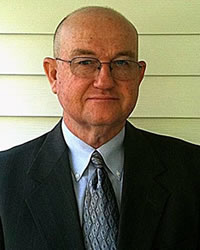
Gary Shepard

The Cost

Luke 14:25-33
Gary Shepard June, 30 2013 Audio
0 Comments

Sermon Transcript

Auto-generated transcript • May contain errors

100%
If you would turn this morning
in your Bibles to the Gospel of Luke chapter 14. Luke 14, and I'll begin reading
at verse 15. And when one of them that sat
at meat with him heard these things, he said unto him, Blessed
is he that shall eat bread in the kingdom of God. Then said
he unto him, A certain man made a great supper, and bade many. And he sent his servant at suppertime
to say to them that were bidden, Come, for all things are now
ready. And they all with one in consent
began to make excuse. The first said unto him, I have
bought a piece of ground, and I must needs go and see it, I
pray thee, have me excused. And another said, I have bought
five yoke of oxen, and I go to prove them, I pray thee, have
me excused. And another said, I have married
a wife, and therefore I cannot come. So that servant came and
showed his Lord these things. Then the master of the house,
being angry, said to his servant, Go out quickly into the streets
and lanes of the city, and bring in hither the poor, and the maimed,
and the halt, and the blind. And the servant said, Lord, it
is done, as thou hast commanded, and yet there is room. And the
Lord said unto the servant, Go out into the highways and hedges,
and compel them to come in, that my house may be filled. For I say unto you that none
of those men which were bidden shall taste of my supper. And there went great multitudes
with him, and he turned and said unto them, If any man come to
me, and hate not his father, and mother, and wife, and children,
and brethren, and sisters, yea, and his own life also, he cannot
be my disciple. And whosoever doth not bear his
cross, and come after me, cannot be my disciple. For which of you, intending to
build a tower, sitteth not down first, and counteth the cost,
whether he have sufficient to finish it? Lest, happily after
he hath laid the foundation, and is not able to finish it,
all that behold it begin to mock him, saying, This man begin to
build. and was not able to finish. Or what king, going to make war
against another king, sitteth not down first, and consulteth
whether he be able with ten thousand to meet him that cometh against
him with twenty thousand? Or else, while the other is yet
a great way off, he sendeth an ambassage and desireth conditions
of peace. So likewise, whosoever he be
of you that forsaketh not all that he hath, he cannot be my
disciple." Now, I've entitled this message, The Cost. The Cost. But even though I take
that title, to this message, I would want to remind you one
more time and be sure that you know that salvation is the gift
of God. Faith is the gift of God. Repentance is the gift of God. Grace is the free gift of God. Christ Himself is called the
unspeakable gift. The ground of all our salvation
depends entirely upon Him and what He has accomplished in His
life and His death. But how could we read these verses
that we've read this morning and not see that he speaks here
of a cost. And this has to do with the cost
of being a Christian in this world. It was the case in this
day, and it is the case in our day. And even though many profess
to be Christians, Even though many claim to be the children
of God, they know very little, if anything, about the cost. You see, the title Christian
means a lot of different things to a lot of different people. In our day, it has become a title
that is very acceptable, very common, and even very fashionable
in some ways. But the name and title of Christian
in the Bible began as a name of contempt. It wasn't spoken
in kindness. It was spoken to some in utter
contempt of them. We find in Acts 11 that at Antioch
it says, and it came to pass that a whole year they assembled
themselves with the church and taught much people and the disciples
were called Christians first in Antioch. That is, these apostles
taught and preached in that place, and men began to believe the
gospel, and those who did not believe, they called them by
this name of contempt, Christians. Then we read also later in the
book of Acts, when Paul stood before Agrippa, He used it in
the same way. He said after Paul got through
speaking, he said, are you trying to persuade me to be a Christian? I know the song was written almost
persuaded, but that's not the meaning of that verse. He's saying,
are you trying to persuade me, King Agrippa, to be a Christian? And not only that, we find the
apostle Peter using that name in this way. He says, Yet if
any man suffer as a Christian, let him not be ashamed, but let
him glorify God on this behalf. What it says when any man or
woman suffers as a Christian, then let them glorify God, let
them thank God that that is their situation. These people were
spoken of in contempt because they identified with the true
Christ. They were called by this name
of contempt because they identified with the doctrine of Christ. There are some in our day who
imagine that they can identify with the Lord Jesus Christ, but
not identify with Christ's doctrine. But he himself said, if any man
be ashamed of me and my words, he'll be ashamed in the day of
judgment. They were called by this name
because they identified with the doctrine of grace. That is, the gospel, which we
find spoken of many times in Scripture, The word we find many
people using in our day, in the Bible, it's always identified
in some way. Not just the gospel. It's the
gospel of God. It's the gospel of His Son, Jesus
Christ. It's the gospel of the glory
of God. It's the doctrine or gospel of
the grace of God. they were held in contempt because
they identified with this gospel, number one, that has a totally
different view of man than the world has. Man operates by the
principle oftentimes that everybody is basically good. But if we
believe the Bible, we have to confess and believe that all
men are essentially, by nature, bad. They operated on this principle,
believed this doctrine, that it's the choice of God in salvation
that determines salvation, and not the choice of man. They operated
on this principle or this doctrine of Christ and grace that when
Christ died, he died a particular death in order to accomplish
something successfully and victoriously for a particular people, his
own people, his elect people. They operated on this principle. that it was not left to man to
determine anything with regard to his soul, not left to the
will of man, or the choice of man, or the ability of man, but
that it was God's irresistible grace and power that brings one
to Christ. And they operated on this principle,
as do those who preach and believe the gospel in every age. And that is that God will keep
and preserve and ultimately and finally save and glorify all
his people. They are kept by his power through
faith and they are not of themselves able to preserve to any degree
themselves in the matter of salvation. They call them Christians. And so what we find is they believed
a doctrine, they believed a gospel, they believed on a Jesus that
whose salvation gives all the glory to God and thoroughly abases
man so that Christ would say to them Blessed are ye when men
shall revile you, and persecute you, and shall say all manner
of evil against you falsely for my sake." Blessed are you. In other words, not only will
this happen, not only can you expect this, Not only is this
what characterizes all who believe the truth, but he said, blessed
are you if that happened to you for my sake. Not only that, but
he says this in Luke 6. He said, woe unto you when all
men shall speak well of you, for so did their fathers to the
false prophets. What did they do? They spoke
well of Him. They called Him good prophet,
good preacher, good people, all these things, and yet they believed
and spoke of a false God and a false religion. You see, Christ's
teaching here in our text has to do with following Him. He is the one who in John 10
says as the great shepherd of the sheep, my sheep hear my voice
and they follow me. He is talking about there being
His disciples. Now what is a disciple? A disciple is simply a learner. A disciple is one that is taught
or one who is brought under the discipline of the teacher. A disciple is, as is said here,
a follower. He's talking about true disciples. And what he has to say here,
the things he's talking about, these are not conditions for
discipleship. or conditions for being a child
of God, but the manifestations of being a disciple. What he's
talking about here has nothing to do with Christ alone, his
bloodshed, his righteousness imputed to us, being the whole
of our salvation. This is not about how he saves
us, but this is the experience of those he saves, of those who
follow him. And if you read his teaching
over and over again, he makes a distinction, often times, between
the mere professor of religion and those who are true disciples. If you notice here, he uses two
illustrations. And the one he uses, he speaks
of building a tower. He didn't say, build a little
hut. He didn't say, build me a little
cabin in the corner of glory land. But he likens this experience
of his disciples to building a tower which is a very unmistakably
public thing and also a very expensive proposition. It will have a cost. And then
on the other hand, he speaks of this being a disciple as being
involved in a warfare. Now we don't like that too much.
Man by nature would rather fight the government or fight this
evil or fight this immorality or fight this person or this
group or that or the other. And we can be involved in a host
of conflicts and warfares in this world and still not be in
the fight." Hold your place right here and turn to 2 Timothy. 2 Timothy. Now listen to Paul's
word here. Because this is the same man
that when he came down to the end of his race, the end of his
journey in this life, he's expressed it in this way looking back.
He said, I have fought a good fight. Now listen to what he
writes to Timothy here. 2 Timothy chapter 2. He says, Thou therefore, my son,
be strong in the grace that is in Christ Jesus. Now, what's he talking about
there? Well, surely he's talking about the grace that God gives
to his people in Christ. Surely that's a part of it. We
know that. But what he's talking about here,
and we find out about it in the next verse, is he's talking about
this gospel of grace, this salvation by grace. which is contrary to
everything that man by nature wants to believe about God, believe
about himself, believe about how salvation is. He says, you
be strong in the grace of God, listen, and the things that thou
hast heard of me among many witnesses, the same commit thou to faithful
men who shall be able to teach others also. Now notice how he
expresses this. Thou therefore endure hardness. Now we have these men in places
like Iraq and Afghanistan, especially Afghanistan. That is, on their
best days there is not a doubt that if you think about what
they're having to live through and deal with, they have to face
hardness. That's the role and the mission
of a soldier. And he's likening that to his
people. He says, Thou therefore endure
hardness as a good soldier of Jesus Christ. no man that woreth
entangleth himself with the affairs of this life, that he may please
him who hath chosen him to be a soldier." Well, I thought we
were chosen to be the king's children. We were. I thought
we were chosen of blessing and eternal glory and eternal inheritance
and all that. Yes, that's exactly the case. But in this world, he says we
are chosen to be soldiers. And if a man also strive for
mastery, yet he is not crowned, except he strive lawfully, the
husbandman that laboureth must be first partaker of the fruits. Consider what I say, and the
Lord give thee understanding in all things. Remember that
Jesus Christ, the seed of David, was raised from the dead according
to my gospel. Now listen to what Paul says,
wherein I suffer trouble as an evildoer. Now wait a minute.
Paul, God calls you to identify with this blessed truth of His
grace in Christ Jesus. You've been faithful to preach
that salvation is of the Lord, the free gift of His grace, that
it's not of works, lest any man should boast that he was raised,
this one who is the seed of David and David's Lord at the same
time, you've been called and you've been proclaiming this
glorious person, the Son of God, and they're treating you like
what? You're suffering, Trump, as an evildoer, even unto bonds? That's the reception you're getting.
The only good news there is in this universe The only glad tidings
that there are that can be proclaimed to sinners such as we are, the
good news of his free and sovereign grace in Christ, this is how
it's received. This is what men do to you. He
says, but the word of God is not bound. It may appear that
God's purpose is halted, that his people, that his servant,
is bound up and can't do anything, but the Word of God is not bound. Therefore, I endure all things
for the elect's sake, that they may also obtain the salvation
which is in Christ Jesus with eternal glory." That's the reception. That's the conflict. That's the
warfare that he's talking about. Look down in verse 25 of Luke
14. Now, our Lord has done a number
of great miracles. He has taught glorious things. And if you look down at verse
25, it says, And there went great multitudes with him. When I read
that, I thought, I wonder how modern-day evangelists and preachers
would respond to that. They'd say, well, the Lord is
your blessing. They'd say, this is a glorious thing. They'd say,
you folks, come right on. Join my church. You folks, start
your giving. You folks, start your doing.
You folks, start following me. Follow me on my website. Follow
me on all these things. But that's not what our Lord
did. It says, and there went great multitudes with him, and
he turned and said unto them... In other words, He spoke pointedly. He spoke plainly concerning what
those who followed Him, what these disciples, what they could
expect. And He urged them to count the
cost. Count the cost. You know, the
Lord Jesus Christ, He never did sugarcoat things. He never misrepresented
things. He never tried to sneak up on
people with the gospel. That's what a lot of these preachers
think they're going to do. We're going to maintain the same
structure. We're going to maintain the same
idolatrous themes. We're going to maintain the same
invitations, the same foolish programs. We're going to do all
these things. And little by little, we're going
to slip in a little gospel we're going to kind of sneak up on.
I met a preacher on a Monday morning one time, and he wanted
to know what did I preach on. This was a long time ago, 30
years ago, more than that. He wanted to know what I preached
on. And I said, well, I preached on Matthew 1.21, and I divided
it like this. Thou shalt call his name Jesus,
for he shall save his people from their sins. Number one,
I dealt with the name Jesus, what it means. Yehoshua, Jesus
the Savior, that he shall emphatically, cannot fail, without any doubt,
he shall do this, say, that is to the uttermost, to the far
reaches of whatever salvation is, especially the salvation
of the soul, he shall save his people, no one else, but all
of them, his people, from their sins, all their sins, finally,
fully, freely, and eternally." He said, whew! You preach that? All I could think of was, what
else does that say? He said, I'm just trying to kind
of slip these things into my people. How can you slip in a
plain declaration of God's Word? You see, by his own example and
by his own statements, Christ would have us know that the cost
of following Christ, the cost of believing the true Gospel
may be It may be high. It may be high. It's free, but
it may be falsely. Hold your place and look over
in John 6. John 6. Look at verse 60. Like I said, Christ had been
doing all these miracles. Feeding the multitude with five
loaves, two fishes. And then He begins to set forth
His gospel. His doctrine. He begins to say
things like this that are only to be understood in a spiritual
sense. He said, except you eat my flesh
and drink my blood, you have no part in me. What's that? That's
the person and work of Christ. If you're not enabled to assimilate
unto yourself by faith what the gospel says about the person
and the accomplished work of Jesus Christ, He said, you have
no part in me. Look at verse 60. Many, therefore,
of his disciples, they were to that point followers, listeners,
learners. Many of his disciples, when they
had heard this, really heard what he said, they said, this
is a hard saying and who can hear it? You want to know who
will hear this hard saying? God's elect will hear it. My
sheep hear my voice and they follow me." Well, a little bit
time passed. Our Lord begins to tell them
in verse 63. He says, It is the spirit that
quickens, makes alive, the flesh profits nothing. The words that
I speak unto you, they are spirit and they are life. But there
are some of you that believe not, for Jesus knew from the
beginning who they were that believed not, and who should
betray Him. And He said, Therefore said I
unto you, that no man can come to Me." Is that right? I thought
it was all about free will and man's choice and that everybody's
got a chance No man can come to me, can having to do with
ability. No man can come unto me except
it were given unto him of my Father." Now, they had followed
Christ. They'd listen to his teachings.
They'd eat his bread and his fishes and all that. But verse
66 says, from that time, many of his disciples went back and
walk no more with him. You say, well, if it says they
were disciples, that means that they were believers. Not necessarily. Not necessarily. Many learn a
few things. Many follow outwardly Christ
a certain distance. But they're not true disciples. Because when the time comes that
the cost is made manifest to them in their particular situation,
they show that they know nothing of that salvation that's in Christ. Many. You mean Christ has said
some things that appear to be deliberate to turn some back,
turn away? Absolutely. He said there must
be heresies or divisions among you that they which are true
might be made manifest. That's what the gospel does.
Now listen. Then said Jesus unto the twelve,
Will you also go away? Will you also go away? Then Simon
Peter answered him, Lord, to whom shall we go? Thou hast the
words of eternal life. Not the miracles. Not all these
other things, like men preaching nowadays of a health and wealth
gospel. Not any of these things. What
is it? What was it that held them, that they found necessary,
above all things, that bound them to Him, made them follow
Him? It's the words. The words of
eternal life. Nowadays, man makes a show in
religion. He has a party. He has a production. He has everything that the flesh
wants. If you want to be recognized,
you come to our assembly. We'll recognize you. We'll make
you something, if it's nothing but the honorary floor sweeper. We'll give you a title. We'll
give you honor. We'll stand up on your birthday.
We'll stand up on Mother's Day and Father's Day. We'll recognize
you. They said, Lord, to whom shall
we go? You have got the words of eternal
life. And we believe and are sure that
you are that Christ, the Son of the Living God. We don't know
everything. Somebody says, you people think
you know everything. No. We know the One who knows
everything. We know that One who in His Word
has told us everything that He'd have us to know. And what He's
saying is this, the cost, the cost of being a disciple or a
follower of the Lord Jesus Christ is forsaking all. Now, you look back at our text
at verse 26. If any man come to me, and hate
not his father, and mother, and wife, and children, and brethren,
and sisters, yea, and his own life also, he cannot be my disciple. Now I'm not trying to start some
kind of secret society or get you to take some kind of a blood
oath or anything like that. I'm just telling you what the
Master says. That's what the Master says.
And when you stop and think about it, what kind of hatred does
the Holy God command? In other words, you have to know
that He cannot, that He does not command contrary to His law,
His word, His character. He's not going to tell us one
thing to do one thing and another time to do another thing with
regarding the same individual. But he speaks of father and mother
and wife and children and brothers and sister and one's own life,
the things that are nearest and dearest to us. What he means
is they're to be hated comparatively. You say, what do you mean comparatively? I mean, although He commands
us to love father and mother, although He commands us husbands
to love their wives, wives to love their husbands, that He
commands us to love our children, none of these are to be loved
and regarded above our Lord Jesus Christ. That's the cost. We're
to love them. We're to treat them good. We're
to pray for them. We're to encourage them. were
to seek to spread the gospel to her, but comparatively they
are not to be preferred to Christ or loved more than Christ. And that love and this hatred,
as it's called here, will at some point in a believer's life,
and may be often called into question, won't it? It will. It absolutely will. in Matthew
10, which is a kind of parallel passage to Luke 14. He says,
He that loveth father or mother more than me is not worthy of
me, and he that loveth son or daughter more than me is not
worthy of me. I have a preacher friend, I was
telling some before the service, that his father died recently. Don't you know that He loved
his daddy. I know that. I can just tell
that he loved his daddy. Don't you think that if he could
have, he would have some way lowered the standard of God for
his daddy's sake so that he could go to heaven? Why didn't he?
He didn't. Number one, he didn't by the
grace of God. But he didn't because God had
put in his heart a higher regard and love for Christ than any
other earthly creature. You say, what do you do? You
bow and you acknowledge that the judge of all this earth will
do right and thank him that he found a way to do right and at
the same time justify a sinner like yourself. Absolutely. Old
John Gill said, these are to be neglected and forsaken and
turned from with indignation and resentment when they stand
in the way of the honor and interest of Christ and dissuade His servant,
His service. I love them, but I don't love
them more than Christ. I'll do anything for them, but
not at the expense of worshiping Christ, following Christ. I had
a friend, saw him just recently, many years ago, that's been a
long time ago. One day his wife, who was about
to get ready to go to church to hear the gospel, she said
to him, don't go today, stay home with me. He said, no, I
want to go, I need to go. She said, I'm going to tell you
this, if you go out that door and go to church, go to that
church I believe she said, when you come back I won't be here.
You leave me no choice now. You've just made it a question
of you or my Savior. My salvation. My hope. He went
to church. Came home. Guess what? He wasn't
there. He lost everything. He didn't
lose anything. As a matter of fact, I saw him. I've seen him over the last 30
years many times. And he's a happy man. He has
a believing wife now that he found out the cost. I remember
reading years ago a message that was preached, I think sometime
in the 1800s, by a man who took, I'm not sure if this was the
text, but he took the same title, the cost. And in it he said some
good things. He said it will be required of
you to give up your self-righteousness, you have to give up your sins,
you have to give up favor, you have to give up your love of
ease. Those are the four things I believe he gave. There's a
lot of truth in that. But he never could give up his
place in the Church of England and its idolatry. The cost of
following the truth would have involved giving up infant baptism,
which he could not. The wearing of the idolatrous
robes of priestcraft, which he could not give up. and a view
of the atonement that set forth in the Bible of particular redemption
which he could not. Too high a price to pay. But
what this involves is to be ready to part with the dearest relations,
with the closest friends, with our greatest enjoyments of life,
and even life itself should Christ call for it. And I believe I've
found this out. And you look here in verse 27.
He says, and whosoever doth not bear his cross and come after
me cannot be my disciple. It was a strange thing yesterday.
I walked into a convenience store, and there on the rack when I
went to pay, there was a little rack of, as there is everywhere
most, of religious trinkets. This one kind of struck my attention.
It said, The Disciple's Cross. Knowing what I was thinking about
preaching about this morning, I wondered, really, what in the
world is it talking about? Somebody had taken four horseshoe
nails. I used to have horses. I know
what a horseshoe tail looks like. They had taken four horseshoe
nails and some wire, wired them all together in the form and
fashion of a cross, put it on a string. They were selling them
for a few bucks, calling it the disciples' cross. I tell you,
it's an easy thing to wear a cross. It doesn't bother this religious
world that God says, thou shalt not make unto me any graven image,
all this idolatry. It's an easy thing to put on
a bumper sticker or another kind of sticker or a pin or a cross,
whatever it is. That's not what he's talking
about here. This is the disciples' cross. And you can be assured
that there is no curse in the disciples' cross. Because our
curse was born by the Lord Jesus Christ. He blew all our curse. But you can make sure, as he
said, he that taketh not his cross, he's talking about our
cross, and followeth after me, he's not worthy of me. But in
almost every context where you find the Lord Jesus talking about
the believers, the disciples' cause, their cause, it's always
in a context mostly of those that are nearest and dearest
to us. And it has to do with before
these, sharing the reproach of Christ willingly for his glory. If any man will come after me,
let him deny himself and take up his cross and follow me."
Turn over to 1 Peter. 1 Peter, the Apostle Peter, writing
in chapter 4, in verse 12, he says this, Beloved, think it
not strange concerning the fiery trial which is to try you as
though some strange thing happened to you, but rejoice inasmuch
as you are partaker of Christ's suffering." He tells us that
the servant is not greater than his master. that when his glory
shall be revealed, you may be glad also with exceeding joy."
If you be reproached for the name of Christ, not because you've
got a bad attitude, not because you like to argue and debate
on scripture and things like that, but if you be reproached
for Christ's sake, Happy are ye, for the Spirit of glory and
of God resteth upon you. On their part He is evil spoken
of, but on your part He is glorified. But let none of you suffer as
a murderer, or as a thief, or as an evildoer, or as a busybody
in other men's matters. Yet if any man suffer as a Christian,
let him not be ashamed. but let him glorify God on this
day. Now, there's a lot of common
sufferings. Mankind, sinners as a whole,
they have all kinds of sufferings. But he says this is for the name
of Christ. This is for identifying with
Christ. This is for believing and confessing
the true gospel of Christ. It's believing and identifying
with and promoting this gospel in the midst of this world, especially
in the face of the religions of this world. Because most people,
and I do mean most people, believe the three big lies of religion. You say, what are the three big
lies of religion? Well, they believe that God loves
all people. Number two, they believe Christ
died for every man. Number three, they believe that
God is trying to save every man. And those three things are an
abomination to the Father and the Son and the Holy Spirit. That's a kind of satanic trinity
of lies. All you have to do is read Ephesians
1 to find out that's not the case. You see, He tells us that
this is to be ready to lose the approval of the world and of
friends and family and all these things. When our Lord was here,
you know He had to be some amazing personality, speak amazing things. And so it says in John 12, nevertheless,
among the chief rulers, also many believed on him. But because
of the Pharisees, they did not confess him. What? You mean to
tell me that here's the Lord of Glory standing in human flesh
before you? You've just heard him speak the
way of truth, the glorious things of God, and you're not going
to believe him just because a bunch of hypocrites A bunch of religious
people that Christ Himself described as snakes and vipers and dead,
garnished tombs full of dead men's blood? You mean to tell
me that because of that person, you're not going to believe on
Christ and follow Him? Do you mean to tell me because
of some sinner who's a sinner just like you, ignorant just
like you, blind just like you, spiritually dead just like you,
God makes known to you the truth of the gospel, and you're not
going to believe Him over somebody who's as ignorant or more ignorant
than you are? Doesn't make sense, does it? Why would they not believe on
Him? Because of the Pharisees, they
did not confess him, lest they should be put out of the synagogue. That meant that their hope was
being a member of that synagogue. Just like so many people, their
hope is being a member of a religious organization, a church so-called.
For they loved the praise of men more than the praise You
know, the Lord's people, they have to forsake a lot of the
activities of family, of friends, of this world, in order to worship
God. If you find something better,
go ahead. But he calls the gospel the necessary
bread. Well, I want my children to be...
I want them to have a well-rounded education. I want them to have
a good cultural experience and exposure. He said, train your
children in the way that they should go, and when they're old,
they'll not depart from that. You see, what a lot of parents
don't realize is that a great part of hell will be for them
that their own children, who then will know how everything
really was and is, being cast themselves into outer darkness,
they will look at their parents who did not show any interest
in the things of God, did not in their life demonstrate the
importance of worshipping God or learning the gospel of God,
and they'll curse them for all eternity. That's the truth. That
will make hell even more of a hell for them. It will cause forsaking
all that the world seeks after. Verse 33 says, So likewise, whosoever
he be of you that forsaketh not all that he hath, he cannot be
my disciple. Oh, man. You ask people, are
you a Christian? Oh, yes, I'm a Christian. I had
a funny feeling when I was in Bible school one time. I made
a profession of faith. I joined the church. They dipped
me in some water or sprinkled some water on my head when I
was an infant. Something like that. But he says,
Whosoever he be of you that forsakes not all that he hath cannot be
my disciple. All the possessions, all of those
goals. I wonder how many times in 30
years I've heard people say, Preacher, I've got a chance of
a promotion, a good job over in such and such a state. It will mean a lot to my family
and all that kind of stuff. So, I've accepted it. Would you
help me pray for maybe the Lord finding you church? Not really. Not really. The most vital thing
to your soul and to the welfare of your children and your family,
and that's the last thing that's entered in your mind? Tell me,
well, preacher, I feel led to take this job. It ain't the Lord
that's leading you. He doesn't lead His people away
from the truth. He doesn't lead His people away
from the worship of God's people. Oh, they are sometimes found
gone away, but they suffer great chastisement. It means regarding
all things as His. Forsaking all, knowing that we
shall not be forsaken. Forsaking all, knowing that we
have not really forsaken anything. You say, how can you say you've
not forsaken anything if it comes to a loss of husband, wife, child,
their favor, their friendship, their relationship. How can you
say that we've not lost everything? Because if we have Christ, we
have all. I've not experienced any of my
immediate family not talking to me because I believe the gospel,
but pretty close to it. They don't really want to have
anything to do with me. Those people are courteous and
outwardly kind It's a show, you know? That they know deep down
that I know, that I believe, that they are not really Christians
at all. That they are really lost. That
I cannot give them a false hope. That I cannot pat them on the
back and say, well, we're all going the same way. No. Why? Because of the glory of God.
and never lose anything, forsaken all for Christ. He said, and
everyone that hath forsaken houses, or brethren, or sisters, or father,
or mother, or wife, or children, or lands for my name's sake shall
receive a hundredfold and shall inherit everlasting life. A friend
of mine and I were staying in a house. We were preaching at
a Bible conference in Tennessee and we were staying in a house.
And we got up the next morning, and the folks had to go to work,
So they had left us a note on the counter. Here's where this
food is, here's where that food is, here's where the milk is,
here's where the coffee is, here's where this is, and here's the
keys to this car we've left in the driveway. I told them, I
said, we haven't lost anything. We've received a hundredfold.
I've got a family bigger than I could have ever imagined. I
can drive in almost any direction. And within a matter of hours,
if I'm tired and weary, if I need something, if I need help, all
I've got to do is knock on somebody's door and say, look, I need a
little help. I need a place to lay my head.
I'm worn out. I've got it. I haven't lost anything. And that's surely been true of
this family. Family of believers here. True disciples, they keep
following. If you continue in my word, then
you're my disciple indeed. If you continue in my word, continue
hearing my gospel, seeking to know the truth of my word, you
continue. That's the mark of a disciple.
It's not kind of like this. It's not who gets on this train.
It's who's on it when it pulls into the station. We have a lot
of warnings. He says, remember Lot's wife.
He gives us a warning in Judas Iscariot, counted among the apostles. He tells us about Demas through
the apostle Paul. Paul said, Demas, having loved
this present world, hath forsaken thee. John warns, he said, let
me read this to you. 1 John. Little children, it is the last
time. Oh, you mean Preacher, we're
not looking way down the road somewhere for the last times,
no. John said in his day, it is the
last time. And as you've heard that Antichrist
shall come even now, there are many Antichrists whereby you
know that it is the last time. They went out from us, but they
were not of us. For if they had been of us, they
would no doubt have continued with us. But they went out that
they might be made manifest that they were not all of us. They didn't continue. Our prayer
is that we will not be among those that turn back, that believe
to the saving of our souls. Continue in His Word. Continue
in Christ. continue in his worship, continue
with his people, and then he gives another mark of a disciple.
And you can really count this as a call sometimes. He said,
by this shall all men know that you're my disciple, if you have
love one for another. That's about as easy a thing
as can be done. So we think, until our brother
or our sister messes up, or says something maybe unkind to us,
or fails to meet our expectations. What does a true disciple of
Christ do? He still loves him. I had a man
call me, I guess it's been a couple of years now, and he wanted to
know, he had some relation that was in the military, he wanted
to know what the position of this congregation, this church
was on church discipline. Isn't that something to ask about?
That's to find out whether or not... He didn't say, tell me
what you believe about the gospel. Tell me what you believe about
grace. Tell me how you believe that God saves sinners. No. Tell me what you believe about
church discipline. I told him, we believe that rather than emphasize
church discipline, The Bible emphasizes restoration. You which are spiritual. If a brother or a sister be taken
in a fall, you that are spiritual, he says, seek to restore them. We're not looking, if we're disciples,
at another disciple, and when he messes up, we'll say, gotcha. No. He said pray for one another.
Love one another. And this is how before men, one
way that it's demonstrated that you are my disciples, that you
continue to love one another. I tell you, when God revealed
the perfect one to me, I quit looking for perfection in anybody
else. That's the cost. Forsake all,
follow Him. I'm not going to spend a series
of 20 weeks describing all the things to be forsaken to follow
Him. You know what they are if you're the Lord's child. You
know what they are. That doesn't make them any easier.
You know what they are. And usually, they have to do
with possibly losing the favor of those who are your friends
or your family. The recognition of this world. That good old pat on the back.
That's the way it is with His disciples. And when you've forsaken
all, if you have Christ, you're not really forsaken anything.
Because He's all. God has freely given us all things
in Him. And that's what eternity will
reveal. Father, we pray this day that
you'd help us, give us grace, that we might be a follower,
a disciple of the Lord Jesus Christ. That we might view with
open eyes, with understanding the cost. That we might count
the cost. that these things may not take
us by surprise. And Lord, so many of them we
may not even be required to forsake in a general sense, but make
us willing to. Give us grace when we have to,
that we might be a follower of our Savior, the Lord of glory,
the King of kings. For we pray and we ask all things
in his name. Amen.
Gary Shepard
About Gary Shepard
Gary Shepard is teacher and pastor of Sovereign Grace Baptist Church in Jacksonville, North Carolina.

Comments

0 / 2000 characters
Comments are moderated before appearing.

Be the first to comment!

Joshua

Joshua

Shall we play a game? Ask me about articles, sermons, or theology from our library. I can also help you navigate the site.