Bootstrap
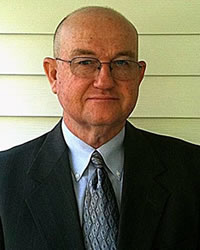
Gary Shepard

The Footprints of God & His Gospel

Acts 8:26-40
Gary Shepard June, 2 2013 Audio
0 Comments

Sermon Transcript

Auto-generated transcript • May contain errors

100%
Turn with me this morning to
the book of Acts, Acts chapter 8. And we'll begin reading in
verse 26. And the angel of the Lord spake
unto Philip, saying, Arise, and go toward the south unto the
way that goeth down from Jerusalem unto Gaza, which is desert. And he arose, and went, and behold,
a man of Ethiopia, and eunuch of great authority under Candace,
queen of the Ethiopians, who had the charge of all her treasure,
and had come to Jerusalem for to worship, was returning, and
sitting in his chariot, read Isaiah the prophet, Then the
Spirit said unto Philip, go near and join thyself to this chariot. And Philip ran thither to him
and heard him read the prophet Isaiah and said, understandest
thou what thou readest? And he said, how can I except
some man should guide me? And he desired Philip that he
would come up and sit with him. The place of the Scripture which
he read was this, He was led as a sheep to the
slaughter, and like a lamb done before his shearer, so opened
he not his mouth. In his humiliation his judgment
was taken away, And who shall declare his generation? For his
life is taken from the earth.' And the eunuch all answered Philip
and said, I pray thee, of whom speaketh the prophet this? Of
himself or of some other man? Then Philip opened his mouth,
and began at the same scripture and preached unto him Jesus. And as they went on their way,
they came unto a certain water, and the eunuch said, See, here
is water. What doth hinder me to be baptized? And Philip said, If thou believest
with all thine heart, Thou mayest." And he answered and said, I believe
that Jesus Christ is the Son of God. And he commanded the
chariot to stand still. And they went down both into
the water, both Philip and the eunuch, and he baptized him. And when they were come up out
of the water, the Spirit of the Lord called away Philip, that
the eunuch saw him no more. and he went on his way rejoicing. But Philip was found at Azotus,
and passing through, he preached in all the cities till he came
to Caesarea." Sometimes people ask, or are asked, as a friend
of mine was, does a person have to hear the gospel to be saved? Now, when I hear that question,
it kind of sounds an alarm in my mind, because my first thought
is, what is the motive behind such a question? I wonder whose
unbelief that they're trying to justify. Maybe it's the unbelief
of a parrot who died in rebellion against the truth, having no
real knowledge of the gospel. Maybe it's a child who has no
interest, no contact with the gospel. Sometimes I feel like
that it has to do with some area of indifference, as if laziness
or irresponsibility concerning the gospel. or maybe even too
stinginess, not as to want to spend anything to support missionaries
to preach the gospel. But it does sometimes come up
in the minds of people. But the first thing that I'd
want to say to you this morning is that the God of the Bible
And He is the only God there is. He is an absolute sovereign. That is, we really know nothing
about God until we're brought to see this and to acknowledge
it and to bow to it. He absolutely rules over all. He does what He will,
and there is no one that can stop Him. He does it to whom
He will, and there are none who can question it. He saves whom
He will, and He saves how He will. That's what Nebuchadnezzar,
that great king, had to learn himself. He learned that all
the inhabitants of the earth are reputed as nothing, and that
He, that is God, doeth according to His will in the army of heaven
and among the inhabitants of the earth, and none can stay
His hand or say unto Him, What doest Thou? He is God alone. And as God the Father, we find
in this book that He chose a people that would come from Adam's fallen
race, that He chose them in an everlasting covenant, gave them
to His Son, bestowed His love upon them in Him, and gave to
them all spiritual and eternal blessings." That's what this
book says. It also says that as God the
Son, He came into this world as Jesus the Savior. as the man Christ Jesus, who
would and did save his people from their sins. He laid down
his life for the sheep. He purchased the church with
his own blood. He gave himself for his friends. He redeemed His own with His
own blood and by Himself purged their sins. And then also it
says, as God the Spirit, He comes to each one of His elect to make
an application of this salvation, giving them spiritual life through
the new birth which results in them having those two joined
gifts of repentance and faith. And they shall all be saved,
they shall all be taught of God, they shall all confess Christ,
all believe on Him, All trust His blood and righteousness alone. All continue by His grace in
the faith until the day that He calls them unto Himself."
Now, those three things are absolute truths, which no one who truly
believes the Bible can or would dare to deny. But although these
things are absolutely and unchangeably and unmistakably true, it is
utter foolishness and a complete denial of so many things we find
in this book if we say that that means, as some say that it does,
that if they're going to be saved, then they'll be saved no matter
what. Or, as some say, if they're God's
elect, He'll save them regardless. Or, as some would respond to
our beginning question, God will save them whether or not they
hear the gospel or not? Well, yes and no. Yes, God will unmistakably and
unfailingly save all His people from their sins, and He will
also use the means to do so. Hold your place right here and
turn over to the 16th chapter of the book of Acts. Acts chapter
16, where we find, to my great encouragement, these apostles
and preachers of the gospel who do not have the answer, who do
not know the will of God in every situation. It says that they
came to Derbe and Lystra, and there were all these peoples,
all these individuals, no doubt all these needy sinners. But when you look down in verse
6, It says, now when they had gone throughout Phrygia and the
region of Galatia, and were forbidden of the Holy Ghost to preach the
Word in Asia. Now it would be contrary to what
a multitude of people believe in our day, to think that that
was actually the case, that the Spirit of God forbade the preaching
of the gospel to a certain people or place. But now look farther. After they were come to Mesia,
they assayed to go into Bithynia, but the Spirit suffered or allowed
them not. They were not allowed to go there. And then passing by Mesia, came
down to Troas, and a vision appeared to Paul in the night, and there
stood a man of Macedonia. Evidently, this had not come
to their mind. Evidently, they did not know
ahead of time. But there came and stood in a
vision a man of Macedonia and prayed him, saying, Come over
into Macedonia and help us. In our day, somebody, if they
all received that vision, would probably say, they need medical
missionaries there, or they need food there, they need blankets
there, they need some kind of care or benevolent deed there. But listen to what Paul says.
And after he had seen the vision, immediately we endeavored to
go into Macedonia, assuredly gathering that the Lord had called
us for to preach the gospel unto them. He sent them not one way
or the other way. He stopped them from going this
way in order to get them with this gospel to these people in
Macedonia. When this same apostle was in
that wicked city of Corinth, You might remember he was obviously
afraid because of all the wickedness and false religion in that place. And the Lord commanded him in
the night, saying, Do not be afraid, but stand forth and preach
the gospel without fear, because I have much people in this city. The reason you're here, Paul,
with the gospel that I've sent you to preach is because I have
much people in this city. Even in such a case as we find
with Rahab the harlot of Jericho, in God bringing judgment against
the greater majority of all the inhabitants of that city, destroying
it by bringing it down to the very dust of the ground. He preserved
Rahab and her family, but he did so first off by sending her
a message. Sending her a message, and that
being a message of good Now, without a doubt, God has ordained
the end. He says to us so plainly, our
Lord did, all that the Father giveth me shall come to me. In other words, not one of them
will ever be lost. But He has also ordained not
just the end, He has ordained the means to that end. As a matter of fact, how could
we ever think that a certain end could be accomplished by
anybody if they were not also able to ordain and control the
means to bring that end to pass? But what we have to remember,
at least in my mind, is that he has purposed, not only in
the end, But he has purposed also in the means to bring that
goal to an end. He has purposed that he would
get glory to himself in the means as well as in the end. He works all things after the
counsel of his own will. And he accomplishes his purpose
of grace. through the means that He has
established, David himself saying concerning that everlasting covenant
that it was ordered in all things and sure. And some may think
that they glorify God by saying He can do things any way that
He wants. They say you can't tie God up.
God can do things any way that He wants, but I'll promise you
two things. God will not act or do anything
in a way that is inconsistent with His holy and just self. He will not do wrong. And secondly, He always will
act in all things in accordance to His own will. He will do what
He says that He will do, and He will do it the way He says
that He'll do it. Because He gets glory in the
doing of it as well as in the accomplishment of it. And this
gospel will go forth according to what He says in this book. and that salvation that we read
about in scripture, which is always associated with faith. But how can anybody, even with
God-given faith, believe on Christ, who is the object of true faith? if there is not first a revelation
of the person and the work concerning that person that we are to believe
on. Something has to distinguish
him. He's distinguished by what the
gospel says that he is, and he's distinguished by what the gospel
says that he does. And so we have a man here, who's
traveling out in the middle of a desert place. He is one of
these individuals that God chose and that Christ came to die for,
undoubtedly. So if with the reasoning that
some often give, why did this man not just one day wake up
and find out that he was in heaven. Why didn't he just one day come
to him like in a cloud somehow? That God had chosen him and saved
him and blessed him with all blessings? Why was it that God
had to go to all the trouble that he did in the saving of
this man to send a messenger way out in the middle of a desert
place, having brought that messenger from a place where a great stirring
of God's Spirit was, bring him out in the midst of the desert
to meet a man riding along in a chariot. I'll tell you something's
more strange than that. especially in our day of so-called
evangelism. And that is that he sent him
out there to one man, one man. You see, the success of evangelism
in our day is based on numbers. Philip, you're a failure. Noah,
you're a failure. But contrary to man's logic,
man's ways that are not God's ways. He sent him out into this
desert place and he saves this man, brings to him the knowledge
of his grace to him, the knowledge of Christ's salvation to him
using three things. The first thing he uses is always
what I call his active Providence. Providence. The dictionary defines
providence as the guardianship and control exercised by deity. Divine providence is described
as a manifestation of the care and superintendence which God
exercises over his creatures all events being ordained by
divine direction. Here's one I like. God's preserving
and governing all things by means of second causes. I've told you many times about
the only thing that God would have to control, in order to
control all things, all the affairs of men, is the weather. That's
about all. But what we have behind all things,
all peoples, all places, all events, good, bad, whatever,
is the hand or the first cause, which is God We look at things
in this world, especially in my mind, as we find them at this
present hour, and it looks like everything is helter-skelter,
absolutely out of control. But what does the Bible say?
It says he works all things after the counsel of his own. Have you ever seen one of those?
I think it's called counted cross stitch. You ever look at the
back of one of those? You got all these colors of threads,
different sizes, different lengths, all hanging out the back of them.
It looks like an absolute mess. That's our view of things. But
if you turn it over, and look at the face of it, and you see
the design of the Creator, the Worker, the Seamstress. That's
what God sees. And so everything that's going
on, as it was on this occasion, He just happened to be a man
of such authority as to be able to leave Ethiopia. He just happened
to have some kind of an interest in the Jews' religion, so He
goes to Jerusalem. He just happens to be here at
this time. And all the time, God is bringing
him and bringing Philip, and most especially bringing the
gospel to him at this appointed time. There's no way it can miss. There's no way he cannot believe
it. There's no way Philip cannot be there. And as that goes on,
although we don't have all the details of it, we don't know
how they both individually considered what was happening and going
on. They may have thought that things
were really gone awry. This may not have been the way
he normally would take through the desert. This might not have
been exactly what Philip thought he was on his way to do. But
the hand of Providence the hand of God, who elevated him and
gave him an interest in the Jews' religion, brought him to Jerusalem,
charted his course through the desert, every detail foreordained
and predestinated according toward this goal. They're going to meet. They're going to meet. And they
may not be headed in their directions with the right motives, Probably
not. Philip may have been like I'd
probably have been. Well, I don't know why that all
had to go behind me there, and that was going on. We was having
a great time, and the Lord was blessing, and all this kind of
things. That Ethiopian may have said,
well, we had that chariot wheel to go bad back there, and now
I'm going to be late, and the Queen's not going to be too pleased
with me, and all that stuff. But everything was happy. so
that he might hear the truth of the gospel and believe. And neither one of them, neither
one of them might have been the persons we would have thought. If we had seen Philip, known
Philip, who was not himself an apostle, If we had known him,
we'd have thought, he's about the last preacher God would use.
And if we'd known this Ethiopian, we might have said, well, he's
the least likely one to be one of God's elect. And surely, there's
not even a cathedral here. There's not even a facility here. But there was the gospel and
one of God's sheep. When old Joseph When he took that, I call it
a winding, twisting course. into the bottom of the pit when
his brothers threw him there. Then dragged out of the pit,
sold to a bunch of slave traders out of Egypt. Then to the house
of Potiphar, far where he's lied about, and then cast into prison. Then from that prison, brought
before the Pharaoh, standing there, telling him in the revelation
of the dream that God had given him. And then here's his brothers
and his father. There's a famine in the land,
and it gets so bad that they have to send down to Egypt, because
that's the only place where there's grain. And the king has put Joseph
overhead of all the storehouses of grain. Well, you just about
stop and say, It seems to me like, Joseph,
you've had a bad life. Or you could say, as his father
later did say, all these things are against me. No, here's the
hand of God's providence. So that Joseph, before his own
brethren, would be given understanding and grace enough to say to them,
but as for you, you thought evil against me, but God meant it
unto good to bring to pass, as it is this day, to save much
people alive." As it was with his father, who in his unbelief,
just like me most likely, said, All these things are against
me." When the truth was, all those things were for him. That son he thought was dead
was alive. And rather than being a lost
life, God had blessed his whole life and raised him up into this
particular position. He used him as a means for his
grace to a lot of people, and now Jacob himself and all his
family would be received and blessed greatly. That's providence. And you could say, as it's stated
so clearly in one verse of Scripture, that is the promise that he gives
to God's people always at all times, when Paul says, and we
know, we know, that all things work together for good to them
that love God, to them that are the called according to His purpose."
It's His purpose. Naming that Syrian captain, the
leper. Finally, his leprosy is so bad,
and he hears that there is a prophet in a land that is beside them. And here's the prophet of God.
Here's the one who has the message. But how in the world will Naaman
ever... Now, I know apart from a work
of God's grace in his stubborn, proud heart. But how will he
ever know that there's hope? Well, it just so happened that
there was a little maid who was a prisoner from one of the Syrian
conquests. who's a household maid in his
house. And when she sees her master
in his desperate state and condition, she goes and tells him about
the prophet of God. And here is Naaman brought then
on this long journey with a company of men. He goes there to where
the prophet is, and the prophet tells him simply, straightly,
and clearly what he's to do to be clean. Go dip yourself in
the River Jordan seven times. All that was was a picture of
the cleansing power, the cleansing blood, the necessary work, the
satisfactory work of Jesus Christ in salvation. Just go be saved
by Christ alone. That's all. He thought, well,
there's a lot of things that I thought that the prophet might
tell me, but that's not one of them. But finally, he's brought
to dip himself and to be cleansed of his leprosy. God brought him
all that way, brought that girl there, even into a position of
slavery. And one of the most amazing things,
and I don't think this is really appreciated very much, but at
the time of Christ's coming, God had made a man to be virtually
the conqueror of the whole world. And he had spread his power in
almost all the known world, and therefore, at the same time,
sent his language into the four corners of the earth. So when
the gospel was first to be sounded forth from the early church,
And when God raised up Saul of Tarsus, first of all, to be that
force by which those early believers are scattered abroad. But it
says, and they went everywhere preaching the gospel. Here's
a language. Here's a message. Here's God's
providence doing all things. And we have that from the front
to the back of this book. And we have that in the confessions
and the experiences of the Lord's people wherever they are. If He brings us where we are,
if He does something that moves us and motivates us around in
this world, it's always to do us good. That's what He does
to bring us under the truth. Alright? Here's the second thing
that's obvious here. And that is that He used a messenger
of His own In other words, God had ordained that this man hear
the gospel from a man that he would sin. Now there are some
amazing things with regard to those God uses. You can just
read the epistle to the Corinthians. And you can find out that no
preacher, no instrument that God uses has any reason to toot
their horns, because He uses the base thing. He uses the weak. Why? that he might manifest his
strength. He uses the messenger that he
would. Verse 30 says, And Philip ran
thither to him, and heard him read the prophet Isaiah, and
said, Understandest thou what thou readest? And he said, How
can I except some man should guide me? Now, how many men would
you imagine on the face of this earth at that particular time
would have been able to guide this man in what he was reading
there in Isaiah. I don't imagine there'd been
too many. I know there'd been some, may have been more than
I thought, but I don't imagine too many. But here's a man who's
reading the Scriptures, and he's in need of understanding. He
doesn't just automatically read one of the most glorious texts
that there are in the Bible and have an understanding of who
the prophet is talking about. He obviously knew some things.
He knew Isaiah was a prophet. He knew this was a special prophecy. But he didn't really know the
truth about who Isaiah was writing about. So God sent him a preacher. Paul wrote, he said, for after
that in the wisdom of God, the world by wisdom knew not God,
it pleased God by the foolishness of preaching to save them that
believe. A man told me once, he said,
he's talking about the foolishness of the thing preached there,
the preaching of the cross. I'll agree to that. But the context
in which he's speaking, he's speaking about the gospel ministry
and the preaching, the actual preaching of that message. Why? Why is that necessary? Because it pleased God. It's
pleasing to God. Let me read you this verse found
in Acts 15. It's at that meeting at Jerusalem
and it says, "...and when there had been much disputing, Peter
rose up and said unto them, Men and brethren, you know how that
a good while ago God made choice among us that the Gentiles by
my mouth should hear the word of the gospel and believe." We
live in the day of go to the church of your choice. Pick you
out the preacher of your choice. Peter said, you know that God
made choice among you, among us, that by His mouth these Gentiles
should hear the word of the gospel and believe. I can't preach another
man's preaching. He can't preach mine. Such as
it is. Paul writing to the Romans, he
declares this in my mind as clearly as it can be said. He says, for
whosoever shall call upon the name of the Lord shall be saved. Everybody says, hallelujah. That's
what I believe. I believe whosoever shall call
upon the name of the Lord shall be saved. But he didn't stop
there. He says, how then shall they
call on him in whom they have not believed? And how shall they
believe in him of whom they have not heard? And how shall they
hear without a preacher? And how shall he preach except
he be sent? And then he quotes out of the
Old Testament, same book, as it is written. How beautiful
are the feet of them that preach the gospel of peace and bring
glad tidings of good things." What I call this, this morning,
the footprints of God and His gospel. Because He says in His
command that many call the Great Commission, He says, go ye into
all the world and preach the gospel. Somebody said, well,
if only God's elect are going to be saved, why should we do
that? Because He said so. Because He
gets glory in it. Go ye therefore and teach all
nations, baptizing them in the name of the Father, and of the
Son, and of the Holy Ghost, teaching them to observe all things whatsoever
I've commanded you. And lo, I'm with you always,
even unto the end of the world. Amen. God calls this man's path
to cross with this preacher that he might teach him, reveal to
him the truth as it is in Christ. When Paul was in prison and everybody,
I guess, was feeling sorry for him for his failure in his ministry,
shut up. He said, oh no. He said, I'm
here. What's happened to me has fallen
out to the furtherance of the gospel. I endure all things for
the elect's sake." Prison? Yep. There's a runaway slave
there. He's one of God's children. No
doubt others, criminals. And even that jailer and some
of his household, he sent him the messenger. And then the third
thing is this, and that is God always uses that one message,
just one message. And it is the message of Jesus
Christ and Him crucified. In Isaiah, he says, "...for as
the rain comes down and the snow from heaven, and returneth not
thither, but watereth the earth, and make it bring forth and bud,
that it may give seed to the sower and bread to the eater."
Now, what's he talking about? He's talking about the means
God uses to feed us physically on this earth. Gotta have the
seed, gotta have the water, gotta have the wind, gotta have the
ground, gotta have the sowing, gotta have the tilling, gotta
have the harvesting. Sometimes when somebody asks
a question such as, does a person have to believe? Does a person
have to hear the gospel to be saved? I just want to ask them
this. Do you believe God will feed
you? They say yes. I'll say, well, just don't even
bother to show up for work tomorrow. You're going to use that same
logic. If you believe in this sense that this is the end, that
God's going to feed all of us, Just tell those farmers to cut
their tractors off and park them under the shelter. This shows
the blind rebel in us. We look all around us at the
means God uses. And then we have to deny the
means He uses, call to save His people. Well, the place where
that Ethiopian was reading was Isaiah 53. I remember reading
a commentator years ago, and he said it seemed like to him
that in Isaiah 53, as if Isaiah was standing there at the foot
of the cross, watching all that was going on. Because if you
notice, it says that when the Ethiopian asked him what that
whether the prophet was speaking of himself or of some other man. Verse 35 says, then Philip opened
his mouth and began at the same scripture. Now it might would
shock you if you knew how many preachers stand in pulpits in
our day and they do not believe Jesus is anywhere in the Old
Testament scripture. I'm telling you the truth. Well,
don't spend your time preaching out of the Old Testament, because
Christ is not in the Old Testament, He's in the New Testament. No,
He's in every word of this book. And it says, from the same scripture,
He preached unto him. He preached unto him Christ and
Him crucified, as the one God had appointed, the one God had
ordained, as the one who would come into this world, and stand
in the place of His people, shed His blood in the payment of their
sins, and do so successfully. I'm going to have to bring maybe
that third point next Sunday. The gospel in Isaiah 53 is as
clear. It's actually the most often
quoted of all the prophets, made reference to by the Lord Jesus
Christ Himself. Because it's the gospel of Christ
dying as a substitute for His people. The Lord laying on Him
all their iniquities. And Him bearing their sins in
His own body. The Lord wills we'll look at
that a little closer next week. Father, we're thankful this day
that in our weakness Your strength is made manifest. We're thankful
that You do all things in the accomplishment of two great goals,
one being the glory of your own self, and the other being the
salvation of your people. Lord, we thank you that you rule
this world. And though while, as it seems
in these days, we're found so often wondering why this and
why that and how awful this must be and how awful that must be,
we thank you that Even the wrath of man shall praise you, and
the remainder you'll restrain. We thank you that you're exalting
yourself, you're carrying out that wise and good purpose, and
that maybe even as things appear to be hastening to an end, that
Lord, we know you're still calling out your own. When that last
one of your sheep has brought the gospel and believes. And
that last stone is laid in this building. It will be with shoutings
of grace, grace. Give us eyes to see, hearts to
believe your truth. Help us to see the hand of your
providence bringing us to wherever we are at this moment. And may it be that we might,
for that reason, be brought to hear your word and believe on
your dear side. We thank you and we praise you.
In his name, amen.
Gary Shepard
About Gary Shepard
Gary Shepard is teacher and pastor of Sovereign Grace Baptist Church in Jacksonville, North Carolina.

Comments

0 / 2000 characters
Comments are moderated before appearing.

Be the first to comment!

Joshua

Joshua

Shall we play a game? Ask me about articles, sermons, or theology from our library. I can also help you navigate the site.