Bootstrap
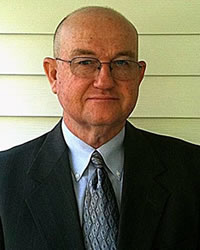
Gary Shepard

Son, Your Sins Are Forgiven

Mark 2:1-12
Gary Shepard May, 26 2013 Audio
0 Comments

Sermon Transcript

Auto-generated transcript • May contain errors

100%
Turn back to Mark chapter 2. I'm in a great weakness this
morning. But I'm reminded that the Scriptures
say that it is not by our might, and it is not by our power, but
it's by the Spirit of God. and also that in our weakness
He is made strong." If you look at that first verse here in Mark
2, you find out that Christ has now come to Capernaum. If you look in Matthew's Gospel,
you'll find in chapter 11 something He said about Capernaum. And thou, Capernaum, which art
exalted unto heaven, shall be brought down to hell. For if
the mighty works which have been done in thee had been done in
Sodom, it would have remained until this day. But I say unto
you that it shall be more tolerable for the land of Sodom in the
day of judgment than for thee." That's where he's at. And if
you notice what takes place and the determination of those who
sought to get this man sick of a palsy to Christ, it is amazing. Verse 2 says, in straight way,
Many were gathered together, insomuch that there was no room
to receive them, no, not so much as about the door, and he preached
the Word unto them." What will be the most important thing that
Christ does for these people? It will be to preach the Word. And they come unto him, bringing
one sick of the palsy, which was born of four. Four men carried him. And when
they could not come nigh unto him for the press, they uncovered
the roof where he was, and when they had broken it up, They let
down the bed wherein the sick of the palsy lay." They lowered
down with ropes or something of that kind this man laying
on his very sick bed. And our Lord here, He commends
their faith. He commends their faith, not
like so-called faith healers do in our day, when they can't
really heal anybody. And so they blame it on the lack
of faith by the individual. No, Christ doesn't comment on
His faith, He comments on their faith. And what is so wonderful
here, what is so wonderful about the goodness and the grace and
the power of God, is that Christ dealt with this man not on the
basis of what he might have thought that he needed, or even those
who lowered him down on his bed, might have thought he needed,
or certainly not on the basis of all this crowd of people that
they thought he might have needed. But he dealt with him in true
grace and true mercy. And he speaks some words to him
that are most wonderful. As a matter of fact, What he
says to this man are the most precious words that he could
ever speak to a sinner or that a sinner could ever hear. He says to him, Son, thy sins
be forgiven thee. Son, your sins are forgiven."
And he identifies this man, though we do not know his name, but
he identifies him on the basis of relationship. He calls him
son. Not in some slang way, but he
calls him son because he's in relationship to Him as the everlasting
Father. Whenever our Lord came to that
tree where the man Zacchaeus had climbed up in, He looked
up and He said to Zacchaeus, This day is salvation come to
this house for as much as he also is a son of Abraham. That's what our Lord is doing
there. He's a son of Abraham. And he has come to not only bear
his sins, but to bring him the good news. Hebrews says, For
it became him for whom are all things, and by whom are all things,
in bringing many sons unto glory, to make the captain of their
salvation perfect through suffering." He simply states to him and certainly
makes effectual to him the pure and unadulterated good news of
his gospel. Son, your sins are forgiven. But as is always the case, he
received a response by these worksmongers and these false
religionists, so that in verse 6 it says, but there were certain
of the scribes sitting there and reasoning in their hearts,
why? Doth this man thus speak blasphemies? Who can forgive sins but God
only? They were, as the Scriptures
say, ever learning, but never coming to the knowledge of the
truth. They knew something of the letter
of the law, but not the Spirit. And amazingly, their own words
condemned them. He could forgive sins because
He is God and because He has forgiven sins. And when Christ
spoke these words, they were not words of mere sentiment. They were based on truth. They were based on both law and
love. They were words of justice and
mercy. Because the psalmist had long,
long before been led to say to God, if thou, Lord, Shouldest
mark iniquities, O Lord, who shall stand?" God does mark iniquities. God does deal with us in all
our sins. But he continues, he says, but
there is forgiveness with thee. There is forgiveness with God,
that thou mayest be feared." When you begin to study about
forgiveness such as is spoken of in this text, you find that
the word remit and the word forgive are really basically the same
word in the original. And that forgiveness and remission
of sin is an act of God who alone can and who alone does based
on the person and the work of the Lord Jesus Christ. Nothing else. You see, in Daniel,
we read that to the Lord our God belong mercies and forgiveness. You can't get it anywhere else. And if we're going to have forgiveness
for our sins, it must come from God. In Micah, the prophet says,
Who is a God, like unto thee, that pardons iniquity, and passes
by the transgression of the remnant of his heritage? He retaineth
not his anger forever, because he delights to show mercy. He delights to show mercy. What is it for God to remit or
to forgive sin? Now, if you don't have any sins,
if you've never sinned against God, then you don't need to understand
what is involved. But the truth is, if we say that
we sin not or have not sinned, He says that we seek to make
God a liar because all have sinned and come short of the glory of
God. But this word that is translated
remit and also forgive, it casts light on what it is to forgive
and to remit sin. It is not simply to forget it. And it really is much more than
simply a pardon. The word means something like
this, to release from bondage and imprisonment. It means to
forgive sins to the degree as to look at them as if they have
never been committed. It is the remission of the penalty. And when he says, be forgiven,
in verse 5, it means to send off or to send away. Boy, I'd like to have all my
sins sent away. And one Greek scholar defined
it like this, the voluntary release of a person or thing over which
one has legal or actual control. And God has both. He has legal
control over all His creatures, He has actual control over all
His creatures. But when you think about that,
you ought to also remember the words of Christ that He spoke
to His disciples. Because He said to them, Whosoever
sins ye remit, they are remitted unto them, and whosoever sins
ye retain, they are retained." Well, is that a contradiction? Only God can forgive sin, and
yet He now tells these disciples that whosoever sins you remit,
they're remitted unto them. How can that be? Because what
He gives to His disciples, what He gave to them, what He gives
to all His gospel preachers and people in all generations is
the authority or the power and certainly the privilege of giving
assurance of the forgiveness of sins by God on the basis,
on the basis that God Himself has determined. In other words,
no one can speak of forgiveness, or as the prophet said, no one
can speak peace to any of us except on the same basis that
God speaks peace. to His people. He warned of those
who would say, peace, peace, when there is no peace. But He
says to these disciples and to all His gospel preachers that
they can assure an individual of the very thing that Christ
is saying here on the same terms as Christ. Gospel terms. And that's why Paul and every
gospel preacher, as a group, they say, we preach Christ crucified. In other words, the terms of
gospel forgiveness, the condition of gospel forgiveness and the
remission of sin, is Christ and Him crucified on the basis of
one priest and one sacrifice for sins forever. And that peace being not some
kind of a mystical peace, but peace by the blood of His cross. You see, God can only forgive
sinners through the substitutionary death of the Lord Jesus Christ."
In other words, when Christ hung on that cross, when He died that
substitutionary death, in that death, God was forgiving somebody's
sins. He was forgiving the sins of
His people. He was saving His people from
their sins. And so when our Lord identifies
Himself as the way, there are so many applications of that. He's the way to heaven. He's
the way to God. But He's the way that God, as
a just God, can forgive sins. If he wasn't who he was, if he
wasn't about to do what he was about to do, it would have meant
nothing more to this man than anybody else saying, son, your
sins are forgiven. It wouldn't have meant anything
more. You see, the real reason why these scribes and Pharisees
said what they said was they didn't know who he was. They
didn't know what he came to do. He said concerning his own self
and his own sacrifice, he said, this is my blood of the New Testament
which is shed for many for the remission of sin. Either Christ
put away my sin or I still have to face them. Either He put them
away and forgiveness is only in Him by His life and death
or I'm hopelessly doomed, because I can't do a thing to remit even
one of my sins. And all those Old Testament prophets
and all those Old Testament sacrifices especially, and all the work
of those Old Testament priests showed that sin can only be remitted
and removed and made an end of by blood. You can't go in a little
booth somewhere, confess a few things to another man who's as
big a sinner as you are and have your sins forgiven. You can't
by simply praying a little prayer that someone has told you to
rehearse. You can't by doing that. have
your sins forgiven. Or by making a decision or walking
down an aisle of a religious building when somebody is in
an emotional stir. It's only by blood. We are only forgiven on the basis
of a death for sin. And since a sinner cannot die
for a sinner, that must be a perfect Sacrifice. Because the wages
of sin is death. And the author of Hebrews, he
writes in chapter 9, and he shows us attaching all those Old Testament
sacrifices to Christ. He says, and you know, almost
all things are by the law purged with blood. That priest sprinkled
blood. He says, and without shedding
of blood there is no remission. What is blood? Well, God says
in the beginning of this book, at the beginning of creation,
He said, you're not to eat, you're not to drink blood. Why? He says, the life is in
the blood. That blood is representative
of life. And we are created the way that
we are, and we die the way we do. That blood flows out of an
individual, and when the blood flows out, the life flows out. That's what's happening on the
cross. When they nail those spikes into Christ's hand, When they
crown those thorns on his head, when they thrust that spear into
his side, and that blood flows out, that's simply an open demonstration
that he died. Christ died for our sins. He came into this world for that
central purpose. of paying the debt that is required
for our sins. The wages of sin is death and
that's the wage he paid. And since he was that perfect
sacrifice, since he was that holy sinless man, he lays down
his life and he dies as he says, for many. If Christ died for
many, what's to keep me from thinking and believing that He
died for me? In Hebrews 10, God says, this
is the covenant that I will make with them after those days, saith
the Lord. I will put my laws into their
hearts, and in their minds will I write them, and their sins
and iniquities will I remember no more." Next line. Now where
remission of these is, there is no more offering for sin. Why do we not, in the worship
of God and in the matter of our sinfulness, Why didn't we have
an offering or a sacrifice blamed this morning? He says, where
sins have been remitted, there's no more offering for sin. Not only could we not provide
it, it's not necessary. There's no more offering for
sin because that one offering by which he perfected all his
people, has already been offering. So he says, having therefore
brethren boldness to enter into the holiest by the blood of Jesus. Who could enter into the presence
of God? How could this man, whose very
sickness was the evidence of sin, how could this man, as that
One dying thief did enter into God's presence immediately. Because they had no sin. They
had no sin. Where was their sin? Christ put
it away. Christ died the death for sin
in their place. Christ suffered what they were
due for all eternity. It says that He suffered the
just for the unjust and in doing so He brought His people to God. You see Richard sang about that
King of love, who is the shepherd of His people. And here's David,
who says, the Lord is my shepherd, I shall not want, I will not
be in need of anything, especially in the matter of forgiveness. Why? Because the shepherd lays
down his life for the sheep, gives his life for the sheep. He bears their sins in his own
body on the tree. He pays the penalty due them. He dies the death before God's
justice that is due them. Their sins had long before he
came into this world been imputed to and charged to The Savior. Are you sure of that? David said,
blessed is the man to whom the Lord will not impute sin. Now you talk about blessed. But
they were removed from them. They were not charged to them.
because they were charged to Christ. They were charged to
the One who's called the surety. He had always been responsible
for their sins. He came with that name to save
His people from their sins. And the Old Testament saint received
and experienced the forgiveness of sins on the same basis, on
the promised Christ. Now, I never felt weaker, probably,
in the pulpit than I do this morning. I'm serious. And God
has not given me the authority to heal. I'd probably start with
myself if I had been given that. He's not given me some kind of
new revelation or word or promise from Him. He's not given a promise
of your material happiness or possessions. But He has promised
something, and that is He's promised to forgive every sinner who comes
to Him through the blood, the sacrifice, the righteousness
of the Lord Jesus Christ. Now, if this man had been a dead,
deaf man, and Christ had said to him, son, your sins are forgiven,
it wouldn't have meant much because he couldn't hear. And that's
the way even all his children are spiritually in this world.
We read a precious word like that. We pay no attention to
it. Why? Because of spiritual death. But if He gives us ears to hear,
if He quickens us to spiritual life, if He opens our understanding
and we hear Him from this word say, your sins are forgiven. You can count on it. They are.
Now most of us would rather hear something like this. You're not
going to have any more troubles in this world. You're not going
to feel any more pain in this world. You're not going to have
any more family problems in this world. You're not going to have
any economic problems in this world. You're not going to have...
But what we need to hear most is, Son, your sins are forgiven. Not most of them. Not a few of
what we consider the worst of them. But all of them. All of
them. Two verses or two passages I
want you to look at. The first one being Colossians
chapter 1. Colossians chapter 1, Paul writes
this epistle to the Colossians. And they were like us, they had
to be warned about some things, rebuked about some things, instructed
in some things, encouraged in some things. But look at verse
13. Speaking of the Father, He says,
"...who hath delivered us from the power of darkness, and hath
translated us into the kingdom of his dear Son, in whom we have
redemption through his blood, even the forgiveness of sins."
Now let me just ask you this, where does the Apostle Paul directed
by the Spirit of God to right, where does he say redemption
and the forgiveness of sins is? In whom? Christ. If he enables
us to believe that, look to Christ. then He'll make sure we're convinced
of the next two words. "...in whom we have redemption
through His blood, even the forgiveness of sin." Alright? Look back in
Ephesians 1. Ephesians 1. And look down at
verse 5. He says, "...having predestinated
us unto the adoption of children by Jesus Christ to Himself, according
to the good pleasure of His will, to the praise of the glory of
His grace, wherein He hath made us accepted in the Beloved."
That's in Christ. Next statement. In whom we have
redemption through His blood, the forgiveness of sins according
to the riches of His grace. Redemption, forgiveness, and
all the riches of God's grace. Those who look to Christ have
it all in Christ. When this man, certainly by no
effort of his own, did you see that? By no effort of his own,
the Lord Jesus Christ looks unmistakably at him and says, son, your sins
are forgiven. Now, I can speak that in truth,
telling you the basis upon which it happened. But only the Spirit
of God can speak it in your heart. That makes me think of a little
chorus we used to sing some that said, did you hear what Jesus
said to me? My sins are all taken away. Your sins are pardoned and you
are free. They're all taken away. They're all taken away. They're
all taken away. Your sins are pardoned and you
are free. They're all taken away. This is the only good news there
is. Son, daughter, your sins are
forgiven. Father, we pray this day that
you would speak that word, that good news of forgiveness into
someone's heart. that they may hear these words,
Lord, not as my words, but as your words, spoken particularly
and directly to them. May they know that peace that
you've made by the blood of your cross. May they know that forgiveness
of sin and that redemption by your blood. We pray that you'd
help us in all things. Cause us to look to Christ alone. For we pray in his name. Amen.
Gary Shepard
About Gary Shepard
Gary Shepard is teacher and pastor of Sovereign Grace Baptist Church in Jacksonville, North Carolina.

Comments

0 / 2000 characters
Comments are moderated before appearing.

Be the first to comment!

Joshua

Joshua

Shall we play a game? Ask me about articles, sermons, or theology from our library. I can also help you navigate the site.