Bootstrap
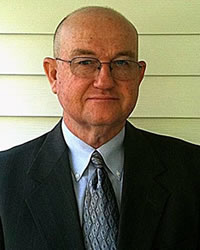
Gary Shepard

Justifying the Wicked

Exodus 23:7
Gary Shepard May, 1 2013 Audio
0 Comments

Sermon Transcript

Auto-generated transcript • May contain errors

100%
Here in Exodus chapter 23. Now we're in all these different
laws and ordinances and such as that. Too many various things
to look at individually, but what I want us to see in these
things is the principles that God sets forth. What we have
in these verses is instruction to the people, and oftentimes
instruction to the elders who would be dealing with and judging
matters between the people. He says, Thou shalt not raise
a false report, Put not thine hand with the wicked to be an
unrighteous witness. Thou shalt not follow a multitude
to do evil, neither shalt thou speak in a cause to decline after
many to wrest judgment, neither shalt thou countenance a poor
man in his cause. If thou meet thine enemy's ox
or his ass going astray, thou shalt surely bring it back to
him again. If thou see the ass of him that
hateth thee lying under his burden, and wouldst forbear to help him,
thou shalt surely help with him. thou shalt not rest the judgment
of thy poor in his cause. Keep thee far from a false matter,
and the innocent and righteous slay thou not, for I will not
justify the wicked." Now, these laws and ordinances that God
gave to this nation Israel through Moses, they reveal a lot about
God Himself. They reveal a lot about His unchanging
principles. And it seems like that what He's
saying in those first verses is kind of summed up in the last
statement of verse 7. God says, you do all these things,
you don't do these other things, for I will not justify the wicked. I will not justify the wicked. To justify somebody means to
declare that they are righteous, or that they are right in what
they have done or are doing. It is a legal term, or as many
have said, it is a term of the court. And these who were to
judge in Israel, they were to be like the judge, the judge
of all the earth. If you remember Abraham's conversation
with God in the matter of his nephew Lot, He reminded God,
saying, shall not the judge of all the earth do right? He was saying, God, surely we
know you will not destroy the righteous with the wicked. But what he says here in this
seventh verse, is something that is stated and restated again
and again all throughout the Old Testament and the New Testament
in various ways and language. He says in Deuteronomy 25, if
there be a controversy between men, and they come unto judgment,
that the judges may judge them, then shall they justify the righteous
and condemn the wicked." This is what God requires, that the
judge justify the righteous and condemn the wicked. In Exodus 34, when God is telling
Moses something about Himself. He speaks saying, He is the God
who keeps mercy for thousands, forgiving iniquity and transgression
and sin, and that will by no means clear the guilty. No means clear the guilty." In
2 Samuel 23, David acknowledging his own failures, in doing thus,
he restates what God requires. He says, "...the God of Israel
said, the Rock of Israel spake to me, He that ruleth over men
must be just, ruling in the fear of God." Then in 1 Kings, and
I'm just giving you some of them, in verse 32 of chapter 8, it
says, "...then hear thou in heaven, and do, and judge thy servants,
condemning the wicked to bring his way upon his head, and justifying
the righteous to give him according to his righteousness. This standard
and this principle never changes. Psalm 82, how long, he says,
will you judge unjustly and accept the persons of the wicked." He
says, by that prophet Nahum, the Lord is slow to anger and
great in power and will not at all acquit the wicked. He just won't do it. Romans 1, he says, for the wrath
of God is revealed from heaven against all ungodliness and unrighteousness
of men who hold the truth in unrighteousness. The wrath of
God is against that. And then again in Romans 2, he
says, "...but after thy hardness and impenitent heart treasurest
up unto thyself wrath in the day of wrath, and revelation
of the righteous judgment of God, who will render to every
man according to his deeds." But maybe there isn't a verse,
a portion in Scripture that really sums it up and states it just
like it is any more than in Proverbs chapter 17. Turn over there and
look at that. Proverbs 17. Because in verse
15, We have it stated as concisely
and as clearly as it can be stated. Verse 15, "...he that justifieth
the wicked, and he that condemneth the just, even they both are
abomination to the Lord." That one who condemns the just one,
the righteous one, that one who justifies the wicked one, he
says they are both an abomination to the Lord. But when you stop
and think about it, and that's not going on much in our day
when it comes to the things of God, When God says it as clearly
as He said it in these verses and there in our text verse,
verse 7, I will not justify the wicked. Does it not seem that
that is exactly what He's done in saving those He saves? Doesn't that seem like that that
is exactly what he's doing when he accepts a sinner like me? As a matter of fact, turn over
to Romans chapter 4, because in Romans chapter 4, it gets
about as brassy and bold it would seem like, in the other direction. He says of Abraham, verse 3,
that the Scripture says, Abraham believed God, and it was counted
unto him for righteousness. Now to him that worketh is the
reward not reckoned of grace, but of debt. But to him that
worketh not, but believeth on him, that justifieth the ungodly."
Now, wait a minute. Here is the one that Abraham
looked to and believed on. Here is the God of Exodus 23,
7, and yet Paul describes Him in what seems to be a contrary
way. The God who justifies the ungodly,
for His faith is counted for righteousness. Here God says, I will not justify
the wicked. And there He's described as God
who justifies the wicked, or the ungodly. Does that mean that
God has a different standard for His people? Or that He has
in some way changed from the Old Testament to the New Testament? Does it mean that He now deals
with sin in a different manner than He did there in Moses' day? You see, this raises a question. which I believe is the question
of all questions. It raises an issue that if we
are truly taught of God, He will have to bring us in some measure
to understand what takes place here. Look over in Job chapter
9. in the book of Job chapter 9,
and listen in Job 9 as Job says this, asks this question. Verse
1, then Job answered and said, I know it is so of a truth, but
how should man be just with God? Or justified by God? How can God look at any who are
surely of Adam's fallen race and declare that they're righteous,
accept them? Well, turn over also in Job chapter
25. Job chapter 25, it says this, Verse 4, how then can man be
justified with God? Now there are a lot of people
who don't have a problem with this at all. They don't have
an issue with this at all. Number one, because they don't
know who and how God is. And number two, they do not know
or will not confess what they are. But if you ever find out
anything about how the two really are, he says, how then can man
be justified with God, or how can he be clean that is born
of a woman? You can't bring a clean thing
out of an unclean thing. Like always begets like. He says, Behold, even to the
moon, and it shines not, yea, the stars are not pure in his
sight, in God's sight. How much less man that is a worm,
and the Son of man which is a worm. Do I have to tell you that that
word actually means maggot? In the sight of God, man in himself
is just simply this maggot? And we are described, if we honestly
read what God says about us, we read what He says, and He
says we're sinners and vile, corrupt, dead, helpless. And when you stop and think about
what man is, you could just simply say, he is everything that God
is not. And everything that God of Himself,
by Himself, must refuse and condemn, because we are in ourselves the
wicked. We're the wicked. In ourselves
and left to ourselves, we're the wicked. And the psalmist
said it so clearly. He said, if thou, Lord, shouldest
mark iniquities, Oh Lord, who should stand? Who will stand?"
And nobody could stand. And He does mark iniquities. He has pledged that He will and
that He must punish sin. The psalmist again, he says,
"...enter not into judgment with thy servant, for in thy sight
shall no man, no man in and of themselves living." be justified."
It gets worse, it seems. He says in Isaiah 45, this is
God talking, "...tell ye, and bring them near, yea, let them
take counsel together. Who hath declared this from ancient
time? Who hath told it from that time? Have not I the Lord? And there
is no God else beside me." There is no court of appeal, a just
God and a Savior. There is none else beside me."
Now, where do we find the answer to this question? You could call
it a dilemma. We have a picture of such a dilemma
with the man Daniel. when the king had issued his
decree, that decree of the Medes and the Persians, which could
not be altered. He said, if anybody prays to
any other god, other than the god that I've stood up here,
you'll be cast into a den of lions. Wow! Well, there's one
thing for sure. Daniel was found guilty of violating
the king's decree. And that put the king, who loved
Daniel, in a very awkward position. He had a dilemma that he had
to deal with. Here he was wanting to deliver
and save Daniel, and yet here was Daniel guilty of violating
that unchangeable law. which really represented the
law of God. So what must take place? Daniel
had to be thrown in that lion's den. Daniel had to die. And there is a sense in which
that's exactly what he did. Except that God delivered him
from that lion's den. He shut the mouths of those lions
up. And so we have a type and a picture
of a just salvation in that, with one exception, in representing
the Lord Jesus Christ. The lion's mouth were not tied. That's what's happening on the
cross. But you see, there's only one
place There's only one thing where you can find the answer
to this problem and question and dilemma, and that's in the
true gospel. The true gospel. Now, there are
a lot of gospels out here that Paul called another gospel. And
they offer everything from health and wealth and prosperity and
the miraculous and all this other kind of stuff. But when you stop
and you ask these people, they say, well, Christ died for everybody. And then they tell you, if you
don't do something, you're going to hell. And so you ask them
what I would call a thinking person's question, if Christ
has already paid my debt, if He's already suffered in my place,
if God has already exacted from Him the just penalty and payment
for my sin, if God casts me into hell, wouldn't that make God
unjust? And yet, if he takes me into
heaven and has not dealt with the matter of my sin, he'd be
in trouble there also. He'd have to abdicate the throne. You see, all this always. Some people seem to think it's
so simple, and it really is in a sense, but it's the most profound
thing that you could ever find out about and gain understanding
of. How that God can be just and
a Savior at the same time. Seems to me like if He's just,
He'll just cast all of us into hell. Seems like to me if Christ
died for all of us and He's just, He'll have to take all of us
to heaven. But we know both of those are not going to happen.
He says that. But I say the one true gospel
is what sets forth the answer to this critical, central, eternal
issue. Because Paul says in Romans 1,
I'm not ashamed of the gospel of Christ. Why? He says, because therein is the
righteousness of God revealed. Righteousness has to do with
justice. And here is God, who seems like
in the face of His own unchanging self, will justify a wicked sinner
who says, I will not justify the wicked. In other words, the
judge was always to call it as it was, call it as he saw it
to really be. If this one is just and righteous,
Declare them righteous. If they are guilty, wicked, condemn
them for it. And that's really what it means
when it tells us concerning God and all these that he's talking
about here, that they are not to be respecters of persons. You can't take a man who comes
before you and he's rich, your buddy or something, and another
man that he's wronged and stole from, and he's poor and a nobody. You can't favor your friend or
the rich man. You've got to deal with them
justly. Where is the righteousness of
God? Where is God right to declare
a sinner like me to be righteous. Just one way. I'll wear you out
as long as you don't run me off of preaching it. And that is
through Christ crucified. Christ crucified. Because, you
see, the Scripture says forth God as the one who deals with
these two groups of people, all of whom in themselves are wicked,
but He deals with them through two individuals. Not a lot of lost time wondering
around, picking, choosing who and this one is active this way
and that. No way. Judgment. has already taken place. The actual judgment of all men
has already taken place. There will be a sentencing hour. But the truth of the matter is
that God has dealt with all the sins of all His people in the
Lord Jesus Christ. He has laid on Him their iniquity
held him who knew no sin responsible for their sin, and made them,
though they had no righteousness, through his righteousness being
imputed to them the very righteousness of God, made them to be righteous
in him." Now, God, will always call it like it is. He'll always
call it like it is. Turn over to Romans chapter 5. Listen in Romans 5. Down at verse 16. Now he's comparing two men, the
first Adam, the last Adam. And he's not only comparing them,
he's showing the difference of effects in what each of them
did. Adam did something, and there
was a consequence for all in Adam. Christ did something, and
there was a consequence for all in Christ. He says, and not as
it was by one that sin, so is the gift. The principle is the
same, but the consequence is different. For the judgment was
by one to condemnation, but the free gift is of many offenses
unto justification. By what one man did, a multitude
became sinners. By what the other man did, a
multitude became righteous in God's sight. He says, "...for
if by one man's offense death reign by one, much more they
which receive abundance of grace and of the gift of righteousness."
shall reign in life by one Jesus Christ. Therefore, as by the
offense of one judgment came upon all men to condemnation,
even so by the righteousness of one the free gift came upon
all men unto justification of life." That means that God through
the Lord Jesus Christ, by His life and death. Not only being
a just God must declare all who are in Christ, all for whom He
died, He must declare them righteous, but He is just to give them life. Just to give them eternal life. Paul says in Romans 4, that last
verse, he speaks of Christ and he says it like this, "...who
was delivered for our offenses and was raised again for our
justification." That's actually and was raised again because
of our justification. Turn back to Romans chapter 3
and listen as Paul kind of walks us through this and gives us
kind of a big picture. Romans chapter 3 verse 19. Now we know that what things
soever the law saith, it saith to them who are under the law,
that every mouth may be stopped, and all the world may become
guilty before God." However you interpret that verse, it always
winds up in the same thing. guilty before God. All the whole
world guilty before God. Therefore, by the deeds of the
law, there shall no flesh be justified in his sight. The law has already delivered
Adam's race, delivered every person, delivered all flesh guilty. and totally unable to be justified
by any principle of their obedience. But now the righteousness of
God without the law or apart from the law is manifested, being
witnessed by the law and the prophets, even the righteousness
of God, which is by faith of Jesus Christ unto all and upon
all that believe. For there's no difference, for
all have sinned and come short of the glory of God. Now here
they are. He just said, by doing, by their
obedience, no flesh shall be justified. So that means that
the only distinguishing difference, visible difference if you will,
between those that are in one condition and those that are
in the other condition is faith in Christ. That's it. Why? Because true faith that
God gives as a gift, and He's just in giving faith to His people
that Christ died for. Faith, trust, only Christ crucify. I know we use terms, Lord knows
I'm one of the worst probably. We use terms like justifying
faith. Well, yes and no. Faith is justifying
faith only in this sense. It believes on the Lord Jesus
Christ alone. The faith itself does not justify,
but the one that true faith looks to, He's the one that justifies
us. He's the one that bore our sins,
and He's the one whose righteousness we have imputed to us. Verse
24, being justified freely. That word is translated in another
place, without a cause, concerning Christ. They hated Him without
a cause. Same word. Being justified freely
by His grace. through the redemption that is
in Christ Jesus. There's always a bickering going
on as to one believes they're not justified until the cross,
another believes they're not justified until they believe,
others believe in eternal justification, but the justifier, the justifier,
looks at it all at once, all accomplished, never dependent
on anything, but Jesus Christ and Him crucified. You see, God
has hinged all of this on a relationship between the Father and the Son
and the Spirit. So when you start talking about,
it didn't happen till here, it didn't happen till there, it
didn't happen till the other thing, you're kind of in trouble
because there's no possibility, there never was any possibility
of these three persons of the Godhead failing to do and accomplish
what was pledged to do. He was then. in Isaiah 45, a
just God and a Savior. He is now. He was before the
foundation of the world. Listen, "...whom God has set
forth," and it's not really to be there because that's italicized,
it means it was added by the translator, "...whom God has
set forth a propitiation," through faith in His blood to declare
His righteousness for the remission of sins that are passed through
the forbearance of God." Somebody said, well, that just means forbearance
of God means He just looked over them until Christ came. Well,
how could He then call Abraham, speak of Abraham as righteous? How could Lot? have been righteous
lot delivered, because God would not punish the wicked and also
the just. To declare, I say at this time,
His righteousness, and I love this, that He might be just and
the justifier, of him which believeth in Jesus." Just and the justifier
of those who believe on and trust in Christ and only Christ. Now, this is what I want you
to get a hold of. Whatever God says that I am, that's what I
am. You may not think it. I may not feel it altogether.
But if God says that I'm righteous, then I'm righteous. Because He
has to call it like it is. So when everything is said and
done, and here stands all the glorified saints before His throne,
saved by His grace, It's still going to be the same thing. He
will still be God who will not justify the wicked. He will render
to every man according to his deeds. Does that scare you? It
doesn't scare me. because he's counted the very
deeds of the Lord Jesus Christ to be mine." He doesn't count
me as wicked in Christ. Those who believe on Christ,
they do so because Christ died for them. And they are brought
to believe on Him, plead Him. If it were not that Christ was
counted as the One who is responsible for all the sins of His people,
God would never have raised His hand to put His Son to death. That's a just God doing that.
When He'll raise up all His glorified people, He'll still be the righteous
judge of all the earth. He will have done right. in saving
all His people, and being to them a just God and a Savior."
I used to know of a fellow, and he'd come to that verse, and
this is the way he'd always want to put it. He said, now God is
a just God, but He's a Savior too. No, there's no but there. There's an and there. And He
must teach us how there can be an and instead of a but. It appears that He's justified
the wicked. But in truth, He's made them
righteous and justified them on that basis. Father, tonight
we thank You for Your Word. Cause us to cast out all our
notions and our opinions and to look to You as the just one
and yet the justifier of all who believe on Christ. Give us
faith in Christ. Cause us to plead only His death,
which is His righteousness. Count us to have all in Him been
justified. and make this the comfort and
peace of our minds and hearts. We thank you that you are the
same yesterday and today and forever. And we rest all our
hope in who you are. and in what you say that you've
done for us as sinners." And therefore the Apostle said, where's
boasting then? It's excluded. It's excluded
because you deserve all the glory in being gracious and merciful
unto us and your Son. We thank you and we pray in His
name. Amen.
Gary Shepard
About Gary Shepard
Gary Shepard is teacher and pastor of Sovereign Grace Baptist Church in Jacksonville, North Carolina.

Comments

0 / 2000 characters
Comments are moderated before appearing.

Be the first to comment!

Joshua

Joshua

Shall we play a game? Ask me about articles, sermons, or theology from our library. I can also help you navigate the site.