Bootstrap
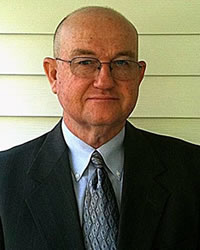
Gary Shepard

Rahab's True Token

Hebrews 11:31; Joshua 2
Gary Shepard April, 14 2013 Audio
0 Comments
Gary Shepard
Gary Shepard April, 14 2013

Sermon Transcript

Auto-generated transcript • May contain errors

100%
Turn first of all this morning
to the book of Hebrews, Hebrews chapter 11. Here in Hebrews 11,
I want us to notice one verse, and that is verse 31, where it
says, "...by faith the harlot Rahab perished not with them
that believed not, when she had received the spies with peace."
That verse, of course, is a reference to what we read in our reading
this morning in Joshua chapter 2. And when I read it this week,
it reminded me that the church of Jesus Christ is a hospital,
is a refuge for sinners. You see, grace is always for
the guilty, and mercy is for those who show themselves to
be enemies. And what we read in the Bible,
is so very contrary to what men practice in our day. It seems
they try to get men and women good enough to be saved. Their emphasis is on improving
their lives, not pointing them to Him who is life. They seek to bring men and women
to a position that God will bless them, when all the time leading
them away from the very ground that He only blesses men on. This book says that Jesus Christ
died for the ungodly. It tells us that He came into
this world to save sinners. He himself said, I came not to
call the righteous, but sinners to repentance. And that he is
called Jesus, which means Savior, because he shall save his people. And then they're described. from
their sins. In these verses, this morning
we come to meet a woman by the name of Rahab. And what we find
about Rahab in the New Testament, there in Hebrews 11, is that
faith distinguished her from all the people in her city, this
large city of Jericho. It says, she perished not with
them that believed not. So if you turn back to that second
chapter of Joshua, and read as we did, you can find out something
about who Rahab really was. It shows us there, as in every
case it is the case, that she was a common sinner. And I suppose she would be, in
the eyes of most, the least likely candidate to be the object of
God's favor and God's love. But the truth is, this actually
makes her a good candidate. It actually makes her the perfect
and really the only candidate for the mercy and grace of God."
Her name is derived from the word or named Ra, which signifies
proud. She's like every sinner, proud,
with no reason to be proud. And she was one of the inhabitants
of Canaan, being a Gentile, and an alien, and by nature an enemy
to the commonwealth of Israel." Paul describes such as she was
as being without hope and without God in the world. And she lived in this city, this
city of Jericho, which unknown to others was under the curse
of God. It had been set for destruction
by God. The iniquities of that city would
be dealt with by God as He fulfilled His purpose of grace and mercy. And she is described by what
she is said to be in these verses as being a taverner or an innkeeper. And she entertained guests and
residents in her house which was said to be actually a part
of the walls of the city. And she was most likely Though
many have tried to make her less than this, she was most likely
a prostitute also." You see, in Proverbs, there is a warning
given. And that warning is, "...whosoever
loveth wisdom rejoiceth his father." But he that keepeth company with
harlots spins his substance." The word harlot is the word porne. And I suppose you know that that
word, at least in part, has come to be a part of our language. And there is much talk of porn. But it meant, in its feminine
sense, a strumpet. We don't use that word many more,
although we have lots of them. And figuratively, an idolater,
and most definitely a whore. That was Rahab, the harlot of
Jericho. And yet, when we read what she
was and we think about her, when I say that, do we distinguish
ourselves from her and others like her in our minds? Can we even read where it says
that she was a harlot and kind of look down our nose just a
little bit at her? But I'd ask you, in this very
moment, are we in any less need than she was? Or are we any more
deserving of God's mercy than she was? Or any more desiring
to know God as He is than she was? or any more fit to stand
before the justice of a holy God than she was? Hold your place
and turn over to Romans chapter 3. Because in Romans chapter
3, we find out something that is as common to us as it was
to Rahab. Here may be one over here that
is one thing, here over is another one who is seemingly another
thing, but there is one thing that no matter Whether we're
male or female, no matter where we come from, no matter whether
we're young or old, rich or poor, educated or uneducated, there
is one thing that we all have in common, and that we have in
common with Rahab. And that is, we are sinners. And that is, as God says, man
at his best state is altogether vanity. So the apostle is led
by the Spirit of God, here in Romans 3, to identify what we
really are, whether we be Jew or Gentile. In verse 9 he says,
"...what then? Are we better than they? No, in no wise, for we have before
proved, both Jews and Gentiles, that they are all under sin."
We have nothing wherein we can boast or separate ourselves from
any other people by nature, all under sin. As it is written,
there is none righteous, no, not one. and there is none that
understandeth, there is none that seeketh after God, they
are all gone out of the way, they are together become unprofitable,
there is none that doeth good, no, not one." Whether Jew or
Gentile, In whatever day their throat is an open sepulchre,
with their tongues they have used deceit. The poison of asp
is under their lips, whose mouth is full of cursing and bitterness. Their feet are swift to shed
blood, destruction and misery are in their ways, and the way
of peace have they not known." And then he sums it up in that
18th verse. There is no fear of God before
their eyes. And this woman Rahab, just like
us, there was no difference as far as being a sinner is concerned,
there was no difference between her and all the other inhabitants
of that city. The only distinction and the
only difference being, as it is cited by God, the fact that
she believed. She did not perish with them
that believed not. But you have to ask this question,
you have to think about, if this woman had faith, and if she and
her household were the only ones in Jericho that had faith, where
did she get it from? Why did she have faith and others
did not? Because it is obvious that it
is not, as men say in our day, that everybody has faith and
what they have to do is just exercise that faith. The Bible
says just the opposite. All men have not faith. So why did, of all people, a
harlot in Jericho have faith and believe God? Where did she
get this faith? I'll tell you, it was the gift
of God. It was the gift of God. And that is the case with every
sinner that is ever enabled to believe God, to believe on the
Lord Jesus Christ. It was the case of those Ephesian
believers, and this is what Paul says. He says, "...for by grace
are ye saved." Whatever follows after that statement, we know
that it is all of grace. The reason she had faith was
because of God's grace. God's grace in Christ. He says,
"...for by grace are ye saved through faith." There's no salvation
apart from faith. There's no grace apart from faith. He says, "...through faith, and
that not of yourselves, it is the gift of God." It's the gift
of God. There is no way that anyone believes
God apart from this God-given faith, he says, because it is
not of works, lest any man should boast. It's the gift of God. But you can be sure that even
though it is the gift of God, holy of His grace, it was not
given, it did not come to her apart from the means that God
ordained. You see, some try to talk of
faith apart from anything set forth as the object of faith. But listen to what the Apostle
says. He says, so then faith comes
by hearing. He doesn't mean that everybody
that hears the Word will believe the Word. It doesn't mean that
everyone who hears it, God will give it faith. But it says, then
faith comes by hearing, and hearing by the Word of God. In other
words, God in His grace and mercy gives it, and He gives it alongside
of Him giving to them the Word. You see, what we have here in
this passage of Scripture is that amazing work and acts of
God in His providence. You see, these who are called
oftentimes spies are actually in these verses called messengers. You say, well, the reason they
were there was to spy out the land. Yes. The reason they were
there was because Joshua sent them there. Yes. But the real
reason why they were there was that God in His good and gracious
providence, He had sent them as messengers, and of all the
places. of all the houses, probably of
all the inns, or all the taverns, or all the lodging places, of
all the places that they could have gone, verse 1 of Joshua
2 says that they wound up at her house. Her house. Because grace was to come to
her house. You see, it doesn't matter whatever
the providence is, whatever God is doing in this world, whatever
He's doing in His purpose, wherever He's sending men and women and
whatever are the affairs of this life, God at all times is sending
His people to a place and sending His Word to them to save them. If you look here in Joshua chapter
2, look down at verse 9 at what she says to them. You see, in
truth, they were not the first witness of God to her. It says, "...and she said unto
the men, I know..." Now that's amazing, isn't it? Here is an
idolater. who's living in the most wicked
of cities, who's surrounded from her birth probably with the idolatry
of the day, with the gods and religions of that time, and now
here she is talking to one of the Lord's people and she says,
I know, I'm sure of this, but this is the knowledge of faith.
She says, I know that the Lord, Oh, she'd heard about Jehovah.
"'I know that the Lord hath given you the land, and that your terror
is fallen upon us, and that all the inhabitants of the land faint
because of you, for we have heard.'" You see that? What she knew. What she was assured of. What God had convinced her of
in her heart was because of something that she had heard, the truth
that she had heard about God. And she had heard. Even at this
point, she had heard about something that God had done. Isn't that
the gospel? Isn't that the gospel? Somebody
was preaching one time and they made this statement. They said,
faith is believing that God will do what He says He'll do. That's true. That's true in one
sense. But why? Would we dare even believe
that God will do what He says He'll do if we have not first
and are not first believing that He has done what He said He'll
do? You see, that's what the gospel
is about. The gospel is about something God has done. And so here she is, she's convinced. She's convinced based on something
that she has heard. For we have heard how that the
Lord dried up the water of the Red Sea for you when you came
out of Egypt. They had heard of a redemption. They'd heard how the Lord had
delivered them out of that bondage, how that the Lord had delivered
them by parting the Red Sea. We've heard, and what you did
unto the two kings of the Amorites that were on the other side,
Jordan, Sinai, and Og, whom ye utterly destroyed. And as soon
as we heard these things, our hearts did melt. Neither did
there remain any more courage in any man because of you for
one reason." You stop and think about this. Here is a non-army
about to come up against the very first city in the land of
Canaan, Here is this king, here is this people who are a warlike
people, and they are about to be besieged by this non-army
of people, and they're afraid. It isn't logical. But she said, for the Lord, your
God, He is God in heaven above and in earth beneath. She believed, based on what she
had heard, that Jehovah God, He was the one God in heaven
above and in earth beneath. And I do believe that's the first
issue that has to be settled in a sinner's heart. And that
is the first issue that grace comes to us with faith to believe
and to be sure of. That God, that the God of this
book, that God as He is in Jesus Christ, He is God alone in heaven
and in earth. That's what had to happen to
Nebuchadnezzar. That's what had to happen to Saul of Tarsus.
And that's what has to happen to every one of us. We have to
be brought, bowed, to own God and confess Him as He is here
in this book, to be God alone in heaven and in earth. She had
heard that her city and all in it were under the condemnation
of God. And the Spirit of God took that
word and filled her heart with the fear of the Lord. And she
believed what was said of God, and now would believe what is
said by God." And this is still the way God works, and the way
He's pleased to show mercy and to save sinners. What do we know
about Rahab? Not a lot. Why was she distinguished? What distinguished her? What
was the evidence of God's grace to her? She believed the truth. John 3 says, "...he that believeth
on him is not condemned, but he that believeth not is condemned
already, because he hath not believed in the name of the only
begotten Son of God." We're not counting up how many wrongs somebody
did. We're not counting up how many
rights somebody did. It's not as some believe that
somehow God's going to take the good we did and the bad we do,
put them on a set of scales, and we'll just hope that the
good we've done... No, He's already told us there's no good to put
there. But rather he says this, "...he
that believeth on the Son hath everlasting life, and he that
believeth not the Son shall not see life, but the wrath of God
abideth on him." You see, we have faith when we believe the
Word of God so as to act upon it. How do we know that she had
faith? Because she acted in her actions
based on that faith. She hid the spies. She believed
that they were sin of God. And like Abraham, it says of
him, he staggered not at the promise of God through unbelief,
but was strong in faith, giving glory to God, and being fully
persuaded that what he had promised, he was also able to perform. and believing that she was in
the same condition as all the others in Jericho, and believing
these men to be sin of God, she sought mercy and grace. She didn't
say, well, I'll tell you what, I don't believe there's any way
that that little ragtag group can beat the mighty armies of
Jericho. You see, when you really believe,
that you are what God says that you are. When you really find
yourself as a sinner, there's just one thing to do, and that's
to cast yourself on Him for His mercy. Look down in verse 12. She says, now therefore I pray
you, swear unto me by the Lord, since I've showed you kindness,
that you will also show kindness unto my father's house, and give
me a true token, and that you will save alive my father, and
my mother, and my brethren, and my sisters, and all they have,
and deliver our lives from death. Now they never promised her that
they'd save everybody. They did promise her that they
would save everybody in the house. That's the household of faith.
They'll all be saved. He warns them, don't let anybody
go out of the house. Stay in the house. And she said,
would you give me a true token of this? A true token of this. You know, that's what God has
done. Again and again and again. He
did it in Noah's day. He said to Noah, I do set my
bow in the cloud, and it shall be for the token of a covenant
between me and the earth. That rainbow is a token. He says, when he gave circumcision,
and ye shall circumcise the flesh of your foreskin, and it shall
be a token of the covenant betwixt me and you. A token of the covenant. In Exodus, he says, "...and the
blood that was to be put on the lintels and the doorposts," he
said, "...and the blood shall be to you for a token upon the
houses where you are. And when I see the blood, I'll
pass over you, and the plague shall not be upon you to destroy
you when I smite the land of Egypt." That blood on the doorpost
has a token. And that's what every sinner
needs. There has to be a ground upon which we can expect from
God. There has to be a ground of truth
upon which we can believe God. That's what the psalmist said.
He was in the misery of his being despised of men and rejected
of men and treated in the worst kind of ways from men. He said,
Lord, show me a token for good. that they which hate me may see
it and be ashamed, because thou, Lord, hast helped me and comforted
me." What kind of token did they give Rahab? She asked for a true
token. Isn't that what you want? That's
what a real sinner wants, is a true token. A true token from
God. And when you look here in verse
14, It says that the men answered her, Our life for yours, if you
utter not this our business. And it shall be, when the Lord
hath given us the land, that we will deal kindly and truly
with thee. And then she let them down by
a cord through the window, for the house was upon the town wall,
and she dwelt upon the wall. And she tells them to go and
flee and hide themselves for three days. Look down in verse
18. They said, Behold, when we come
into the land, Thou shalt bind this line of scarlet thread in
the window which thou didst let us down by, and thou shalt bring
thy father and thy mother and thy brethren and all thy father's
house household home unto thee, and it shall be that whosoever
shall go out of the doors of thy house into the street, his
blood shall be upon his head, and we will be guiltless. And
whosoever shall be with thee in the house, his blood shall
be on our head, if any hand be upon him." Now, I don't know. I don't have a clue, and I could
do like some have and speculate for hours on end just exactly
what that scarlet cord was. I know this. She let them down
through the window down to the ground safety off the wall using
it. So it would seem to us that thread
might be a word used whereby is lost much of what it actually
was. Why it was red in the natural
sense, I do not know. I've seen some cords that the
women used to tie up drapes that were red. Why this was, I don't
know. Might even have been something
to symbolize what she was down in the red light district. But
I do know this. It did represent salvation by
blood. Tie that red cord in your window
and you're safe. It represented salvation and
deliverance from sin and judgment through the sacrifice, through
the death of that Messiah, the Lord Jesus Christ, which was
to come. We sing sometimes a hymn, What
can wash away my sin? Nothing but the blood of Jesus. What can make me whole again? Nothing but the blood of Jesus. But you know, maybe a better
way of singing that, and a way more in line with what true faith
really is all about, would be to sing it like this, What has
washed away all my sins? What has made me whole again? Nothing but the blood of Jesus. And that is the message of the
gospel. And that is what these men gave
as the true token, as the witness, that she and all in the house
would be spared and delivered from that judgment that was about
to fall on the city. You can trust in that. You can
trust in that. You've got an approaching army,
maybe not so much an army, but a whole lot of people, You're
going to trust a piece of red rope hanging in the window for
your safety, for your security, for your life, for the life of
your family? Why would you do that? Because
the God-sent messengers, bearing witness of the truth of God,
said that this is the one way If you're in that house and that
cord is there, then if anything happens to you, your blood will
be on our hands. But outside of that, if anything
happens to you, your blood is on your hands. And that's what
the gospel announces. Salvation to those in Christ. Salvation by His blood. The only true token that any
sinner, under the just judgment and condemnation of God, the
only hope is the gospel of Christ. You see, here is a woman, a sinner,
having no right, no claim, no refuge from God's wrath against
the sin of Jericho, and yet God, in His distinguishing grace,
sends her a messenger, tells her the only way, demonstrates
His sovereign mercy, and determines to bless her. This scarlet quarter
wrote, symbolized atonement by the blood. That's the token of
the covenant. Matthew 6, our Lord says, this
is my blood of the New Testament, or the new covenant, which is
shed for many for the remission of sins. Blood. A life laid down. You see, there
were probably soldiers, and maybe others, there in the crucifying
of our Lord, maybe as they did so, maybe as He hung there, that
His blood actually dripped on. And they perished. They perished. Because the blood, as it was
poured out, the life as it was given, was before God. a definite sacrifice, a definite
bloodshedding for the sins of those many that he talks about
in that verse, his people. Paul says, "...whom God hath
set forth to be a propitiation through faith in his blood."
And when the Spirit of God directed Paul to write that, Any thoughts
of some kind of mystical salvation by some kind of mystical Jesus
just went all the way out the window. Because when He said,
faith in His blood, He brought us everyone to know it's faith
and salvation through His sacrifice. And he tied that to every one
of those sacrifices which pictured it in the Old Testament. Without
the shedding of blood, there is no remission, there is no
forgiveness. He says, "...in whom we have
redemption through His blood, the forgiveness of sin according
to the riches of His grace." It's almost as if this is written
for such Rahabs. He says, "...but now, in Christ
Jesus, ye who sometimes were far off, are made nigh by the
blood of Christ, and having made peace through the blood of His
cross, to reconcile all things unto Himself, things in heaven
or earth." And then in Hebrews, neither by the blood of goats
and calves, but by His own blood He entered in once into the holy
place, having obtained redemption for us." A just redemption. If you're in that house wherein
the window is tied that scarlet cord, you will be dealt with
justly. As we have said to you, if any
harm comes to you, your blood will be on our hands, our heads. And I'll tell you, all those
who look to Christ, perish even the thought of this impossibility. But if anything happened to any
sinner who trusts Christ their blood, what happened to them
would have to be on His hands. That's not going to happen. He
has dealt with them justly. He has put away their sins by
His own sacrifice. He has, by His one offering,
perfected them forever. He has, by His own blood, stood
before God and obtained eternal redemption for them. What did
Rahab say to this? You could have said, well, that's
foolish. Is that all you got? That piece of rope has been laying
here a long time. Haven't you got a cross or a
trinket? Don't you have something? Can
you give me an idol, maybe a gold statue or something like that?"
Verse 21, she said, according to your words, so be it. And she sent them away, and they
departed, and she bound the scarlet line in the window. I don't imagine
that the inhabitants of Jericho had any knowledge of any significance
in that? What about if somebody said,
well, Rahab, what in the world is that new decoration you've
got up there? What is that all about? Just
like those Israelites who were to paint the blood of that lamb
on their doorposts. The blood of the Lord Jesus Christ
is said to be the blood of the everlasting covenant. That's how we know salvation
is sure. That's how we know that all who
believe are safe. This covenant is signed in blood,
and we've been given a true token from heaven itself. And she separated
herself in doing that from that perishing city. And this is the
only place safe for a sinner. Under the blood of Jesus, safe
in the shepherd's foal. Under the blood of Jesus, safe
while the ages roll. Are we under the blood? Have
we by faith bound the scarlet cord of Christ's redeeming blood
The wind of our hearts? Well, James says, likewise also
was not Rahab the harlot justified by works? Oh, Paul and James
are at odds with each other. No. One is talking about our
standing before God, and the other is talking about The evidence
of it before men says, likewise also was not Rahab the harlot
justified works when she had received the messengers and had
sent them out another way. What was the evidence of her
believing? She sent the messengers out.
She stood in the face of a king and in danger of her own life. sent them out another way, and
hung that scarlet cord in the window." Well, was her reliance
on that token? On that covenant that was made?
On those promises that were given to her? Was it justified? Well, turn over to Joshua 6.
Joshua 6, verse 16. And it came to pass
at the seventh time when the priests blew the trumpets. The Israelites were to go and
they were to surround the city of Jericho. They were to go around
it seven times, seven days. They were not to utter a word.
You talk about freaking you out. You're just standing there on
that city wall looking over Here are all these hundreds of men,
they're going around, and they're not saying a word. They're just
walking around. And on that seventh day, the
seventh time, the priests that were walking with them, they
were to take those shofars, those ram's horns. And that simply
pictured a sacrifice that had been made. That ram, that substitutionary
sacrifice like we saw with Isaac. And they were to take those ram's
horn, and they were to sound them like a trumpet. Joshua said
unto the people, Shout, for the Lord hath given you the city. Verse 20, So the people shouted
when the priests blew with the trumpets. And it came to pass,
when the people heard the sound of the trumpet, and the people
shouted with a great shout, that the wall fell down flat. The wall. It doesn't say it toppled
over. Actually, it says it fell down
flat. Actually, it fell down into the ground. All except for
one house. Somebody preached a sermon one
time. They entitled it, The Part of the Wall That Didn't Fall.
So that the people went up into the city, every man straight
before Him, and they took the city. And they utterly destroyed
all that was in the city, both man and woman, young and old,
and ox and sheep and ass, with the edge of the sword." You mark
it down. God's judgment is sure. God's
judgment is severe. God's judgment is total. They slew every person in the
city. Young, old, grandmamas and babies,
every person in that city. And them slew the cattle and
the ox and the sheep because God said so. Now when we read
that, I know the first thoughts in our mind. Well, that's pretty
severe. You know what we're doing when
we think thoughts like that? We're imagining that somehow
if we were the one in that place acting as God, we'd be more merciful
or more gracious than such. But mark it all down. Every slain
person was a sinner. And the only reason that Rahab
and her house, the only reason they were saved, number one,
was because God would. He just would. Always boils down
to that. that He does what He will to
whomever He will. I'm sure that Rahab walked out,
looked at what has taken place, and she's just probably overwhelmed by it. But
do you think for one minute that she was not glad that God had
mercy on her and her family? Verse 22, "...but Joshua had
said unto the two men that had spied out the country, Go into
the harlot's house." And bring out thence the woman, and all
that she hath, as ye swear unto her. And the young men that were
spies went in, and brought out Rahab, and her father, and her
mother, and her brethren, and all that she had. And they brought
out all her kindred, and left them without the camp of Israel. And they burned the city, and
all that was therein. Guess how God's going to destroy
this earth the next time? He said, it won't be water. He'll
destroy it with fire after He has delivered out all His rabbs. Only the silver and the gold
and the vessels of brass and of iron they put into the treasury
of the house of the Lord. And Joshua say, Rahab the harlot
alive, and her father's household, and all that she had, and she
dwelleth in Israel even unto this day, because she hid the
messengers which Joshua sent to spy out Jericho." And then
Joshua said, cursed is the man that tries to build again But
I'll tell you what's even more amazing. As we say, this blows
my mind. And that is when you come to
the New Testament, when you come to that first Gospel account,
that first chapter of Matthew, and you read the earthly genealogy
of the Lord Jesus Christ, It says, and Salmon begat Boaz of
Rahab, and Boaz begat Obed of Ruth, and Obed begat Jesse, and
Jesse begat David the king, and David the king begat Solomon
of Hur that had been the wife of Uriah. Then it goes on to
say, "...and Jacob begat Joseph, the husband of Mary, of whom
was born Jesus, who is called Christ." You see, there are about
four questionable women and a whole lot of questionable men in that
lineage to show the grace and the mercy and the salvation of
God in His Son. So I guess it's like I'm sent
to this Jericho this morning, to this world that's under a
curse. Just a messenger, just having the promises that are
yea and amen in Christ, just having the gospel of salvation
by the blood of Christ, justification through His righteousness imputed
to us. and telling you to look to Him,
because whosoever believes on Him, they'll not perish. By faith, the harlot Rahab perished
not with them that believed not, when she had received the spies
with peace. Now in all the books of Moses,
when you read in Hebrews 11, you have all these, Abraham,
Isaac, Jacob, others. But after you leave there, till
you get to the New Testament saints, you have one monument,
and that's Rahab, the harlot of Jericho. The trophy of God's
grace. Look to the Lord Jesus Christ. Plead His blood, His righteousness
only. You'll be safe. Stay in the house. Be a part of those who plead
only that salvation by His sacrifice. You'll be safe. Father, we thank
You for such good news, for such grace and mercy bestowed upon
spiritual harlots such as we are, bringing us to be made the
bride of Christ, And it can be said of all who believe, all
such as Rahab, what is said of her, Thou art all fair, there
is no spot in Thee. Father, we pray that You'd bless
Your Word to go forth, be the means by which You call out Your
sheep, and the means by which You comfort them, and may all
honor and glory and praise be to You and to You alone. Amen.
Gary Shepard
About Gary Shepard
Gary Shepard is teacher and pastor of Sovereign Grace Baptist Church in Jacksonville, North Carolina.

Comments

0 / 2000 characters
Comments are moderated before appearing.

Be the first to comment!

Joshua

Joshua

Shall we play a game? Ask me about articles, sermons, or theology from our library. I can also help you navigate the site.