Bootstrap
Gary Shepard

The Hand of Faith

Leviticus 1:4
Gary Shepard March, 24 2013 Audio
0 Comments
Gary Shepard
Gary Shepard March, 24 2013

Sermon Transcript

Auto-generated transcript • May contain errors

100%
Turn back to the place of our
reading this morning, in Leviticus, in that first chapter. This is the book of the Lebites,
the book of the priests. And God has said of all His people
that He would make them kings and priests, or a kingdom of
priests. I would to God this morning,
that everyone that hears me, and that I myself might be as
the one who is described and pictured in the fourth verse. That we might be like He is spiritually. It says, "...and he shall put
his hand upon the head of the burnt offering, and it shall
be accepted for him to make atonement for him." Now there is, without
a doubt, more about Christ Himself and His sacrifice in this one
chapter than we could preach and have understanding of in
a lifetime. But there is also a clear picture
before us of faith laying hold of Christ. of the believer appropriating
the sacrifice of Christ. The he that is talked about here
is the offerer, or the worshiper. It is the one that has sinned,
and has been enabled to see his need for his sins to be atoned
for, his sins to be forgiven. And what we have here in the
picture of Christ is the burnt offering. The burnt offering. But if you notice here, it says,
that it, though it's talking about He, the worshiper, it says
that it shall be accepted for Him to make atonement for Him. And that tells us, as we see
everywhere in this book, If the worshiper were to come in our
own works, our own righteousness, in our sin and our pollution,
we would meet with certain destruction. We'd be like that man Uzzah. It says in 2 Samuel that they
came to Nacchan's threshing floor, And Uzzah put forth his hand
to the ark of God, and took hold of it, for the oxen shook it."
They're returning the ark of the covenant. But not the way
that God always purposed for it to be, with the staves and
the priest. They were bringing it back. on
a cart drawn by oxen. And the oxen stumbled. And this
man Uzzah, maybe with good intent, as he saw the ark seem to shake,
he reached out his hand to steady it." And it says, "...and the
anger of the Lord was kindled against Uzzah, And God smote
him there for his error, and he died by the ark of God. That simply showed that no matter
how good the intent, no matter how sincere the act, no matter
how naturally reasonable the act, None can approach God, touch
God without a sacrifice for sin. And the worshiper here who has
sinned now comes to the place, to the tabernacle, and comes
before God as God has appointed. You look back in the book of
Deuteronomy, it says, "...but unto which the Lord your God
shall choose out of all your tribes to put His name there. Even unto His habitation shall
ye seek, and thither shalt thou come, and thither thou shalt
bring your burnt offerings." This man was coming in the only
way that we can come before God and be accepted by God. We have a warning in Uzzah, but
we have an example or an illustration in the man in verse 4. And here is this emblem of the
way that the sacrifice is appropriated by the offerer, and an example
of the one way of access to God and acceptance by God. And it was the same for all the
people, all the priests, all the rulers, all the congregation,
all the common people. It did not matter what their
place was in Israel, or their stature, or whatever their place
was in life, there was this one way to approach God. And this is an illustration of
faith. God has been so merciful and
condescended to us to give us such a clear picture and example
of what it is to believe on the Lord Jesus Christ. He said that all who believe
on the Lord Jesus Christ they shall be saved." But here in
this illustration of faith and in the act of this man and all
who came this way, which is all who worshiped and obeyed God,
we have the spiritual significance of what this is and what we find
taught everywhere in the New Testament. Because as he came,
in his coming and in his offering and sacrifice, he showed a real
and public confession of sin. He showed himself and confessed
himself to be a sinner. Otherwise, there's no need for
this sacrifice. And we, by faith, being taught
of God and being given faith and being brought by God, we
confess ourselves guilty before God because only by faith can
we know and believe what God says that we are. Now, men and
women, they come to every kind of Jesus. But only those who
come to Christ as He is, as the Savior, as the Redeemer, as the
ones who are guilty and who are in need of having their guilt
dealt with by the only One who can deal with it. You see, when
you believe on Christ, when you, as the Scriptures say, come to
Christ, You are, in looking to Him as this man was offering
this sacrifice, you're confessing that you are the lowest and the
vilest and the most needy and most sinful of all creatures,
because only sinners seek such a sacrifice for their sins. And they confess in this, he
confessed in this act, that what was taking place with this sacrifice
was what he really deserved. And not only was it what he really
deserved, by his own sacrifice, a sacrifice of something he did,
or even a sacrifice of himself, that none of those things would
ever make atonement for his sins. I'm sure there were probably
those, and we have some of those illustrated in the Old Testament,
some who sought by other ways and with other sacrifices and
in other places to make atonement for their sin, but they all met
with the same thing that Uzzah met with. They met with the wrath
of God. And he showed here that he was
not only powerless to make amends, but he was in himself if left
to face God without that which God provided, without God revealing
to him and teaching him through this thing that this was the
only way. He'd never have known it. I'd
have never known it. I'd have lived my life thinking
what all do by nature, and that is that somehow, some way, we'll
be able to do something to please God and make an atonement for
our sins, sometimes, if nothing else, by the way of trying to
keep from sinning. You see, this man confessed himself
a real sinner. And he said like Job of old,
how many are mine iniquities and sins? Make me to know my
transgression and my sin. You see, if we've never looked
to Christ, and I mean entirely to Him and to Him alone, to His
sacrifice, we've never really confessed ourselves to be what
we really are as sinners. Christ came into this world,
it says, to save sinners. He came into this world and He
died for the ungodly. He came to seek and to save that
which was lost. And so this act of faith is first
of all, and most elementary, an act of confession that the
offerer, the one that looks to this sacrifice, they are a helpless,
hopeless, lost sinner. Cannot please God? cannot be
accepted by God in their persons, cannot be accepted by God in
anything that they do. And this is a very public act,
if you notice here. It's a very personal act. It's
an act done for oneself and not for anybody else. You see, it's
a lot like baptism. What is that? A confession of
faith in Christ. It's a lot like the Lord's table,
whereby in all these things, we personally, as sinners, identify
with the Savior and confess our need of Him and of having no
hope but Him. God help us to do that. The thing
that troubles my heart more than anything else I think in this
day is that there seems to be so little real, genuine conviction
over sin. So little. And only the Spirit
of God can make a person, such as this individual we see pictured
here, rise up from whatever station in life they have, rise up in
their families, and amongst their friends, and amongst their co-workers,
and come out in a public confession of their need as sinners, unable
to save themselves, a need of the Lord Jesus Christ, the Savior. We don't just need somebody to
give us a little help or a push or a lift. We don't need somebody
just to lead us or to provide a good example for us. What we
need if we be sinners such as they, we need a Savior. Somebody who comes to save us
from our sins. But not only that, when he comes
in this way with this burnt offering and sacrifice, he demonstrates
that to believe God is to believe and rely on this principle of
substitution. That's right. You see, this is
God's way. This is God's way as the righteous
judge, and it is to deal with all He saves in a substitute. We don't have much trouble being
the sports-minded people that we are in this generation. We
don't have much trouble with understanding the principle of
substitution. Here is the quarterback in a
game and he gets injured, they bring him out maybe on a stretcher,
and in his place goes the substitute. But the picture here is that
this offering, that this victim that is slain, this sacrifice
that is made, that God is dealing with the offerer through and
by this sacrifice or this substitute. I hear people make statements
sometimes like, Well, me and God have got this thing all worked
out together, and when I stand before Him, I'll do this, I'll
do that, and the other. You'll perish, because He will
not, as Brother Richardson used to say, He will not speak to,
nor will He even be spoken to, sinners such as we are, outside
of the substitute. You got a substitute? Everyone
who has not trusted fully, completely, wholly in Christ alone, they
do not have a substitute. and they bite against the whole
principle and notion of substitution, and in doing so, reveal a deadly
ignorance. You see, if God is pleased with
dealing with His people on the basis of a substitute, we sure
ought to be. That's the wisdom of God. You see, that's the only way
that God can be just, a just God and a Savior, is to deal
with those He saves in a substitute. It's by this substitute. He honors
His law. He satisfies His justice. He vindicates His character. He does what is necessary, first
of all, to satisfy Himself, and then at the same time, to save
a sinner. This offerer comes over, and
he takes that sacrifice, and he lays his hands on it. And
when he lays his hands on that, all he's doing really is confessing
or bowing to the principle of substitution. that this one is
all that he is before God in the person of this substitute. That's what the Scriptures teach.
Paul, when he writes to the church at Corinth, he says, for he that
is God hath made him to be sin for us. Most often when you read
A phrase like, for us, or see God speaking in terms of Christ
doing or being for us, He's talking about in the place of or as a
substitute for. And He, that is God, hath made
Him to be sin for us. That's substitution. He's dealt
with us in Christ. He hath made Him to be sin for
us, slain Him, put Him to death in our place, that we might be
made the righteousness of God in Him. He's dealt with us in
Christ as our substitute. When this man came and he laid
his hands on this sacrifice, he not only was confessing himself
to be a sinner, but he's also confessing now that he trusts
in, that he believes in, that he delights in salvation by substitution. Don't you need a substitute?
Do you really want to stand before God? as those are spoken of in
Matthew 7, and tell God what great things you've done, and
hear Him say, Depart from Me, ye that work iniquity, I never
knew you." You remember Jonah. All the ship is rocking and reeling,
tossed to and fro, Jonah in his disobedience. is there on that
ship and they've come up against this ship-destroying storm. But right in the midst of us,
God gives us a picture of substitution. And Jonah stands up and he says,
take me up. and cast me forth into the sea,
so shall the sea be calm unto you. For I know that for my sake
this great tempest is upon you." He said, throw me to the fish
and you'll be safe. God will deal with us in a substitute
and we'll be safe. But we won't be safe any other
way. Not only does he consent to, if you will, or show his
trust and delight in the substitutionary principle, but he also shows
a reliance and trust in the victim. He's identifying with the victim.
Might have been a squeamish individual. Maybe all this blood, maybe all
this matter of sacrifice, maybe all this touching of an animal
is a little bit more, in one sense, than he can take. But
because of who is pictured in this sacrifice, in this burnt
offering, because of who is pictured in it, he lays his hand on it
and he shows that he relies on Him. on this innocent victim. He identifies with him. He shows himself to be in union
with the sacrifice. He lays his hands on this sacrifice
and he shows that he's one with this sacrifice. And surely that
has to be a picture of Christ. He's the most natural sacrifice
for sinners like us. Because just as our Father dealt
with us in Adam, our earthly Father, dealt with Him as the
head of our race, so that whatever happened in Him happened to us,
Christ is said to be also an Adam. But He's the last Adam. He's the second Adam. And He
alone, is not only humanity, but He is perfect humanity. When
you look back in these verses, but also everywhere almost in
all the Old Testament, where you look at what the requirements
are for a sacrifice, a burnt offering, a sin offering, whatever
it is, it was always one chief requirement. It had to be perfect. And the only way we could ever
be saved from our sins, the only way we could ever be redeemed,
is by the offering of a perfect human sacrifice. An offering to God in that character
that a holy God can only accept perfection. No other perfect
man. Let them parade all the idols
of man, let them parade all men before us. None of us and none
of them can stand a close scrutiny of any kind, but He can. He is a man for me, but He is
a perfect man. All these sacrifices, it was
said, before they were offered, look at them, check them out,
examine them, shut them up, make sure that they are not deformed
in any way, make sure they are not sick or lame or anything
like that, because this is an offering to God in the matter
of sin, and they've got to be perfect. Later on in this same
book, when the descriptions are given of all these offerings,
it says, "...and whosoever offereth a sacrifice of peace-offerings
unto the Lord, to accomplish his vow, or a freewill offering
in beefs or sheep, it shall be perfect to be accepted." There
shall be no blemish therein. Christ is perfect. He was perfect
humanity. And a man must needs be sacrificed
for the sins of men, but only a perfect man will do. I tell you, if you ever find
out anything about Christ, if the Lord is pleased to open your
eyes, and you can see the glory, the glory of the person who came
to accomplish the work, you won't have any trouble trusting the
work. It's the person who accomplishes
the work that assures the work is a success. One cannot die
for a sinner who is a sinner. This one is the one who knew
no sin. Hebrews says, "...for as much
then as the children are partakers of flesh and blood, He also likewise
took part of the same, that through death He might destroy him that
had the power of death, that is, the devil, and deliver them
who through fear of death were all their lifetime subject to
bondage." Why do we fear death? I pay absolutely no attention
to the bravado of fools who say they are not afraid to die. They don't know Christ. They
don't have any hope. They don't have any basis of
consolation with regard to their eternal destiny. But they are
not afraid to die. A dead man is not afraid of you
shooting him either. A dead man's not afraid if you
run over him with a truck, because he's dead. That's the way a sinner
is apart from the life of God. He's dead to all these things.
But if he be brought to life, and he see his own state, the
most glorious thing he can see is the sinless, spotless Lamb
of God. and to know that He alone is
the one that God has appointed and approved, and the only one
that God will accept, and God has laid His hand upon Christ
and is propitiated, and when we are brought by God-given faith
to trust Christ, we'll be at peace. Always remember this. You cannot be satisfied. with anything other than what
God has satisfied. You may offer it, you may bring
it again and again, you may take it, shine it up and polish it
up, do whatever you want to, you can exercise this foolishness
of natural trust, but if it doesn't satisfy God, it'll never satisfy
your conscience. It'll never give you peace in
your conscience. When this individual came, Before
God in this hour of worship and offering of this sacrifice, He
demonstrated that He believed in a real transference of sin. A real transference. And what a plain picture it is
here. By putting the hand on the head
of the sin offering, sin was typically laid on the victim. But when he put his hand on the
sacrifice, in the Hebrew there it means he set his hand on that
sacrifice. What was he depicting? That all
his sins were transferred to the Substitute. that all his
sins are laid on the sacrifice. And all he's doing really is
confessing not only that he believes this, but that he believes this
on the basis of the fact that God has said this is the way
it is. Do we really believe God? Isaiah
said, "...the Lord hath laid on him the iniquity of us all."
He's talking about God's people. The Lord! You see, the man did
it, but this is what faith believes. Faith believes that God has done
something, and He has laid on Him, transferred to Him, the
sins of His people. It actually means not just to
sit down, it means to sit down as a heavy burden or weight.
That's what faith does. Faith looks to God and believes
what He has said with regard to our sins, and when we are
unable to believe it, when we by faith trust Christ, that weight
is gone. That guilt is gone. It won't
be gone any other way. But when we trust Christ, that
weight is gone. Look over in Leviticus chapter
16, where we have the sin offering. This was the burnt offering.
We have the sin offering. But the principle is still the
same here also. Leviticus 16 and verse 21, this
is the sin offering and the scapegoat. And Aaron shall lay both his
hands upon the head of the live goat." Two goats were brought. One was slain. One was a goat
that stood for God and what He required, that is, this sacrifice
Godward, and the other was toward the Offerer and the people. And
it says, "...and Aaron shall lay both his hands upon the head
of the live goat, and confess over him all the iniquities of
the children of Israel, and all their transgressions, and all
their sins, putting them on the head of the goat, and he shall
send him away by the hand of a fit man into the wilderness. And the goat shall bear upon
him all their iniquities unto a land not inhabited, and he
shall let go the goat in the wilderness." Aaron lays both
his hands, showing the totality of faith. All my being, all my
state, all my salvation, all my hope is in the sacrifice. It's already been made. And here
Aaron confesses the sins of the people, all the sins. He lays
his hands on the head of the goat. But the goat doesn't die
this time, this goat doesn't. He's the goat for the people.
He goes free. All their sins transferred to
this goat. A suitable man takes him out
into the wilderness, and when he comes back, he doesn't have
the goat, and therefore they don't have the sins. Is that
really what happens at Christ? Is that really what took place
on the cross? Is that really the state of grace
that His believing people are in? Absolutely. Absolutely. And that's what imputation
is. I can't stand for people to talk
of imputation as if it is just merely a doctrine to be dabbled
with. It's a genuine, real thing. It is an act of God. It has absolutely essential soul
consequences to us. There seems to be four imputations
in the Scripture. The first being when God imputed
Adam's sin to all his race. He did that and Adam all died. And then when he imputed or laid
on the sins of all of God's elect on Christ, the Lord hath laid
on him, held him accountable for. And then when he imputes
or lays on, if you will, in this same sense, the very righteousness
of Christ on His people. They are said to be made the
righteousness of God in Him. That's not a mere theological
matter to quiz ourselves or others about. That's the blessed truth
of the gospel. That's our comfort. But of Him
are you in Christ Jesus, who of God is made unto us wisdom
and righteousness and sanctification and redemption. Or as Paul in
Romans 5, for as by one man's disobedience the many were made
sinners, so by the obedience of one shall the many be made
righteous. There is also an effect. of these
imputations in the experience of a believer in faith. Paul writes in Romans 4, he says,
but for us also. Well, this wasn't just God dealing
with Abraham. but also for us to whom it shall
be imputed, if we believe, or since we believe, on him that
raised up Jesus our Lord from the dead, who was delivered for
our offenses, and was raised again for or because of our justification."
There's a real transference. Olaf of Pink said that these
sacrifices, they represented the sufferings of our great High
Priest under two distinct aspects. The burnt offering principally
shows Christ as He was to God, and the sin offering as He is
to men. That scapegoat had to die that
was marked for the Lord. But the one that was marked for
the people, He went free, and they with Him. One aspect of
it is a perpetuatory purpose, that is, to stay God's wrath,
and the other is expiatory in its purpose, to cleanse us from
our guilt. Sin, because God is just, cannot
be on two at the same time. Boy, if you ever see that, You
talk about peace and hope. That if all my sins were on Christ,
if He's dying there on that cross bearing all the consequence,
all the penalty of all my sins, if the Lord laid them all on
Him, they can't be on me. God be unjust to hold Him accountable
for them, turn and hold me accountable for. You see, right at the heart
of a false gospel is this making God or showing God to be unjust. They say, well, He died for all
the sins of everybody. Well, if He's just, everybody
has to be saved. But if He died simply for all
the sins of all His people, you mark it down, they must go free. He is justified in giving them
every blessing, giving them life in His Son. I like what the old
hymn writer wrote. He said, Sin God cannot twice
demand, first at my bleeding surety's hand, and then again
at mine. That's what faith believes. That's
what faith relies on. Because this man, he demonstrates
that also what faith is. It is a total dependence and
a leaning on the victim. Now just imagine. Here's this
offer. I don't know how high the altar
was, but I just suspect it was low enough to the point that
he had to lean over and touch the sacrifice. He had to put
all his weight All is trust in that sacrifice. You say, that
would be pretty easy if we had a sacrifice to do it on today. No. Because those who truly believe
God in this, they relied on that sacrifice, not in the sacrifice
itself, but in who it represented that was promised to come. So
that they look to Christ in the same way we have to, by faith. They look forward to the cross.
We look backward to the cross. You see, when you consider the
worth and the worthiness and the dignity of the sacrifice,
how can we not trust Him, trust His blood, His sacrifice? Hebrews 10, the Apostle says,
Wherefore, when He cometh into the world, Speaking of Christ,
He saith, "...sacrifice and offering thou wouldest not, but a body
hast thou prepared for Me." That's what the Savior was to say. That's
what He did say. That's what the prophets and
the psalmist said He would say. Sacrifice and offering thou wouldest
not, but a body hast thou prepared me. In burnt offerings and sacrifices
for sin thou hast had no pleasure." That is, God is not satisfied
in all the thousands multiplied hundreds of thousands of lambs
and bullocks and goats and doves and pigeons and all that were
shed, slain in their bloodshed in these offerings. Then said
I, Lo, I come. It is written in the volume of
this book, To do thy will, O God. Above, When He said, Sacrifice
and offerings, and burnt offerings, and offering for sin, thou wouldst
not, neither hadst pleasure therein, which are offered by the law.
Then said I, Lo, I come to do thy will, O God. He taketh away
the first, that He may establish the second. What's He saying
there? Before anything in the law was
given, before any of these sacrifices were commanded by God to be offered
in this way, the Christ, the Savior, the Substitute, the Surety,
the Messiah, long before that, He was committed to the Godhead
to come. And men waited on this earth
till that appointed time. But God in mercy gave them all
these pictures. of the one true sacrifice for
sins forever. All the saved of all time, they
rest on this sacrifice. They rest on Christ. Hebrews
again it says, but this man, after he had offered one sacrifice
for sins forever, sat down on the right hand of God. And by
this one offering he hath perfected forever them that are sanctified."
And then let me just say in closing that this worshiper, oh God help
us to be like him. He demonstrates what we might
call the great simplicity of faith. There are no preparatory
rites. Nothing added. There is a sinner. There is a sacrifice there. It
is not the characterized sinner. The Puritans were really bad
about this. He had to be a this kind of sinner
or a that kind of sinner. No. He just had to be a sinner. And instead of waiting for time,
when we feel the depths of our sin. You can't feel the depths
of your sin. If you could have felt the depths
of your sin, then Christ would not have come and felt the depths
of our sin in our place. Just a sinner. An offerer who
came to have his sins removed, and when he left, he left forgiven. You look at him. There's nothing
in his hands. He didn't say, I'm coming and
I'm going to lay a big pile of money in my hand and then lay
it on the sacrifice. No, He's empty handed. We don't have anything to bring.
The old hymn writer said, Nothing in my hand I bring, simply to
the cross I cling. That's good in a way. But it's not my clinging to the
cross that saves me. It's Christ clinging to me. That's
the good part. Faith lays hold on Christ. But in laying hold on Christ,
what it realizes and learns and believes and knows to trust in,
that it is not our hold on Him that saves us, it's His hold
on us. He said, My sheep, every one
of them, they're in the Father's hand. And no man can pluck them
out of the Father's hand. Some dummy comes along and says,
Well, you can jump out of the Father's hand. No way. Anybody in the Father's hand,
they don't want to leave that. Couldn't if they ever for an
instant wanted to. No merit, no price, nothing. There's nothing on His hand,
no ring or signet of gold that would denote some kind of a position
of authority or rank or Specialness. Everybody in our day wants to
be special. They've been told by preachers
and teachers and politicians that they're special to the extent
that they are absolutely, specially lazy, worthless fools. The only
place you'll ever be special is in Christ. And the only reason
you'll be special in Him is because He's special. He's special to
the Father. And there's nothing done by His
hand. No hocus pocus. All that blasphemous potpourri
that's gone on in the last couple of weeks, always moving The incense
burner always moving us, scepter always moving us, hocus pocus,
diamond locus, whatever it is. No. We trust Christ and Him alone. No cunning ritual. Though we
are by nature like Naaman and say, well, I thought. I thought
surely. The prophet would come and he'd
wave his hands over my leprous body that I might be healed. What did he tell him? He said,
you go dip in the muddy river Jordan seven times and you'll
be clean. That's a type of Christ. His blood. The woman with the
issue of blood. She couldn't be seen for the
press. He had to press through just to get the opportunity to
touch Him. He said, if I can just touch
Him, I'll be healed. If you can believe on Christ,
you are healed. By His stripes, you were healed. See, God-given faith is not passive. It's active. It's living. And this spiritual sense has
a hand, a hand that touches Christ, lays hold on Him, and like Jacob,
will not let Him go. And the best picture of a sinner
touching Christ, the true picture, is a thief, who with his hands
nailed to a cross, He said, Lord, remember me when you come into
your kingdom. God gave him faith. And by faith, he reached out
to Christ and touched Him. And Christ said, today, you'll
be with me in paradise. Not on the basis of anything
you've done. If ever there was a man that
should have been at the point where he knew there was nothing
he could do, who was there on that cross dying because of what
he had done, but faith reaches out for mercy and grace in Christ. What a clear picture of a sinner
identifying with, trusting Christ and Him crucified alone. And as I said in the beginning,
My prayer to God is that those who hear me, and I myself, might
be as that. Father, this day we give You
praise and thanks and glory, and pray that You might give
us faith, confess ourselves as sinners, trust this principle
of substitution, lean wholly and singularly on Christ and
Him crucified alone, as all our hope, all our righteousness,
all our salvation. Call out your people, bring your
sheep, and save us to the glory of your name. Save us in Christ,
because we pray in His name. Amen.
Gary Shepard
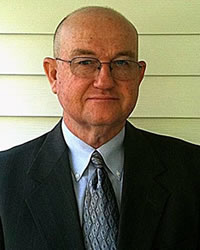
About Gary Shepard
Gary Shepard is teacher and pastor of Sovereign Grace Baptist Church in Jacksonville, North Carolina.

Comments

0 / 2000 characters
Comments are moderated before appearing.

Be the first to comment!

Joshua

Joshua

Shall we play a game? Ask me about articles, sermons, or theology from our library. I can also help you navigate the site.