Bootstrap
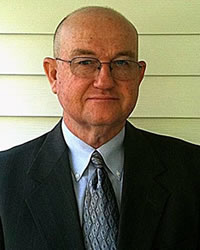
Gary Shepard

A God That Cannot Save

Isaiah 45:18-22
Gary Shepard February, 17 2013 Audio
0 Comments
Gary Shepard
Gary Shepard February, 17 2013

Sermon Transcript

Auto-generated transcript • May contain errors

100%
Open your Bibles to the book
of Isaiah. Isaiah chapter 45. Isaiah is
the prophet of God. I'd have to say of myself what
another man said when he said, I was neither a prophet or a
prophet's son. But he said, I was a gatherer
of sycamore fruit. And the Lord came and called
and gave His Word to speak. I'm not a prophet. I'm not a
prophet's son. But God has given through His
prophets and through His apostles His Word. And when everything
is said and done, the only thing that will count at that hour
is the same thing that counts at this hour. And that is what
thus saith the Lord. Look with me in verse 18 of Isaiah
45. For thus saith the Lord that
created the heavens, God Himself that formed the earth and made
it, He hath established it, He created it not in vain, He formed
it to be inhabited. I am the Lord, and there is none
else. I have not spoken in secret in
a dark place of the earth, I said not unto the seed of Jacob, seek
ye me in vain. I the Lord speak righteousness,
I declare things that are right. Assemble yourselves and come,
draw near together, ye that are escaped of the nations, They
have no knowledge that set up the wood of their graven image,
and pray unto a God that cannot save. Tell ye and bring them
near, yea, let them take counsel together. Who hath declared this
from ancient time? Who hath told it from that time? Have not I the Lord, and there
is no God else beside me, a just God and a Savior? There is none
beside me. Look unto me, and be ye saved,
all the ends of the earth, for I am God. and there is none else."
Sometimes in God's providence, He brings His people into situations
where truth and error are very sharply contrasted. Where they remember the pit from
which they're digged. and where they are made thankful
again to remember His sovereign saving grace in Christ to them. And it is as with the case of
a preacher of the gospel, he is reminded of that which is
to be preached to eternity-bound sinners. At the recent funeral
of a friend, I heard a preacher. I don't get to hear too many
preachers, but I heard a preacher who was talking about a God whose
promises, whose purposes, whose very salvation were dependent
on what the hearer would do. He would make a statement from
Scripture which sounded really good, and then he would immediately
follow it, making the fulfillment of it to be contingent on what
the hearer did or didn't do. He would say a great thing about
God, and then in the next instance, reduce him to being helpless
to do anything contrary to a sinner's will. He would say things like,
if you will, God will. And everything was dependent
upon an act, a decision, a choice, or the so-called free will of
the individual. But I would say to you this morning,
and to any who would ever hear me and listen. A God that can
only do what men allow Him to do is no God at all. He is a God that cannot save. If you look back at our text
this morning, It is very easy to find out who it is that's
speaking. You're not to believe anyone
simply based on the fact that they said something. As a matter
of fact, the great Apostle Paul, it says that there were some
that God calls noble Bereans. And it says that when they heard
the Apostle Paul preach, they searched the Scriptures to see
if the things that he said were true. God has not left us out
here in this world to follow everyone's opinion or even our
opinion. We are to weigh everything in
the balance and scales of this book. And he says, to the law
and to the testimony. And if they speak not according
to this word, it's because there's no light in them. They're just
darkness. But we can be sure we know who's
talking here. It says, "...for thus saith the
Lord that created the heavens." This is the Creator God. God Himself that formed the earth
and made it, He hath established it. This is God the Creator of
all, therefore the Possessor of all. And He says of His own
creation that He created it not in vain. He did not create His
creation to simply hand it over or allow it to be taken over
by either devil or man. But it says He formed it to be
inhabited. And if that depended on the will
or the works of men and women, If that depended on us as sinners,
that could never be. Never be. The Bible says that
this world, this earth, will at one day be purged with fire. And when it is purged with fire,
John said he saw a new earth, a newly restored earth, and that
earth will be inhabited. But it says that the earth at
that time will be without any sin or anything that defiles,
And yet it will be full of men and women who inhabit it by the
grace of God. And if it depended on anybody's
willingness or the will of any sinner, that would never happen. Because the will of fallen man
is not some separate thing that hangs out there that acts contrary
to or separate from we ourselves, but our wills are bound to our
fallen natures. We never will in a way that is
different from what we are and what we desire. You will never find me going
into a restaurant somewhere, and according to what I like
and don't like, you'll never find my will ordering something
like liver, because I don't like liver. And my will will not operate
in a way that's contrary to my nature, to my desires, And neither
will our will as sinners ever operate contrary to what we are,
which is nothing but sin. As a matter of fact, he says
that our carnal minds, which is simply our natural minds,
are enmity against God. All of us, by nature, hate God. Now, we don't hate the God of
our imagination, and we don't hate the gods that men have set
forth that they know will be naturally appealing to us, but
God as He is, the Creator God, Since we fell in Adam, our natural
mind is enmity against him. We do not desire, we do not want
the things of the living God. And he says here in verse 18,
he reminds us that he is the Lord and there is none else. If we don't believe that, we
might as well totally throw away the Bible. Because the God of
the Bible, He allows no equal. He allows no rival. And so many times in this book,
He tells us again and again, irregardless of what anybody
says, I am the Lord, and there is none else." Not only is He
the only God who exists, He's the only one who rules, He's
the only one whose will counts, He's the only God that there
is. There are not many faiths as
we hear in our day. There is one Lord, one faith,
one Spirit, one baptism, the Scriptures say. So any God who
is not like God as He says He is, that's all I ask anybody
to listen to, to read, and to see how God says He is. Any God who is not like God says
He is, is simply, and as is said here, a false god, an idol. And when we say an image, all
an image is, is something that first began in the imaginations
of men and women, fallen sinners. The gods of their imagination,
whether or not they're ever cast in gold or silver or chiseled
out of stone or carved out of wood, whether that happens or
not, they're still the gods of man's imagination. And since
if any God who is not like God says He is here, a false God,
so also all who preach a different God. All who preach a different
God, they are false prophets though they be sincere, though
they be zealous, though they be moral, though they be nice,
the Bible pronounces them all as idolaters and false professors
and false prophets." You see, Isaiah speaks, or rather God
speaks through him, and calls all such gods, gods that cannot
save. They pray unto a God that cannot
save. And my friends, if there's one
thing that we absolutely need and absolutely must have, it
is a God that can save. You see, can has to do with ability. Ability. You remember how your
grammar school teacher would try to teach you the difference
between may and can? You'd go ask her, can you go
to the bathroom? She said, I don't know if you
can or not. And what you were supposed to say was, may I go? You're asking for permission.
We're not talking about ability. And so he says of these gods
that they are gods who cannot say. They don't have the ability
to say. But when God, using Isaiah the
prophet in another place, when He describes God as He is in
Christ, He says this, Who is this that comes from Edom, with
dyed garments from Basra, this that is glorious in His apparel,
traveling in the greatness of His strength, Then he answers
his own question. He says, I that speak in righteousness,
mighty to say. Mighty to say. And if he is the only one that
is mighty to save, then there are just a multitude of errors
in preaching such a God as he warns against here who cannot
save. The gods such as this man that
I heard preached and such as are warned about throughout all
of Scripture, the very first thing about them, it is obvious,
if we know anything about the Word of God. Now such preachers
rely on the ignorance of men and women. They rely on the laziness
of men and women. They rely on their willingness
to be told something rather than search it out for themselves
in the Scriptures. But the Bible sets forth God
as totally the opposite of what most men say. You see, the God
of the Bible is an absolute sovereign. I don't know how many times I
get asked, number one, what's the name of the church that you
pastor? And when I tell them, I begin
with sovereign grace, and they begin to write it down like if
they're filling out something. Number one, they haven't seen
that word enough to be able even to spell it. Sovereign? What does that mean? It means
that God, being the absolute sovereign that He is, He does
whatever He will, He saves whomever He will, He does it when He will,
and He does it how He will. He's the one true free will in
the universe. And when you read the Bible and
you read about God's descriptions of Himself, God clearly not only
is God, He's not some kind of figurehead God, but He acts like
God. Look down in verse 5 of Isaiah
45. I am the Lord, and there is none
else. There is no God beside me. I girded thee, though thou hast
not known me, that they may know from the rising of the sun and
from the west that there is none beside me. I am the Lord, and
there is none else. I form the light and create darkness. I make peace and create evil."
What was that? Is that a misprint there? Did
he not know that in this day, 2013, that that could never ever
be attributed to the God of the Bible, who men say is nothing
but love? God does not mind taking credit
or responsibility for that which He does. He says, can there be
evil in the city and the Lord hath not done it? In other words,
He does all things, and no matter how they appear to us, in His
great scheme of doing and in His wisdom, He does, as it says
here, all things right. I, the Lord, do all these things. Drop down, ye heavens, from above,
and let the skies pour down righteousness. Let the earth open, and let them
bring forth salvation. And let righteousness spring
up together, though I, the Lord, have created it. And woe unto
him that striveth with his Maker." You go over in the prophecies
of Jeremiah, and you find God taking Jeremiah on a visit down
to a potter's house. And he does that in order to
show Jeremiah and us that he is this absolute sovereign who
does what he will in the armies of heaven and among the inhabitants
of the earth, and none can stay his hand. He said, cannot the
potter of the same lump make one vessel unto honor and the
other unto dishonor? And rather than our fighting
against what is an obviously declared truth, regardless of
our trying to reason it in our so-called logical minds, He does
all these things, and He does them in such a way that we might
know that He's God. He didn't ask me about it. He
didn't wait till you and I came along to see if that was all
right with us. We don't run anything. We don't
rule anything. We imagine that we do sometimes,
but God does according to His will in all things. Look over in Isaiah. Well, look
at verse 9 again. "...Woe unto him that striveth
with his Maker." Now that woe is pronounced against those who
fight against, who strive against, who kick against their own Creator. Let the potsherds strive with
the potsherds of the earth. Shall the clay say to him that
fashioneth it, what makest thou or thy work he hath no hands? He said the clay has no dispute
with the potter. The clay cannot argue, that is,
and win against the very potter that forms him, and fashions
him, and shapes him, and makes him what he will, whether it
be a vessel of honor or a vessel of dishonor. Look over in Isaiah
chapter 46 verse 9. He says, remember the former
things of old, for I am God, and there is none else. I am
God, and there is none like me, declaring the end from the beginning,
and from ancient times the things that are not yet done. Now, how
can God declare what's going to be How can He assure from
ancient times things that are not yet done if there is a possibility
that His creatures will in some way deviate, not do what He'd
have them to do, or act in a way contrary to His will? How could
He ever declare anything? And yet he declares all things
because it says, he will bring them to pass. Saying, my counsel
shall stand, and I will do all my pleasure. Calling a ravenous
bird from the east, the man that executes my counsel from a far
country, Yea, I have spoken it, I will also bring it to pass,
I have purposed it, I will do it." You see, that's just a bunch
of funny language. That ravenous bird is simply
like a bird of prey. And here is one over here that's
flying so high, some king, some government, some people that
seem to be in total control of everything, and God says, I'll
just raise up somebody who's like a bird of prey that will
come sweeping out of nowhere to them, destroy them, overcome
them, and rule them. And He said, they'll do it because
I've purposed it. I've willed it. I've determined
it. And you see, He says that all
things are predestinated according to the purpose of Him who works
all things after the counsel of His own will. You know why
people hate the Bible doctrine of predestination so bad? They
don't ever stop and think about, this is the all-wise God who's
done it. They don't ever stop and think
about how He's right in everything He does. They don't ever think
about it being a purpose of His grace whereby He brings a people
to be conformed to the image of His Son. They don't think
like that. They think that if He predestinates
all things, that that means that all things are out of my hands
and out of my control, and I do not want that to be such. But
He predestinated all things after the counsel of His own will. And I sat there and I listened
to this preacher and I thought, how different this God is that
you're talking about from the God of the Bible. And not only
that, how this preacher's God is totally unjust. Just totally unjust. You say,
how do you know that? Because according to him, he
will cast into hell those he says Jesus died for. He says He paid their debt, and
bore their sins, and paid a ransom for them. And yet, because of
something they don't do, He's going to cast them into hell
anyway. They say, well, Jesus died for everybody, and now it's
up to you. Jesus paid the price for everyone,
they say, and now it's just up to you to accept it. No! There was a transaction between
the Father and the Son, and it is not contingent upon anything
we do. If He paid the debt, it's paid. If He bore my sins in His own
body on that tree, then I do not have to bear them in my body."
And listen to what it says in verse 21, the latter part. He says, "...there is no God
else beside Me, a just God and a Savior." Isaiah 45 and verse
21. He said, there is no God else
beside me. And if we're really interested,
we could follow that very statement with this, well, what kind of
a God are you? He says, a just God and a Savior,
and there is none else beside me. Well, I know this. I know
if one sinner for whom the Lord Jesus Christ died on that cross,
and paid that sin debt, and bore that wrath of God on their behalf,
died in their place, if one of them perishes in hell forever,
he will be proclaimed the most unjust God that could be. I don't know about you. But if
there's anything that kind of gets under my skin, it's when
somebody's trying to rip me off. When they're trying to make me
pay this for this, and yet they want to give me less than that. paid a bill, and then they come
back two months later with a statement that says, I'm still guilty for
the same amount. I'm still responsible for that
amount. And we just get all irate, we
get all ill and mad, and we just will not stand for that injustice. We don't think like that with
God. These preachers say, well, Christ died for you, and He loves
you, and He's trying to save you. But he can't. That would be just injustice.
And not only that, this just God of the Bible, He tells us
exactly who Christ died for. Christ said, I lay down my life
for the sheep. The sheep. That's a common name
in Scripture given for the Lord's people. And never do you find
somebody who's called a goat, which are also a people described
by the Lord. Never do you find a goat being
changed into a sheep. And neither do you find that
every person born into this world is a sheep. Christ looked at
the Pharisees and He said, you believe not, because you're not
of My sheep. Now you think about that. Morally? They thought they were as clean
as a houndstooth, as we say. Upright, Bible scholars, righteous
before men, but he called them a generation of vipers. He talked
of them as those who trusted in themselves that they were
righteous and despised others. He called them the enemies of
God, and He said, He said, You believe not, because you are
not of My sheep. My sheep hear My voice, and they
follow Me. It says that He laid down His
life for His friends. It tells us that he purchased
the church with his own blood. He says to husbands in Ephesians
5, "...husbands, love your wives, even as Christ also loved the
church and gave Himself for it." But notice how he describes them
in this text, in verse 20. He says, "...assemble yourselves
and come. Draw near together ye that are
escaped of the nations." Now that word for church is not a
word that's used to describe a building or an organization. The Greek word is something like
ekklesia, which means a called out assembly. That's what God
is doing here. He's calling out an assembly. He's calling out these people,
His people, from these false gods, from these idols, and He
calls them those who are escaped of the nations. How did Lot escape
Sodom? Did Lot one day just kind of
wake up and say, you know what? I think things are going to get
bad around this place. No. The Lord sent the angels
down into Sodom and took Lot by his hand and pretty much just
drug him out. That's right. I don't know if
you read old John Bunyan's famous book, famous allegory called
Pilgrim's Progress. There's one thing I always remember
about that. That is, he lived in the city
of destruction, and being warned, and against all his family, and
against all his friends, and against everything he had, and
all these things. Finally, he's brought, it says
that his name is Christian, and he runs out of that city. with
his fingers in his ears. He's not listening to himself
anymore. He's not listening to his wife,
his husband, or his children, or his brethren, or his friends,
or his co-workers anymore. But because that was the city
of destruction, being warned of God, he runs out of that city
with his fingers in his ears, crying, Life! Life! Eternal Life! You see, God will
save everyone that Christ died for. Because the God of the Bible,
He doesn't offer salvation, and He doesn't make men savable,
and neither does He help them to save themselves. He saves them. He saves them. That's why I'm not going to spend
an hour at the end of every service singing 27 stanzas of Just As
I Am and getting somebody to come down to this front and shake
my hand, the hand of a fool, and there'll be no better for
it. He said, they shall all be taught of God. And every man,
Christ said, that hath learned of the Father comes to Me. And men always talk about this
God who is a God of love. He's a God of love. God loves
you and has a wonderful plan for your life. You will not find
that in the Bible. You will find two times in the
same epistle where the apostle states this fact, God is love. That doesn't mean he loves me.
That's like saying there are rich people in this world. That
doesn't mean they're going to make me rich. You see, man's
view of God is such that it reduces the love of God to a helpless
love. You got that little granddaughter.
And I love her. I do. I love her in a way that's
unique and different from any other way I've ever experienced
in my life. I love my wife. I love my son.
I love my daughter. I love that granddaughter. And
whatever it takes, whatever it takes, keep her safe, watch over
her, protect her as best I can, according to my ability, I'm
going to do it. Would we dare imagine that God
loved somebody and He would not be willing to do the same thing
for them? It says, He loved His people
and gave Himself for them. So when men talk about a God
who loves, but He can't save you against your will, He can't
do this and that and the other, they reduce the love of God to
nothing. And then such a God as this man
preached is a God who is not only helpless, but He is a burden. He is a burden. As a matter of
fact, in the first two verses, such gods are described by God. He says, "...bell bows down."
Nebo stoopeth. Their idols were upon beasts
and upon the cattle. Your carriages were heavy loading. They are a burden to the weary
beasts. They stoop, they bow down together. They could not deliver the burden,
but themselves are gone into captivity." You know, the God
of this man and the God of these people in this world, He's a
lot of trouble. I had a young lady last week. She knows I'm a preacher, so
she wanted to know what our church did for Lent. She said, what
are you giving up for Lent? By the way, she told me she was
giving up sugar. Giving up sugar. In other words,
what are you going to do for God? And these preachers stand
like beggars. God only has your hands, and
He only has your mouth, and He only has your feet, and He only
has your wallet. You need to give. If you give,
the Lord will bless you. Beggars. I don't need a God that
I have to do something for. I don't need a God that can be
increased by anything I give. I need a God that's going to
do something for me. I wanted to tell that young lady, and
I will one of these days shortly, I want to ask her, do you want
a God that you've got to support and hold up and do for, or do
you want a God that'll do something for you? I need a God that'll
save me. I need a God that'll help me.
I need a God that'll bless me. I need a God that'll provide
for me. And I can't give Him anything
that doesn't already belong to Him. Look in verse 3 of chapter
46, "...hearken unto me, O house of Jacob, and all the remnant
of the house of Israel, which are born by me from the belly,
which are carried from the womb. And even to your old age I am
he, and even to whore hares will I carry you. I have made and
I will bear, even I will carry and will deliver you." He said,
Bal, God's like Baal and Nebo and every false god. They're
a burden to men. But he said, the Lord God, I've
carried you from the womb right down to your very last days. And I tell you, I'm beginning
to feel more and more the need of a God who will carry me in
my last days. I need a God who will do something
for me. I don't need a burden. I need
a burden bearer. I don't need somebody who is
in worse financial condition than me. I need somebody who
is rich. Isaiah 40 says of this shepherd,
"...he shall feed his flock like a shepherd. He shall gather the
lambs with his arm and carry them in his bosom." a little story, you know, about
the two footprints and the one set of footprints in the sand,
and supposedly it's the Lord walking with you every day, and
then one day there's just one set of footprints, and the man
asks God, you know, why is there just one footprint on this particular
strand of beach? He says, that's when I took in
my arms and carried you. God carries His people every
step of the way. He bears them like lambs in His
bosom. He says, underneath us are His
everlasting arms. We're in the Father's hand and
no man shall pluck them out of My Father's hand. Such a God
as this man proclaimed denies also what the Bible says about
man. He denies what you say that we
are, Lord. This man's God cannot save men
in the condition that God says that they're in. He calls upon
them to do. He calls upon them to allow God. When God says in Ephesians 2
that we are dead in trespasses and sins, they say, you take
the first step and God will take the rest. Richard, if a man can
take that first step, that's the problem. Dead men don't take
the first step. I remember hearing the story
about, I believe it was the so-called Saint Bemis of Catholicism. Supposedly Saint Bemis, they
cut off his head and he took his head in his hand and walked
all the way around the world. Somebody said, well, I don't
believe that stuff. And the man said, well, if he
could take that first step, he could go all the way around.
It's that first step for a dead man. Dead in trespasses and sins. Lost. You ever been lost like
lost in the woods? That's a bad feeling. I was lost one time. Way back
in a bad swamp, me and another guy, we were lost. There's no
doubt about it. And we would have probably been
lost to this day. But I heard the sound of a factory
whistle that I knew was on the river. And I told him, I said,
if we go toward that whistle, we'll go to that river, and those
guys on those boats will be coming by and they'll get us. He said,
I don't know about that. I'm not sure about that. I said,
well, that's where I'm headed. They found us. This is a sound
that awakens, this gospel sound that God uses and awakens us. He describes us as being blind. as being lame, as being paralyzed
spiritually. He says in John 6 that no man,
maybe I better get you to read that. John chapter 6. John chapter 6 and look at verse
44. Now this isn't some some medieval
theologian or somebody who has a theology by their name. This is Christ. This is God in
flesh saying this. No man can come to me except
the Father which has sent me draw him, and I will raise him
up at the last day. Look down in John chapter 6 and
verse 65. And he said, "...therefore I
said unto you that no man can come unto Me except it were given
unto him of My Father." Was that true? Next verse says, And from
that time many of his disciples, those who had been following
him and learning from him, they went back, and they walked no
more with him. And then said Jesus unto the
twelve, Will you also go away? That's why I'm not trying to
get people to do anything. Will you also go away? Then Simon
Peter answered him, Lord, to whom shall we go? Thou hast the
words of eternal life, and we believe and are sure that Thou
art that Christ, the Son of the living God." You see, God, as
our Savior, knows our true condition and state. And he doesn't send
band-aids to deal with cancer. He doesn't give aspirins to deal
with dead people. He gives life. He gives life. But most of all, such a God denies
the person and the work of the Lord Jesus Christ. The one he
was talking about was what Paul called another Jesus. What the Bible shows to be counterfeit
gods. What John says were antichrists. You see, religion has got everybody
looking with tunnel vision down to some figure coming sometime
in the far future that's called the antichrist. John said in
his epistle, even now there are many antichrists. Who are they? Everyone who departs from the
doctrine and truth of Christ and Him crucified. You see, men
deny, their gospel denies the work of the God-man. And most
especially denies Jesus Christ, who is none other than the mighty
God in flesh and His mightiness to save. I just want to raise
my hand and say, wait, wait, wait, just a minute, preacher.
What does Matthew 1.21 mean? Thou shalt call His name Jesus,
for He shall save His people from their sins. That's the most
powerful the most straightforward, the most gospel-encompassing
verse in all of Scripture. When the angel tells Mary and
Joseph His name is to be called Jesus, Jehovah's Savior, or Jehovah
the Savior, because He will save His people from their sins. Not part of them, not most of
them, but all of them. You see, the Bible says that
this is what Christ actually came into the world to do. Paul writing to Timothy says,
this is a faithful saying and worthy of all acceptation, that
Christ Jesus came into the world to save sinners, of whom I am
chief. Did he actually do that? If he
didn't, he's a failure. If he didn't save everyone that
he came into the world to save, then he's a failure. Well, you
say, well, I know everybody's not going to be saved. I know
the same thing. Therefore, he must not have come
into the world to save everybody. But he did come into the world
to save these who are identified by this character. They're sinners. They're sinners. I'm a sinner.
I didn't used to be a sinner. Not in that sense. I was. But
I still am. On my best day, I'm a sinner. I'm not going to stand up before
you and try to say that you can be something that I know I'm
not myself. But sinners have to be saved
all by grace. And they have to be saved by
one outside of themselves. I had to be saved. As a matter
of fact, I keep having to be saved. I keep having to be delivered. And Christ is on that cross actually
accomplishing the salvation of His people. He is successfully accomplishing
what the Bible calls the work of righteousness. What does that
mean? That means he is saving his people
in a way so that God can remain just and at the same time be
their Savior. That means he is bearing their
sins in his body. That means they will not be saved
without their sin debt being settled. And this is the heart
of what he means so many times in Scripture, one verse being
2 Corinthians 5.21, where Paul says, For he, that is God, hath
made him to be sin for us, he who knew no sin, that we might
be made the righteousness of God in him. He took all the sins
of His people and laid them on Christ, or as it is, imputed
them to Christ, charged them to Christ's account, and that
account required that He die. takes the very righteousness
of God in Christ, and he imputes that to their account, so that
they are made the righteousness of God in Him. It doesn't just say that they
are made the righteousness of God, lest we imagine that somehow
we are in our persons righteous. He says, they are made, or accounted,
the righteousness of God in Him. You see, Christ is the only God
who saves. He is our own and only salvation. And all of man's doctrines, such
as free will, and works, such that make the work of Christ
and the success of His mission into this world, and yes, even
the very glory of God, depend on man? Depend on man's choice? On man's fallen will? On man's
always wrong decision? Or his works which he says are
filthy rags? Would you entrust your greatest
work Your glory to be dependent upon how your enemies are going
to say or do or choose or whatever. Everything God does, He says,
is to the praise of the glory of His grace in Christ. In chapter 45 verse 23, he says,
"...I have sworn by myself, the word has gone out of my mouth
in righteousness, and shall not return that unto me every knee
shall bow, and every tongue shall swear. Surely, shall one say,
in the Lord have I righteousness and strength." Somebody is going
to believe His gospel. Somebody is going to bow before
Him. These are going to come, these
that are escaped of the nation, are going to come and bow at
the feet of King Jesus. Even to Him shall men come, and
all that are incensed against Him shall be ashamed. And in
the Lord, In the Lord shall all the seed of Israel..." He's talking
about spiritual Israel there. We know that can't be true of
national Israel. "...but in the Lord shall all
the seed of Israel be justified, declared righteous, and in the
Lord They'll glory. They'll tell what God has done
for them. They'll not be talking about
their decision for Christ. They'll be talking about His
decision before the world began. They'll not be talking about
works of righteousness which they have done, but they'll be
talking about His work of righteousness. They're not talking about what
they did to be saved, they'll be talking about how He saved
them according to His own mercy and grace. Will we be found among those
who are escaped? Only if the Lord takes us like
He did Lot and leads us out of our idolatry, natural and man-made,
brings us to repent of all these things which He describes as
being nothing but dead works and fruit unto death. There were
three men, we call them three Hebrew children, or Shadrach
and Meshach and Abednego. And when the king set out his
command, his Edechia, he commanded that nobody was to be bound down
to and worship any god except the god he'd raised up there
in the plains. But there came some jealous,
God-hating men. to the king, and they said, now
we've got a little problem here. There are certain Jews whom thou
hast set over the affairs of the providence of Babylon, Shadrach,
Meshach, and Abednego. These men, O king, have not regarded
thee. They serve not thy gods, nor
worship the golden image which thou hast set up. They're in
trouble, aren't they? Because He said, those who didn't
worship that image He set up, they'd be thrown into the fiery
furnace. But when he had those three men
thrown down there in that fiery furnace, and he looked in there,
though they were wrapped tight with every piece of clothing
and rag that could be put on them, and the furnace heated
seven times higher than it had ever been before, and even the
men who threw them in there were burned to death. He looked down
there. He said, didn't we throw three
in there? And yet now I see four. And the
fourth one is likened to the Son of God. They didn't bow to
His gods. That's my prayer for us, for
every one of us. that by His grace we will not
bow to the gods of this world. But worship the true and living
God, worship Him in spirit and in truth, and hear what He says
in verse 22. Lest we should say, well, I don't
know if I'm one of the elect or not, or I don't know if I'm
one of these that are called the seed, or I don't know if
I'm one of these chosen of God. Well, look at what He says in
verse 22. Look unto Me, and be ye saved, all the ends of the
earth, for I am God, and there is none else." I don't know if
Christ died for me or not. Look unto Me. If you can turn
the eye of confidence away from every other hope, and trust Christ
alone, believe on this God, Bow to His claims. If you do that,
I assure you Christ died for you. He laid down His life for
the sheep, and He said, My sheep will hear My voice, and they'll
follow Me. Me. This is God. And rather than being a God that
cannot save, He is the only God that can and does save sinners
in His darling Son. Father, this morning we pray
that You would get all glory unto Yourself. Lord, surely we
are those who must be saved. And surely there is none other
name given under heaven among men whereby we must be saved
other than this true Christ, who saves all His people from
all their sins. Lord, we know that we don't know
everything. We certainly don't know everything
about You. But thank You that we could say
as many as who believe on You that You've given us an understanding
that we may know Him that is true. And this is the true and
the living God. This is our God who's in the
heavens, and he hath done whatsoever he hath pleased. We thank you,
Lord, that it pleased you to make us your people, and it pleased
you to, through the preaching of the cross, to save them all. Therefore, all glory and all
praise be to you, both now and forever, in Jesus Christ. Amen. Amen.
Gary Shepard
About Gary Shepard
Gary Shepard is teacher and pastor of Sovereign Grace Baptist Church in Jacksonville, North Carolina.

Comments

0 / 2000 characters
Comments are moderated before appearing.

Be the first to comment!

Joshua

Joshua

Shall we play a game? Ask me about articles, sermons, or theology from our library. I can also help you navigate the site.