Bootstrap
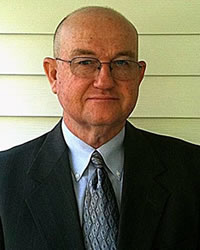
Gary Shepard

If Thou Doest Well

Genesis 4:1-8
Gary Shepard January, 20 2013 Audio
0 Comments
Gary Shepard
Gary Shepard January, 20 2013

Sermon Transcript

Auto-generated transcript • May contain errors

100%
If you would, open your Bibles
this morning to the book of Genesis, the fourth chapter. And Adam
knew his wife, and she conceived and bare Cain, and said, I have
gotten a man from the Lord. She thought that she had already
given birth to that promised one. And she again bare his brother
Abel, and Abel was a keeper of sheep, but Cain was a tiller
of the ground. And in process of time it came
to pass that Cain brought of the fruit of the ground an offering
unto the Lord. And Abel he also brought of the
firstlings of his flock, and of the fat thereof. And the Lord
had respect unto Abel and to his offering, but unto Cain and
to his offering he had not respect. And Cain was very wroth, and
his countenance fell. And the Lord said unto Cain,
Why art thou wroth, and why is thy countenance fallen? If thou
doest well, shalt thou not be accepted? And if thou doest not
well, sin lieth at the door. And unto thee shall be his desire,
and thou shalt rule over him. And Cain talked with Abel his
brother, and it came to pass, when they were in the field,
that Cain rose up against Abel his brother, and slew him." This
text, the message of this text, is belief on the Lord Jesus Christ. The message is as it is in all
of Scripture, plead only His death, His blood alone before
God, and do it now. I call this message, If Thou
Doest Well. And as we have seen, this chapter
records the first murder. The only two sons at this point,
and yet brother rises up against brother and kills him. It's amazing how that could take
place, because there's no mention of a weapon. How could it ever
be that such a thing could take place in the logic of our day
without a handgun or an assault weapon? But the truth is, as
Christ said, murder is the product of the heart. And wherever there
is murder in the heart, Apart from restraining grace, that
sinner will find a weapon in his hands to commit it. And if he doesn't find a weapon
to use, he'll do it with his hands, because it's in his heart. But what I want us to notice
in this text especially is this seventh verse. In what God says
to Cain after he has rejected his offering and now his countenance
is fallen. He says to Cain, If thou doest
well, shalt thou not be accepted? If you do well, will you not
be accepted by me?" Well, I'm sure of this, he could not have
been talking about Cain obeying the law, because the law at this
point had not been given. That law that said, this do and
live, had not even been given. Nor is God establishing the principle
of accepting or saving us by something we do, something we
perform. He says that salvation is not
of works, lest any man should boast. So what did God mean by
this doing well. What does he mean here when he
says to Cain, if you do well, won't you be accepted? In other
words, he had some knowledge that there was a way, a basis
upon which God would accept him and receive him. But the answer
first is right here in this text of Scripture. And if you look
back in verse 3, it says that in the process of time, it came
to pass, and God clearly distinguishes not only between these two men
who were brothers, Same parents, same environment, same opportunities,
if you will, same everything that men use to distinguish and
give a reason why one does a deed like this and the other doesn't. But they were the same, grew
up in the same place, same opportunities. But he not only distinguishes
between these two brothers, he distinguishes mainly between
their offering. Verse 3 says that Cain brought
of the fruit of the ground, that is his crops, an offering unto
the Lord. Then it says of Abel, he also
brought of the firstlings of his flock, and of the fat thereof. One brought one thing, the other
brought another thing. God accepted one man's offering,
and he rejected the other brother's offering. Verse 5, But unto Cain,
and to his offering he had not respect." And that made Cain
angry. You see, what happens with regard
to Cain has to do with the offering that he brought. Because the
offering he brought before God revealed that he sought to be
accepted by God on the basis of his own doing, his own way. All that Cain does here is characterize
by self-will. He will do it the way he will
do it. And in truth, all so-called free
will is, is really self-will. You could say that Cain was the
first one with regard to God to demonstrate this free will
so-called. He willed to come before God
in the way that he would. What he does characterizes not
only self-will, but pride. When God did not receive his
offering, he got very angry. He was giving to God based on
what he'd get out of it, and it was offensive to him that
God would reject his best. And it showed that in his heart,
rather than being subdued by grace and bowing to the will
and Word of God, he was still a rebel before God. He's still
like that child of the wicked one who said, I'll do it my way,
I'll be as the most high. And the work of his hands were
offered up to God rather than the sacrifice which God required. God required a sacrifice of a
kind that was particular and of a kind that if Cain, as a
tiller of the ground, if he offered that, he had to get it first
from his brother Abel. That's pride. He didn't want
anything but what he himself could do, and perform, and give,
and to humble himself, or to have to go and buy a lamb from
his brother. It was offensive to him, and
so he chose rather to give of his own work. But God accepted. the sacrifice of Abel. And in it, as is demonstrated
here, he accepted Abel. He accepted him. That's what
the whole thing is about. He says to Cain, if you do well,
will you not be accepted? Abel was accepted. Cain was rejected. And yet, we don't find anything
up to this point, we don't find anything about how they lived,
what they did, anything that had to do with their conduct
of life, or their character, or their personality. We don't
find out anything about that. And so when they come with these
two offerings, Abel is received, accepted his offering, and Cain
is rejected, and there becomes at this point a real controversy,
a real war, if you will, a real disagreement and argument on
how God accepts sinners. And really what this amounts
to is that there is a controversy over grace and over works, so
that the first murder, the first death, that took place on this
earth the first time that a man raised up his hand against another
to slay him, it was over the issue of the gospel, over grace
and works. And the hatred that is demonstrated
by the one that God rejected over the one that God accepted. In other words, here is God being
God with regard to these two brothers. And here God is accepting
Abel on the basis of his offering, and rejecting Cain on the basis
of his offering. And when God rejects Cain, Cain
displays what is and has always been in his heart, which is that
enmity against God. And when he cannot reach out
and kill God, he reaches out and he kills the child of God. He slays this one who believes
God. He slays this one that God has
accepted. And here is this Abel, lest we
think for a minute that he arrived at doing what he did, offering
what he did by some kind of natural reason or natural choice or something
like that. That is not ever the case. In other words, Abel did what
he did, offered what he offered, did what he did in obedience
to God, following the teaching of Adam and Eve. You see, God,
if you remember, had to teach them when they fell. He had to
show them in that demonstration whereby He slew animals and provided
skins for coats and coverings for them. He showed them that
one way that God will cover and accept a sinner, He taught them
that the way of salvation was by the sacrifice of blood. Because that lamb slain, that
offering that Abel brought as one who had been taught, he not
only had been taught by his believing parents, but he had been taught
of God. That's right, he had been taught
of God. so that it did not matter what
was the most logical or what was most outwardly appealing
or that which would be to anybody else the thing to do, but because
he believed God, he came with the sacrifice that God had appointed
and that God had provided. And you know, that ought to teach
us something as parents. That ought to show us the necessity
and the importance of getting our children under the sound
of the gospel. Now, we live in a day when everybody
wants the best for their children. They want them to be socially
accepted and socially adjusted. They want them to have, as they
say, all the things that they didn't have. But the truth of
the matter is, the one thing that they need above every other
thing, and this is no guarantee that God will save them, but
if He does, He will bring them to believe the truth of the gospel. He will bring them to believe
on Christ as He is set forth in the Scriptures. He will bring
them to see and have some understanding concerning the only way that
a holy and a righteous God can accept sinners like you and me."
You see, Abel had the same parents that Cain had. Like begets like. The only thing that a sinner
can give birth to or father is another sinner. And that's why
we come forth, as God says, from the womb speaking lies. None better than the other. Me no better than you. Any child,
any no better than the other child. But here is God in His
grace, has come to this man Abel, and in mercy revealed to him
this way, this only way, and here is Abel going forth, it
says, by faith, and looking to the one that the sacrifice represented."
What did that lamb that Abel took and went out and picked
him out of the best of the flock, watched him, took him and slew
him and shed his blood on that altar as a sacrifice unto God. What did that represent? It represented Christ and Him
crucified. Christ and Him crucified. And the Bible says here that
the Lord had respect unto Abel and his offering, and that simply
means that in his sight, he saw the two as one. And that's our only hope. That
God, in His mercy and in His grace, has looked upon and looks
upon and will continue to look upon us as being in Christ Jesus. Turn over to Hebrews 11. You see, this isn't a mere incident,
a mere account of an occasion, a happening in the Bible or in
biblical history. But you see, the Scriptures say
that these things are written for our admonition, those of
us upon whom the end of the age shall come. Look down here in
Hebrews 11, verse 4. It says, "...by faith Abel offered
unto God a more excellent sacrifice than Cain, by which he obtained
witness," not just any witness, He didn't walk down some aisle,
shake some preacher's hand, and the preacher say, well, you're
saved, everything's all right now, you're on your way to heaven,
don't ever let anybody convince you of otherwise. No, he had
the only witness that counts. It says, he obtained witness
that he was righteous, God testifying of his gifts, his sacrifices. And by it, He being dead, yet
speaks. That is, Abel, although he's
been long dead, although his brother killed him, he, in what
he did, in his acts of faith, he's talking to us today. He's
speaking right now. God is using him in this account
to speak to us and show us mercy and grace. He is using Cain to
warn us. He is using Abel so that we might
look to the one way that he saved sinners. And God who is described
as being no respecter of persons, In other words, he won't respect
you because you're southern or northern, or you're male or female,
or you're Baptist or whatever it is, or you've done this or
you haven't done that. He will have no respect. He'll not accept you on that
basis at all. But it says he had respect to
Abel and his offering. And what was God's testimony
of Abel? This is really something. Just
simply by virtue of the fact that he obeyed God, that he offered
this offering, and he offered it by faith, means he believed
on the One that it represented, the One that was coming, that
it pictured. He believed on the Lord Jesus
Christ, and God made this testimony about him. He said, But doesn't
Paul say there's none righteous? No, not one. In other words,
there is none of us, none of Adam's race, who at any time
are essentially, personally righteous. There is not any of us at any
time that by our doing, that we attain righteousness. But
he said of Abel, the Lord bore witness. The only witness that
counts. The only one that's going to
matter in the last day for sure. The only one that matters right
now. I don't care who your family is, your friends are. It doesn't
matter what anybody says about me. What God says about me. It's about how God views me.
You say, I know you preacher, you're just as much a sinner
as anybody else. Absolutely. To my shame I say
it. Concerning my track record over
my life, and what will probably be my track record for the rest
of my life, you could not look at me and having the eye of God
say he is in any way personally good, nor has he ever done anything
good. God said he's righteous. Looks
like he would have given us a few more things about Abel No, he's
going to shut us up to this one thing, to this one way of righteousness. What about if he said, well,
Abel gave a lot of money. He helped the poor. He visited
the sick. Abel did this, and Abel did that,
and he never killed anybody. He didn't have a chance. He's
killed himself. But he's righteous. And you know
what? You and I, If we are ever brought
in the sight of God to know the truth, to have hope ourselves
of being accounted by God as righteous, we're going to have
to be taught of God the basis upon which men like Abel were
righteous. I'll tell you another one. You
remember reading about a man by the name of Lot? Lot lived
in the city of Sodom, and Lot was such that the only way that
he could be delivered and saved from that judgment that God brought
on Sodom was for God to send two angels in there and literally
take hold of him and bring him out. It doesn't say anything
about him being really too discontented with the wickedness of Sodom,
but when you read about him in the New Testament, God describes
him as righteous Lot. Righteous Lot. I was preaching
one time years ago, and I was mentioning something about Lot,
and the lady came to me afterwards, proper and educated lady, she
said, I just don't see how God could say that Lot was righteous. You know what that told me? That
told me that your view of right and wrong, your view of righteousness
is a lot different from God. When Joe read that long list
of things that God does in judgment to nations and people, and I
told him before he read it, you'll think he's talking about our
day. When He takes away this, and He takes away that, and He
takes away the honorable man, He takes away the statesman,
those are judgments from God. And then he comes to that tenth
verse, I believe it is. He says, but you say to the righteous
that it will be well with them. That's why I'm not going to get
overly concerned about politics and government and stuff in our
day. The things we're experiencing
right now, they most likely are judgments from God. He takes
away that honorable man. Neighbor comes in conflict with
neighbor. All these things. But he says
in the midst of it, you say to the righteous that it will be
well with them. That's a principle all through
this book. It will be well with the righteous. Isn't that what
he's saying to Cain? If you do well, won't you be
accepted? As a matter of fact, in Acts
10, the apostle says in one of his messages, "...but in every
nation, he that feareth him and worketh righteousness is accepted
with him." Everyone that works righteousness is accepted of
God. Abel was accepted of God. Others were accepted of God.
And his was a more excellent sacrifice than Cain." Because
when he begins that verse 4 in Hebrews 11, it begins by those
two words, by faith. By faith. I've heard people so
many times say, well, preacher, I've got faith. Some people have
a kind of faith that's faith in faith. They have a kind of
faith that's kind of like resolve. They have a kind of faith like
they're saying, I sure hope this is the way it turns out. This
is the way I think it's going to be. But this faith is the
gift of God. He says all men don't have faith.
Why did Cain not have faith and Abel have faith? Answer that
one. I know. I know based on this
book. Abel had faith only because God
gave him faith. He says to us in Ephesians 2,
Paul says, for by grace. He wrote to these believers at
Ephesus, the church at Ephesus. He said, for by grace are you
saved through faith. But that doesn't end that verse.
And that, not of yourselves, It is the gift of God. Here's
the evidence. One man had faith, the other
man didn't have faith. And Abel's faith was that which
God gives and always finds as its object, the Lord Jesus Christ. Say, I believe in Jesus. Do you
believe on Him? Here's a bridge. One bridge. One way of salvation. One righteousness,
one hope, one truth, one Lord. You have one of those many faiths? Are you like the super evangelist
who says he believes there are many ways to God? Then you don't
have faith. Faith lays hold of Christ. Lays hold of Christ as He is
in the Bible. Somebody said, I believe on Jesus.
You don't even know who He is. If there's one thing that I found
out when the Lord revealed the truth in my heart, it was that
I did not know Jesus. I had that Southern Baptist Bible
school, cradle roll, Jesus, but I didn't know Him, whom to know
is life eternal. I've often said, since the Lord
revealed the truth, there's one verse of Scripture that sets
forth Jesus from every antichrist. One verse, if that's all we have.
Many verses, but if we only have one, there's one verse of Scripture,
Matthew 1.21. When Mary and Joseph are told
what they're to name this child, this holy thing that's in her
womb, thou shalt call his name Jesus for or because he shall,
without a doubt, save his people from their sins. He's going to
save every one of His people from their sins. You say, well,
I guess Cain wasn't one of them. I guess he wasn't. Bless God,
Abel was. Abel was. Do you think Abel was
glad he was? I suspect that he was. But you
see, God counted Abel righteous through the one that the sacrifice
pictured and represented. That was Christ Jesus, His blood,
His death on that cross. And this is exactly what John
is talking about in 1 John. Turn over to 1 John. These little
epistles of 1 John. This is still John the Apostle. that God used to write the gospel. But look here in 1 John chapter
3. But first, pick up on verse 29
of chapter 2. If you know that He is righteous,
you know that everyone that doeth righteousness is born of Him. Now you just think about it. in the day of such a self-righteous,
proud, religious generation like we're in. And you go into, I'll
say, I'll give it a wide margin, I'll just say 95% of the churches
this morning, they're going to try to tell you what they think
about doing righteousness. They're going to give you a formula,
the ABCs of salvation, the Roman road. They're going to tell you
that if you do this or you do that, then you have some basis
upon which to have assurance that you're saved. We can tell
you if you're saved. If you come to our font and get
a little sprinkle of water on your head, if you'll go to our
pool and be dipped in it, if you'll come to all our meetings,
if you'll give generously, helping the Lord's work, we know you're
saved. Did you know that the very people
who did those things the most, who were morally upright in the
eyes of men called the Pharisees, that Christ had more wrathful
words to say about them than anybody else. He said, you are
of your father, the devil. The devil. Look over in 1 John
3 and verse 7. John says, little children. Let no man deceive you. He that doeth righteousness is
righteous, even as he is righteous." Everyone that does righteousness,
everyone that does well, will be accepted. Look on down in
verse 10. In this, the children of God
are manifest and the children of the devil. Whosoever doeth
not righteousness is not of God, neither he that loveth not his
brother. And guess who he's going to use
for an illustration? Led by the Spirit of God. Guess
who he's going to use to illustrate? what it is to do righteousness,
what it is to do well, and what it is not to do it. These same
two brothers, Cain and Abel. For this is the message that
you heard from the beginning, that you should love one another,
not as Cain, who was of that wicked one. You said, well, I
thought you were condemning Cain on hearsay evidence. No. Cain was of that wicked one. He's of the same family of every
works monger that's ever lived on this earth, of everyone who
sought to go to God his own way by free will or whatever kind
of will or all this kind of stuff. He's of the same family of the
Pharisees. Children of that wicked one. "...and slew his brother. And
why did he slay him? Wherefore slew he him? Because
his own works were evil." You go back to Genesis 4 and you
tell me, you tell me about Cain's works and Abel's works apart. from those two sacrifices, you
won't find anything. You say, well, Cain, you know
how he was probably. He was probably a whoremonger
and smoked and drank and cussed and ripped and reared and all
that kind of stuff. Doesn't say it though, does it?
It says God counted him as not righteous based on that offering
that he brought. Now, he goes on to demonstrate
what he is in his heart. But he'd already shown it before
God. Because his own works were evil. Evil. Just like that crowd in
Matthew 7 that Christ said would stand before Him in the judgment.
They're going to say things like, Lord, You're our Lord. We preached in Your name. We cast out devils in Your name. As a matter of fact, we did a
lot of good things. in your name." And you know what?
The Lord, He doesn't deny that. But He said, depart from Me,
you that work iniquity, unrighteousness. I don't care if you'd fed every
hungry person that you ever found out about. I don't care if you
ever sheltered every homeless person in the world. I don't
care if you cook for old sister so-and-so, and if you gave money
to the priest. I don't care what you did. It
was not equal to what I require. Depart from me, ye that work
iniquity." He said, this is working righteousness. This is doing
righteousness. This is doing well in the sight
of God. And only those who do righteousness,
as is demonstrated, they're the only ones who love the brethren.
Love the brethren. And so he gives us this example. Cain and Abel. And this is exactly
what we find throughout all the Scriptures. Plain statements
like Galatians, when Paul says, knowing that a man is not justified. He's not declared righteous by
God. He's not justified by the works
of the law, but by the faith of Jesus Christ. Even we have
believed in Jesus Christ, that we might be justified by the
faith of Christ, and not by the works of the law. For by the
works of the law shall no flesh be justified. These people want
to put up the Ten Commandments in the schoolyard. If you want
some mean kids probably, that is, if you want them to demonstrate
it, just put up that law in front of them that God says only makes
the flesh rise up against it. If you want some children to
know God and be of the spirit of Abel, better teach them the
gospel. Better teach him the gospel.
Paul says to Titus, "...not by works of righteousness which
we have done, but according to his mercy he saved us." And then
we have that great example of this very same thing in the man
named Abraham. Because the first mention of
righteousness has to do with Abraham. It says, "...and he
believed in the Lord, and he counted it to him for righteousness."
That is, Abraham sought to be accepted by God, saved by God,
through the righteousness of Jesus Christ that God would impute
to him. Through the death of a substitute
in his place. As a matter of fact, when Christ
came, when He came, after Abraham had lived, died, offered up all
those offerings on all those altars, He said, Abraham, you're
always talking about Abraham, He said, Abraham saw My day,
and he rejoiced in it. He had peace in the matter of
his sins. He had hope toward God. He looked to be received by God,
not on the basis of anything he did. He lied about Sarah,
his wife, to a king, and every other thing that characterizes
a sinner. But he believed God, that God
would deal with his sins, put them away. By that one sacrifice
for sins forever, he looked for the promised one, the coming
Messiah, the coming Savior. He believed God. And Paul says in Romans 4, and
therefore it was imputed to him for righteousness. As a matter
of fact, this doing well, this doing righteousness, It's exactly
what Paul is talking about in Romans 10. Romans 10. And I don't even have to get
you to read it. Because he says, Whosoever shall call upon the
name of the Lord shall be saved. They preach it, don't you believe
it? I absolutely do. But the truth of the matter is,
this matter of calling on the name of the Lord. I used to live
in a place where a drunk would often walk by our house. He'd get drunk and he'd walk
down the highway, in the middle of the highway, by our house,
singing hymns, quoting scripture, doing all that. In a sense, you
could say, he often called upon the name of the Lord. People
have been given that formula, told to call on the name of the
Lord. Pray the sinner's prayer. That's the only prayer any of
us have ever prayed. Even if we prayed true prayer,
it'll be a sinner's prayer. But the first time in the Bible
where we read something about somebody calling on the name
of the Lord, it's obvious. that it has to do with the way
that we approach God, worship God, and seek to be accepted
by God. Because time after time, it says
that Abraham, as a nomad like he was, he traveled from this
place to this place, and when he got there, he set up his tent,
and he raised up an altar and called on the name of the Lord."
What did He do? Stand on top of that altar of
stone that couldn't be stone that were cut out by human hands? Had to be stones that were just
there on the earth and picked up and put into this heap? Did
He just stand up on it and look up toward heaven and call on
His name? Call on the name of the Lord? No, sir. He slew an animal and He sprinkled
His blood on that altar. And he acknowledged, not just
before God, but before man, this is the way that I seek to be
accepted by your holy and just self. Through the sacrifice of
Christ that you will provide, the Savior who will come into
this world and die in my place for my sins, establish righteousness. I'm worshipping you. I'm worshipping
you. And everywhere you find him.
I know they thought, well you know Abraham, that's a strange
guy. Who's this fella? Him and a bunch
of camels and people and animals. They come marching across the
desert and they stop. They're setting up camp obviously.
What is he doing? First thing he's doing. He goes
out there and he gets him a handful of stones, and he brings them
back, and he raises up an altar. Oh, he must have a new grill.
He's going to kill an animal, roast it. No. He's going to sprinkle
that blood on it, because he's acknowledging. He's doing it
by faith. You see, that's his Bible. What Adam and Eve told Abel,
that was his Bible. Why? Because they told him what
God said. We do well to tell our children
before they can read the one only way that God is worshipped,
the one only way that He accepts us as sinners, and that is in
the one who's called the way, the Lord Jesus Christ. Jane,
if you do well, You'd be accepted. And if not, then lies at your
door. And that means in the Hebrew,
that kind of means something like an animal is crouched at
your door ready to devour you. That's what's waiting for you.
You come the way that Cain came. in your own person, in your own
deeds, in your own professions, sin waits to consume you, literally. What did Cain go out and do? Probably they got in a discussion,
these two brothers, and Abel said, but you know what mom and
dad said about what happened to them in the garden. You know
what they told us that God said was the way that He would be
approached. You see how God has accepted
them? Well, you'd think that Cain at
this point would be real appreciative for good instruction like that. But he rose up and he killed
his brother. The truth is, God is righteous
to forgive. to accept a sinner through Christ's
sacrifice for sin. Through that act of imputation,
wherein it says, for He hath made Him, that is, God has made
Him who knew no sin, to be sin for us, that we might be made
the righteousness of God. Not this phony righteousness,
which is nothing but self-righteousness, but the righteousness of God.
How? In Him. In Him. You see, if God accepts me, it
will have to be on the same basis He accepted Abel. And when Paul
wrote to those Ephesians, he said that God and grace, they
were believers. They'd heard the true gospel,
God had saved them by Himself for His glory, and He says, He
hath made us accepted in the Beloved, in the Beloved. To do well is to trust Christ
crucified alone, to seek to stand before God only in Him. Like that hymn writer, On Christ
the solid rock I stand, And all other ground sink in sand. When Jude is led by the Spirit
of God to write concerning those certain to meet the sure judgment
of God, he's distinguishing the wicked. And he says, Woe unto
them where they have gone the way of Cain. The way of self-will. The way of self-righteousness. The way of proud religion. But, I can say to you, you do
well. And I'm not talking about doing
your best. I'm talking about trusting Christ. If you do well,
you'll be accepted. You'll be accepted. Father, this
morning we give praise to such a merciful God, who would set
forth before us in such a plain, unmistakable picture, the one
way of salvation, the one way of grace and mercy, set against
that way that seems right to a man, but the end thereof is
the way of death. Lord, keep us from going the
way of Cain. bring us to trust the Lord Jesus
Christ, to repent of every other thing that we would ever count
ourselves as being a ground of salvation, look to His death
on the cross, plead Him in His blood alone, do well, and therefore
be accepted in Thy sight. We pray You do it for Your glory.
Honor Yourself. Magnify Your Son. For we pray
it in the name of Christ. Amen.
Gary Shepard
About Gary Shepard
Gary Shepard is teacher and pastor of Sovereign Grace Baptist Church in Jacksonville, North Carolina.

Comments

0 / 2000 characters
Comments are moderated before appearing.

Be the first to comment!

Joshua

Joshua

Shall we play a game? Ask me about articles, sermons, or theology from our library. I can also help you navigate the site.