Bootstrap
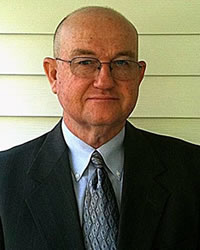
Gary Shepard

My Heart's Desire

Isaiah 6:1-8
Gary Shepard December, 23 2012 Audio
0 Comments
Gary Shepard
Gary Shepard December, 23 2012

Sermon Transcript

Auto-generated transcript • May contain errors

100%
Turn, if you would, in your Bibles
to Isaiah 6. And I'll begin reading in verse
1. Isaiah writes, In the year that
King Uzziah died, I saw also the Lord sitting upon a throne,
high and lifted up, and his train filled the temple. Above it stood
the seraphims. Each one had six wings. With twain he covered his face,
and with twain he covered his feet, and with twain he did fly. And one cried unto another and
said, Holy, holy, holy is the Lord of hosts. The whole earth is full of his glory.' And the
posts of the door moved at the voice of him that cried, and
the house was filled with smoke. Then said I, Woe is me, for I
am undone, because I am a man of unclean lips. And I dwell
in the midst of a people of unclean lips, for mine eyes have seen
the King, the Lord of hosts. Then flew one of the seraphims
unto me, having a live coal in his hand, which he had taken
with the tongs from off the altar. And he laid it upon my mouth,
and said, Lo, this hath touched thy lips, and thine iniquity
is taken away, and thy sin purged. Also I heard the voice of the
Lord saying, Whom shall I send, and who will go for us? Then
said I, Here am I, send me." During these days, there are
many people who are asking questions such as, what would you like
for a gift? What would you want for Christmas? And I thought about it. If I
were really to answer such a question, what would I say? What would
I want? I mean, if I could get anything
that I really wanted, what would I ask for? And I thought about
it. I believed that if I could ask
and receive anything that I wanted, It would be for the Spirit of
God to come in His reviving, refreshing, saving power into
my own heart, and into the hearts of this congregation, and into
the hearts of these men and women who are all around us, that are
yet dead in trespasses and sins. I believe that my desire would
be something like the Apostle Paul, when he said, my heart's
desire and prayer to God for Israel is that they might be
saved. I thought of this hymn this morning. that we sang, come Holy Spirit,
heavenly dove, with all thy quickening powers, kindle a flame of sacred
love in these cold hearts of ours. Come Holy Spirit, come. I know this, I know that if God
will, He can. What I desire but cannot do neither
for myself or for anybody else, if He will, He can. I'm like that leper who said
to Christ, if you will, you can make me clean." I know that it
is exactly as we read in the book of Job, that he is in one
mind, and who can turn him, and what his soul desires, even that
he doeth. And I know that if it is his
will to do so, If it is the will, the good, wise will of God to
do so, He will immediately go into the face of the will of
men. His power will meet with all
the opposition, not only of Satan, but also of every fallen sinner."
But I'm thankful, as we read there in our other text in Daniel
4, that this is the case. That it is as Nebuchadnezzar
himself confessed, that none can stay his hand. What we find
is that in both of these texts, human wills have met divine sovereign
power. And this is exactly what will
happen and what must happen if anybody is to be saved. There must be omnipotent grace. There must be that effectual,
powerful working of God's Spirit. Both Nebuchadnezzar and Isaiah
both had to be brought down before they could be lifted up. They
had to be emptied in order for God to fill them. And all who are saved, they must
of necessity be saved. And it's a bit like Brother Richardson
used to say. And that is that God saves all
His people against their will with their full consent. You see, there is only one free
will in this universe, and that is the will of the Almighty God. And I am thankful that that is
not a mere title. that He is Almighty God, but
that in that might and strength, He demonstrates it, as Scripture
says, as the one who is mighty to save. That's who I want to
come in power. That's who I want to raise the
hand of His strength in our day and in our hearts. That's who I want to come, and
Him come with the knowledge brought to all of us that nobody can
stay His hand. You see, in truth, salvation
is not only a demonstration of God's grace, it is also a demonstration
of His mighty power. It has to do with both His authority
and His ability, as He demonstrates it in the Lord Jesus Christ. Let me read you a verse in John's
Gospel. It says, "...these words spake
Jesus, and lifted up his eyes to heaven, and said, Father,
the hour is come, glorify thy Son, that thy Son also may glorify
thee." And as I try to tell you, when something is glorified,
That means that which they are, that which they're doing, is
made manifest. And the glory of Christ, the
glory given to Christ by the Father, is of course His redemptive
glory. And so the next verse, he says,
"...as thou hast given him power over all flesh." That is both
authority and ability. Power over all flesh that he
should give eternal life to as many as thou hast given him. Power over all flesh. And specifically power. by which to save each and every
one of that people that the Father gave to Him before the foundation
of the world. But what actually happens when
in our time or in our experience, God comes to us by His Spirit
as the mighty God. Well, when He comes, it is without
a doubt at a time. Nebuchadnezzar, is describing
that time when God came to him. And what we find also here in
Isaiah 6 is that Isaiah is also talking about a time. He says,
"...in the year that King Uzziah died." That is, to both of these
men, God came to them and demonstrated His might and power, not only
to them, but in them, in saving mercy. As a matter of fact, the
Psalms speak specifically of a time when God in His great
power has purposed to have mercy on His people. Listen to what
it says, "...thou shalt arise and have mercy upon Zion." Zion,
of course, is the church, the Lord's elect. And it speaks of
them not only corporately, this is true of them corporately,
but it's also true of each of those in Zion individually. He says, "...thou shalt arise
and have mercy upon Zion for the time to favor her." Nothing
takes God by surprise. God has no contingency plan. The purpose of grace that He
has determined for each of His people cannot be thwarted in
any way. None can stay His hand. And so when He arises, when he
arises to have mercy upon Zion than the time to favor her, yea,
the set time." There is a set time, he says, is come. And I'm not trying to hurry God,
certainly not trying to slow down God. but praying that my
desire for this hour and his desire for this hour, his purpose,
that they are one and the same. You see, with all these we read
about in Scripture, such as Isaiah and Nebuchadnezzar, Saul of Tarsus,
every one, there was before and then there was an after. There
was a time when God came to them individually and demonstrated
His power of grace in revealing Himself to them, saving them
from their sins and from every evil. With Isaiah, it was in
the year that King Uzziah died. With Paul, it was when it pleased
God. But whenever it comes, whenever
God in this saving power comes to a sinner, there are some things
that are the same in every case, though the details are different. And the first thing is always
this, and that is that God comes to those he saves in a mighty
revelation of his own self. That's what Isaiah tells us in
that first verse. He says that in the year that
King Uzziah died, he doesn't say he just joined the church
or did many of the things that religious people trust in and
rely upon as their hope. He said, in the year that King
Uzziah died, I saw the Lord. Not just God in some abstract
or generic sense, but he said, I saw the Lord, Jehovah God,
and most likely here, this was one of those theophanies, one
of those pre-incarnate manifestations of the Lord Jesus Christ. He says, I saw the Lord. Where did he see Him? How was
he when he saw Him? Well, he said, I saw the Lord
sitting upon a throne. Not just some little meek and
lowly Jesus boy. Absolutely not laying in a manger,
as he is most often depicted in this world, the two religious
holidays that men make. One depicts him as a helpless
babe in a manger. The other depicts him as a helpless
dead man on a cross. He said, I saw the Lord. Not a lord, not one of many lords,
but I saw Thee, Lord, and He was seated upon a throne as an
absolute sovereign, ruling, and high and lifted up." And you
know what? That's exactly the way He is
right now. That is exactly how He is. And the Apostle says, when He
had by Himself purged our sins, He sat down at the right hand
of the Majesty on high. How did Nebuchadnezzar see Him? He said, I saw him, came to know
him, found out that he is the most high. Oh, there's some high
things in this world. As a matter of fact, Nebuchadnezzar
thought he was one of them, and maybe the highest in this world. But when God came to him as the
mighty God, the Savior, he found out, he was shown without any
doubt that Jehovah God, He is the Most High. And men can talk
about the so-called free will of men, They can talk about their
decisions, they can talk about their plans and their accomplishments
all they want to, but we have never seen the Lord until He
reveals Himself to us as the One high and lifted up. Paul says to the Ephesians, he
says of Christ, he says, "...in whom also we have obtained an
inheritance, being predestinated according to the purpose of Him
who worketh all things." Not most of them. but him who worketh
all things after the counsel of his own will." And if you
notice here, Isaiah, in his descriptions of the one he saw, it says, "...and
his train filled the temple." Now, there's no way that I or
any other preacher or anybody else could say that this exactly
means this or anything else, but it seems to imply that his
train filled the temple so that there was no room for anything
or anyone else. And it is most likely. that His
train or His robe is that word or that item that is used to
describe all His attributes, all that He does, all His purpose,
all His salvation, so that there is no room for boasting by any
of us. It isn't me and Jesus have a
good thing going. It isn't that me and Jesus sat
down and had a little talk about this thing and I decided to let
Him save me or any of these things. No, this is a revelation, a mighty
revelation of God as He is exclusively and entirely. And as they behold
Him there, as Isaiah sees Him, He beholds Him and He worships
Him in His central and chief attribute. What is going on? There's this worship going on
that now Isaiah is made a part of. These seraphim cry out. What do they say? Well, love,
love, love. No. That's what's cried out in
our day. And that's why men and women
really don't know anything about the true love of God, because
they don't know anything about the God who loves and how He
must love. They cried out to this triune
God, Holy, Holy, Holy. If it can be said that God Almighty
has a chief attribute, like the center of a wagon wheel, where
all His other attributes flow out from that and are inseparably
joined to that, it's this, God is holy. You may not understand
that and I may not. Men may not believe it. They
may choose to exalt some other attribute of His to the expense
of the other attribute of His. But in the middle of everything
is this declaration, an unending declaration of the unchangeable
God, and He is holy, holy, holy. Exodus 15, in a part of that
song of redemption that we just looked at on Wednesday evening. He says in that song, the song
of Moses, Who is like unto thee, O Lord, among the gods? Who is like thee, glorious in
holiness? The immaculately, perfectly,
thrice holy God. And in this, He shows us, He
reveals to us, He declares to us that all that God does, He
must do in a way consistent with the way that He is with His Holy
Self. You know what God would have
to do to no longer be holy? The only thing he would have
to do, and this is what most every sinner by nature wants
him to do, the only thing he'd have to do to cease from being
holy is to receive you or to receive me unto himself with
no regard for his justice or his holiness. And he would no
longer be holy. If He were to save us, bless
us, help us in a way that was inconsistent to the way that
He is in this holiness and justice, He'd lose His glory. You see,
where He dwells is described as the Holy of Holies. We have His Holy Word. We're praying for His Holy Spirit. Christ is the Holy One of Israel. He is immutably holy. And so, we not only find that
out here, we not only find that in plain statements all throughout
the Scripture, but the last book of the Bible shows these same
ones crying out and they rest not day or night saying, Holy,
Holy, Holy, Lord God Almighty, which was and is and is to If He loves us, it must be with
a holy love. If He does something for you
or for me, it must be in a way consistent with His glorious
holiness. And as such, He cannot accept
anything other than that which is absolutely perfect. And one of the first things when
he instituted that law with Israel, gave it to Moses with regarding
to all the sacrifices, the first thing was this, in order to be
accepted, it must be perfect. You and I don't have anything
perfect to give to this holy God. You and I can't do anything
that can please this perfectly holy and righteous God. And we don't find that out until
He's pleased to reveal to us, comes in mighty power to us,
and shows us who He is. Nebuchadnezzar walked out on
that balcony. He'd already been told a prophecy
concerning Him. And he walked out on this balcony
and he looked over that, and it was a great one too, the great
kingdom of Babylon. And he said, Oh, great Babylon
that I've made with my hands and for my glory. That's like
you and I. walking out in contemplation
of our standing before God, our hope of heaven, all that we base
any measure of hope we might have for eternal life, and going
to heaven. We just walk out on all the things
we've done and we say, oh, I've done all these things. And most
of the time it's more like this, oh, I haven't done any of these
things. But I tell you, it's only in
the light of divine holiness, in the light of the One who sits
upon the throne, high and lifted up, and where we find out that
He's of purer eyes than to behold evil, and He cannot look upon,
or that is, accept or look with favor upon iniquity. And it is
in His light, the Scripture says, that we see light. Because also,
along with that, and essential to this demonstration of saving
power, is that he comes to the sinner in a mighty revelation
of the sinner to himself. You see, we've never seen ourselves
until we've seen God. And I don't mean in a vision,
I'm talking about the Holy Spirit taking this precious Word, and
with this Word, revealing to our hearts just exactly who He
is. And you know something amazing
happens when that happens. All our high views of ourself,
they come crumbling down. Like old Daniel, you remember
what Daniel says? He said, when that God of glory
revealed Himself to him, He said, all my comeliness melted within
me. Melted within me. My granddaughter,
the other day, I bought her an ice cream cone. We got back in
the car and she told me immediately, she said, turn on the cold air,
Papa, because hot air makes ice cream melt. I can tell you this. The white-hot heat of holiness,
when God comes to us in His might, melts us. Melted big, tall, brilliant
Nebuchadnezzar. Melted Isaiah, sidekick of a
king. Melted Saul of Tarsus, big, tough,
religious zealot. Just melts them down. Because
when Isaiah saw the Lord high and lifted up, the next thing
he saw was himself. He said, woe is me. You read
the first chapters of Isaiah, and he's pronouncing a woe on
everybody and everything else. Woe unto Israel. Woe unto this
one. But he says, in the year that
King Uzziah died, and I saw the Holy One high and lifted up,
I said, woe is me. You know who talks about other
people, criticizes other people, finds a lot of fault with other
people? Those who've never seen themselves. I'm telling you. You show me a man or a woman
who's always finding fault, always seeing the flaws and the failures
of other people, always dissatisfied with what they do, and I'll show
you a person who doesn't know themselves. And they'll never
know themselves until God Almighty comes in might. Old Isaiah now sees himself as
the one of woe, a sinner, helpless and hopeless and vile and wretched. You remember Job? Job was just
a tad on the self-righteous side, wasn't he? But when you come
down to Job chapter 42, Job, he's brought to this. He said,
I've heard of thee by the hearing of the ear, but now mine eye
seeth thee, wherefore I abhor myself and repent in dust and
ashes. Two men went into the temple
to pray in Luke chapter 18. The one was a Pharisee. It said
that he prayed thus within himself, because there's no way you can
pray this to God. And that's what most sinners
are doing, talking to themselves, trying to convince themselves
how good they are, how saved they are, how right with God
they are, because of something that they either do or abstain
from doing. And there is a sense in which
this modern religious view of morality is a really damning
thing, because people trust in it. They say, well, preacher,
you need to preach more on holy living. Let me ask you something. Doesn't just about everybody
know that they ought to be doing better than they are morally
Do I need to tell you that adultery is a sin? Do I need to tell you
that stealing is a sin? You know that. The one you need
to hear about is the one who gives this gift. the gift of
righteousness. I started to preach on that today.
Everybody's thinking about gifts. Go to Romans 5 and listen to
this gift. He says it's the gift of righteousness
that's in Christ. You say, well, you ought to live
right, preacher. That's absolutely true. The man
at his best state, on his best day, is altogether vanity. And we only cry out to the Savior
when we're brought to see we need a Savior. This Pharisee
stands there in the temple, prays thus with himself, God I thank
you that I'm not as other men are. Christ described the Pharisees
in this way. He said, they are they that trust
in themselves that they're righteous and despise others. This is one
case. I thank you that I'm not like
others are. I pray. I fast. I give alms. I do all these things. But the Bible says there was
another man over there. He was a publican. He's just
an old tax collector. You know how we all hate tax
collectors. But it says that he smote himself
in his breath. He wouldn't even look up toward
heaven. The light was too bright. He said, God, be merciful to
me, the sinner. Be propitiated. May your wrath
be turned away from me through that sacrifice of blood." And
it says that that man went down to his house to justify. Justify? That means he went down to his
house and though the publican and maybe every other person
in that temple called him nothing but a publican and a sinner,
he went down to his house, called by God, declared by God righteous. And I can tell you that's the
only way you'll ever be declared righteous before God, is through
the righteousness of the Lord Jesus Christ. You see, this is
a revelation that sin is not only what we do, but what we
are. And that all our works in themselves
are nothing but dead works, and rather than justify us before
God, as Paul said, they're to be repented of. Turn to Philippians
3 sometime and read what Paul said he was, it's what most preachers
would love to have for church members. And he said, I count
it but done, loss, that I might win Christ. All our religious
works, as is shown in Matthew 7 by Christ Himself, He said
they're iniquity. All our righteousnesses are as
filthy racks, and we have to be stripped in order for Him
to clothe us. And we can do nothing to save
ourselves, give nothing to God that He will accept. And we've
got to see that. But we'll never see it until
He comes in might. Not only that, But when he shows
himself the mighty God, mighty to save, he shows in that mighty
power a revelation of the gospel of Christ. And when he does,
it is the gospel of Christ crucified. It is the message of that one
substitutionary sacrifice for the sins of his people forever. Look down in verse 6 of Isaiah
6. Isaiah says, I'm a man unclean,
unclean lips. What does he say, unclean lips? Well, by our mouths, most oftentimes
without even realizing it, as Scripture says, we either condemn
or justify ourselves. You say, what do you mean? I
mean, I can almost listen to somebody in a conversation for
15 minutes, especially me, since they know I'm a preacher, and
I can tell you whether by their lips they're actually justifying
themselves or condemning themselves. Because they're going to tell
me where they go to church, how long they've been a church member,
the fact they've been baptized, They give, and most of all, what
they've done in the church. You know what they're doing?
They're condemning themselves. What they're actually doing,
and I've said this all along, what's in the well is what comes
up in the bucket, you know, and what they're doing is they're
revealing what their own hearts trust in and hope in. Look down at verse 6. Then flew
one of the seraphims unto me, having a live coal in his hand,
which he had taken with the tongs from off the altar. And he laid
it upon my mouth, and said, Lo, this hath touched thy lips, and
thine iniquity is taken away, and thy sin purged." You know,
it never says anything here about some amazing feeling that Isaiah
felt then. Now you would think that if hot
coals hit your lips, you'd really have something to say about that.
It doesn't say it. But what that's a picture of,
the coals on an altar symbolize that the sacrifice has already
been made. It's already accomplished. And
so the picture here is that the one who sits upon the throne
sends a messenger to show and to tell Isaiah that on the basis
of a finished sacrifice, his lips are now clean. His iniquity
is taken away. His sin is purged. You know, that's what happened
to me. The one on the throne sent a message with a messenger. to tell me that on the basis
of the finished work of Christ, on the basis of His sacrifice
of blood on that cross, God had taken my iniquity away. He had purged my sins. That's
what it said. That He had by Himself purged
our sins. By one offering He hath perfected
forever them that are sanctified. He had by one sacrifice for sins
put our sins away." Well, Isaiah, is that good enough? Can you
really believe that and trust that? Well, why couldn't I trust
the One who sits on the highest throne? Can you imagine that
Isaiah, some days after that, He had days he didn't feel so
saved. He didn't feel so purged and
clean. You think he'd had some days
like that? I'm sure he did. But it wasn't what he felt. It
was what the mighty God had said. Your sins are purged. They're
put away. They've been made an end of.
He didn't have to ask anybody else. He didn't have to engage
in this, what I call, belly-button introspection all the time. The
Puritans were terrible about this. As good as they had things
to say, many times they are always sending somebody to introspection. And I tell you, there's nothing
good in there. Well, you know the Bible says, examine yourselves. No, it doesn't. It says, examine
yourselves whether you be in the faith. If you ever examine
yourselves, personally and individually, and find anything good there,
you're in big trouble. We're nothing but wounds and
bruises and putrefying sores. And when God comes in might to
our souls, and He shows us the gospel, and enables us to believe
what He says— I'll never forget reading once about an occasion
when Napoleon— you know, he was a little man who rode a big horse—
Napoleon was doing a review of his troops. He probably had more
horse than he was man to manhandle, and all of a sudden the horse
reared up and started acting wild and everything, and one
of the privates in the ranks leaped from his position, grabbed
the reins of Napoleon's horse, and stopped him, and held him,
and steadied him down. And he said, Thank you, Captain. That young man walked down to
the to the officer's tent. Went in there to get him something
to eat in the officer's tent. And the officers looked at him
in horror. They said, what are you doing
in here? He said, well, I'm a captain.
I belong in here. They said, who said you were
a captain? He said, he did. Napoleon did. You see, God's
people are what He says they are. They're loved. They're forgiven. Their sins are put away. They're
righteous. Not in themselves, but in Christ. Paul said, "...I am not ashamed
of the gospel of Christ, for it is the power of God unto salvation
to everyone that believeth, to the Jew first, and also to the
Greek. For therein is the righteousness
of God revealed from faith to faith, as it is written, The
just shall live by faith. God made Him who knew no sin
to be sin for us, that we might be made the righteousness of
God in Him." That's the truth. That's to be believed. That's
to be rested in. That God had put away our sins. You see, we not only have to
be convicted of our sins, we have also to be convinced by
His mighty Spirit that our sins have been put away. I wasn't
there. I had nothing to do with the
transaction. As I said, sometimes I don't
feel like it. But that does not change the
declaration of the one who sits on the throne. Then there has
to be a mighty bringing. Mighty bringing of a sinner to
Christ. To submit to Christ. To confess
Christ. So the one who sits on the throne
says, who shall I send? And who will go for us? Isaiah
says, here am I, send me. Now to do what? It doesn't matter. Does that mean full-time service? As I've so often heard it called,
full-time service in the Lord's work. I've got news for you,
friend. Every servant of God is in full-time service to God. It may be to sweep the church
building out, it may be to be a missionary, it may be anything
in between. But it's full-time service. It's in me. Well, you know, I
don't believe old Willie over there. I don't believe he's doing...
I'm having to do a lot more than him. It doesn't matter. It's
in me. What a privilege it is to do
what God enables us to do for His glory. That is why we're
doing it, isn't it? I can tell you this. It was a
great day for me when I found out that I'm first of all preaching
for the glory of God. I'm not even first of all preaching
for your salvation. I'm not preaching to see how
many we can build, how big we can get, how much money we can
gather, what we can do. No. He said, the preaching of
Christ goes up to God like a sweet fragrance, both in those that
are perishing and in those that are being saved. It's about His
Son. It exalts Him. Thy people shall
be willing in the day of thy power. Isaiah says, Lord send
me. Nebuchadnezzar says, I found
out who the Most High is and he does whatever he will and
he can do it to me. When Christ came in that mighty
power to old Saul of Tarsus on the road to Damascus, I dare
say that about the last being in the world that he thought
was the one who spoke to him was that one named Jesus, who
he was about to go and hail his followers into prison and have
them stoned. I just would imagine that's the
last one that he would ever have imagined. But whoever it was,
Saul of Tarsus says, who are you, Lord? Whoever you are, you're
the Lord. You're Lord over me. Your Lord
over whoever you are." So bright and glorious was the brilliance
of Christ revealed to him. He couldn't see anybody else.
He's just blinded. He's the Lord. There's no other
person pressuring. There's no threat of punishment.
There's no promise of reward. He's willing to be a bondservant. willing to tell people, as in
Isaiah's case, a message that God already tells them. They're
not going to want to hear it. They're not going to listen to
you. Willing to forsake all and follow the Lamb. Willing to justify
God against His own self, against His own family, against His friends. But He's coming. Christ said,
Of the sheep have I that are not of this fold, them also I
must. He said, "...all that the Father
giveth me shall come to me, and him that cometh to me I will
in no wise cast out." He said, it's written of this people that
they will hear and learn of the Father and they'll come to me. You see, what I want most of
all I know I can accomplish it. I know that none of themselves
will ever be able to do it. And that's why I pray to God,
to the mighty God, that He would do it. That He, by His Spirit,
would, through this gospel, reveal Himself, reveal His grace, reveal
His redemptive love, reveal His Son, reveal His glory in the
person and work of the Lord Jesus Christ. That baby that lay in
the manger that everybody's talking about, the Lord Jesus Christ,
He did come. I'm so glad He did. As a matter
of fact, He's coming again. But I sure do pray that between
those times that He comes in His Spirit. in power as the One
Mighty to save. Have you seen Him? Have you seen
yourself? Has He opened your understanding
to what the Gospel is? It's good news to some people. Well, follow Him. Serve Him. Worship Him. Because to worship
the Lord Jesus Christ is to worship the Mighty God. Father, we pray,
come Holy Spirit, heavenly dove, for all these cold hearts, mine
the coldest, all these obstinate souls, blind, hardened, rebellious,
to our children, to our families, our friends, all these around
us, as it pleases you, and show yourself mighty to save. We ask it in Christ. We pray
it for your glory. We thank you for your mercy.
In Christ's name, amen.
Gary Shepard
About Gary Shepard
Gary Shepard is teacher and pastor of Sovereign Grace Baptist Church in Jacksonville, North Carolina.

Comments

0 / 2000 characters
Comments are moderated before appearing.

Be the first to comment!

Joshua

Joshua

Shall we play a game? Ask me about articles, sermons, or theology from our library. I can also help you navigate the site.