Bootstrap
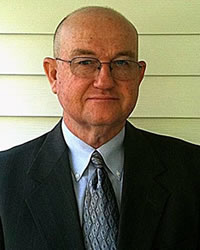
Gary Shepard

Dressed In Beauty Not My Own

Genesis 3:21
Gary Shepard November, 4 2012 Audio
0 Comments
Gary Shepard
Gary Shepard November, 4 2012

Sermon Transcript

Auto-generated transcript • May contain errors

100%
Turn back in your Bibles to Genesis
chapter 3. And this time I want you to look
with me at the 21st verse, where it says, unto Adam also and to
his wife did the Lord God make coats of skins and clothed them. an old Scottish preacher by the
name of Robert Murray McShane. He didn't live very long. But
he wrote a hymn called, When This Passing World Is Done. I believe Richard has sung that
for us. But in that hymn, he writes these
words. He said, When I stand, before
the throne, dressed in beauty not my own. When I see thee as
thou art, love thee with unsinning heart, then, Lord, shall I fully
know, not till then, how much I owe." The line in that hymn
that struck me this week is that line wherein he says, dressed
in beauty, not my own. And I wonder if that could be
said of us, that that is our state now, and that will be our
state and standing when we stand before God. dressed in beauty,
not my own." And the beauty that he is talking about there is
the beauty, the glory of an imputed righteousness. That's what old
Bunyan called it. The glory of an imputed righteousness. And his confidence, and the confidence
of all believers, was the confidence of David, the confidence of Abraham. It was the confidence and the
hope that Paul speaks of in Romans chapter 4. Look over in Romans
chapter 4. Because here in Romans chapter
4, the apostle not only talks about it, but he identifies it
as being the hope and the confidence of David, and Abraham. And since Abraham is called the
father of all them that truly believe, if we truly believe,
if we are believers in the biblical sense, this has to be our confidence
and our hope. Here in Romans 4 and verse 6,
He says, even as David also describes the blessedness, the happiness,
the reason for rejoicing, he describes the blessedness of
the man unto whom God imputes righteousness without works. People in our day are always
talking about blessings. They always leave and say, bless
you. But they want nothing to do with
this true blessedness, which is righteousness without works. without our words." He goes on
saying, blessed are those whose iniquities are forgiven and whose
sins are covered. Look at verse 8, blessed is the
man to whom the Lord will not impute sin. Also in verse 11,
speaking of Abraham, he received the sign of circumcision, a seal
of the righteousness of the faith which he had yet being uncircumcised,
that he might be the father of all them that believe, though
they be not circumcised, that righteousness which might be
imputed unto them also." He's talking about Gentiles that are
found among God's elect, as well as Jews. And then, if you look
on down further, in verse 20, he goes on about Abraham. He staggered not at the promise
of God through unbelief, but was strong in faith, giving glory
to God. and being fully persuaded that
what he had promised, he was able also to perform. And therefore it was imputed
to him for righteousness. Now it was not written for his
sake alone that it was imputed to him, but for us also, to whom
it shall be imputed, if we believe on him that raised up Jesus our
Lord from the dead, who was delivered for our offenses and was raised
again for our justification." He's not saying here that if
we believe on Him, God will impute that to us. He's saying if God
has imputed that to us, we will believe on the Lord Jesus Christ
alone. You see, by what we have read
here just in Romans 4, It has to be obvious to us that this
word imputed or impute is a Bible word. It is a Bible word. And it simply means things like
this, to count as. Or, also, one way it's translated
in Romans 6 is, to reckon, or to account, or to attribute,
or to charge, or to place to one's account. It has both, I
guess you'd say, a negative and a positive sense. Because in the negative, David
says, and Paul quotes him here in verse 8, he says, blessed
is the man to whom the Lord will not impute sin. He says that person is blessed
of God, blessed in His grace, if God does not hold to his account
his sin. He does not charge to this person's
account their sin. And he gives us an illustration
of that. in a man that you might remember
by the name of Shimei, who cursed David when he was having to leave
Jerusalem. 2 Samuel 19, this man Shimei
says to David the king later, let not my Lord impute iniquity
unto me. His cry is, King David, do not
hold me accountable and charge me with my sin, neither do thou
remember that which thy servant did perversely the day that my
Lord the King went out of Jerusalem, that the King should take it
to heart. He's saying, David, don't remember
my act of wickedness towards you. Don't hold to my account. Don't charge me with that sin
against you that I have committed on that occasion. But not only
that, but also in that positive sense where he says in verse
6, quoting David, describing the blessedness of the man unto
whom God imputeth righteousness. In one case, God takes away that
which a man actually does and is, and in this case, He gives
to that person that which they are not, imputes righteousness
without works. And what we find in simply just
these verses alone is that imputation is an act of God. Long before men called tornadoes
and earthquakes and stuff like that acts of God, here is an
act of God. God does this. And it isn't something
that you and I can alter or change. It is something He has already
done for His glory and for the good of His people. It is a sovereign
act of God. If he does it, it is a just act
of God. It is an act of God who is right
or righteous in all that he does. And when we study the Scriptures,
what we find is that there are essentially three great acts
of imputation in the Bible. And the first one that we find
in the Bible is God imputing the sin of Adam to all of Adam's
race. God charged all of Adam's race,
which is every one of us, with the sin of Adam because he counted
Adam as a representative of his race, as the federal head of
his race. Let me read that to you over
here in Romans 5. Romans 5 and verse 12, it says,
"...wherefore, as by one man sin entered into the world, and
death by sin, so that death passed upon all men." Now, he's not
just saying here that sin entered in by this man, though it did. He's not simply saying here that
death is the consequence of that, though it is. Look at the last
phrase in Romans 5.12. He says, for that all have sinned,
or as it is, all sinned. When Adam sinned, all sin, God
imputed or charged His whole race with this act of rebellion
and defiance. What happened when Eve sinned? She ate first. Nothing, basically. But when Adam sinned, something
began to happen. And it says that God told him,
in the day that you eat of that tree, you will surely die. God knew and had determined exactly
what he would do and the consequences of it. And Adam died spiritually. He died to God. And by imputation,
his whole race died in him. Look down in verse 19. He says, for as by one man's
disobedience, many were made sinners. By this act of imputation. because he stood as a representative
for all his posterity. When he died, when he sinned,
we all sinned. God charged his sin to us. Alright? The second act of God
acting in imputation is when God charged or imputed all the
sins of His elect people to Christ. You can go back when you get
home and you can read Isaiah 53 where it says, "...that the
Lord hath laid on Him the iniquity of us all." Isaiah speaking. not only as one of God's people,
but on behalf of all of His people, saying, The Lord hath laid on
him, or made to meet on his head, the iniquity of us all." In other
words, the sinless one has charged to him the sins of his people,
and that is exactly what we find Paul stating so clearly in 2
Corinthians 5. Look over in 2 Corinthians 5. And that last verse, that 21st
verse, which he states as the basis and the ground of our reconciliation
to God, he says in that first part, for He, that is God, hath
made Him to be sin for us who knew no sin. God laid on Christ. laid and laid to the charge of
this sinless One, the Substitute and Savior, the sins of all His
people, holding Him accountable for them, charging Him with the
responsibility of paying that sin debt, and as a result of
that, Christ died on the cross. God slew these lambs for these
skins we here talked about in Genesis 3.21. And God, it says, saves His people
because Christ hath redeemed us from the curse of the law
being made a curse for us. For cursed is every one that
hangeth on a tree." But I want us to think about today that
third act of imputation, that third charging or reckoning or
accounting one on the basis of another with
that which he did not himself perform, and that which in himself
he never was. What could that be? It is that
imputation, that third act, if you will, of imputation whereby
God imputes to His people, to those that Christ died for, to
His elect, He imputes to them righteousness. Righteousness. As a matter of fact, If you look
back in 2 Corinthians chapter 5, wherein we read that first
part of it, he continues on and says that Christ was made sin
for us, that we might be made the righteousness of God in Him. Now there's something we ought
always to notice in that. He does not simply say that in
Christ, by this act of imputation, that we are made righteous. He says we are made the very
righteousness of God in Christ. And we ought to know and be reminded
that the only righteousness that there is in this universe is
the righteousness of God. The only righteousness that He
will accept is that righteousness that He imputes or charges to
His people, the very righteousness of God in Jesus Christ. We are made the righteousness
of God in Him. You see that? This is something
God has done. This is the hope and whole of
our salvation. This is the only righteousness
there is, the only righteousness God will accept, and it's the
only one He gives. We can't earn it or merit it,
and we do not have it in ourselves. And in that fifth chapter of
Romans where it said, by one man's disobedience, the many
were made sinners, and he's talking here about this principle of
representation or federal headship, or as it is, imputation, he goes
on in that 19th verse and he says, so, by the obedience of
one, shall many be made righteous." On the same principle, in Christ,
and not in Christ in some mystical kind of way, but through and
by His suffering and His death, these many These many represented
by Him, these many whose sins were put away by Him, they are
made by God, accounted by God, the very righteousness of God
in Him. This is a most amazing and glorious
thing. Oh, Robert Hawker. described
this as so important an article in the faith of a believer. And because it is such an important
thing, God, in His great grace, would have us to know it, would
have us to see it, and He gives us many illustrations of it. I've said for a long time that
God gave the illustrations first. That is essentially what the
Old Testament is about. In Hebrews, the Apostle describes
it as these figures, or types, or shadows, or foreshadowings
of Jesus Christ. and Him crucified. And not only does He do this,
not only does He give us this truth, this gospel of imputation,
shows us this imputed righteousness, He does so in the very beginning
where we read. He gives us a picture. Because
when Adam and Eve sinned against God, They not only went and hid
themselves in the midst of the trees in the garden, it says
that they got busy. They got busy. And they got busy
sewing fig leaves together to make themselves aprons or clothing
or coverings Because it said they now were brought to realize
that they were naked. Now they were the only two people
on the earth. They were man and wife. They
certainly would not see that nakedness in that relationship
as anything wrong. There were no other people to
look at them and gawk at them and see their nakedness. Who
were they naked before? They were naked before God. And
when he spoke, it says, they heard the voice of God speaking
in the garden, and obviously they didn't find a great security
in their covering, their covering of their nakedness before God,
because they went and hid themselves. Isn't it funny how a sinner can
be so proud of who he is, or who she is, and what they've
done, and what they've not done, and what they've given, all these
things, until God speaks. But when God speaks, it's obvious
they're naked. You see, God shows us this truth
in His first dealings with fallen Adam in the garden. And He shows
it with regard to their natural thinking, the natural thinking
of a fallen sinner shown first in what they did, they tried
to dress themselves. You see, there was first rebellion,
And then there was hypocrisy. That's always the way it is.
And he exposes their sins, shows their attempts to cover their
nakedness. Unacceptable. You remember what
he said, do you know what God says in Isaiah 64? He brings the prophet. as a member
of Adam's fallen race, to confess not only what his state is, but
every sinner's. He says, but we are all, all
as an unclean thing, and all our righteousnesses are as filthy
rags. You say, well, I'm not like So
and so. That's what the Pharisee said.
I'm glad you're not if you're not. Or I don't do this. Or I've never killed anyone. Just take everything you can
imagine that would be what you think might be good and acceptable
that you've done and listen to what he said. All our righteousnesses
there is filthy rag. We like that fable, that fairy
tale. I think they called it the Emperor's
New Clothes. He was told by a bunch of tricksters
and liars and thieves. They convinced these people in
him that they could provide a garment for the king better than any
other, and only special people could see it. And supposedly
they did this, although they did nothing. And he paraded himself
before people, just as we say in the South, just as naked as
a jaybird. And they looked at him and laughed
at him, and he thought he was covered, and they would say to
themselves, oh, what a beautiful garment. But it didn't exist. That's the way we are. And if
you notice, In what we read, God does not give them a single
precept, a single command, a single law or rule or any such thing
whereby they might, by something they did, by their works, regain
His favor and His acceptance and righteousness. Read it again. He doesn't tell them, but now
if you do this, you'll be covered. Or if you do that, you'll be
covered. Not a single thing. No, God did something. That's what verse 21 says. It
says God did something. And what he did, it says, that
he made them coats, or tunics, or robes, garments, and clothes,
and he covered them. There it is. Imputed righteousness. It is something that God did,
something that God did for them. It is something that God did
in one outside of themselves. He clothed them. He wrapped their
nakedness up. And he did so by covering them
at the expense of another. He covered them with garments
of another. And he did so by covering them
with a covering that came out of a living innocent creature
being made a sacrifice. dying as a substitute in their
place and for their sins. And it pointed to Christ. It
pointed to the Lamb of God. It showed in a picture or a figure
the righteousness of God. Well, you say, he could have
just said, Well, that's okay. You slipped. You fell. You made
a mistake. I heard a preacher on the radio
say one time, he said he didn't sin anymore. Oh, he made some
mistakes, but he didn't sin anymore. That's what sin is. A bad mistake. And the worst mistake of sin
is to imagine that you, by doing something, can produce Righteousness. That's the worst mistake of all.
You see, not only that, but these coats were made after they made
theirs, which showed that the man-made ones were not sufficient
to cover the shame of their sin. Not a bit. And since that day
in the Garden, since that day that our race fell in Adam, One
after the other, born in this world, born in sin, shape and
iniquity. All these sinners come forth
and from almost their first breath, they're trying to defend themselves
before God. They're trying to lay their sins
on somebody else. They're trying to go about to
establish their own righteousness. Did you know there's no greater
evidence of a sinner being a sinner than when they go about to establish
their own righteousness. Those who did so, so outwardly
and blatantly such as the Pharisees, our Lord condemned them to the
highest shame and with the most severe criticism, because there's
none righteous, no, not one. She's a good woman. He's a fine
man. Well, I hope so. But I can guarantee
you this, outside of the Lord Jesus Christ, they're not righteous
in God's sight. Not righteous in His sights.
And these coats were made of the skins of these slain animals,
which pictured the Lamb of God, the one sacrificed for sins forever,
the very death of Christ, whereby that everlasting righteousness
is brought in." And it shows that God made them in their individual,
particular beings. He made them righteous. He made
them righteous, clothing them to His own satisfaction. They couldn't say like people
do in our day, well, I'm as good as so-and-so. There was no preacher
they could look at and say, well, I'm good as Reverend so-and-so. Or, I'm good as mama or daddy. They couldn't even sing, give
me that old time religion. It's good enough for mama, it's
good enough for me. There was none. They were still
lost. They were still unrighteous in
themselves. They were still naked before
God, without any ability, as they demonstrated, to cover themselves
and be righteous in His sight. And He clothed them, and by what
He did, He showed that this is the righteousness wherein they
must stand before Him. It must be His own, it must be
provided by Him, and it must be put on them by Him. His righteousness
in Christ must be made ours. As a matter of fact, there in
Romans 5, it's called the gift of righteousness. The gift of
righteousness. The only way you'll have righteousness
that God will accept is in the gift of righteousness. Paul says,
if righteousness come by the law, then Christ is dead in vain. If there was any way, if there
was any other way, that you could be righteous before God except
in Christ." Then he died in vain. He did. Paul says, writing to
the Corinthians in that first chapter, he says, "...but of
Him," that is, of God, "...are ye in Christ Jesus, who of God
is made unto us wisdom and righteousness." He accounts the very righteousness
of God in Christ to us, imputes righteousness to us. And this
shows us also that justification, which is to be declared righteous
by God, is the work of God in Christ, is to be declared righteous
in His sight, and justified sinners are righteous in His sight, though
not righteous in their persons." You see anything happening to
Adam and Eve here? Do you imagine that they sinned
after that? You can count on it. Were they
still sinners in and of themselves after that? They sure were. They did finally die. What's
that? The wages of sin is death. But though in themselves they
were not personally righteous, in themselves they did not do
acts of righteousness whereby to stand before God after that,
and even as sinners in themselves they died, but they were righteous
in God's sight, because He imputed to them righteousness. It's like this, you know, here
is the ledger books of God. And here is this profit and loss
statement. Here are the assets on one side
and the debts on the other side, the debits, the credits, and
here on the asset side is a big zero. Here on the debt side is
a great debt of sin. And God takes that debt of sin
and charges it to the account of the Lord Jesus Christ, who
comes to this world, dies on that cross, pays that debt, and
He goes to the account of that sinner's assets who had none,
and there is marked Righteousness. He goes to that naked sinner
and He clothes them. There's a picture. I say there's
this picture everywhere. In Matthew's Gospel, we read
wherein we're told that if a man has two coats, he's to give one
of those coats to the man who needs it. Do you know Christ
had two coats? He had an essential righteousness
as God. He's the righteous God. But as
a man in human flesh, living in this world, living under the
law, living before men as a man, He has righteousness. We're men and women, we don't
have one. What does He do? He gives us His coat. He gives
us His coat. He answered and said unto them,
He that hath two coats, let him impart to him that hath none. That's a good picture there. We have none. He has two. Turn over to Jeremiah chapter
23. Jeremiah 23. He's talking in the Scriptures
about that union and relationship between Christ and His bride. And it's a situation like, here
is a poverty-stricken bankrupt woman who has nothing, and she
marries a rich man, and now they are one flesh, she has everything
he has. You don't think that's a biblical
picture? Well, look over in Jeremiah 23. Verse 6, "...in His days, who
the righteous branch," the one that David is a type and picture
of, the Lord Jesus Christ, "...in His days Judah shall be saved,
and Israel shall dwell safely. And this is His name whereby
He shall be called, the Lord our God." Righteousness. That's His name. Alright? Turn
over to Jeremiah 33. Jeremiah 33, verse 16, "...in
those days shall Judah be saved, and Jerusalem shall dwell safely. And this is the name wherewith
she shall be called, the Lord our Father." Righteousness. The bride had no righteousness.
But by grace, what those old preachers used to call the grace
union, whereby God loved us in Christ, and chose us in Christ,
and put us in Christ, counts us as one with Christ. We have
His righteousness. Turn over to Zechariah chapter
3. Zechariah chapter 3, this is
a marvelous illustration. Verse 1, Zechariah 3, "...and
he showed me Joshua the high priest standing before the angel
of the Lord, and Satan standing at his right hand to resist him. And the Lord said unto Satan,
The Lord rebuke thee, O Satan, even the Lord that hath chosen
Jerusalem rebuke thee. Is not this a brand plucked out
of the fire?" Now Joshua was clothed with filthy garments
and stood before the angel. And he answered and spake unto
those that stood before him, saying, Take away the filthy
garments from him. And unto him he said, Behold,
I have caused thine iniquity to pass from thee, and I will
clothe thee." with change of raiment. And I said, Let them
set a fair mitre upon his head. So they set a fair mitre upon
his head, and clothed him with garments. And the angel of the
Lord stood by." What did he do? He took off those filthy garments
and he put on him clean, new, royal garments. Clothed in. This is what salvation is. This
is what salvation by grace in Christ is. Salvation for needy,
naked sinners, weary of going about trying to establish their
own righteousness. That's the most difficult and
the most impossible work there is. You can't get yourself good
enough for God, clean enough for God. You can't do enough
for God. He's got to do something for
us. Our hopes in what He's done. Our hopes in one outside of ourselves. That's what Saul of Tarsus found
out. Look over in Philippians chapter
3. In Philippians chapter 3, after he has just described what
he all of his life, until the Damascus Road experience, thought
was a glorious robe of perfection and righteousness as a Pharisee,
as a Jew. And so he says in verse 3, he
says that those who are the true circumcision, they have no confidence
in the flesh. And he said, if anybody thinks
that they had a ground upon which to have confidence in the flesh,
I certainly did. He goes on to describe all that
he was and all that he did. But then in verse 7, he says,
but what things were gained to me? those I counted for loss,
yea, doubtless, and I count all things but loss, for the excellency
of the knowledge of Christ Jesus my Lord, for whom I've suffered
the loss of all things, and do count them but done, that I may
win Christ and be found in Him, not having mine own righteousness,
which is of the law, which is of any principle of my doing,
but that which is through the faith of Christ, the righteousness
which is of God by faith." By faith. There was a king in Matthew
22 that gave a feast, a wedding feast for his son. And in the
custom of the day, somebody like a king, He provided the wedding
garments. And it says that there was found
one at the feast that did not have on the wedding garment.
And he asked that man, why do you not have on the wedding garment?
It says he was speechless. Just like all will be speechless.
He said, bind him, hand him foot, cast him into the lake of fire
where there's weeping, wailing, gnashing of teeth. Got to have
the garment. Got to have this God-provided
garment. Look over in Ezekiel chapter
16. Ezekiel 16, where we have a picture of each and every sinner
that God saves, a picture of them as they are in themselves.
They're pictured here as a naked, aborted female infant, left out
dead in a field, blood covered. But look down at verse 8, Ezekiel
16, "...now when I passed by thee, and looked upon thee. Behold, thy time was the time
of love." Man, think about that sight. Death. Lifeless. He passes by. And I spread my skirt over thee. That was a mark of his spousal. I'm going to marry you. And I
covered thy nakedness, yea, I swear unto thee, and entered into a
covenant with thee, saith the Lord, and thou becamest mine. Then washed I thee with water,
yea, I thoroughly, throughly washed away thy blood from thee,
and I anointed thee with oil. I clothed thee with broidered
work, and shod thee with badger skin, and I girded thee about
with fine linen, and I covered thee with silk. I decked thee
also with ornaments, and I put bracelets upon thy hands, and
a chain on thy neck, and I put a jewel on thy forehead, and
earrings in thine ears, and a beautiful crown upon thine head. Thus was
thou decked with gold and silver, and thy raiment was of fine linen
and silk embroidered work. Thou didst eat fine flour and
honey and oil, and thou wast exceedingly beautiful, and thou
didst prosper in a kingdom. And thy renown went forth among
the heathen for thy beauty, for it was perfect. through my comeliness,
which I had put upon thee, saith the Lord God." Same picture,
same picture. I'll read this verse out of Isaiah
61 to you. I will greatly rejoice in the
Lord. My soul shall be joyful in my
God, for He hath clothed me with the garments of salvation. He
hath covered me with the robe of righteousness, as a bridegroom
decketh himself with ornaments, and as a bride adorneth herself
with her jewels." Robe of righteousness. Awake, awake, put on thy strength,
O Zion, put on thy beautiful garments." When that prodigal
returned to the father, as the father said, put on him the best
robe. That's what God the Father does
to all His people. He puts on them the best robe. Righteousness. Just go all the
way through the book of Revelation. And in all these visions wherein
John sees the people of God in heaven. He looks and he sees
this big crowd of people. They're standing there. And it
says they're clothed in white fine linen. Well, what is that? He says, which is the righteousness
of the saints. Got to do with this robe, this
covering, something God put on them, something God provided
for them. And that's what He's done in Christ. I've got to hush. Take your hymn book, turn to
hymn number 40. I'll just let this be my closing
thought to you. the 1700s, by the name of Nicholas
von Zinzendorf. He was a count. He wrote this
hymn. He said, Jesus, thy blood and
righteousness, my beauty are, my glorious dress. Midst flaming worlds, in these
arrayed with joy, Shall I lift up my head?" You're clothed,
covered with the imputed righteousness of Christ. In death, in trouble,
when this world is aflame, at the judgment bar of God, you
can lift up your head. When you're dressed in beauty,
Not your own. Dressed in the beautiful righteousness
of Christ. God having charged His righteousness
to your account and your sins to His Son who has put them away
in His death. May the Lord give us eyes to
see it, which is faith to believe it. Our Father this day, we come
in the worthy name through the precious blood and righteousness
of our Lord Jesus Christ. Look upon us in Him, count us
righteous in Him, for we have no other. We thank you and we
praise you in His name. Amen.
Gary Shepard
About Gary Shepard
Gary Shepard is teacher and pastor of Sovereign Grace Baptist Church in Jacksonville, North Carolina.

Comments

0 / 2000 characters
Comments are moderated before appearing.

Be the first to comment!

Joshua

Joshua

Shall we play a game? Ask me about articles, sermons, or theology from our library. I can also help you navigate the site.