Bootstrap
Gary Shepard

This Is The Rest

Isaiah 28:12
Gary Shepard October, 14 2012 Audio
0 Comments
Gary Shepard
Gary Shepard October, 14 2012

Sermon Transcript

Auto-generated transcript • May contain errors

100%
Turn back with me this morning
to that 28th chapter of Isaiah, where we had our reading. Isaiah
was a prophet. He was the prophet of God in
a day that is very much like ours. In our reading, we found
out that God says of the prophets and priests of that day, that
they could be described as the drunkards of Ephraim. They were drunk with pride. They were drunk with self-righteousness. They were drunk with that which
actually makes men drunk. And they have been guilty of
refusing the true message and word and gospel of God. They have rejected and not spoken
of that one that God in these verses calls that precious cornerstone. that stone that he had laid in
Zion for a foundation. And so, we find that in verse
9, he says through Isaiah, whom shall he teach knowledge, and
whom shall he make to understand doctrine? His law, His word was
to them, as it says, just line upon line and precept upon precept. And so God says in verse 11,
for with stammering lips and another tongue will He speak
to this people. this people to whom he said,
This is the rest wherewith ye may cause the weary to rest. And this is the refreshing, God's
word, God's gospel. He says, Yet, they would not
hear." Now, that is not to say that they did not speak in some
ways of the law of God that He had given in their day. But the law that God gave to
Israel is not like a buffet wherein you can go to it and pick and
choose those things that you want. As a matter of fact, James,
I believe it is, tells us that the law of God is such that if
one offends in one point, they are guilty of breaking the whole. And we find in all that God gave
to this economy, which He gave to this people of Israel, we
find in that law the things that are used of God to picture things
of the gospel. When you stop and think about
it, just ask yourself a question. Men describe this law sometimes
as being moral and ceremonial, but I never have read that in
all of Scriptures. It is the law of God. And so we ask ourselves about
those priests that were under that law. Were they actually
the priests by which sinners are enabled to stand before God? No. They were pictures and types
of the priest, the great high priest of the Lord's people,
Jesus Christ. And all those many sacrifices
that were offered under that law, were those sacrifices actually
sacrifices that put away the sins of the people? Absolutely
not. All the blood of bulls and goats
on Jewish altars could never put away one sin. They were rather pictures and
types of that one sacrifice for sins forever. The blood of the
Lord Jesus Christ. And so, what about that Sabbath
that was under the law given by that man Moses? Was that Sabbath that which is
sustained all the way unto our day as a particular day that
is to be recognized and regarded by the Lord's people? Absolutely
not. Just like everything under those
Old Testament laws, they were not the things in truth, but
the things that represented the truth. The truth of the Lord
Jesus Christ. The word Sabbath, Literally means
rest or repose. Rest. And the Sabbath, as it
was under the law, rather than being the day in which God providentially
seems to have set aside for us to worship, rather than being
the first day of the week, or the Lord's day as it is called,
the Sabbath was the seventh, the last day of the week. And so really the term, as it
has been used sometimes and maybe often, the term of Christian
Sabbath, in its strictest sense, is simply not accurate. As a matter of fact, the whole
idea and notion of special days and such as that in the New Testament
and under this gospel dispensation of grace, it seems is rather
to be avoided rather than observed. Hold your place there and turn
over to Colossians chapter 2, where believers are given specific
instruction by the apostle concerning these very things. Colossians
chapter 2. And you look down in verse 16
where he says, "...let no man, Therefore judge you in meat,
or in drink, or in respect of an holy day, or of the new moon,
or of the Sabbath." You say, well, it says days there. If
you notice, that's in italics. And so the translators, for a
reason I cannot imagine, although I maybe can a little bit, they
added the word days rather than what it actually says, where
it says, let no man judge you, therefore, of the Sabbath. And if you notice in the next
verse, he tells you why and explains what these things were. He said,
which are a shadow of things to come. They were shadows, he
says, but the body is of Christ. They all were used of God before
the actual coming of the Lord Jesus to picture and to show
Christ and the things about Christ. So if you think of it in that
light, and that's exactly the light we are to speak of it and
think of it, turn over to Matthew's Gospel and the 11th chapter. Matthew chapter 11. You see, Isaiah has been used
of God to speak reminding those people that they had rejected
prophet, priest, and people this message wherein God speaks to
His people about arrest. It is through His Word that they
avoided and denied that God brought this message, this good news
of a rest. And He said, this is the rest
whereby you can make the weary to find rest. This is the refreshing. And so, our Lord comes here in
Matthew 11, and if you look with me and listen to the Lord Jesus
Christ, He is speaking of this very thing. Verse 28, He speaks
and He says, all ye that labor and are heavy
laden, and I will give you rest. Take my yoke upon you, and learn
of me, for I am meek and lowly in heart, and ye shall find rest
unto your souls. For my yoke is easy, and my burden
is light." Now, what we find in this verse or these verses
is the same thing that we find everywhere in this Bible. And that is, when God speaks
concerning His promises and His blessings, He speaks them in
a way so as to identify a particular people. Sometimes it is to his
elect, sometimes it is to Zion, sometimes it is to Jerusalem,
sometimes it is to this name and to that name, but here, The
particular people that are described are described in this way, all
ye that labor and are heavy laden. All those who in this spiritual
sense have labored and yet found themselves under even greater
burden. In other words, they're laboring. has not at any time or in any
way reduced the feeling of this great burden. Would he be talking
to you? You see, this is God speaking. And His message is the same in
our day as it was in Isaiah's day. It is the message of all
His rest and His blessing and His salvation being in Christ
and Him crucified. They did not hear. Will we hear? Will we hear? And if you notice here, when
he speaks of this rest, he does not say what he says as the religionists
of every age say, and as the false prophets of every day say. His message is not one wherein
they are to do or to go. He says, come, come. And not only that, he says, come
unto me. Me. Not to a place. He doesn't say you need to make
a pilgrimage to Mecca, or Salt Lake City, or wherever men might
say we need to go to find some holy place. He doesn't say, go
to a particular doctrine, although doctrine is certainly mentioned
in our text. He does not say, go to the baptismal
pool or font, or to the front of the church, but he says, come
unto me. We are to come unto this divine
person, the God-man Jesus Christ, and we can only come unto Him
as He declares Himself to be in this book. He doesn't say,
come unto Me as you think I am. He doesn't say, come unto Me
as all these false prophets say that I am. But He says, come
unto Me as I am declared to be in My own Word. We are to come to Him as He is,
and we are to come to Him as we are. This is actually a command. He says, come unto me, come now,
and come immediately, come in light of your soul's present
danger and eternal danger. The notion here is come, and
flee to me, leaving every other hope and every other refuge,
come with urgency, come heeding this warning that I've given
you in the lives of these Israelites." They're a warning to men. He
says, these things are recorded. Not so we'll have a history of
these Israelites and God's dealing with them, but that we might
have this message that is to come to those of us upon whom
the ends of the age shall come. This is a warning of grace. We
ought not to hear what takes place here to these Israelites. We ought not to hear what God
says concerning them of His judgments that He was going to bring upon
them and just simply brush it all off and say, well, that was
them or that was in that day. He writes this to us for our
day. And what does He say? You come
unto Me and I'll give you rest. Rest. Almost hate. to take this
text today. Because I know that in this rest
that he speaks of is so much and so much more than I would
ever be able to describe or express or tell you of. But I'll tell
you what he said. He said, come unto me, all you
that labor, and are heavy laden, and I'll give you rest." Now
think about this. Because obviously, this rest
has to do with grace. That has to do with this free
grace of God in Christ. Why? Because He says, I'll give
you rest. Well, somebody says, if somebody
gives you something, Can't be worth much. Not so with God. He said, I'll give you as the
gift of my grace, because I alone can give this, because I've promised
to give it to my people. Come unto me and I'll give you
rest. I'll give you soul rest. I'll give you conscience rest. I'll give you eternal rest."
And this is what He gives to His people. This rest in Christ
is a thing which believers in Christ, they both possess it
and they look forward to it. We have rest and we'll get rest. Turn over to Hebrews chapter
4. Hebrews chapter 4, because in
Hebrews 4, here is this glorious restating of this very same thing. Hebrews chapter 4, and he uses
even this same people and this same reference in the Old Testament
to remind us of it. Let's back up and look in Hebrews
3, first of all, in verse 15. He said, while it is said, today
if you will hear His voice. You see, that was the problem.
God said you would not hear. You won't hear. You may know
enough of God's Word to quote a verse here and there. You may
be able to speak about a certain doctrine, but have you heard
what God says. Today if you will hear His voice,
harden not your hearts as in the provocation. Well, when was
the provocation? Well, He says, "...for some,
when they had heard, did provoke, howbeit not all that came out
of Egypt by Moses, but with whom was he grieved forty years."
The greater part of those delivered out of Egypt that went under
that great banner of being the people of God, they provoked
God. Was it not with them that had
sinned, whose carcasses fell in the wilderness?" That whole
generation, that first generation of people who came out of Egypt,
every one of them died in the wilderness except two, Caleb
and Joshua. They provoked God. And to whom
swear he that they should not enter into his rest?" Who did
he say, you'll not enter into my rest? He says, them that believe
not. He sent his prophets. He gave
Moses. He gave Joshua, He gave all these
prophets of God, He sent to them His Word, His message, His gospel. They wouldn't hear. They didn't
count it as even worth thinking about. They had more important
things to do than His Word. He says, so we see that they
could not enter in because of unbelief. Here's the plain picture,
the record, not simply of history, but the record of God against
them, they did not enter because of unbelief. They didn't enter
His rest. The chapter is not divided here,
it goes on. This is a man-made division.
He says, "...let us therefore fear, lest, a promise being left
us of entering into His rest, any of you should seem to come
short of it." That's a warning to us. And I've told you so many
times, the only people that ever heed the warnings of God are
the people of God. They don't presume upon God,
but they know something about the weakness and frailty and
the unbelief of their own hearts. And God uses this, and they take
this to heart. Let us fear less, having received
a promise of entering to His rest. We don't believe Him. Now you notice this. For unto
us was the gospel preached as well as unto them." Just one
gospel. There's not a gospel for Israel
and a gospel in the New Testament. Just one gospel. The gospel is
preached to us, the apostles said, just as it was to them. But the word preached did not
profit them. not being mixed with faith in
them that heard it. And not only personally, an individual,
was that the experience of most of those that came out of Egypt,
God uses them as a whole to picture this for us that we might see. He says, "...but for we which
have believed do enter into rest." As he said, as I have sworn in
my wrath, if they shall enter into my rest, although the works
were finished from the foundation of the world. For he spake in
a certain place of the seventh day on this wise, and God did
rest the seventh day from all his works. And in this place
again, if they shall enter into my rest, seeing therefore, It
remaineth that some must enter therein, and they to whom it
was first preached enter not, because of unbelief." Again,
he limiteth a certain day, saying in David, Today, after so long
a time, as it is said, Today, if you will hear his voice, harden
not your hearts. For if Jesus had given them rest,
then would he not afterward have spoken of another day." there
remaineth therefore a rest to the people of God." God's people
are going to rest. He says, "...for he that is entered
into his rest, he also hath ceased from his own works, as God did
from his." Let us labor, therefore, to enter into that rest, lest
any man fall after the same example of unbelief." Same example. You see, when the apostle is
used of the Spirit of God, He writes, and what he says is that
in the first part, not that we shall enter into rest, though
that is certainly true, but that we do presently have a rest. He's talking to people and he
says to them, we presently have a rest. Have a rest. And obviously, this rest has
to do with faith, because he describes them there, those who
are entered into that rest, in this way. He said, those that
believe, they've entered into rest. Entered into rest. And just like those Old Testament
priests, they pictured Christ, our great High Priest. And just
like those Old Testament sacrifices pictured Christ and His shed
blood at one sacrifice for sins forever, so did the Sabbath day. Christ is the rest and Sabbath
of His people. And He says of that people, they
would not hear the gospel They would not hear of Christ, they
could not see the goodness and grace of God in that which He
spoke to them, so they didn't enter into rest. And what does
He use to illustrate rest here? He uses God in the acts of creation. What is rest? I have to believe that if he
uses himself in the acts of creation, and he quotes it here in our
text in Hebrews 3, Hebrews 4, then it has to do with something
that is pictured in what God did. Let me read you a verse,
it's actually what's quoted there in Hebrews 4, but it's found
in Genesis 2, verse 2, where he says, "...and on the seventh
day God ended His work which He had made, and He rested on
the seventh day from all His work which He had made." Now
let me ask you this, did he get tired? Did he get tired? No. This simply means that he
finished and he completed the work that he had done. Is there any way that sinners
such as we are living in a day in such as we live in, is there
any way that anyone in this world right now can enter into rest
in Christ? You know, the Jubilee was like
the culmination year of Seven times, seven years of the Sabbath. There was not only a Sabbath
day, there was a Sabbath year, and at the end of seven of those
Sabbath years, there was the Jubilee. And what they did on
the Jubilee? They sounded a trumpet. Actually,
what it was, was a ram's horn, the shofar. And they sounded
that trumpet, they blew that ram's horn. In other words, here
is a ram, one of the sacrifices that had been offered up to God,
and now here is this ram's horn, the horn of this sacrifice used
to herald and trumpet something. What is it? Good news, every
slave has to be freed. Every piece of land that has
been bought or lost from one's inheritance had to be restored. And there had to be in this hour
rejoicing because of this great rest. Look back over in Isaiah 11.
Isaiah 11. And look at verse 10. God never
has failed in His promises. And He's never failed in His
prophecies. The Lord Jesus Christ is the
Spirit of prophecy. And He says in that 10th verse,
"...and in that day there shall be a root of Jesse." This is
a man. This is the one that David, as
a literal root of Jesse, was a piper. In that day there shall
be a root of Jesse which shall stand for an ensign of the people,
to it shall the Gentiles seek. I love that last statement, and
his rest. shall be glorious." That's what
I'm talking about this morning. I'm talking about that glorious
rest. You can rest your body, but you
can't rest your conscience. You can rest your weary feet
and legs and muscles, but you can't rest your soul. You can't
do one thing to bring rest to your soul. But that ensign, That's
a banner. He's talking about Christ. This
One who's the root of Jesse, this One to whom the Gentiles,
He said, shall seek His rest, shall be glorious. You see, this
rest in Christ is like the creation work. As a matter of fact, He
is Himself the Creator. And when He created all these
things, He rested. He finished it. And He said,
it's good. Do you know everything God does
is good? Do you know that everything we
do is bad? Salvation is Christ's finished
work. As a matter of fact, When He
hung on the cross, He cried out in the announcement of it. He, being who He is, and His
covenant of grace being between who it is, the Father, Son, and
Spirit, when it was willed and purposed to do, it was done,
as far as God is concerned. He's the Lamb slain from the
foundation of the world. It was finished in old eternity
when within the Godhead an agreement is made whereby to accomplish
all of it for His people. But we've got to find out about
it. So when He hung on that cross, He cries out, it is finished. As a matter of fact, Paul says,
if any man be in Christ, he is a new creature or a new creation. The Lord Jesus Christ finished
and accomplished a perfect salvation. Christ Jesus, as the angel said
He would do, saved all His people from their sins, and in the matter
of our salvation, in the matter of righteousness, He left nothing
for us to do. He became a perfect man to be
the sacrifice for our sins. He's all the sacrifice for all
the sins of His people. Well, what are they supposed
to do then? Rest. Rest. He absolutely, perfectly obeyed
what was required and endured what was required of the law
of God broken by us in the matter of our sin. Rest. He established a perfect righteousness
about us, for us, so that rather than our being, like Paul said,
of his own people, they were going about to establish their
own righteousness, God's people, quite contrary to that, ceased
from that, and they rest. He satisfied all the bills, all
the claims, all the outstanding obligations to God's justice
for us. You know, when a man dies or
a woman dies and they begin to settle the estate, if you have
a part of that inheritance, you won't get it right away. Why? Because there has to be time
given and search made to see if there are any outstanding
obligations. They might pop up a year later
that this debt was owed by this individual and was to be paid
by his estate. Not going to happen with God. You can take this inheritance
and rest. He bore all the wrath of God
that might have been toward us. As a matter of fact, Paul says,
we shall be saved from wrath through Him. We've got no black
cloud hanging over the Lord's people. Don't have to lay down
at night and be afraid of, if I died tonight, I'd go to hell. He said, rest. Christ is rest. He not only died and bore that
wrath, but He rose again, and He reigns and represents us in
His perfect humanity, glorified humanity, at the right hand of
the majesty on high. Some believers like myself sometimes
get to thinking that the Lord doesn't know what I'm going through
in this world. Oh, the Lord's turned His head aside. David
felt that way at times. Oh, no. His eyes always on His
people for good, and they can rest. Not only all that Christ
was, not only all that He has done, not only all that He is,
but also all that He is doing for the good of His people. How can you rest in the midst
of it? You can rest in the knowledge of this one thing. It is the
Lord. It's the Lord. All the work of
Christ as our substitute and sacrifice and Savior is finished
and good before God. So he says, rest. All self-righteousness
wants to work. Self-righteousness, what we are
naturally, wants to work, because it imagines that in some way
we can do something that would please God, that He would accept,
and on that basis we could rest. You'll never rest in that. All
of God's justice and wrath for present sins is gone. All fear of God's justice for
future sins is gone. All work for our life and salvation
and righteousness and all work for favor is gone. Every once in a while I see a
sign, a man standing by the road, a man holding this sign. He said, we'll work for food.
Here's a sinner will work for righteousness. It's a gift. It's a gift. All works that are
born of sinful pride and ambition and discontentment, let them
be over. Rest. All our circumstances we
know to be ordered of God. All our needs God has promised
to provide. All fear of what Satan can do,
be gone. All fear of what men can do,
be gone and rest. Who has this rest? He says, we
which have believed. We believed. So it's not doing
that gives rest. Not professing that gives rest.
It's not feeling that gives rest. It's not experience that gives
rest. It's what we receive by God-given
faith, which is rest in Christ. The writer in Hebrews talks about
a labor that is consistent with this rest. You think of labor
and rest as being contradictory. He speaks of a rest that's not
contradictory to this rest at all. A labor that's not contradictory
to it. Look down in verse 11 of Hebrews
4. He says, let us labor, therefore, to enter into that rest, lest
any man fall after the same example of unbelief. By nature, we have
a tendency to labor in order to save ourselves. But the labor
of grace is much different. You see, the labor of grace is
a labor to get away from our labors. I'm still in this flesh. It's a labor to get away from
trusting in our labors. It's a labor to be clear of self-reliance. It's a labor in prayer not to
rest in our prayers. Brother Henry brought a message,
Brother Henry Mahan brought a message from Hebrews 4, one of these
texts one time, and I remember that. I remember those things
he stated, that this labor is a labor in prayer not to rest in our
prayers. I'm so much in this flesh, I'll pray one minute and
stand off and look at my prayer and say, well, that was a pretty
good prayer, I believe. It's a labor in our repentance not
to rest in our repentance. It's a labor in our knowledge
not to rest in our knowledge. It's a labor in our faith not
to rest in our faith. A labor in our growth in grace
not to rest in our growth. Well, I've learned a lot. You haven't
learned enough, I can tell you that. For I've grown a lot. Well, on your best day, you're
still a baby. It's a labor in our laboring not to forget Christ. It's a labor to be as Mary who
sat at the feet of Jesus and heard. Martha, the Bible says,
was cumbered with much serving. Oh, she's busy doing this, doing
that, and she's so busy doing it, she comes to the Lord and
she said, look at my sister. I'm doing all the work. You know
what Christ told her? He said, your sister has taken
and chosen the better part, which shall not be taken away from
her. What was that? To sit at Christ's feet and to
hear Him and learn of Him. It's a labor not to rest in our
laboring. It's a labor not to grow in self-esteem,
but in humiliation. It's a labor to decrease so that
Christ might increase. It's a labor to labor motivated
by love for Christ and to glorify God rather than to exalt ourselves. You see, we're always wanting
to pat ourselves on the back. We're always wanting to remind
somebody of what we've done. We labor against that all our
days. It's a labor to spread His gospel. A labor to seek His
sheep. It's a labor to live for His
glory. It's a labor to worship His name. Look back over in Isaiah at chapter
32. It's to totally rest in all that Christ
is, and in all that he's done. Look at verse 17, "...and the
work of righteousness," there's only been one, "...and the work
of righteousness shall be peace, and the effect of righteousness,
quietness, and assurance forever, and my people shall dwell in
a peaceable habitation, and in sure dwelling places, and in
quiet resting places." Resting places. What are those resting
places? Well, you could say, I guess,
and be truthful, that their resting places are these times when We
have opportunity to gather and hear the gospel of Christ and
to be with the Lord's people, and we rest. I'll tell you what,
on a many a Wednesday night and a weary week, the Lord makes
my soul to rest. But when we go into the place
where we sit down and read His Word, find this promise, this
verse to be sweet and joyous to us, reminds us of all the
reasons we have to be comforted and rejoice, He makes all these
places resting places. Those times when we're unable
to cast all our cares on Him, knowing that He cares for us,
they're resting places. The rest is in this promised
rest, in this crucified Christ. He said, they wouldn't hear my
voice. Can you hear His voice? Can you hear what He said? That's
what He has said about what He's done. And His Son, does that
give your soul rest? The hymn writer said, I heard
the voice of Jesus say, come unto Me and rest. Come, you weary, Wayward one,
and lay your head upon my breast." Every sinner who comes to Christ
finds rest. They find the true Sabbath of
God. They find in His finished work
peace and rest. God says through Isaiah, this
is the rest. wherewith you can cause the weary
to be refreshed." Why would we preach any other gospel? Father,
this day I pray that you would take what you have written, what
you have in your faithfulness as the God of truth declared,
and give some hearer, ears to hear, and faith to believe, so
that in believing on Christ they might find rest for their souls. May all glory and honor and praise
be to you in Him. Do your will. Accomplish your
purpose. Call out your sheep. Bring them,
Lord, into that place of still waters and cause them to rest. For we pray and ask it in Christ's
name. Amen.
Gary Shepard
About Gary Shepard
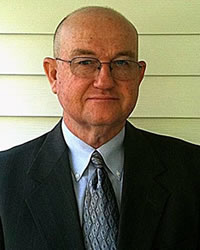
Gary Shepard is teacher and pastor of Sovereign Grace Baptist Church in Jacksonville, North Carolina.

Comments

0 / 2000 characters
Comments are moderated before appearing.

Be the first to comment!

Joshua

Joshua

Shall we play a game? Ask me about articles, sermons, or theology from our library. I can also help you navigate the site.