Bootstrap
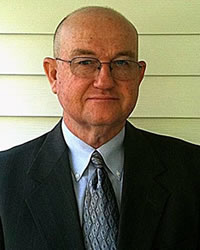
Gary Shepard

Why A Chair Wasn't There

Hebrews 10
Gary Shepard August, 5 2012 Audio
0 Comments
Gary Shepard
Gary Shepard August, 5 2012

Sermon Transcript

Auto-generated transcript • May contain errors

100%
Hebrews chapter 10, and I'm going
to begin reading in verse 1. For the law, having a shadow
of good things to come, and not the very image of those things,
can never with those sacrifices, which they offered year by year
continually, make the comers thereunto perfect. For then would
they not have ceased to be offered, because that the worshipers once
purged should have had no more conscience of sins. But in those sacrifices there
is a remembrance again made of sins every year, For it is not
possible that the blood of bulls and of goats should take away
sins. Wherefore, when he cometh into
the world, he saith, Sacrifice an offering thou wouldest not,
but a body hast thou prepared me. In burnt offerings and sacrifices
for sin thou hast had no pleasure, Then said I, Lo, I come, in the
volume of the book it is written of me, to do thy will, O God. Above, when he said, Sacrifice
and offerings, and burnt offerings, and offering for sin, thou wouldst
not, neither hath pleasure therein which are offered by the law.
Then said he, Lo, I come to do thy will, O God. He taketh away
the first, that he may establish the second, by the which will
we are sanctified through the offering of the body of Jesus
Christ once for all. and every priest standeth daily
ministering and offering oftentimes the same sacrifices which can
never take away sins. But this man, after he had offered
one sacrifice for sins forever, sat down on the right hand of
God, from henceforth expecting till his enemies be made his
footstool. For by one offering he hath perfected
forever them that are sanctified. Whereof the Holy Ghost also is
a witness to us, For after that he had said before, This is the
covenant that I will make with them after those days, saith
the Lord. I will put my laws into their
hearts, and in their minds will I write them, and their sins
and iniquities will I remember no more. Now where remission
of these is, There is no more offering for sin. The title of my message this
morning is, Why a Chair Wasn't There. Why a Chair Wasn't There. I hear often men and women say,
that the Lord told them to say this or told them to say the
other. I can't say that myself as far
as my experience is concerned. I've never heard God speak audibly
to me. But last night I laid down my
Bible and my notes as I was about to go to bed, always try to look
over what I planned to try to preach on and maybe go to bed
with that on my mind. So I did that as I usually do
and about 12.30 this morning I woke up, just woke up awake. And the very first thought I
had was the thought of a verse from this text that I've just
read. That 14th verse. For by one offering he hath perfected
forever them that are sanctified. And I thought about it a few
minutes and then I went back to sleep. And a little while
later I woke up again and I was still thinking about this one
verse and text of Scripture. But I tried to, in a sense, put
it out of my mind so I could sleep. But about 2.30 this morning
I woke up and it was still on my mind to the extent that I
had to get out of bed and go to my desk and take my Bible
and see what the Lord was pleased to teach me again from these
verses. And rather than say, I know it
was the Lord, I pray that it was. And I pray that what I have
to say this morning is His message, and that he gave it that it might
be of a special spiritual and eternal benefit to someone."
These words speak about the priesthood of the Lord Jesus Christ. In the Old Testament, there were
three offices that God had men anointed for, with that special
anointing all. He had His kings anointed, such
as David. He had His prophets anointed. And He had all His priests, especially
the great high priests, anointed. sitting forth for us how that
He Himself had ordained this office and this individual. So the Apostle here in Hebrews
10, and really all through the book of Hebrews, is talking about
the priesthood of Jesus Christ. And there in Hebrews 9, where
Joe read, we read about all these furnishings that were in the
tabernacle. When Israel was there in the
wilderness, they traveled from place to place, but always in
the center of the camp. was this God-designed building,
I guess you'd say, that was called the tabernacle. And the priests
of God, they ministered in that tabernacle. And we have a description
of all those things that were in the tabernacle, such as the
table, and the candlestick, and the showbread, and then the second
veil, and the Holy of Holies, and the Ark of the Covenant,
all these things. God gives us the description
of and specified that were to be a part of the things in that
tabernacle. But when you look at these things,
of all the furniture and all the furnishings of the tabernacle,
there was one item that was strangely absent, and that was a chair. There was no chair in the tabernacle. There was a table, there was
the showbread, there was all these things, but there was no
chair. And there was a reason for that.
There was a reason why there was no chair in that tabernacle,
and because there could be no part of that in the service of
God. Because if you look down here
in verse 11, He tells us, "...and every priest standeth daily,
ministering, and offering oftentimes the same sacrifices." They stood
when they went into that holy place. They stood when they went
into that holy of holies. And he tells us the reason for
that is that they did it daily, and they went back and they did
it often times, and they did it offering many sacrifices. It's plural there. They did it
many times. They offered many sacrifices. They did it virtually constantly. And they never sat down. As a matter of fact, the priest's
work was never done. And the reason why it was never
done, the reason why these sacrifices had to be offered again and again,
the reason why they stood daily in that tabernacle offering sacrifice
after sacrifice, the reason why is that these sacrifices never
did and never were designed to take away sins. As a matter of fact, it says
in that 11th verse that they stood daily ministering and offering
oftentimes the same sacrifices which can never take away sins. They never took away, they never
actually atoned for, they never did deal with the matter of God's
justice for even one sin. Not even one. And the first question always
comes to mind is this, if all these priests and all these sacrifices
and offerings, if they never did put away one sin, why did
God ordain them? Why did God command them? Well, if you look back at this
first verse in Hebrews chapter 10, we find out that this priesthood
and these sacrifices, they were a picture or a shadow or a type
of another priesthood, of another sacrifice. Look in verse 1 of
Hebrews 10. For the law, and by that this
included the whole mosaic economy that God gave to Moses for this
people Israel. He says, for the law, having
a shadow. The Spirit of God uses that word
shadow a number of times here in Hebrews. And if you stop and
think about it, there can be no shadow unless the real substance
already exists, but is not yet made manifest. You see, the priest
of God is described as the priest of God forever. The priesthood of Christ is an
eternal priesthood. It did not simply begin when
He came. It did not begin when He died. His is that priesthood that is
forever. There's only been one priest. He says, for the law, having
a shadow of good things to come, and not the very image of the
things, can never, with those sacrifices which they offered
year by year continually, make the comers thereunto perfect. They were just types and shadows
and pictures or illustrations, if you will, of that which was
to come. And they could not in these sacrifices
put away even one sin because the type is not the substance. They could not put away sin,
that is, God could not justify them before Himself. They could
not satisfy God in the matter of their sin. They could not,
by these sacrifice and this priesthood, make them acceptable to God. You see, we only begin to have
understanding of the gospel. when God confronts us with the
truth and causes us to begin to consider how it is that this
thrice holy God This God who says that He will by no means
clear the guilty, and who says He will absolutely punish sin,
how can this holy God show mercy and be gracious to sinners like
us? What is the way that God saves
His people? And we're not left to wonder
that ourselves or to agree among ourselves what is the right way. He sets forth in His Word the
one and only way. And if we live and die in this
world ignorant to what God actually says, we'll perish. I'll perish. You'll perish. You
see, these sacrifices, they never made peace with God, and they
never, therefore, wrought peace to a sinner's conscience. Look
at verse 2. He says, "...for then would they
not have ceased to be offered?" If they in this priesthood offered
this sacrifice that God appointed and ordained, if it had actually
put away their sins, would it not have therefore wrought peace
to their consciences and therefore ceased to be offered again? Because that the worshipers once
purged, that means cleansed or washed. The worshipers then once
purged should have had no more conscience of sin. And like I've
told you so many times, there are two places that the matter
of our sin must be dealt with and must be satisfied and peace
be brought. One is the court of heaven in
the matter of divine justice. Which is what this priesthood
was all about. These sacrifices were all about. In the matter of our sins, in
the court of heaven, that has to be settled once for all. And then there's another place.
And that is in the court of conscience. In the court of your conscience. In that reality that you know,
that reality that you're assured of by God Himself, when you're
by yourself, when all that men say has passed, when all you've
thought, and there you are alone before God, and in your conscience
there must be that which gives you peace. And I can tell you
this, if it is not a matter that has been settled in the court
of heaven, It will never be settled in the court of your conscience. If God has not accepted the basis
upon which you seek to be accepted by Him, approved by Him, blessed
by Him, favored by Him, if He's not accepted that basis, then
you think what you will will never have peace in your conscience. And men can tell you from pulpits
or wherever it is, that you ought to make your peace with God,
when the reality is only God can make peace with God. And that's what this priesthood
is about. You see, animal blood cannot
do that. Look at what he says in verse
4. He says, for it is not possible
that the blood of bulls and of goats should take away sins. Not possible. Why? Because God said it wasn't. Because
God is immaculately holy. Because salvation doesn't have
to do with animals, it has to do with men and women. And these sacrifices, according
to what we read here, these sacrifices were a reminder of the only way
sin is put away. How many years, how many times
did a priest ordained of God, appointed this Arianic priesthood,
how many times did they go into that tabernacle? How many times
did they shed the blood of an animal? How many times did they
sprinkle it on the mercy seat? And yet, in that, not one sin
was put away. So why did he do that? He was
showing to you and me as well as to them that the only way
that God can put away sin and accept a sinner in Himself is
through the shedding of blood. Salvation by blood. Not salvation by your works or
your imagined goodness. But salvation only through the
blood of a God-appointed and God-accepted sacrifice. He showed in all of them the
only way that the thrice holy God is worshipped. They never
worshipped God. They never considered that they
were worshipping God apart from this tabernacle and these sacrifices
and through this priest. They never considered anything
else but that as worshipping God. And He showed in this the
only way. the only way of approach into
God's presence, the only way of acceptance for sinners, and
that is through a God-provided and accepted priest and sacrifice. Do you have one? You mean to
tell me that God, had a multitude of animals slain and their blood
poured out, sprinkled on that mercy seat, sprinkled on those
vessels in the tabernacle, showed again and again for thousands
of years. that there is this one way, the
way of blood, the way of salvation through this priesthood, and
now He's going to accept you or me in ourselves? No Israelite
outside of that one great high priest who went into the Holy
of Holies once a year With that sacrifice on the Day of Atonement,
not one other Israelite ever entered into that place. Why? Because God said, that's where
I dwell. You can't come to God. You can't
approach Him on the basis of yourself. You can't approach
God and be accepted and favored by God on the basis of something
you do or someone that you are. He tells us again and again that
we are nothing but sin, that all our righteousnesses are like
filthy rags, and we're going to approach God He showed that
none could. None could. You see, this salvation
is not in what you accept that is offered you, but what God
will and has accepted on your behalf of an offering. You see, men have been swollen
up with pride. Because they've had somebody
who is nothing but an imposter, Jesus. What Paul called another
Jesus. They've had Him set up before
them and offered to them. They've had men to beg them to
accept Him. Won't you please come accept
Jesus as your personal Savior? You will not read that anywhere
in this book. You see, salvation is not what
I accept that is offered to me of God. Salvation is through
this one priest and the sacrifice that he offered to God on my
behalf. It's not about the so-called
free offer of the gospel. It's about this one offering
for sins forever that is revealed in the gospel. You see, God must
accept us. God is the one who must accept
us. And His people, He says, that
He has made them accepted in the Beloved. In the Beloved. Who's that? That's Christ. Christ
is this priest. And He is not only the priest,
He is Himself also the sacrifice. He is the one priest appointed
of God to stand before Him and represent His people, and He
is Himself that one sacrifice for their sins forever. You see, Christ Jesus is the
one in whom we are accepted, and that through something He
did, something He offered to God. You ever wonder why when
he walked here on this earth, he said, I am the way. I'm the way. The Bible says there
is a way that seems right to a man. Logical. Everybody agrees with it. But
he says that way that seems right to a man is the way of death. It's the way of death. It's not
the way of righteousness. It's not the way to God. It's
not the way of God. It seems right to us naturally
because we're spiritually blind and ignorant. Because we don't
really know God for who He is, high and holy and lifted up. We don't know what He requires.
We don't know why Christ came into this world and what He came
to do. So anything works. And so our
Lord says Himself, He said, "...broad is the way that leads to destruction,
and many there be that go in thereat." It's the broad way,
which is virtually any way. But here is this priest, this
mediator between God and men, and Paul writes to Timothy and
he says, "...for there is one God, That's all there is. Not the God of this country,
or the God of that country, or the God of this people. There's
one God, the true and living God. If you stop and think about
it, by the whole concept of God, there could only be one God.
There can only be one absolute. There can be only one who totally
rules. There can only be one free will
in this universe. He says, for there is one God
and one Mediator between God and men. Who's that? The man Christ Jesus. The man
Christ Jesus. And this has always been the
only way. He's always been the only way,
not an earthly sinful priest, but the heavenly priest from
heaven itself who preceded all these priests. He's the one that
God said, you are a priest forever after the order of Melchizedek. Now there's a unique individual
for you, because the Spirit of God describes this Melchizedek,
the one who met Abraham when he was coming back from the fight,
the one that Abraham bowed to and worshipped and gave spoils
to. He says, you are a priest forever
after the order of Melchizedek. Wait a minute. These priests
were after the order of Aaron. This priest is a priest forever
after the order of Melchizedek, of whom it is said, who had neither
beginning of days or end of life." This is a unique priesthood.
And he is before Aaron. And he is appointed of God. And
he is sent of God. And more than that, he is one
who is God. God manifests in the flesh. When He was here on this earth,
they took Him. And they took Him and put a robe
of purple on Him. And they took a reed and put
it in His hand as if it were a scepter. And they put a crown of thorns
on His head. What are they doing? They're
mocking Him in His priesthood. They're mocking Him in His kingship. That's what men do. But when
He's described, You see, he is the king priest. And he is described
in the Revelation when John was given this vision of him, and
it says that he was clothed with a vesture dipped in blood. And his name is called the Word
of God, the Word that was God. The Word that was made flesh
and dwelt among us. His name is the Word of God.
And He's shown there as a victorious, triumphant King. But He's always
associated with blood on His vesture. He had this vesture,
this garment, dipped in blood. When God gave Moses the instruction
concerning the priesthood of Aaron and his sons, He said,
"...and thou shalt take of the blood that is upon the altar,
and of the anointing oil, and sprinkle it upon Aaron, and upon
his garments, and upon his sons, and upon the garments of his
sons with him. And he shall be hallowed, and
his garments, and his sons, and his sons' garments with him."
They are set apart by God. for this priestly service, and
they'll always be identified with blood." Do you imagine,
after one of these men had been a priest for, say, 20 years,
and every day he goes in and he takes that animal It's been
looked over and watched to make sure it's perfect in every way.
And then he takes that animal and he destroys that animal's
life, splits its throat and the blood pours out. He does this
day in and day out, day in and day out, blood everywhere. Do
you think he might have got tired of that? I'll guarantee you he
did. But God never got tired of it.
He said, can I not do with my own what I will? And rather than
leaving this bunch of rebel sinners out there to do what rebel sinners
always do, which is to try and approach me and gain my favor
and gain my forgiveness based on something that they do, I'm
going to show them every day the one way, the only way, the
true way. that God can accept a sinner.
And the most of them, the most of them never saw it. As a matter
of fact, every one above a certain age that came out of Egypt, every
one of them that traveled in the wilderness with this tabernacle
always in their midst, this priesthood always going on, these sacrifices
always being offered, it says that they died in the wilderness
in unbelief to men. of that generation saw what these
things actually represented. Caleb and Joshua. And that's
what the gospel is all about. You see, people love to hear
things said to them that make them feel better about themselves,
and they love to be entertained on the way to hell. They love
to be thought highly of and regarded. When they stand before God, they
will appear to themselves for what He sees them as. Vile, wretched,
unclean sinners. And we've been that way for a
long time. When Adam sinned in that garden,
it says that all his race sinned with him and in him. It says
when we come forth from the womb, we come forth from the womb speaking
lies. It tells us that man at his best
state is altogether vanity. And preachers stand before men
and women who are eternity bound, whose days are short upon the
earth, and they're like Nero who fiddled while all of Rome
burned. They're rearranging the deck
chairs on the Titanic and it's sinking. Instead of thinking
enough of somebody, loving men and women enough to tell them
the truth about this one way that God had been picturing and
picturing and picturing, this one priest and this one sacrifice
by which He saves His people. You see, that's what's going
on in Hebrews here. The apostle being led by the
Spirit of God, comparing in a measure the priesthood and the sacrifices
with the Lord Jesus Christ, but even more so, he's contrasting
them to Christ. He's telling us about this better
covenant, this better priesthood, this better blood, the Lord Jesus
Christ. You see, this priest who went
in to that Holy of Holies, he was a particular priest. He had
a particular sacrifice, and that sacrifice was offered for a particular
people. Paul says in Hebrews 3, he says, Partakers of the heavenly calling,
consider the apostle and high priest of our profession Christ
Jesus." God's people have a priest. They don't come behind in anything. They not only have a priest,
they have the only priest. And though millions of blind
sinners are fascinated with, and they look to earthly priests
who are nothing but sinners like themselves, and have never been
appointed by God, who parade around this earth dressed in
their fine, colorful garments, carrying out their rituals and
ceremonies that were never ordained of God, and pretending to intercede
before God for these blinded ones. That's a big show. But it's a false one. And it's
a false priesthood. And it's not a sacrifice. No
man can pray over a glass of wine or a wafer, and that becomes
the body and blood of Jesus Christ. Everywhere in this book, His
sacrifice was offered once. That's what He's showing us here.
We don't have continued priests offering multiple sacrifices,
because this priest, with his sacrifice, he did it once. Just once. And I'll tell you,
in our day, those who would never call themselves priests, they
call themselves reverends, they call themselves pastors, they
call themselves preachers, But they are embracing the very elements
and things and outward glories of another priesthood. They don
to themselves their robes. They string the cross around
their neck. They stand before men and tell
men and women if they'll just walk to the front and shake their
hand. They take their holy days. Because
they want to look like the harlot Babylon. Because that's what
blind men and women want. Something outward. Something
to make you feel good. Something to make you feel religious. And they die in their sins. And their priests die with them
in their sins. Like Christ said of the Pharisees,
He said, the blind leading the blind, and therefore they both
fall in the ditch. And my friend, unless God interrupts
you, unless He intercepts you, unless He opens your blinded
eyes, unless He gives you an interest in what His Word actually
says, unless He gives you faith to believe the truth which you
will not believe of yourselves, you'll perish. You mean to tell
me, preacher, what I've always believed and what some of my
best friends believe? Do you mean to tell me that that's
not true? No, I'm not telling you that.
I have no more authority than you do." That's what God is saying. You see, Christ came into the
world and He has already accomplished this service and offered this
sacrifice to God. Look down at verse 5 of Hebrews
10. The psalmist and the prophets,
long before he came, had already given prophecies concerning the
works of Messiah. Messiah is saying to the Father,
of all these burnt offerings and sacrifices, Father, You've
had no pleasure. That means You've never been
satisfied. Your justice has never been satisfied
in the matter of the sins of Your people. So I've come to
do Your will. Like it is written in the volume
of the book, that book of eternity, the purpose of God. This was
always the way it was. Lo, it's written in the volume
of the book, you prepared a body for me, and I come." What? To do thy will, O God, that will
of saving His people through His priesthood and sacrifice
to the glory of God. You see, salvation has to glorify
God. Salvation is to the praise of
the glory of His grace. And you and I can never glorify
God. We can never of ourselves do
anything God will accept. We have to have a substitute.
We have to have this priest. What would have happened if one
of those Israelites had run through that tent door, run there in
the Holy of Holies? I can tell you what, he would
have died instantly as some did. When a man who was a king intruded
into the priesthood, God smote him instantly with leprosy. You've got to have a priest that
God's appointed, that God's accepted. He says, verse 9, "...then said
he, Lo, I come to do thy will, O God, and He taketh away the
first, that He may establish the second." The first priesthood,
the first covenant, the first law, all of that ended with Christ. Christ is the end of the law
for righteousness. By the which will? Whose will? Your will? No. God's will. By the witch will, we are sanctified
through the offering of the body of Jesus Christ once for all. We need to find out what Christ
was doing on that cross. He wasn't making something available
for you, possible for you. He was actually representing
all of God's people. Not all are God's people. Christ
looked at those Pharisees and He said, you are of your father
the devil. But He's standing there, I mean,
hanging there on that cross, representing all the people of
God. They're called the sanctified.
And they are not such because of something they do, or are,
or don't do. It's because they're in Christ.
And He goes there onto that cross, hangs before the justice of God
in their place. He stands as their priest. He
enters into that Holy of Holies in heaven with His blood. and puts away their sins. Why? How does He do that? Because
that is what the putting away of sin requires. Death. The death
of a perfect sacrifice. You see, I couldn't even die
for one of you. That would be one sinner dying
for another. That won't work. He had to bear
our sins in His perfect, holy, sinless body. But look at that
twelfth verse, "...but this man," not these men, "...but this man,
after he had offered one sacrifice for sins forever, he sat down
on the right hand of God." The reason there was no chair in
the tabernacle is because their work was never done, it was never
finished. But when he, this man, had offered
one sacrifice for sins forever, he sat down on the right hand
of God, verse 14, for by one offering he hath perfected forever
them that are sanctified. Now how did he do that? You say, how can one man die
for a multitude of sinners and that be satisfactory to God?
Because of who He is. He's not only the sin man, sinless
man, a man who being a man can die, but He's the God man. who gave to His sacrifice such
an infinite worth and value that it saved all His people from
their sins. Through one offering, only one,
and that of the body of Jesus Christ. Once. Once. And contrasted to those priests,
this man sat down. And that 14th verse is the one
that kept coming back to my mind. For by one offering he hath perfected
forever them that are sanctified." That word, for, means because. Because of this one offering.
Because this man is the one who did it. By one offering, not
many, not a continual offering of himself, but by one offering,
he, not you, Not me, but He hath, past tense, perfected, perfected. That word perfected there in
the Greek means to complete, to accomplish, to consummate,
to finish. And it has as the same root the
meaning that three words are translated as in John 19 and
verse 30, where it says, And when Jesus therefore, hanging
there on that cross, had received the vinegar, he said, It is finished. He could as easily have said,
Perfected. It's the same thing. And he bowed
his head and gave up the ghost. But what if? What if I sin again
today? No what ifs to it. You will. What if I this, that
and the other? In a month, a year? He hath perfected. That is so far as
our standing before God. Forever. Forever. You see, whatever God does, He
does forever. There can be no imperfection
in it, because there is no imperfection in Him. And so these Old Testament
believers, they looked forward to the coming Savior. They looked
forward to the cross. They, in these types and shadows,
they looked, they had a hope concerning the one that God would
send, who would be their priest, their sacrifice. And we look
back to the cross, and God enables us to hear what He said. He said,
it's finished. And He sends His apostles, He
sends this good news, the gospel, it's finished! He has by one
offering, the offering of His body, put away our sins forever! Would that be good news to you?
You see what God has done for sinners in Christ, that's good
news to real sinners. If you think you're going to
stand before God and you're going to be like those in Matthew 7
and say, Lord, Lord, we called you Lord, and we did many wonderful
works in your name. We gave to the poor. We did all
these things. We preached in your name, they
said. We even cast out devils in your
name. And he says to them, depart from
me, ye that work iniquity, inequity, you that try to come before me
with that which is not equal to what I demand, depart from
me. What you did was iniquity. Depart
from Me, I never knew you, I never knew you." You can't add anything
to perfection. You can't add anything to completion. You can't add anything or improve
upon that which Christ has done. And He begins this book, Hebrews
1, And he says that God has in these last days spoken unto us
by His Son, who when He had by Himself purged our sins, washed
them clean, He sat down at the right hand of the Majesty on
high. Our priest is seated on a throne. And the Bible says, we have a
great high priest who can be touched with our infirmities.
He's not looking down at his people saying, every time they
fall or fall, aha! No. He's touched with the feelings
of our infirmities. We have a priest and have access
to that priest. He lives, ever lives, to make
intercession for us. And he said, we come boldly before
his throne. find grace and help in every
time of need. That's our priest. He's not on
earth. He's in heaven. He's on the throne. And then he says, them that are
sanctified. Do you know what that word sanctified
means? It's probably the more mis-translated,
mis-represented word in all the Scripture. Sanctified, holy. Saved, sanctified, filled with
the Holy Ghost, people say. Sanctified means to be set apart
by God. To be regarded as holy by God. The vessels of the temple were
described as being sanctified. Christ Himself is referred to
as being sanctified. Was He made holier? Was He made
better? No. He was set apart by God to a
specific purpose and work. And so His people are described
as sanctified. What does that mean? They were
sanctified by God the Father in that everlasting covenant.
Read Ephesians 1, chosen in Him chosen in Christ by the Father
before the world began. And they were sanctified in Christ
when He went to that cross. He said, I lay down my life for
the sheep. And they're sanctified by God
the Spirit when He calls them, sets them apart. As Paul says
in 2 Thessalonians 2, they're set apart unto the gospel of
Christ. When He comes to them in their
journey in this earth, and He causes them to have spiritual
life through this new birth, which is demonstrated by faith. That's what the Lord said. Whoever
lives and believes has everlasting life. Not believes and therefore
lives. You see, faith is the demonstration
of life. I can just see some doctor taking
a baby, newborn baby, looking at it and say, if you'll cry,
you'll live. No. If he's alive, you'll cry. If God makes us alive, we'll
believe what He says. My sheep hear my voice. And the
Holy Spirit is going to cause His people to hear the good news. Like he did that thief on the
cross, about to die. And he's been one minute railing
on Christ, just like the other thief. And now all of a sudden,
he's bowed and broken, and he says, Lord, remember me when
you come into your kingdom. And the Lord Jesus said, today,
you'll be with me in paradise. That's why there was no chair
there. Because the only one who could be that priest, the only
one that could be that sacrifice, was yet to come. But He has come
now. And God has accepted His sacrifice
for the sins of His people. These who believe the truth,
who trust this priest, this sacrifice alone, and God raised Him from
the dead as the evidence that his sacrifice on our behalf was
accepted. Just like when that priest, if
he came out of that tabernacle door alive, it meant God was
pleased. And He raised him to that exalted
throne where he sat down, finished, complete. God help us to look
to Him. My hope is built on nothing less
than Jesus' blood and righteousness. Father, we ask this day that
You might be glorified. that we might be enabled to behold
with the eye of faith our great high priest and his one sacrifice
for sins forever. May our souls find rest in his
word. It is finished. May we plead
his sacrifice alone. May we look to His priesthood
alone. May we find Him our ever-faithful,
ever-living priest forever. We thank you for your gospel
that you make good news for sinners such as we are. And we pray in
Christ's name. Amen.
Gary Shepard
About Gary Shepard
Gary Shepard is teacher and pastor of Sovereign Grace Baptist Church in Jacksonville, North Carolina.

Comments

0 / 2000 characters
Comments are moderated before appearing.

Be the first to comment!

Joshua

Joshua

Shall we play a game? Ask me about articles, sermons, or theology from our library. I can also help you navigate the site.