Bootstrap
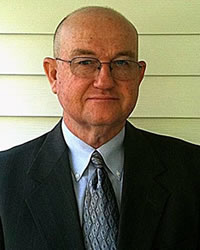
Gary Shepard

God Save The King

Daniel 4
Gary Shepard July, 8 2012 Audio
0 Comments

Sermon Transcript

Auto-generated transcript • May contain errors

100%
Turn again in your Bibles this
morning to where we read in Daniel 4. Daniel 4. Here in Daniel 4, we meet a man by the name of
Nebuchadnezzar. Most all who have read in the
Bible or heard of Bible stories or such as that, they have heard
the name of Nebuchadnezzar. Nebuchadnezzar was a king. And I don't mean he was a king
of the kind that may be called kings in our day, or even those
who have been called kings In former days, Nebuchadnezzar,
being the king of Babylon, was virtually the king over the known
world. He had amazing wealth and riches. He obviously had great talent
and ability. great mental faculties. And here he comes into confrontation
with the living God. Paul wrote, and rightly so, that
not many mighty, not many noble are called. I believe it was
Lady Huntington that said, she was saved by an M. That he didn't say not any, but
he said not many. And I believe that the purpose
of God in interrupting and interfering the life and reign of this man
Nebuchadnezzar, His purpose was that he might be gracious to
him, that we might know what is required for God to save a
king. As a matter of fact, that's the
title of my message this morning, God Save the King. Because one thing that we'll
find out if we find out what it takes for God to save a king,
we'll find out that it takes the same grace, it takes the
same sacrifice, and it takes the same power to save us. It doesn't take one kind of grace
to save King Nebuchadnezzar, and then another kind of grace
to save you or me. It takes the same grace, sacrifice,
and power. And what we have here in this
text, I believe, is a picture of His experience of grace. The Scriptures teach that God
loves a people, and that Christ came into this world to die for
that people, to satisfy divine justice for their sins, and that
they all, as Christ said, must be brought to Him. You remember he said, "...of
the sheep have I that are not of this foal," this Jewish foal,
"...them also I must bring." And here is certainly one who
is not of that Jewish foal, but this Gentile king of Babylon. And he has just had a dream that
was sent unto him by God. And so what we find is that God
has raised this man up and exalted him to this position that he
now finds himself in. Samuel says, the Lord, we ought
to listen to this, The Lord maketh poor, and maketh rich. He bringeth low, and lifteth
up. He raiseth up the poor out of
the dust, and lifteth up the beggar from the dunghill, to
set them among princes, and to make them inherit the throne
of glory. For the pillars of the earth
are the Lord's, and He hath set the world upon thee." He raises
up. and He brings down. He makes
rich and He makes poor. He gives power and He takes away
power. And all the way back over in
Daniel chapter 2, if you look back in Daniel chapter 2, we
find Daniel declared this before. Daniel chapter 2 and verse 20. And Daniel answered and said,
Bless be the name of God forever and ever, for wisdom and might
are His, and He changeth the times and the seasons, He removeth
kings, and setteth up kings. He giveth wisdom unto the wise,
and knowledge to them that know understanding." He is God. And the Scriptures say also by
the psalmist, "...for promotion cometh neither from the east,
nor from the west, nor from the south. But God is the judge. He putteth down one, and setteth
up another." God rules in heaven and in earth. And whatever advancements
are made by men or women, whatever they accomplish or accumulate,
it always has to be traced back to God Himself. And then now on this occasion,
God has given this great warning to this king Nebuchadnezzar,
but listen to Nebuchadnezzar, one year later from this interpretation
and warning. If you look here in Daniel chapter
4 at verse 29, it says, "...and at the end of twelve months,"
a year later, most likely when everything is forgotten, when
the message and the warning and the prophecy of God has now gone
clean out of his mind. At the end of 12 months, he walked
in the palace of the kingdom of Babylon. And the king spake
and said, Is not this great Babylon that I have built for the house
of the kingdom by the might of my power and for the honor of
my majesty?" Was he praying? Was he asking? Was he thinking
about God? Was he giving glory to God? No, he was talking with his God,
which was none other than himself. He was talking with and talking
about his own self. This is absolutely self-exaltation. in both his goals and in his
words, because the very essence of sin is this self-centeredness. Self is at the heart of all idolatry. And because of it, men and women
blot out God and ignore everything concerning God, And they view
everything in the light of themselves. His vision was restricted to
the material things. His heart was, as Scripture says,
of the world. And where his heart was, that
is where he had his eye on. And that's what the Scripture
teaches. He says, where our treasure is,
there will our heart be also. And so His treasure and His glory
is all in the material realm. All the things that I have and
all the things that I've done by my strength, by my power,
by my thinking for my glory. And he misjudges, as all fallen
sinners do, he misjudges greatness. He thought Babylon, since it
was great to himself, must also be great to God. But Babylon,
is that place, that city, that kingdom that fell like all earthly
kingdoms do, and now lays out scattered in ruins in a desert
place. When God says that greatness
belongs to Zion, greatness belongs not to the kingdom of men, but
to the kingdom of God. Greatness belongs to Jerusalem
that is above, the kingdom of heaven. And He makes self here
the center of His universe. I and me. And that's the way
it is whenever we come forth into this world being born in
sin and coming forth from our mother's womb speaking lies,
we've learned, somehow untaught it seems, we learn to express
this very thing with those very words, I, me, and what's the
next one? Mine. This is my Babylon. This is my toy. This is my kingdom. This is my house. This is my
land. This is my money. This is my
family. And that characterizes every
one of us as, like him, ignoring God's Word, and ignoring His
warnings, and ignoring His glory, and ignoring His will, and His
reign, he exalts himself. And it would seem like that every
sinner in this is on a collision course with the One who is truly
God. And sometimes it seems like we
have so many pictures of this in the Bible, so many illustrations
of it in history, that it's like God lets a man strap himself
to the nose of a big rocket, and he just takes off in his
glory, in his splendor, and all these things, in his accomplishments,
like we all do. Until he falls. We're going to
fall. We're not going to be able to
survive in our self-sufficiency. We can flex our muscles, it seems
like, for a while, and then we'll be found in our weakness, and
in our poverty, and in our ignorance. We can bask in the glory of our
self-importance for a while, and then we'll be found miserable. Why? Because, he says, those
that walk in pride. Who'd that be? That'd be every
one of us. those that walk in pride, He
is able to abase. He's going to abase every son
of Adam. But the question is, will all
that we are in ourselves, in our pride, in our ignorance,
in our self-sufficiency, in our idolatry, will it be met by God
in judgment Or will it be met with mercy and grace? I believe God met Nebuchadnezzar's
idolatry and self-righteousness, self-glory. I believe He met
it with grace. You say, now, it doesn't sound
like that what is said to happen to him could actually be viewed
much as grace, couldn't it? Absolutely it could. Because
with grace, God always brings a humiliation or a humbling in
every sinner that He saves. Look down here in our text in
verse 31. Now remember what he's just been
doing? Remember what he's been saying?
Out of the abundance of the heart, the mouth speaketh, and he's
walking around feeling good about himself, feeling good about what
he's done, feeling satisfied before God. And while the Word
was in the king's mouth, there fell a voice from heaven saying,
O King Nebuchadnezzar, to thee it is spoken, the kingdom is
departed from thee." Verse 33 says, the same hour was the thing
fulfilled upon Nebuchadnezzar. At that very moment, at that
appointed time, At the saying of those very words, it came,
and when it came, it came suddenly. And if you never understand anything
I say to you in my lifetime, I want you to remember this. God will not share His glory
as God to anybody. I passed a church sign several
days last week. And it says that when you rely
on God's power, it diminishes Satan's power. In other words,
it puts in the hand of a sinner the ability to increase God's
power and the ability to decrease Satan's power. gets the glory
in that. Well, the man, he's the finger
on the switch. He can turn up God's ability. He can turn down the devil's
ability. He's obviously able to turn down
God's power also, or raise up the devil's power. But ultimately,
the one with his finger on the switch is the one that does it.
He's all-powerful. In the book of Acts it says,
"...and upon a set day Herod..." Do you remember Herod? It says,
"...on a set day Herod, arrayed in royal apparel, sat upon his
throne, and he made an oration or a speech unto the people. And the people gave a shout,
saying, It is the voice of a God, and not a man." What a speech! What words! That's the voice
of a God, not just a mere mortal man. And immediately, the angel
of the Lord smote him, because he gave not God the glory, and
he was eaten of worms and gave up the ghost. But the Word of
God grew and multiplied. He's not going to share His glory.
You see, what takes place in the life of Nebuchadnezzar most
likely went on for seven years. And although we do not know the
full extent or explanation of all that takes place here, I
have a feeling that it had to do more of spiritual and mental
things than it did with actual outward things. But its description
is this, that he was driven from men. Because those who desire
the honor of men, they wind up having neither the honor of men
or the honor of God. And it says that he was stripped,
that is, he was made naked before God, he was stripped of all that
he thought were his possession, and he was certainly stripped
of all his earthly glory. And look at that guy. He obviously
appeared to men as one who's insane. He's lost it, as we say. And he was released in a measure
by God to show himself the beast that he was at heart. I'll tell you, we reap with self-righteousness. We watch the falls and the failures
of men and women, and we almost with a scoff say to ourselves
and to others around us, I'd never do that. I'll tell you
what you'll do. You'll do the very worst of whatever
God lifts His hand of grace, restraining grace upon you, and
allows you to do. And the reason why that in our
day we're so shocked at the things that we read in the newspaper
and hear is because it says that in the last days men will wax
worse and worse. That doesn't mean they're getting
worse. Man at the fall was as bad in
himself as he ever could be. But as time goes on, God lifts
back the curtains of our hearts and releases the natural wickedness
of men's hearts so it appears that they're getting worse and
worse as time goes on. He's a beast. As a matter of
fact, the Apostle Paul, some in the New Testament, describes
them as nothing more than natural brute beasts. What does that
mean? That means that they have no
relationship to God, they have not the Spirit of God, they are
reprobate, turned loose by God to show themselves for what they
really are. And God, in order to save us,
in order to save any sinner has to humble us." You see, only
one who knows what they are by virtue of God teaching them what
they are, that's the only person who needs a Savior. He has to
dethrone self. He has to show our self-righteousness
as the filthy rags they are. He has to strip Him of all self-strength
and self-glorying. That's what He has to do to us.
And the sad thing is, He has to keep doing it to us. That's
right. Listen to Paul. He said, "'For
we would not, brethren, have you ignorant of our trouble which
came to us in Asia, that we were pressed out of measure, above
strength, insomuch that we despaired even of life.'" Can you imagine
the Apostle Paul being in such a state of depression and despair
that he even despaired of life, that he wanted to die. That's
what that means. Lord, I don't want to live anymore.
But listen to him, but we had the sentence of death in ourselves
that we should not trust in ourselves. My friend, God's going to, all
His people, He's going to keep from trusting in themselves.
And I just can't help but imagine that every one of his people
almost daily see the failure of their own hands, their own
inability to know anything, determine anything, do anything that's
right. And they're brought again and
again not to trust in themselves, but in God who raises the dead. who delivered us, he says, from
so great a death, and doth deliver, in whom we trust that He will
yet deliver us." Nebuchadnezzar, you're a king, you're all these
things, you're proud of it, you're secure in it, but you've got
to be humble. You've got to find out who God
is. That's why I've always said, at the heart of salvation is
this issue between men and God concerning God's right to be
God. You've got to find out who God
is. But then he says, at the end of the days. You know, if
there is an end of these days, like this, it's God's grace and
God's mercy. Look down at verse 34. And at
the end of the days, I, Nebuchadnezzar, lifted up mine eyes unto heaven. Now there are seven times. I don't know exactly how long
that is, but seven always seems to represent that number of fullness
and completion Whatever is necessary to bring him to this point, whatever
is necessary to bring him to the end of these days, that's
how long it is. I, Nebuchadnezzar, lifted up
mine eyes unto heaven, and mine understanding returned unto me,
and I blessed the Most High, And I praised and honored him
that liveth forever, whose dominion is an everlasting dominion, and
his kingdom is from generation to generation." He didn't simply
come to acknowledge the sovereignty of God. He was brought to bow
before the God that is sovereign. I often wonder how many times
people pass by this building and lot and see that sign out
front, Sovereign Grace. What does that mean? It means
that God does what He will, to whom He will, when He will, how
He will, and especially so in salvation. When Moses asked Lord
to show him His glory. His glory, the very thing that
men in so-called free will and by works religion, the very thing
that they're challenging in this, is God's right to save whom He
will. You see, by nature, we're without
understanding. And all God has to do is leave
us to ourselves, leave us to our own way, the way that seems
right to a man, the end thereof or the ways of death, leave us
to our own opinion and our own will, we'll perish. We'll perish. He has to come
to us. And this is essential to our
experience of grace. Here we are in our pride and
rebellion and self-love and idolatry. Here we are as we are in ourselves,
and He has to come to us and humble us, take what we thought
was right, and give us an understanding as to what's right. An understanding. Because we, described by the
apostle, are those who having the understanding darkened and
being alienated from the life of God through the ignorance
that is in them because of the blindness of their heart. We don't have an understanding.
You may understand the law of physics. You may understand the
workings of the political world, you may understand the complexities
of your job, but apart from grace, Here's a man who was able to
lay out the great terraces of Babylon and the gardens of Babylon. Here's a man who was able to
accumulate wealth and all these things. Not simply, humanly speaking,
by somebody just plopping them in his hands. He was most likely
a genius, but he had no understanding of God. Everyone that God saves,
He gives an understanding. And I've often said, when the
Lord came to me and began to reveal the truth of Himself to
me and in me, I found out God was not who I thought He was. It's like overnight, I had a
completely different Bible. Overnight, man diminished and
God became great all of a sudden. Overnight, it was brought to
what I could do for God, to finding out if He had done anything for
me. Paul says, that God of our Lord
Jesus Christ, the Father of glory, may give unto you the spirit
of wisdom and revelation in the knowledge of Him, the eyes of
your understanding be enlightening, that ye may know what is the
hope of His calling, and what the riches of the glory of His
inheritance in the saints." How do we know anything about God?
He gives us an understanding by His Spirit through the Word. I like what John wrote in his
first epistle. He says, And we know that the
Son of God is come, and hath given us an understanding. That we can understand some kind
of scheme of prophecy or end-time charts or something? No. An understanding that we may
know Him that is true, and we are in Him that is true, even
in His Son Jesus Christ. This is the true God and eternal
life. And here's this king. His eyes
are now beginning to turn from His own belly button. I, me,
mine. And from that view of earth wherein
He sees only His glory. And His eyes turn toward heaven. And He says, I bless the Most
High. There are other high things in
this world. People say, you know, all men
are created equal. Look around you. Look around
you. God exalts men. He raises up
whom He wills. But over all is the Most High.
And there is no power, there is no authority or dominion that
is not delegated power, given by God. And he said, I praised
and honored Him that lives forever. whose dominion is an everlasting
dominion, and His kingdom is from generation to generation. He lives forever. He's the ever-living
One. He's the giver of all life. His dominion is an everlasting
dominion. His rule and His sovereignty
are unchanging. He is God over a kingdom that
is spiritual and eternal here and hereafter. And the least
are said to be the greatest in His kingdom. And then He confesses
man to be what he is. and includes himself. He says
in verse 35, and all the inhabitants of the earth are reputed as nothing. Nothing. You can find a church
somewhere where they'll tell you that everybody is somebody,
but you'll still be nothing. In yourself, before God, nothing. all the inhabitants of the earth. They're nothing. And he doeth
according to his will in the army of heaven and among the
inhabitants of the earth, and none can stay his hand or say
unto him, What doest thou? We're going to find out who he
is. Here's a man by the name of Saul of Tarsus. He's just
like old Nebuchadnezzar. Just like me and you. He's on
his high horse, a religious, moral man, traveling in his self-strength
and self-righteousness. He's on his way down to Damascus
to hail some believers into prison and maybe have them put to death. But the Lord Jesus stops him
on the road to Damascus. And there's no doubt about it.
he's met the most time. Because some of the first words
out of his mouth are the words, Who are you, Lord? Whoever you are, you are the
Lord. His glory smites him with blindness. Behold, thou hast made my days
as a hand-breath, the psalmist says, and mine age is nothing
before thee. Barely every man at his best
state is altogether vanity." I was reading this morning where
old Solomon, he said, God let me try it all, have it all, learn
it all, who have wisdom above all others. experience all things,
I got me maid's service, men's service, I got this and that
and all these things." But he said, it's all vanity. Vanity. It's nothing. Less than nothing. The psalmist said again, "...surely
men of low degree are vanity, and men of high degree are a
lie. To be laid in the balance, they
are altogether lighter than vanity." You say, preacher, are you saying
we're nothing? I'm saying we are nothing, less than nothing. All nations before Him are as
nothing, they are counted to Him less than nothing, and vanity. And then old Nebuchadnezzar confesses
God Supreme, Jehovah God, the God of these Hebrews. He had
even or some before him, had named this man Daniel, a believer. He named him, held him in captivity,
named him by the name of one of his gods, called him Belteshazzar. You see, this pertains to him
and every other person. that God is God and He does His
will in the armies of heaven and among the inhabitants of
the earth. He confesses Him to be supreme
and to confess so is to say that salvation is by His will and
by His grace and through His righteousness and through His
mercy and in His Son that He'd see. And He comes like that old
leper. He says, Lord, if you will, you
can make me clean. If you will, not a matter of
ability, it's a matter of your willingness. If you will, you
can make me clean. And I love what the Savior said
back to him. He said, I will be thou clean,
be thou clean. What is his will? He doeth according
to His will. His will is to save a people
in Jesus Christ. This is the will that has sent
me, that of all He has given me, I lose nothing, but raise
them up at the last day. This is the will of Him that
sent me, that everyone that seeth the Son and believeth on Him,
they'll never perish. I'll raise them up at the last
day. Then verse 36, he says, And at the same time my reason
returned unto me, And for the glory of my kingdom, mine honor
and brightness returned unto me, and my counselors and my
Lord sought unto me, and I was established in my kingdom. And excellent majesty was added
unto me." Now, just think about this. If you were to think about
excellent majesty being added to you, what would it be? Wealth? This man had more than
you and I can even imagine. Well, power? Humanly speaking,
he was the sovereign power over the kingdom. How could you come
to a man like Nebuchadnezzar, and a whole lot more like Him,
and add to Him excellent majesty." It can't be but one thing. And
that is to give Him Christ. To make Him righteous before
God. To forgive Him of all His sins. To make Him accepted before God. Because really, If God didn't
give him that, though he had everything, he had nothing. He had nothing. Then in verse
37, Now I, Nebuchadnezzar, praise and extol and honor the King
of heaven, all whose works are truth. and His ways judgment."
He is essentially praising Him here as a just God and a Savior. How can He be a just God and
a Savior? Through Jesus Christ and Him
crucified. He justly deals with the sins
of those He saves through His death. He saves them, giving
them the very righteousness of God in Him. And those that walk
in pride, He is able to abase. He is going to abase all. Every
knee shall bow and every tongue shall confess that Jesus Christ
is Lord to the glory of the Father. But thank God. because he loves
the people in Christ, and because Christ came into this world and
went to the cross in their place. Every one of them, like Nebuchadnezzar,
they're going to experience God's grace and power. He's going to
bring them down, cause them to acknowledge Him for who He is,
and look to Him alone for salvation, and raise them up to eternal
glory. God save the King and God save
every one of His people by His power and grace through the Lord
Jesus. He's the Most High. He's the
Most High. Salvations of the Lord. I'm glad
He does what's necessary to save us and to keep us. Father, we give You thanks as
our Savior and our God. We rejoice that you are the Most
High God. We rejoice that our God reigns,
that you have power to save, and that you save all your people
in Christ. Bring us from trusting in ourselves,
and bring us to trust the Lord Jesus Christ alone. Help us with
all our problems and our cares in this life. You're the most
high over all of them. And receive this day our thanks
and our praise through Jesus Christ our Lord. Amen.
Gary Shepard
About Gary Shepard
Gary Shepard is teacher and pastor of Sovereign Grace Baptist Church in Jacksonville, North Carolina.

Comments

0 / 2000 characters
Comments are moderated before appearing.

Be the first to comment!

Joshua

Joshua

Shall we play a game? Ask me about articles, sermons, or theology from our library. I can also help you navigate the site.