Bootstrap
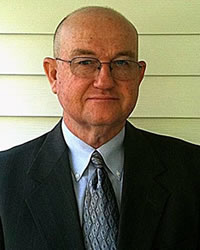
Gary Shepard

Christ Died For Us

Romans 5:8
Gary Shepard May, 27 2012 Audio
0 Comments

Sermon Transcript

Auto-generated transcript • May contain errors

100%
I want you to turn to the book
of Romans this morning, Romans chapter 5. In the book
of Isaiah, God gives a rule to His people, a rule concerning
all that they hear. And He tells them to go to the law and to the testimony. And he says, if they do not speak
according to this word, it is because there is no light in
them. And I would certainly want to
subject everything that I say this day to that rule. If I speak not according to this
word, do not hear me." And I'd ask you to look with me here
in Romans 5, because I want to begin by reading one verse, one
verse, that eighth verse, where Paul says, commendeth his love toward us,
in that while we were yet sinners, Christ died for us." And that's
the title of my message, Christ died for us. There's an old religious song
that asks some questions. It says, were you there when
they crucified my Lord? Were you there when they nailed
Him to a tree? Were you there when they pierced
Him in the side? And the answer as far as my part
is concerned, the answer is simply, no. I wasn't there. I wasn't present. And had I been
there, I would not have been able to enter into the experience
of His suffering. I could have had some natural
compassion for His wounds and agonies, but I could never have
actually entered into the experience of His suffering Because it is
impossible for one who has never known anything but sin. That's all I've ever known. Sin. It would have been impossible
for me to comprehend or understand the actual experience of one
who knew no sin. Here's one who knew no sin, And
he's being dealt with by God, God the judge for all the sins
of his people. I do believe that what we hear
when we hear him say, My God, my God, why hast thou forsaken
me? That we are hearing that holiness. that shriek of horror wherein
one who knows no sin is now being treated by God in the matter
of sin. As a matter of fact, the Messiah
says through the prophet Jeremiah in Lamentations, as if He hangs
on that cross, is it nothing to you? all ye that pass by,
behold, and see if there be any sorrow like unto my sorrow, which
is done unto me, wherewith the Lord hath afflicted me in the
day of His fierce anger." He said, see if there be. a comparable
sorrow to my sorrow. No, all I have to go on is what
I read in His Word. And what I read in His Word again
and again, and the message of hope to all of His elect is simply
this. Christ died for us. That is, when Christ suffered,
He suffered, as the Apostle says, as the just for the unjust. And Christ's perfect life, which
He absolutely did live a perfect sinless life, Christ's perfect
life under the law, was necessary for one main reason, and that
was to show him, that was to demonstrate how that he was and
is that spotless Lamb of God who died. He is the Lamb without spot and
without blemish. And if this is somehow to be
a good news to us, why then did he have to die? Why wouldn't
simply a good example be enough? Why wouldn't simply good teaching
be enough? Well, because death is the penalty
of sin against God. God laid that fact out in the
very first book of this Bible and established it so we would
know without a doubt. Hold your place and look back
at Genesis chapter 2. In Genesis chapter 2, In verse
17, God gives this instruction to Adam and Eve, and it's plain. He says, "...but of the tree
of the knowledge of good and evil thou shalt not eat of it. For in the day that thou eatest
thereof..." You're going to get a stomach ache? No. He said, Thou shalt surely die. That very first sin, that very
first rebellion against God was marked by this warning from God
that in the day that Adam eats of this tree, he will surely
die. He didn't die physically that
day. But he did later. But he did
die spiritually to God. And had God not had mercy, he
would have died an eternal death. That second death. So to be saved, as we use that
expression often and see it in the Bible, to be saved is to
be saved from the consequences of our sin. Look over in Ezekiel
chapter 18. Ezekiel chapter 18, and listen
to what God says through another man, the prophet Ezekiel. He says in verse 4, "...behold,
all souls are mine, as the soul of the Father, so also the soul
of the Son is mine, and the soul that sinneth, it shall die."
It shall die. Look down in verse 20. The soul
that sinneth, it shall die. The Son shall not bear the iniquity
of the Father, neither shall the Father bear the iniquity
of the Son. The righteousness of the righteous
shall be upon Him, and the wickedness of the wicked shall be upon Him. But that soul that sins shall
surely die." Have you ever sinned? You see, the truth of the matter
is, not only do we sin, but the reason that we do sin is the
fact that we are sin. Go back to the book of Romans
and look down at the last verse of Romans 6. Romans 6. This is not some kind of myth
or fantasy that was the way it was in a former day. You see,
God is always the same. And so, we read this statement,
which is one of many in the New Testament, in Romans 6.23, where
He says this, "...for the wages of sin is death." It isn't temporary
imprisonment. It isn't purgatory. It isn't
some of the things that men have made over the years for it to
be. He says, the wages of sin is
death. Men foolishly imagine that they
want God just to give them what they deserve. No. He's going
to do that. But the wages, he says, of sin
is death. And James also, in the New Testament,
states it like this. He says, "...when lust hath conceived,
it bringeth forth sin, and sin, when it is finished, bringeth
forth death." That's why sin is not a light matter. It brings
forth death. And so the good news of the gospel,
which is supposed to be good news for sinners, the good news
of the gospel has to do with the death of Christ. Good news
to sinners who deserve to die, but who will not because Christ
has died for them. And so the Apostle Paul, The
one that God used to write the better part of the New Testament. He writes to that church at Corinth,
and He goes back and reminds them of the beginning. He reminds
them of what He first preached to them, and He tells them that
the message has not changed. He said, "...I delivered unto
you first of all that which I also Well, what was that, Paul? How that Christ died for our
sins according to the Scriptures. You see, this means that central
to the gospel is this substitutionary death of Christ for the sins
of His people. Christ died for, or in the place
of, in the stead of us dying for those sins, He died for our
sins. And since we read, as Paul says,
being led by the Spirit of God, since he says that that death
was according to the Scriptures, we know in Paul's day it had
to be the Old Testament Scriptures. Does it not? When he says that
the death of Christ was somehow according to those Old Testament
Scriptures, that means that it was a sacrificial death. You begin in Genesis, you go
all the way to the book of Malachi, And if there is one thing that
characterizes every book and this people of Israel, it is
over and over again that sacrifices were offered, sacrificial death,
a death to satisfy the divine justice of God. Turn over in
Isaiah chapter 53. Isaiah chapter 53, maybe the
most familiar chapter in all the Old Testament to some. Isaiah
53, and look at what it says beginning in verse 8, God the
Spirit speaking through the prophet of whom? Christ, the Messiah
come. He says in verse 8, "...he was
taken from prison and from judgment, and who shall declare his generation? For he was..." What? "...cut
off out of the land of the living." The prophets had said he'd have
a people. The prophets had said he'd have
a sea. The prophets have spoken of a
generation of people that would flow out from the Messiah. Well,
who will declare his generation since he'll be cut off? Look
at what it says, "...for the transgression of my people was
he stricken." For the transgressions, the iniquities, the sins of God's
people, Christ was smitten, that is, He died. And He made His
grave with the wicked and with the rich in His death. Because
He had done no violence, neither was any deceit. in His mouth. You can watch His life. God has
laid it out for us. You can watch it in the last
hours as He hangs on the cross. You can hear Him speaking nothing
but righteousness and good and truth, yet it pleased the Lord
to bruise Him. Yet this just God, it pleased
him to bruise him, he hath put him to grief, when thou shalt
make his soul an offering for sin, a sacrifice for sins. And he shall see his seat, He
shall prolong his days, and the pleasure of the Lord shall prosper
in his hand." How? Through his death. How will he
see this posterity, this spiritual posterity, these seed? How will
he be the one who's the father of these people? because he made his soul an offering
for their sins." That's right. Let me read this to you out of
1 Peter. 1 Peter chapter 2, and listen
to what the apostle Peter says. Peter says in verse 22 of the
Christ, he says, "...who did no sin, neither was guile found
in his mouth, who when he was reviled, reviled not again. When he suffered, he threatened
not, but committed himself to him that judgeth righteously."
What's the next thing he's going to say? "...who his own self,"
bear our sins in His own body on the tree, that we, being dead
to sins, should live unto righteousness, by whose stripes you were healed."
What healed you? Was it His life? Was it so many
other things that people talk about? No, it was His stripes. Meaning that it was by God's
justice inflicting on him the stripes that we deserve, which
are death stripes. He said, you are healed. But
not only that, it says this, it says that He, His own self,
bear our sins in His own body on the tree. If it was only mental
suffering or mental anguish or something inexpressible or mystical,
then he really wouldn't have had to actually die, but it says
that he bore them in his own body on that tree. What does
that mean? It means that God, when He brought
His Son to this earth and He gave Him a body, it was in order
for that body to bear our sins in it, which was to die. Christ died. The apostle writing
in Hebrews, he says this in Hebrews 2.9, he says, but we see Jesus
who was made a little lower than the angels for the suffering
of death. My friend, we are so wicked,
we are so lost, We're so vile before the holiness of God. We're such violators of everything
that God commands and everything that He is, that it was not possible
in order for Him to redeem us, to save us, to do anything less
than becoming human flesh and coming into this world to die. for us to die. You see, the words in Scripture
that we find, and I'm talking about biblical words and terms
here. Words that we find at the heart
of what Paul preached and others all throughout this book, the
words in Scripture such as justification, or justify, or righteous, or
righteousness, they all in some way have to do with our being
declared not guilty by God. And not only do they have to
do with us being declared not guilty by God, but that God at
the same time that He declares His people not guilty, He remains
just to do that. Do you know anything about that? I'll tell you what, Paul in the
first chapter of Romans, he said, I'm not ashamed of the gospel
of Christ, Because therein is the righteousness of God revealed. In the gospel is revealed and
declared and demonstrated how that God can be a just God and
at the same time a Savior. Well, if Christ died for our
sins, when He died, was He guilty then? Well, it all depends really
on what you mean by guilty. I found out that there are a
lot of folks that don't mean what I believe the Bible means
about guilty. And I say that because if you
look in Romans 3, and I'll read it to you, you're familiar with
it probably. In Romans 3, 19, when Paul is
showing how that being a Jew will not satisfy God, or being
a Gentile will not, because they're both in the same boat as sinners. He says, now we know. that what
thing soever the law saith, it saith to them who are under the
law, that every mouth may be stopped, and all the world may
become guilty before God." Everybody in the same boat. Adam's descendants,
whether they be through a natural line, such as Ishmael or Isaac,
whoever they are, Jew or Gentile, wherever they live, male or female,
guilty. But most people think of guilt
as a feeling. We feel guilty about something.
Or remorse. But in truth, the Bible, yes,
even this word in that text, the Bible means something else. Let me tell you how Strongs defines
that word guilty there. He defined it as under justice. Under justice. It means accountable. And it's from two words, the
first word making up part of that word. The first word means
under, and the second word means justice. Under-sentence, under-justice,
accountable. So if you stop and think about
it, in light of what this book says, one does not have to commit
the sin to be guilty in this sense if God holds another accountable
for it. And that's what this means. They're
guilty before God. They're accountable to God. They're
under sentence from God. They're under justice before
God. Let me ask you this. Paul says
the whole world is guilty before God. Do they feel it? No. You know that. They don't feel guilty before
God. As a matter of fact, a man left to himself, a woman left
to herself, they feel good about themselves. And false religion
comes along and tells you, you're okay, we're okay. But though
they don't feel guilty, does that mean they're not accountable?
They're accountable. They're accountable. So can God
justly hold one accountable if he did not actually do the sin? And I feel right here is where
many go wrong. Because the answer is yes. And
the answer is yes, because God dealt with all of Adam's race
in that one man. Listen to what Paul says in Romans
5. Wherefore, as by one man, sin entered into the world, and
death by sin, and so death passed upon all men, for that all have
sinned." Let me ask you, did you feel it when Adam sinned?
Were you there when Adam sinned? No. Were you guilty? when Adam sinned. Absolutely. Absolutely. Because in that one
verse, if that was the only verse, in that one verse, we find that
God accounted all of His race because He represented them before
God. He accounted them all as sinners
and therefore guilty, under justice. And Paul goes on in that fifth
chapter saying, by one man's offense, death came, and judgment
came, and condemnation came, and by one man's disobedience,
the many were made sinners. I'll tell you what, we better
find out what happened in that garden. Because if we do not
find out what happened in that garden, we'll have no understanding
about what happened on that cross. God dealt with one man in that
garden for all Adam's race, and He dealt with one man, Christ,
on that cross concerning all His people. But blessed be His
name. He says, for Paul to write on,
and he says, by one man's obedience. Oh, contrasted. That's what you
have in Romans 5. You have a parallel, you have
comparisons of two men, and you have the contrast of the two. The contrast of the consequences
of two. He said, by one man's disobedience,
the many were made sinners. They were accounted as sinners.
And therefore also, by one man's obedience, the many were made
righteous. They were declared not guilty
by God. Now what kind of obedience was
required of God in order for all these that Christ represents
All these people that were given to him by the Father, his church,
his bride, what kind of obedience was required in order for them
to be accounted not guilty? Well, turn over to Philippians
2. Philippians chapter 2. And listen, in Philippians chapter
2, at how plainly Paul tells us this. Philippians 2 and verse
8. He's talking about the condescending
love and mercy and grace of God as it is in Christ. Listen in
verse 8. He says, "...in being found in
fashion as a man, he humbled himself and became obedient unto
death." That's the obedience. He was obedient unto death, even
the death of the cross. Christ had to die. Christ died
for us, Paul says. And this was the case because
as the surety, what is a surety? We read about it all in the Old
Testament. Assurity, though, is not what
some people imagine as a guarantor, so that if somebody doesn't pay
the debt, then he'll step in and pay it. No, the surety, he
assumes all the debt on the behalf of the individual at the first. He assumes all the responsibility
of it. It never does depend on their
paying or doing or anything. It's always accountable to the
surety. And Christ, as the surety of
His elect, He made Himself accountable to God for their sins. You see, I don't think we really
have an idea about the mercy of God. Until we come to realize
that our sins, the whole weight and debt of it, they have been
charged to the Lord Jesus Christ from old eternity. You say, really? Well, seeing that the whole purpose
of God and His grace and His Son and His glory all depend
on this matter of sin, when He says, blessed is the man to whom
the Lord will not impute sin, since His whole purpose and grace
and will on this earth really hangs on that one thing. His
determination not to impute their sins to them, not to charge them
with their sin, it had to be determined before the world began. You see, God imputed, made accountable,
laid on, as the writer of Isaiah speaks of it, all their sins
to the Lord Jesus Christ, and He brought their substitute under
His justice in the matter of their sins. That's why when He
came to this earth, He came to this earth to die. Christ died
for our sins. God come in human flesh to do
that which is required of our salvation, and to do that which
He cannot do in Himself, of Himself, as God, He became a man to die. Now I'm sure, I'm dead sure,
I'm sure that Christ leading up to that hour and in that hour,
I'm sure that he felt inexpressible anguish and suffering. I'm sure I cannot imagine it,
and all the emotional preaching that is done, and all our natural
emotions that are stirred up, they would all fall short of
his actual experience. And the truth is, God doesn't
really tell us much about that, does He? I'll be honest, He doesn't
really tell us a whole lot. You see, we receive what we have
by faith. And here is God talking about
Him dealing with God in the matter of our sins. We're not going
to enter into a whole lot of that. They make for good preaching,
but You see, the truth of the matter is, it is all really a
matter of justice. God's a just God. He's going
to justify His people. He's going to make them righteous.
He's going to show His righteousness in doing it. He's going to do
right in it. And if He doesn't do right in it, then you can
hang on it all you want to, and you'll still perish. Do you know
that? And men can make light of the legal aspects of his death
and exalt what they think that they can see in his actual sufferings,
but the Bible speaks of his death as a ransom. Somebody's holding
your child hostage or kidnaps them, requires a payment in order
for them to go free. What's that? It's a ransom. The
Bible speaks of redemption. Do you know what redemption is?
Redemption means to buy back by the paying of a price. The Bible speaks of making righteous. And yet these who are said to
be made the righteousness of God, they do not in themselves
possess a personal righteousness. They don't have a righteous essence
about them. They can still, in their dealings
in this world, they can deal unrighteously, can they not?
What does that mean, unjustly? You see, righteousness has to
do with justice. And the very first time in this
book, where the word and mention of righteousness is, though it
has been displayed before that, the very first word that God
speaks of Himself as the righteous God is when He tells Moses to
have all these just judges in Israel when they deal with those
who are great or small to exercise the same standard. Don't because
one is rich, you look at him and say, He might can do me a
favor, so I'll cut him a little slack. Oh, here's one over here
that's poor. He can't offer anything. No.
You see, that image that we have for our justice system, that
woman holding the scales and she's blindfolded, you know that's
not true with our justice, but it is with God's. That's what
righteousness is about. And that's what the gospel has
to do with, this ransom, this payment, this redemption, this
justifying, this making righteous of these sinners that Christ
died for. And men can speak of legal satisfaction
as if it is not real, but I can tell you this, if you are taken
into a courtroom, and before the bar of justice, you're condemned
in a matter, and condemned unto death, would we just say, well,
that's just legal stuff. It's not real. Let me tell you
something. If they were to take you or me
out to a gala somewhere, and they read that declaration of
condemnation, that declaration of judgment against us, and the
noose goes down on our head legally, and we stand over that trapdoor
legally, and the trapdoor opens and we fall, and the noose tightens,
it will be real. Will it not? Judgment is real. God condemning a sinner is real. Righteousness is real. But most of all, Death is real. You understand what I'm saying?
This is what's real. It's not what I can feel about
it. It's not even the measure to which I can understand it.
It's going to come down as it has before God on this one thing. Christ died for us. Died for
us. You see, the gospel is the good
news of God, that God is righteous in saving a people, that He died
according to the Scriptures. Now you could just take and maybe
read a few chapters out of each book in the Old Testament, in
every one of those places where it talks about a sacrifice. And
you could read them, You might not remember everything, but
I'll guarantee there'd be two things that you'd remember about
a sacrifice. Christ died for our sins, according
to the Scripture. There'd be two things that you'd
remember about every one of those sacrifices. Whether it was a
lamb, or a heifer, or a goat, or a bird, whatever it was. Two
things. Number one, it had to be perfect. Perfect. God stated that it must
be perfect to be accepted. And you and I have never had
anything, done anything, been anything close to perfection. But that sacrifice had to be
perfect. And they didn't take that sacrifice.
Can you imagine on the Day of Atonement, them taking that animal
that was appointed as the sacrifice, that the Bible says that the
priest was to lay his hands on the head of that victim and confess
the sins of the people. But it didn't say that he took
tar or grease or something, and when he did that, put it on his
hands and rubbed it all over that animal dead. Why? Because it had to be perfect. It had to be that lamb without
spot, without blemish. That Passover lamb couldn't have
a wicked looking eye, couldn't have a broken bone, couldn't
have a deformity from birth, couldn't have anything like that,
because he represented the lamb that would be without spot and
without blemish. Two things. What's the other
thing? They all died. That's right.
They all died. He took that lamb and slid his
throat and the blood flowed out. He had to die. Wow, that's what
the price of our sins is. That a perfect man, and there's
only been one, a perfect man, an innocent man, has to be held
accountable in my place, and that accountability is death."
You see, that blood represented a life that was poured out. God had said, you don't eat that
blood now. Why? Because the life is in the blood.
And so when he talks about the blood of Jesus Christ, it's not
so much talking about the literal blood that poured out. There
may have been some of that that dropped on a soldier's hand or
head, but he wasn't saved. It means the death of Christ. The substitutionary death of
Christ. Those he died for. That death,
the blood of Jesus Christ cleanses them from all sin. Now, I'm going to say this. This
book sets forth again and again pictures and examples of substitutionary
death. But what we can feel about Christ
dying will not save us. His death saved us. You see,
some days I don't have very high views of His death. I hate to
even say this. But there may be a day that passes
I don't even think about His death. But my feeling about His
death, or the lack of it, is not what saves me or condemns
me. It is His death. And I'm afraid
that many who can weep at the vivid descriptions of preachers
concerning Christ's death, that they really have no understanding
and interest in what He actually accomplished. by it, but His
blood is the blood, the death, that makes sure the everlasting
covenant. Now I'm going to say one other
thing, and I know this will be misconstrued if anybody listens
to this message, but the truth is, even if Christ hadn't felt
a thing, now think about this, Even if he hadn't felt a thing,
his death before divine justice, his blood shed, which is righteousness,
would have put away the sins of his people forever. That's
the way it is. I don't ever want what I can't
understand about his dying to diminish what I know about the
fact that he died. That's what I'm saying. Paul
said, this is the demonstration of God's love toward us, that
Christ died for us. Look back over in the book of
Romans in that 8th chapter and listen to what Paul says. To
me this is so wonderful. It's not only clear, it's wonderful.
Romans chapter 8 and look down at verse 31. What shall we then
say to these things? If God be for us, who can be
against us? He that spared not His own Son,
but delivered Him up for us all, how shall He not with Him also
freely give us all things? Listen to this. Who shall lay
anything to the charge of God's elect? It is God that justifies. In other words, you can say what
you want to say, you can do what you want to do, but if God declares
me not guilty, I ain't guilty. But notice the next line. Who
is He that condemneth? It is Christ that died, died. Yea, rather that is risen again. How could He rise again? Because
that death, is the satisfying death necessary to save his believing
people. Turn over to Hebrews 9. Hebrews
9, and listen to what the Apostle says in Hebrews 9 and verse 14. He says, How much more shall
the blood of Christ, blood, death, dying, sacrifice, who through
the eternal Spirit offered himself without spot to God." We can
try to make him whatever we want to. We can try to smear that
grease on the sacrifice if we want to, but he offered himself
without spot to God. How much more shall it purge
your conscience from dead works to serve the living God? Blood. Hebrews 10. Look at verse 12
of Hebrews 10. But this man, after that he had
offered one sacrifice for sins forever, he sat down on the right
hand of God. What did he offer? Sin? No. He
offered one sacrifice for sin. One death for sins. Verse 14. For by one offering he hath perfected
forever them that are sanctified." Over and again. For when we were
yet without strength in due time, Christ died. with the ungodly. For to this end Christ both died
and rose and revived, that He might be Lord both of the dead
and living. The One who died for us, that
whether we wake or sleep, we should live together with Him,
being justified freely by His grace. How? Through the redemption,
the blood-shedding of the Lord Jesus Christ. And the Lord Jesus
Christ, He could rightly speak of the iniquities of His people
as being His, because He was accountable to God for them. There came that hour when the
surety, the court convened. Who pays for this sin-debt of
all these people? This people given to Christ. And the surety stands. And he
said, their sins are my sins. Their dead is my dead. And I'm
come to give my life. What does the shepherd do for
his sheep? He said, I lay down my life. That means he dies for
the sheep. All those sacrifices, all picture
the death of the innocent sacrifice for sinners. The just one. Dying for the unjust. The one
who knew no sin, being made sin, and that is the same thing as
Paul says, being made a curse. How do you know somebody was
made a curse? He said, cursed is everyone that hangs on a tree. God made His Son to be our sin
offering if He died according to the Scriptures. And he treated
him as the sinner I am, though he knew no sin. Because in order
for this sinner to go free, a sinless one had to die in my place. What was it Zechariah said concerning
the Lord's Shepherd? Concerning the one he described
as his fellow? God said, Awake, O sword, and
smite the shepherd. Some, like Luther and others,
have called Christ the world's greatest sinner, but the Bible
doesn't. You understand that? The Bible
doesn't. As a matter of fact, those who
believe the Bible, they say, God have mercy on me, the sinner. They say like Paul, I'm the chief
of sinners, but thankfully I've got a sinless sacrifice and Savior. You see, God's people, now men
live to themselves, they can believe anything. But God's people
cannot believe what they cannot clearly read in God's Word. There's one thing I'm sure in
this Word, and that is Christ died for us. That means I don't
have to die. That means there's no sin to
my account, because the Lord has laid on Him our iniquities,
and God has made us in Him the righteousness of God. us declared
by God not guilty, perfectly acceptable, and righteous in
His sight." Turn back to that Romans 5, our text, and look at the next verse, verse
9. Paul says, "...much more than being now, or having been justified
by His blood." We shall be saved from wrath through Him. Did you hear that? If you're
a real sinner, and you are whether you know it or not, but if you
can find yourself a real sinner and have some conviction about
your state before God, there's hope for you. This is where the
good news is. Christ died. were our sins according
to the Scriptures. And the fact that God accepted
His sacrifice is demonstrated by the fact that God raised Him
from the dead. How did they know when that priest
went in there in the Holy of Holies with that sacrifice of
blood, how did they know whether or not God had accepted it? If
He came out alive, He had. If He came out alive. God accepted."
Turn your hymnals to 412. This came to my mind, and I thought,
boy, that sums up where I'm at. We've sung this hymn lots of
times. And this hymnal we have now has
got a different name, but we sang it under the name, My Faith
Has Found a Resting Place. We've sung it lots of times.
But I want you to look at what the hymn writer says in verse
3. It says, my heart is leaning on the Word, the written Word
of God. Salvation by my Savior's name. Salvation through His blood. I need no other argument. I need
no other plea. It is enough. that Jesus died,
and that He died for me. We preach Christ crucified. He died for our sins. They may be having the Eucharist
convention in Dublin, where they'll all celebrate how that they think
that when the priest hands out a wafer and a cup, that they're
handing it to you, actually becomes the blood and body of Jesus Christ. No. Christ died for us once. And all who look to Him in that
death, plead His blood, they'll be saved from wrath. That's what He's doing on the
cross. That's what that death's about. He's bearing the wrath
of God, because the soul that sins shall surely die. Don't look for more, and certainly
don't settle for less. It's what He did. Not what we
do. Not what even we feel. None of
these things. Christ died for us. Father, we
give You thanks this day. and pray that every word that
is not true to your word would be washed from the memory of
all who hear. But all that is true of your
word, let us not escape it. Enable us to see in the fact
that the God-man died what awful sinners we must be, what sin
must be in your sight. but at the same time to see your
love and your mercy and your grace in giving Him to die for
our sins. We thank you and we pray in Christ's
name. Amen.
Gary Shepard
About Gary Shepard
Gary Shepard is teacher and pastor of Sovereign Grace Baptist Church in Jacksonville, North Carolina.

Comments

0 / 2000 characters
Comments are moderated before appearing.

Be the first to comment!

Joshua

Joshua

Shall we play a game? Ask me about articles, sermons, or theology from our library. I can also help you navigate the site.